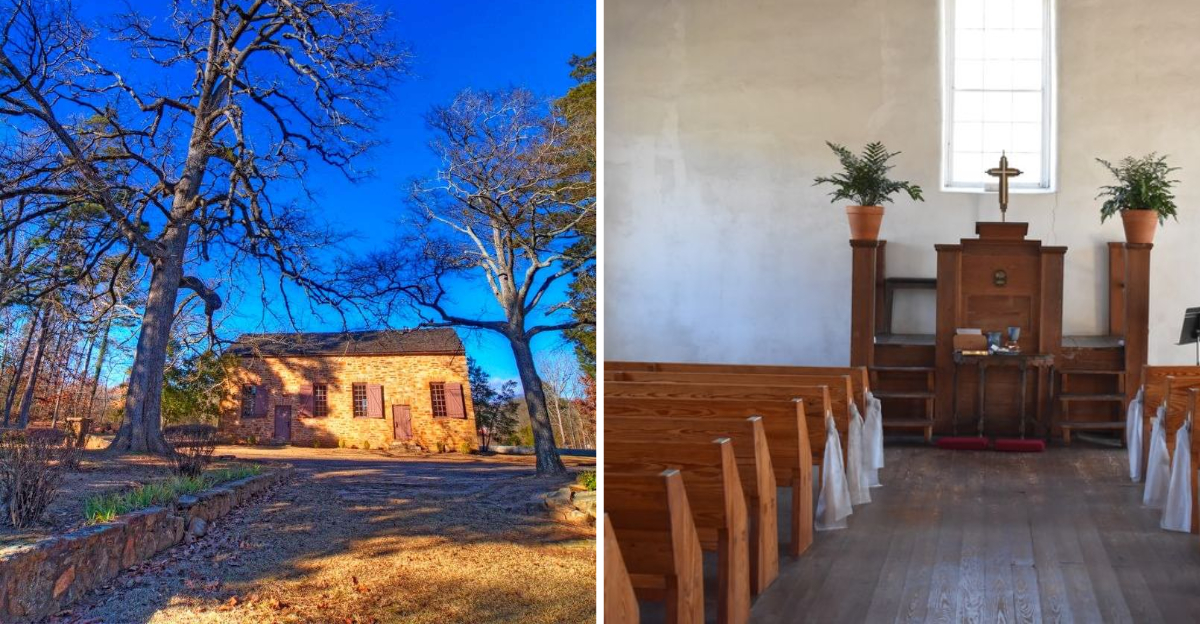
Fieldstone walls rose behind a low wall of trees, looking as stubborn as they must have looked two centuries ago, and I pulled off a busy South Carolina road expecting a quick photo stop. I stayed for the better part of an afternoon.
The quiet hit me first, the kind that makes you lower your voice without deciding to, a stillness that settles over the graveyard and the churchyard alike. Around the building, a burial ground older than the church itself holds Revolutionary War generals, frontier families, and a few stories that locals still repeat with a grin.
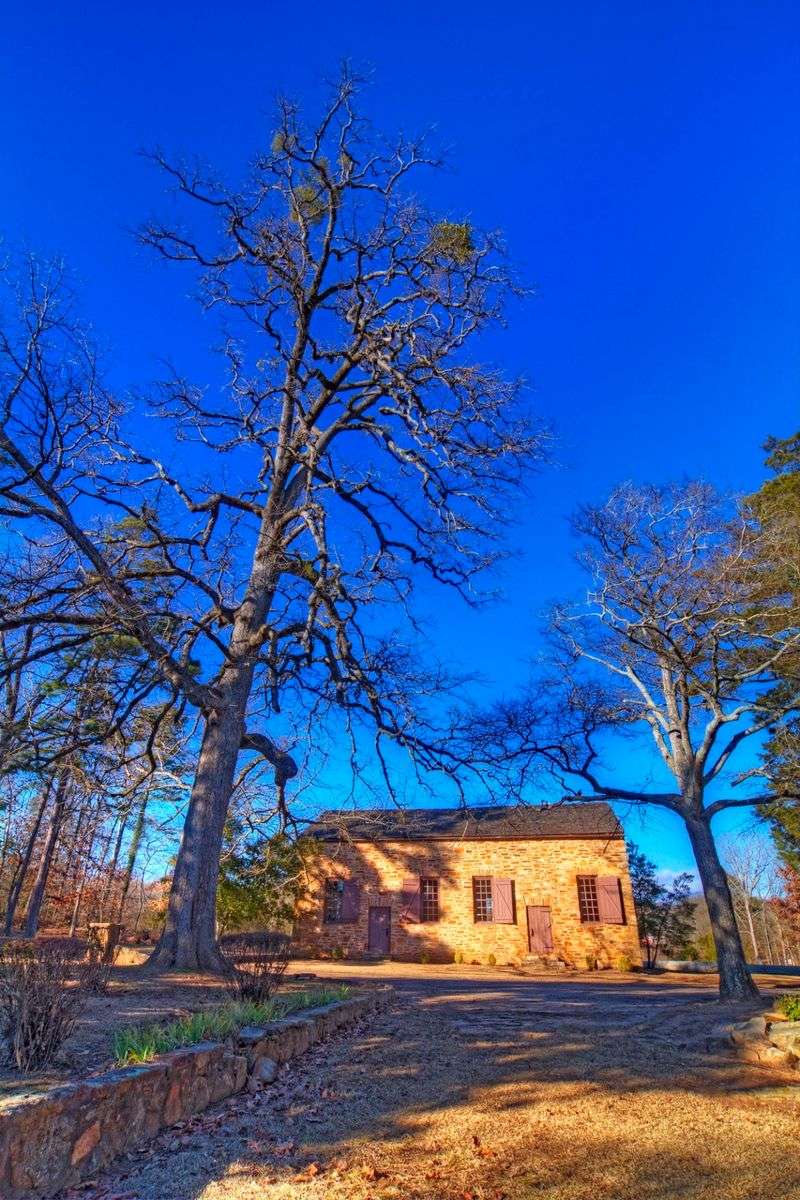
The fieldstone is rough and uneven, laid by hands that have been gone for generations, and the roof has been replaced more than once, but the walls have never been touched.
I love places where history is not behind glass, and this one is open to the sky and free to wander, with nothing between you and the past except the grass and the stones that mark where people rest.
This stop deserves more of your day than you think it will.
Walls Two Feet Thick and Built to Outlast Everyone
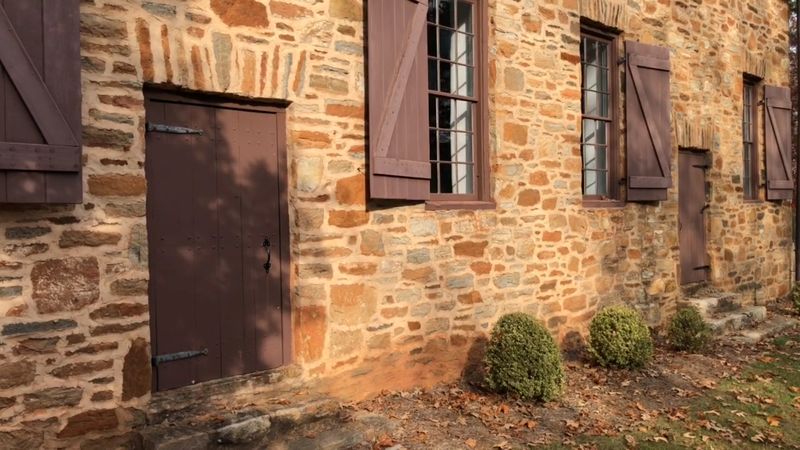
Running my hand along the outside of this building, the first thing I noticed was how uneven the stone is. Every rock has a different shape and color, like the builders used whatever the ground gave them.
That is exactly what happened. The walls were raised from natural fieldstone gathered nearby, and they measure a full two feet thick, which explains why the place still stands after more than two centuries of weather.
Construction stretched from about 1797 to 1802, led by a builder named John Rusk. Land for it came from John Miller, a newspaper publisher who was a well known figure in the Carolina upcountry at the time.
Some people say the fortress-like look was intentional, since the frontier could turn tense between settlers and Cherokee neighbors. I cannot verify the reason, but the building certainly feels braced for something.
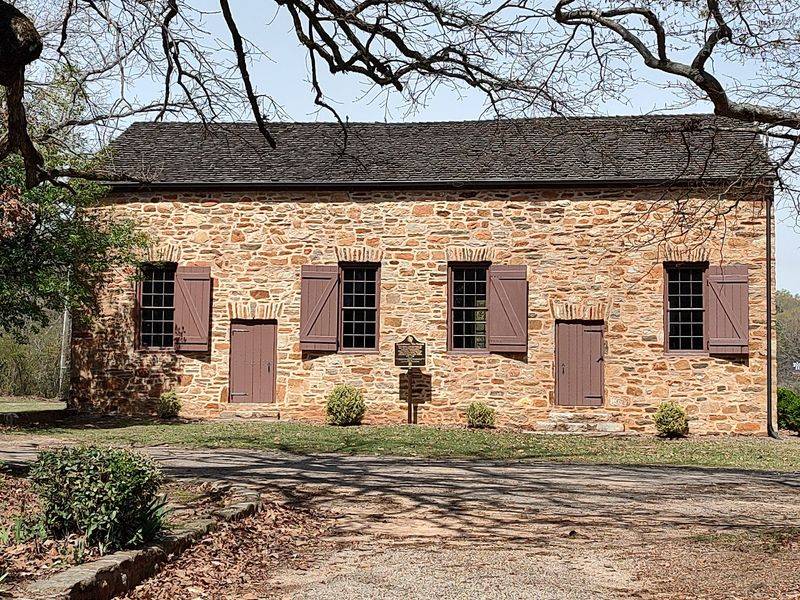
Six bays run along the sides, with windows cut as tall as the doorways and capped with flat arches. It reads as a meeting house translated into stone, plain and practical.
Bring a camera with a wide lens. The texture of those walls photographs beautifully in low sun.
Address: 101 Stone Cir, Clemson, SC 29631
The Congregation That Packed Up and Moved to Pendleton
Here is the part that surprised me most. The people who built this church did not stay in it very long at all.
Presbyterians organized the Hopewell congregation back in 1789 and put up a log meeting house near the Seneca and Keowee river area around 1791. Fire took that first building, reportedly in 1796, which pushed them toward something far harder to burn.
They worshipped inside the stone building for roughly twenty five years before relocating to Pendleton in the mid 1820s. After that, the walls stood empty of a regular congregation, which is where the whole abandoned reputation comes from.
I find that timeline oddly moving. A community poured years of labor into stone, then moved on within a generation, leaving the work behind for strangers to inherit.
By the late 1800s, both the building and its burial ground had slipped into rough shape. Nobody was tending the grass or repointing the mortar.
Knowing that backstory changes how the place feels when you walk up to it. You are looking at something that survived being forgotten, which is rarer than survival itself.
A Graveyard Older Than the Church Itself
Most churches come first and the graves follow. Not here.
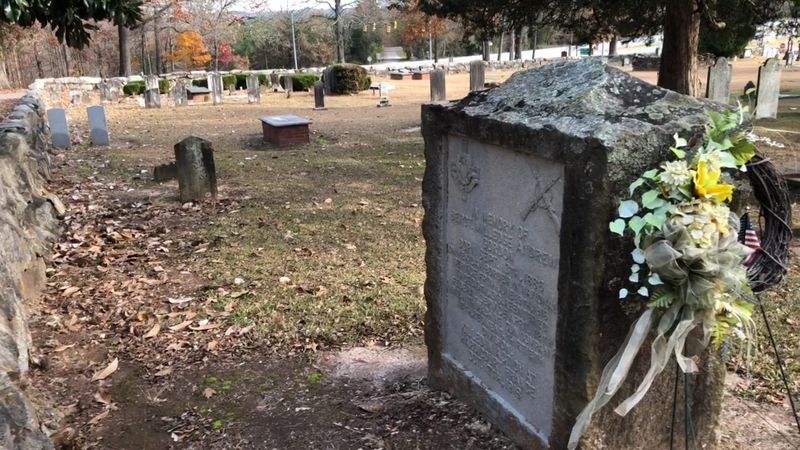
The burial ground already existed before the stone walls went up, with the oldest known grave dating to 1794 or 1795. That means people were being laid to rest on this ground while the congregation was still meeting in a log building down the way.
Wandering the rows takes longer than you plan. Slate and marble markers lean at odd angles, some so worn that you trace the letters with your eyes and still guess wrong.
I noticed graves from the Revolutionary era sitting near stones from much later conflicts, which gives the whole plot a layered feel. Generations stacked side by side, all in one modest square of grass.
Volunteers have clearly worked hard here. Where old markers cracked, broken pieces have been kept together rather than tossed aside, which I appreciated more than I expected.
Give yourself thirty minutes minimum, and wear shoes you do not mind getting damp. Morning dew hangs around under the trees well past sunrise.
Address: 101 Stone Cir, Clemson, SC 29631
Andrew Pickens, Robert Anderson, and Names You Already Know
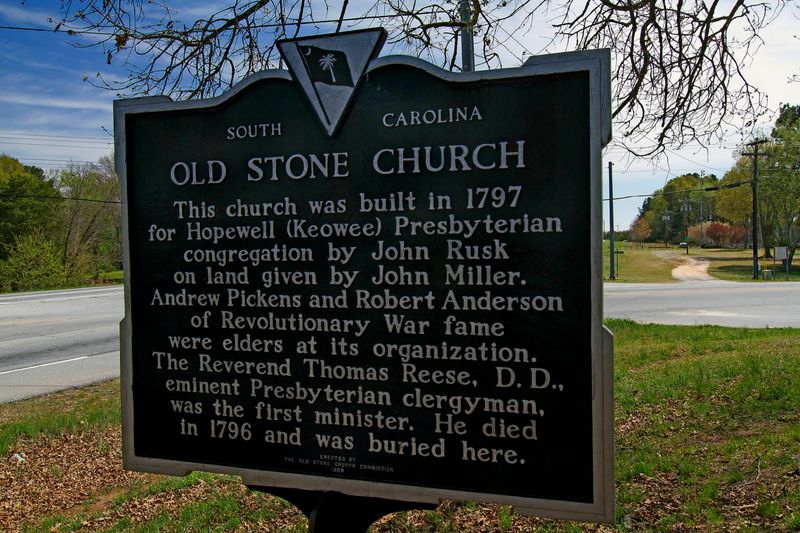
Two South Carolina counties are named after men buried in this yard, which is a strange thing to realize while standing on ordinary grass.
General Andrew Pickens, the Revolutionary War figure who gave his name to Pickens County, rests here. So does Colonel Robert Anderson, namesake of Anderson County.
Governor Andrew Pickens Jr., son of the general, is buried on the grounds as well. Family members including Rebecca Calhoun Pickens share the plot.
Visitors regularly show up specifically to find these markers, and several people who have written about their trips mention tracing direct family lines back to them. Watching someone locate an ancestor’s stone is quietly powerful.
What gets me is the scale mismatch. These names sit on courthouse buildings and highway signs across the state, yet their graves are modest, weathered, and close enough to touch.
There is no ticket booth or guided tour explaining any of it. You simply walk in and read.
If genealogy interests you even slightly, research a few names before arriving. The visit lands differently when you know whose story you are standing beside.
Osenappa and the Grave Marked by a Pile of Stones
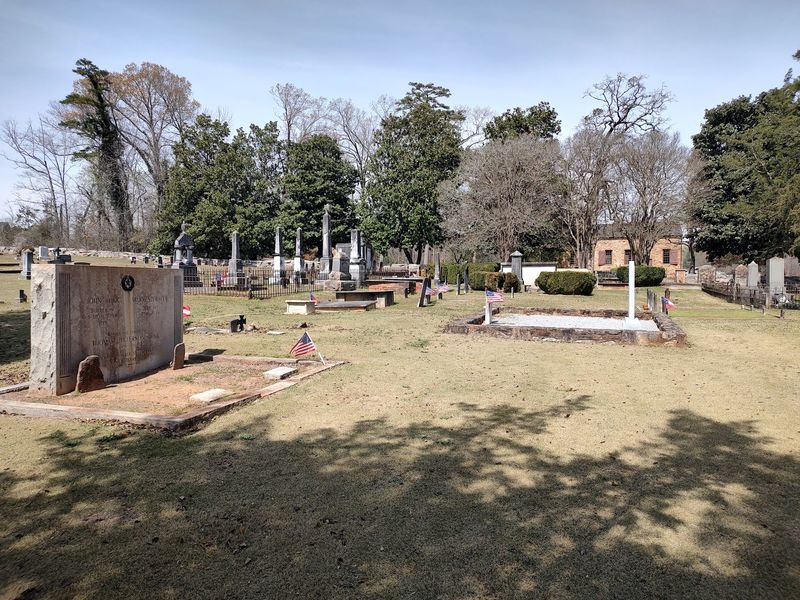
Among all the carved marble, one grave stands out because it has no carving at all.
A Cherokee man named Osenappa passed in 1794 and was buried on these grounds, his resting place marked by a pile of stones instead of an engraved marker. He is believed to be the only Native American interred within the cemetery.
I stood there longer than at any other spot. The simplicity says something the fancier monuments cannot.
His burial predates the church building itself, which places him among the earliest people laid to rest on this hillside. That detail alone rewrites how you picture the site’s beginnings.
The cemetery also carries a harder truth worth knowing. African American slaves were members of the congregation, but none were buried here, instead being interred in slave cemeteries on nearby plantations.
Exterior stairs once led to a gallery at the rear of the church where enslaved worshippers sat. The full history of this place includes people who were present but excluded.
Reading the ground honestly makes the visit richer, not heavier.
The Commission That Refused to Let It Crumble
Buildings this old usually vanish. Weather gets in, roofs sag, and somebody eventually clears the lot.
What saved this one was a group of people in the 1890s who decided otherwise. Descendants of those buried in the cemetery, along with other concerned neighbors, formed the Old Stone Church Commission to handle repairs and upkeep.
Major restoration work happened during the second half of the twentieth century. More recently, the windows were replaced in 2016, which tells you the effort never really stopped.
Volunteers still maintain the grounds today. When I visited, the grass was cut, the walkways were clear, and the general condition was far better than a two hundred year old structure has any right to be.
Honestly, that is the part of the story I keep thinking about. Stone lasts, but only because somebody keeps showing up with tools and time.
The site received a listing on the National Register of Historic Places on November 5, 1971, which recognized it as a strong example of early pioneer church architecture in the state.
Preservation here looks like patience more than money.
Still Hosting Weddings, Funerals, and Family Reunions
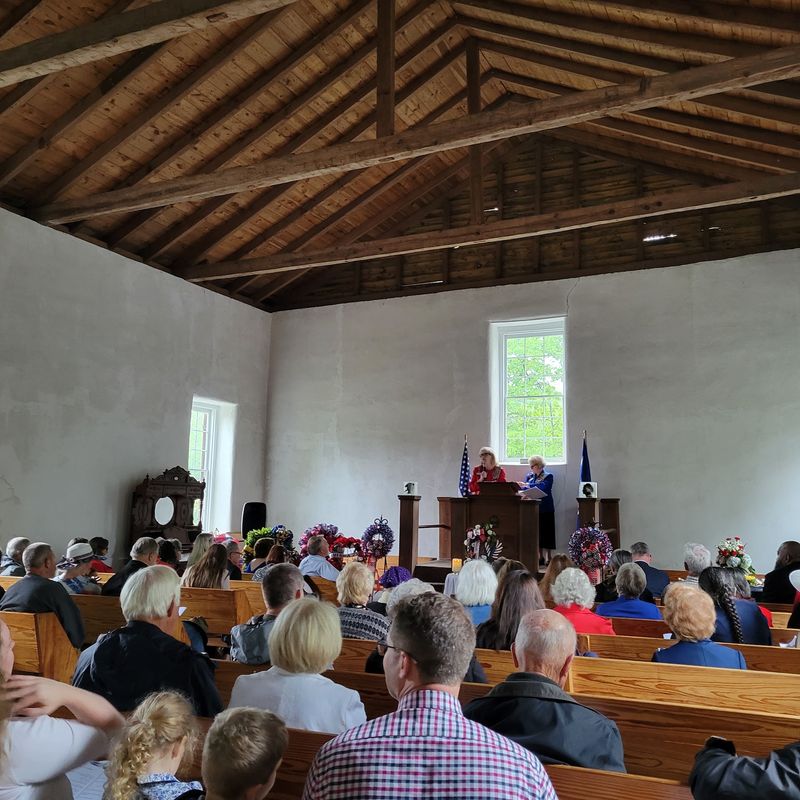
Abandoned is technically accurate and completely misleading at the same time.
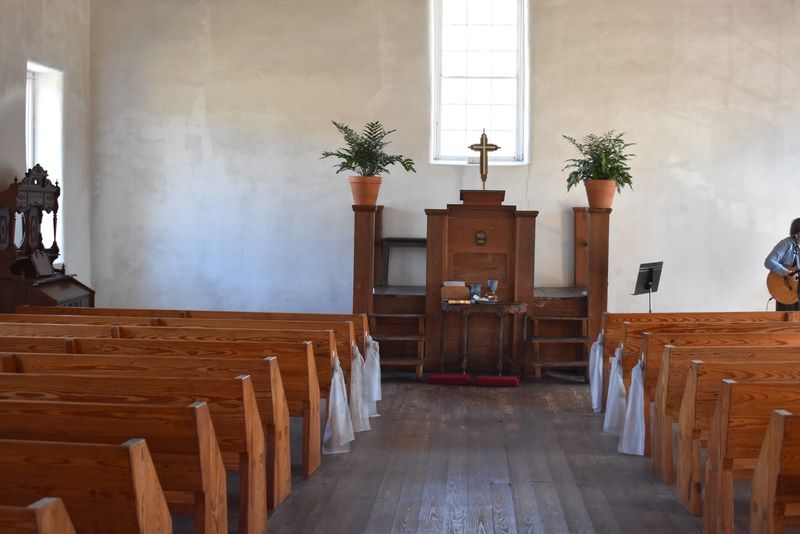
No regular congregation calls this home, yet the building stays busy. Weddings happen inside those thick walls, along with funerals, occasional services, meetings, lectures, and family reunions.
There is no heating and no air conditioning, which means a July wedding here is a genuine commitment. I kind of love that nobody has tried to modernize it into comfort.
The doors are usually locked, so most visitors experience the exterior and the cemetery rather than the interior. A few lucky travelers have arrived while volunteers were preparing for an event and been welcomed in for an impromptu look.
If seeing inside matters to you, checking the schedule ahead of time is smart. Otherwise, treat the interior as a bonus rather than the plan.
The site keeps close ties with Clemson University and Old Fort Presbyterian Church, which helps explain why it stays woven into local life rather than sitting as a museum piece.
Two centuries in, the building still does the job it was built for.
Address: 101 Stone Cir, Clemson, SC 29631
Planning a Visit Without Rushing the Experience
My advice after spending an afternoon here is simple. Do not schedule this as a fifteen minute stop between other things.
Parking sits right beside the grounds off Stone Circle, and access to the cemetery is open to the public. The church interior is typically closed, so plan around the outdoor experience.
Some of the informational signs have faded badly over the years, with text that is tough to read in spots. Reading up before you arrive fills the gaps nicely.
Mornings tend to be peaceful, and I passed no other visitors during much of my walk. That solitude is a big part of the appeal.
Families with young kids can manage this easily, though half an hour is often the natural limit for little ones. Older kids interested in history usually last longer.
Basic respect goes a long way. Stay on the paths where you can, avoid leaning on fragile markers, and carry out whatever you carry in.
Pair it with Clemson’s campus and the surrounding Upstate scenery for a full day that balances old stone with lively college town energy.
Address: 101 Stone Cir, Clemson, South Carolina 29631
