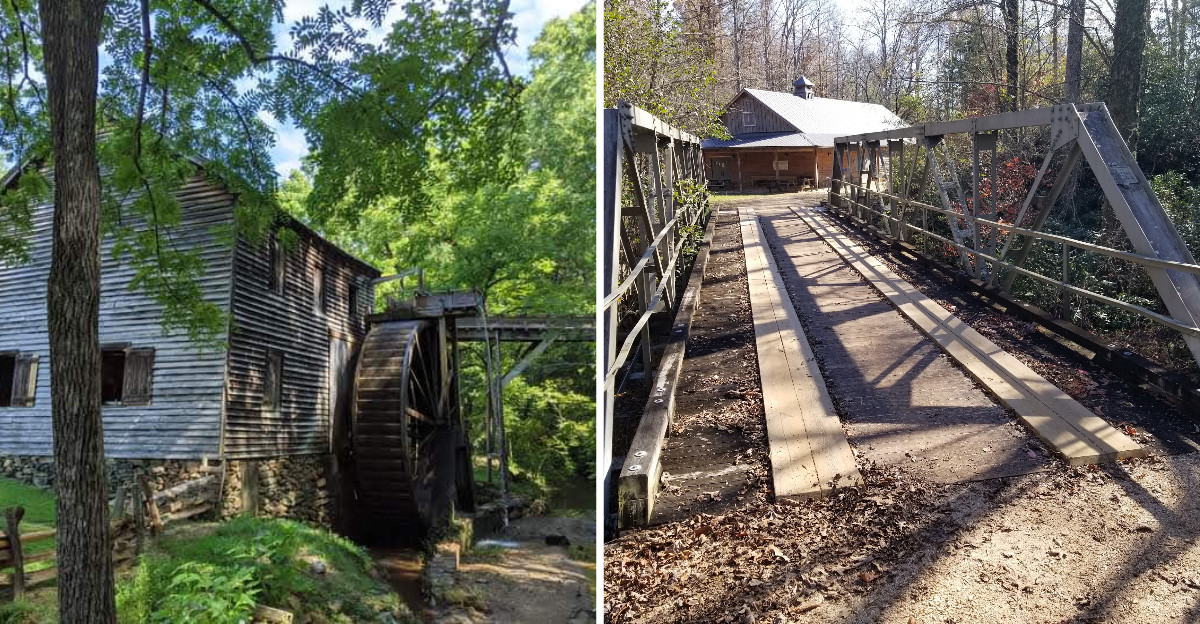
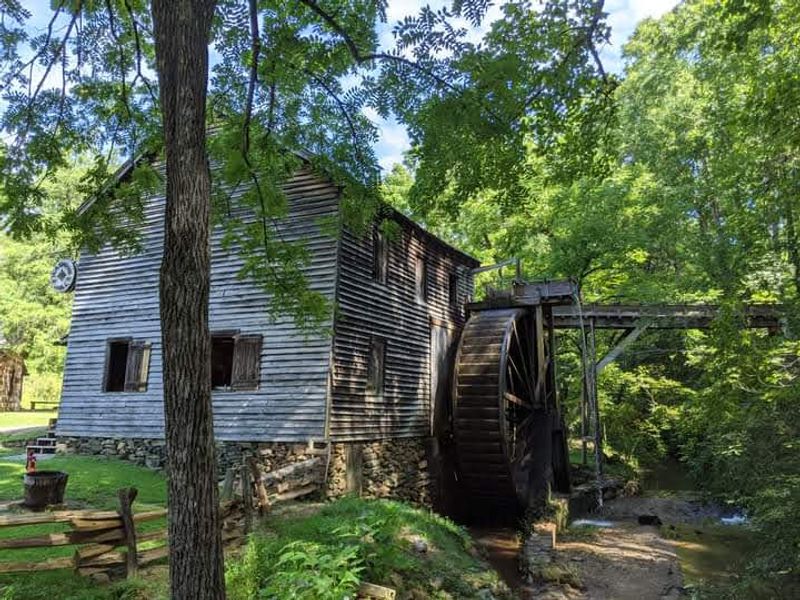
A steady splash and groan came from behind the trees, and following the sound down a gravel path led to a twenty-foot wooden wheel turning like it had all the time in the world.
A mill has stood on this South Carolina creek since the 1840s, and grain has been ground here since the 1790s, which means people have been standing in this exact spot for generations.
Chickens scratch in the yard, cabins older than the state’s railroads lean into the shade, and ancient carvings sit under a protective roof on a soapstone boulder nearby. Watching water do real work slows you down and makes you pay attention.
Almost three hours passed, and the place still held corners left unexplored. The wheel keeps turning, the creek keeps running, and the past keeps grinding along beside the present.
History that still moves under its own power is rare, and this quiet corner of the state delivers it.
The 1845 Mill and the Wheel That Never Quit
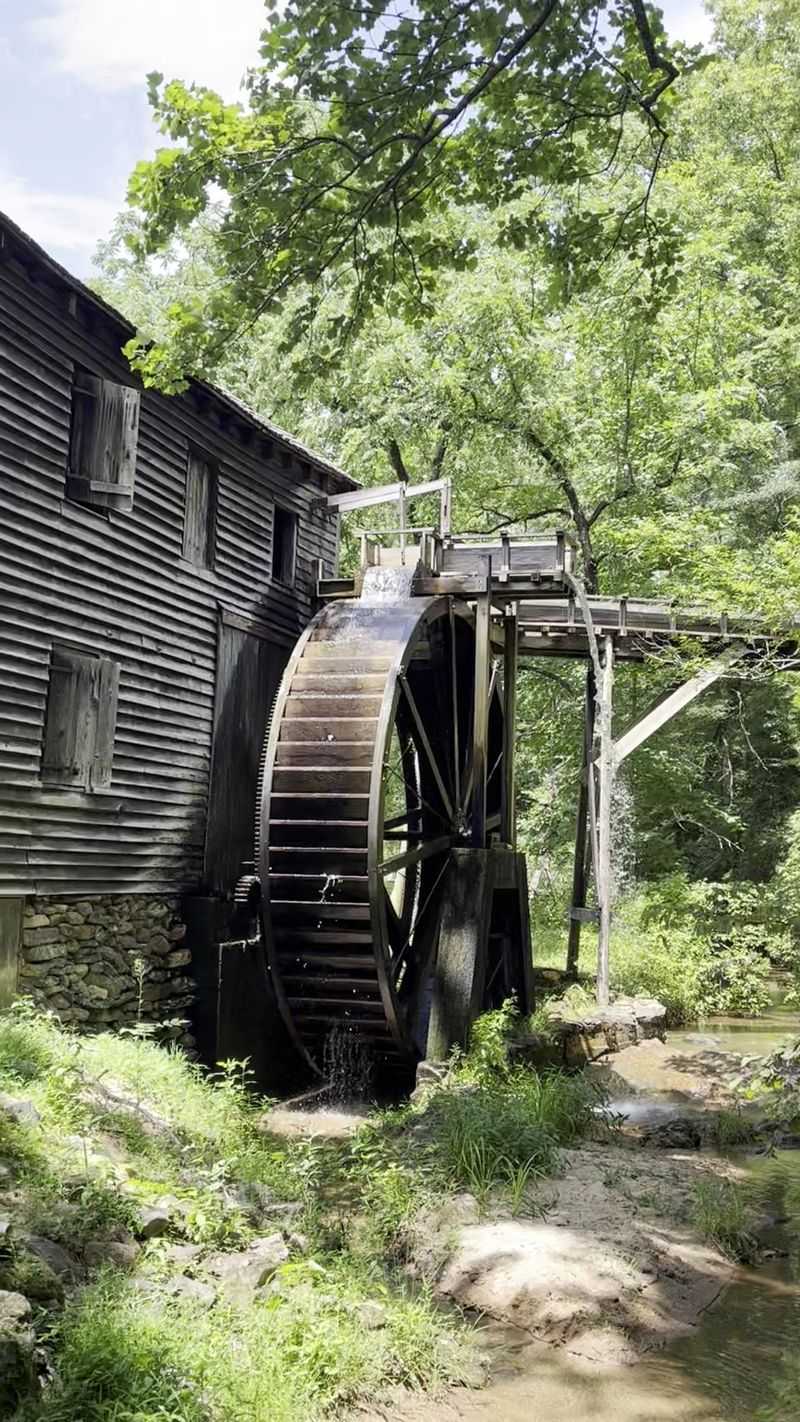
Water hits the top of the wheel, not the bottom, and that small detail is what makes this mill work. It’s called an overshot wheel, twenty feet across and four feet wide, and it can generate around twenty-two horsepower when the creek is running well.
James Hagood built the current mill in 1845, though grain was already being ground on this spot back in the 1790s. The family kept it going for more than a century, turning out grits, cornmeal, flour, and feed for animals.
What surprised me most was how loud it is. Not deafening, but alive, with wood creaking and belts slapping and water thumping in a rhythm you start to feel in your chest.
You can climb up inside and look at the whole system, the shafts, the leather belts, the big wooden gears that transfer all that creek power into spinning millstones. Seeing it laid out like that makes the whole thing click in a way no diagram ever could.
Commercial milling stopped here in 1966 after federal corn-testing rules made small operations impractical. The mechanical parts were rebuilt in the 1970s and restored again in the 1990s, but much of the original material is still in place.
Listed on the National Register in 1972, it remains one of South Carolina’s oldest working water-powered gristmills.
Ancient Carvings Hidden Under a Roof
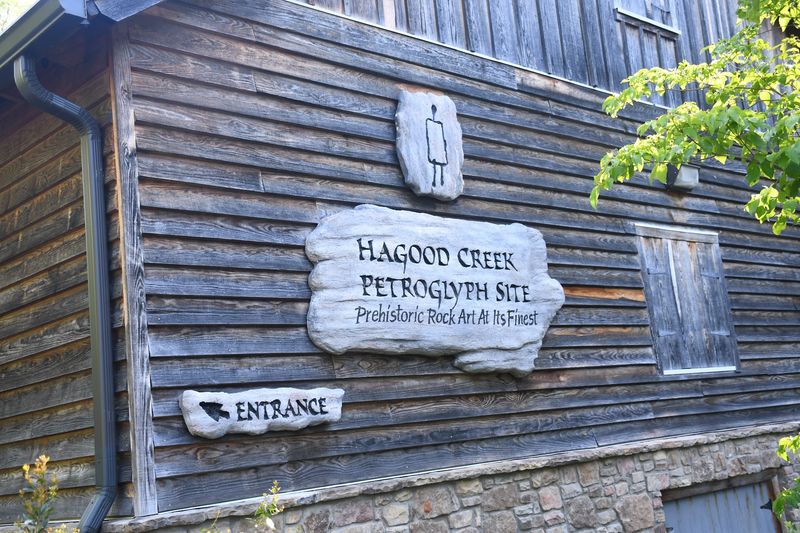
Nobody expects to find rock art in the South Carolina Upstate, which is exactly why the Hagood Creek Petroglyph Site stopped me cold. Thirty-two carvings sit on a big slab of granite, most of them simple human figures, and they’re thought to be somewhere between 1,500 and 2,000 years old.
A building was constructed right over the rock to protect it, so you walk inside, press a button, and the room takes over. Lights sweep across the stone at low angles while an audio recording explains what researchers understand about the figures and the people who made them.
The angled lighting matters more than you’d think. In flat daylight the carvings almost disappear, but when the beams rake sideways across the surface, shapes emerge one by one like someone slowly turning up a dial.
It’s the only petroglyph site in the state that the public can actually visit, which feels remarkable for a place with free admission and a gravel parking lot.
I sat through the presentation twice. The second time I noticed figures I’d completely missed, tucked near the edges where the stone dips.
Plan to arrive between Wednesday and Saturday if you want to see it, since the petroglyph building keeps the same hours as the mill interior.
Cabins That Predate Almost Everything Around Them
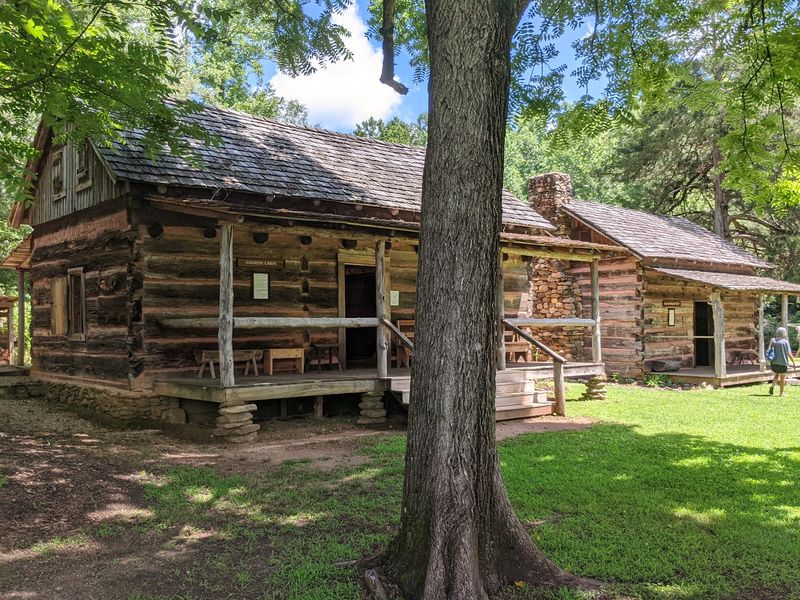
A cabin built in 1791 doesn’t look like much from across the yard. Up close, though, the Murphree-Hollingsworth Cabin becomes fascinating, with hand-hewn logs, notched corners, and a stone chimney that someone stacked by eye.
It’s one of the oldest surviving structures anywhere in this part of the state. Nearby sits the Hagood Cabin from the early 1800s, smaller and darker inside, with a low doorway that made me duck.
Inside the open cabins you’ll find spinning wheels, an old loom, cast iron cookware, and furnishings arranged to suggest how families actually lived. Nothing is behind glass, which changes the whole feeling of it.
The rooms are tight. Standing in the middle of one, you can reach almost anything, and it becomes obvious that a family of six or eight shared this space through winters with no heat beyond the hearth.
Plaques outside give the background without turning the visit into a reading assignment, so you can wander at whatever pace suits you.
If you’re visiting midweek, a few buildings may be locked, which is worth knowing ahead of time. The exteriors and signage are still accessible, and the mill and petroglyph building stay open.
Bring sturdy shoes, because the paths between structures are dirt and rock rather than pavement.
Third Saturday, When the Whole Place Wakes Up
Show up on the third Saturday of the month and the site shifts from quiet museum to working village. The mill runs, the millstones grind, and artisans set up across the grounds to demonstrate the kind of skills that used to be ordinary.
The blacksmith shop is usually the busiest stop. Iron glows orange, hammers ring against the anvil, and you can stand close enough to feel the heat coming off the forge.
Elsewhere there’s spinning and weaving, hearth cooking, butter churning, and other hands-on trades. People explain what they’re doing as they work, and the explanations tend to be generous.
Music often threads through the day too. Past events have included fiddling competitions and Native American celebrations, plus festivals built around grits and other milled products.
These Third Saturday events carry a small admission charge, unlike the rest of the year when the site is free. From what I saw, it buys you a much fuller experience.
Craft workshops and classes also run throughout the year, including blacksmithing instruction, so it’s worth checking the schedule before you plan a trip.
My honest advice: if you only get one visit, aim for a third Saturday. The difference between seeing a mill and watching one work is enormous.
Grits Ground a Few Steps From the Register
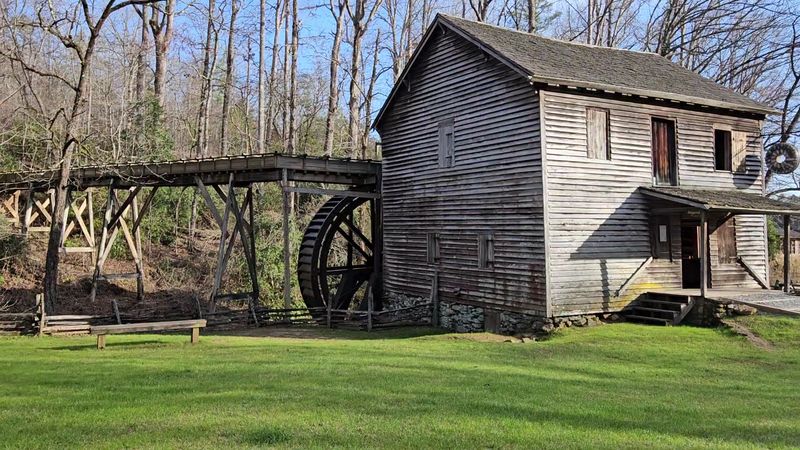
Buying grits from the shop where they were ground feels slightly unfair to every grocery store I’ve ever visited. The Hagood Mill Mercantile stocks freshly milled cornmeal and grits in yellow and white, plus wheat, rye, and oats alongside handmade crafts and heritage goods.
Those products come from the mill’s own stones, ground during operating days when the wheel turns. The bags sit on the shelves looking plain, and then you cook them and understand the difference.
I picked up white grits and a bag of oats. The grits took longer to cook than the instant kind, and the texture was noticeably coarser, more like something with actual character.
Beyond the milled goods, there are locally made crafts and small souvenirs, the sort of things that don’t feel mass produced. It’s a compact space, easy to browse in fifteen minutes.
The staff inside are a resource in their own right. During my visit someone happily explained how the millstones are dressed and why the grind size matters, information I never would have thought to ask for.
Shop hours run Wednesday through Saturday, ten to four, matching the mill interior and petroglyph building.
Pack a cooler if you’re driving far, and grab more than one bag. You’ll want it.
Trails, Creek Sounds, and a Bridge With a Past
Behind the historic buildings the grounds keep going, spreading across roughly fifty acres of woods, creek bank, and open field. A Historic Trail Loop and a Creekside Trail wind through the property, and one of the loops runs about three quarters of a mile.
The walking is easy and shaded for most of it. Hagood Branch stays close by, chattering over rocks, and the mill sound fades in and out as the path bends.
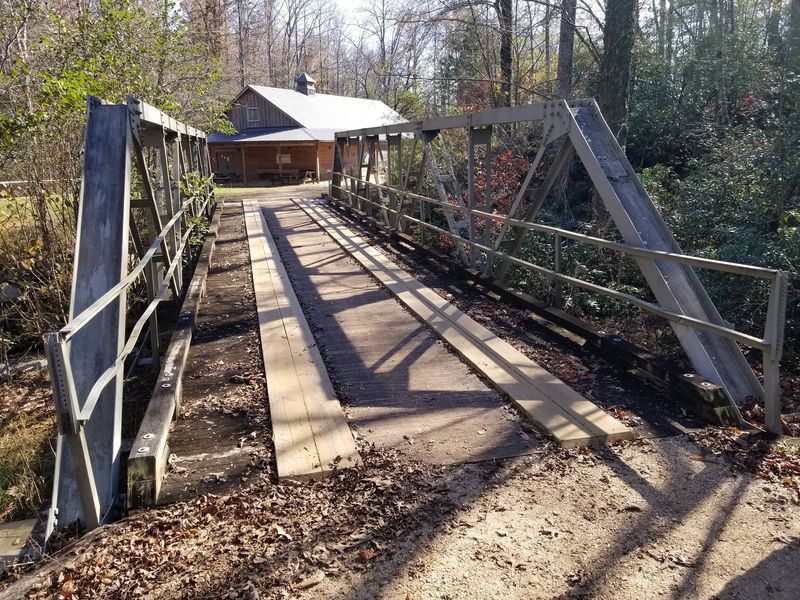
Prater’s Creek Bridge caught my attention more than I expected. It’s a sixty-four foot steel span built in 1930, relocated here in 2007, and it looks wonderfully out of time sitting among cabins from the 1790s.
Picnic tables are scattered under trees, and the grounds, outdoor exhibits, trails, and picnic areas stay open daily even when the buildings are closed.
Primitive campsites sit across the road from the historic area, tucked along the creek, which means you can fall asleep to running water and wake up a two minute walk from an 1845 gristmill.
Bug spray is a genuinely good idea in warmer months, and so is water, since shade only helps so much in a Carolina summer.
Dogs are welcome on the grounds, which makes it an easy stop for road trippers.
Disc Golf, Barn Exhibits, and the Odds and Ends
Not everything here is from the 1800s, and the eighteen-hole disc golf course proves it. Baskets are laid out across the wooded acreage, which makes for a genuinely odd and wonderful combination of history and frisbee.
Families seem to split up naturally. Some head for the course while others linger at the mill, then everyone reconvenes at the picnic tables.
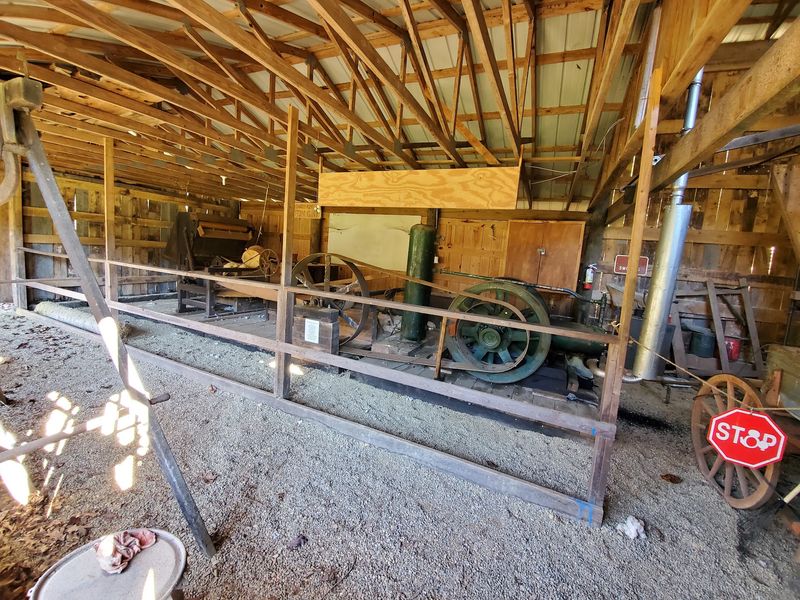
The traditional barn holds a family farm exhibit and an agriculture museum, packed with tools and equipment that explain how land around Pickens was actually worked. A cotton gin sits nearby, showing how fibers were pulled away from seeds before machines took over the job.
There’s also a preserved still on display, included because distilling was once part of the local economy, presented purely as history.
Restrooms are clean and there’s handicap access, small things that matter when you’re out for a few hours with kids or older relatives.
Free parking, free admission most days, and a layout you can tour at your own speed make this one of the easier historic stops in the Upstate. I’d budget two to three hours minimum.
The mill interior, petroglyph building, and shop run Wednesday through Saturday, ten to four.
Address: 138 Hagood Mill Rd, Pickens, SC 29671
