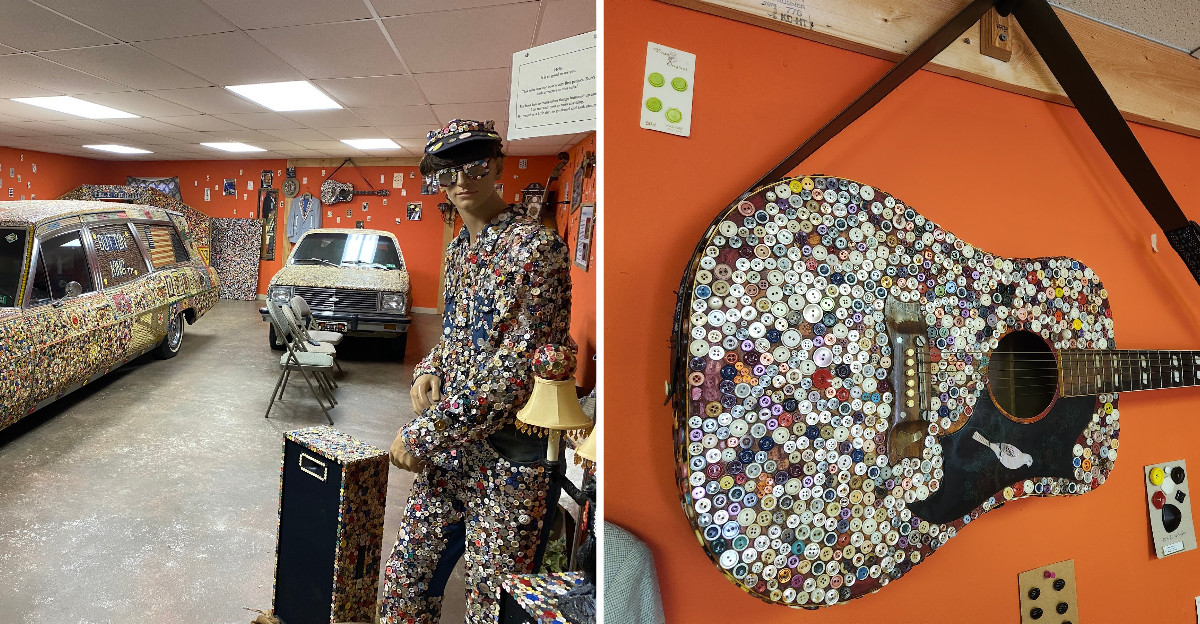
Buttons cover a suit, a guitar, a bathtub, and even a hearse, hundreds of thousands of them glued and stitched over every surface. A small roadside sign pulled the car off its route and straight into one of the strangest, sweetest places in South Carolina.
Somewhere down a quiet country road near Bishopville, a metal building holds the work of one man’s hands. The story of the Button King had been heard before, but seeing his work up close hit differently, because every single button was placed during nights he could not sleep.
The result is part folk art, part obsession, and part quiet magic. Walking back to the car with a grin, it felt like being let in on a very good secret.
Places like this do not advertise loudly. They just wait for the curious to pull over.
The Sleepless Nights That Started Everything
Insomnia is usually a problem people try to fix. Dalton Stevens turned his into an art career.
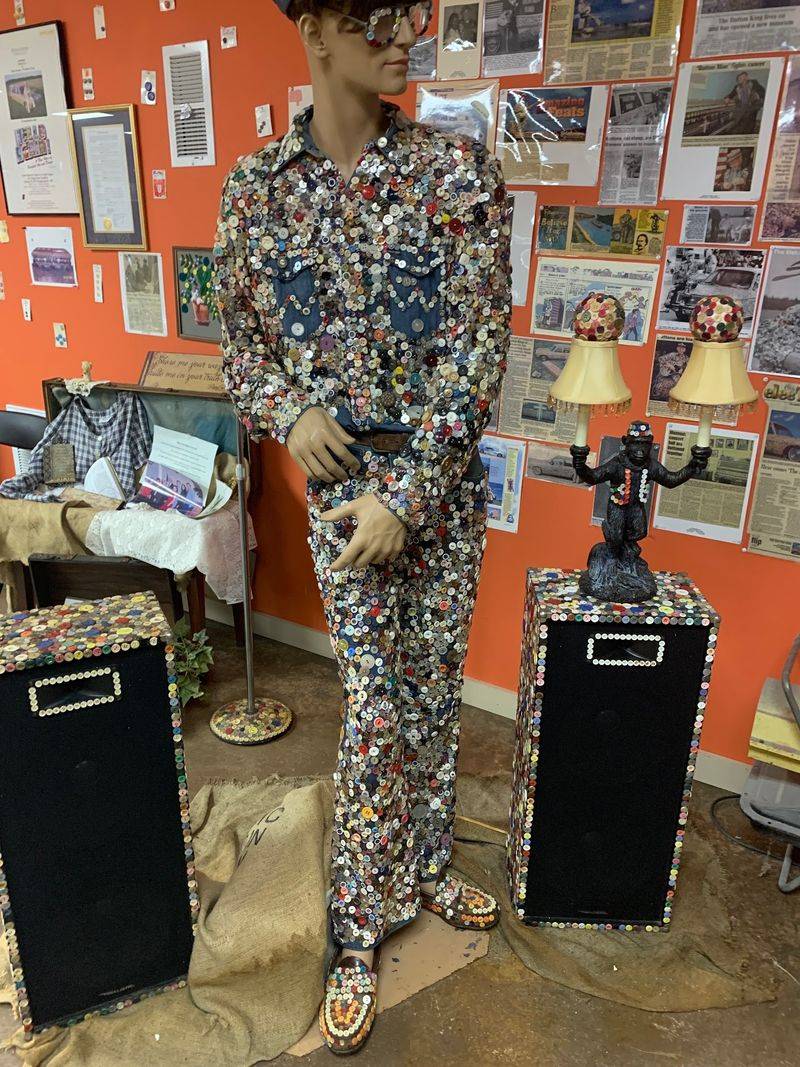
For years he went long stretches without sleep, sometimes days at a time, and by 1983 the restlessness had reached a point where he needed something, anything, to occupy his hands through the dark hours. So he picked up a needle, thread, and a denim suit, and he started sewing buttons onto it.
That first suit ended up holding 16,333 buttons. It took two years and ten months to finish, and it gained about 16 pounds in the process.
Seeing it in person, I kept thinking about the math of it. Thousands of individual stitches, each one a tiny decision about color and spacing, made mostly between midnight and sunrise while the rest of Lee County slept.
What struck me was how ordinary the starting point was. No art school, no grand plan, just a man with too many waking hours and a jar of buttons.
The suit hangs in the museum now, and it looks less like clothing and more like armor made of small round mirrors. If you ever needed proof that a frustrating habit can turn into something worth keeping, this is it, stitched one button at a time.
Finding the Metal Building Down Joe Dority Road
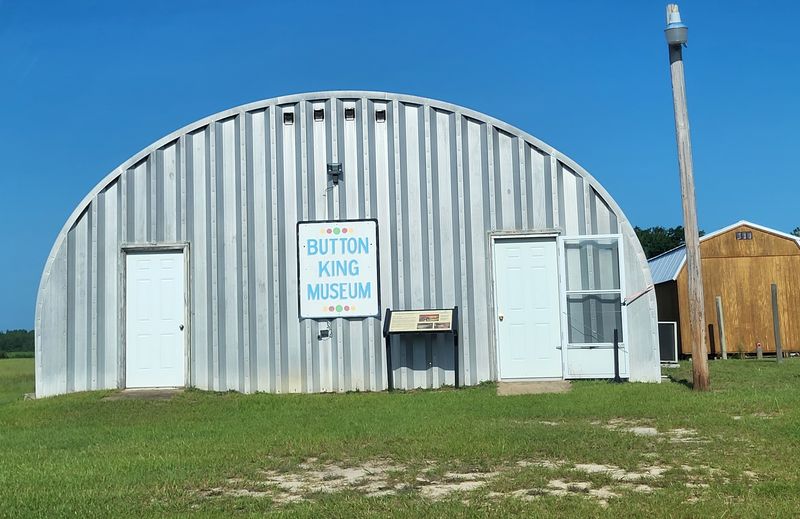
My GPS did not prepare me for how quiet the approach would be. South Carolina fields, pines, a scattering of houses, then a plain metal hangar sitting there like a storage shed nobody bothered to decorate.
The building went up in 2008, built by Stevens’ children to hold a collection that had outgrown every other space available.
From the outside it gives away almost nothing, which honestly makes the inside land harder. I pulled the door open, flipped on the lights, and the whole room started to glitter.
Bishopville itself is a small town, the kind where you can drive the main stretch in a few minutes, and that makes the museum feel even more like a discovery rather than an attraction.
The doors stay unlocked most of the time, and the listed hours read as round the clock. A quick phone call before you go is smart, though, since access can vary depending on the day and whether someone is around to show you through.
Parking is simple, right there on the property. No ticket booth, no gift shop line, no crowd control.
Just a metal door, a light switch, and a room that changes your mood within about four seconds of entering.
Guitars, Banjos and Shoes That Shimmer
My favorite pieces were not the big ones. They were the small, fussy, obsessive ones.
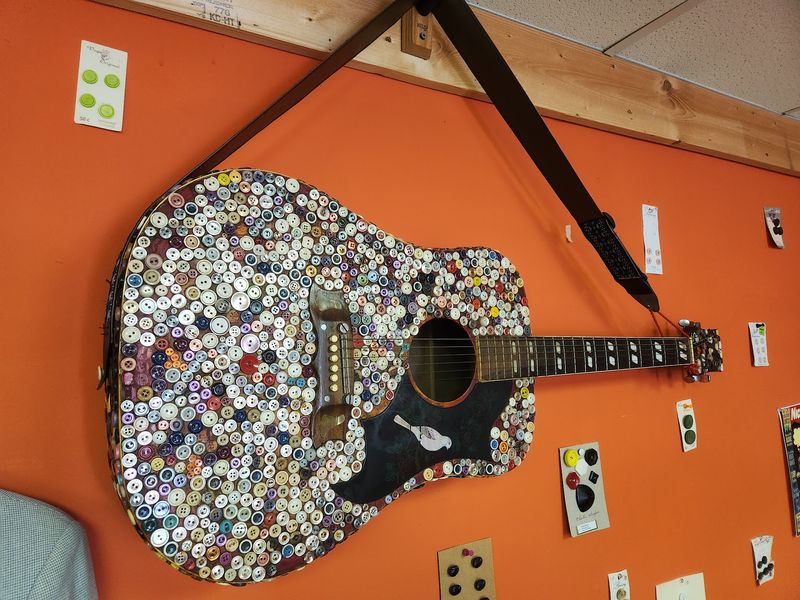
A guitar sits under layers of buttons, 3,005 of them by count, arranged closely enough that the instrument’s shape almost disappears. A banjo nearby got the same treatment, its round body turned into a mosaic.
Then there are the shoes. His first pair carried 517 buttons, which sounds modest until you picture curving rows of them around a toe and a heel without leaving gaps.
Standing close, I noticed something the photos never show. The buttons are not random.
There are patterns inside patterns, repeated rings and color runs that only reveal themselves when you lean in.
Sewing machines, grandfather clocks, and other household oddities got the same coating, each one silently documenting another stretch of hours he could not sleep through.
The museum lets you get close to a lot of it, and touching many of the pieces is part of the experience. Running a hand across a buttoned surface feels like pebbles, cool and uneven.
If you bring kids, this is where they will slow down and start counting. Adults do the same thing, just more quietly and with a lot more disbelief.
A Hearse and a Chevette, Buttoned Bumper to Bumper
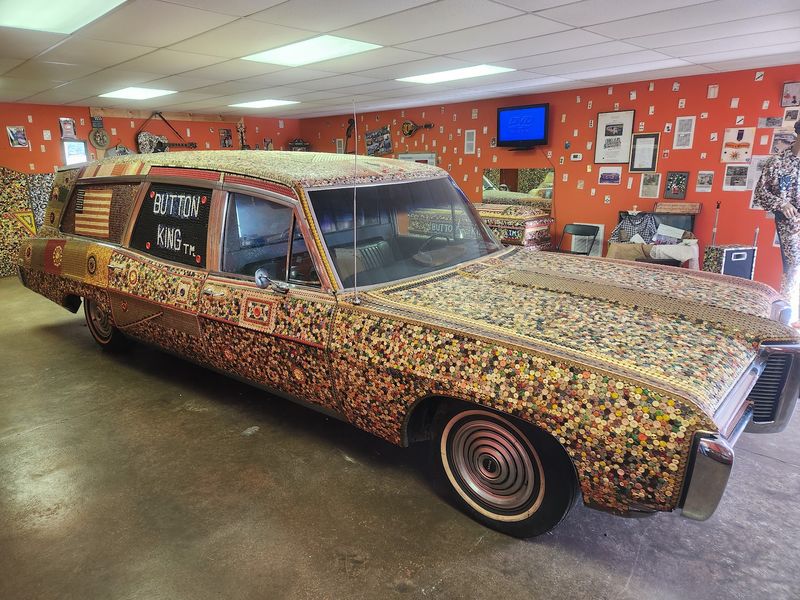
Nothing in the building makes you laugh out loud quite like the vehicles.
A full-size hearse sits there covered in buttons, roof to fender, and the effect is somewhere between solemn and gloriously ridiculous. I walked a full lap around it twice.
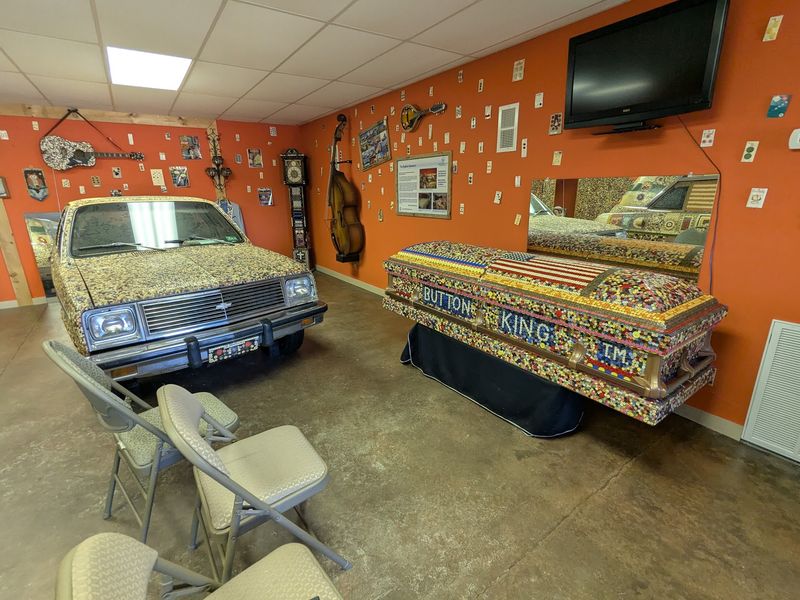
Next to the story of the hearse is a 1983 Chevrolet Chevette, a modest little car given roughly 150,000 buttons. That number stops being abstract when you are standing beside the door panel trying to find bare paint.
Cars are supposed to be smooth and aerodynamic. These are textured, bumpy, and kind of soft looking, which scrambles your brain a little.
The household fixtures push the joke further. A toilet, a bathtub, and a sink all got the button treatment, and yes, the toilet is usually the first thing visitors photograph.
There is something wonderfully stubborn about all of it. He clearly reached a point where the question stopped being what should I cover and became what have I not covered yet.
I have seen plenty of roadside attractions that lean on gimmick alone. This one earns its strangeness through labor, because you can see the hours sitting right there on every surface.
Two Coffins, 600,000 Buttons Each
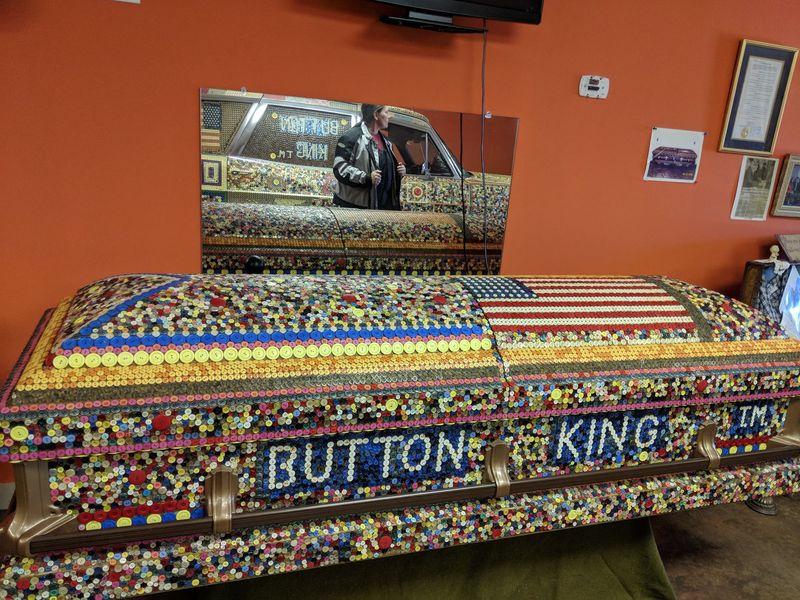
Some exhibits are fun. This one made the room go quiet.
Stevens covered two coffins in buttons, and each one carries about 600,000 of them. Sit with that figure for a second, because it is more buttons than most people will handle in a lifetime.
One coffin was made for his own use, which he was entirely open about. He intended to be buried in the work that defined the last decades of his life.
The other remains on display in the museum, and it is genuinely beautiful up close. Pale, pearly, dense, more like a beaded surface than a box.
I did not expect to feel anything tender in a room full of buttoned toilets and guitars, but this stopped me. There is a plainspoken honesty in an artist deciding his final resting place should be another canvas.
It also reframes everything else in the building. The suits and the cars stop looking like jokes and start looking like a lifelong project with a clear beginning and a deliberate end.
Visitors tend to linger here longer than anywhere else. That says something about how a simple idea, carried far enough, becomes moving rather than merely odd.
World Records and Late Night Television
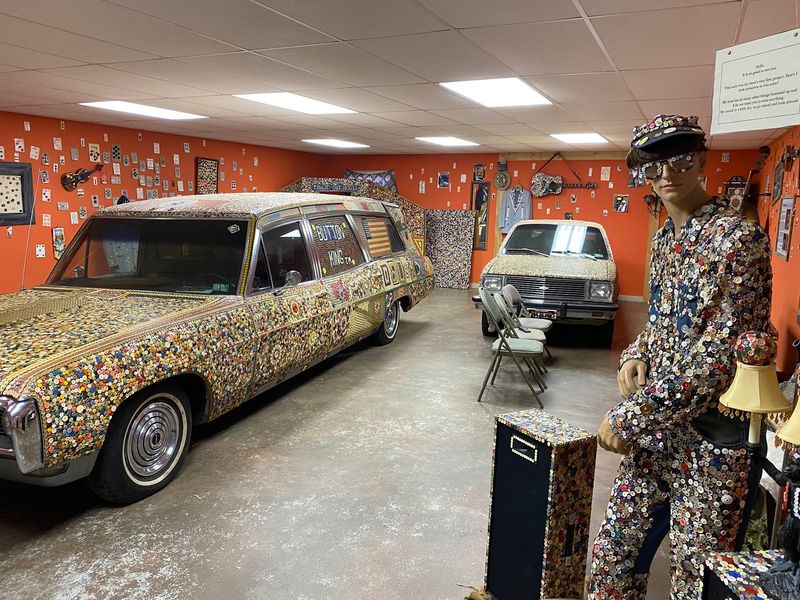
Between the button covered objects, the walls tell a different story. Framed clippings, photos, and bits of Americana document how far this Bishopville hobby traveled.
His collection earned a spot in the Guinness Book of World Records for the world’s largest button collection, passing the one million mark.
That recognition opened doors nobody would have predicted for a man whose art began as a way to survive sleepless nights. He appeared on national television, carrying his suits and instruments with him.
Johnny Carson, David Letterman, and Kathie Lee Gifford all hosted him. Watching the clips and reading the wall material, you get a sense of why producers kept booking him, since he came across as warm, funny, and completely unbothered by how unusual his work sounded.
He also had a song, and several visitors mention it sticking in their heads for hours afterward. Mine included, for what it is worth.
What I liked about this part of the museum is the lack of bragging. The clippings are just pinned up among the art, no fancy cases or spotlights.
A small building in a small town somehow became a stop on the national curiosity circuit, and the evidence is right there on the wall.
The Legacy Kept Alive by His Son
Dalton Stevens died on November 21, 2016, at age 86, and the museum kept right on welcoming people.
His son, J.D. Stevens, lives on the property and looks after the place.
Many visitors mention him coming over to greet them, switching on a short video, and sharing stories about his father’s adventures as the Button King.
Admission is free, though donations are gladly accepted and go toward keeping the lights on. Bringing a little cash feels like the right thing to do.
Here is a detail I keep thinking about. Stevens was color-blind, yet his pieces are full of harmonized, confident color choices, which suggests an instinct that had nothing to do with seeing the spectrum the way most of us do.
Plan on thirty to forty-five minutes, more if someone is around to talk. Calling ahead is worth it, since tours depend on availability and access can shift day to day.
While you are in the area, Pearl Fryar’s Topiary Garden sits just five or six miles away and pairs perfectly with this stop.
Out of all the quirky detours I have taken, this small metal building stuck with me the longest.
Address: 53 Joe Dority Road, Bishopville, South Carolina
