Brick buildings usually do not give me goosebumps, but one in South Carolina did exactly that. Long before it held dinosaurs and telescopes, this place was a cotton mill that made history.
On April 15, 1894, workers switched on electric power and the entire mill ran without water wheels or steam engines turning the machines. No textile mill anywhere in the world had done that before.
The brick walls still stand, the windows still let in light, and the floors still creak underfoot. Walking through the exhibits, it is easy to forget that this was once a place of roaring machinery and thousands of spindles.
Today the old mill is a museum, and the building itself is the biggest artifact in the collection. I spent a whole afternoon there, and I still keep thinking about that one switch.
The Day the Machines Hummed to Life
History books love big battles, but I have a soft spot for quiet turning points. April 15, 1894 was one of those days in Columbia.
The Columbia Duck Mill started running completely on electric power, and the world of factories changed a little that morning.
Before then, most mills used belts and shafts connected to water wheels or steam engines. Power had to travel through a messy web of leather and metal.
Electricity offered something cleaner, and this mill proved it could actually work at full scale.
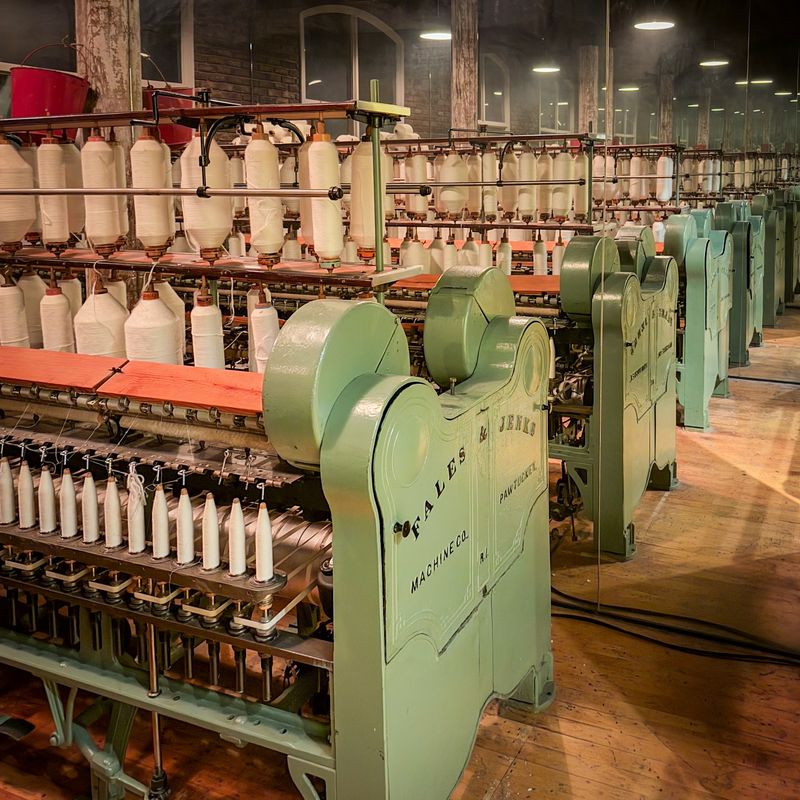
By the end of 1894, the mill was in full operation. It turned out heavy cotton duck, a tough canvas used for things like sails, tents, and work gear.
I like picturing bolts of that sturdy fabric rolling out of a building powered by something brand new.
Standing inside the museum lobby now, you can almost sense that old energy. The brick walls have seen a lot.
If you visit, take a minute before heading to the exhibits and simply look up and around, because this room is the starting point of the whole story.
Small moments can change big things, and this mill is solid proof of that idea.
A Canal Plan That Took a Surprise Turn
Plans rarely go exactly as expected, and the folks behind Columbia Mills learned that firsthand. In 1893, the Columbia Mills Company picked a spot on the Columbia Canal at Gervais Street.
Water power from the canal seemed like the obvious choice.
Construction began on April 18, 1893. Then trouble showed up, because getting enough power straight from the water turned out to be harder than anyone hoped.
So the owners got creative. They started looking at other options, and electricity rose to the top of the list.
Engineers could use the canal’s water to make electric power, then send it into the mill through wires instead of clunky mechanical connections.
I find this part of the tale oddly comforting. Sometimes a problem pushes people toward an idea that ends up being far better than the first plan.
That shift is the reason Columbia earned its spot in world history.
After your museum visit, walk over toward the canal area and look at the water for a bit. It’s peaceful now, but it once powered a big leap forward.
Knowing that makes an ordinary stroll feel like a little history lesson outdoors.
Generators Hanging From the Ceiling
Here’s a fun fact that made me laugh out loud: the mill’s electric generators were hung from the ceiling. There simply wasn’t enough floor space on the ground level, so the builders went up instead of out.
Talk about thinking outside the box.
The engineers and architects were Lockwood, Greene & Co. of Boston. They had to solve brand new puzzles, since nobody had built a mill quite like this before.
Putting heavy machines overhead was a bold move, and it worked.
The project also became the first major industrial installation for General Electric. That company would later grow into a giant name, but back then, this Columbia mill was a big test.
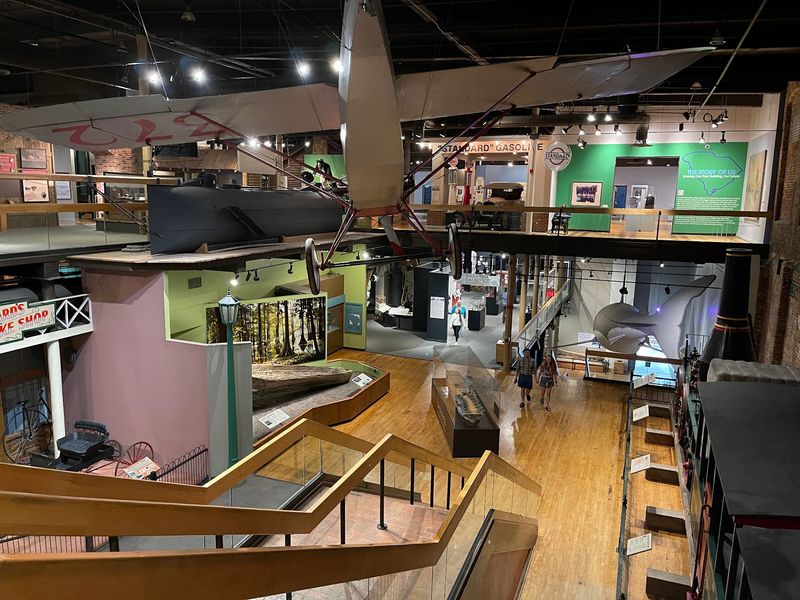
I spent a while tilting my head back in the lobby, trying to imagine those machines up there. The exposed ceilings make it easier to picture.
Kids especially seem to enjoy this detail, because it sounds like something from a cartoon.
My tip for families is simple. Share this story before you go inside, then let everyone guess where the generators might have hung.
It turns a quick look at the rafters into a small treasure hunt and gets young visitors curious about engineering right away.
From Cotton Duck to Museum Doors

Nearly a century of work happened inside these walls. The mill kept running for decades, long after its famous first switch.
When the machines finally stopped, the building found a second life that I think is even more charming.
On October 29, 1988, the South Carolina State Museum opened its doors right here. Instead of tearing down the old mill, the state gave it a fresh purpose.
Few museums can say the building itself is the star.
The mill was added to the National Register of Historic Places in 1982. It’s officially treated as the museum’s largest artifact, which I find delightful.
You’re basically exploring inside an exhibit the whole time.
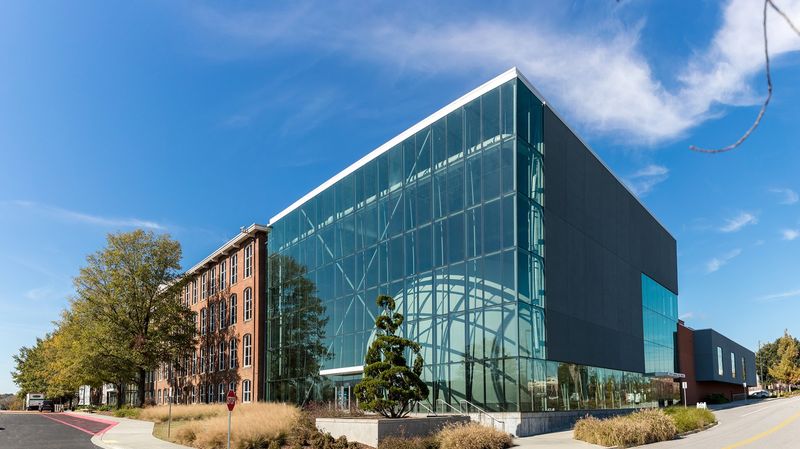
From the outside, the long brick structure looks sturdy and calm. Inside, the lobby keeps that factory feeling with exposed brick and open ceilings.
The mix of old bones and new displays works really well.
Before you head off to the exhibits, snap a photo of the exterior from across the street. The size is easier to appreciate from a distance.
Then compare it with the lobby view once you’re inside, and you’ll get a real sense of how much space the mill workers once filled.
Four Floors of Wonder Inside the Old Mill
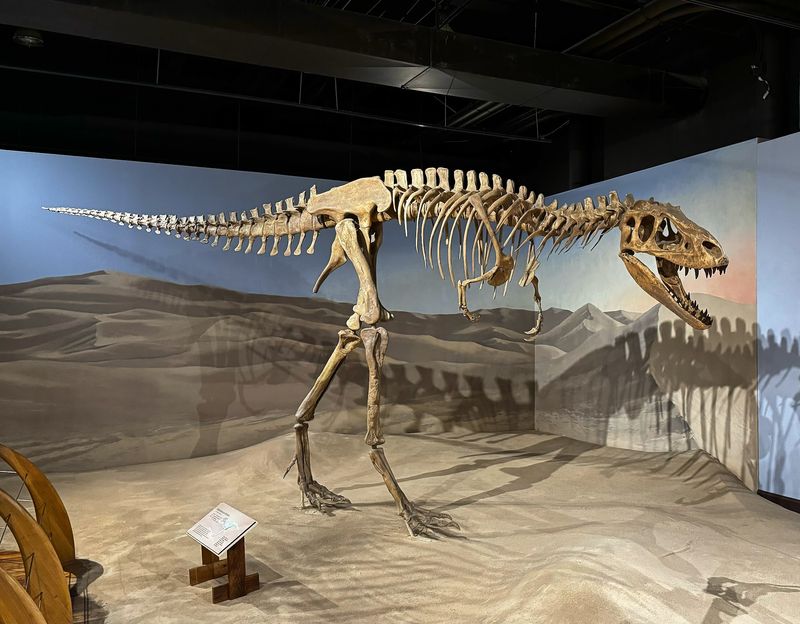
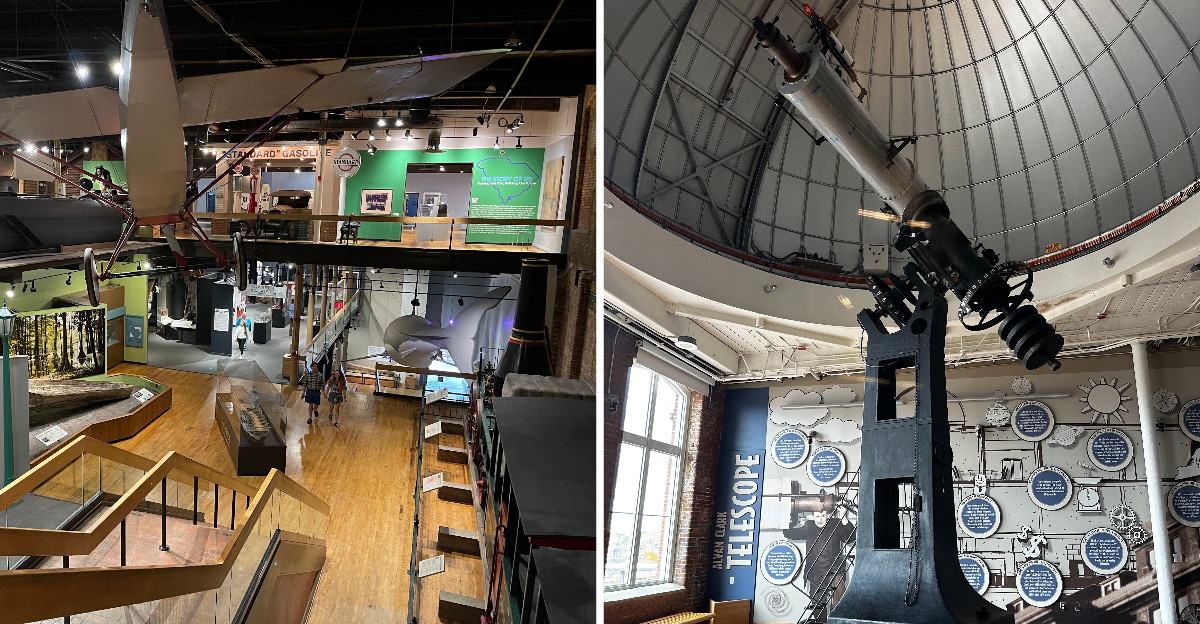
My feet were tired by the end, and honestly, that’s a compliment. The museum spreads across four floors covering art, history, natural history, and science and technology.
Every level feels like a different chapter.
Natural history brings fossils and creatures from the state’s deep past, including dinosaurs that kids tend to love. History sections walk through South Carolina’s story across many eras.
The science areas lean hands-on, with interactive pieces that invite you to touch, test, and play.
The art galleries are smaller, but they offer a quieter pause between the busier spaces. I appreciated that change of pace.
Here’s some practical advice. Plan for at least two or three hours, and more if you want to catch shows.
Some visitors like starting on the top floor and working their way down, which keeps the route easy to follow. Grabbing a free map at the start also helps, since the paths can twist a bit.
I loved knowing that all of this sits inside the same rooms where cotton duck was once woven. Science exhibits about energy hit a little differently when the building itself made electrical history.
It’s a neat connection worth pointing out to anyone you bring along.
Stars, Domes, and a Theater That Moves
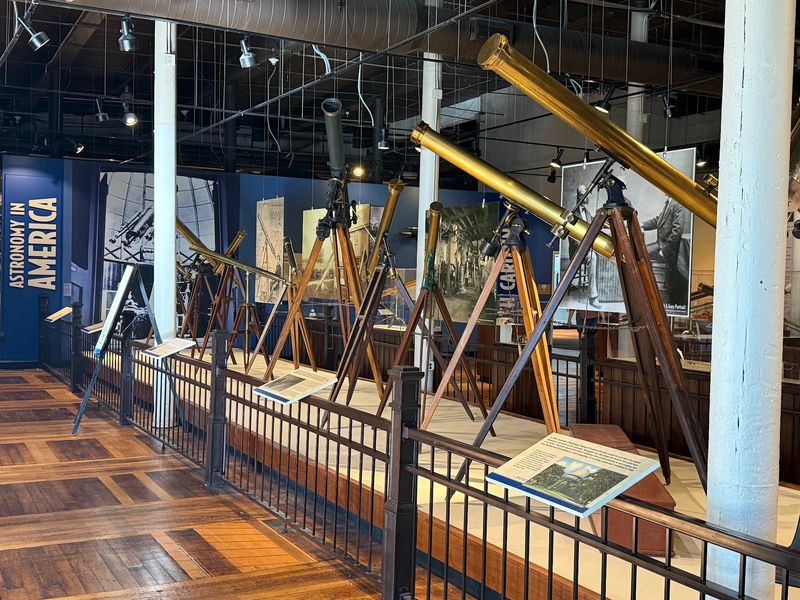
Leaning back under a sky full of stars in an old cotton mill is a strange and wonderful feeling. The museum has a digital dome planetarium that wraps the whole ceiling in space scenes.
It quickly became my favorite part of the day.
Shows rotate, so the options change. The dome makes galaxies and glowing skies feel close enough to touch.
Pick a time slot when you arrive, because seats fill up for popular showings.
Then there’s the 4D interactive theater. These films are short and playful, adding movement and effects that make you feel part of the action.
Younger visitors usually come out grinning, and plenty of grown-ups do too.
One small tip from my visit: a planetarium show is very relaxing. If you get sleepy easily in dark, cozy rooms, catch it earlier in the day while your energy is high.
I couldn’t help thinking about those 1894 workers here. They watched electricity run looms for the first time.
Now that same building uses powerful technology to project entire universes overhead, which feels like a sweet way for the story to come full circle.
A Century-Old Telescope Waiting Up Top
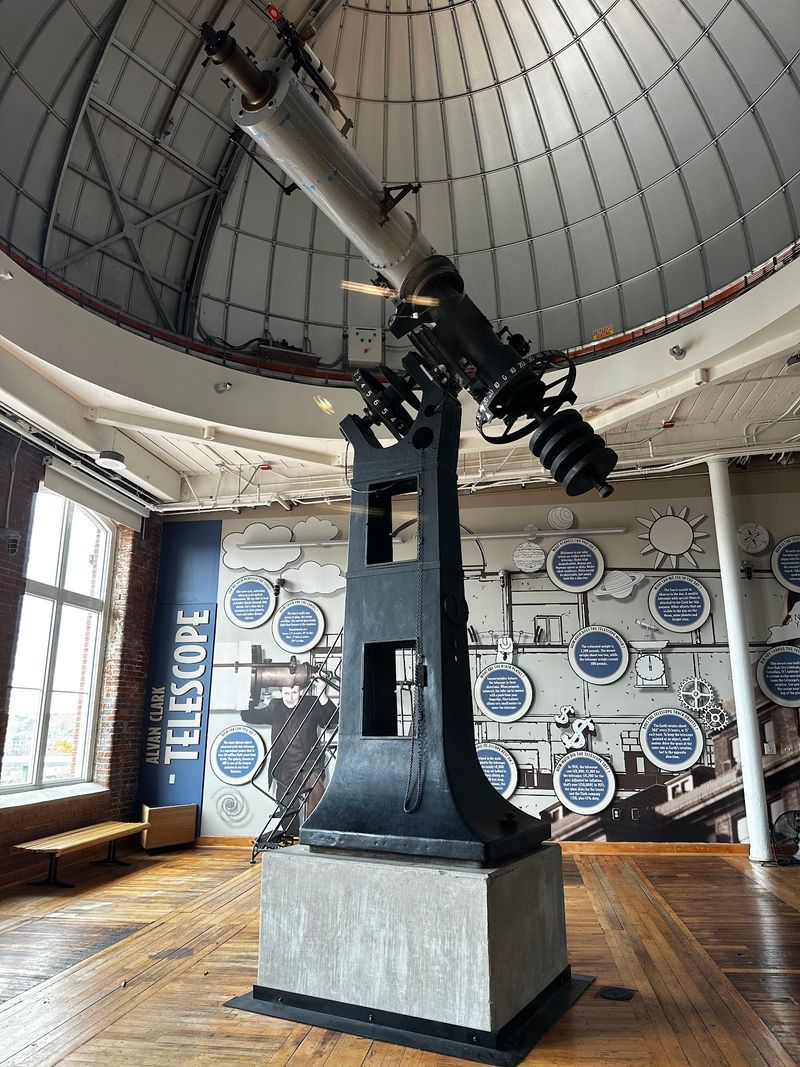
Old telescopes have a kind of magic that new gadgets can’t copy. The Boeing Observatory at the museum houses a historic 1926 Alvan Clark telescope.
Seeing it in person made me feel connected to every curious sky-watcher who came before me.
Alvan Clark telescopes are famous among astronomy fans for their fine craftsmanship. This one has been pointing upward for about a century.
Staff often guide visitors through what they’re looking at, which makes it easy for beginners.
On some daytime visits, guests get to safely view the sun through special equipment. That’s a treat most people never experience.
Ask at the front desk about observatory times, since availability can change.
When you’re done, the museum sits at 301 Gervais Street, close to the canal where this whole tale began. The EdVenture children’s museum is right next door if you have little ones with leftover energy.
Hours run Tuesday through Saturday from 10 AM to 5 PM and Sunday from noon to 5 PM, with Mondays closed.
I left looking up at the sky and back at the brick walls. Both held stories worth chasing.
Address: 301 Gervais Street, Columbia, South Carolina 29201
