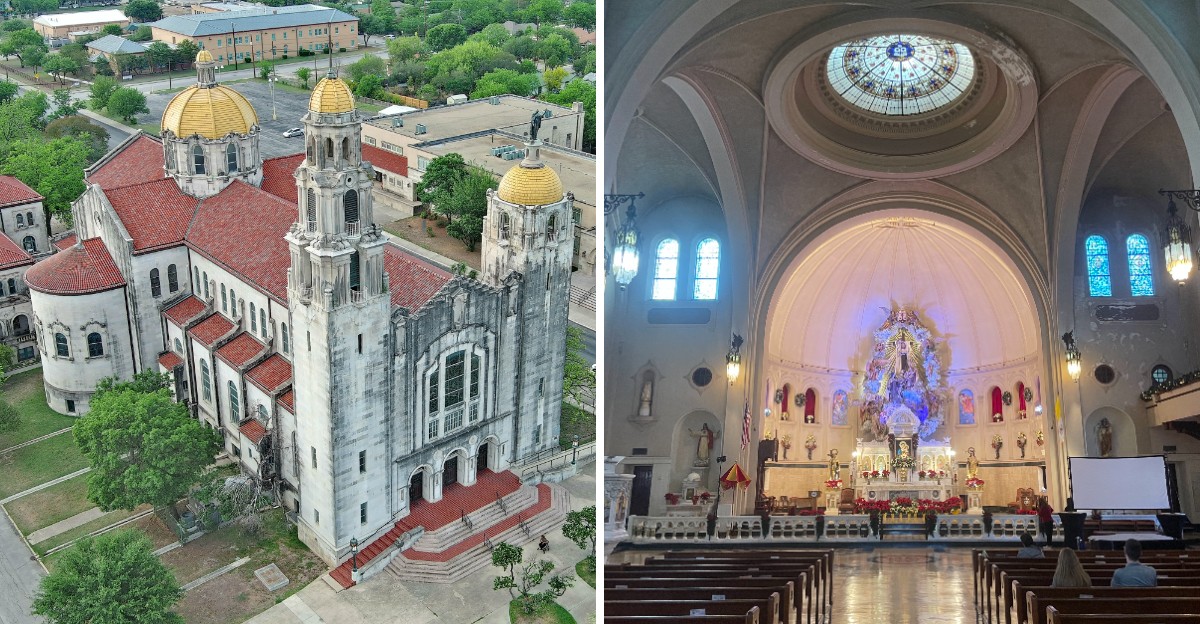
Some buildings carry a sense of calm the moment you step inside, and this Texas basilica has been offering that feeling to visitors for generations, drawing people year round regardless of their faith or background.
The architecture is striking without being showy, with details that reward a slower look, and the quiet inside creates a natural pause from whatever was occupying your mind before you walked through the doors.
Visitors come to admire the craftsmanship, to sit in the stillness, or to simply take a break from the noise of everyday life, and the basilica welcomes all of them with the same open spirit.
It is the kind of place that does not demand anything from you except a little respect and a willingness to slow down for a few minutes.
Whether you are religious, curious, or just in need of a quiet moment, this Texas landmark is worth a visit. Step inside, take a seat, and let the peace do its work.
Faith That Grew During the Great Depression
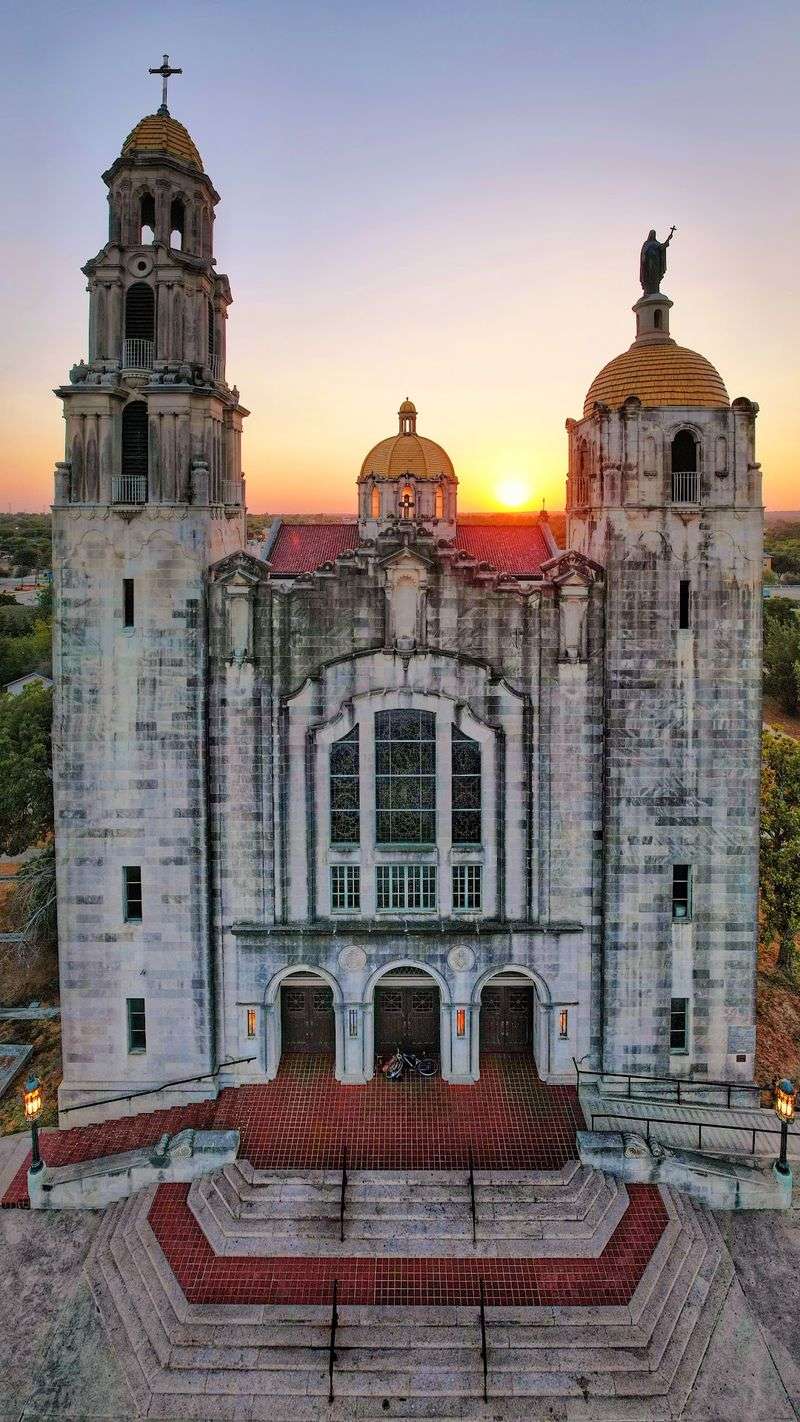
Timing is everything, and this basilica had some truly rough timing. Its cornerstone was laid on October 15, 1929, only days before the stock market crash that started the Great Depression.
Most building projects stalled during those years. This one kept going.
Donors from across the United States sent what they could, even when they had very little to give.
The story actually starts a few years earlier. In 1926, a group of Discalced Carmelite friars arrived in San Antonio after escaping religious persecution during the Mexican Revolution.
They came with a big dream, which was to build a national shrine for St. Thérèse of Lisieux, a French nun who had been named a saint in 1925.
That dream became real on September 27, 1931, when the church was completed and consecrated. It was the very first National Shrine in the United States dedicated to St. Thérèse.
Pretty impressive for a project built while the whole country was struggling.
Take a slow look at the walls inside. Marble plaques carry the names of donors who helped fund the building during those hard years, and reading a few of them adds real meaning to a visit.
Knowing this background changes how the place feels. It stops being just a pretty building.
Instead, it becomes a reminder that ordinary people, giving small amounts with big hearts, can create something lasting. That idea fits the saint it honors perfectly, as later sections will show.
Golden Domes You Can Spot From the Highway
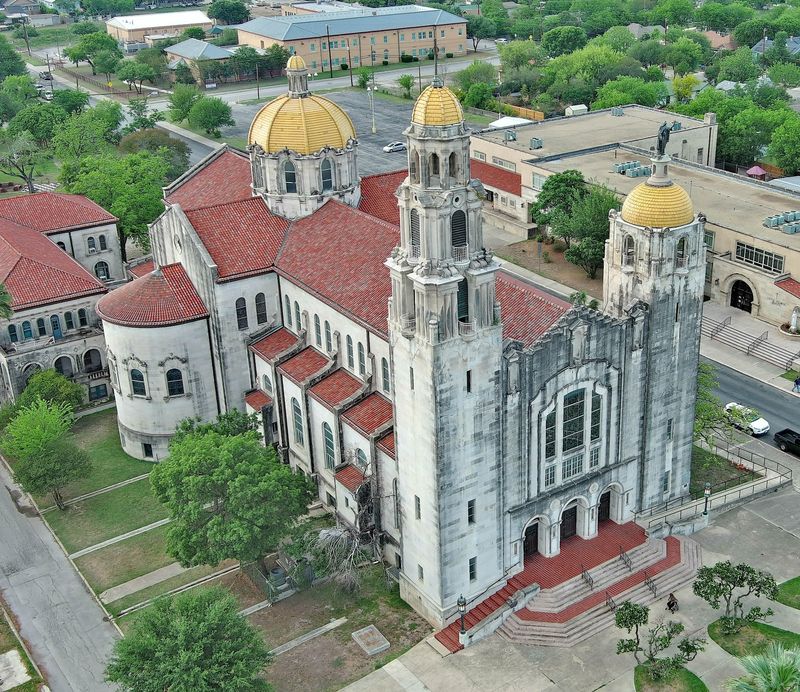
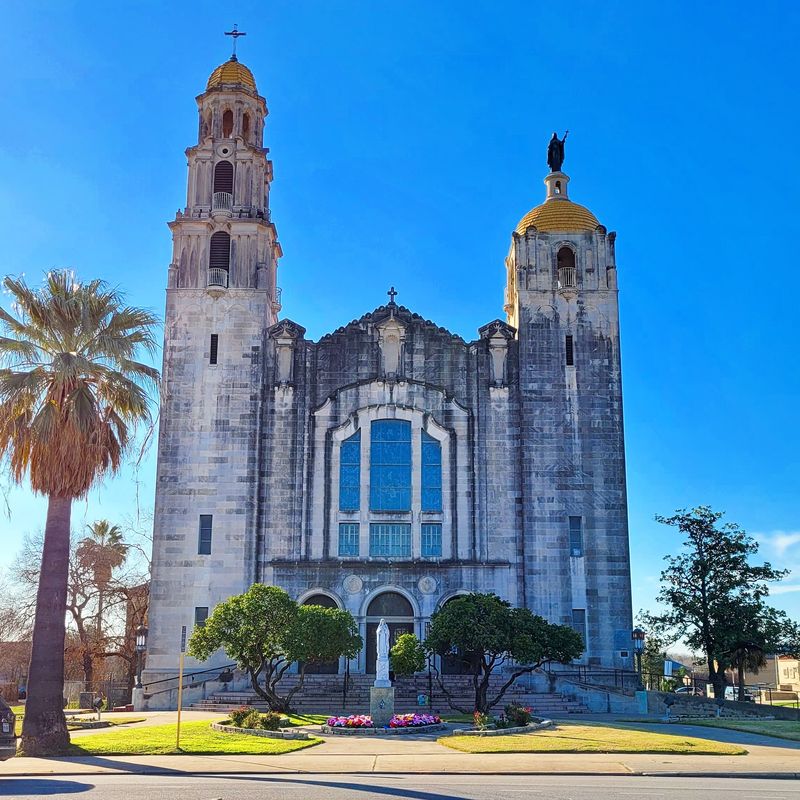
Those domes are hard to miss. Three of them glow gold above the neighborhood, and they shine clearly to drivers on Interstate 10.
The architect behind the design was Charles L. Monnot from Oklahoma City.
He chose the Beaux-Arts style, a grand and detailed look that was popular in the United States until the early 1930s. Two domes top the towers beside the main entrance, while the third sits above the transept, which is the cross-shaped part of the church.
Here is a fun detail. The two towers are not the same height, and that is on purpose.
The south tower is a 118-foot bell tower topped with a wrought-iron Roman cross, and it holds bells that were cast in Germany.
The north tower stands 96 feet high. Perched on top is a seven-foot bronze statue of St. Thérèse, sculpted by San Antonio artist Louis Rodriguez and cast in Italy.
Bring binoculars or a phone with good zoom for this one.
Look closely at the limestone above the main doors too. Carved shields of the Discalced Carmelite Order sit there, and the same shield appears on the cornerstone.
For the best photos, try the soft light of early morning or late afternoon. The gold catches the sun beautifully at those hours.
A quick walk around the building from different angles also helps, since the uneven towers look a little different from every side.
Roses Hidden Everywhere You Look
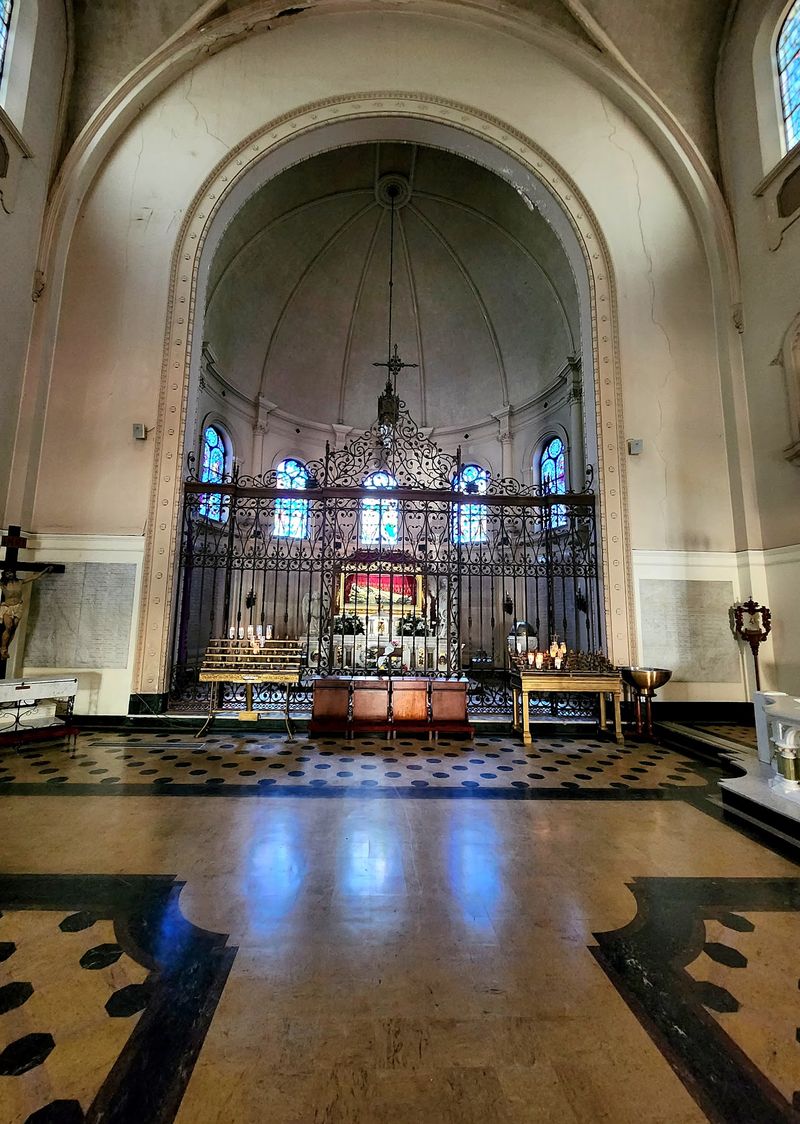
Consider it a treasure hunt for grown-ups. Roses are the symbol of St. Thérèse, and the designers hidden them into nearly every surface of the basilica.
Start with the floor. Rose patterns appear in the tile underfoot, so it pays to glance down now and then.
After that, check the stone carvings and the wrought iron details, where more roses curl along the edges.
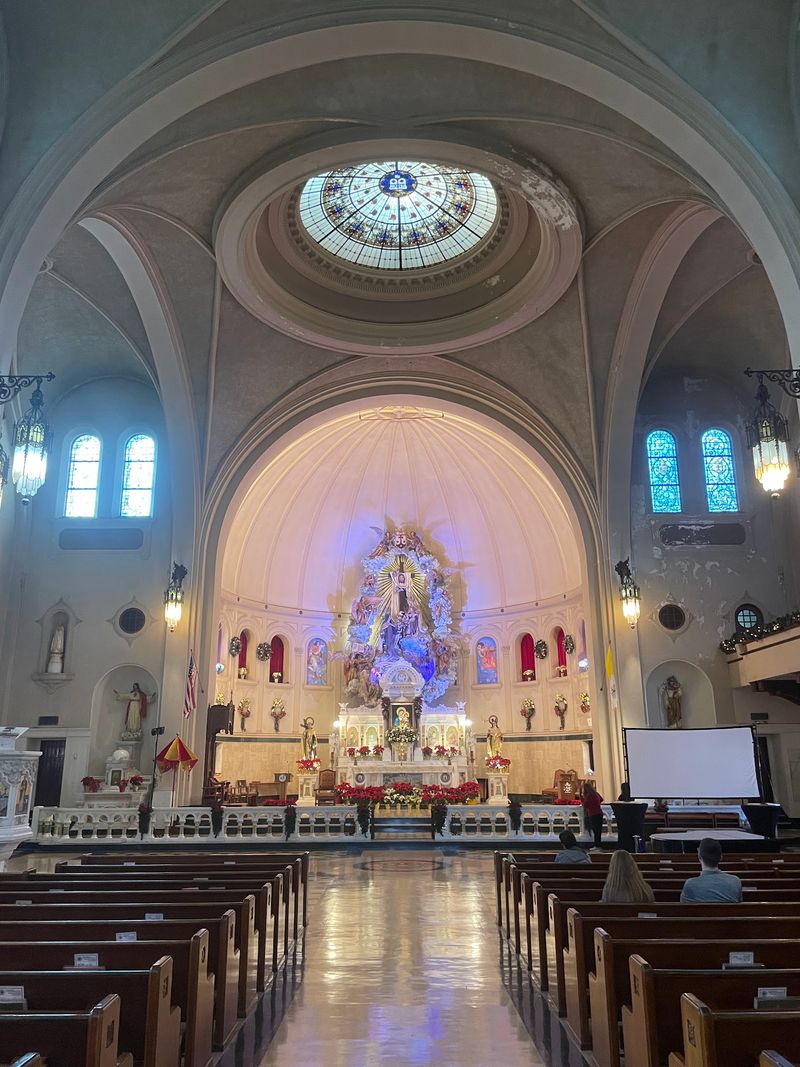
The cast brass light fixtures carry the theme as well. So does the leaded glass of the dome window high above.
Once the eyes adjust to spotting them, they seem to pop up everywhere.
Kids especially enjoy this. Turning the visit into a quiet game of counting roses keeps young travelers busy and curious without breaking the calm mood of the space.
The stained glass windows deserve plenty of attention on their own. Their colorful scenes tell the life stories of important Carmelite saints, including St. Thérèse, St. Teresa of Jesus, and St. John of the Cross.
Sunlight makes the reds and blues glow across the pews.
Mosaics add even more detail. Tiny pieces of colored material come together into images that reward a close look, so take time to step near them.
A simple tip helps a lot here. Sit in a pew for a few minutes before moving around.
Letting the space settle in makes small details easier to notice, and the soft hush of the room becomes part of the experience.
Meet the Little Flower Herself
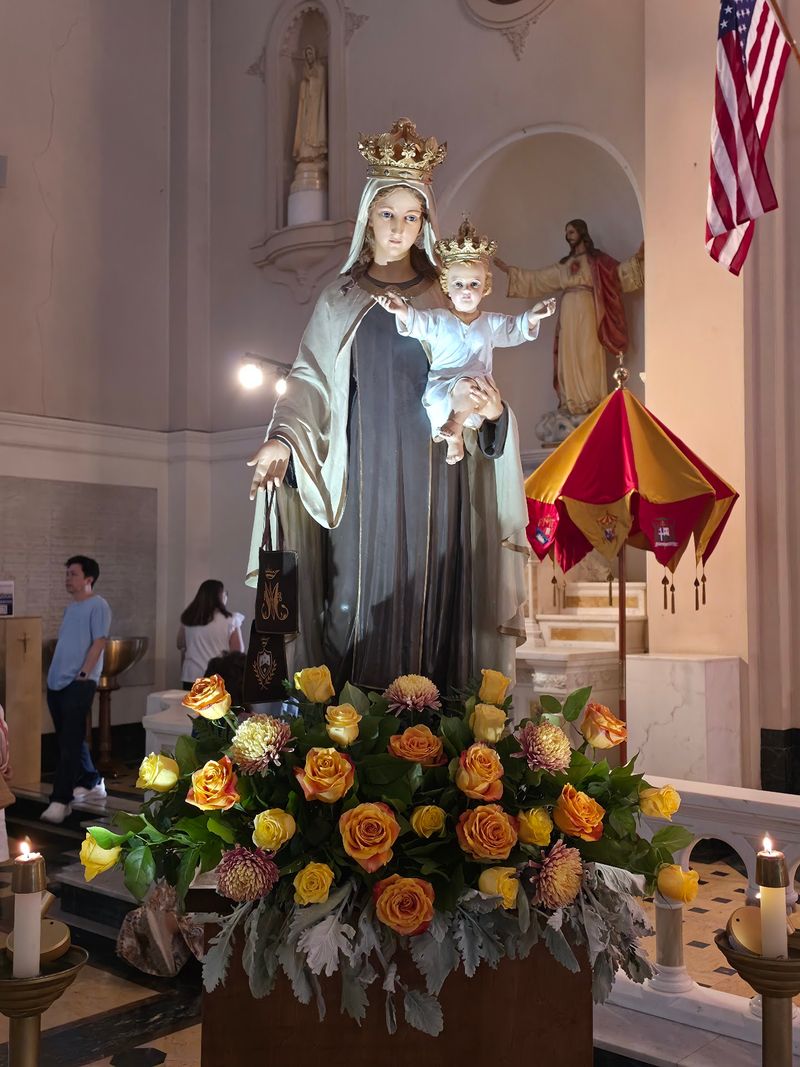
Who exactly was the Little Flower? St. Thérèse of Lisieux was a young French nun who belonged to the Discalced Carmelite order.
She called herself a little flower of Jesus in her autobiography, and the nickname stuck.
Her book, Story of a Soul, became one of the most popular books in Catholic spirituality. It spread her ideas all around the world after her death.
Pope Pius X even described her as the greatest saint of modern times.
Her main teaching is called the little way. The idea is simple and very relatable.
Holiness does not require huge, dramatic acts, only ordinary daily tasks done with great love and trust in God.
That message connects nicely with how this shrine was built. Small gifts from regular people during hard times added up to something grand.
One of the most moving pieces inside is a huge painting of St. Thérèse, about seven by ten feet. It was created by her own sister, Celine Martin, who was also known as Sr. Geneviève of the Holy Face.
This exact painting was carried in the procession during the canonization ceremony in Rome.
Her writing desk is on display too. Seeing the actual desk of someone whose words reached millions feels surprisingly personal.
Reading a few pages of her autobiography before visiting is a smart move. It turns paintings and windows into familiar scenes instead of mystery pictures, and it makes the whole visit richer.
Relics, Rare Treasures and a Hollywood Surprise
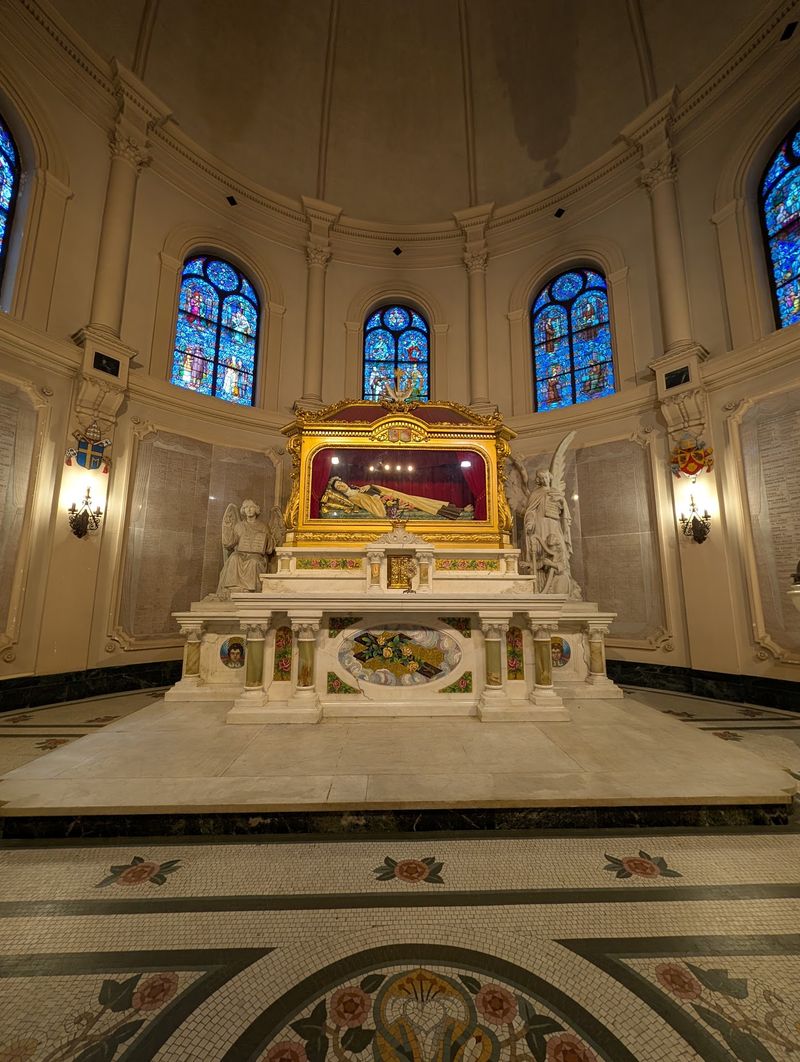
Few places in North America hold such a personal connection to a famous saint. The basilica safeguards first-class relics of St. Thérèse, along with relics of her parents, Sts.
Louis Martin and Zélie Guérin Martin.
Her parents were canonized together, which is quite rare. Having relics of the whole family in one building makes this a meaningful stop for many pilgrims.
Relics of St. Thérèse are regularly offered for public veneration, such as on Tuesday evenings after the Carmelite community Mass. Relics of several other Discalced Carmelite saints are kept here as well.
Checking the official website before a trip is wise, since schedules can shift for special events.
Now for the surprise. The marble holy water fonts at the entrance were gifts from Barbara Stanwyck, a famous American movie star, and her comedian husband, Frank Fay.
Old Hollywood left a little mark right at the front door.
Most people walk right past those fonts. Pausing to look gives the visit a fun bit of trivia to share later.
Visitors should keep a respectful attitude around the relics. Speak softly, silence phones, and follow any guidance from staff or volunteers.
Photos may be fine in some areas, but asking first is always polite.
Even for people who are not religious, these objects carry real history. They link a quiet Texas neighborhood to a small French town and to centuries of tradition.
Quiet Corners for Prayer and Reflection
Silence is a rare thing these days. Here, it comes easily.
The St. Elias Chapel was created as a space for silent prayer and Adoration of the Blessed Sacrament. It was a gift from a Lebanese family in San Antonio and opened on the Feast of Corpus Christi in 2007.
The chapel is typically available from 8 a.m. to 6 p.m., but confirming current hours ahead of time is a good habit.
Step inside and the outside world fades fast. Traffic noise disappears, and the room feels small, warm, and still.
The main church also offers Masses throughout the week, with Sunday services in both English and Spanish. That mix reflects the broad community the basilica serves.
Some visitors also appreciate the option of receiving communion at the communion rail, either kneeling or standing.
Hours for the main church can be limited on weekdays, often centered around Mass times. Planning a visit near those times is the easiest way to see the interior.
The church usually opens a little before and after services.
Travelers who are not Catholic are welcome to sit quietly too. A simple rule works well, which is to follow the lead of people around you and keep voices low.
Many pilgrims come on special dates, like the birthday or feast day of St. Thérèse. Those days bring extra energy and devotion, while ordinary weekdays tend to feel calmer and more private.
Gardens, Butterflies and a Giant Chessboard
A life-size chessboard in a church garden? Yes, really, and it might be the most charming surprise on the property.
The basilica sits on about 2.5 acres, and the grounds are worth exploring just as much as the interior. East of the main entrance, radial walkways cut between grassy patches, and queen palms line North Zarzamora Street.
A round flowerbed holds a statue of St. Thérèse, surrounded by raised beds full of perennial flowers.
The main garden lies west of the basilica. Fences and hedges wrap around it, and entry comes through gates on Kentucky Avenue.
Inside, the mood turns relaxed and a little wild. Live oaks spread wide shade, while conifers, cacti, and flowering plants mix together in an informal way.
Brick paths wander between planting areas, forming little garden rooms to discover one at a time.
There is a vegetable garden and a butterfly garden too. Spring and fall are lovely times to catch butterflies drifting between blooms.
Then comes that shaded patio paved to look like a chessboard. No pieces are needed to enjoy it.
It makes a great spot to rest, chat, or snap a playful photo.
San Antonio summers get hot, so bring water and a hat. Early mornings feel the most comfortable for strolling.
Comfortable shoes help on the brick paths, and a few quiet minutes on a shady bench can be the highlight of the whole day.
Tours, Gifts and a Rare Honor
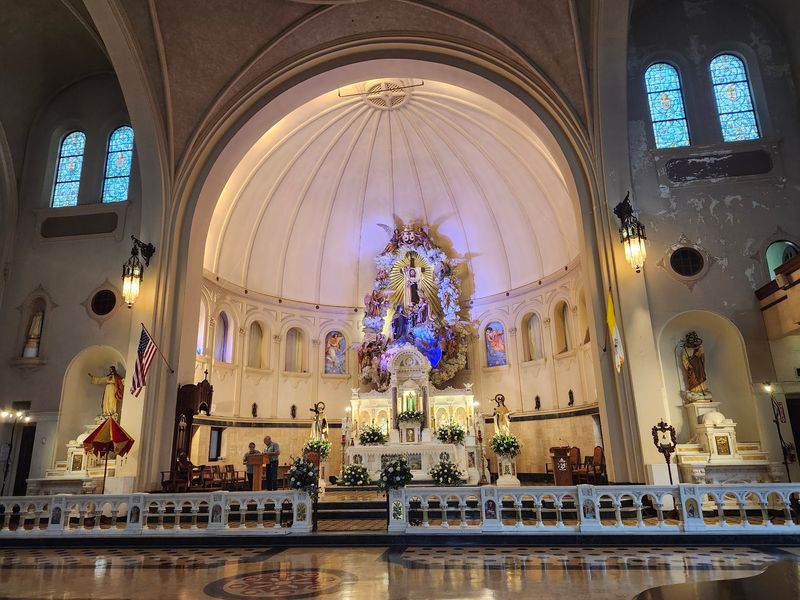
Big honors came in 1998. That year, the shrine was named a Minor Basilica, a special title from the pope for churches with great history, beauty, and spiritual importance.
It is one of only 84 minor basilicas in the United States and one of just four in Texas. With that status, its ecclesiastical throne symbolically became a papal throne.
The same year, the building joined the National Register of Historic Places.
Pope John Paul II also visited the shrine in 1987 during his trip to San Antonio. That visit remains a proud part of local memory.
The best way to learn all of this is on a Public Heritage Tour. Guides share the story of the founding, the lives of Carmelite saints, and the meaning behind the stained glass.
Many tours also include a chance to venerate first-class relics, so booking ahead through the official website makes sense.
Afterward, swing by the gift shop near the back of the basilica. It carries books, medals, rosaries, and small keepsakes, and visitors can often get holy water for their own bottles.
Plan around the Rose Festival too. This annual event honors St. Thérèse and brings the community together in a cheerful way.
The basilica sits at 1715 N Zarzamora St, San Antonio, TX 78201, and the Discalced Carmelite Friars still care for it today. A preservation plan is underway, so every visit helps keep this landmark shining.
