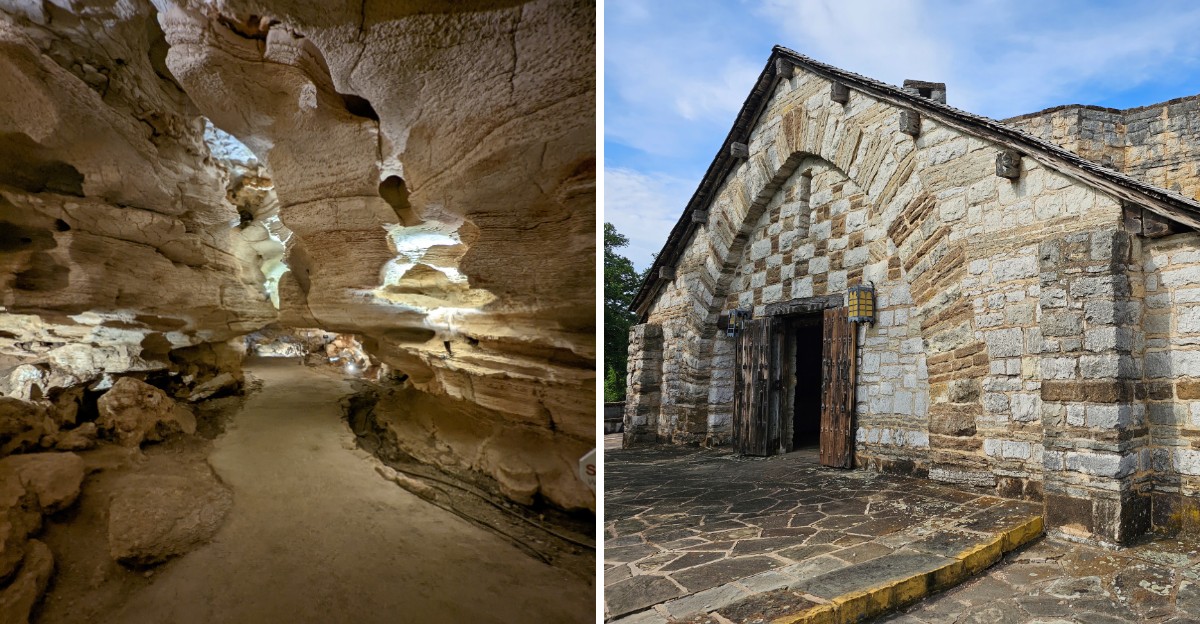
Live bands once played inside this Texas cave while couples danced beneath the rock ceiling. Decades later, the cavern was designated and stocked as a nuclear fallout shelter during the Cold War.
It’s hard to think of two more different uses for one cavern.
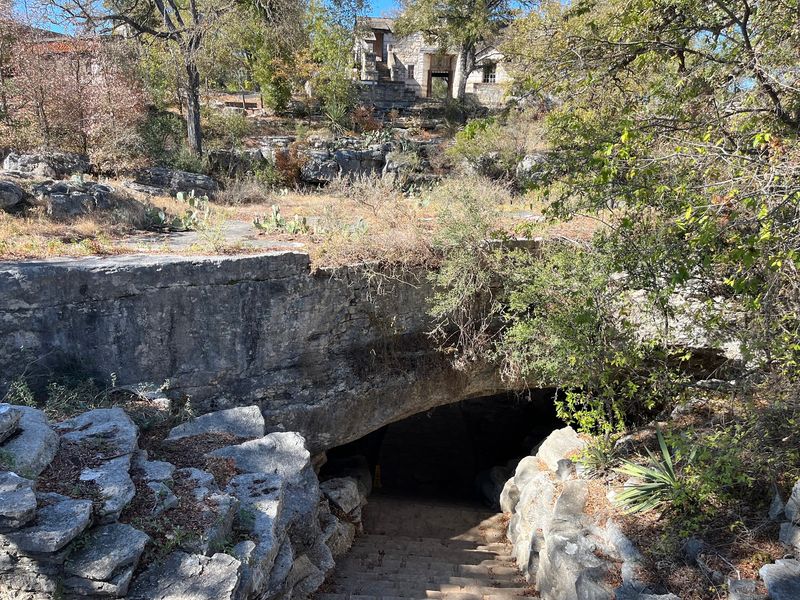
Long before either chapter, an ancient underground river carved smooth limestone walls and winding passages. In the 1930s, Civilian Conservation Corps workers cleared debris and built stone stairways that visitors still use.
Today, guided tours lead through illuminated chambers, including the beautifully sculpted Hall of Marble.
I’d be especially curious to stand in the space where music once echoed and hear how it became an emergency refuge. You can explore the cavern with a guide, then look at the park’s historic stonework above ground.
It’s a cave with a strange enough past to rival the scenery.
An Old River Carved This Cave, and You Can Tell
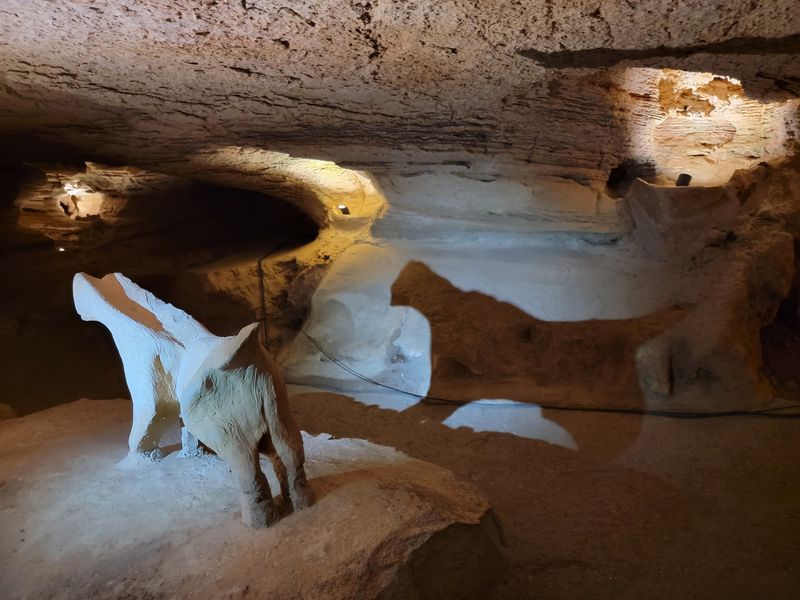
Most Texas show caves grew drip by drip from water seeping down from the surface. Longhorn Cavern State Park took a different route, because an ancient underground river did most of the carving.
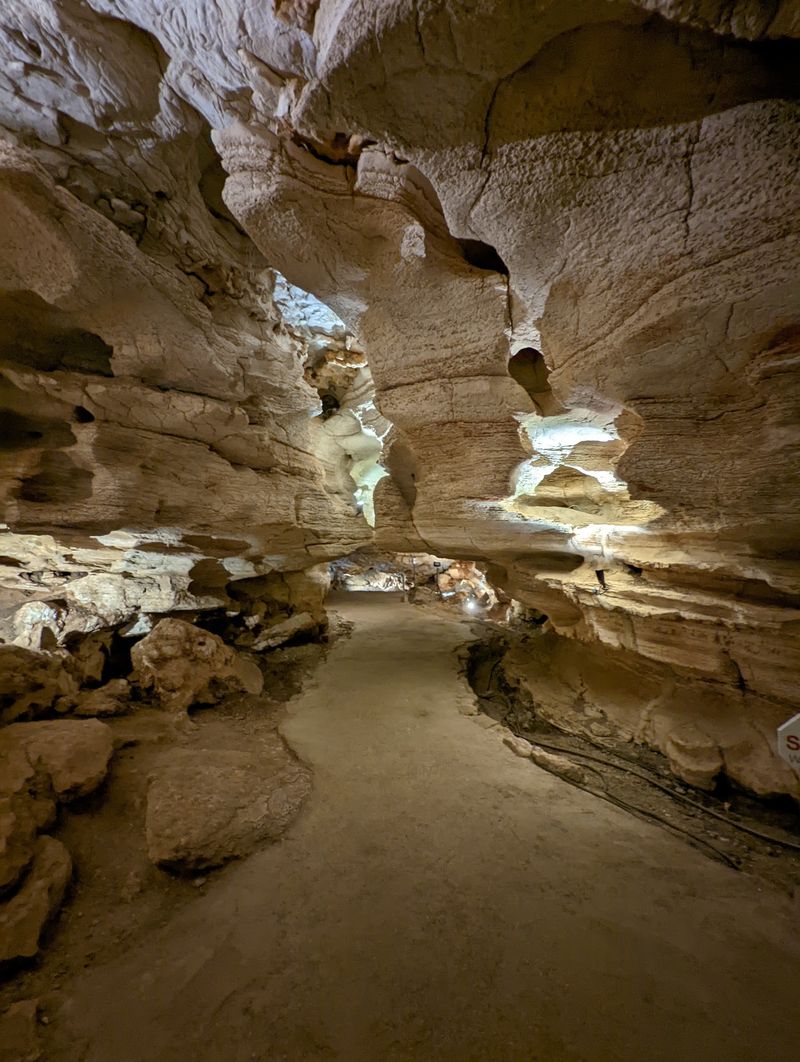
That river cut and dissolved the rock as it rushed through. The result is smooth, curvy walls that look almost polished by hand.
You’ll notice it right away in places like the Hall of Marble. That chamber is carved from dolomite, and its sculpted shapes feel more like art than geology.
Of course, the cave still has classic formations too. Stalactites, stalagmites, flowstones, draperies, and cave pearls all show up along the way.
The cave is young as caves go, so many drip formations are on the small side. Honestly, that makes the river-cut rooms the real headliners here.
Spots like Crystal City and the Hall of Diamonds add some sparkle with glittering calcite crystals. Then there’s the Queen’s Throne and the Queen’s Watchdog, which sound like a royal family took up spelunking.
Keep your eyes moving between the walls and the ceiling. The shapes change quickly, and each room tells a slightly different water story.
It’s a geology lesson that never once feels like homework.
Mastodons, Flint Tools, and a Very Long Guest List
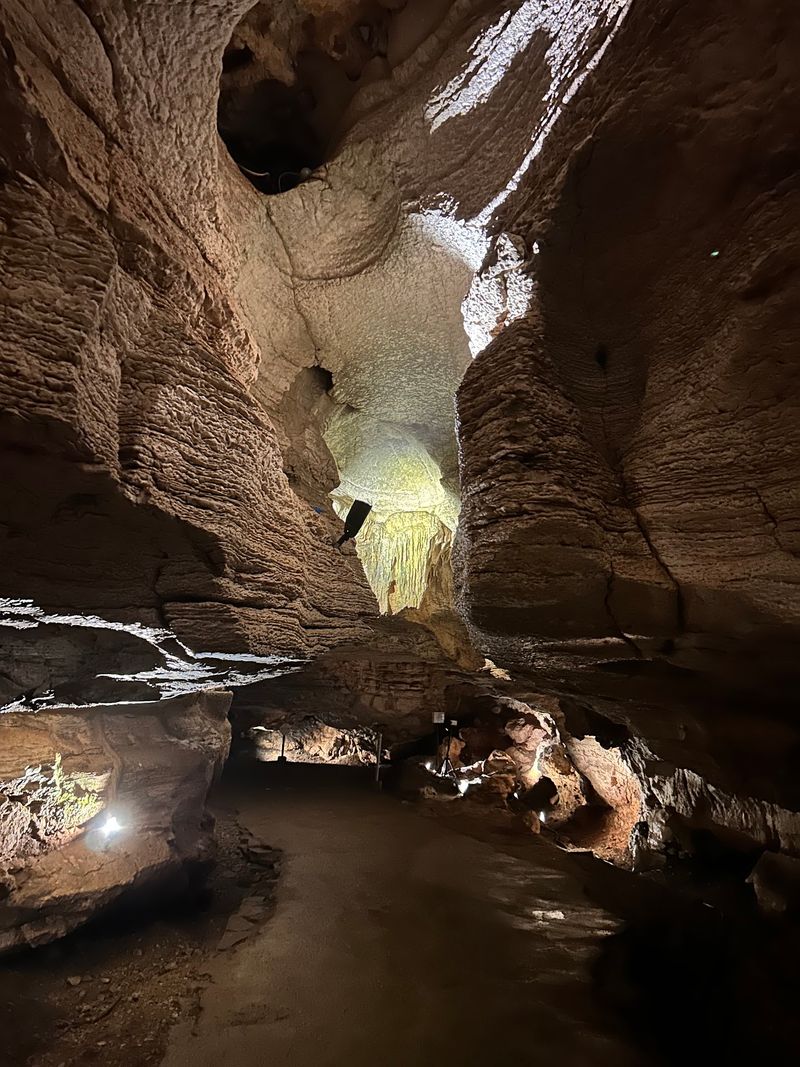
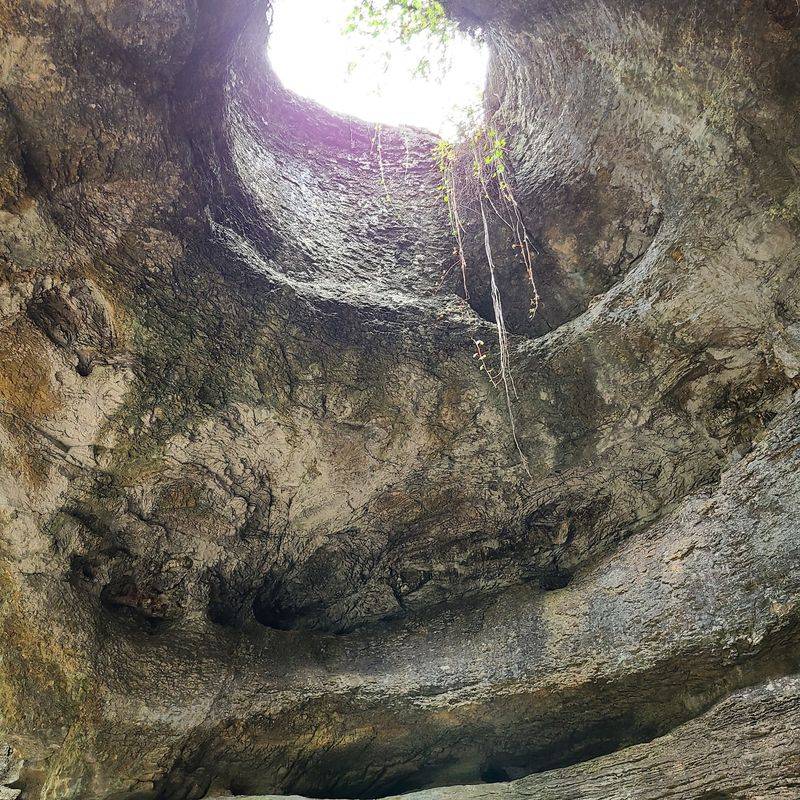
Long before tour tickets existed, this cave had visitors with spears. Prehistoric Texans used it as a trap cave, driving animals over its large opening during hunts.
The list of animals is wild. Mastodons, bison, grizzly bears, and deer all ended up below, and their remains have been found inside.
Evidence points to people here as far back as the Paleo-Indian era. That puts this cave’s human story among the oldest chapters in the region.
Later, Comanches used the cave for shelter and gatherings. One chamber still carries the name Indian Council Room because of those meetings.
They also mined chert, a type of flint, right from the walls. That stone became tools and weapon points, so the cave doubled as a supply store.
The 1860s brought a very different use. Millions of Mexican free-tailed bats lived here then, and their guano was turned into gunpowder ingredients.
Then there are the outlaw tales. Folks long whispered that Sam Bass hid here with stolen money, but nobody has ever proven it.
Treat that one as campfire material, not history. Still, it’s a fun thought while you stroll past the shadowy corners.
The Coolest Dance Floor in Texas Was Literally Underground
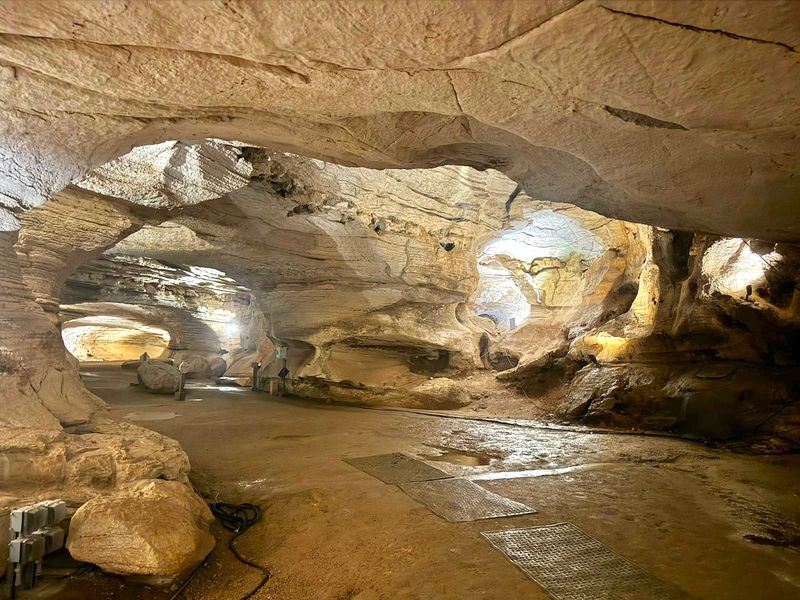
Back in the 1920s and early 1930s, the place went by Sherrard’s Cave. It also worked as a dance hall, nightclub, and restaurant tucked far below the Hill Country.
Guests danced to live music from bands like the Harris Brother’s Texans. Meals were served by candlelight, which sounds wonderfully dramatic against all that rock.
Some performances even reached San Antonio by radio. Picturing listeners at home hearing a band play inside a cave is pure delight.
The setting made perfect sense for a party. A steady temperature near 68 degrees meant no sweaty summer nights on the dance floor.
Today, guides still point out the old nightclub area during tours. It’s one of those stops where the room suddenly feels full of ghosts in fancy shoes.
The music never fully left, either. Chamber music returned to the cave in 2006, and dancers came back in 2008.
Longhorn Cavern State Park now hosts live music inside the cave about twice a month. Check the event calendar before you go if you want a show with your stalactites.
Hearing live notes bounce off river-carved walls is about as Texas-unique as it gets.
Thank the CCC for Every Step You Take Down There
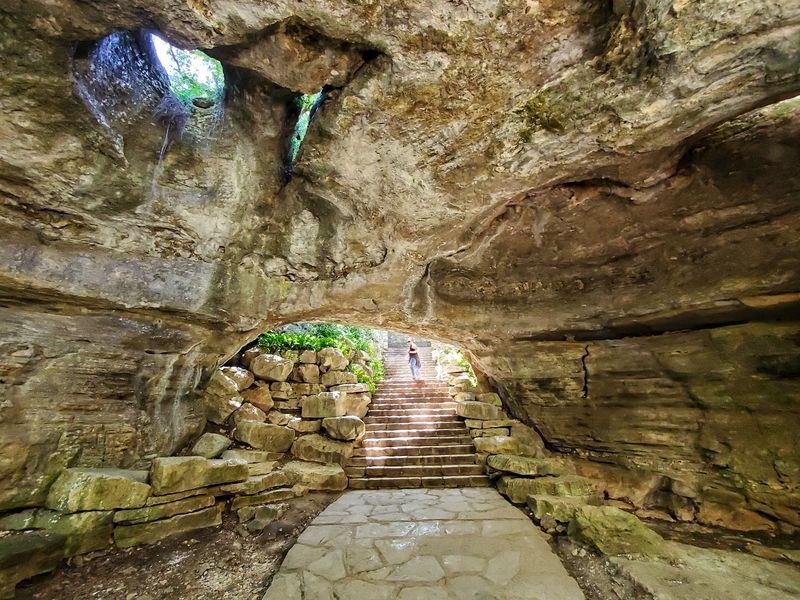
Fifty-two stone steps lead you into the cave. Young men from Civilian Conservation Corps Company 854 built them by hand in the 1930s.
Texas bought the cavern and land in 1931, and the park opened in 1932. The real heavy lifting started in 1934 and stretched into the early 1940s.
And heavy is the right word. Crews hauled out tons of silt, debris, and guano without modern machines.
They also installed more than two miles of indirect lighting. Those glowing paths you’ll follow today trace straight back to their work.
The CCC built pathways and staircases throughout the cavern too. Above ground, they added buildings, residences, pavilions, and an observation tower.
They even built Park Road 4 to link the park to the highway. So your drive in is part of the same project.
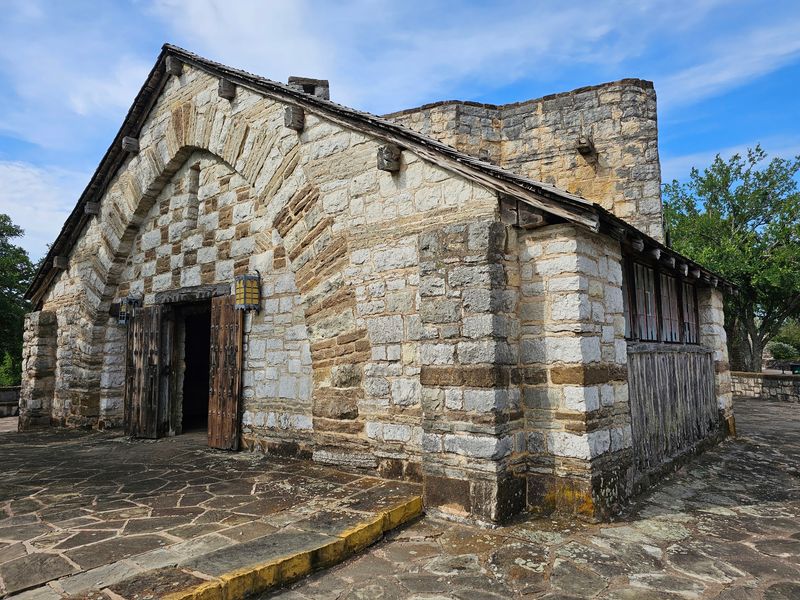
Many structures follow the National Park Service Rustic style. Workers used native stone, local cedar, hand-split shingles, and iron fixtures.
Some of that stone came from nearby ranches or straight out of the excavated cave. That’s recycling with serious muscle behind it.
Take a slow look at the stonework before heading underground. Every block tells you somebody cared.
Once Stocked for the Worst, Now Open for the Curious
Plenty of caves claim a colorful past. Few can say they were officially licensed and stocked as a nuclear fallout shelter.
That happened here during the Cold War in the 1960s. The cavern was set aside to protect people from nearby Texas communities if the unthinkable ever came.
It’s a big shift from the candlelit dance years. One decade had swing bands, and a few decades later the same rooms held emergency supplies.
The choice was practical. Thick rock overhead and a steady temperature made the cave a natural fit for shelter planning.
Thankfully, the shelter never had to do its job. Instead, it became one more surprising layer in the cave’s story.
In 1971, the U.S. Department of the Interior named Longhorn Cavern a Registered Natural Landmark.
That honor marked the cave as nationally important for its natural features.
Modern life keeps finding uses for it too. A YouTube interactive series even filmed here in 2019.
So the cave has played hunting ground, mine, club, shelter, landmark, and film set. Not bad for a hole in the Hill Country.
Ask your guide about the shelter era. It adds real perspective to a fun day out.
Pick Your Adventure Level Before You Head Below
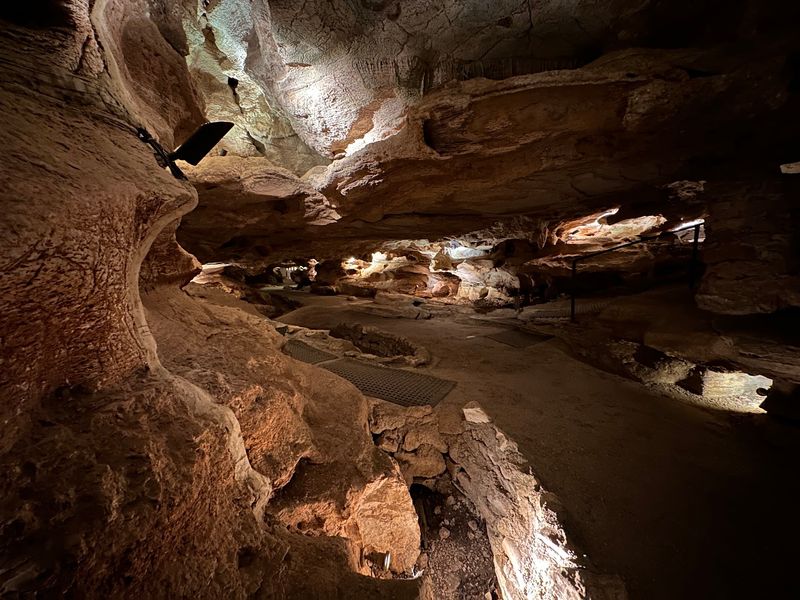
Two very different tours wait underground. One keeps your clothes clean, and the other definitely won’t.
The Walking Tour is the popular pick. It runs about 1 to 1.5 hours and covers roughly 1.1 miles of passages.
You’ll descend 130 feet below the surface on developed, well-lit paths. Most visitors can handle it, though a few spots require a short duck under low ceilings.
Near the end comes a brief lights-out moment. Total darkness underground is strangely thrilling, and very quiet.
Craving grit instead? The Wild Cave Tour lasts about three hours and heads into the undeveloped lower levels.
You’ll get a helmet, headlamp, knee pads, and gloves. Expect crawling, squeezing through tight gaps, and moving through water.
That one rewards people who don’t mind getting muddy. Leave the new sneakers at home.
A Blacklight Tour is also offered, using lanterns in smaller groups. It’s a neat way to see the cave like early explorers might have.
Wear comfortable shoes for any option, since floors can get slick. Weekends get busy, so booking ahead saves you a wait.
Remember that cave access requires a paid guided tour. Plan your time around your chosen start slot.
Say Hello to the Tiniest Residents Hanging Around
Bats run the show at Longhorn Cavern State Park, just in smaller numbers than before. Tri-colored bats live in the cave all year long.
They hibernate from fall through spring. During those months, you have a good chance of spotting them clinging to the rock.
Don’t expect giant wings swooping past your head. These little guys are tiny and tend to stay perfectly still while they rest.
Guides often point them out along the route. Keep your voice low, because nobody likes being woken up during a long nap.
It’s a big change from the 1800s. Back then, millions of Mexican free-tailed bats filled the cave.
Wildlife fans should also look up once back above ground. The park’s trails host many birds, including the endangered golden-cheeked warbler.
That warbler nests only in Texas, which makes any sighting special. Bring binoculars if birding is your thing.
Kids usually love the bat moments most. A tiny furry face on a cave wall beats a textbook picture every time.
Just follow your guide’s lead and keep hands off the walls. Protecting the cave keeps it welcoming for its smallest tenants.
Climb the Little Stone Tower for a Big Hill Country View
After all that time underground, sunshine feels like a reward. The surface side of the park deserves its own slow wander.
An observation tower built by the CCC stands among the trees. Its native stone walls look a bit like a small castle dropped into the brush.
Climb up for wide views across the Texas Hill Country. Rolling hills and cedar stretch out in every direction.
About 1.25 miles of short trails loop around the grounds. They make an easy add-on before or after your tour.
Shaded picnic areas offer a spot to refuel. Pack a lunch, or grab something from the snack bar.
That snack bar keeps things simple with grab-and-go options. Expect Hunt Brothers pizza, ice cream, and Werner snacks and jerky.
The visitor center also holds a gift shop with apparel designed in-house. Geodes, polished rocks, and souvenirs fill the shelves too.
Kids can try a small dig-and-sift area to find their own geodes. Cracking one open feels like a mini treasure hunt.
Entry and parking on the grounds are free. That makes the above-ground fun an easy bonus.
Plan the Drive, Then Plan to Stay a While Nearby
Getting here is half the fun if you enjoy scenic roads. Longhorn Cavern State Park sits at 6211 Park Road 4 S, Burnet, TX 78611.
That’s about nine miles southwest of Burnet, off U.S. Highway 281.
Expect roughly an hour and twenty minutes to ninety minutes from Austin.
San Antonio folks will head north to reach it. Either way, the final stretch on Park Road 4 rolls through classic Hill Country.
Hours run 9 a.m. to 5 p.m. on weekdays. Weekends stretch until 6 p.m., and the park closes only on December 25.
Keep in mind this is a day-use park. There’s no camping on site, so plan where you’ll sleep.
Inks Lake State Park sits about six miles north on the same road. It’s the closest state park campground and an easy pairing.
Cell service can fade inside the park. Download maps and tickets before you arrive.
Summer visitors get a sweet bonus. While Texas bakes outside, the cave stays near 68 degrees.
Rainy days work well too, since the tour stays dry overhead. Basically, there’s rarely a bad excuse to go underground here.
