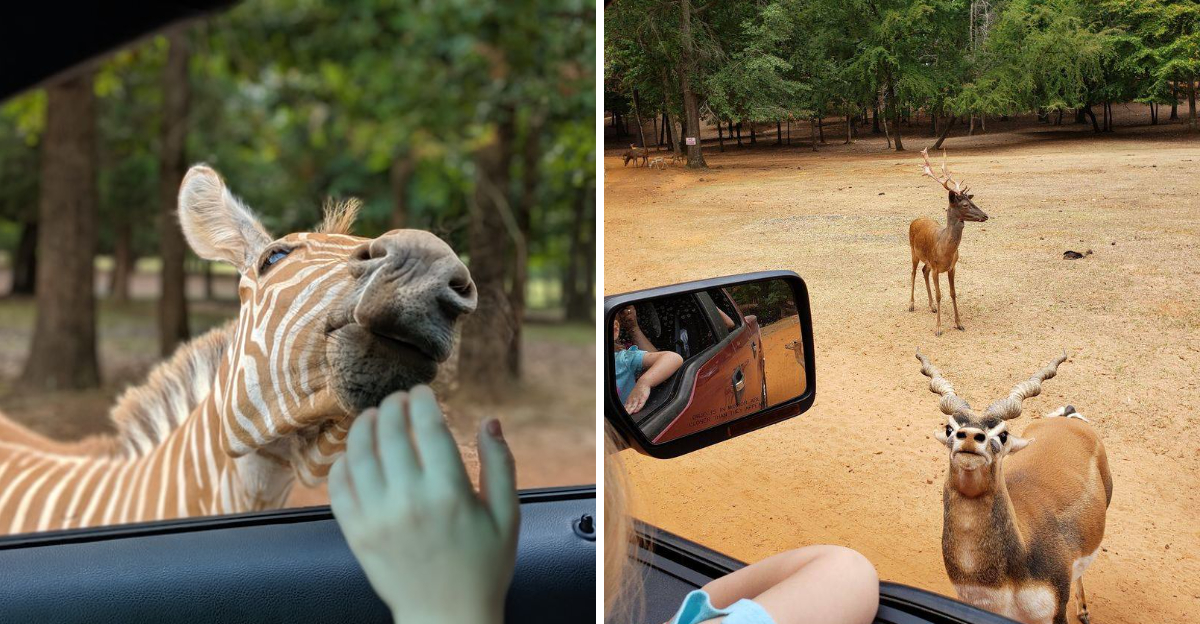
A normal drive gets much more interesting when a zebra walks over and starts investigating the passenger window.
This Texas safari spreads across about 300 acres, where visitors follow a self-guided route through open habitats filled with exotic and endangered animals that can approach vehicles during the drive.
Zebras, camels, antelope, bison, alpacas, and other species are among the animals visitors may encounter, with feed available for the kind of close-up interaction that makes keeping everyone calmly seated in the car slightly optimistic.
There is no walking from enclosure to enclosure or wondering when the next animal will appear because the whole experience happens from your own vehicle.
Texas road trips rarely involve this many unexpected faces staring through the window.
Rolling Into the Piney Woods Before the Gate Even Opens
Getting there is half the mood-setter. County Road 4405 narrows the closer you get, pine trees crowding in on both sides, and cell service starts doing that flickering thing where you stop trusting the map.
Roughly twelve miles east of Jacksonville, the drive shifts from small-town Texas into something quieter and greener. Cherokee County has a soft, hilly feel that most people do not expect from the state.
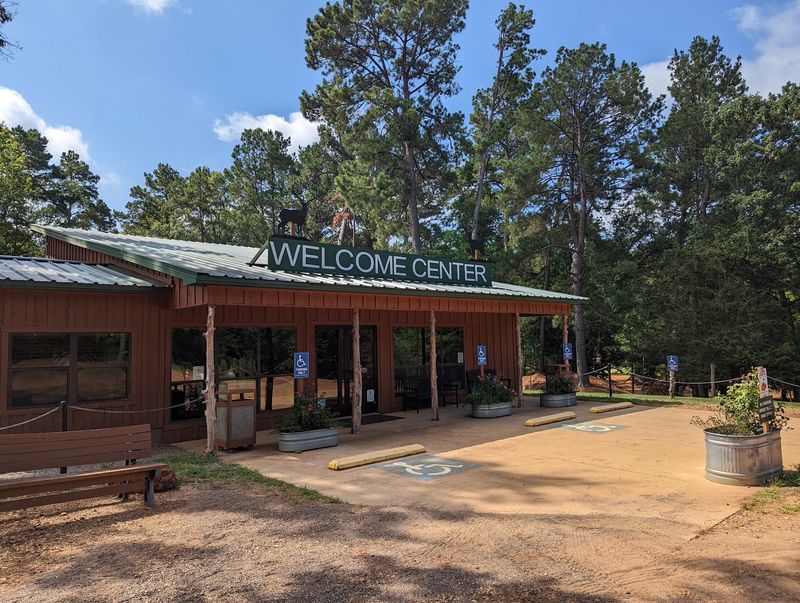
The entrance itself is understated. A wooden sign, a small building, and staff who hand over feed and a route map without much fuss.
That plainness works in its favor, since nothing about the setup oversells what comes next.
Arriving early made a real difference for me. Morning air still had a cool edge to it, the animals were up and moving, and the light coming through the pines looked like something from a nature documentary.
A few practical notes worth remembering. Fill up on gas before turning off the main highway, because options thin out fast.
Bring a bottle of water, and roll the windows down partway so hands and noses can reach.
Tall vehicles work well here, though a regular sedan handles the gravel fine. Trucks and SUVs simply give better sightlines over the grass.
Sitting at the gate with feed in the passenger seat, listening to nothing but birds, I understood the appeal before a single animal appeared. The setting does a lot of the work.
Camels, Llamas and Alpacas With Very Different Personalities
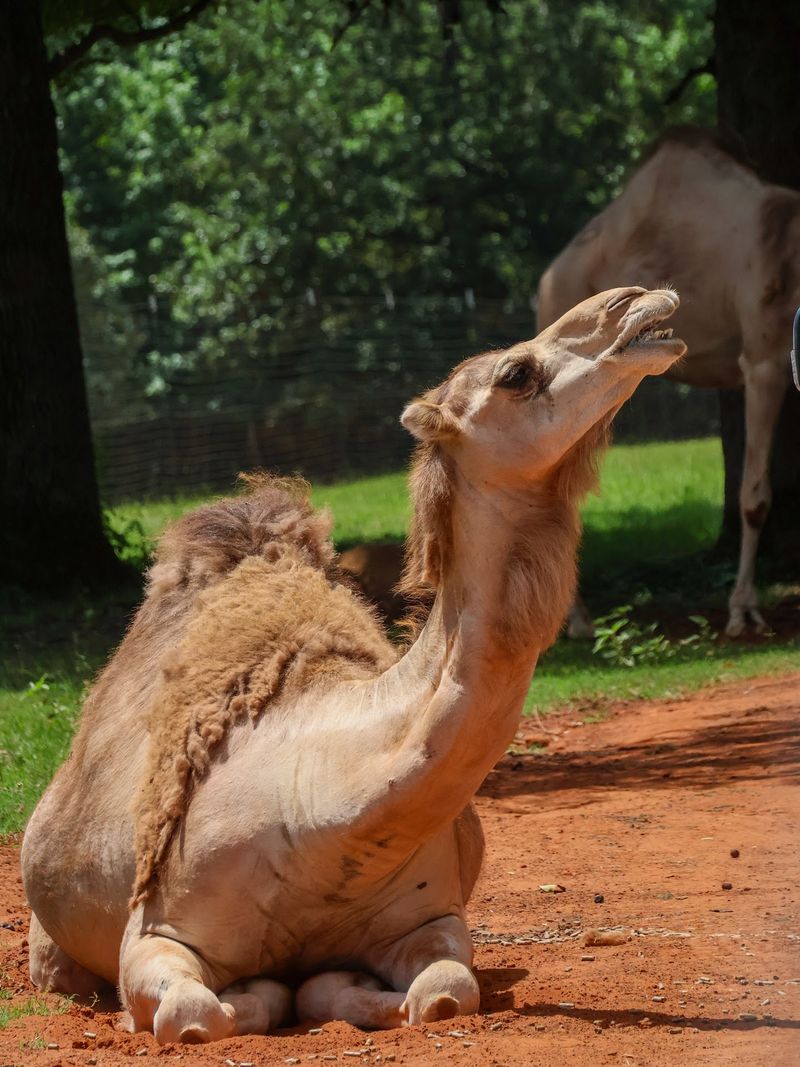
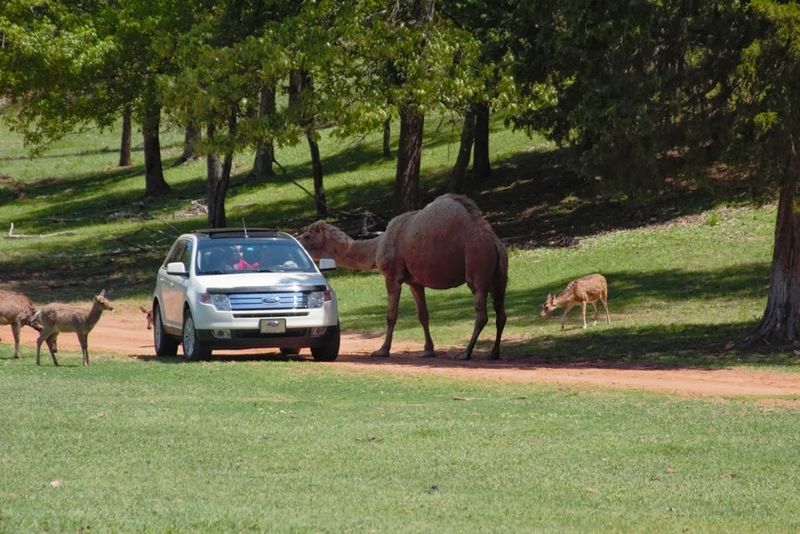
Camels operate on their own schedule. One wandered over with a long-legged, swaying walk, lowered its enormous head, and simply waited with the patience of something that has never once been in a hurry.
Their size is the shock. Seeing a camel from a car seat means looking up, and those lashes and rubbery lips are close enough to count.
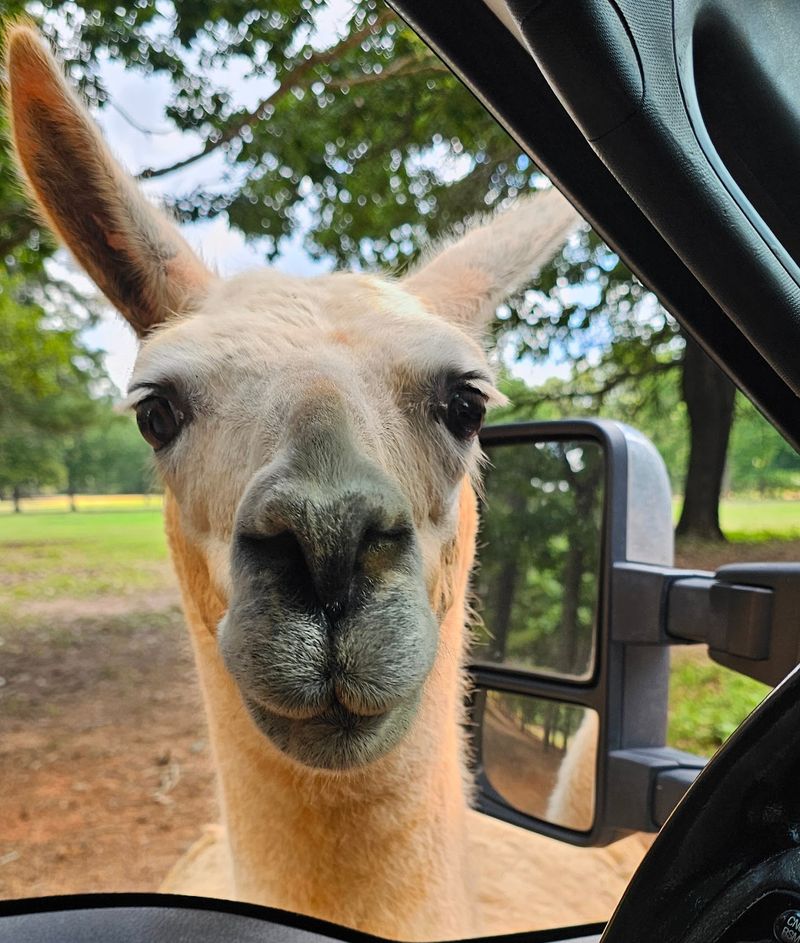
Llamas play it cooler. They approach at an angle, size up the situation, then decide whether a handful of feed justifies the walk over.
Alpacas mostly kept their distance during my visit, fluffy and slightly ridiculous, grazing in loose clusters. They looked like walking cotton balls with excellent posture.
A warning that deserves attention. Llamas and alpacas can spit when they feel crowded or annoyed, so keeping calm and quiet around them helps everyone avoid an unpleasant souvenir.
Kids in the back seat tend to lose their minds over the camels specifically. Something about that goofy face changes the whole energy in a vehicle.
Feeding these three species taught me the value of patience. Rushing produces nothing, while sitting still with an open hand usually brings someone over within a minute or two.
Watch how they move across the pasture too. Camels cover ground with an oddly graceful gait that looks wrong and right at the same time, and it never got old.
Zebras That Treat Your Window Like a Drive-Thru Window
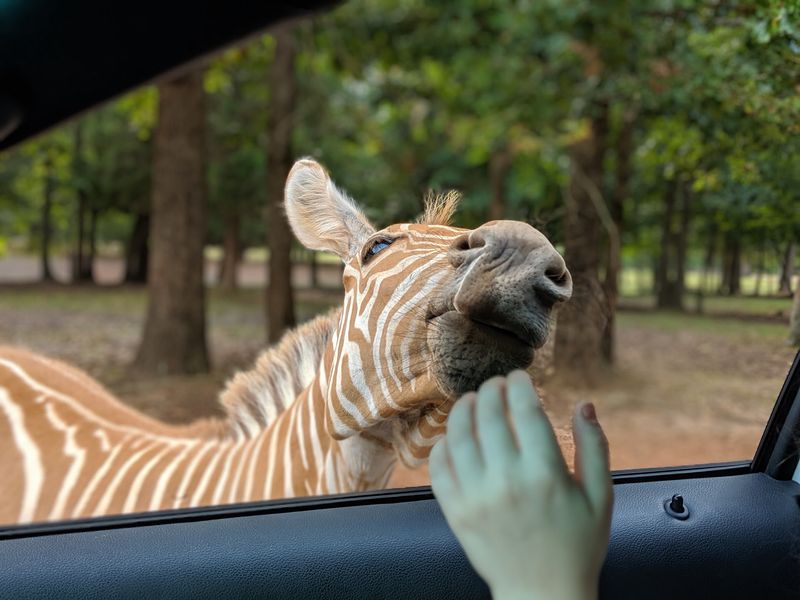
Zebras get all the attention here, and honestly, they earn it. They are bolder than expected, walking up with a confidence that suggests they have done this thousands of times.
Up close, the stripes look almost painted on, with fine hairs catching sunlight along the edges. The pattern shifts as they move, which is strangely hypnotic to watch from three feet away.
They also have opinions. One zebra decided my feed bucket was not being offered fast enough and nudged the door with its nose, which produced laughter from everyone in the car.
Staff make the rules clear, and following them keeps the experience fun. Hands stay inside, no petting, and feed goes out flat in an open palm or gets tossed lightly onto the ground.
Zebras can bite. Not out of meanness, just because they are large animals with strong instincts around food, and fingers look a lot like carrots to them.
What surprised me most was the sound. Their hooves crunching gravel, the huffing breath, the low grunts they exchange with each other create a soundtrack no fence-and-moat zoo can match.
Photographers should keep a camera ready before the animals arrive rather than fumbling mid-encounter. Encounters happen quickly, and a zebra face filling the entire frame is a shot worth being prepared for.
Roll slowly, stop completely, and let curiosity do the rest.
Deer Species From Across the Globe Grazing Side by Side
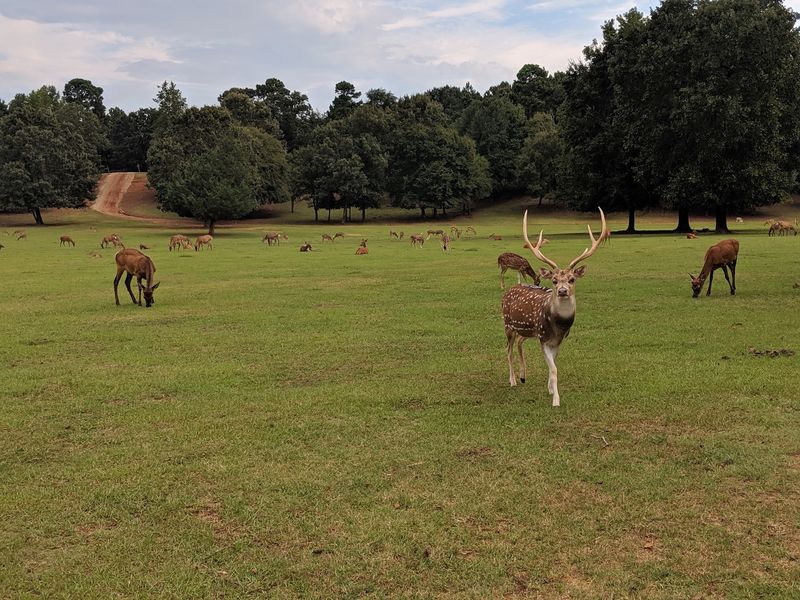
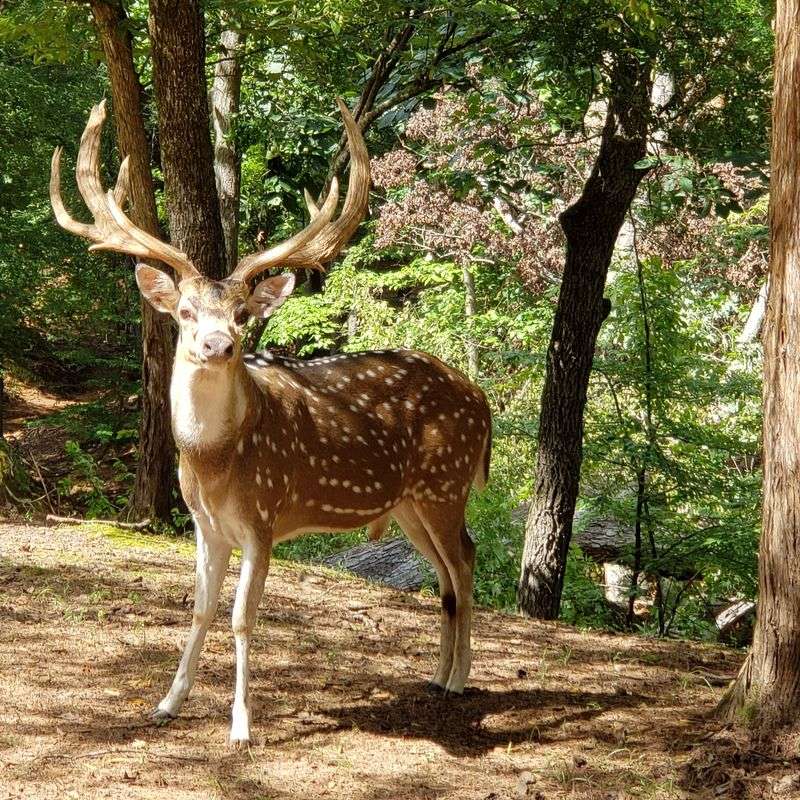
Deer are the quiet stars of the preserve, and there are far more kinds than most visitors expect. Axis deer come first, spotted and elegant, moving in small groups that drift across the grass.
Barasinga deer, also called swamp deer, carry impressive multi-pointed antlers during certain seasons. Watching one raise its head slowly is a genuinely striking moment.
Then comes the species with the real story. Pere David’s deer once vanished from the wild entirely, surviving only because a handful of preserves and parks kept breeding them carefully over generations.
Cherokee Trace has taken part in the recovery of that species, which adds real weight to seeing them wander past a car window. A rare animal casually eating grass twenty feet away is a strange privilege.
Elk show up too, bulkier and more imposing, often keeping to the shaded edges. Blackbuck antelope streak across the open sections with a speed that makes the whole pasture feel bigger.
My advice is to slow down through the deer areas rather than treating them as filler between the flashier animals. Details reveal themselves, like coat patterns changing with the light or the way fawns stick close to their mothers.
Binoculars help for the shyer individuals hanging back near the treeline.
Spending time here shifted the whole visit for me. It stopped feeling like an attraction and started feeling like a working preserve.
Watusi Cattle, Bison and Wildebeest Holding Down the Big Leagues
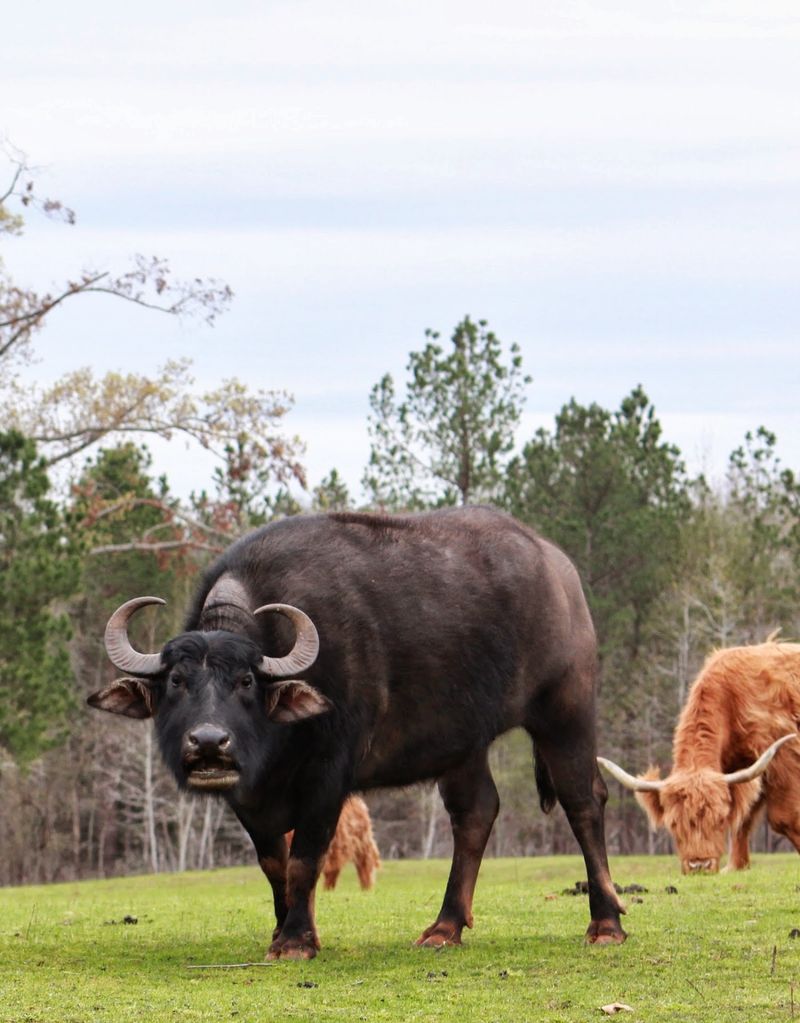
Nothing prepares a person for Watusi horns. They sweep upward and outward in massive curves that look physically impossible, and the cattle carry them with total nonchalance.
Getting close to one meant measuring the horn span against my windshield, which was a humbling little exercise. They are enormous, and the animals know exactly how much space they occupy.
American bison bring a different kind of presence. Heavy, shaggy, and slow-moving, they radiate a stillness that makes the car feel small even when nothing is happening.
Wildebeest tend to keep their distance, traveling in loose bunches with those sloped shoulders and shaggy beards. Spotting them across open savannah gave the whole scene an unexpectedly African look, right in the middle of East Texas.
Respect matters more with the big animals than anywhere else on the property. Stay in the vehicle, keep doors closed, and never lean out for a better photo angle.
Sunroofs and hoods are off limits for good reason. A startled bison or a swinging Watusi horn is not something to test.
Where the road passes bridges over ravines, the terrain opens up and larger herds become visible at a distance. Those views are worth pulling over for.
The scale of these animals reset my sense of what a drive-through safari could be. Photos never quite capture it.
Kangaroos, Capybaras and Other Unexpected Residents
Halfway through the route, the animal lineup takes a turn toward the delightfully odd. Red kangaroos live in their own enclosure, lounging in the shade in that boneless way kangaroos have perfected.
Seeing them lie flat on their sides is funnier than expected. They look completely melted until one hops up and reminds everyone how powerful those legs are.
Patagonian cavies share the unusual-resident category. Long-legged rodents resembling a rabbit crossed with a small deer, they move with quick, twitchy steps that are hard to look away from.
Capybaras earned my full attention. The world’s largest rodents move like they have never worried about anything, and their calm, blocky faces have a comedy all their own.
African crested porcupines are another highlight, with quills that rattle when they shuffle around. Alligators occupy their own space, usually motionless enough to be mistaken for scenery.
Emus stride around with a jerky curiosity, poking their heads toward vehicles when the mood strikes. They are genuinely strange to watch, in a good way.
Enclosure areas reward parking and simply looking rather than rolling past. Animals settle down once engine noise stops, and behavior gets more interesting.
These sections gave the visit variety that kept younger passengers engaged all the way through. A capybara does wonders for backseat morale.
Feeding From the Driver’s Seat, Rules and All
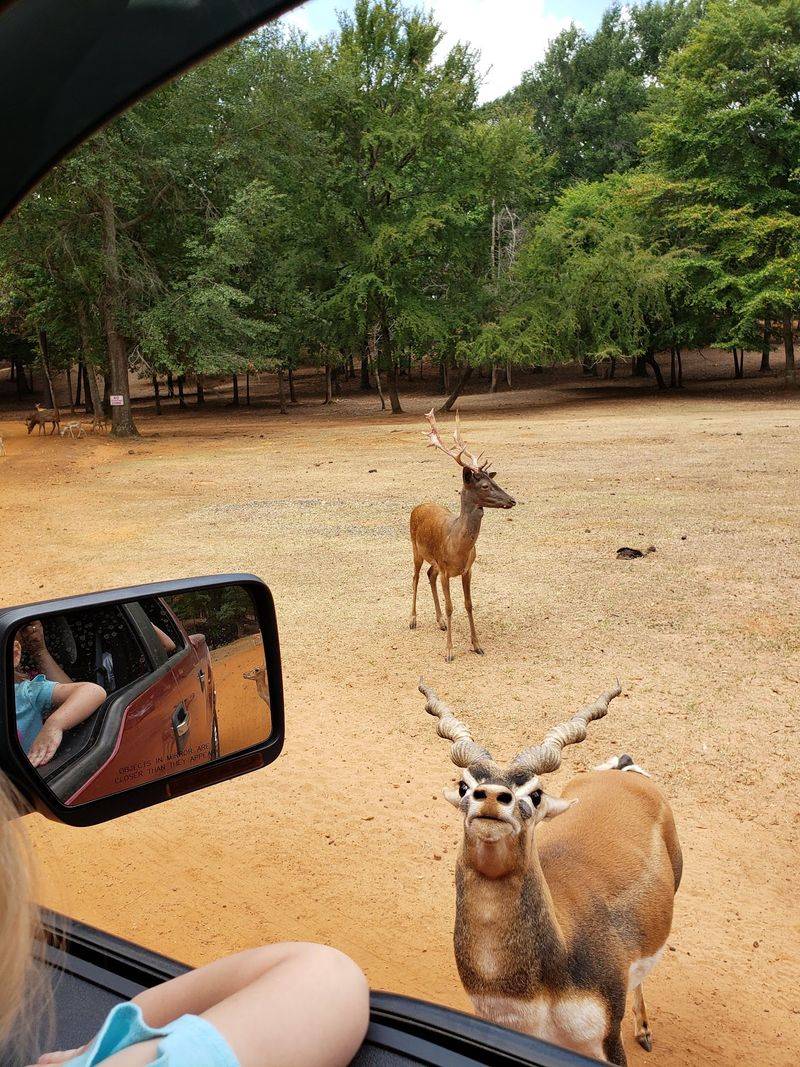
Feed comes with admission, and that bucket changes everything about the experience. Animals recognize vehicles instantly and start drifting over before the car even fully stops.
Portioning matters. Spreading the feed across the whole route beats dumping half of it on the first eager zebra, a lesson learned about four minutes in.
The safest method is holding a flat palm or tipping pellets into an open hand rather than pinching them between fingers. Animals aim for the food but are not precise about it.
Rules are posted and repeated for a reason. Everyone stays inside the vehicle, doors stay closed, and nobody sits on sunroofs, windows, or hoods.
Petting and touching are discouraged across the board, since animals may bite, spit, or kick without warning. Following that guidance keeps both visitors and animals comfortable.
Pets are not allowed anywhere in the safari, so plan accordingly before the drive out. Sticking to the marked road system and arrow route signs is also required.
What I appreciated most was the pacing freedom. Stop as long as desired, back up if something interesting appears, and take a second loop through the whole property in the same visit.
Nobody rushes anyone along.
Hand sanitizer or wipes in the glovebox are a smart addition. Feed dust and animal slobber are part of the deal.
Golden Hour Light and the Best Photos of the Day
Light does remarkable things across these 300 acres. Early morning brings soft, low sun that skims the grass and makes dust hang visible in the air.
Late afternoon works even better. Golden hour turns the pastures amber, and animal coats pick up a warmth that midday sun completely flattens out.
Shooting through a car window creates its own challenges. Rolling the glass fully down avoids glare and reflections, which fixed most of my early problems.
Turning off the engine helps too, since idle vibration blurs shots more than people realize. A steady hand braced against the door frame does the rest.
Phone cameras handle close encounters surprisingly well because the animals get so near. Zoom lenses become useful for herds grazing across the ravines and open savannah sections.
Bridges over the ravines offer elevated angles that show off the rolling terrain. Those wider landscape shots ended up being my favorites, more than any single animal portrait.
Overcast days are not a loss either. Even light removes harsh shadows and brings out coat patterns on the deer and Watusi cattle beautifully.
Two loops help photographers enormously. The first pass finds the animals, the second pass gets the shots, and the light usually shifts between them.
Patience beats persistence here. The best moments arrived when the car sat still and nobody said a word.
Wrapping Up With a Picnic and a Stop at the Gift Shop
After the second loop, the picnic area became the right place to sit and decompress. Shade, tables, and restrooms make it easy to stretch out a visit rather than driving straight home.
Bringing lunch is encouraged, which is a small detail that says a lot about the place. Sandwiches in a cooler turn a one-hour stop into a relaxed half-day outing.
The gift shop is worth a look before leaving. Small, unfussy, and stocked with the kind of souvenirs kids latch onto immediately.
A bit of background gives the whole property more meaning. Noel and Kyle Ischy founded Cherokee Trace in 2004, built around a genuine love of animals and a wish to give the community something unusual.
Family-owned still shows in the details. Staff talk about individual animals like neighbors, and the conservation work with Pere David’s deer is not treated as a marketing line.
Sitting there afterward, I kept thinking about how close everything had been. Not glass, not distance, just an open window and a curious animal deciding to come say hello.
Plan on two to three hours to do it properly, longer with kids who want another pass. Weekday mornings feel especially calm.
East Texas hides plenty of good detours, and this one ranks near the top for sheer strangeness and charm.
Address: 1200 Co Rd 4405, Jacksonville, Texas
