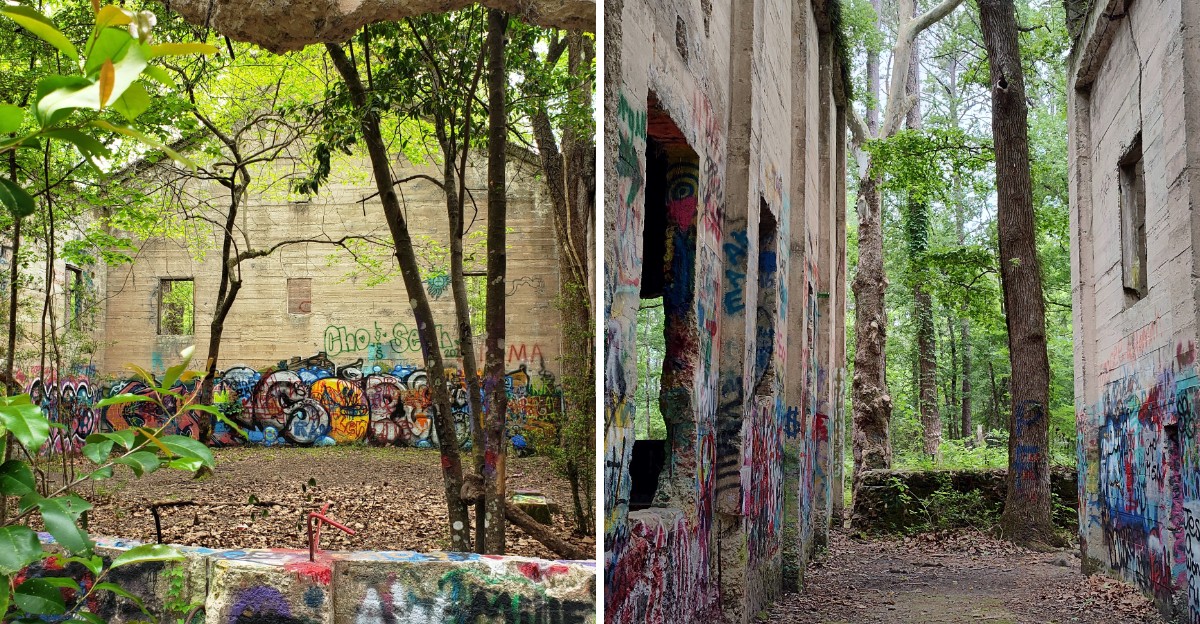
Concrete walls rise unexpectedly from the trees at the end of a Texas forest trail. They are all that remains of a sawmill complex that once supported a busy lumber community, now surrounded by pine woods and the sounds of a nearby creek.
The mill began operating in the early 1900s, and the town eventually included homes, a hotel, and a company store. Fires and the decline of milling brought the operation to an end.
Today, a roughly five-mile round-trip hike leads from a recreation area to the ruins.
I find the contrast between the surviving concrete and the surrounding forest hard to ignore. You can walk along the creek, pass through shaded stretches, and finally see where an entire community once worked.
The empty structures make the past feel close without needing anyone to recreate it.
Concrete Giants Still Stand Where A Whole Town Once Hummed
Ghost towns usually leave a few chimneys and a lonely sign. The Aldridge Saw Mill left something far bolder, with massive concrete buildings rising out of the Angelina National Forest.
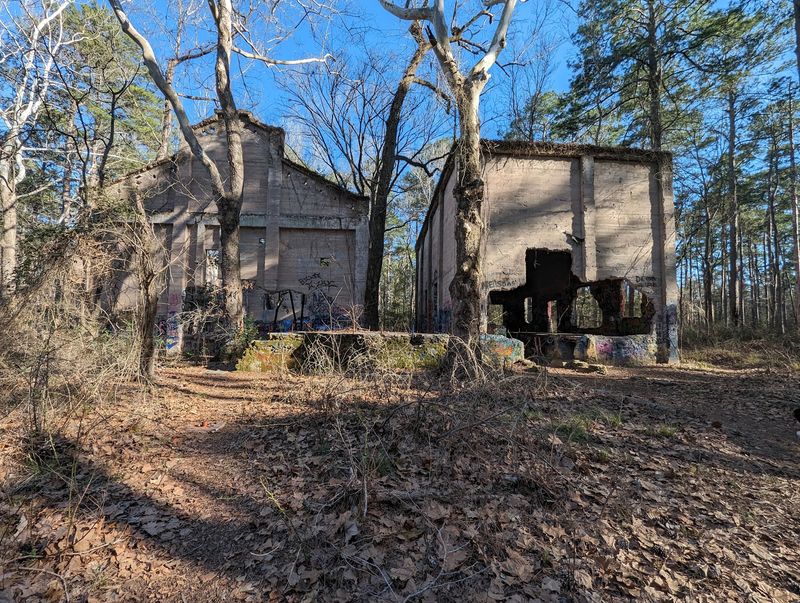
The site sits deep in East Texas pine country, and the ruins look almost too big for the woods around them. Roofless walls, tall window openings, and thick foundations give the place a castle-like feel.
Hal Aldridge started building the mill in 1903, and it was running by 1905. At its peak, it turned out around 125,000 board feet of lumber every single day.
That made it one of the larger lumber producers in East Texas. Up to 500 workers kept the saws moving and the logs rolling in.
The concrete you see today wasn’t the original plan. Those sturdy walls came later, after trouble struck, which is a story worth its own section.
For now, just know the Aldridge Saw Mill is now an official historic site. It’s part of a national forest and sits on the National Register of Historic Places.
That’s a pretty impressive résumé for a building with no roof. It also means you can visit this slice of Texas history without paying any admission fee for the ruins themselves.
A Fire Turned Wooden Buildings Into Stone-Tough Survivors
August 25, 1911, was a rough day in Aldridge. Fire swept through the original wooden mill buildings and destroyed them.
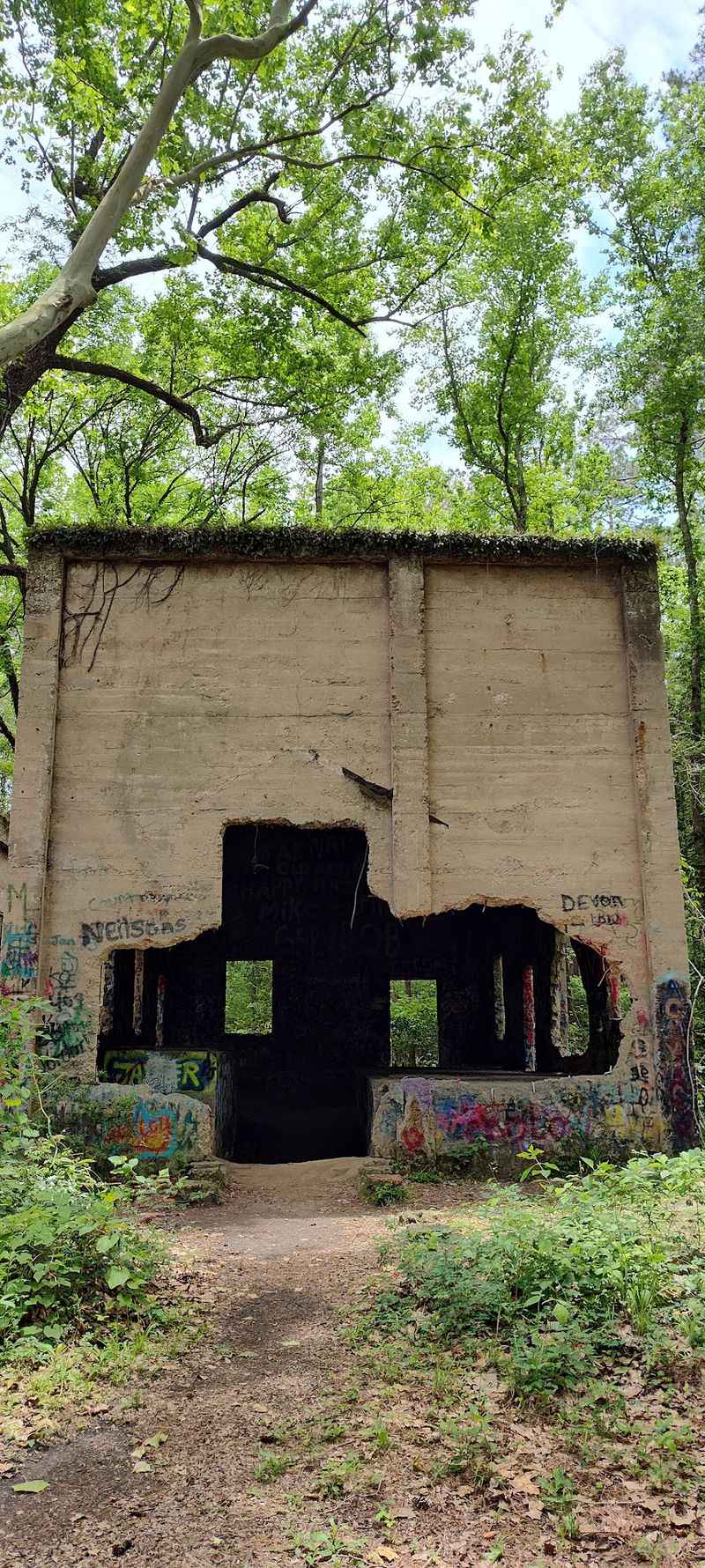
Plenty of companies might have packed up and moved on. The Aldridge crew rebuilt instead, and this time they chose hand-poured concrete.
That one decision explains why you can still stand beside these walls more than a hundred years later. Wood would have rotted away long ago in the humid Pineywoods.
The remaining structures include parts of a boiler building, an engine building, and a fuels building. You’ll also find traces of the power plant and a dry kiln.
Each one played a role in turning raw logs into finished lumber. Boilers made steam, engines turned that steam into power, and kilns dried the boards.
Fire wasn’t done with Aldridge, though. A second blaze hit in 1914, and Hal Aldridge handed the business to his brother, F.W.
Then another fire struck in 1919. You have to admire the stubbornness here, even if luck clearly wasn’t on their side.
Standing near these walls, you can almost see the lesson the builders learned the hard way. Concrete doesn’t burn, and that’s why this ghost town still has bones.
Hundreds Of Families Once Called This Quiet Clearing Home
Back in 1913, this spot was buzzing. Somewhere between 1,000 and 1,500 people lived in Aldridge, mostly in about 200 company houses.
The town was its own little world. It had a hotel, a company store, a post office, a blacksmith shop, a train depot, and two schools.
By 1911, records counted 76 buildings in the community. That’s a lot of life packed into a forest clearing.
Company towns like this one were common across East Texas during the timber boom. Workers lived, shopped, and sent their kids to school all within walking distance of the mill.
Kids probably grew up with the sound of saws as background music. The blast of train whistles likely counted as the town alarm clock.
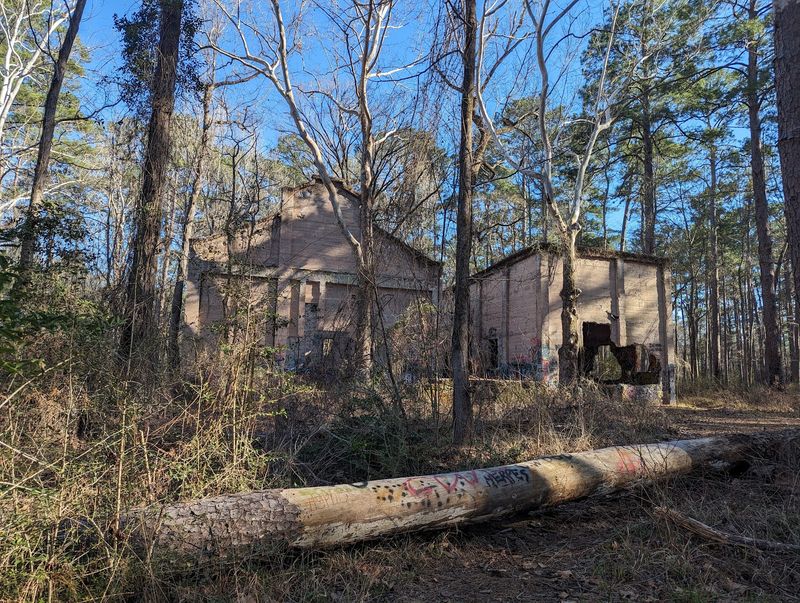
Almost none of that remains now. The houses, the store, and the schools have faded into the forest floor.
That’s what makes the concrete ruins so striking. They’re the last big clue that a real town with real families once stood here.
As you walk the grounds, it helps to keep those numbers in mind. Each empty patch of woods may have been a front porch, a garden, or a schoolyard full of noise.
Your Walk In Follows The Path Old Logging Trains Once Rolled
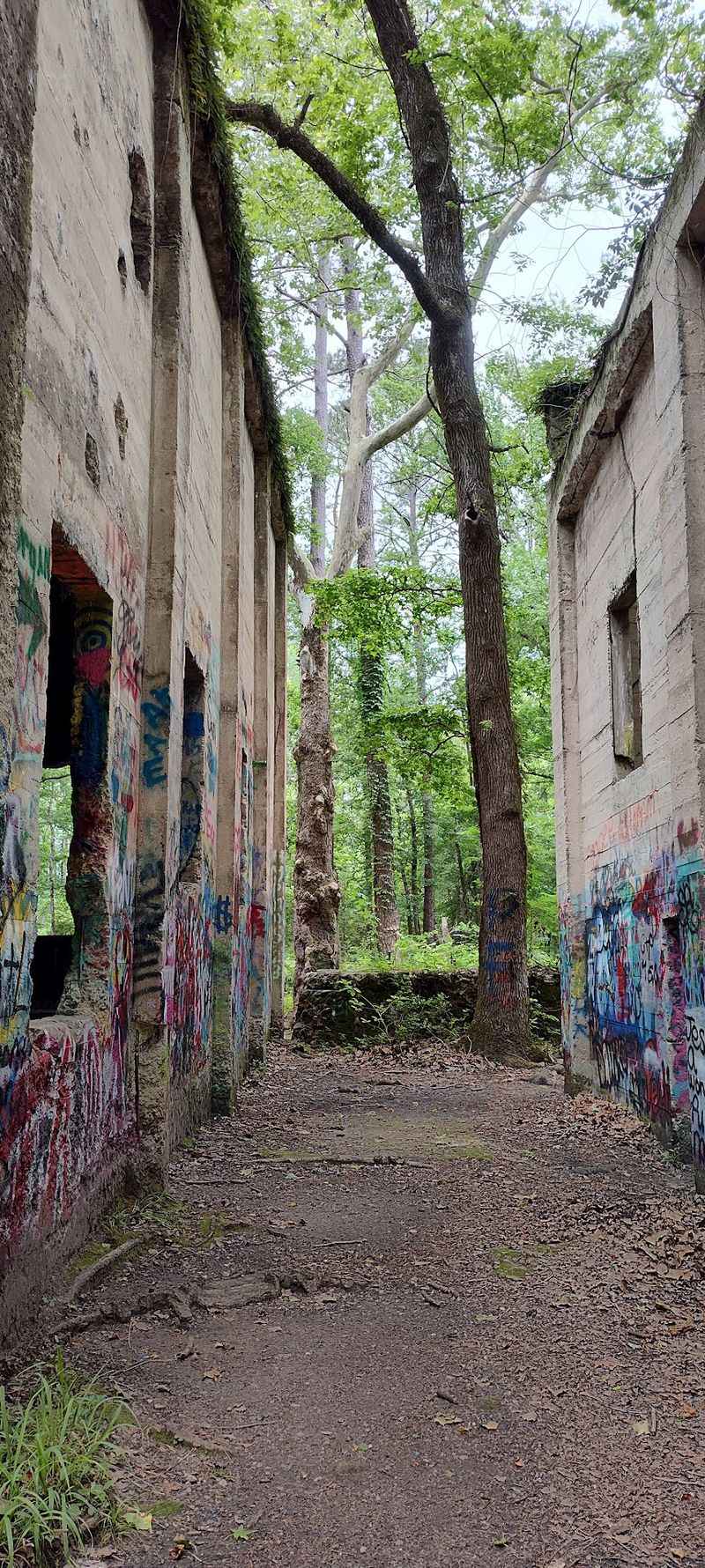
Getting there is half the fun, and it comes with a history lesson built in. The Sawmill Hiking Trail runs roughly 2.75 to 3 miles from Boykin Springs Recreation Area to the ruins.
Parts of the trail follow an old tramway. That rail line once hauled logs through these woods to the busy mills.
So you’re literally walking where timber used to ride. It’s a fun thought when you’re a mile in and your legs start asking questions.
The hike winds through the Angelina National Forest, one of the prettiest stretches of piney woods in Texas. It’s a nice way to build up anticipation before the ruins appear.
Prefer a shorter stroll? There’s also a gated trail off County Road 34, also called Forest Road 326, that gets you much closer.
From that gate, it’s a quick walk to the mill. That option works well for families with younger kids or anyone short on time.
Both routes end at the same jaw-dropping concrete shells. Pick the long trail for the forest experience, or the short one for a fast history fix.
Either way, wear sturdy shoes. The ground can be uneven, and roots love tripping up distracted sightseers.
The Trees Are Clearly Winning This Slow-Motion Takeover
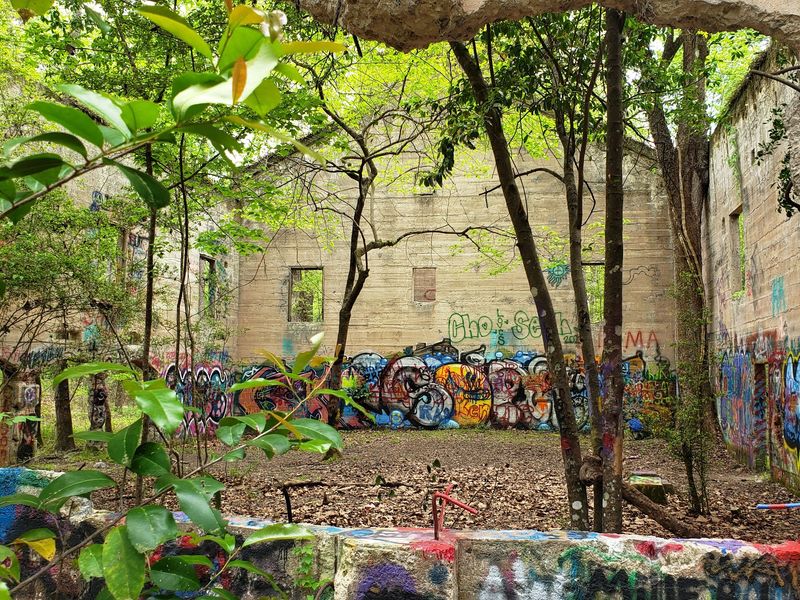
Nature is a patient landlord. At the Aldridge Saw Mill, large pines and hardwoods now grow right out of old concrete walls and foundations.
These are the same spots that once supported heavy mill machinery. Now they support trees, which feels like a bit of poetic payback.
The mill existed to cut down the forest. A century later, the forest is quietly moving back in.
The surrounding woods add plenty to look at too. Keep your eyes open for flowering dogwood and magnolia trees along the way.
The trail area also shows shifts between different forest types. You can spot longleaf pine, bald cypress, and loblolly pine mixed with hardwoods.
That variety makes the walk feel different around each bend. One stretch feels open and airy, while another feels shady and close.
Spring is a great time to catch those blooming trees. The white flowers against gray concrete make a striking picture.
Photographers will have a field day here. The mix of rough concrete, green leaves, and filtered sunlight creates moody, dramatic shots without much effort.
Just don’t climb the walls for a better angle. The trees are allowed up there, but you’re not.
Look For The Old Pond That Once Kept The Boilers Fed
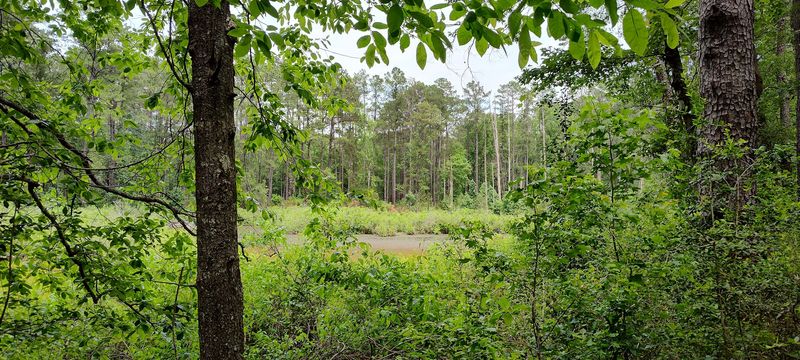
Steam needs water, and lots of it. That’s why the Aldridge mill had its own pond nearby to feed the hungry boilers.
Today, that sawmill pond is a calm, quiet spot. It’s hard to believe it once played a key role in a loud, nonstop industrial operation.
The contrast is what makes it worth a look. Still water now sits where a working water supply kept giant machines running.
You can also find remnants of the old railroad tram around the site. That tram moved logs in and carried finished lumber out.
Put the pieces together and you get a clear picture of how the mill worked. Logs arrived by rail, water became steam, and steam powered the saws.
Exploring with that system in mind turns the visit into a fun puzzle. Which building did what?
Where did the logs enter?
Kids especially might enjoy playing detective here. Give them the clues and let them guess each building’s job.
Bring bug spray, too. Water and thick woods often mean mosquitoes in East Texas, and they don’t care about history.
A little preparation keeps the focus on the ruins instead of itchy ankles.
When The Timber Ran Out, The Whole Town Packed Up
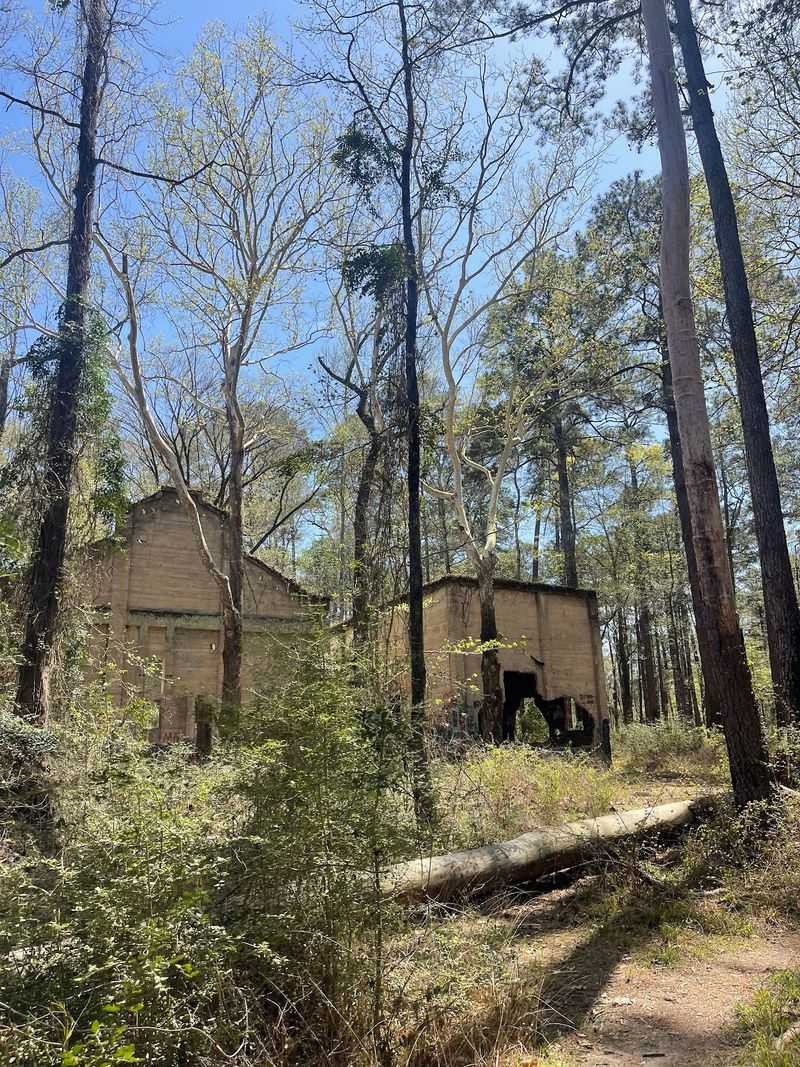
Rising fast and falling faster pretty much sums up Aldridge. After the 1919 fire, the Aldridge Lumber Company stopped operations.
By 1923, the mill had closed for good. The main reason was simple: the surrounding timber had been cut too heavily.
No trees meant no lumber. No lumber meant no jobs, and families began leaving for work elsewhere.
The last real lifeline was the railroad. In 1927, the rail spur from Rockland to Turpentine was abandoned.
That sealed the deal. Aldridge officially became a ghost town, barely a generation after it started.
Think about that timeline for a second. Kids born when the mill opened would have been young adults when the town disappeared.
In 1935, the U.S. Forest Service acquired the property.
It became part of the Angelina National Forest, which protects the land today.
The story carries a real lesson about using resources wisely. Overcutting built the town quickly, but it also emptied it quickly.
Now the forest has grown back around the ruins. It’s a hopeful twist, showing how land can recover when it’s given time and care.
Admire From Outside, Because These Walls Have Earned A Rest
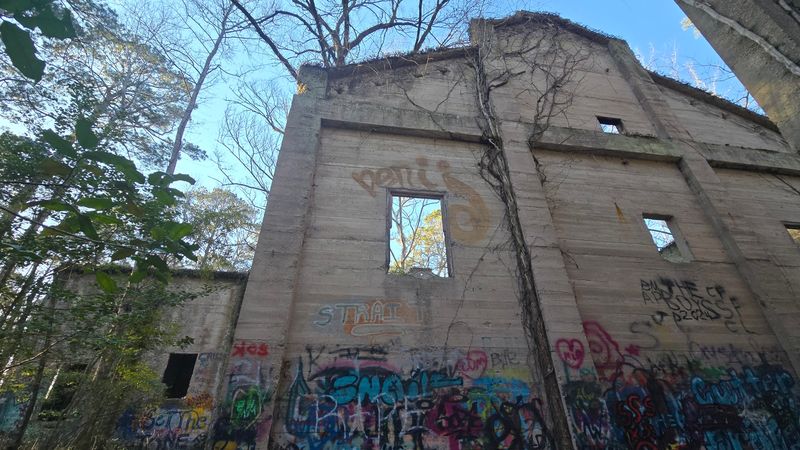
A century of weather is tough on anything, even concrete. The U.S.
Forest Service has closed the buildings to public entry because of deterioration and structural concerns.
That means you’ll enjoy the ruins from the outside. Honestly, the exterior views are impressive enough to fill your camera roll.
The sheer scale is what grabs you. Standing beside these towering shells shows just how big this operation really was.
You’ll also notice graffiti on many of the walls. Some see it as part of the site’s modern story, but it does damage a protected historic place.
The Forest Service works to manage the site and deal with problems like vandalism and overgrowth. Visitors can help by leaving every wall exactly as they found it.
Here’s a simple rule for the day. Take photos, take notes, and take your trash home.
Spooky stories add another layer for some visitors. Local lore tells of a woman lost to the saws, with tales of shrieks echoing at night.
Nobody can prove it, of course. Still, the legend gives the quiet ruins an extra shiver, especially as the shadows grow long in the late afternoon.
Plan Your Trip Right And This Ghost Town Is An Easy Win
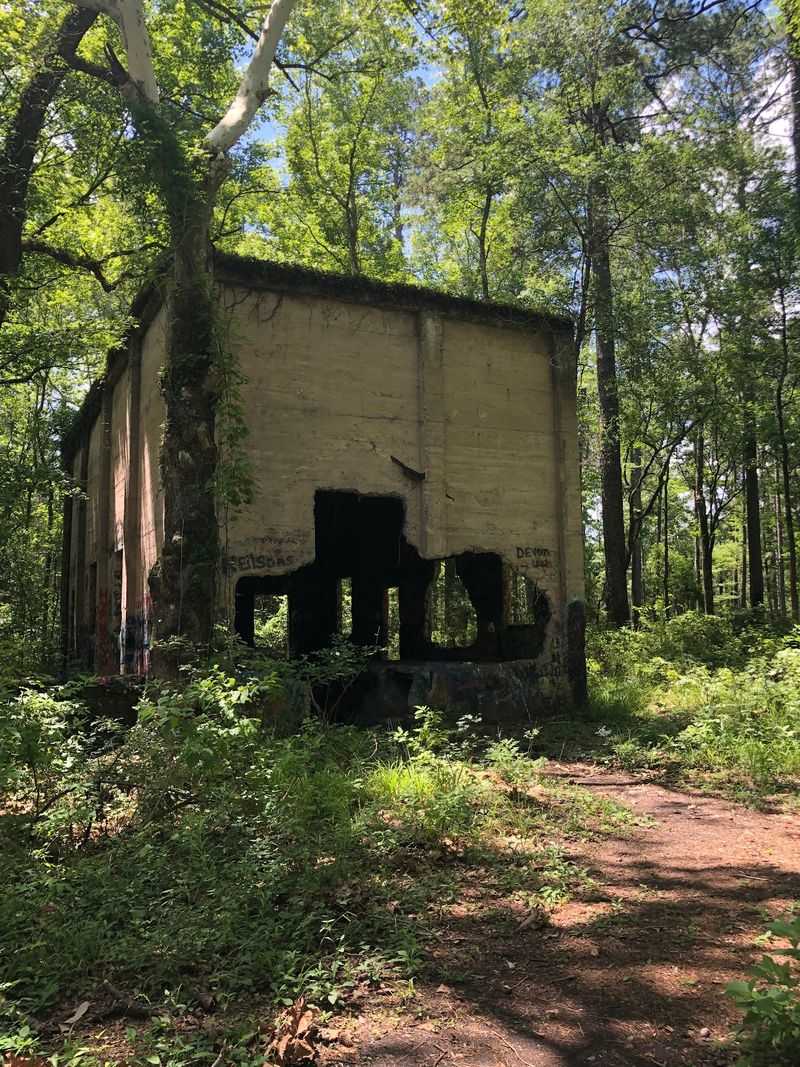
Good news for budget travelers. Visiting the Aldridge Saw Mill ruins doesn’t require an admission ticket.
Google Maps lists the site at Rockland, TX 75938, deep in the Angelina National Forest. The nearby forest office sits in Zavalla, about a short drive away.
You have two main ways in. Start at Boykin Springs Recreation Area for the longer trail, or use the gate off County Road 34 for a short walk.
Boykin Springs may charge a day-use fee for parking. If you only want the ruins, the closer gate is the quicker, simpler choice.
Pack like you’re heading into real woods, because you are. Water, snacks, sturdy shoes, and mosquito spray should all make the cut.
Cell service can be spotty in national forests, so download a map ahead of time. That small step can save a lot of guessing at forest road turns.
Give yourself time to wander once you arrive. The ruins reward slow looking, from tiny details in the concrete to trees sprouting overhead.
This corner of Texas packs history, nature, and a little mystery into one easy outing. Not bad for a town that vanished a century ago.
