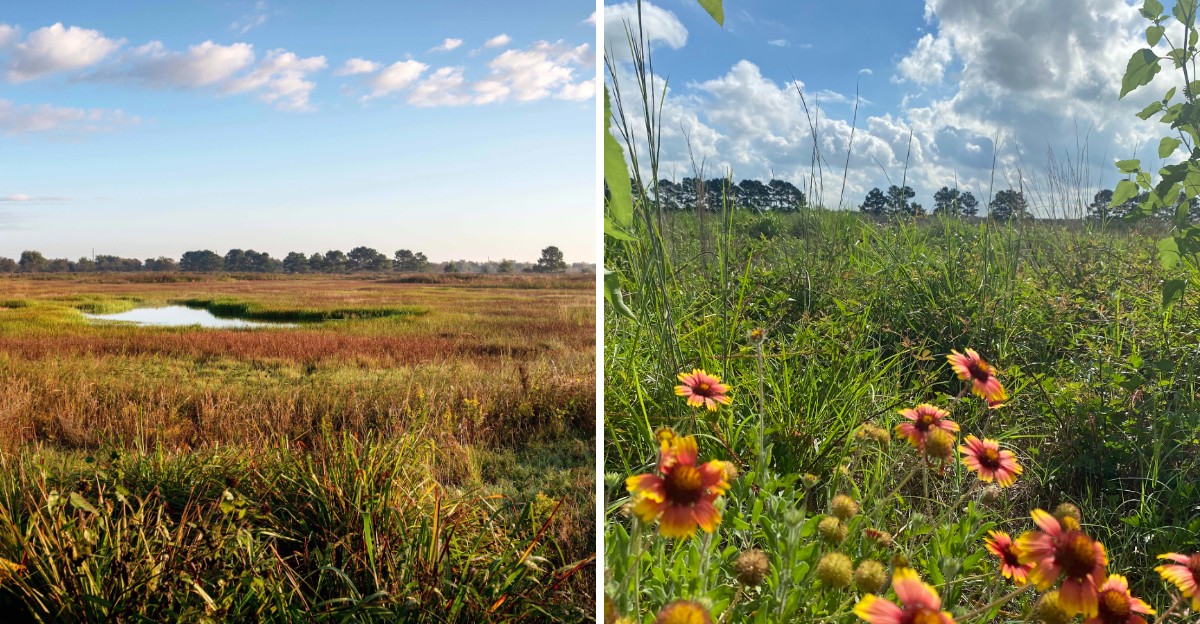
Prairie used to cover millions of acres in Texas. Now, only small pockets remain.
This preserve protects hundreds of acres of it, and it sits just outside one of the state’s biggest cities. That is what makes it so special.
You can drive a short distance from the freeway, step onto a trail, and suddenly be surrounded by native grasses, wildflowers, and the kind of open sky that makes you forget where you are. It is a quiet, peaceful place, a reminder of what the land looked like before development took over.
Birds and pollinators thrive here, and the trails offer an easy way to explore without a long drive. It is not flashy.
It does not need to be. It is just a piece of Texas history that has been allowed to survive.
Worth a visit, especially if you need a break from the city.
From Research Farm To Restored Prairie
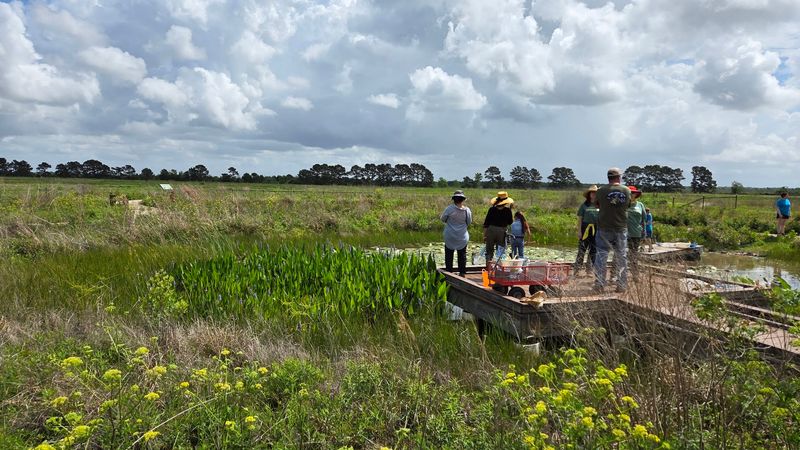
Land has memory, and this particular patch of Waller County has worn a few different hats. The Coastal Prairie Conservancy picked up the property from Dow Chemical back in 2002, when it was still functioning as an agricultural research farm.
Fields, equipment, tidy rows of crops. Not exactly the wild prairie people picture today.
The big turning point came in 2017. Crews began a serious restoration push, reshaping the ground to rebuild wetlands that had long since been drained and seeding native prairie plants across the open acreage.
Wetland construction and prairie seeding wrapped up that same year, but the work never really ended, because restored land needs decades of care to hold its shape.
What makes the story compelling is how deliberate it all is. Nothing here grew back by accident.
Every pocket of shallow water, every stand of grass, traces back to planning, seed collection, and volunteers willing to spend hot mornings with shovels.
Visitors sometimes assume a preserve means untouched wilderness. Here it means the opposite, in the best possible way.
Standing among the grasses now, it is hard to picture the plowed rows that used to cover this ground. The transformation makes the site a flagship example of what prairie restoration can accomplish in a region where development moves fast.
For anyone curious about how damaged land recovers, few places in southeast Texas tell the story more clearly, or more hopefully, than this one.
Meet The Grass That Gave The Place Its Name
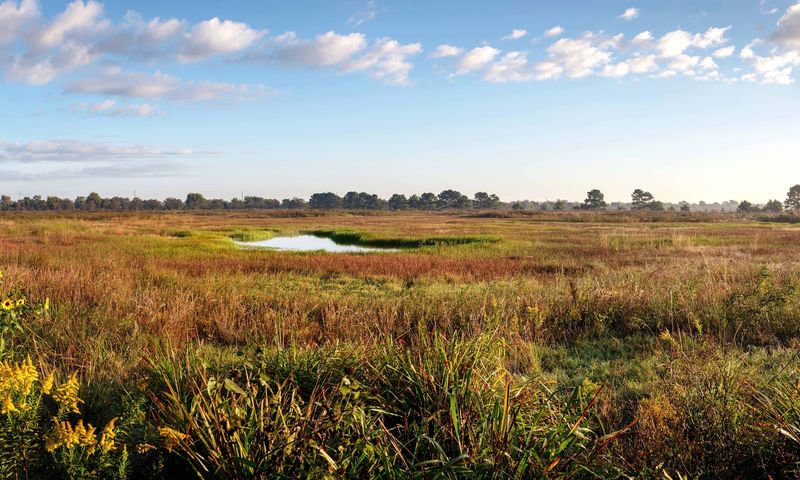
Indiangrass earns its billing. The plant can shoot up to seven feet tall, and in late summer and early fall its seed heads turn a warm bronze-gold that catches low sunlight like metal.
Photographers love that window. So do the bugs.
The real magic happens underground, though, where roots reach as deep as nine feet. Think about that for a second, a grass with roots taller than most rooms.
Those roots build soil, lock away carbon, and let the ground soak up enormous volumes of rainwater instead of shoving it downstream toward neighborhoods.
In a region that knows flooding all too well, that quality is worth more than any landscaping.
Walking the preserve gives a sense of scale that photos flatten. The grasses sway in whole waves when wind crosses the open ground, and the sound is soft and constant, closer to rushing water than rustling leaves.
Native prairie is not a single plant, of course. Indiangrass shares the ground with little bluestem, switchgrass, wildflowers, and dozens of forbs that bloom at different points in the year, which keeps the color shifting from spring through autumn.
Pay attention to the layers. Low flowers near the boot tops, mid-height stems, then those towering seed stalks above eye level.
Once the structure clicks, a prairie stops looking like an empty field and starts looking like a crowded, busy neighborhood. That shift in perception is probably the best thing a visitor can take home.
Walking The Ann Hamilton Trail
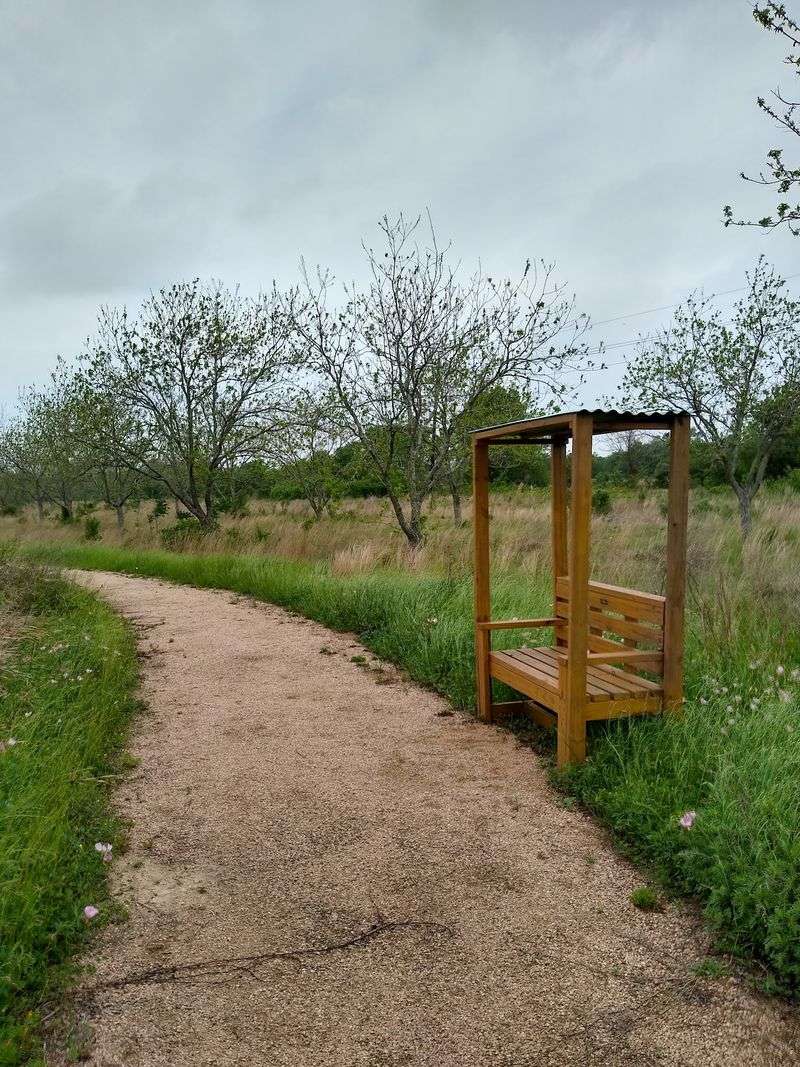
The Ann Hamilton Trail is the route most first-timers take, and for good reason. Roughly a mile and a half of self-guided path loops through both prairie and wetland, so the scenery shifts without ever getting steep.
Flat terrain, all of it. Knees will be grateful.
Along the way, native plants are easy to study up close, which helps when trying to tell one tall grass from another. Wildlife shows up on its own schedule, so patience pays.
Move slowly, stop often, and the number of things noticed roughly doubles.
A second option, the South Trail, adds about 1.3 miles for anyone wanting more ground to cover.
Both trails are pedestrian only. No bikes, no horses, no motorized vehicles, which keeps the soundscape blissfully free of engines and lets bird calls carry across the open space.
Practical advice matters here more than at a shaded park. Prairie means sun, and there is very little cover once the path leaves the buildings behind, so a hat, sunscreen, and more water than seems necessary all belong in the bag.
Sturdy closed shoes handle the occasional damp patch near the wetlands.
Morning walks tend to be the most rewarding, cooler and busier with wildlife. Cameras with a bit of zoom help, though binoculars often prove more useful.
Staying on the marked paths protects nesting areas and fragile plantings, and honestly, the views from the trail are already generous enough.
Birds, Blinds And The Central Flyway
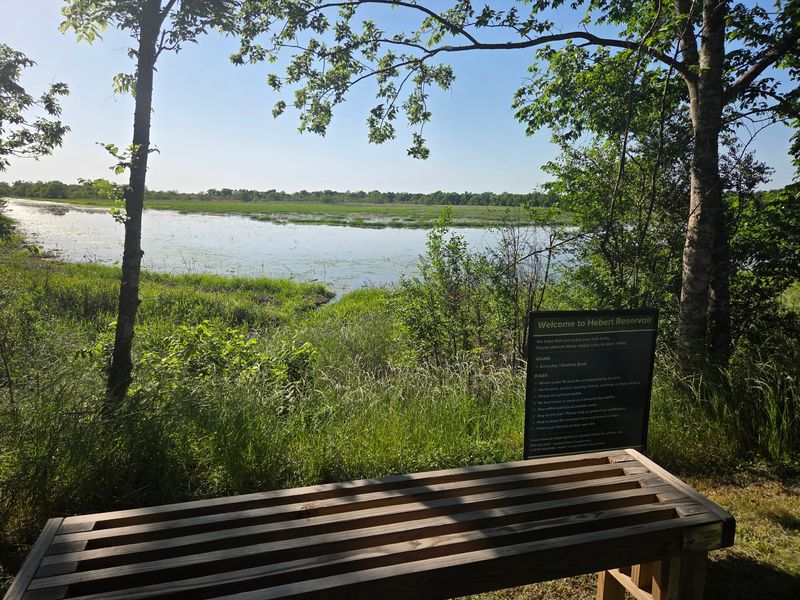
Birders figured this place out a long time ago. The preserve sits along the Central Flyway, the continental highway migrating birds follow twice a year, and restored wetlands make an appealing rest stop for travelers with tired wings.
The Pintail Bird Blind is the spot to settle into. It overlooks wetland habitat and gives a clear, unhurried view without spooking whatever happens to be wading around out there.
Waterfowl, herons, egrets, shorebirds poking through the shallows, all of it rotates with the seasons.
Beyond the water, the list of residents gets wonderfully strange. Eastern spotted skunks, western chicken turtles, and crawfish frogs share the ground with coyotes, bobcats, deer, and squirrels.
Beavers work the wetlands. Alligators turn up too, which is a good reminder to keep a respectful distance from the water’s edge.
Monarch butterflies pass through during migration, drawn by the flowering plants, and lizards scatter off the path in quick bursts on warm afternoons.
Owls, hawks, and even bald eagles have been spotted roosting in the pine trees on the property. Those pines are not original prairie species, but they were left standing because raptors clearly appreciate them.
A few tips make wildlife watching far better. Arrive early, keep voices low, and resist the urge to feed anything.
Bring binoculars if possible, since much of the action happens at a distance across open ground. Sit still for fifteen minutes and the prairie usually decides to carry on as if nobody is there.
Where Thousands Of Native Plants Get Their Start
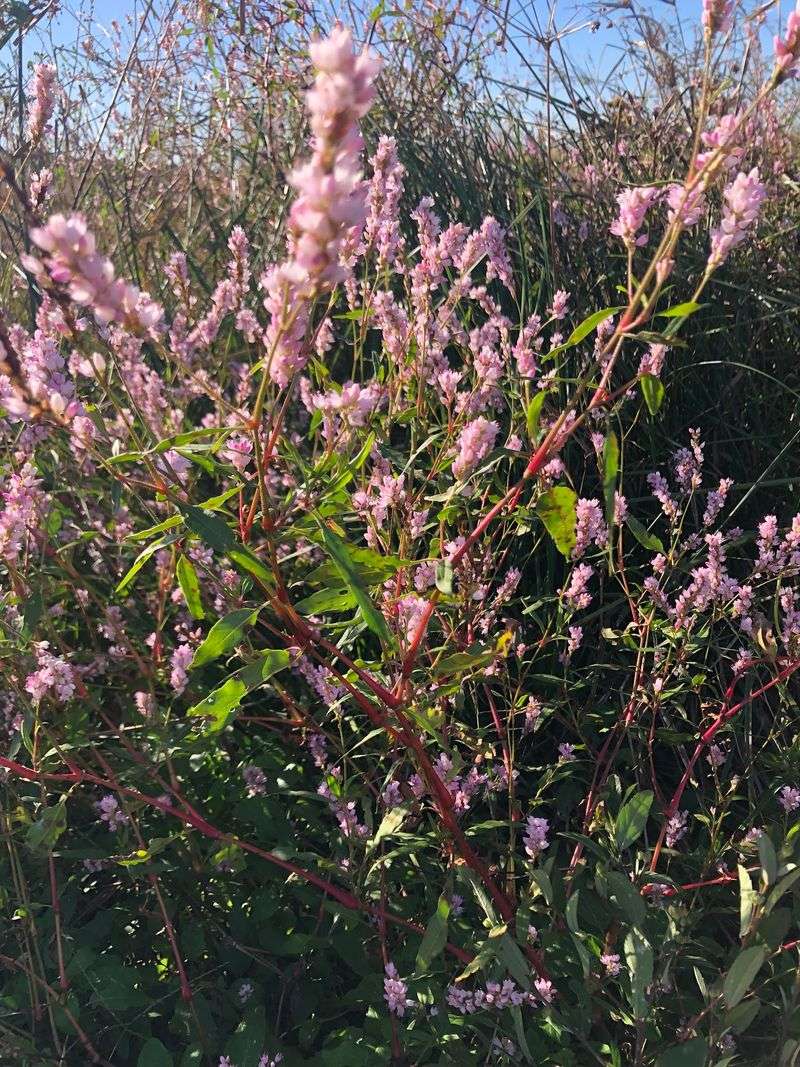
Hidden into the property is a working native plant nursery, and it might be the most quietly impressive corner of the whole preserve. Thousands of plants are grown here every year.
Not ornamental varieties from a catalog. Locally sourced native seed, collected regionally so the genetics match the land they will eventually return to.
Those seedlings ship out to restoration projects all across southeast Texas, which means this small operation shapes landscapes far beyond the fence line. It is prairie restoration in miniature, tray by tray.
Demonstration gardens near the buildings let visitors get close to plants that are harder to identify out in the tall grass. Labels help.
So does seeing a mature specimen next to a young one.
Gardeners tend to linger here, and the inspiration is practical, since many of these species handle Texas heat and downpours better than anything sold as a lawn.
The ecological payoff runs deep, literally. Native root systems hold soil in place, filter pollutants out of runoff, and recharge groundwater that feeds the regional drinking supply.
Flowering species feed native pollinators, monarchs included, at exactly the times those insects need fuel.
For anyone thinking about swapping part of a yard for native plantings, walking through the gardens is a useful education. Note which plants look good in which season, jot down names, and ask staff or volunteers about what thrives nearby.
Small choices at home add up to real habitat.
The Katy Prairie Welcome Center Anchors It All
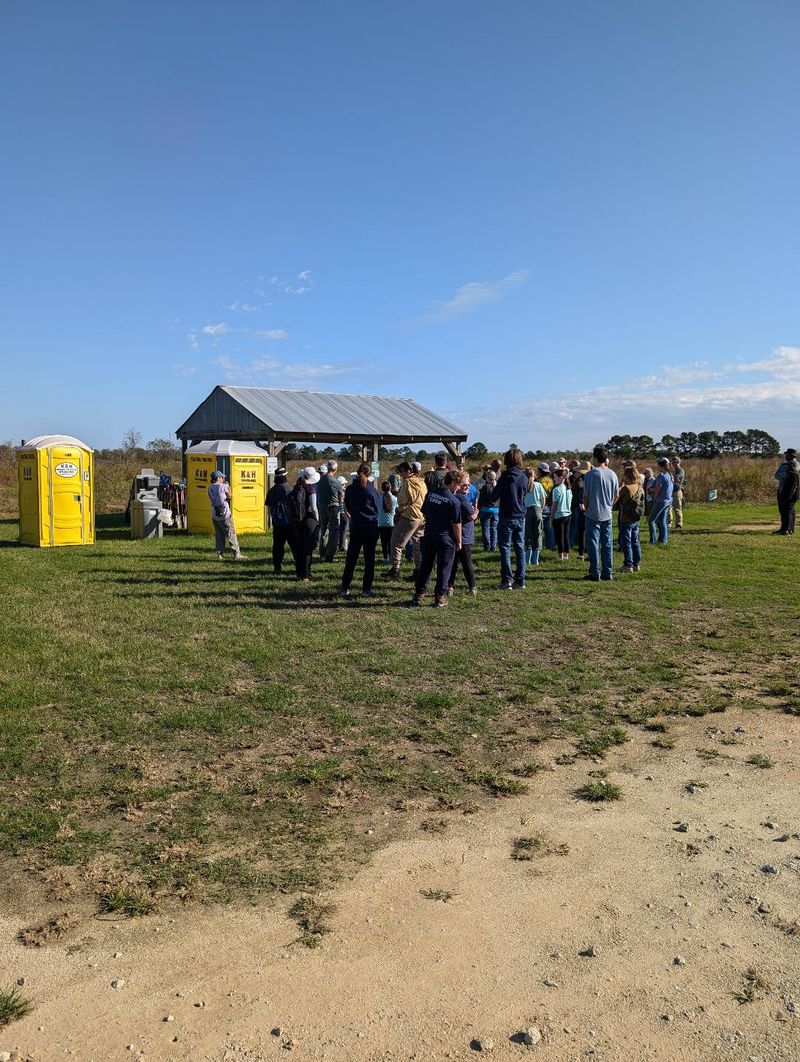
Pull through the gate at 31975 Hebert Rd in Waller and the first thing in view is a substantial building with a covered area full of picnic tables. That covered pavilion does a lot of heavy lifting.
Volunteers gather there before and after work sessions. Families use it for shade.
Everyone uses it for a breather.
The Katy Prairie Welcome Center serves as the hub for visitors, volunteers, researchers, and partner organizations. Educational exhibits inside explain why the coastal prairie matters, how the restoration works, and what lives out in the grass.
Restrooms and a water bottle refill station are available, which is more valuable than it sounds after a couple of sunny miles.
Meeting spaces host year-round programming. Workshops, guided prairie walks, tours, and lunch and learn sessions rotate through the calendar, giving repeat visitors reasons to come back in different seasons.
Families with children tend to do well here, since the exhibits break big ecological ideas into pieces kids can actually hold onto.
Checking the Conservancy’s website before driving out is smart, because programs fill and hours shift around events. Arriving during posted hours matters too, since the gate is not always open outside them.
The center’s real purpose goes beyond information. It connects a stretch of restored grassland to the people living in the metro area just down the road, making the case that prairie is not empty space but working infrastructure for wildlife, water, and regional resilience.
A Small Piece Of A Much Bigger Conservation Puzzle
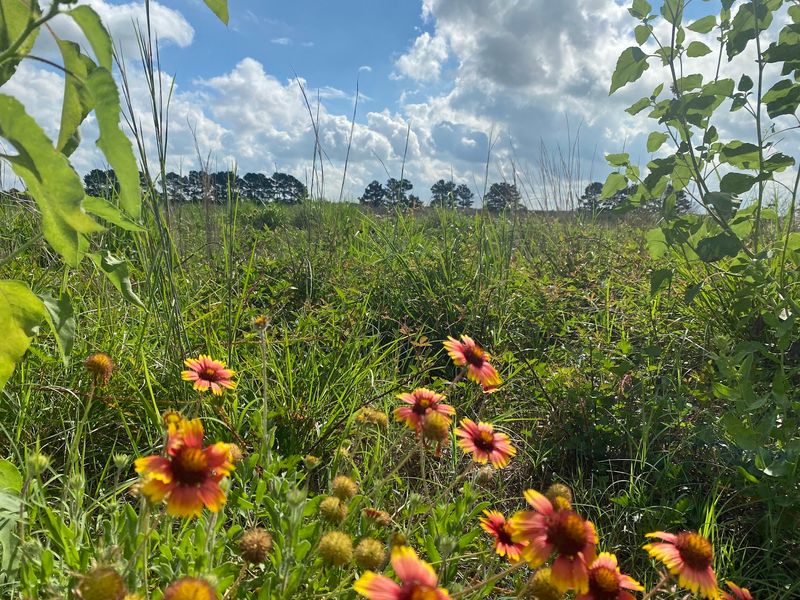
Fifty-five acres of restored prairie and wetland sit within the preserve itself, split roughly between grassland and water depending on which map is used. That number sounds modest until it gets placed in context.
The Coastal Prairie Conservancy safeguards more than 33,600 acres across southeast Texas, and Indiangrass functions as the gateway to the far larger Katy Prairie Preserve.
Think of it as the welcome mat for a landscape most people never realize exists on Houston’s doorstep.
Why protect so much grass? The answer comes down to plumbing, mostly.
Dense prairie shoots slow rainfall, while those extraordinary root systems capture, filter, and push water down into the aquifer instead of letting it sheet across pavement.
Flooding gets reduced. Water quality improves.
Carbon gets stored in soil that took centuries to build.
Those benefits reach neighborhoods that have no idea they are downstream of a preserve, which is exactly the point.
Habitat value stacks on top. Pollinators, migratory birds, amphibians, and mammals all need unbroken stretches of native ground, and fragmented patches simply do not work as well as connected ones.
Every acre the Conservancy adds strengthens the whole network.
For visitors, the takeaway is perspective. A short walk through fifty-odd acres is a sample of something enormous and endangered, given that less than one percent of the original coastal prairie survives.
Seeing it firsthand makes the abstract idea of conservation feel a good deal more concrete.
Timing The Trip And Prairie Etiquette
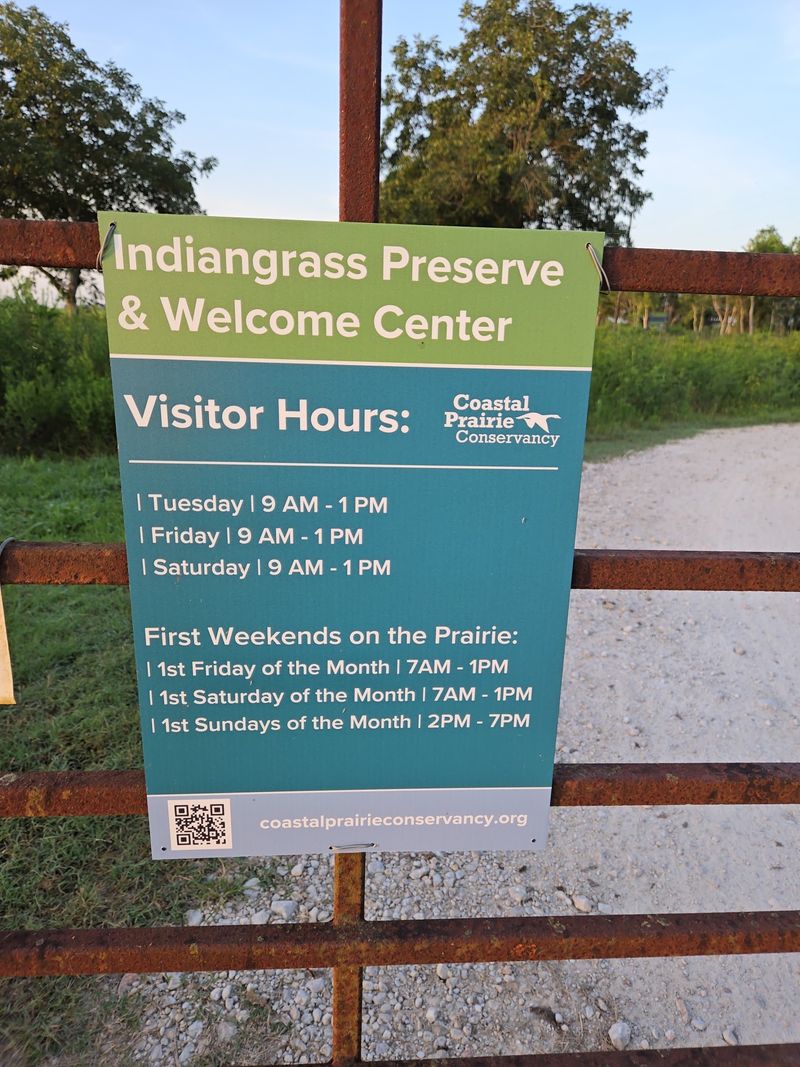
Showing up unannounced is the one mistake worth avoiding. Public hours are limited, running Tuesdays, Fridays, and Saturdays from 9:00 AM to 1:00 PM.
First Weekends on the Prairie open things up a bit. First Fridays and first Saturdays start earlier, at 7:00 AM, running until 1:00 PM, and first Sundays flip to an afternoon window from 2:00 PM to 7:00 PM.
Those early and late slots are the sweet spots for light and wildlife.
Rules are straightforward and easy to respect. Stay on designated trails so sensitive habitat and nesting areas stay undisturbed.
Walking is the only way to get around, since bicycles, motorized vehicles, and horses are not allowed. Pack out whatever gets packed in, and leave wildlife alone, no feeding and no chasing.
Pets stay home too. Service animals are the only exception.
Season shapes the experience quite a bit. Spring brings wildflowers, late summer and early fall deliver those golden Indiangrass seed heads, and winter turns the wetlands into a waterfowl destination.
Texas heat is no joke from June through September, so plan around morning hours and carry plenty of water.
Insect repellent belongs in the bag year-round, along with a hat and sunglasses for the wide-open stretches.
Above all, slow down. The prairie does not reveal itself to anyone marching through at speed, and the best moments usually arrive during the pauses.
