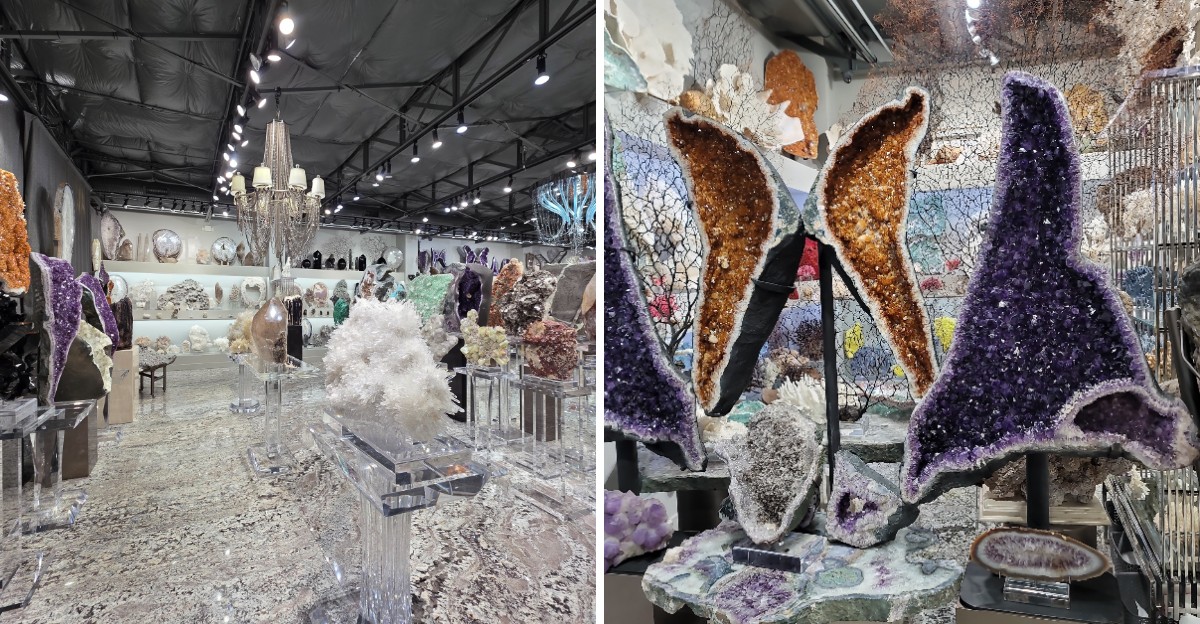
A store that feels like a museum. That is the kind of place that makes you stop and stare.
This Texas shop is packed with fossils, crystals, and minerals, each one with its own story and its own kind of beauty. You can spend hours browsing the shelves, picking up ammonites, holding geodes, and admiring crystals that look like they came from another planet.
The collection is impressive enough to rival any natural history museum. But here, you can actually take something home.
It is the kind of place that appeals to collectors, curious kids, and anyone who has ever picked up a rock and wondered where it came from. The staff is knowledgeable and happy to share what they know.
No pressure to buy. Just explore.
And learn. And maybe leave with a new treasure.
A visit here is part shopping trip, part educational adventure. And it is worth every minute.
A Family Passion That Began Back in 1982
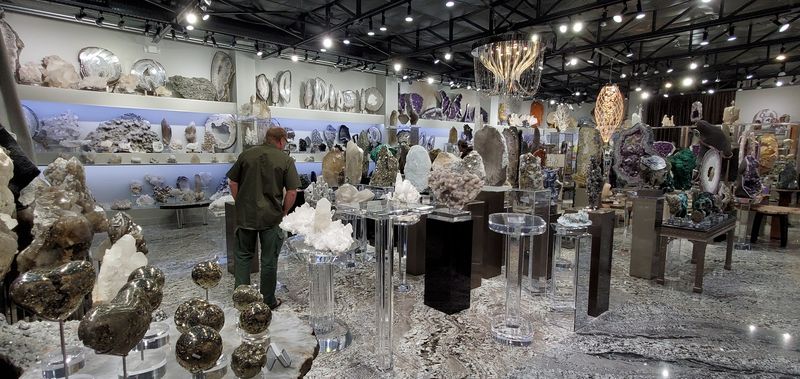
Some hobbies fade after a few years, but a love of minerals that began for Empress Gilbert in 1982 only grew stronger with time. What started as a personal fascination slowly turned into a small business run out of her home.
Picture shelves and tables filling up with specimens until the house practically ran out of room.
In 2010, Empress teamed up with her son, Micah Gilbert, to form the company officially. The pair bought a building in the Dallas Design District and turned it into the showroom that stands there today.
Micah later became president and owner in 2019, bringing serious scientific credentials with him.
He is trained as a geologist, a paleontologist, and a gemologist. Each title matters here.
Geology explains how crystals form deep underground, paleontology covers ancient life, and gemology deals with the quality of precious stones.
The family story shapes the mood of the place in a way that is easy to sense. Instead of feeling like a chain store, the gallery has the warmth of a project built by people who genuinely care about what sits on each shelf.
Visitors often mention meeting Empress or Micah in person, and both are known for sharing facts with real enthusiasm.
For anyone curious about how a hobby can become a life’s work, this backstory is worth keeping in mind while exploring. Every specimen on display connects back to a passion that has been growing for more than four decades.
Not bad for something that began with a few rocks.
Half a Billion Years of Ancient Life
Five hundred million years is a hard number to wrap a brain around. Try this instead.
If all of Earth’s history since the Cambrian Period were squeezed into a single day, humans would show up only in the last few seconds, and the oldest fossils at this gallery would date back to the early morning.
The fossil collection runs from the Cambrian, more than 500 million years ago, all the way up to the Pleistocene Epoch, roughly 20,000 years ago. That range means a single visit can cover ancient ocean life and Ice Age giants in one loop around the room.
Specimens have come from places like Germany, Morocco, Russia, Italy, and the United States.
Trilobites are a great starting point for younger visitors. These armored sea creatures look a bit like oversized pill bugs, and their segmented bodies are surprisingly detailed in stone.
Crinoids, sometimes called sea lilies, are another treat, with feathery arms that look more like plants than animals.
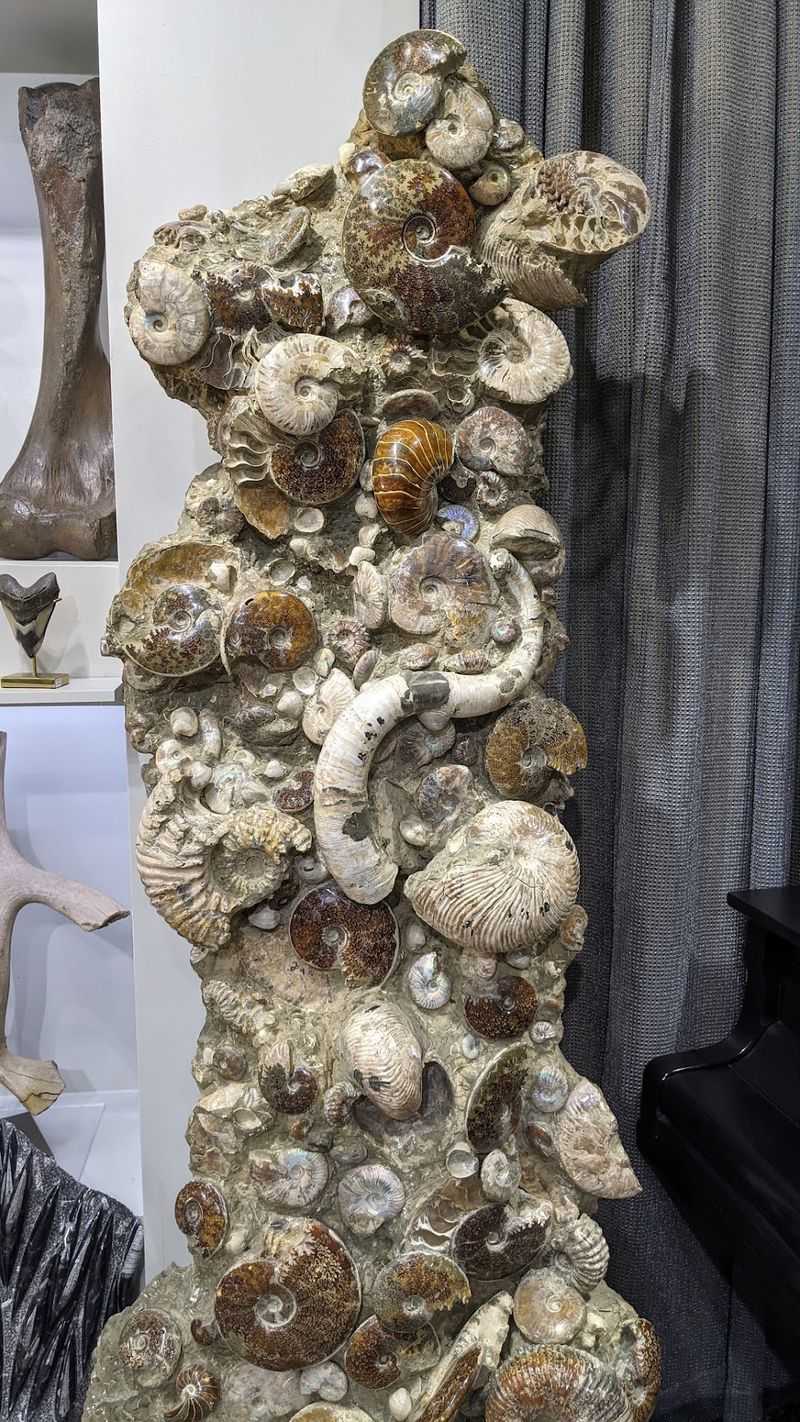
Ammonites might steal the show, though. Their spiral shells curl like cinnamon rolls, and some glow with rainbow colors known as ammolite.
Others have been sliced open to reveal glittering crystal chambers inside, which looks almost too pretty to be real.
A helpful tip is to ask where a fossil was found and how old it is. The answers turn a pretty object into a story about oceans that no longer exist.
Kids especially love learning that a spot now covered in desert was once deep underwater.
Dinosaur Skulls and Mammoth Tusks Up Close
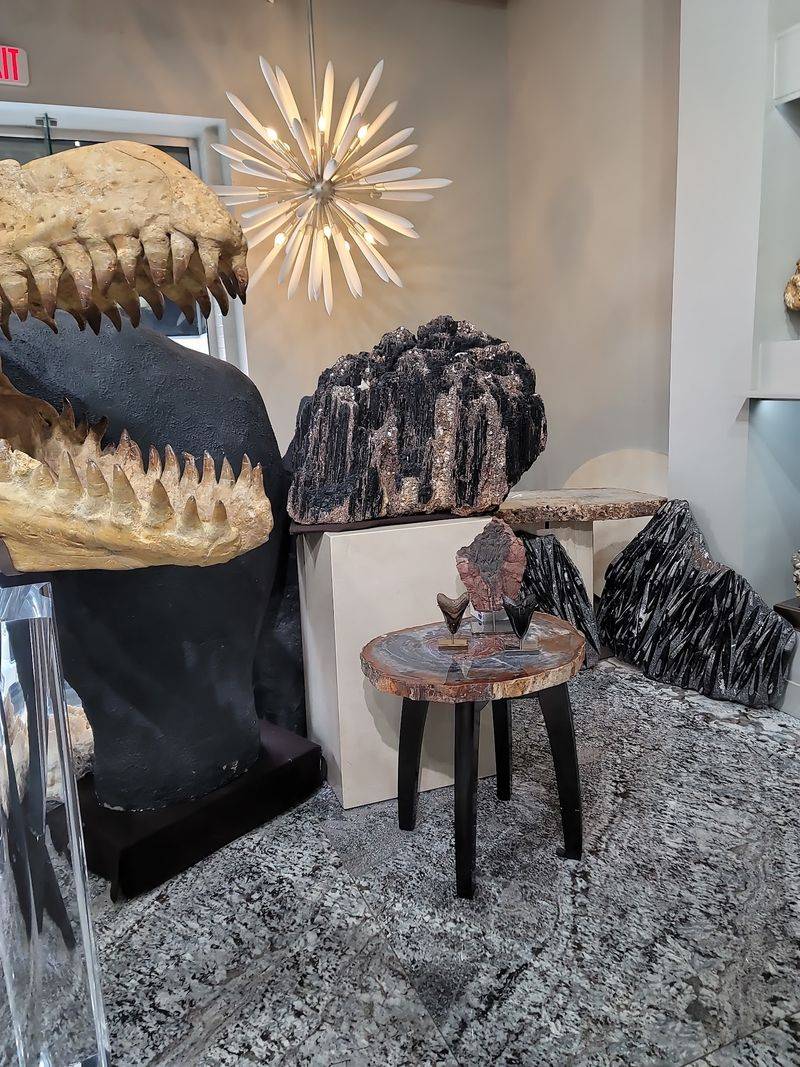
Few things make a grown adult gasp quite like a Triceratops skull. The gallery has featured one, along with an Allosaurus skull and remains of a Mosasaur, the huge marine reptile that ruled ancient seas while dinosaurs walked on land.
Seeing pieces like these outside a big city museum feels a little surreal.
The Allosaurus was a fierce meat eater from the Jurassic Period, with jaws built for tearing. Triceratops came later, famous for its three horns and bony frill.
Mosasaurs, meanwhile, were not dinosaurs at all, which makes a fun fact to share with anyone tagging along.
Then there are the woolly mammoths. Massive tusks and skulls from these Ice Age animals have been part of the collection, and their size alone can be startling.
A curved tusk can stretch longer than a person is tall, and the texture of old ivory shows layers of growth like tree rings.
Collectors also stop by for smaller treasures, such as Mosasaur teeth, which fit neatly in a palm. These make a solid starter piece for a young fossil fan or a thoughtful gift for someone who already has a shelf of rocks at home.
Staff can help explain what makes one tooth different from another.
Inventory changes over time, so the exact giants on display may not match what showed up on the last visit. That is part of the fun.
Checking the gallery website before heading over can give a peek at current highlights, but nothing beats seeing the real scale in person.
Geodes and Crystals in Every Color
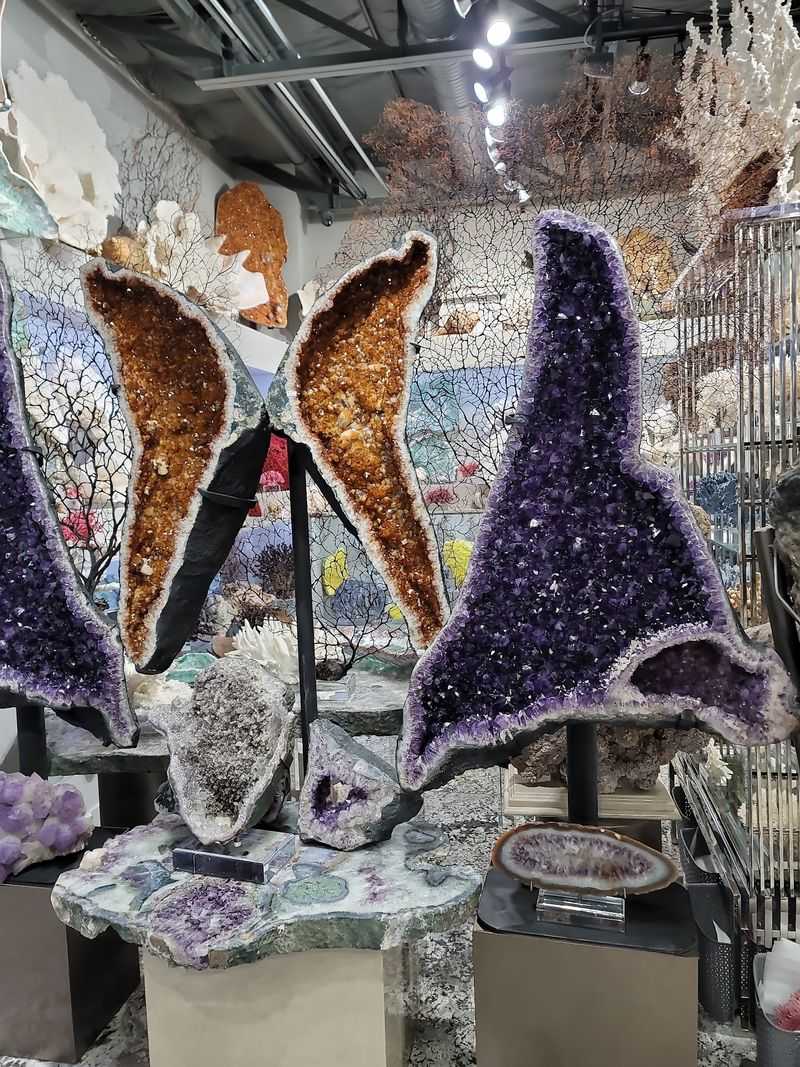
Color is the first thing that hits the eye in the mineral half of the room. Deep blues, fiery reds, and bright greens sit near softer, quieter shades, and the mix makes the space feel almost like a painter’s studio.
Nature, it turns out, has excellent taste.
Geodes play a starring role here. From the outside, a geode looks like a plain, lumpy rock.
Crack it open, though, and a hollow center lined with sparkling crystals appears, like a secret hidden inside a potato.
Some of the geodes at this gallery are enormous, towering over visitors rather than sitting politely on a table. A spot beside one gives a real sense of how much time it takes for crystals to grow, since many form slowly over thousands or even millions of years as mineral-rich water seeps through rock.
That kind of patience is hard to imagine in a world of instant everything.
Crystal clusters and gem-quality specimens round out the collection. Clusters are groups of crystals that grew together, pointing in different directions like a tiny city skyline.
Gem-quality pieces have unusual clarity and color, the kind of traits a gemologist looks for when judging a stone.
Photography lovers should bring a steady hand, because the lighting brings out every glint and edge. Try moving slowly around each piece, since the colors can shift depending on the angle.
A crystal that looks pale from one side might flash bright from another, which keeps the eyes busy for a long time.
Custom Stands That Turn Stone Into Art
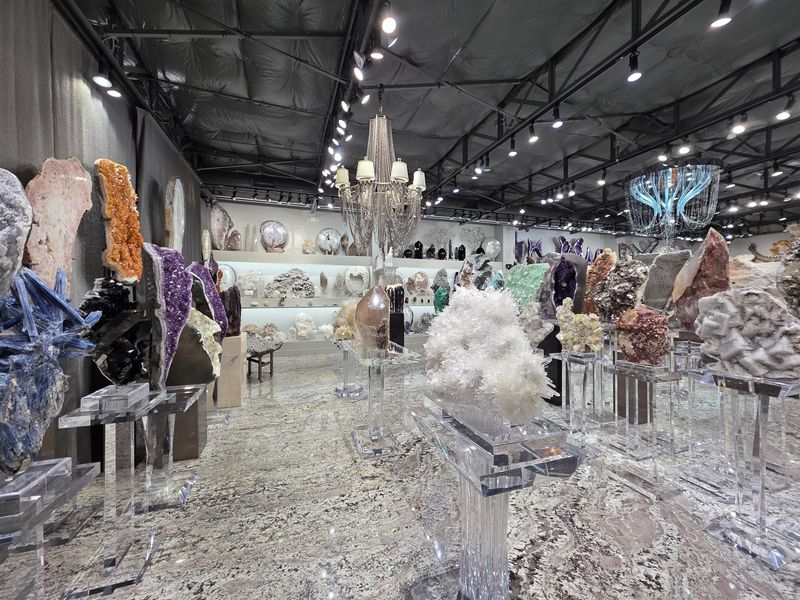
Plenty of rock shops toss specimens into bins or line them up on plain shelves. Not here.
Each piece at this gallery is hand-selected and precision-mounted, meaning its stand is designed to show off its balance, colors, and unique shape.
The materials behind these displays are impressive on their own. Exotic woods, fine leathers, polished steel, brass, bronze, and high-end acrylics all show up in the mix.
The cutting, polishing, and welding happen in-house, so the team can customize almost any display.
One detail worth looking for is the custom-welded stands. Many specimens sit on bases that allow full 360-degree viewing, so a visitor can circle a crystal or fossil and see every side.
Some pieces even rest on swivel bases, which turns a quiet stroll into something more interactive.
Why does all this effort matter? A great mount works like a frame around a painting.
It pulls attention toward the best features of a specimen without stealing the spotlight, and it helps the whole room flow naturally from one area to the next.
Interior designers, homeowners, corporations, and hotels all turn to the gallery for statement pieces, and the displays are a big reason why. A mounted amethyst or ammonite can anchor a living room or lobby the way a sculpture would.
For anyone thinking about bringing a piece home, ask about mounting options, because the right stand can change how a specimen looks in a space.
Details like these explain why the showroom often gets compared to a museum. The craftsmanship is half the show.
Ethical Sourcing and Delicate Corals
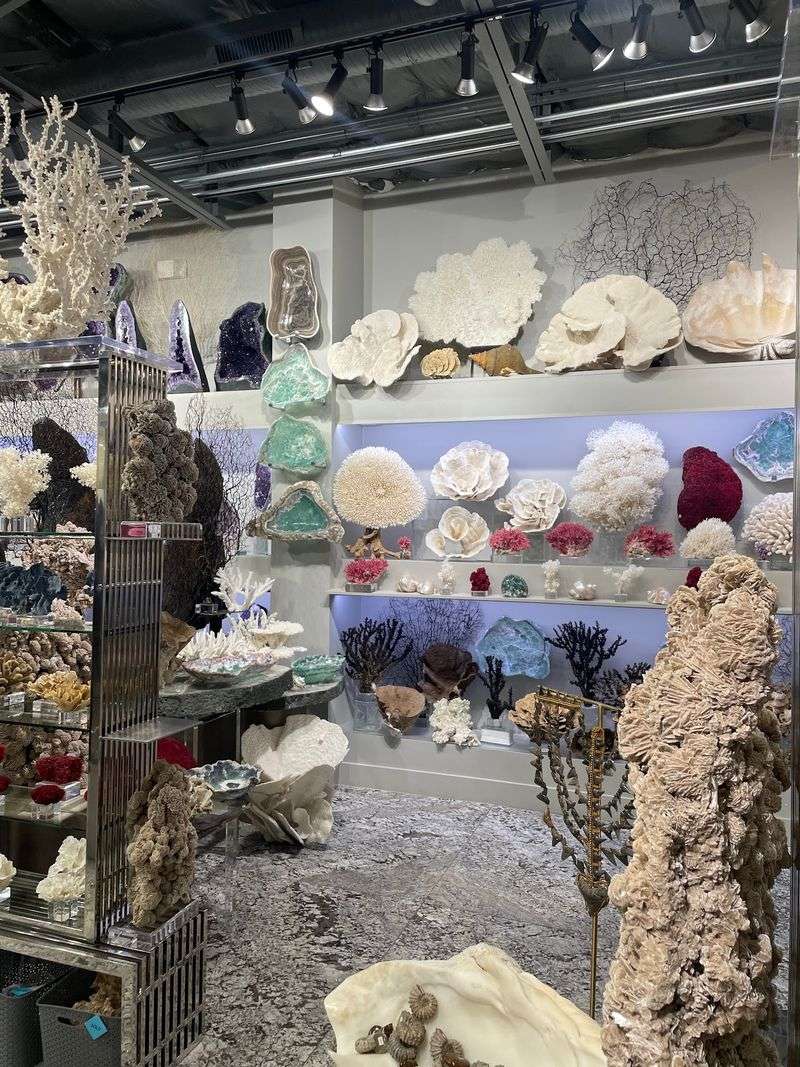
Where a specimen comes from matters just as much as how it looks. The owners put strong emphasis on ethical sourcing, building honest relationships with suppliers and following trade rules in each country of origin.
That commitment reaches into national and international law too. The gallery complies with CITES, which is an international agreement that protects endangered plants and animals from harmful trade.
It also follows regulations from the U.S. Fish and Wildlife Service and U.S.
Customs, so every import goes through the proper checks.
Nowhere is this care clearer than in the coral section. Ethically collected corals and other aquatic specimens bring a completely different texture to the room, with branching shapes, delicate ridges, and pale tones that feel like a glimpse of the ocean floor.
Coral is made by tiny animals called polyps, which build hard skeletons over many years. Some species grow only a small amount each year, so a large piece represents a long stretch of patient growth.
Knowing that makes each branch feel more precious.
For buyers, ethical sourcing offers peace of mind. A fossil or mineral with a clear, legal history is easier to enjoy and share, whether it sits on a bookshelf or in a hotel lobby.
Feel free to ask about the background of any piece, especially corals and fossils, since the team is open about how items are gathered.
It is a small but meaningful reminder that loving nature and protecting it can go hand in hand. Earth’s treasures deserve that kind of respect.
Planning a Visit to the Design District
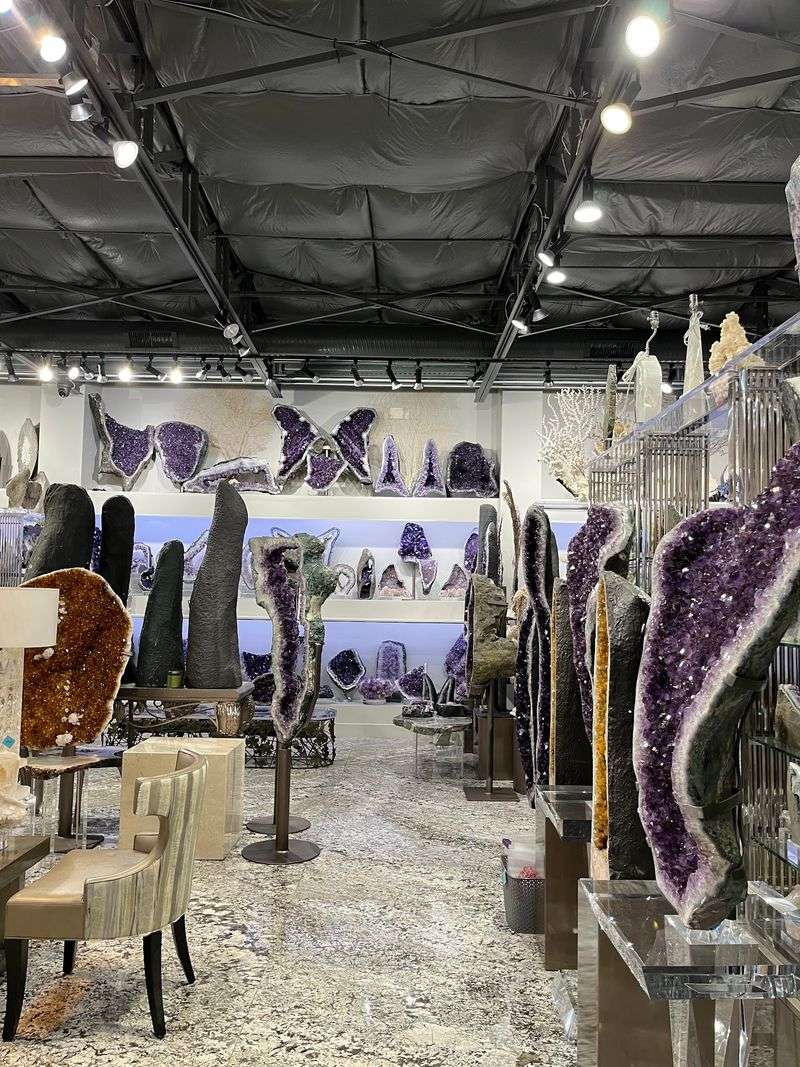
Getting there is the easy part. The gallery sits at 1339 E Levee St, Dallas, TX 75207, right in the Dallas Design District, a neighborhood known for art galleries, furniture showrooms, and creative studios.
Timing takes a little planning, since the doors are open only Wednesday through Saturday, from 11 a.m. to 6 p.m. Sundays, Mondays, and Tuesdays are closed, which catches some travelers off guard.
Building a visit around a weekday afternoon can mean a quieter room and more time to chat with staff.
Set aside more time than seems necessary. A quick loop might take thirty minutes, but most people end up lingering much longer once they start reading labels and asking questions.
Two or three hours is not unusual for anyone who loves science or design.
Because the Design District is packed with other galleries, the area works well for a creative afternoon. Pairing the stop with nearby art spaces turns a single errand into a full outing, and plenty of visitors discover the gallery exactly that way.
Comfortable shoes are a smart choice for hopping between showrooms.
Bring a phone or camera for photos, but stay mindful of the delicate pieces and give each display a bit of breathing room. Large specimens can be tempting to touch.
Ask first, since many items are rare and fragile.
Buying something is optional, yet options range from palm-size treasures to showpieces taller than most people. Checking the official website before heading over can help with current hours and featured pieces.
