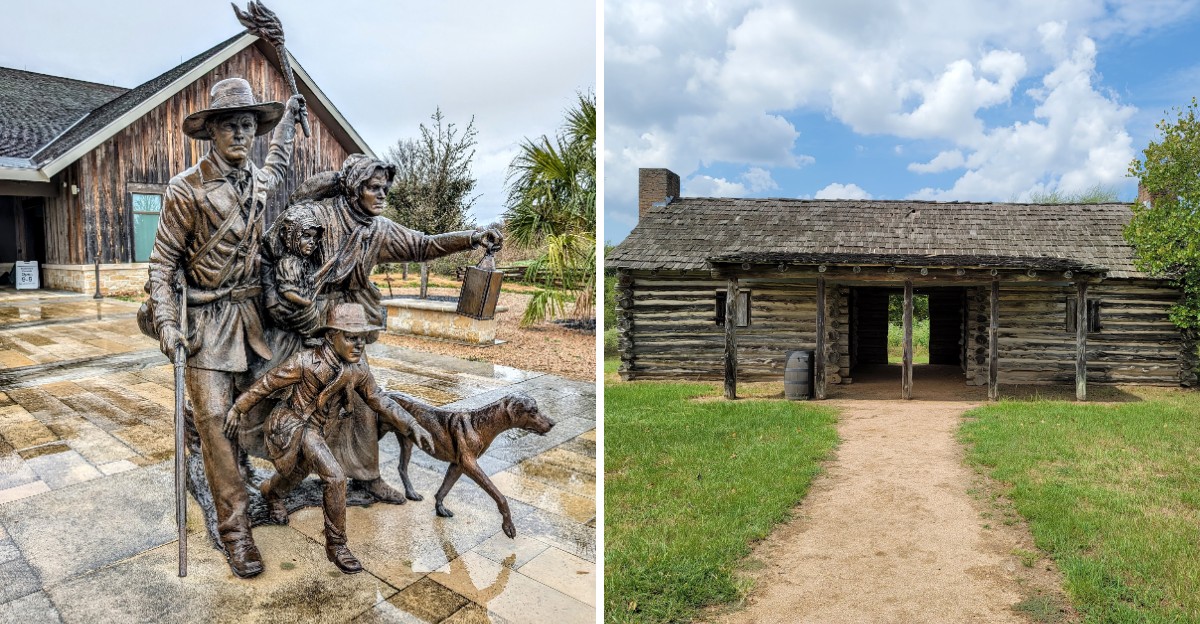
Nearly 200 years ago, a Texas town was burned during the revolution, leaving behind little more than ash and memory, yet today you can still walk the grounds and get a sense of what it looked like before everything changed.
The site has been carefully preserved, with foundations, markers, and reconstructed elements that bring the past into focus without turning it into a theme park, and the result is a place that feels both educational and quietly haunting.
Visitors can explore at their own pace, reading the stories of the people who lived there and imagining what it must have been like to lose everything in a conflict that shaped the entire state.
It is not the kind of attraction that draws big crowds, which means you can often have the place to yourself and take your time with it.
Bring a camera, bring your curiosity, and prepare to see a piece of Texas history that most people never even knew existed.
The Frontier Capital That Started It All
History books often skip right to the Alamo, and that is a shame. Long before that famous battle, a small town on the Brazos River was quietly running most of the action.
San Felipe de Austin was founded in 1823 as the main settlement of Stephen F. Austin’s colony.
The colony itself was huge. It stretched all the way from the Gulf of Mexico up to the Old San Antonio Road.
San Felipe sat at its heart, serving as the center for government, trade, and land deals.
By 1835, close to 600 people lived in town. That made it the second-largest commercial hub in Texas, right behind San Antonio.
Not bad for a place built mostly of logs and big dreams.
Austin and surveyor Seth Ingram laid out the streets using a Mexican model. The plan had a neat grid of avenues and four large plazas, which shows how serious the founders were about building a real town.
It was not just a camp in the woods.
Important people walked these streets. William B.
Travis, who later died at the Alamo, practiced law here. Samuel May Williams and Josiah H.
Bell were also early residents, and their names still pop up in Texas history lessons.
Knowing all this before a visit makes everything on the grounds more meaningful. A simple patch of grass suddenly becomes the spot where Texas began to take shape.
That is a pretty great feeling to carry along the trail.
Fire, Fear, and the Runaway Scrape
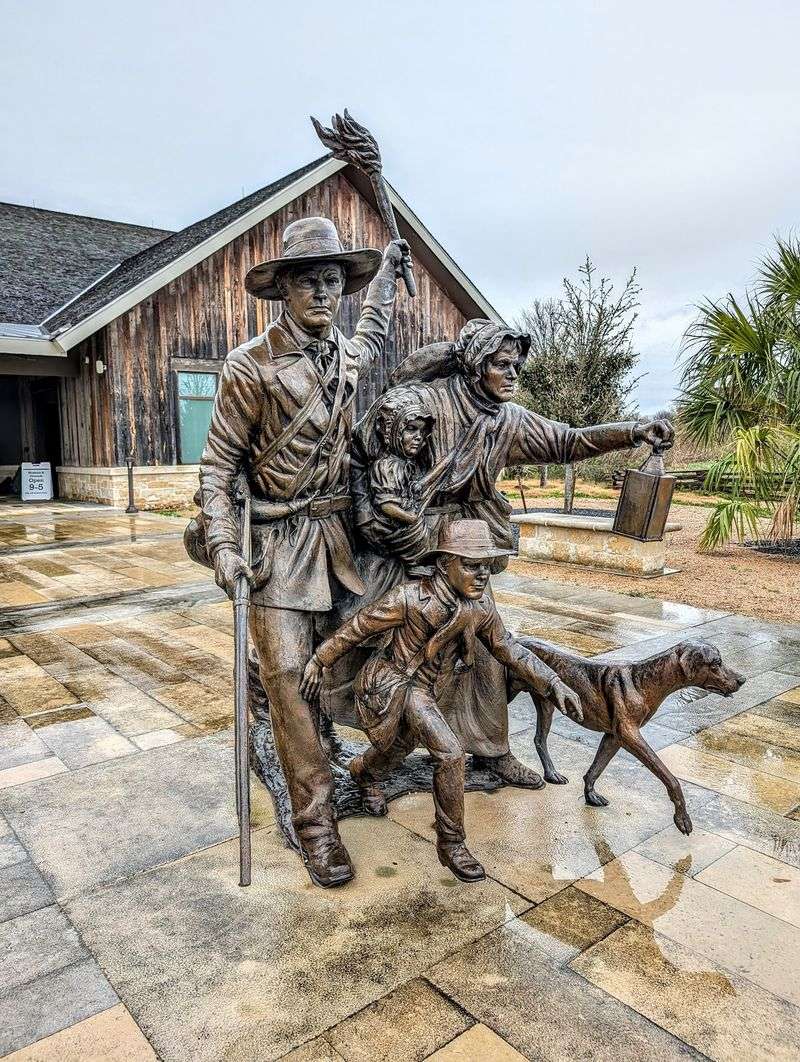
Imagine packing up everything you own in a hurry and then lighting your own home on fire. That is exactly what happened in San Felipe on March 29, 1836.
It sounds wild, but the reason made sense at the time.
The Alamo had fallen earlier that month. General Sam Houston’s army was retreating east, and the Mexican army under Santa Anna was close behind.
Residents knew their stores of food and supplies could help the enemy.
So they evacuated and burned the town to the ground.
This event was part of a larger panic called the Runaway Scrape. Thousands of Texas families fled east during those weeks, often through mud, rain, and flooded rivers.
Many lost almost everything they had.
The museum does a thoughtful job telling this part of the story. Exhibits use first-person accounts so visitors can understand what regular families went through, not just generals and politicians.
Kids especially tend to connect with these real voices from the past.
Some residents did come back later and started over. Still, San Felipe never regained its old importance, and the center of Texas life moved elsewhere.
That loss is part of why the site feels so special today.
Take a moment to think about that sacrifice while exploring the grounds. The quiet fields hide a dramatic story of courage and hard choices.
Few places in Texas carry a history quite like this one.
A Museum Worth Slowing Down For
Good museums make visitors forget about the clock, and this one pulls that off nicely. The building at 220 2nd St, San Felipe, TX 77473 covers about 10,000 square feet.
It is modern, air-conditioned, and packed with things to touch and explore.
Many of the artifacts came straight out of the ground right here. Archaeologists have found pieces of everyday life, like buttons, dishes, and tools, that once belonged to the townspeople.
Seeing them up close makes the old town feel personal.
One standout is a field desk that belonged to Stephen F. Austin himself.
It is small and practical, the kind of thing a busy leader would carry around while managing a whole colony. Kind of humbling, really.
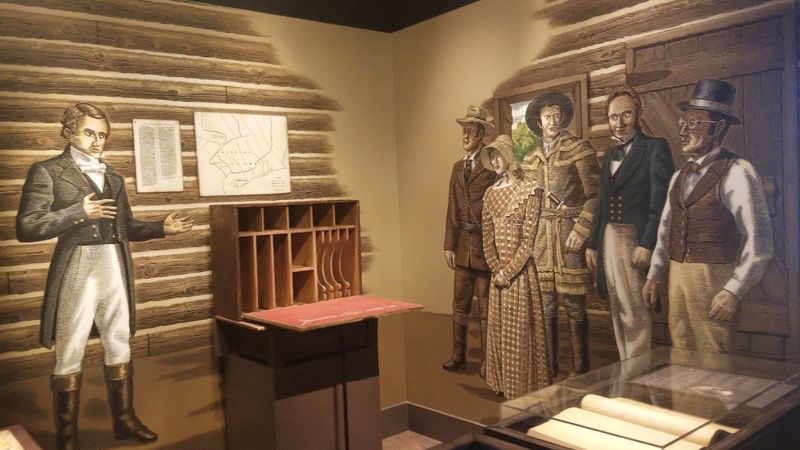
Interactive screens let visitors learn about the colonists, their jobs, and their daily lives. There is also a large interactive wall mural showing the town’s layout before independence.
A model tabletop map helps explain how the streets and plazas were arranged.
Short films made just for the museum tell the bigger story of Texas history. They are easy to follow and great for families with younger kids.
Grab a bench and enjoy a breather.
Plan on about an hour inside, though history fans may want longer. The museum is open Wednesday through Sunday from 9 am to 5 pm and closed on Mondays and Tuesdays.
A gift shop near the exit offers books and souvenirs for every age.
Ink, Paper, and the First English Newspaper
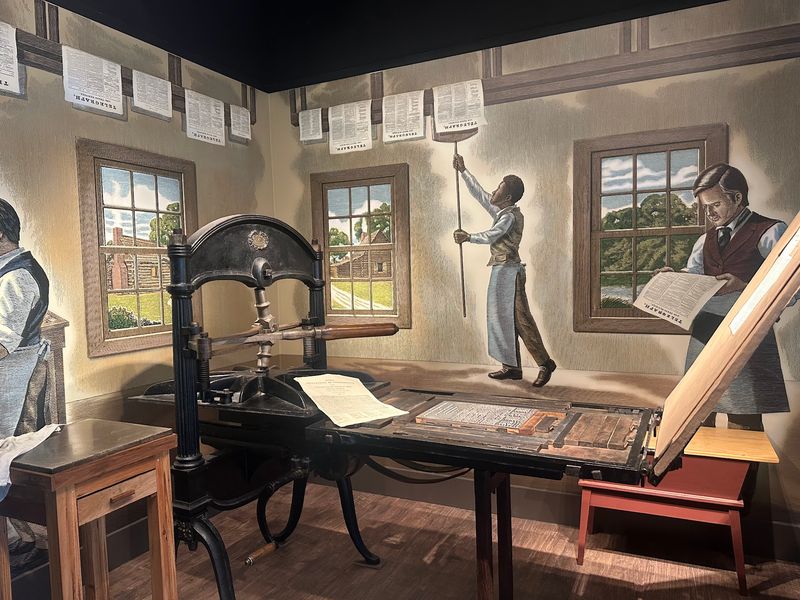
News traveled slowly on the frontier, but San Felipe had a secret weapon. In 1829, the town became home to the Texas Gazette, the first English-language newspaper in Texas.
That was a big deal for settlers hungry for information.
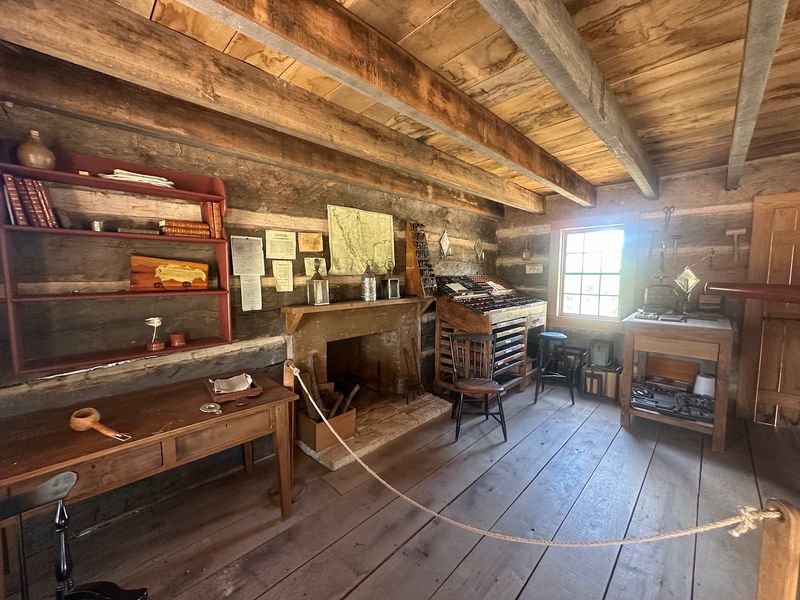
The museum displays an 1830s printing press that helps tell this story. It is heavy, wooden, and impressive to look at.
Visitors can see how much muscle it took to print just one page.
Every letter had to be set by hand. Printers lined up tiny metal pieces of type, inked them, and pressed paper down on top.
One mistake meant starting the line again, which sounds exhausting.
Out in the reconstructed village, a print shop shows where this kind of work happened. Standing near the tools, it is easy to picture a printer covered in ink smudges, rushing to finish the next issue.
Deadlines were stressful even back then.
The newspaper helped spread laws, land notices, and political ideas across the colony. As tensions with Mexico grew, printed words became even more powerful.
People needed to know what was happening and what leaders were planning.
San Felipe also served as the hub of the Texas postal service. Seven mail routes met here, making the town a true information center.
For a place with dirt streets, it was surprisingly well connected.
Fans of writing, journalism, or old machines will find this part of the visit especially fun.
Strolling Through Villa de Austin
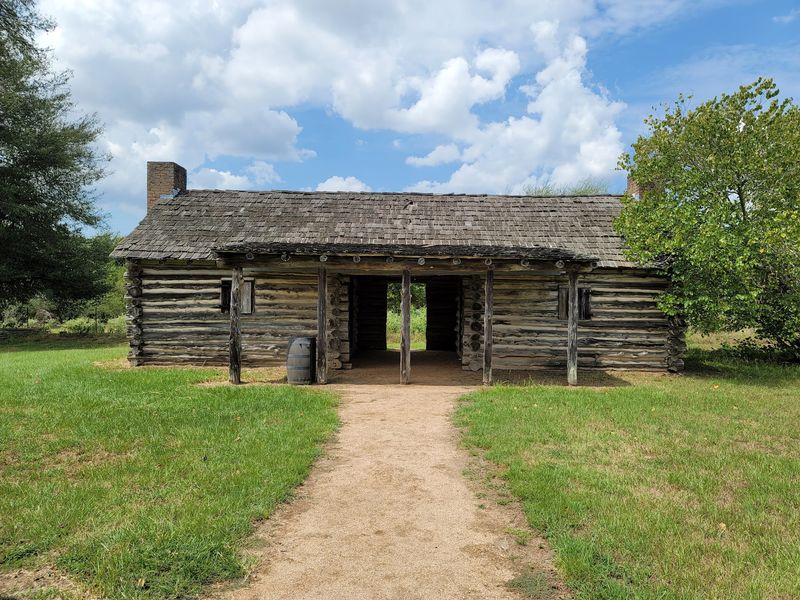
Here is where the magic really kicks in. Outside the museum sits Villa de Austin, a recreated block of the colonial town as it looked around the 1830s.
The buildings are made of logs and timber frames, just like the originals.
Craftsmen built them using historical methods. That means hand tools, careful joinery, and lots of patience.
The result looks rough in the best way, honest and sturdy.
Each building has its own purpose. There is a schoolhouse where kids once practiced their letters, a hotel where travelers rested after long rides, and a courthouse where disputes got settled.
The print shop rounds out the scene.
Peeking inside the doors gives a sense of how small and simple life was. Rooms are cozy, furniture is basic, and windows let in just enough light.
Modern bedrooms suddenly seem enormous.
A few practical tips help here. Some buildings have steps up to their porches, so anyone using a wheelchair or walker may need to view certain spaces from outside.
The main paths are fairly easy to navigate, though.
Bring a hat and water on hot days, since Texas sun shows no mercy. Shaded seating offers spots to rest between buildings.
Plan around an hour for the village, especially if interpreters are around to chat.
Families tend to love this part most. Kids can run from cabin to cabin, asking questions and imagining their own frontier adventures.
Bread, Sawdust, and Living History
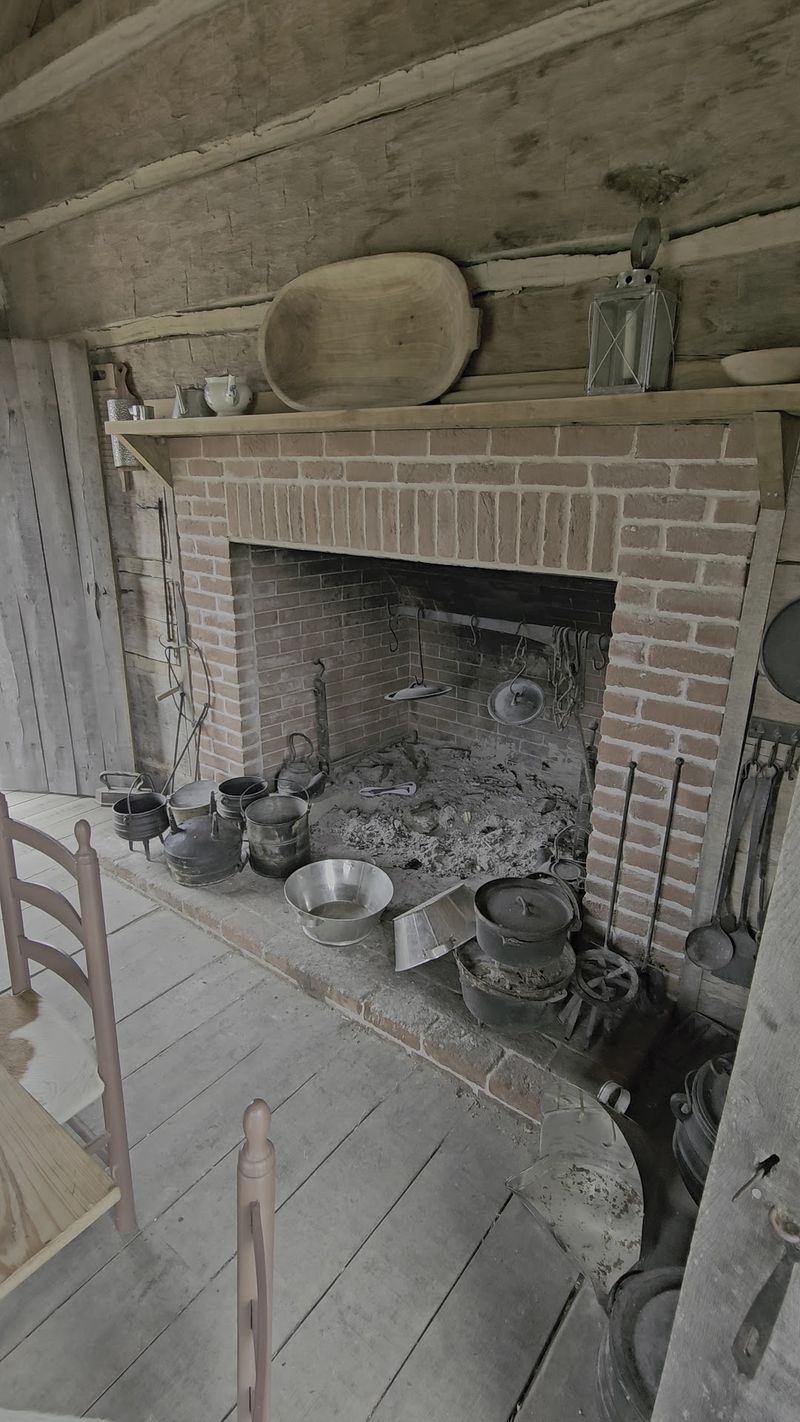
Smell is a powerful time machine. When interpreters bake bread over a fire or cook in an old-fashioned kitchen, the past suddenly feels alive.
Living history programs at San Felipe make that happen often.
Costumed staff and volunteers demonstrate daily tasks from the 1830s. Cooking, baking, and woodworking are common activities.
Watching someone shape wood with hand tools is oddly relaxing.
These interpreters know their stuff. They explain how families got food, built furniture, and kept homes running without electricity or grocery stores.
Questions are welcome, and curious kids usually have plenty.
Special events bring even more energy. Celebrations like Stephen F.
Austin’s birthday sometimes feature reenactments and extra activities across the grounds. Lectures on Texas history also pop up from time to time.
Checking the official site calendar before visiting is a smart move. Program schedules can change, and catching a demonstration really adds to the trip.
Free days happen occasionally too, which is handy for families.
Hands-on learning sticks better than reading signs. Seeing how hard chores were helps explain why settlers worked from sunrise to sunset.
Even simple tasks, like making a loaf of bread, took serious time and skill.
Leave space in the day to linger. Some of the best moments come from slow conversations with someone dressed in period clothing, explaining life in a town that disappeared nearly 200 years ago.
That kind of storytelling is hard to find in a textbook.
Statues, Stones, and Quiet Tributes
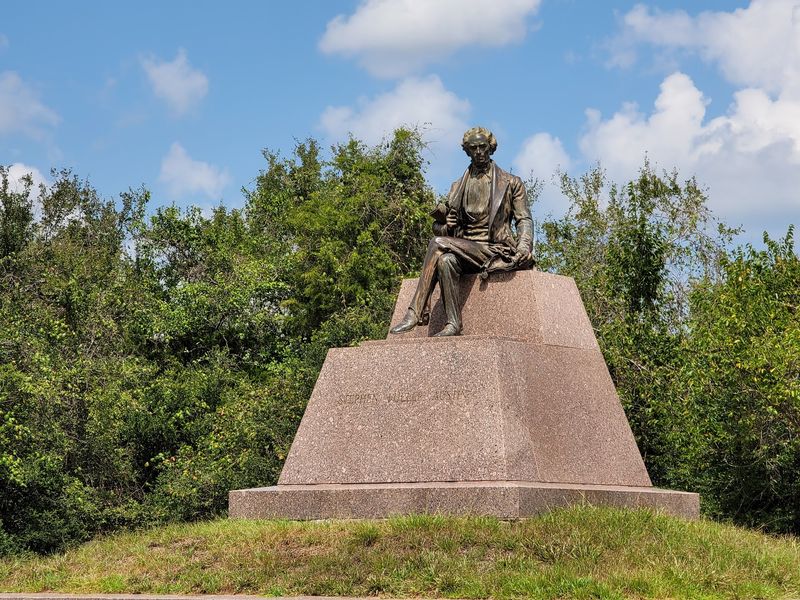
Some corners of the site invite visitors to slow down and simply reflect. The memorial area honors Stephen F.
Austin, often called the Father of Texas. It feels calm and respectful, a nice break from busier exhibits.
A bronze statue of Austin stands as the centerpiece. He looks thoughtful, as if still planning the next step for his colony.
Photos here make a great keepsake.
Nearby, a commemorative obelisk marks the spot where his original cabin once stood. It is a simple stone tower, but the meaning behind it is big.
Austin managed the colonial land office from here and personally handled much of its business.
A replica log cabin adds a sense of what his home may have been like. It is modest, nothing fancy at all.
Hard to believe such important decisions came from such a small space.
The town also hosted major political meetings. Conventions in 1832 and 1833 gathered here, and the provisional government ran from San Felipe after the Consultation of 1835.
Those meetings helped push Texas toward independence.
Take a few minutes to read the markers carefully. They connect the dots between a quiet field and some very loud moments in history.
Older kids often find this part surprisingly interesting.
Shade from the trees makes it a good resting stop. Sit, sip some water, and think about how much changed because of choices made right on this ground.
Trails Across an Old Town Grid
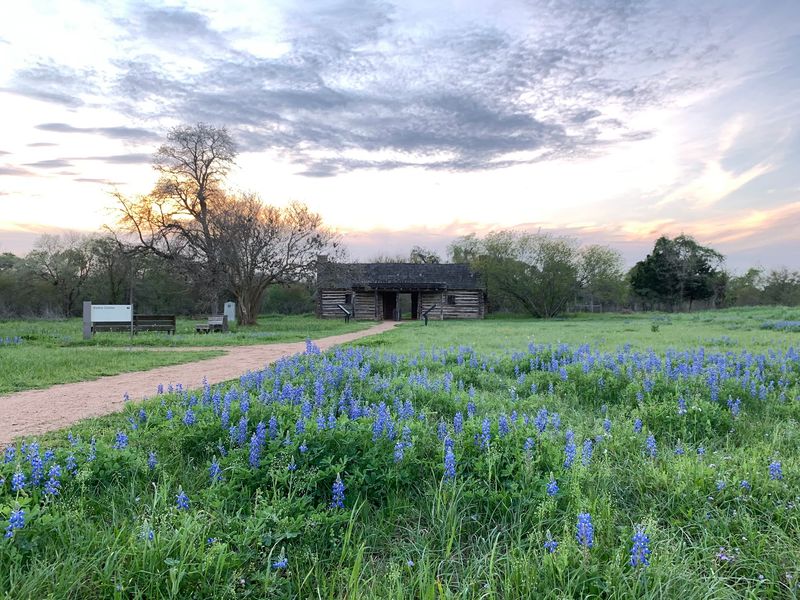
Grass and wildflowers now cover most of the old streets, yet the town plan still lives under every footstep. Walking trails wind through the original townsite.
Interpretive panels along the way explain what once stood in each spot.
It is a bit like a treasure map. One sign might describe a general store, another a blacksmith shop or tavern.
Back in 1828, the town had around 40 to 50 log cabins, three stores, and a hotel.
The panels help visitors picture busy streets filled with wagons, horses, and chatter. Without them, the fields would look like ordinary Texas countryside.
With them, the whole place clicks into focus.
Wear sturdy shoes, since some path sections can get a little overgrown depending on the season. Bug spray is also a good friend during warmer months.
Mornings tend to feel cooler and more pleasant.
The site sits just off Interstate 10, about an hour west of Houston and near Sealy. That makes it an easy stop on a road trip or a full day out.
Pairing it with nearby Stephen F. Austin State Park adds hiking and nature time.
Note that a Texas State Parks pass does not cover entry here, since the site is run by the Texas Historical Commission. Planning ahead avoids surprises.
Finishing the trail loop gives a satisfying sense of closure. The town burned, but its story clearly survived.
