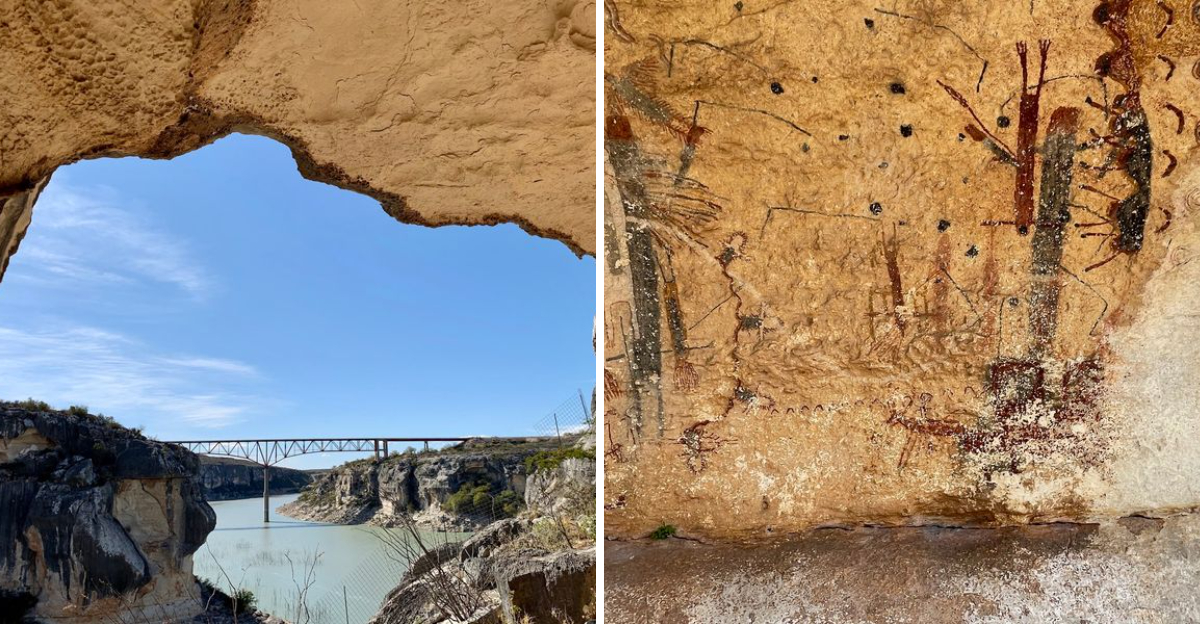
Most hikes end with a view, a waterfall, or the realization that you should have brought more water. This Texas trail leads to something much older: an extraordinary rock-art mural created by hunter-gatherers thousands of years ago in the Lower Pecos Canyonlands.
The famous panel is thought to be roughly 4,000 years old, while nearby rock art at another shelter has been radiocarbon dated to more than 3,200 years ago.
Access is through guided tours, which makes sense when the destination is an irreplaceable piece of human history rather than another scenic picnic spot.
Texas has plenty of ancient landscapes, but standing near paintings made by people who lived here millennia before highways, cities, or even written local history existed puts the word “historic” on an entirely different scale.
The Mural That Started It All
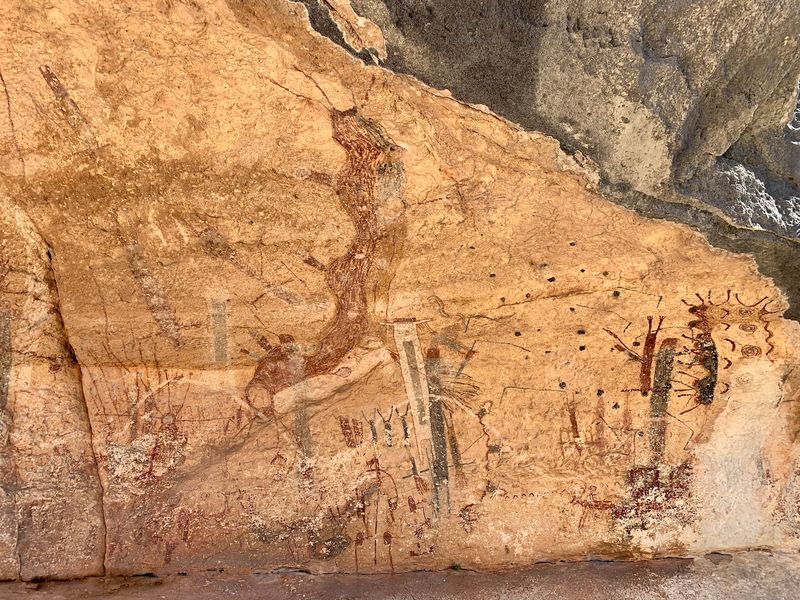
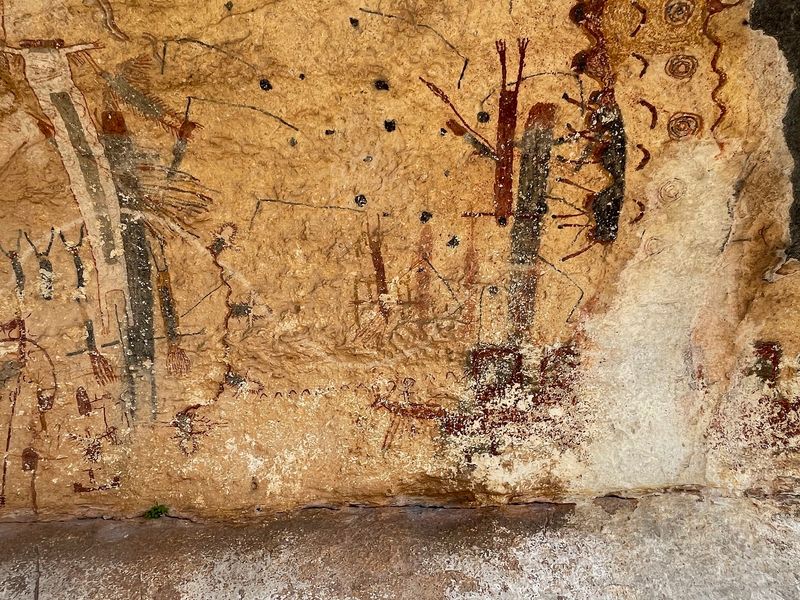
Red, black, yellow, and white figures spread across roughly twenty-six feet of limestone, standing about thirteen feet tall at the highest point. The scale surprised me.
Photographs flatten it, but in person the wall wraps around and above like a stage set.
The painting belongs to what archaeologists call the Pecos River Style, a tradition of polychrome murals found throughout the Lower Pecos Canyonlands. Estimates place many of these works between 2,500 and 5,500 years old.
The name comes from a pale central figure that early researchers described as a shaman. Look closely and you will notice tall elongated forms, animal shapes, dots, arcs, and objects that resist easy explanation.
Scholars studying the panel have proposed that the imagery reads as a narrative rather than a random collection of drawings. Some interpretations connect the scene to creation stories, the birth of the sun, the beginning of time, and the turning of seasons.
What struck me most was the intention behind every line. Pigment was ground, mixed, and applied by people who planned the composition, layering colors in a specific order.
Bring binoculars if you own a small pair. Details high on the wall become far more readable, and guides often point out figures that blend into the rock at first glance.
Photography without flash is generally the norm at rock art sites, so ask before shooting. And resist any urge to touch the wall, since skin oils damage pigment that has survived for millennia.
Getting To Comstock Without Losing Your Nerve
Comstock is small, quiet, and honest about it. The town dates back to around 1883, when the railroad arrived and gave the settlement a reason to exist.
Today it functions as the gateway to some of the most significant archaeology in North America.
The preserve sits roughly two miles west of Seminole Canyon State Park. Del Rio serves as the closest larger town with fuel, groceries, and lodging, so stocking up there makes the day easier.
Cell service out here comes and goes. Download directions before leaving pavement-heavy areas, because relying on a live signal to find a canyon turnoff rarely ends well.
Plan for a long drive no matter where the trip starts. San Antonio sits several hours east, and the final stretch runs through open country with few services.
What I enjoyed most was the transition. Hill Country greenery thins into scrubby limestone country, and suddenly the horizon feels enormous.
Watch for wildlife near the road at dawn and dusk. Deer and javelina move through the brush, and drivers who slow down avoid trouble.
Fill the tank whenever the opportunity appears. Gas stations are spaced far apart, and running low creates unnecessary stress on a day meant for wonder.
Arrive early rather than cutting it close. Parking areas are simple, meeting points are informal, and giving yourself a buffer means starting the hike relaxed instead of rushed.
Booking A Guided Tour With The Witte Museum
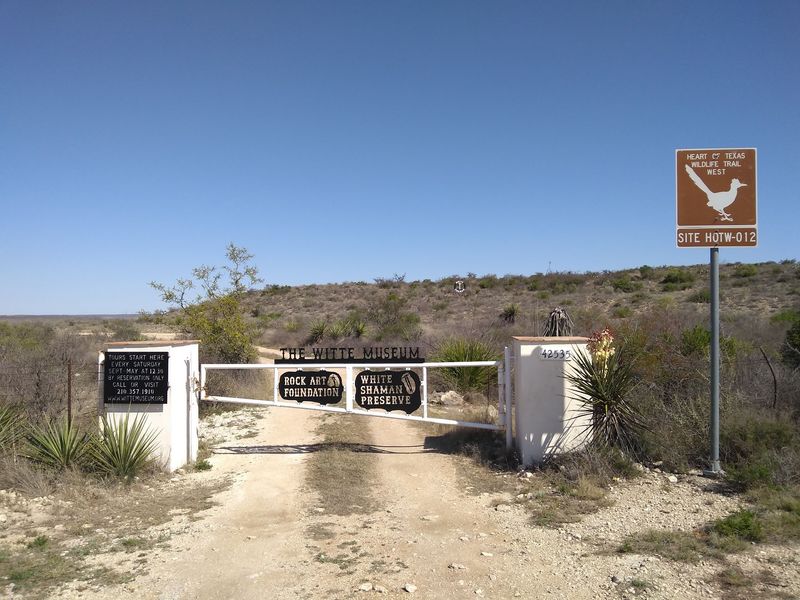
Access here is not a walk-up situation. The Witte Museum manages the preserve, and guided tours run from early fall through late spring, roughly September into May.
Reservations are mandatory. Group sizes stay limited, which protects the site and keeps the experience intimate.
Booking well ahead matters, especially for cooler weekends when conditions are pleasant and interest climbs. Popular dates fill, and showing up hopeful without a spot leads to disappointment.
There is a minimum age of twelve years, and any minor must be accompanied by a parent or legal guardian. Families with younger kids should consider other rock art options in the area instead.
Summer closures exist for good reason. Desert heat in this canyon turns a challenging hike into a genuinely risky one, so the calendar reflects safety rather than convenience.
Guides bring context that transforms the visit. Without interpretation, the mural reads as beautiful abstraction; with it, patterns and possible meanings start to emerge from the stone.
Check the museum’s official information for current schedules before finalizing travel plans. Dates and details shift from season to season.
One practical note that catches people off guard: there are no restroom facilities at the preserve. Plan accordingly at the state park or in Comstock before heading out.
Confirm meeting instructions when the booking is made. Knowing exactly where to gather saves confusion on a road with few landmarks.
That 250 Foot Descent Is No Joke
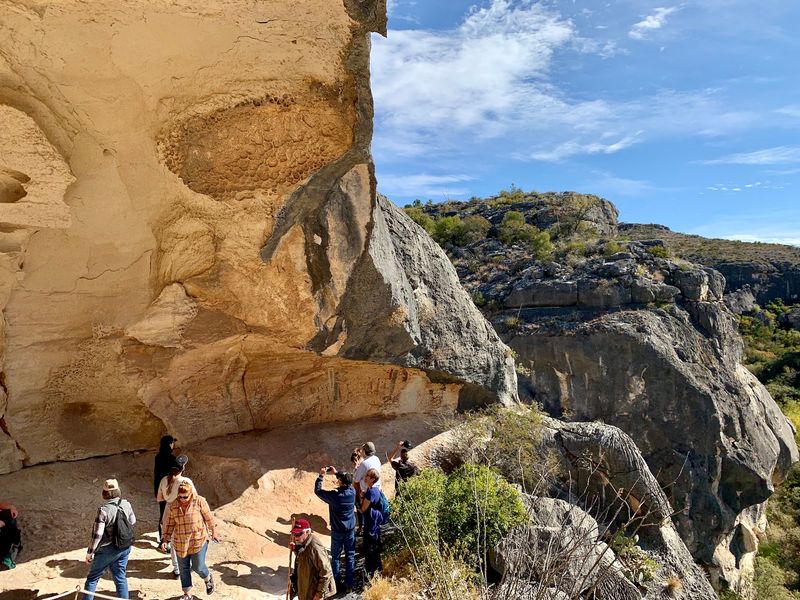
Fifty flights of stairs. That comparison gets used to describe the elevation change here, and after climbing back out, it sounds accurate.
The route drops about 250 feet into a narrow canyon, then climbs the same distance on the return. Round trip covers roughly 1.5 miles and usually takes between an hour and a half and two hours.
Distance alone makes the hike sound easy. Terrain tells a different story, with loose rock, uneven footing, and brushy sections that brush against arms and legs.
Stamina, agility, and decent balance all come in handy. Trekking poles help on the descent, and sturdy closed-toe shoes with real tread beat sneakers every time.
I found the climb out harder than expected, mostly because the sun had shifted and shade disappeared. Pacing beats pride on that stretch.
Carry more water than seems necessary. Two liters per person is a reasonable starting point, and drinking steadily rather than gulping at the top works better.
Long sleeves and long pants protect skin from thorny plants that line the trail. Lechuguilla, in particular, has stiff tips that puncture, so watch where feet land.
A wide-brimmed hat and sunscreen round out the kit. Shade is scarce, and the limestone reflects light back upward.
Take breaks without apology. Nobody wins a race to a painting that has waited thousands of years.
Where The Pecos River Meets The Rio Grande
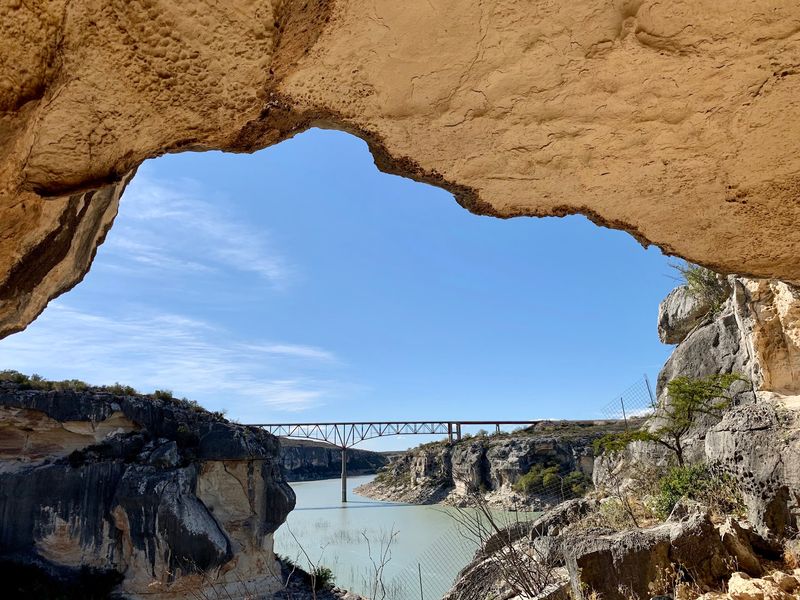
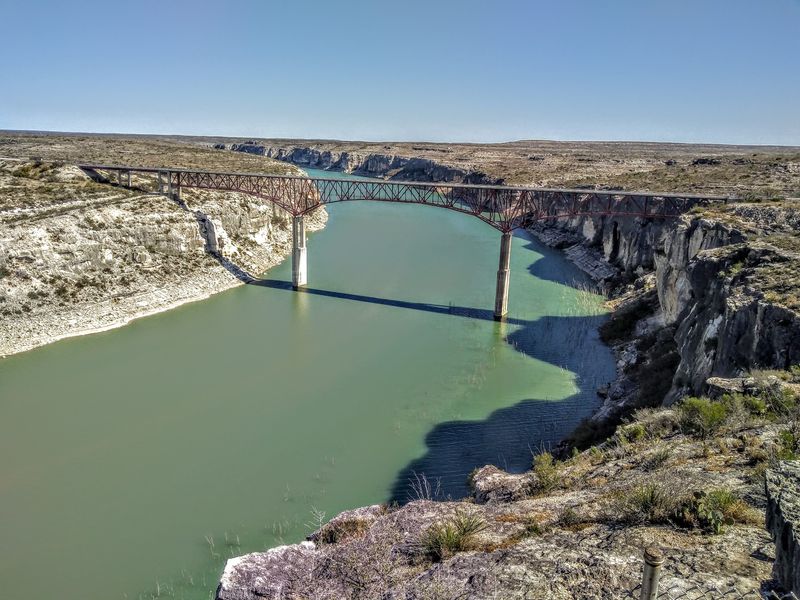
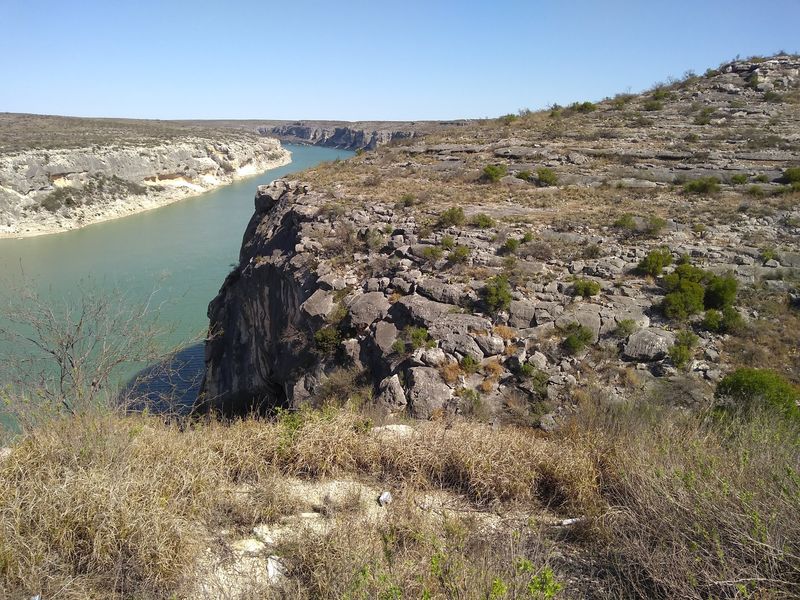
Views along this stretch reward every uphill step. From high points near the preserve, the Pecos River cuts a deep turquoise line through pale limestone before joining the Rio Grande.
The color caught me completely off guard. In a landscape built from tan rock and gray-green brush, that water looks almost tropical.
Canyon walls here rise steeply, carved over immense stretches of time. Standing above them explains why ancient people chose these shelters, since overhangs offered shade, protection, and a view of the surrounding country.
Morning light softens the cliffs and brings out texture in the rock. Late afternoon does something different, turning everything warm and golden.
Birds ride the thermals above the gorge. Turkey vultures circle constantly, and swallows dart along the cliff faces in fast, unpredictable lines.
The nearby Pecos River High Bridge offers another angle worth a stop. Pull-offs along US-90 give a chance to look down into the gorge from road level.
Water shaped this entire story. Rivers carved the shelters, supported plants and animals, and drew people to the canyons in the first place.
Bring a camera with a zoom if scenery matters to you. Wide shots capture scale, while tighter frames catch the layers in the cliff walls.
Sit for a few minutes before hiking back. Quiet up there is a rare, complete kind of quiet.
Reading The Paintings, One Figure At A Time
Curiosity kicks in fast once the shapes start separating from the rock. Anthropomorphic figures, meaning human-like forms, dominate the panel, often stretched tall and armed with what appear to be spear-throwers or staffs.
Zoomorphic images appear too. Deer and feline forms show up alongside shapes nobody has confidently identified.
Layering reveals sequence. Researchers have studied which colors sit beneath others, showing that the artists followed a deliberate order rather than adding figures randomly over generations.
Interpretations vary, and that honesty is part of the appeal. Some scholars read the panel as a cosmological account involving the sun, cycles of time, and seasonal change.
The murals also reflect daily life and belief. Plants that sustained desert communities, hunting practices, and spiritual concepts all appear woven into the composition.
What impressed me was the technical skill. Pigments were made from minerals and binders, applied to a curved surface, and arranged so figures line up across a wide span.
Nothing about it feels accidental. Whoever painted here understood the wall as a whole canvas.
Let the guide lead the looking. Pointing out one figure often unlocks a whole cluster that had blended into the stone.
Give yourself permission to simply stare. Understanding every symbol is not the point, and standing before something this old carries its own weight.
Seminole Canyon Rounds Out The Day
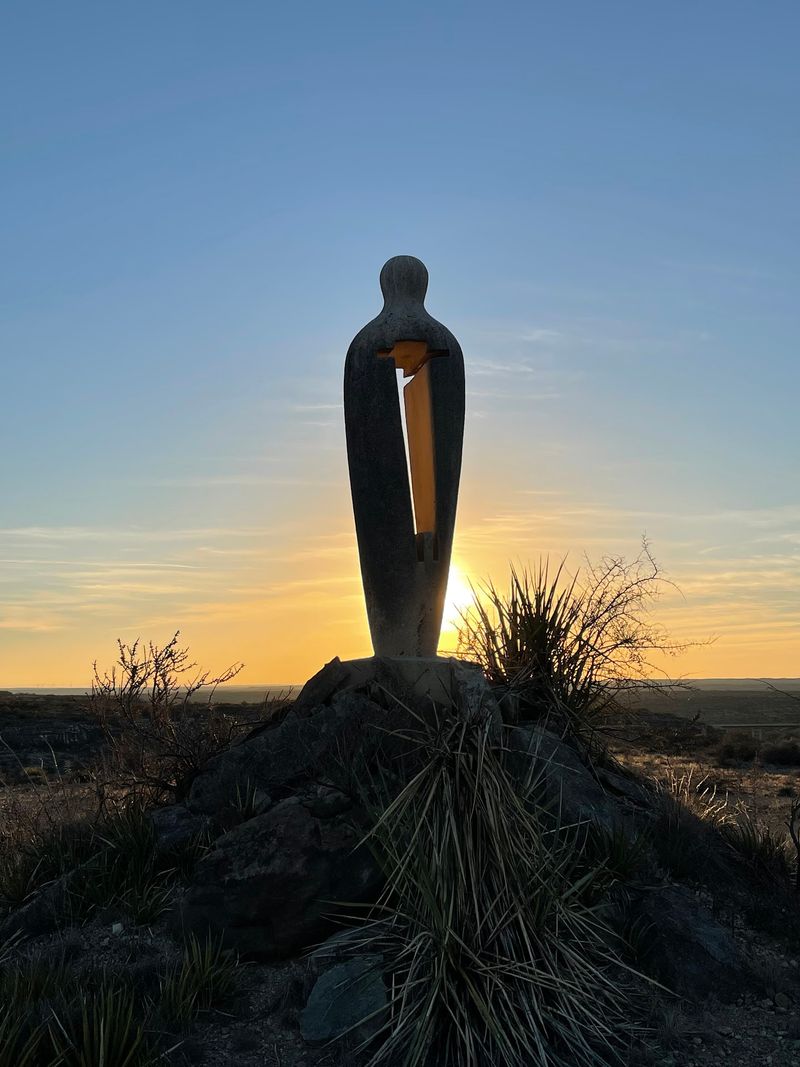
Two miles east sits Seminole Canyon State Park and Historic Site, and pairing the two makes for a full, satisfying day. The park protects its own rock art, most famously the Fate Bell Shelter, reached by guided tour.
Facilities here fill the gaps the preserve cannot. Restrooms, water, exhibits, and shaded picnic spots all exist, which matters after a hot hike.
The visitor center provides helpful background on the Lower Pecos and its ancient inhabitants. Seeing artifacts and reconstructions before or after viewing a mural makes the imagery click.
A trail runs out to an overlook above the Rio Grande, passing a striking sculpture of a Pecos River Style figure. The walk is manageable and the payoff is broad desert scenery.
Camping is available at the park for anyone stretching the trip across two days. Waking up in this landscape beats driving in at dawn.
Also based in Comstock is the Shumla Archaeological Research and Education Center, an organization devoted to documenting and preserving the region’s rock art. Their work has shaped much of what is now understood about these panels.
Stacking sites in one trip makes sense given the distances involved. Driving hours for a single stop feels like leaving value on the table.
Check tour schedules for both locations ahead of time. Coordinating start times prevents a frustrating gap or overlap.
Best Seasons And Small Details Worth Knowing
Timing shapes this entire experience. Tours run September through May, and the shoulder months at either end can still turn surprisingly warm.
Late fall and early spring hit the sweet spot for me. Cooler air makes the climb pleasant, and light stays soft longer into the morning.
Extreme desert heat is the main hazard out here, which is why summer visits are off the table. Respecting that limit keeps everyone safe.
Layers work well because temperatures swing. Mornings can start chilly and warm up quickly once the sun clears the canyon rim.
Pack light but smart. Water, snacks, sun protection, and a small first aid kit cover most situations on a hike this length.
Leave heavy camera gear behind unless it earns its weight. Both hands come in handy on steep, rocky sections.
Weather changes plans sometimes. Rain makes limestone slick and can cancel tours, so build flexibility into the itinerary.
Fuel up on food before arriving, since dining options near the preserve are limited. Del Rio offers more choices for a proper meal afterward.
Respect for the site sits above everything else. Stay on the path, avoid touching painted surfaces, and carry out every scrap brought in.
Then there is the feeling that lingers on the drive home. Thousands of years of human imagination survive on one canyon wall, and getting to stand there feels like an unreasonable privilege.
Address: 42535 US-90, Comstock, Texas
