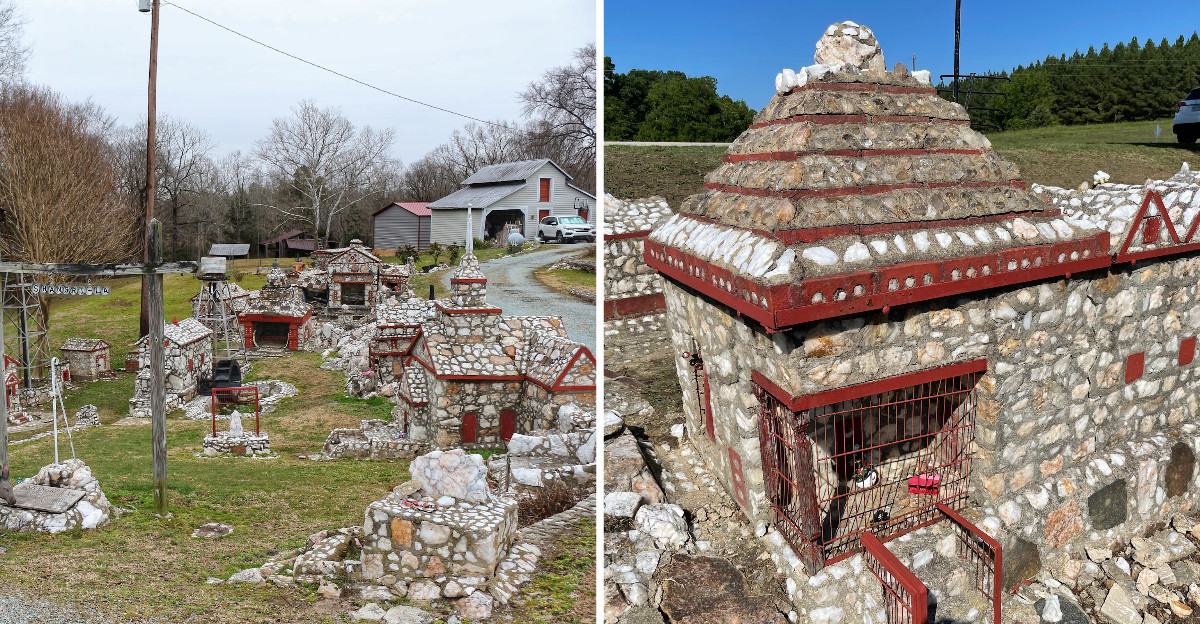
Stone churches no taller than a shoulder sit in a side yard in North Carolina, glittering with white quartz. What was meant to be a quick peek turned into half an hour crouched in the grass, grinning at a miniature world built by one pair of hands.
A retired farmer started the project in 1968, when he was 72 years old, and he kept building for nine years. Every rock came from his own land, pulled and stacked and shaped into a tiny village.
There is a theater, a school, a hospital, a bank, and even a small jail, arranged with the kind of care that makes you lean closer. Kids leave toy figures in the windows, so the whole place feels busy and lived in, even when nobody is around.
Dusty knees and a strong urge to tell everyone about it were the souvenirs. Places built with this much patience do not come along often, and this one stays with you long after the grass stops clinging to your jeans.
A Farmer’s Second Act Built One Stone at a Time
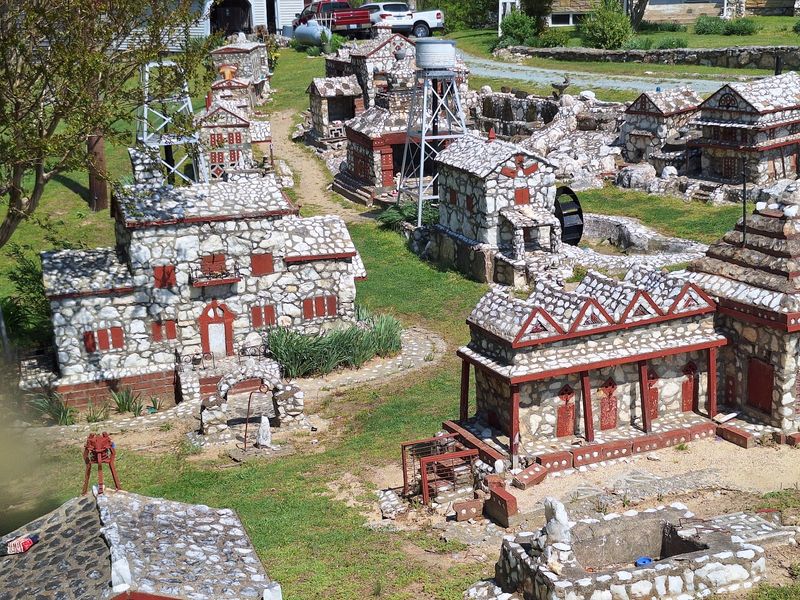
My first thought after parking was simple: who starts a building project at 72? Henry L.
Warren did, back in 1968, after a long life of farming in this corner of Person County. Instead of slowing down, he picked up tools and began shaping a whole town out of rock.
He worked on it for nine years, right up until his passing in 1977. In that stretch, he finished most of the 27 buildings you can see today, which works out to roughly three new structures every year.
That pace blew my mind, especially knowing he did the heavy lifting himself.
Much of the stone came straight from his own property. He blasted and quarried it, then mixed it with concrete and bright chunks of white quartz.
You can still spot rough edges and tool marks if you lean in close, and those little flaws make the whole village feel human.
Knowing the backstory changed how I looked at every wall. Each window frame was a choice, and each roofline took hours of patient fitting.
It reminded me that big dreams do not come with an age limit.
If you visit, take a minute before exploring to picture one man hauling rocks across this yard. The village hits differently once you understand the effort behind it, and it gives the whole stop a quiet, respectful mood.
The Church With the Tallest Steeple in Town
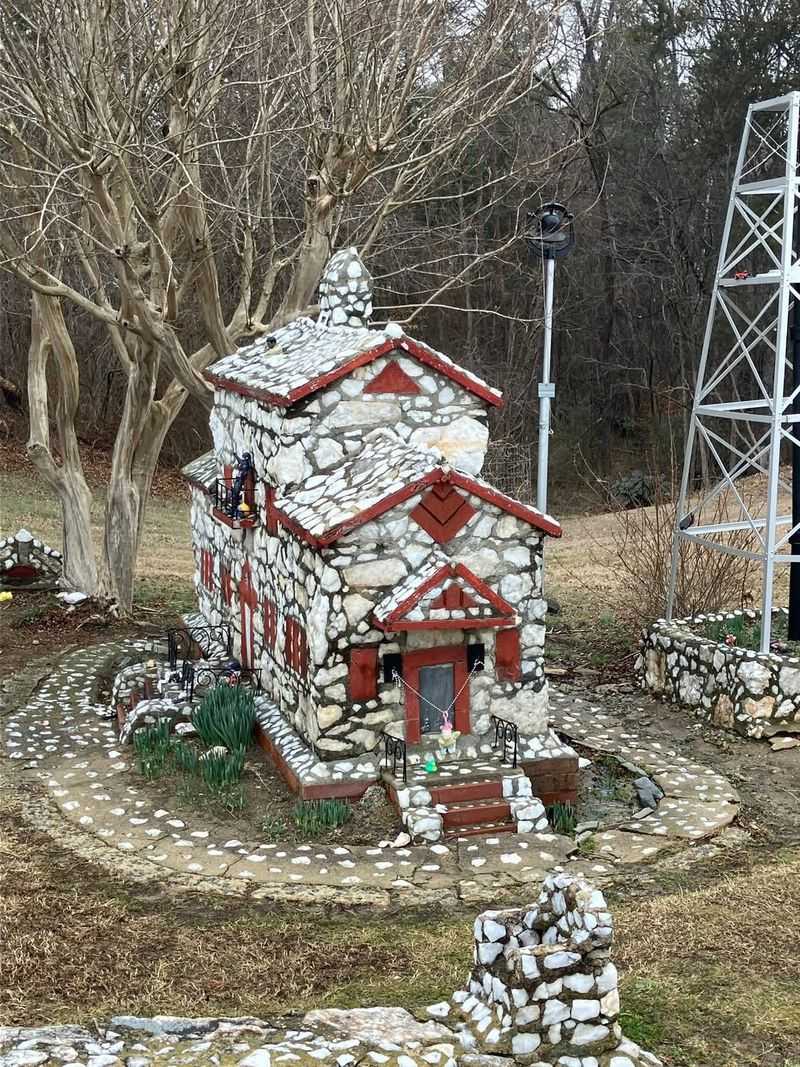
Every small town has one building people use for directions, and here it is the church. It rises to about six feet, and a four-foot steeple shoots up on top, so it easily wins the height contest.
I spotted it before anything else from the road.
Up close, the details are what got me. Quartz pieces sparkle along the walls, catching sunlight like tiny mirrors, while darker stones give the front a sturdy, old-fashioned look.
The steeple narrows gently toward the tip, and I kept wondering how long it took to balance those top layers.
Other visitors had tucked little figures near the doorway, as if a Sunday crowd was arriving. That playful touch made me laugh out loud, alone in the yard.
It also made the building feel less like a sculpture and more like the heart of a real community.
For photos, try kneeling low and shooting upward toward the steeple. From that angle, the church looks surprisingly grand, and the trees in the background add a nice frame.
Morning or late afternoon light brings out the glitter in the quartz best.
Give yourself a slow lap around it, too. The sides and back hold small surprises, from uneven stones to clever little window shapes, and the church rewards anyone who takes an extra minute to really look.
Showtime at the Tiny Theater
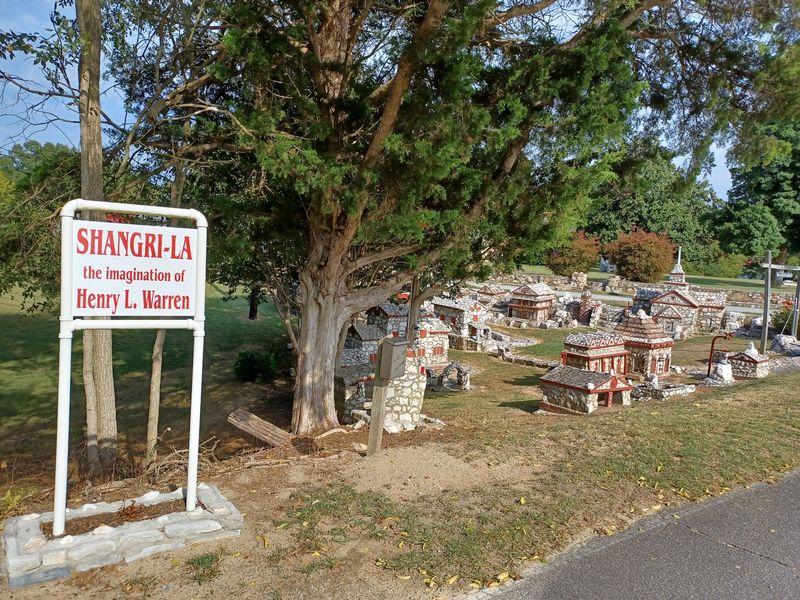
Picture a movie night where the audience is made of plastic dinosaurs and action figures. That is basically the vibe at the theater, one of my favorite buildings in the whole village.
I caught myself imagining what film would be playing inside.
Having a theater at all says a lot about how Warren saw his town. He did not just build the practical stuff like a bank or a mill.
He wanted a place for fun, too, and that choice gives Shangri-La a cheerful, well-rounded personality.
The front feels dressed up compared to some neighbors, with careful stonework around the entrance. Peek through the openings and you might find trinkets that past guests left behind.
Some are silly, some are sweet, and all of them add to the story.
Here is a fun tradition worth joining. Many visitors bring a small toy or charm to place somewhere in the village, and the theater makes a perfect spot for a new cast member.
Pack something tiny and weatherproof so it lasts through rain and sun.
Kids especially love this part of the visit. Hunting for hidden figures turns a quick look into a treasure game, and I noticed even grown-ups slow down here, bending close and pointing things out like they just found buried gold.
School Days and a Library for Little Readers
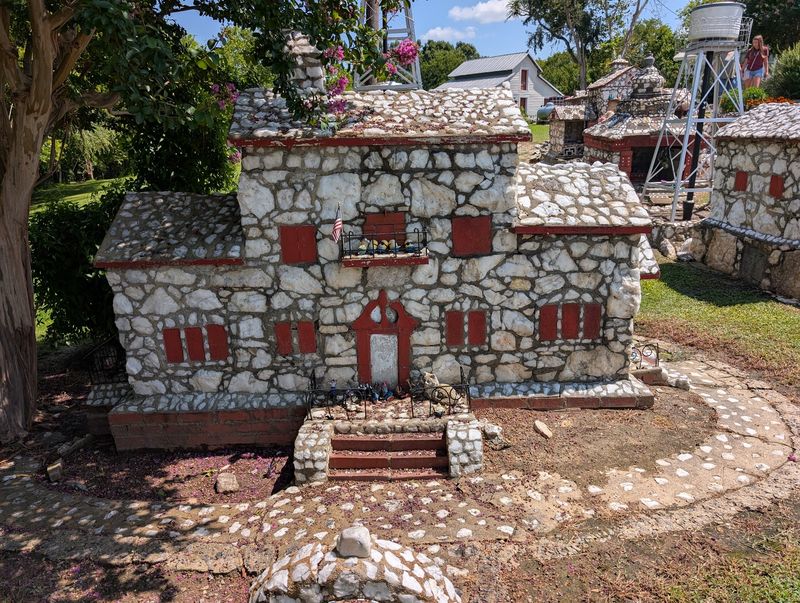
Some towns forget about learning, but not this one. Warren included both a school and a library, and seeing them made me smile about his priorities.
A community that tiny still needed a spot for kids to read and study.
The school has that classic, boxy shape many of us remember from old photos of country schoolhouses. Its small windows look out over the yard, and I could almost hear a bell ringing.
Rough stone walls give it a no-nonsense, sturdy personality.
Nearby, the library feels calmer and more tucked in. I liked walking between the two and noticing how the stones shift in color and size from one wall to the next.
No two buildings share quite the same texture, which keeps your eyes busy.
Families with young kids can turn this corner into a mini lesson. Ask them what other buildings a town needs, then go hunting to see if Warren built them.
The list includes a gym, a town hall, a water tower, and a gas station, so there is plenty to check off.
I walked away thinking about how these little buildings teach something without saying a word. They show that caring about knowledge fits into any dream, even one made of rocks and concrete in a quiet North Carolina yard.
A Hospital Finished With Family Love
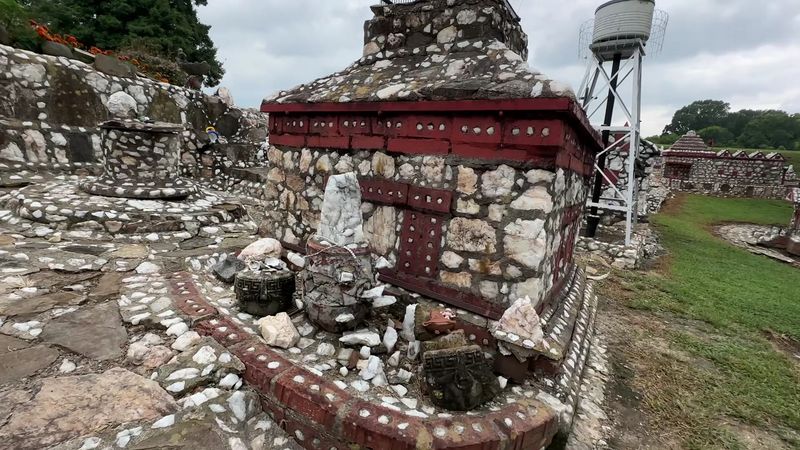
Of all 27 buildings, the hospital carries the most touching story. Henry Warren passed away in 1977 before he could finish it.
His family stepped in and completed the job, so the town would not be missing its place of healing.
Knowing that, I stood in front of it a little longer than the others. The walls match the rest of the village, with the same mix of stone, concrete, and quartz, so you would never guess two sets of hands shaped it.
That smooth blend felt like a quiet tribute.
The family still maintains the village today and opens it to everyone at no cost. That kind of care keeps the site looking loved after more than five decades.
Solid stone helps too, since it shrugs off storms far better than wood ever could.
When you visit, remember this is a private yard next to a home. Stay on the paths, keep voices friendly, and leave every building just as you found it, plus any small trinket you want to add.
Respect is the best way to thank the people who keep it open.
For me, the hospital turned the village into more than a roadside curiosity. It became a family story you can walk through, built by a father and finished by the people who loved him.
Bank, Jail, and Town Hall Keep Order
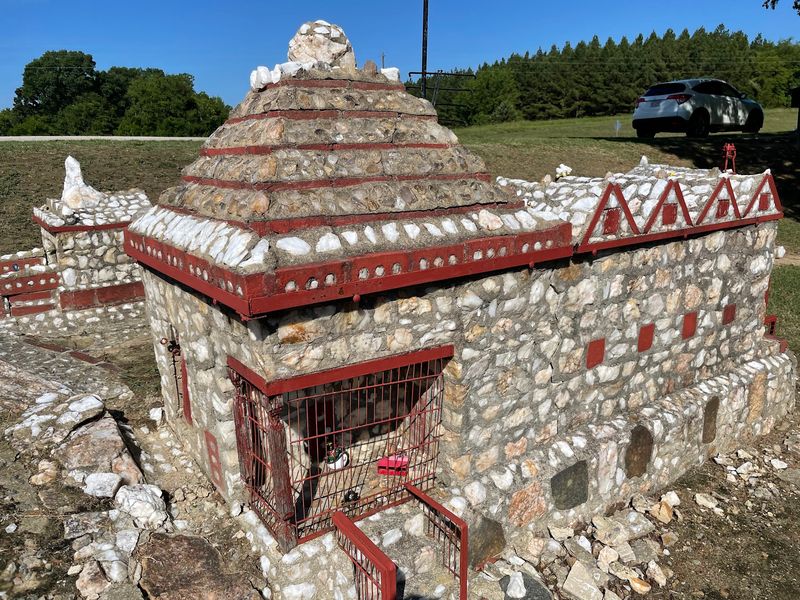
Every good town needs rules, and Shangri-La has the buildings to prove it. There is a bank, a town hall, and yes, a prison.
I found the tiny jail oddly hilarious, since I could not picture anyone in this peaceful place causing trouble.
The bank looks solid and serious, which feels right for a spot meant to guard money. Meanwhile, the town hall has a proud little presence, like it knows it runs the show.
Together they give the village a sense of order that makes it feel like a real place.
Warren also added working-life buildings such as a mill, a hotel, a gym, and a gas station. One visitor noticed that reused bits, like an old gear, show up in clever spots, so keep your eyes peeled.
Hunting for these recycled pieces became my favorite side quest.
A practical tip: buildings stand around five feet tall, so plan on bending and crouching a lot. Comfy shoes and clothes you do not mind getting a bit dusty will help.
After rain, the grass can get slippery on the slope.
Plan on around 20 to 30 minutes if you like details. A speedy glance takes five, but you will miss the best bits, and this corner of town is packed with tiny jokes and surprises waiting for patient eyes.
Arrowheads Underfoot and Words to Live By
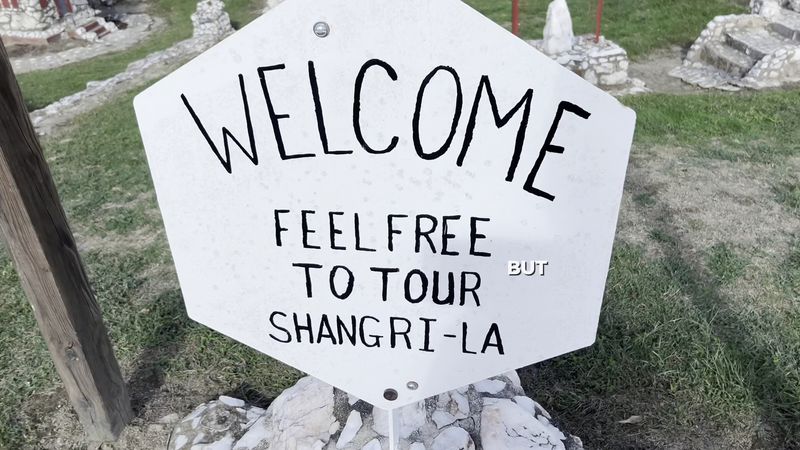
Look down before you look up. The walkway leading into the village holds thousands of arrowheads that Warren collected, pressed right into the stone path.
I nearly missed them at first, then suddenly I saw them everywhere.
It is a gentle reminder that this land has a long history reaching far beyond the 1970s. Each point sits frozen in place, adding texture and a sense of time to your very first steps.
Please enjoy them with your eyes only and leave every one exactly where it rests.
Close by, a plaque installed in 1972 shares the builder’s outlook on life. It reads: “Let me live in the house by the side of the road and be a friend to man.” I read it twice, and it honestly summed up the whole experience better than anything I could write.
That friendly spirit is still alive here. There is no ticket booth and no gate, just an open invitation to wander.
A guest book waits for visitors to sign, and flipping through the entries shows people arriving from all over.
Add your name before leaving. It felt good to become part of the record, one more friend who stopped by the side of the road and was glad for it.
Planning Your Stop in Prospect Hill
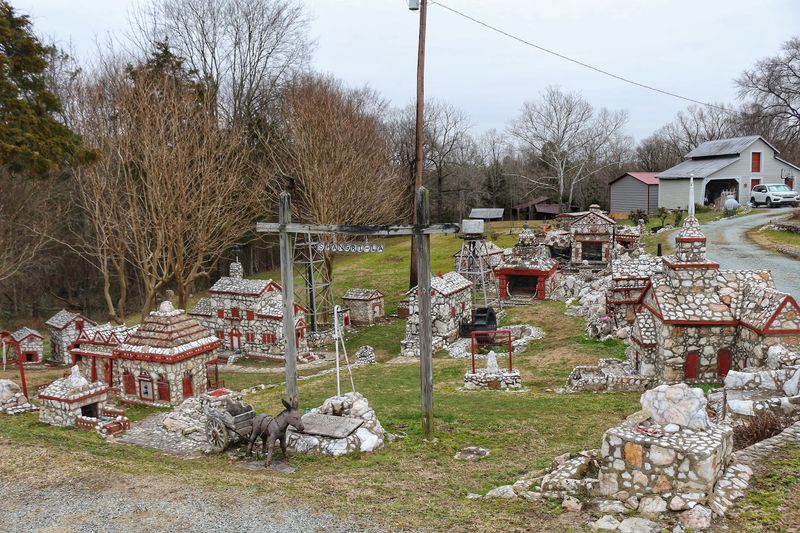
Finding the village is easier than you might think. It sits right along NC 86 in Prospect Hill, next door to the volunteer fire department, and the glittering stone buildings catch your eye from the road.
I almost drove past, then hit the brakes.
Visiting is free, and guests are welcome at any time. Parking is simple along the roadside, and some folks use the fire department’s gravel lot.
If you do, stay well clear of their garage doors, since emergency trucks need a clear path.
This makes a great break on a road trip between Raleigh and southern Virginia. Stretch your legs, let the kids hunt for hidden toys, and bring along a small trinket to leave behind.
Bird lovers might enjoy the setting too, since the rural yard attracts plenty of feathered visitors.
A few small tips can make your trip smoother. Visit in soft morning or late-day light for the best sparkle in the quartz, and bring water on hot days since there are no shops on site.
A phone camera works fine, though a steady hand helps for close-ups.
Above all, slow down. The village is small, but it holds a lifetime of patience, and it rewards anyone willing to crouch low and notice.
Address: 11535 NC-86, Prospect Hill, North Carolina 27314
