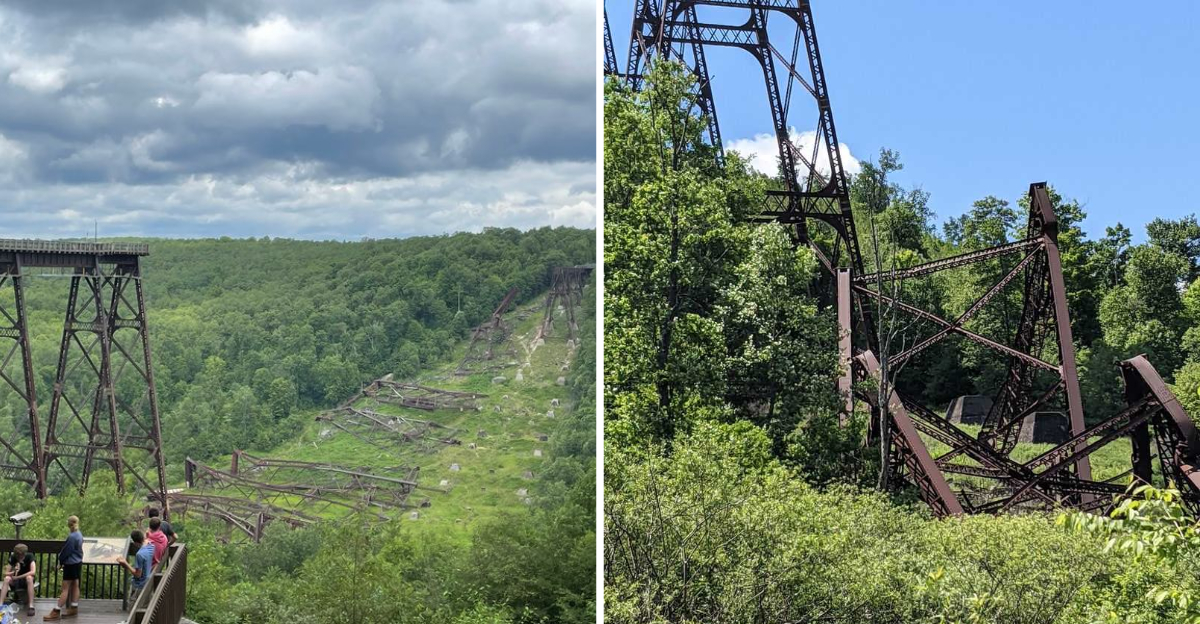
That wreckage of steel beams twisted far below the valley floor tells the story of a railroad bridge that could not hold against the wind.
Out in the quiet hills of Pennsylvania, the remains of a huge structure still stretch over the creek valley, with part of it standing high above the trees while the rest lies tangled where a tornado dropped it years ago.
The bridge was originally completed in the late 1800s and stood as one of the tallest railroad viaducts in the country, a marvel of engineering that carried trains across the deep gorge for over a century. Then the storm came, and the sky took back what it had allowed to be built.
I like places that make history feel real, and this park does that without trying too hard. You can see engineering, weather, forest, and time all packed into one unforgettable view, with the remaining towers rising like monuments to what was lost.
A place where nature and human ambition meet in a way that stays with you is exactly what this Pennsylvania stop delivers.
The Giant That Once Ruled the Valley
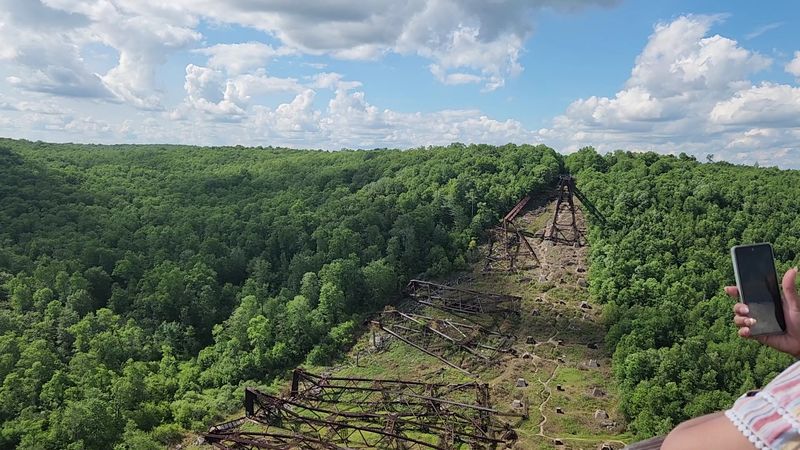
The size of the Kinzua Bridge is the first thing that grabbed my attention, even before I understood its full story. Built in 1882, the bridge rose 301 feet above the Kinzua Creek Valley and stretched 2,052 feet from side to side.
For a short time, it was known as the tallest and longest railroad bridge in the world. People even called it the Eighth Wonder of the World, which sounds bold until you see how high it stood in the forested valley.
The bridge was first made from wrought iron, and its job was serious business. Trains used it to move coal, timber, and oil from northwestern Pennsylvania toward the Eastern Great Lakes region, helping towns and industries grow.
When you visit, try to imagine the sound of engines crossing above the trees. That mental picture makes the quiet park feel much bigger, and it turns a simple overlook into a window into Pennsylvania’s railroad age.
Steel Replaced Iron, but One Old Detail Stayed
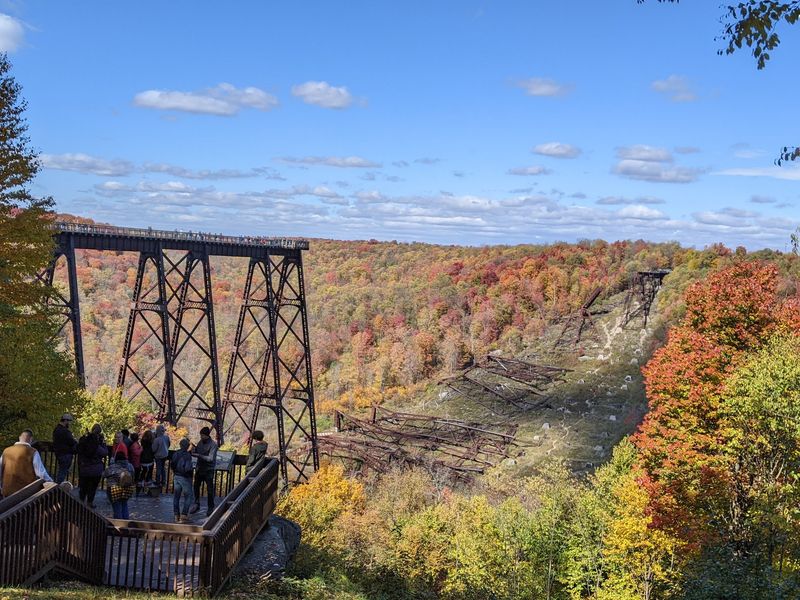
A tiny detail can change a whole story, and Kinzua Bridge proves it in a pretty dramatic way. In 1900, the original iron bridge was taken apart and rebuilt with steel so it could handle heavier trains.
That rebuild made sense for the time because rail traffic had changed. Larger engines needed stronger support, and the steel version gave the old viaduct a new working life above the valley.
One part, however, did not get the same upgrade. The old iron anchor bolts in the concrete piers were left in place, and over many decades, rust slowly weakened parts of the structure.
I find that detail both fascinating and unsettling because it reminds visitors that bridges are not frozen in time. Weather, age, maintenance, and hidden weaknesses all matter.
At the park, the exhibits help make these engineering choices easier to understand. Even if you are not a train person, the story is simple enough to follow and strange enough to stick with you.
Railroad Days Faded Before the Storm Arrived
Long before the tornado made the bridge famous again, Kinzua had already lived several lives. Commercial rail service across the viaduct ended in 1959, after the railroad era that built it had changed.
The Commonwealth of Pennsylvania bought the bridge in 1963, which helped save it from becoming only a memory. Kinzua Bridge State Park later opened in 1970, turning the old railroad landmark into a public place.
That shift feels important when you visit because the bridge stopped being only a tool for industry. It became a destination where families, hikers, photographers, and history fans could stand near a piece of Pennsylvania’s past.
Excursion trains crossed the bridge from 1987 until 2002, giving visitors a rare chance to ride over the valley. Inspections in 2002 found serious weakening from rust, so the bridge closed to trains and pedestrians.
Restoration began in early 2003, and the plan was to preserve the giant. No one visiting the park today can miss the irony that repair work had started only months before the storm changed everything.
The Tornado That Changed the Park in Seconds
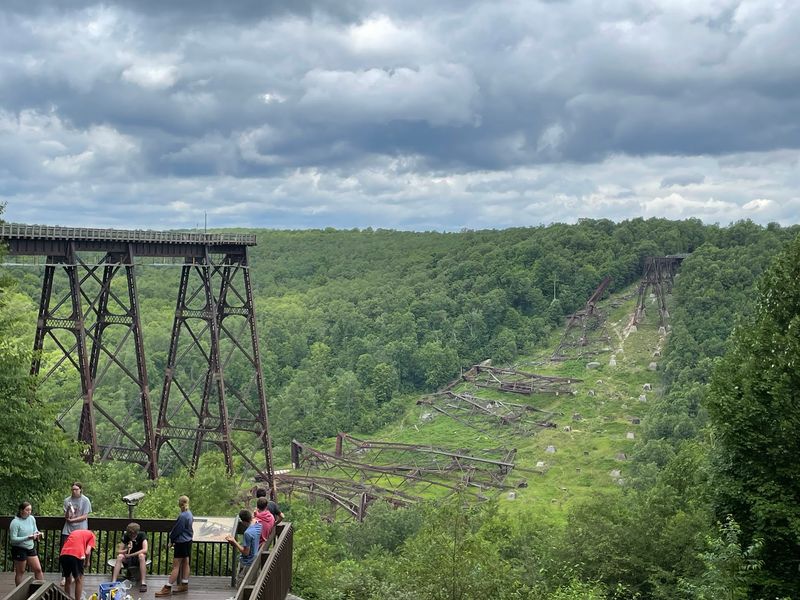
The weather story at Kinzua is hard to forget because it happened so fast. On July 21, 2003, around 3:15 p.m., an F1 tornado hit the Kinzua Viaduct while restoration work was underway.
The winds were estimated at 90 to 100 miles per hour, which is powerful enough to push sideways against a structure that was already weakened. The old bolts at the tower bases failed under that force.
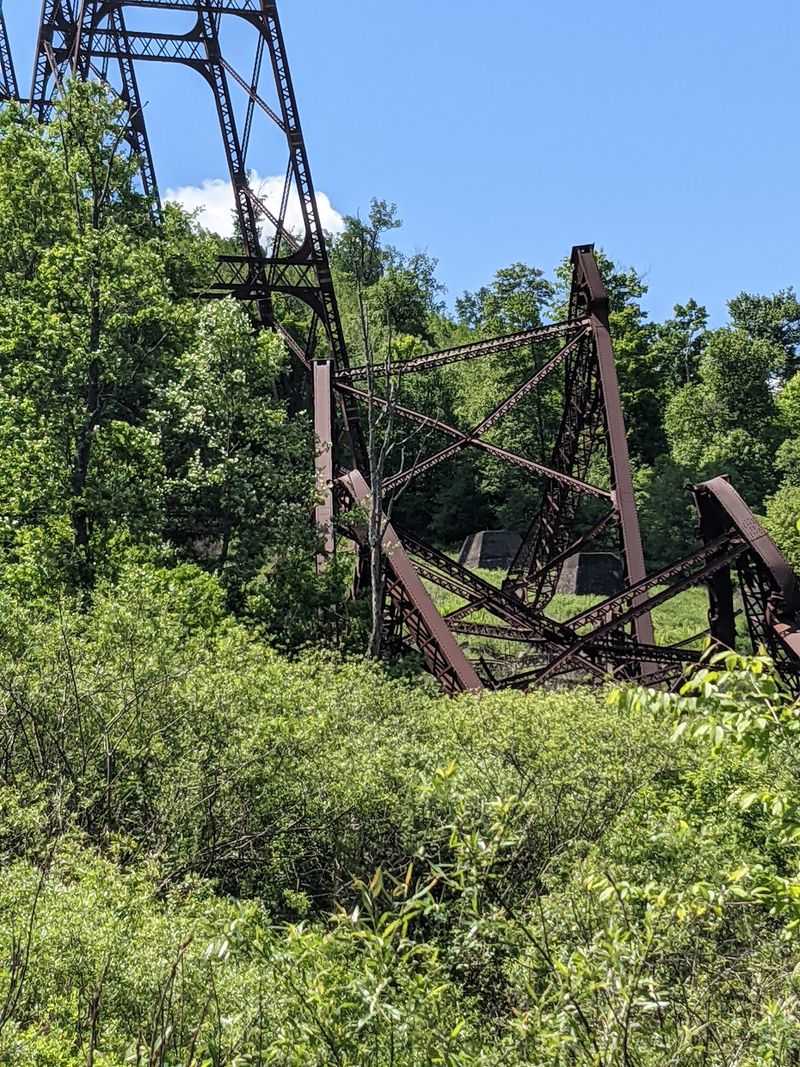
In less than 30 seconds, 11 of the bridge’s 20 towers were ripped from their foundations and thrown onto the valley floor. The middle towers fell first, then others followed as the storm shoved and lifted sections of steel.
What stays with me is the speed of it all. A bridge that had stood for more than a century was partly destroyed in the time it takes to tie your shoes.
No tragedies were reported, though one park employee was injured. That fact adds a quiet sense of relief to a scene that still looks shockingly violent today.
The Wreckage Was Left Where It Fell
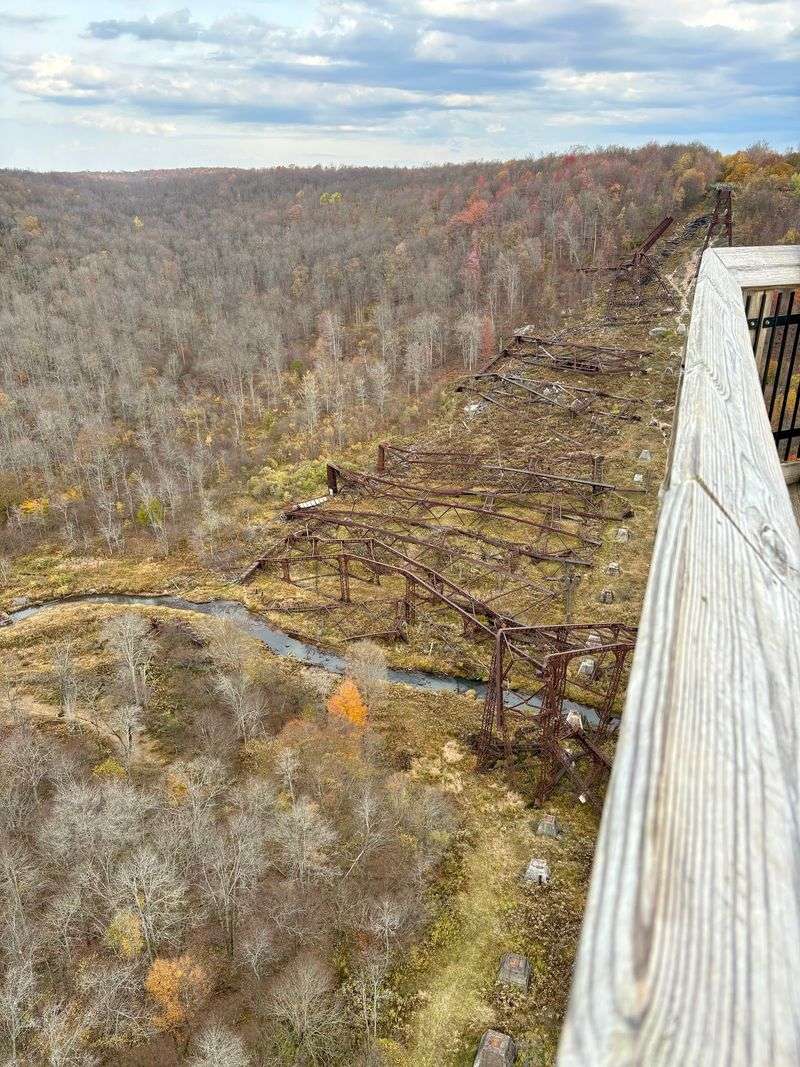
The fallen steel at Kinzua does not feel like a display someone carefully arranged. It looks raw, tangled, and heavy, almost as if the valley is still holding its breath after the storm.
After the tornado, Pennsylvania chose not to rebuild the collapsed section of the bridge. Instead, the 11 fallen towers were left on the valley floor, where visitors can see the power of wind in a direct and unforgettable way.
That choice gives the park a rare kind of honesty. Many historic places clean up damage until it becomes neat, but Kinzua lets the wreckage tell part of the story on its own.
If trails are open during your visit, seeing the twisted steel from below can be especially striking. Wear sturdy shoes, take your time, and remember that the path down and back can feel steeper than it looks.
Even from above, the scattered metal shapes are easy to spot. They turn the valley view into something more than pretty scenery, with history lying in plain sight.
The Skywalk Turns Ruin Into a Viewpoint
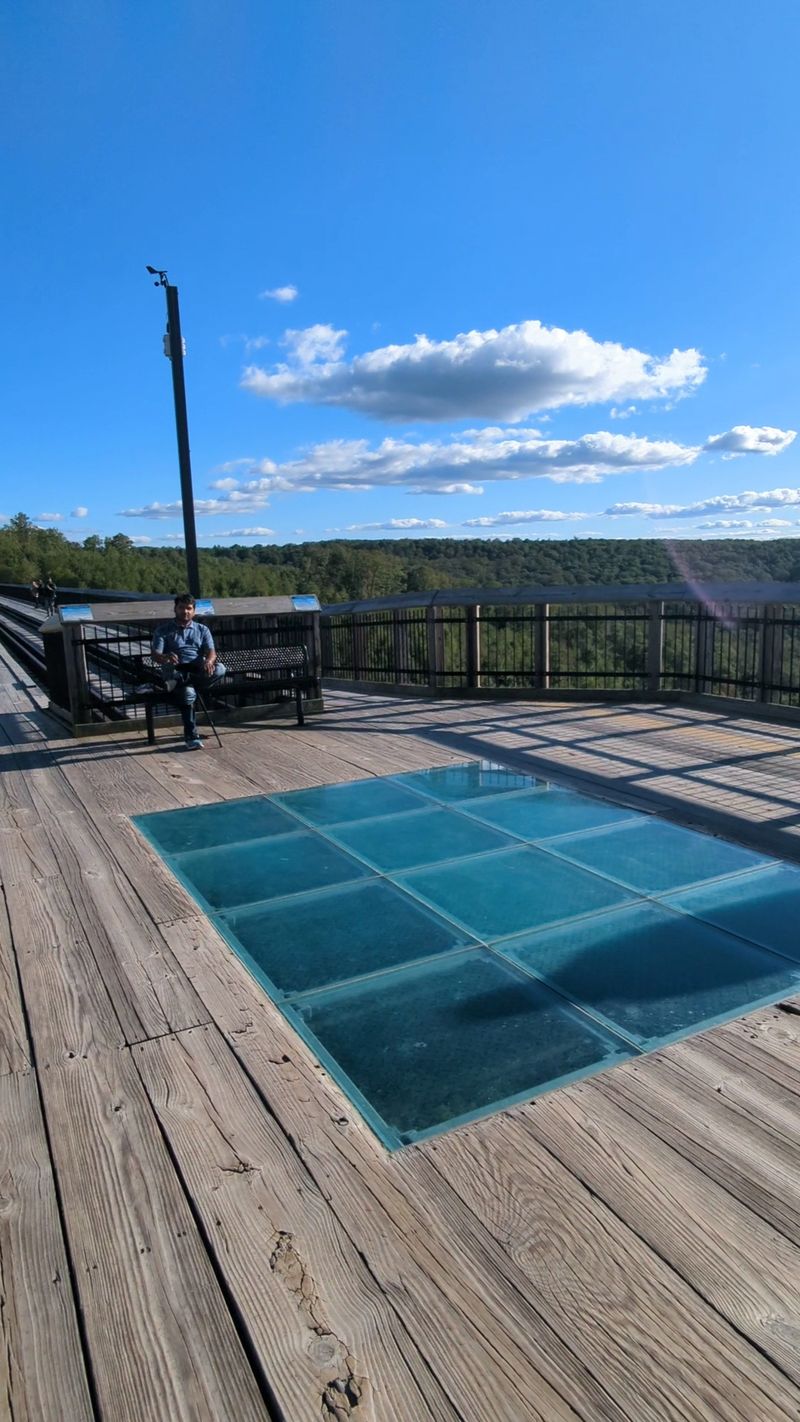
The Skywalk gives the remaining bridge a second purpose, and that idea feels surprisingly hopeful. Opened in 2011, it was built on six surviving original towers and turned part of the old viaduct into a pedestrian overlook.
When open, the walkway leads out to an observation deck about 225 feet above the valley. A partial glass floor lets visitors look down through the structure, which can make even brave people pause for a second.
The view stretches across the Kinzua Creek Valley, with trees rolling toward the horizon and the wreckage below adding a strange, powerful layer. It is beautiful, but not in a simple postcard way.
As of June 2025, the Skywalk is temporarily closed for renovation and preservation work by Pennsylvania DCNR. The project is expected to continue until fall 2027, with a planned temporary reopening for two months during fall 2025.
Before making plans, check the official park website for current access. The visitor center remains open, and the area still offers views and history even during construction.
The Visitor Center Makes the Story Click
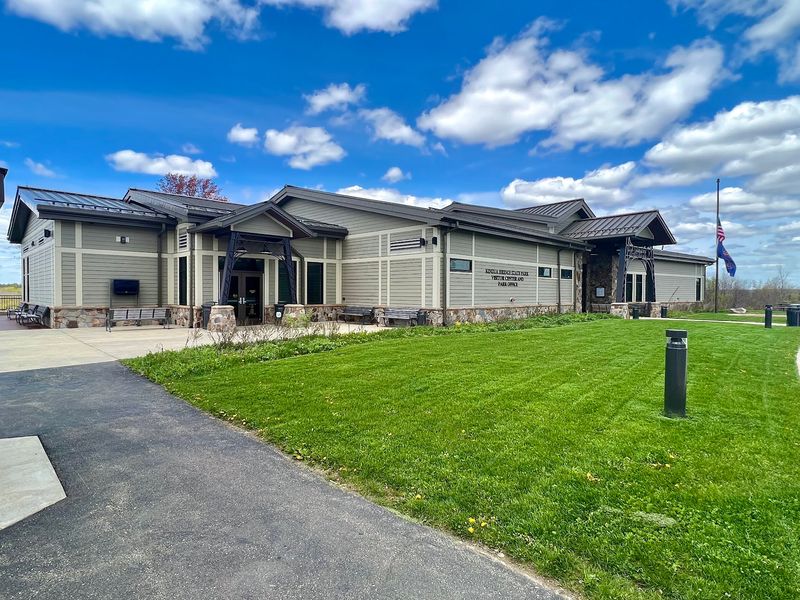
I appreciate a visitor center that does more than hand you a map, and Kinzua’s does a solid job of setting the scene. Inside, exhibits explain the bridge’s railroad history, engineering, collapse, and rebirth as a public landmark.
The displays help connect the dots between the 1882 iron bridge, the 1900 steel rebuild, the end of commercial rail service, and the 2003 tornado. That timeline makes the outdoor views easier to understand.
Videos and educational panels are especially helpful if you are visiting with kids or anyone who prefers stories over dates. The park’s history has enough drama to hold attention without needing extra decoration.
During Skywalk renovations, the visitor center becomes even more useful. It gives context before you head outside to view the remaining towers or look toward the valley.
Plan a little time here instead of treating it as a quick restroom stop. Reading first changed the way I looked at the steel outside, because every beam suddenly felt tied to a decision, a storm, or a moment in time.
Trails Add Sweat to the Scenery
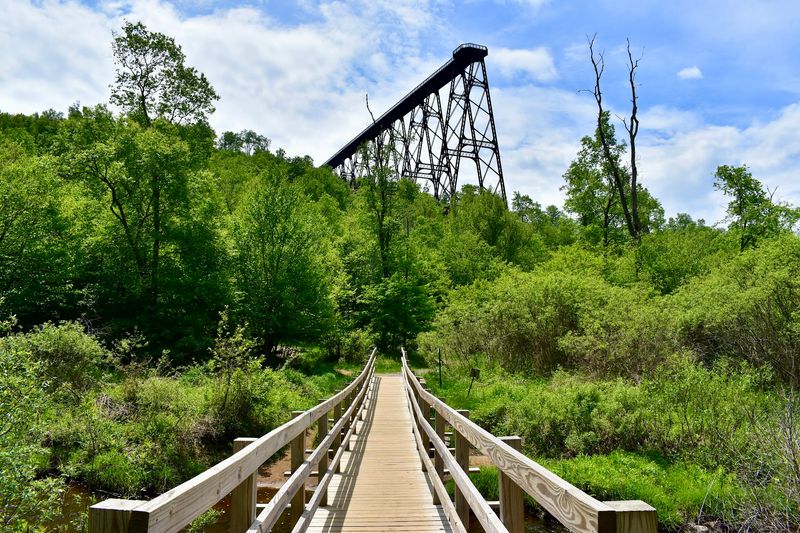
A good trail can slow a visit down in the best way, and Kinzua has options beyond the famous bridge view. The park sits near the Allegheny National Forest, so trees, slopes, and quiet corners are part of the experience.
The Mt. Jewett to Kinzua Bridge Trail is a 7.8-mile route built on a former railroad line.
It was named Pennsylvania’s Trail of the Year in 2023, which gives trail lovers another reason to bring comfortable shoes.
Some paths near the bridge area may change access during renovation work, so check current park alerts before heading out. That small planning step can save frustration, especially if you are hoping to reach lower viewpoints.
When open, routes toward the valley floor can be rewarding but demanding. The descent may feel manageable, yet the climb back up asks more from your legs than the first few minutes suggest.
Pack water, use good footwear, and avoid rushing. Kinzua is best enjoyed with time to notice the creek, the tree line, and the odd feeling of seeing railroad wreckage in a forest.
Planning a Visit Without Missing the Point
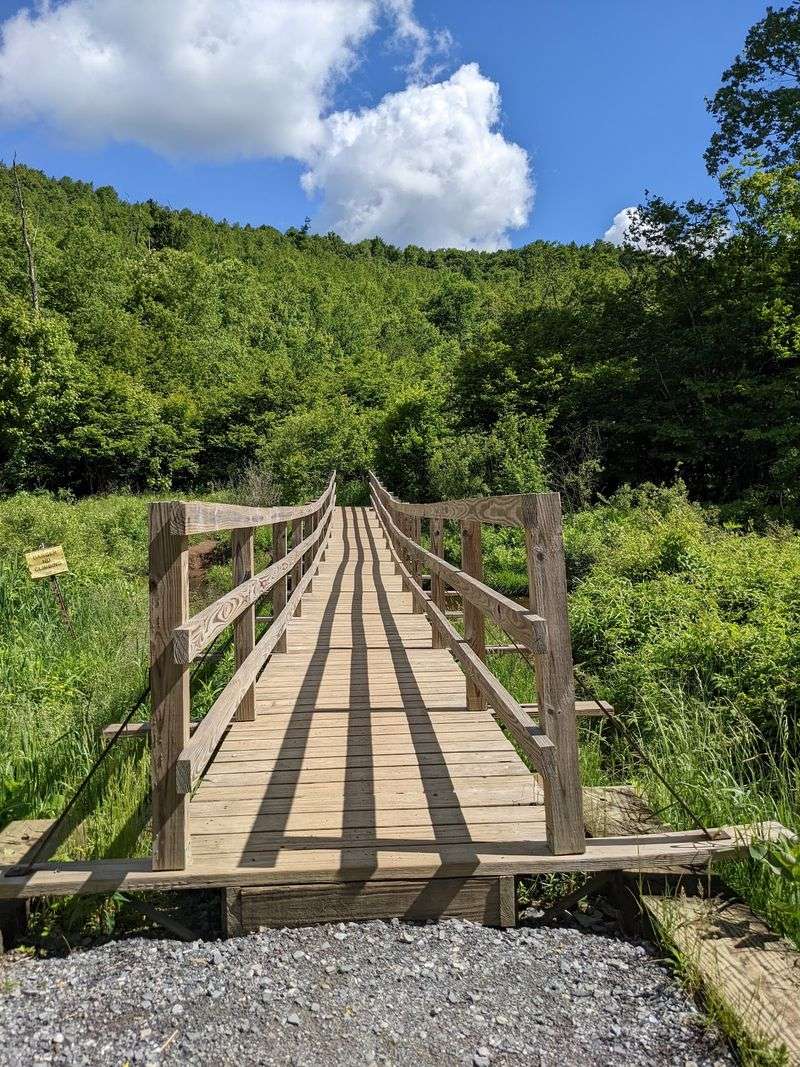
A trip to Kinzua works best when you treat it as more than a quick photo stop. The park has parking, picnic areas, a visitor center, restrooms, overlooks, and outdoor space where the history can settle in slowly.
Because renovation work is affecting Skywalk access, check the official Pennsylvania DCNR page before you go. Hours, trail openings, and viewing options can change, and a fresh update is better than an old memory from someone else’s trip.
Families can still find room to explore, learn, and take in the setting. The mix of engineering, weather, and forest makes the park easy to explain to younger visitors without making it feel like a school lesson.
For the best visit, wear shoes made for walking, bring layers, and leave time for the exhibits. If lower trails are open, only attempt them if everyone in your group is ready for the climb back.
Kinzua Bridge State Park is located at 296 Viaduct Rd, Mt Jewett, PA 16740. Address: 296 Viaduct Rd, Mt Jewett, PA
