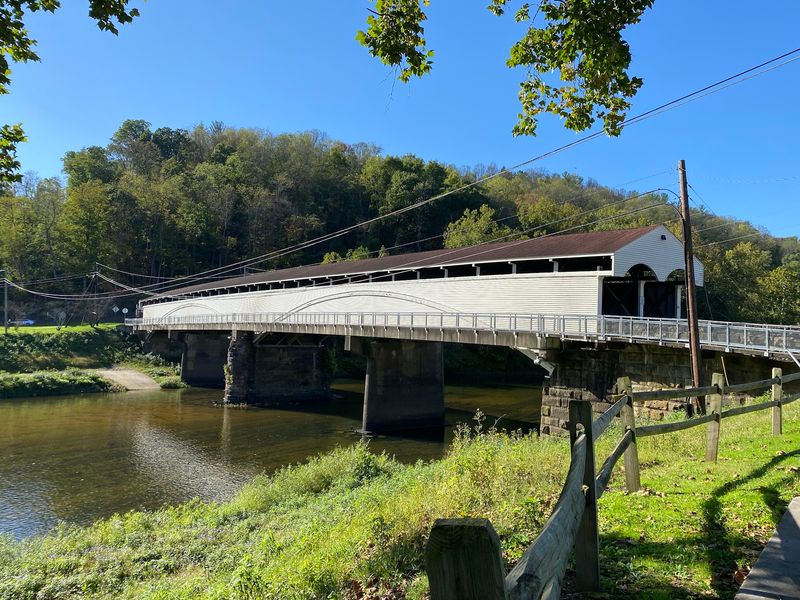
You might roll right up to it without a second glance, thinking it is just another plain white barn stretched over the water. Then your tires hit the deck, the light goes soft and shadowy, and you realize you are driving through a piece of West Virginia history that has outlasted wars, floods, and even a fire.
Folks who grew up nearby still remember riding through it in the back seat with their grandparents. Stick around, because this humble wooden crossing has a story far bigger than its quiet looks suggest.
A Covered Crossing Hiding in Plain Sight
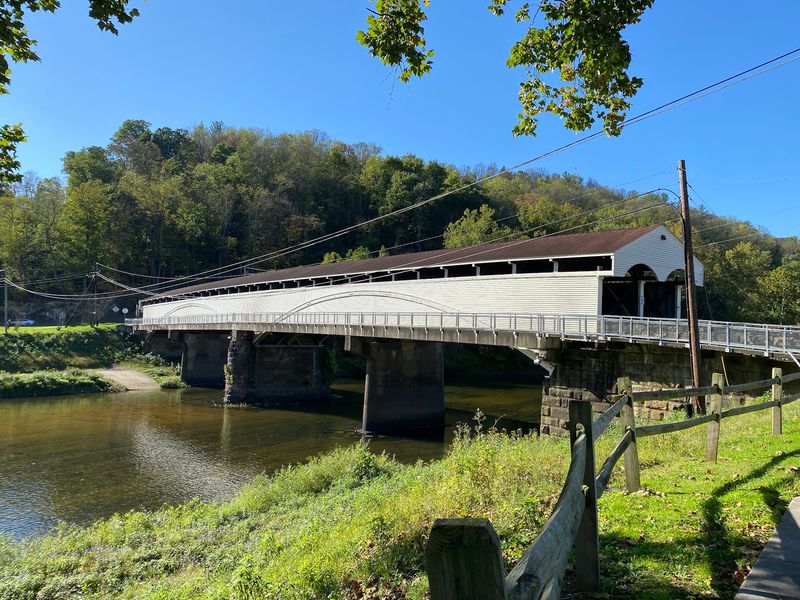
Picture a long white wooden tunnel stretched across a river, with ordinary cars and pickup trucks rolling in one end and out the other. No toll booth, no velvet rope, no gift shop at the entrance.
Just a working road wrapped in timber and history.
That simple scene is what makes this landmark so special. It is a covered bridge, the old-fashioned kind most people only see on calendars, yet it still does the everyday job it was built for.
Locals cross it on the way to the grocery store, and travelers often stumble onto it without realizing what they are driving through.
Some visitors admit it looks a bit plain from the outside, almost like a long white shed. Once inside, though, many say it feels much bigger than it appears.
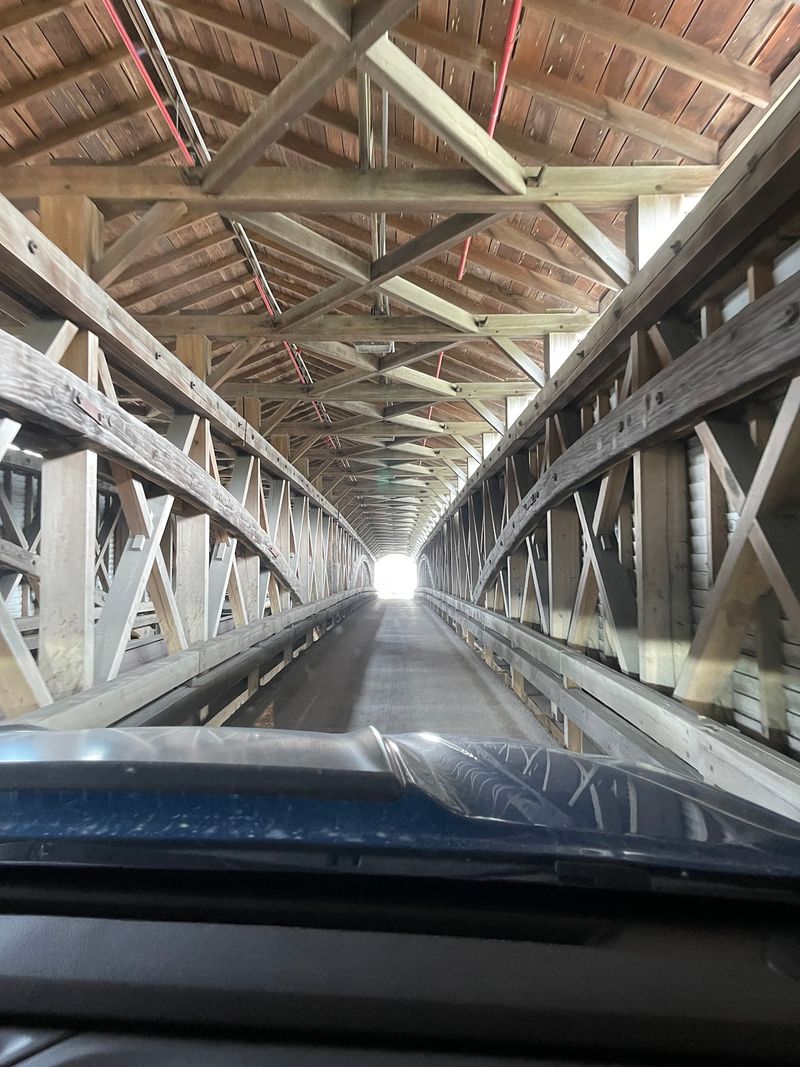
The rafters overhead, the rhythm of the beams, and the hush of the covered roadway can make a two-minute drive feel like a small trip back in time.
Over the next sections, we will slowly reveal where it sits, who built it, what it survived, and why it still matters so much to West Virginians who call this corner of the state home.
Built Nine Years Before the First Shot
Back in 1852, Abraham Lincoln was still a lawyer in Illinois, and nobody in these hills was talking about secession yet. That was the year this bridge was completed, a full nine years before the Civil War began in 1861.
The builder was Lemuel Chenoweth, a self-taught bridge craftsman from western Virginia who earned a reputation as one of the finest builders of his day. He did not work alone.
His brother Eli helped with the job, and a stone mason named Emmett J. O’Brien handled the masonry work that gave the structure its solid footing.
Chenoweth chose yellow poplar for the timber, a wood that grew plentifully in the region and was prized for being strong yet workable. In an age without power tools, every beam was shaped and fitted largely by hand.
Think about what that means for a moment. The same basic structure those men raised before the Civil War is still standing over the water today.
Generations have come and gone, roads have been paved, and cars have replaced horses, yet the Chenoweth bridge remains. Few things built by hand in the 1850s can claim that kind of staying power.
The Morning the War Came to Town
June 3, 1861 started like many early summer mornings, with fog over the river and rain in the air. Before it ended, the town beside this bridge had earned a permanent spot in American history books.
Union troops surprised Confederate forces camped in the area, and the brief clash that followed is widely considered the first land battle of the Civil War. It was a small skirmish by later standards, but its timing gave it outsized importance.
Because the Confederate soldiers left in such a hurry, the event picked up a lighthearted nickname that people still use today: the Philippi Races.
Yes, now you know where we are. The bridge sits in Philippi, the seat of Barbour County, in the north-central part of the state.
After the skirmish, Union troops took control of the bridge and reportedly even used it as barracks, sheltering soldiers beneath its roof. Throughout the war, both Union and Confederate armies relied on the crossing to move troops and supplies.
Standing nearby, it is easy to imagine wagons creaking across the boards. A small park by the bridge offers historic markers that visitors say do a nice job of explaining what happened here.
Close Calls With Flames
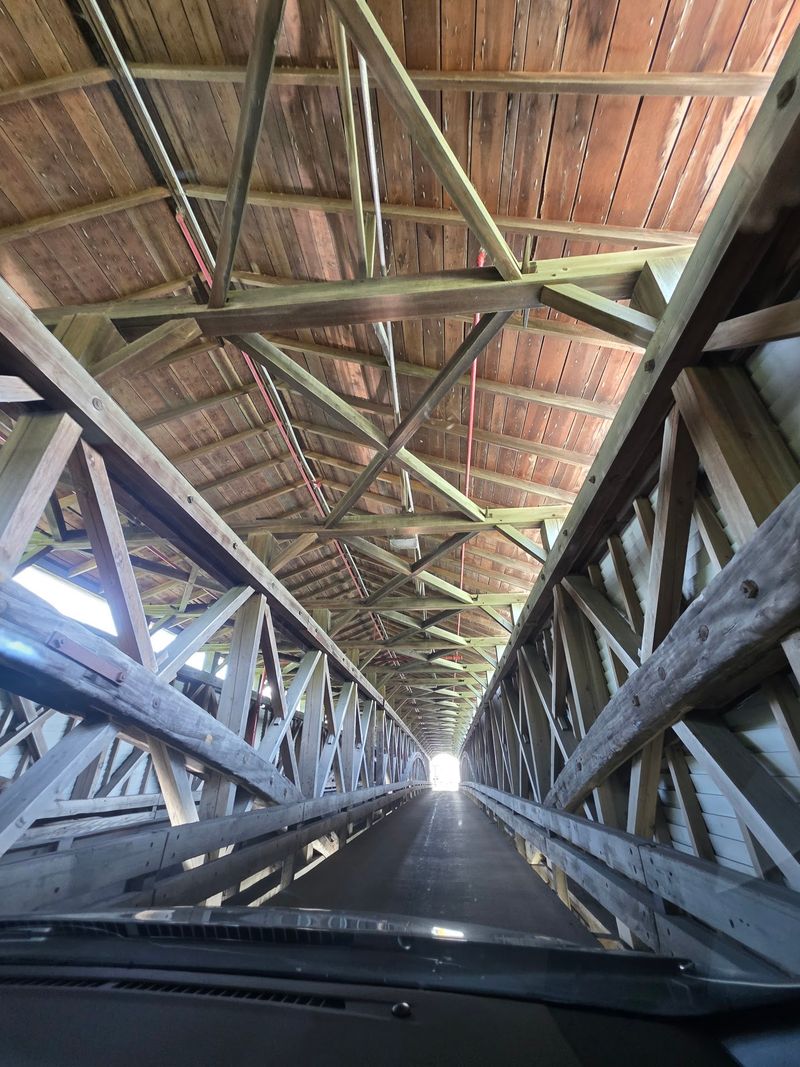
Wooden bridges and fire have never been friends. More than one historic covered bridge across the country has been lost to flames, and this one has had a few scary moments of its own.
In 1863, during Confederate raids in the region, the bridge reportedly came close to being burned. It escaped, and life carried on.
The more dramatic threat arrived more than a century later, in 1989. A gasoline spill near the bridge was ignited, reportedly by the exhaust of a passing car, and the fire caused serious damage to the beloved structure.
For many Barbour County families, that was a heartbreaking day. Plenty of folks had grown up crossing it and could hardly picture town without it.
Thankfully, the community and the state rallied. A careful restoration followed and was completed in 1991.
The goal was to bring the bridge back to the way it looked around 1861 while keeping modern strength upgrades. One clever addition came with the work.
A sprinkler system was reportedly installed, which may make this the only covered bridge in the world with one. One recent visitor noted that some original bracing still remains, now serving more as history than support.
Concrete and Steel Under Old Timber
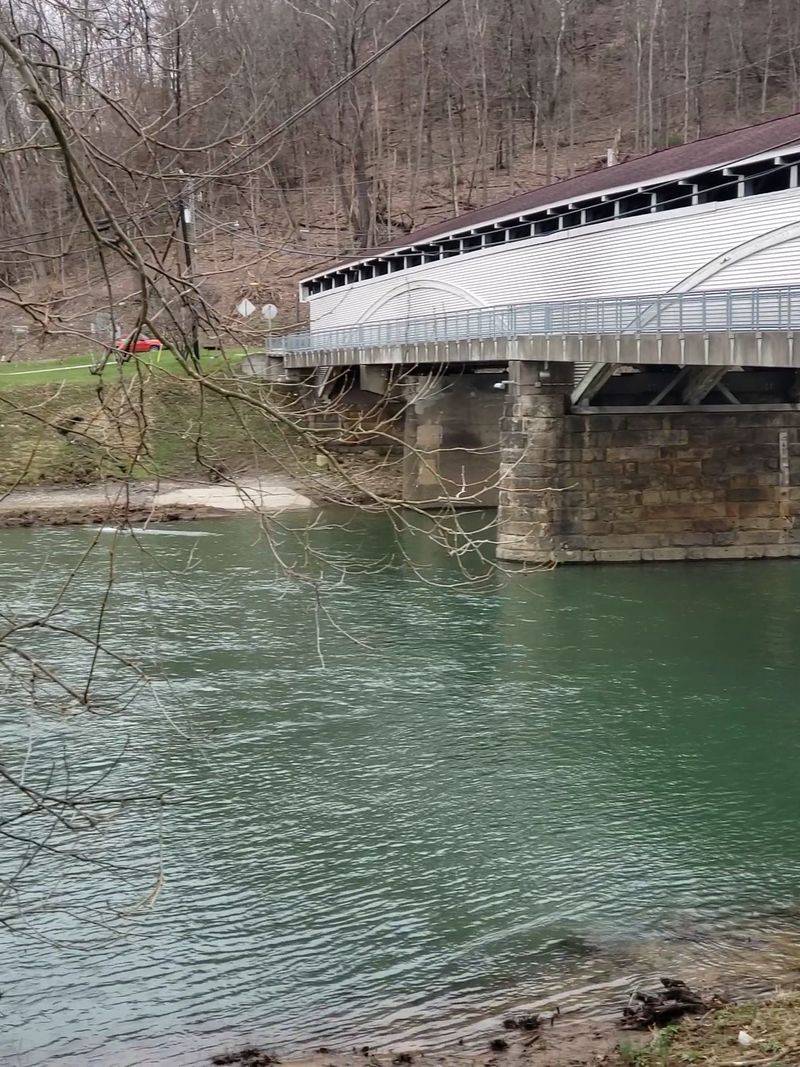
Horses and buggies weigh a lot less than delivery trucks. By the early twentieth century, engineers knew the old bridge needed help if it was going to keep up with the age of the automobile.
In 1934, intermediate concrete piers were added beneath the span to give it extra support. Then in 1938, the original wooden deck was replaced with a concrete deck sitting on steel girders.
Those changes are a big reason the bridge can still carry modern traffic today.
Some purists might wince at concrete in a covered bridge, but the upgrades are a big part of the survival story. Without them, this crossing would likely have been closed to cars long ago, turned into a museum piece, or replaced altogether.
Above the deck, the structure still shows its historic design. The bridge uses a Stephen Long truss-arch configuration, a framework of crisscrossing timbers combined with an arch that spreads the weight.
One visitor who sat on the bridge described marveling at the construction and how well it blends old craftsmanship with the 1930s improvements.
It is a neat lesson in how West Virginians tend to do things: fix what is old, keep it working, and waste nothing.
One of Only Two Double-Barreled Bridges
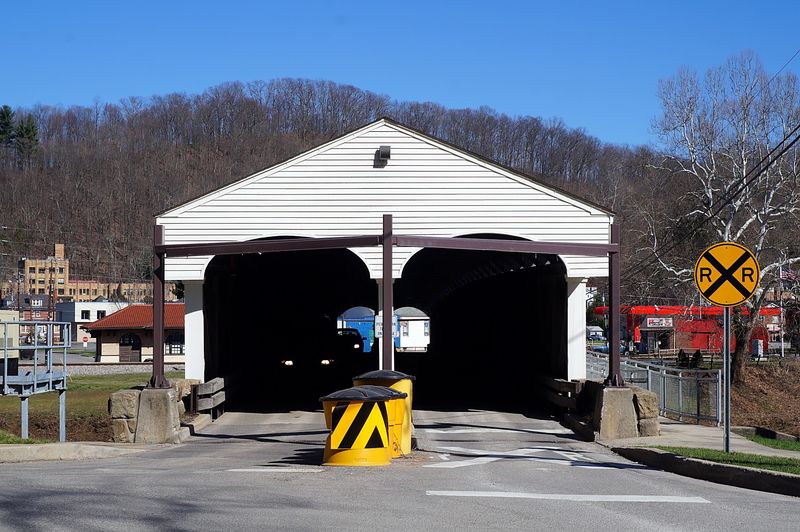
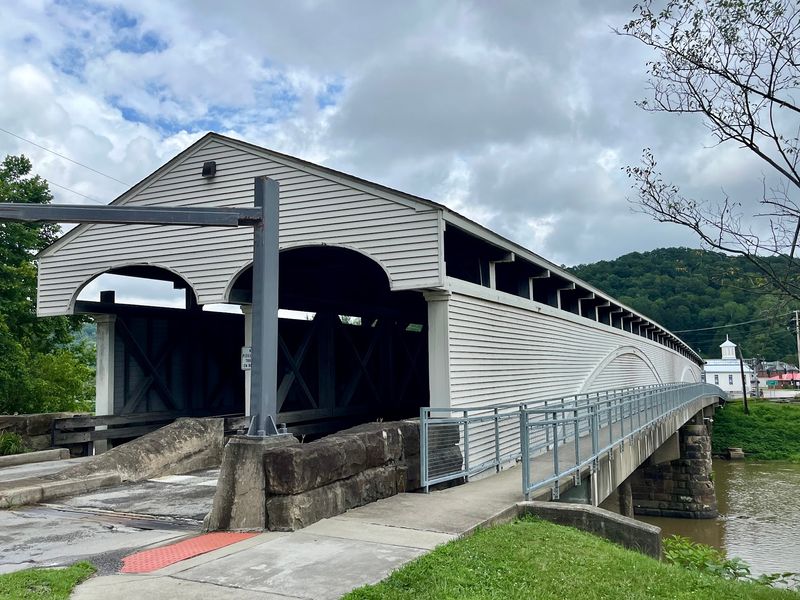
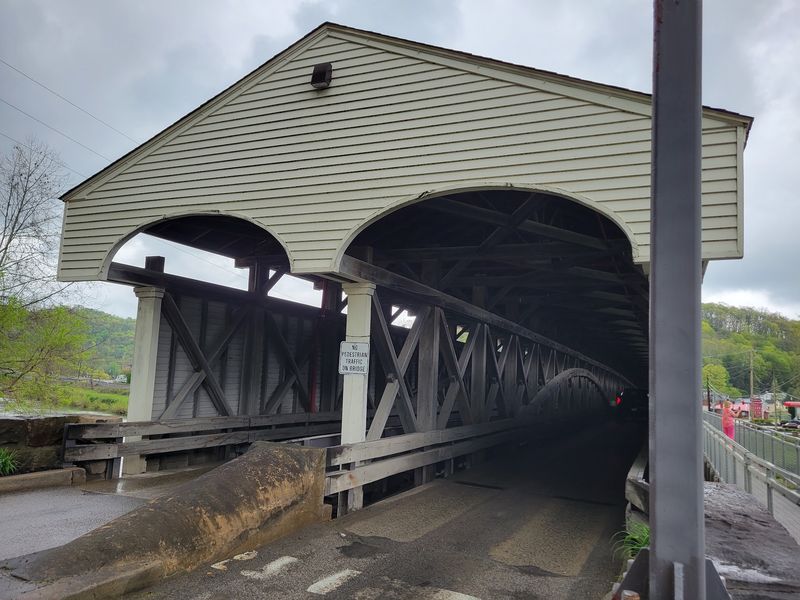
Most covered bridges squeeze traffic down to a single narrow lane, forcing drivers to take turns. Here, two lanes run side by side under one roof.
Bridge fans call this style double-barreled, and it is rare. This crossing is reportedly one of only two remaining two-lane covered bridges in the entire nation.
Look at the entrance and you will see two openings, one for each direction of travel, like a pair of wide wooden doorways.
Visitors seem to love this detail more than almost anything else. Several mention they had never seen a two-lane covered bridge before, and one called it a truly unique sight.
Another traveler said it was the longest covered bridge they had ever driven through.
That length is part of its claim to fame. The bridge is recognized as both the oldest and longest covered bridge in West Virginia, which is no small honor in a state that still treasures a good number of these historic spans.
Driving through, you may notice how the light changes as you enter, then brightens again at the far end. For kids in the back seat, it can feel a little like going through a tunnel at the fair.
A Highway Bridge Like No Other
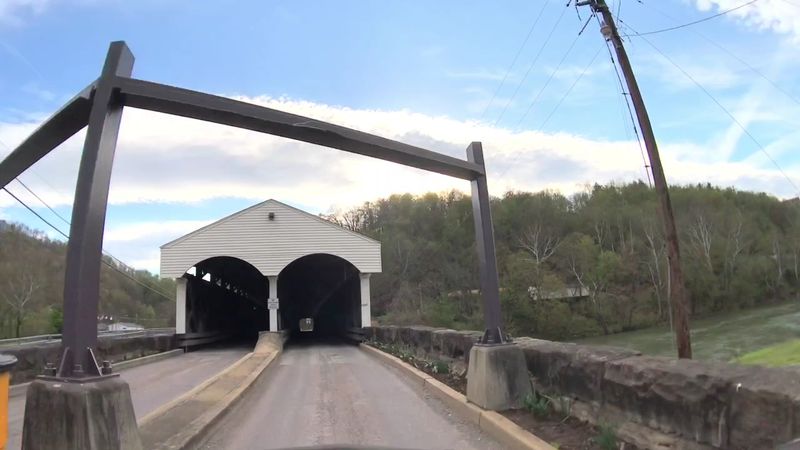
Here is a fun bit of trivia to share at your next family dinner. Of all the covered bridges in America, only one is still part of the United States Numbered Highway System, and you are reading about it.
The bridge carries U.S. Route 250, a real working highway, right through the heart of Philippi near its junction with U.S. 119.
That means it is not a side road or a park path. It is a main route that locals and long-distance travelers depend on every day.
One visitor pointed out that it carries one of the main roads leading through town, which surprises people who expect historic bridges to be roped off. Another said the experience of driving and walking across it was simply something to see.
There is something quietly impressive about a structure from 1852 holding its own in modern traffic. Trucks rumble through, school buses pass, and folks heading to work cross without thinking twice.
For older West Virginians, that steady usefulness strikes a familiar chord. Like a well-loved family tool handed down for generations, it keeps doing its job without much fuss, and nobody would dream of replacing it.
River Views From the Footpath
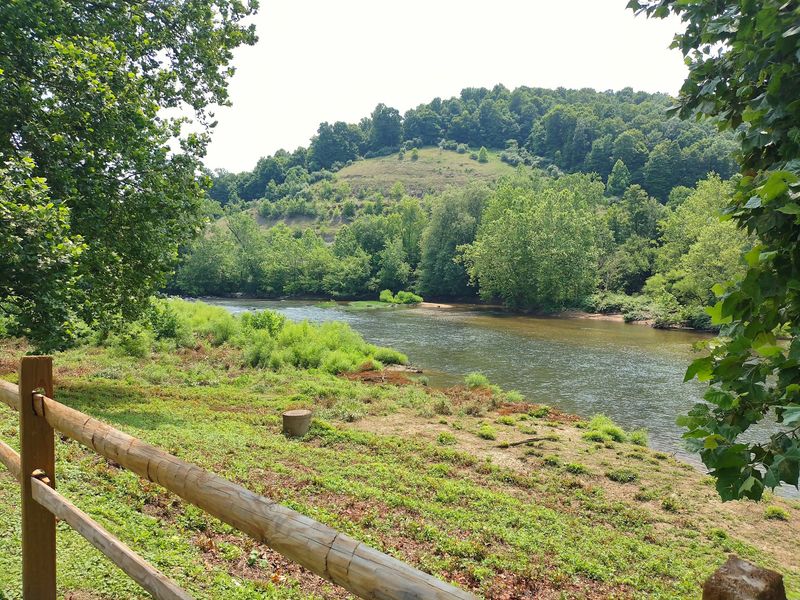
Bring comfortable shoes, because the best views are on foot. Alongside the bridge runs a separate walkway that lets visitors stroll across while looking out over the water.
The river below is the Tygart Valley River, flowing calmly past town and framed by green hills. Visitors often mention the walkway’s lovely river views, and several said walking across on the foot trail was a highlight of their stop.
One small heads-up: some people hope to walk inside the covered roadway itself to snap pictures of the timbers. Since the bridge carries active highway traffic, the walkway outside is the place for pedestrians.
A few visitors wished they could get interior shots, but most agree the outside path more than makes up for it.
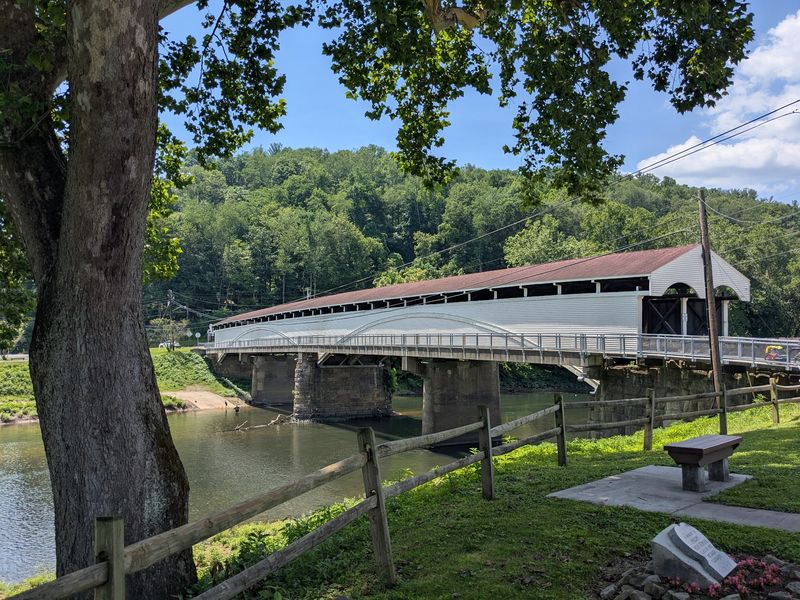
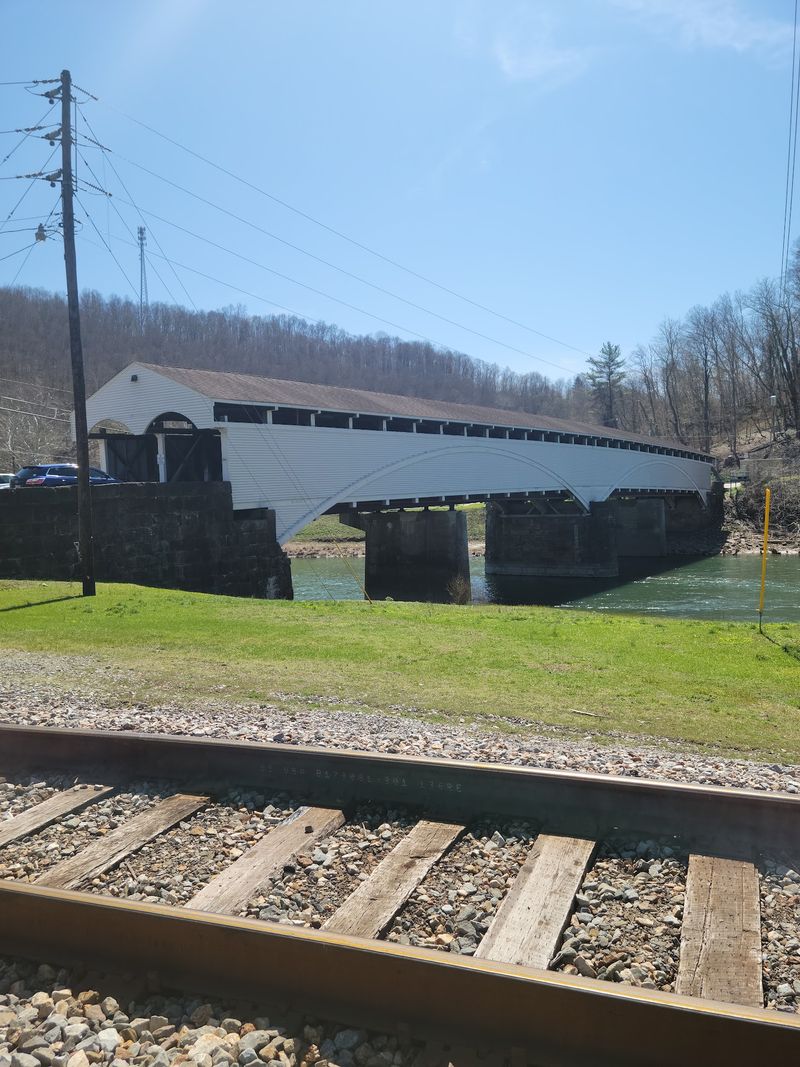
Walk slowly and you will notice details easy to miss from a car, such as the long white siding, the shape of the portals, and the concrete piers standing in the river.
Early mornings can be especially peaceful, with mist sometimes lifting off the water. In autumn, the surrounding hills turn gold and red, adding color behind the plain white bridge.
Either way, it is an easy, gentle stroll suited to just about anyone.
Blue and Gray Park and the Almost Heaven Swing
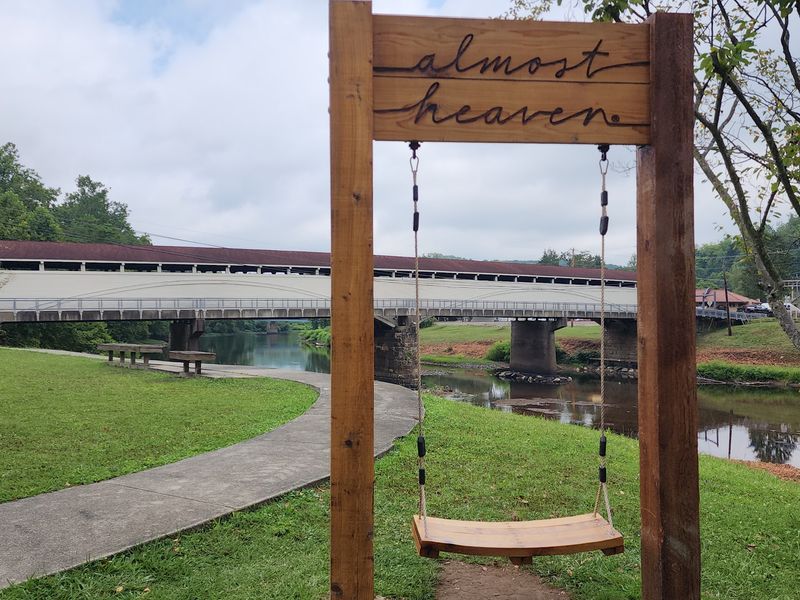
Right near the bridge sits a pleasant green space called Blue and Gray Park, named for the colors of the two Civil War armies. It makes an easy home base for your visit.
Visitors mention parking there before setting out on foot, and the park also holds the historic markers that tell the story of the 1861 battle. One traveler called the history at the small park very informative, which is high praise for a roadside stop.
The park also hosts one of West Virginia’s Almost Heaven Swings, the cheerful wooden porch swings placed at scenic spots around the state. This location is one of the twenty-five swings, and visitors say it is easy to find.
Swinging gently with the old bridge in view is about as West Virginia as an afternoon can get.
Several people recommend bringing lunch, since the area works nicely for a picnic. One family said next time they plan to pack a picnic basket.
Whether you sit on the swing, spread out a blanket, or just read a book in the shade, the park invites you to slow down. It is a simple pleasure that costs nothing.
Photo Opportunities Worth Pulling Over For
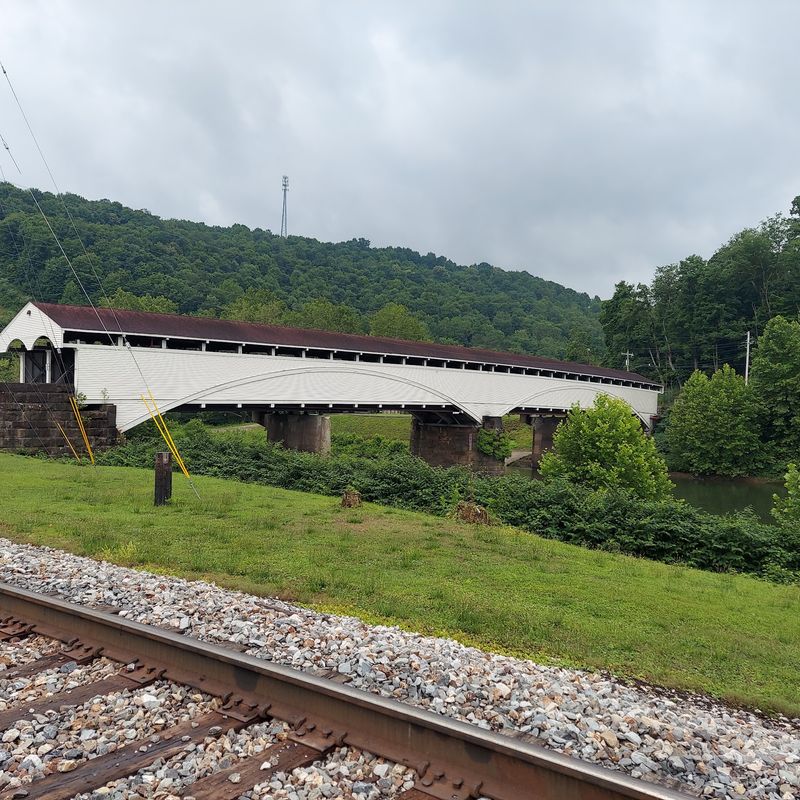
Cameras come out fast here. Photographers, hobbyists, and families with phones all seem to find something worth capturing.
Visitors regularly describe the bridge as a great spot for photographs. One traveler crossing the state said they snagged several good photos and videos while passing through, and hoped to stay longer next time.
A few tips may help you get the shot you want. The riverbank offers a broad side view that shows off the full length of the span, which is impressive when you see it all at once.
The walkway gives a closer angle with the water and hills in the frame. For a classic portrait, many folks like the head-on view of the double entrance, with its two openings side by side.
Lighting matters too. Softer light in the early morning or late afternoon may flatter the white siding better than harsh midday sun.
Do keep safety in mind. Since cars use the bridge constantly, stay on the walkway and in the park rather than stepping into the road for a picture.
And if you have family photos from decades past at this spot, try recreating one. Side-by-side comparisons make wonderful keepsakes.
Small-Town Charm Beyond the Bridge
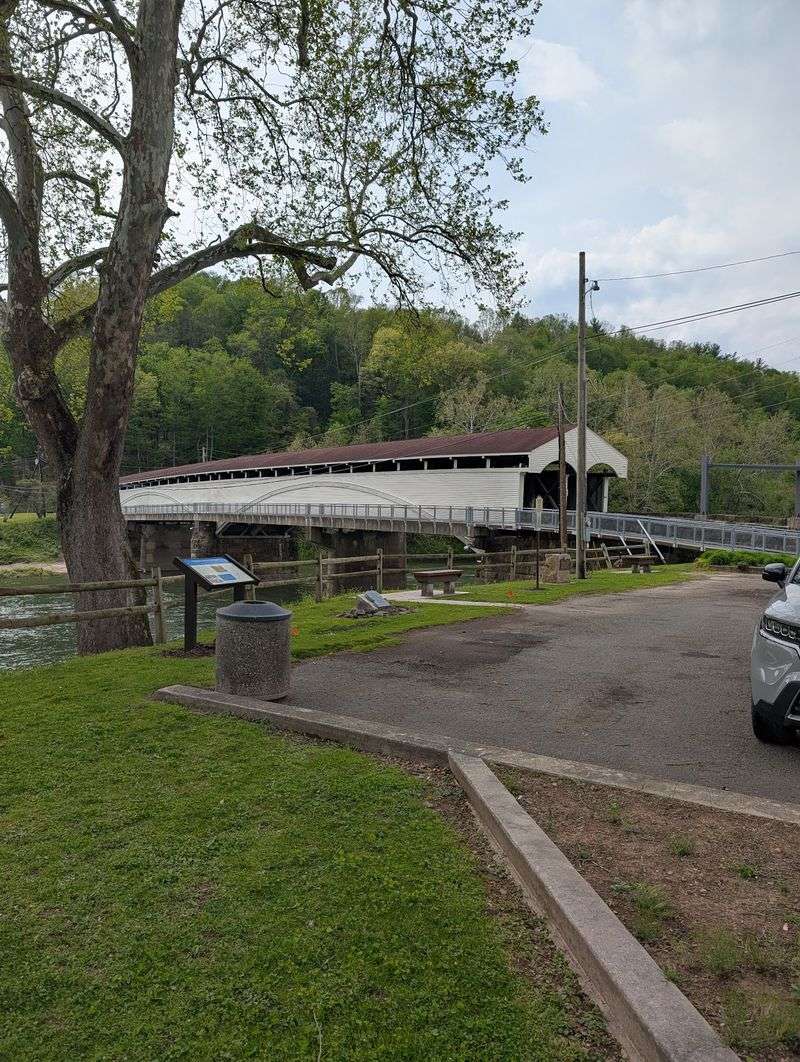
Plenty of travelers come for the bridge and leave talking about the town. Philippi has a friendly, close-knit feel that visitors often describe as adorable.
One family parked at the park and then walked through town using a map of historic sites, turning a quick stop into a mini history tour. Another visitor called it a beautiful and friendly little town full of neat history.
A nearby train station museum also gets mentions, and visitors encourage others to stop in. Pairing the bridge with a museum visit can turn a short detour into a satisfying half day.
For many West Virginians, towns like this stir up warm memories of how things used to be, when Main Street was the center of life and neighbors waved from front porches. That good old days feeling is still easy to find here.
One visitor shared that years ago they had relatives living in Philippi and always loved riding through the covered bridge with their grandparents. Stories like that are common, and they show how deeply this crossing is woven into family memories across the region.
Do you have a Philippi memory of your own? Chances are, someone you know does.
Who Will Love This Stop Most
History buffs, obviously, but the list is longer than you might think.
Retirees on a fixed budget will appreciate that this outing is completely free. There are no tickets, no admission fees, and the bridge is open around the clock, so you can enjoy a day of history and scenery without spending more than a tank of gas and maybe a packed lunch.
Road trippers crossing the state find it an easy break. Several travelers said they stopped on a drive across West Virginia and were glad they did.
Cyclists like it as a rest spot, and one visitor recommended it for relaxing during a bike ride.
Families with kids can enjoy the swing, the picnic space, and the fun of driving through a covered tunnel.
To be fair, not everyone is wowed. One honest visitor said they would not make a long trip just to see it alone, but felt it was worth checking out if you are in the area or on a scenic country drive.
That is a fair way to think about it.
Paired with the park, the museum, and a walk around town, though, it becomes a full and memorable outing.
Practical Notes for Your Visit
Good news first: the bridge never closes. It is listed as open 24 hours a day, seven days a week, and since it is a public highway, there is no charge to cross or walk beside it.
You will find it at 26416 US-250, Philippi, WV 26416, where U.S. 250 meets U.S. 119. The bridge is maintained by the West Virginia Department of Transportation, and it was added to the National Register of Historic Places in 1972.
Visitors mention parking on either side of the bridge, and many choose Blue and Gray Park as a convenient spot to leave the car and explore on foot.
A few handy tips from travelers: one noted there is a Sheetz just around the corner with restrooms, while a small gas station before the bridge did not have them. There is also a McDonald’s within a couple of miles, which can help if you have hungry children in tow.
One visitor mentioned that there is not much signage outside announcing the bridge’s importance, so it is easy to drive through without realizing it. Read up beforehand, and you will appreciate it far more when you arrive.
Why the Old Bridge Still Deserves a Detour
Some landmarks shout for attention. This one simply keeps working, the way it has for more than 170 years.
Built in 1852 by Lemuel Chenoweth, it watched the first land battle of the Civil War, sheltered soldiers, dodged flames in 1863, gained concrete piers and steel girders in the 1930s, and rose again after the 1989 fire. Through all of it, it kept carrying people across the Tygart Valley River.
It may not look fancy from the outside. One visitor called it plain white and nothing special in appearance, yet still appreciated it deeply for its history.
That might be the best way to see it. The beauty here is in the story, the endurance, and the memories so many families carry.
Visitors overwhelmingly come away happy, calling it a beautiful place to stop and enjoy a slice of West Virginia history.
So the next time you are heading through Barbour County, slow down. Drive across, then park and walk the footpath.
Sit on the swing, read the markers, and maybe share a memory with someone you love. A bridge older than the Civil War is waiting, and it is still open for business.
