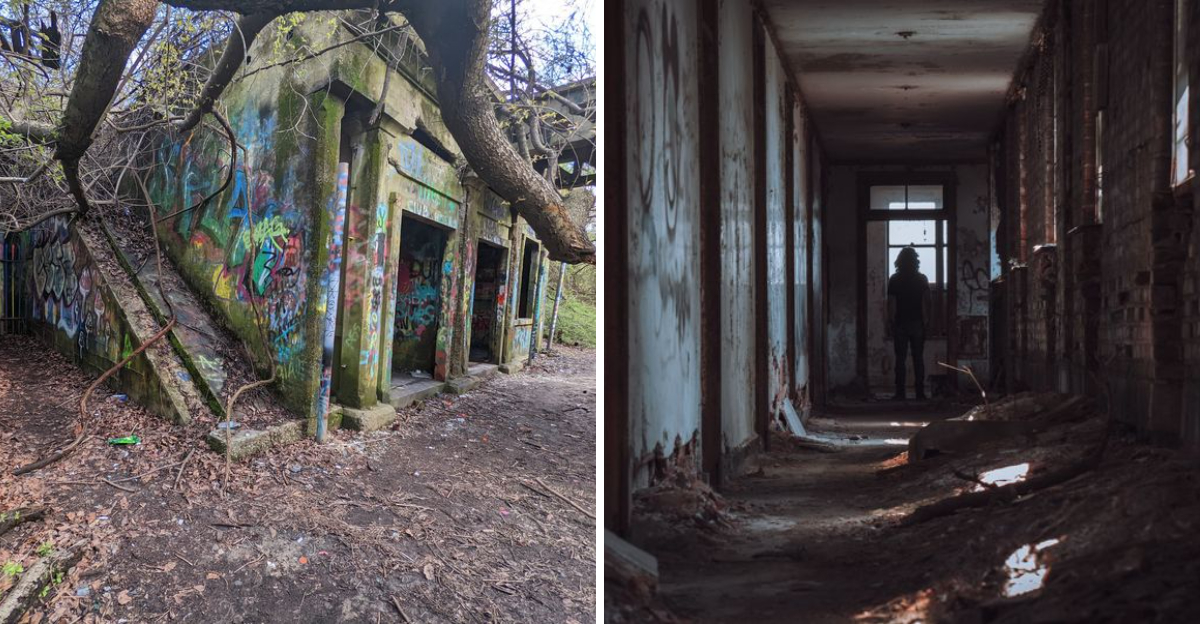
Maryland has enough abandoned ruins, forgotten settlements, old industrial remnants, and weathered structures to make an ordinary history lesson feel considerably creepier.
Some are recognizable pieces of the past while others look like someone simply walked away one day and forgot to come back, which naturally makes them irresistible to anyone fascinated by places with unanswered questions.
Collections of abandoned Maryland sites include former mill communities, crumbling ruins, old forts, and other remnants scattered around the state.
The important part is sticking to places that can be viewed legally from public land, designated trails, or areas where visitors are actually permitted, since “abandoned” definitely does not mean “free to trespass.”
Even without sneaking through a single locked gate, Maryland has plenty of strange leftovers from the past capable of delivering a genuine case of the creeps.
1. Daniels Ghost Town, Patapsco Valley State Park
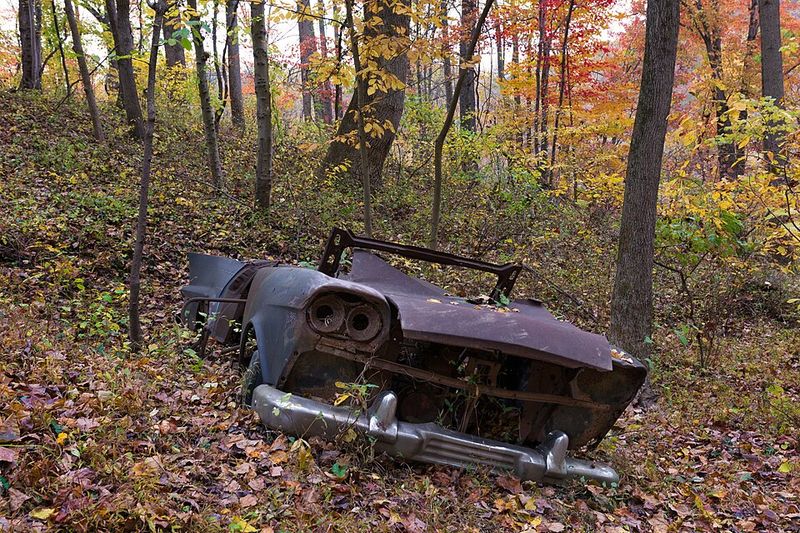
There is something quietly unsettling about a place that once hummed with the energy of hundreds of people and now exists only as moss-covered stone and silence. Daniels, tucked along the Patapsco River inside Patapsco Valley State Park, is exactly that kind of place.
Known by earlier names like Elysville and Alberton, this former mill town thrived through the 1800s, powered by the river’s steady current and the ambitions of its workers.
Cotton mills once stood where forest now reclaims every surface. Floods over the decades steadily dismantled what industry had built, and Hurricane Agnes in 1972 delivered what many consider the final, decisive blow.
What remains are crumbling stone foundations, forgotten chimneys, and the skeletal outlines of structures that once gave this community its identity.
The ruins of St. Stanislaus Church and the Pentecostal Holiness Church are the most striking survivors. They rise from the undergrowth with a kind of quiet dignity that feels almost theatrical.
I remember standing near the old church walls and feeling the strange collision of beauty and loss that abandoned places sometimes offer so perfectly.
Hikers exploring the park’s trails often stumble upon these ruins without expecting them, which makes the discovery feel even more powerful. The railroad bridge pillars still visible along the riverbank add another layer of industrial melancholy to the scene.
Daniels is not a place you visit for answers. You visit it to sit with the questions it quietly raises about time, nature, and what endures.
Address: 8106 Alberton Road, Windsor Mill, MD 21244
2. Glenn Dale Hospital, Glenn Dale
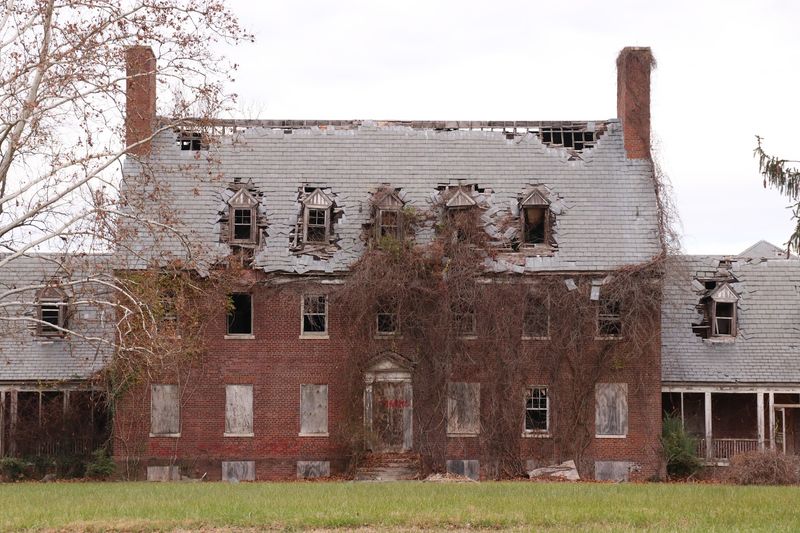
Few places in Maryland carry as much visual weight as the sprawling ruins of Glenn Dale Hospital. The campus stretches across 216 acres and includes 23 separate buildings, each one in a different stage of quiet collapse.
Established in 1934 by the District of Columbia, it originally served as a tuberculosis sanatorium, meant to isolate patients and slow the spread of a disease that terrified the early twentieth century.
The hospital operated for nearly five decades before closing in 1982, largely due to concerns about asbestos contamination and deteriorating conditions. Since then, the buildings have been left largely untouched.
Broken windows frame views of collapsed ceilings. Original fixtures, long stripped or ruined, leave behind ghostly outlines of what once functioned as wards and treatment rooms.
Reports of underground tunnels connecting various buildings add a layer of mystery that urban explorers find irresistible. The property is listed on the National Register of Historic Places, which speaks to its architectural and historical significance, even in its current deteriorated state.
That designation has not stopped nature from doing its slow, relentless work on the structures.
There is something genuinely disquieting about the scale of this place. Most abandoned sites feel contained.
Glenn Dale does not. The sheer number of buildings means that every turn reveals something new, and not always something comfortable.
It rewards curiosity, but it also demands a certain respect for the people who once passed through its doors seeking care they often never fully received.
Address: 5201 Glenn Dale Road, Glenn Dale, MD
3. Forest Haven Asylum, Laurel

Forest Haven Asylum may be the most emotionally difficult abandoned site in all of Maryland. Opened in 1925, it was originally envisioned as something almost hopeful: a sprawling farm-like campus across 300 acres, designed to provide structured care for individuals with intellectual disabilities.
Twenty-two buildings spread across the land, and for a time, the model seemed progressive by the standards of its era.
The decline, when it came, was devastating. Severe funding cuts, dangerous overcrowding, and an expanding patient population overwhelmed whatever good intentions the institution once held.
By the 1960s and 1970s, documented cases of abuse, medical negligence, and unexplained deaths had transformed the facility into something far darker than its founders imagined. A federal court order finally shut it down in 1991.
Many of those who died at Forest Haven were buried in a mass grave on the property. That detail alone gives the site a weight that no amount of peeling paint or broken glass could fully capture.
The buildings still stand, fenced and heavily secured, which means public access is not possible. The perimeter itself, though, tells you enough.
I think about places like Forest Haven and feel a complicated mix of sadness and the need to bear witness. These structures are not just ruins.
They are evidence of a chapter in American institutional history that deserves to be remembered honestly, not romanticized. The eerie atmosphere here is real, but so is the human story underneath it, and that story matters more than the aesthetics of decay.
4. National Park Seminary, Forest Glen Park
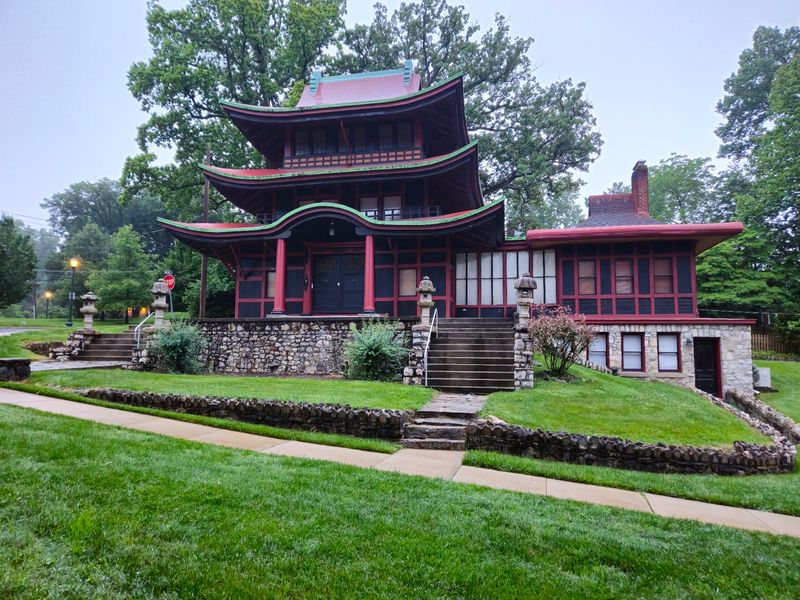
National Park Seminary is one of those places that genuinely defies easy description. It started life in 1887 as a resort hotel called Ye Forest Inn, then transformed in 1894 into an elite women’s finishing school that became famous for its wildly imaginative architecture.
Buildings on the campus were designed to resemble a Japanese pagoda, a Dutch windmill, a Swiss chalet, and an English castle, all sitting side by side as if someone had assembled a miniature world tour in suburban Maryland.
During World War II, the campus was repurposed as an army hospital for soldiers recovering from injuries. That shift from fairytale whimsy to wartime medicine gives the place a layered history that few sites can match.
When the military eventually left, neglect and vandalism began eroding what had once been meticulously maintained grounds.
Preservation efforts in recent decades have saved much of the campus, with many of the fantastical structures converted into private residences. But pockets of unrestored decay remain, and those corners still carry the strange, slightly surreal energy that makes the seminary worth seeking out.
There is something about seeing a crumbling pagoda next to a half-restored windmill that stops you mid-step.
The combination of architectural eccentricity and historical complexity makes this one of Maryland’s most genuinely fascinating abandoned or partially abandoned sites.
It is the kind of place where every building seems to belong to a different story, and somehow all those stories ended up sharing the same stretch of land.
Address: Linden Lane, Forest Glen Park, MD
5. Fort Carroll, Patapsco River
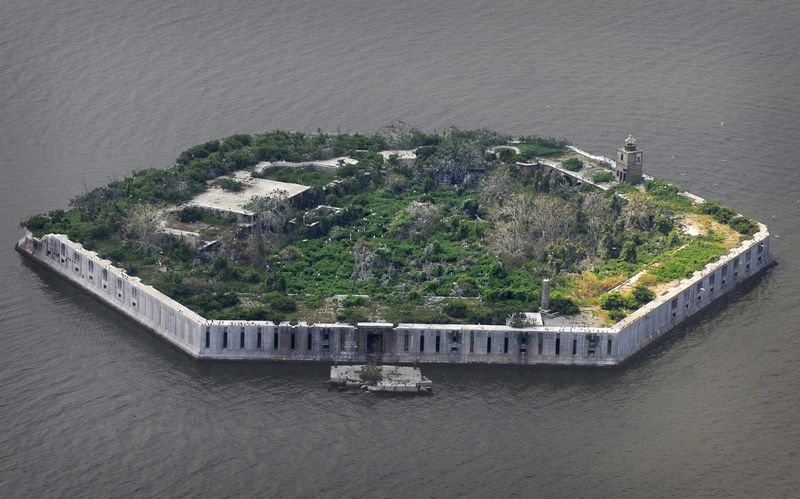
Sitting alone in the middle of the Patapsco River, Fort Carroll looks like something a history professor and a gothic novelist designed together. The hexagonal island fort was conceived by a young military engineer named Robert E.
Lee, with construction beginning in 1848. Its purpose was to defend Baltimore Harbor from naval attack, an ambition that seemed entirely reasonable at the time and entirely obsolete within a few decades.
A lighthouse was added to the ramparts in 1853 to help ships navigate the river. By 1921, the military had officially abandoned the fort, leaving its granite and brick structures to face the weather alone.
The isolation has done its slow, steady damage, and today the walls lean and crumble in ways that make the whole structure look slightly unreal from a distance.
The fort has since become an accidental bird sanctuary, which adds an unexpected softness to its hard, weathered edges. Herons and other waterbirds nest among the ruins, indifferent to the history beneath their feet.
Access to the island itself is restricted, but paddling a kayak around its perimeter gives you a perspective that photographs rarely capture. The scale of it, rising from the water with no land in sight on any side, is genuinely striking.
There is a particular kind of loneliness that comes with looking at Fort Carroll from the water. It feels cut off not just from the shore, but from time itself.
That feeling is exactly what makes it worth the paddle.
6. Mallows Bay, Nanjemoy, Charles County
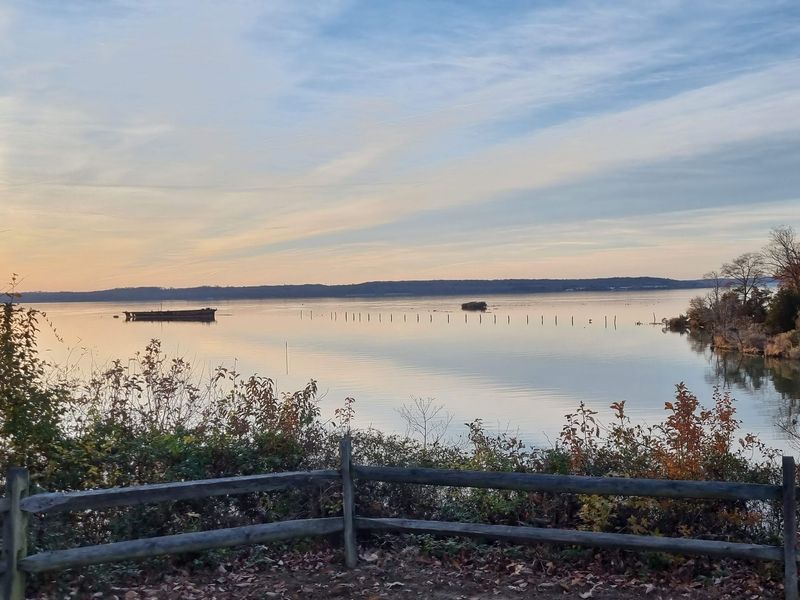
Mallows Bay holds a title that sounds almost fictional: it is home to the largest shipwreck fleet in the entire Western Hemisphere.
Located on the Potomac River in Charles County, this quiet bay contains the remains of hundreds of vessels, most of them wooden steamships built hastily during World War I.
The war ended before many of these ships ever saw meaningful service, and they were sold off, burned for salvage, and eventually abandoned here in the water.
Over the decades, the wrecks settled into the riverbed and became something entirely unexpected: a thriving ecosystem. Vegetation grew over the rotting hulls.
Fish moved in. Birds followed.
What began as a graveyard became, in its own strange way, a kind of sanctuary. In 2019, the area was officially designated a National Marine Sanctuary, a recognition of both its historical value and its ecological richness.
Exploring by kayak among the weathered timber frames that break the water’s surface is a genuinely moving experience. Some of the wrecks are large enough that you can paddle through gaps in the hull, surrounded on both sides by wood that has been slowly dissolving for a century.
The light filtering through the vegetation that clings to these structures gives everything a greenish, underwater quality, even from above.
I found Mallows Bay unexpectedly emotional. The Ghost Fleet, as it is often called, is a reminder that history does not always sink cleanly.
Sometimes it stays half-visible, just below the surface, asking to be noticed.
Address: Mallows Bay Park, 1440 Wilson Landing Road, Nanjemoy, MD 20662
7. Old Town Mall, Baltimore
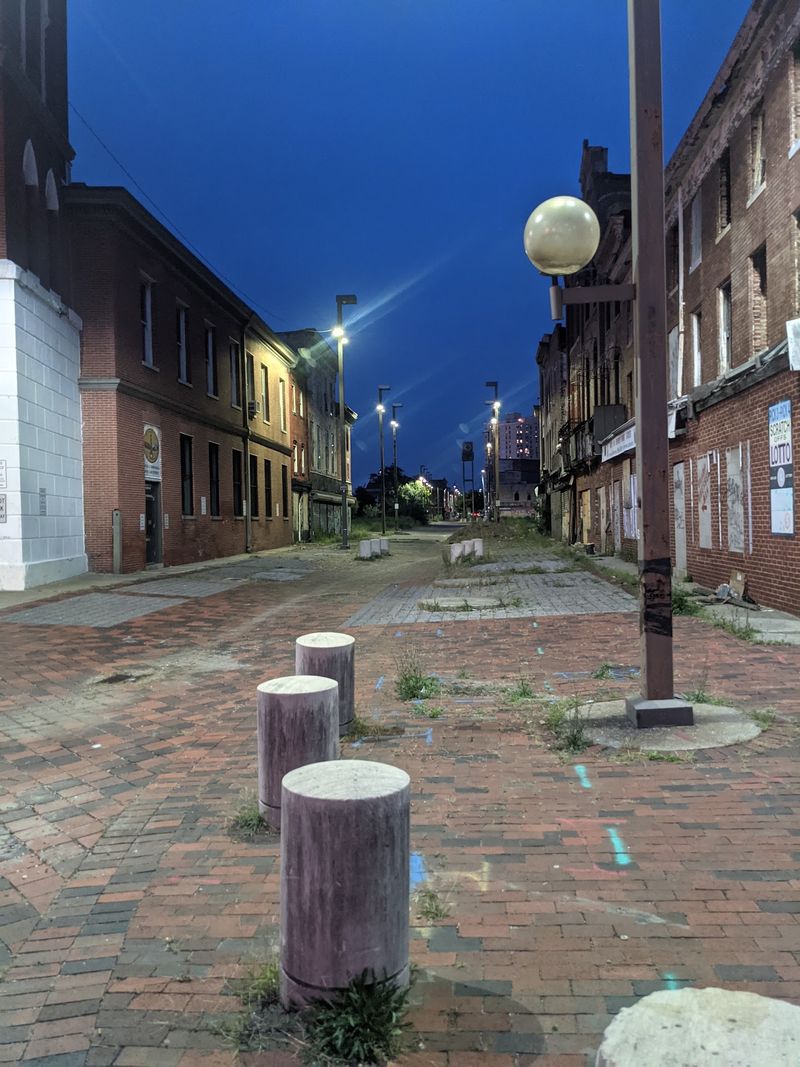
Old Town Mall in Baltimore is the kind of place that makes you feel the full weight of urban history in a single glance. The area around Bel Air Market has been a commercial hub since 1818, which means the roots here go deep.
At its peak, Old Town was a lively, diverse neighborhood destination with dozens of active shops and a real sense of community anchoring the street.
The post-World War II suburban migration hit neighborhoods like this one hard. Residents and businesses followed highways out to the suburbs, and the foot traffic that once made Old Town vibrant began to thin.
The 1968 Baltimore Riot accelerated the decline significantly. In an attempt to bring people back, the street was reimagined as a pedestrian mall, complete with a clock tower and a fountain, in what felt at the time like an optimistic reinvention.
The optimism did not hold. By the 1980s, most of the 64 storefronts had gone dark, and the pedestrian mall settled into the long, slow quiet it occupies today.
The clock tower still stands. The fountain is still there.
Both of them feel slightly surreal in the context of so much emptiness surrounding them.
There is something about a place built entirely around human gathering that becomes especially strange when the people stop coming. Old Town Mall does not feel dangerous so much as deeply still, like a held breath that never quite got released.
It is urban exploration without needing to trespass, and that accessibility makes it worth a visit.
Address: 500 N. Gay Street, Baltimore, MD 21202
8. Fort Armistead, Baltimore
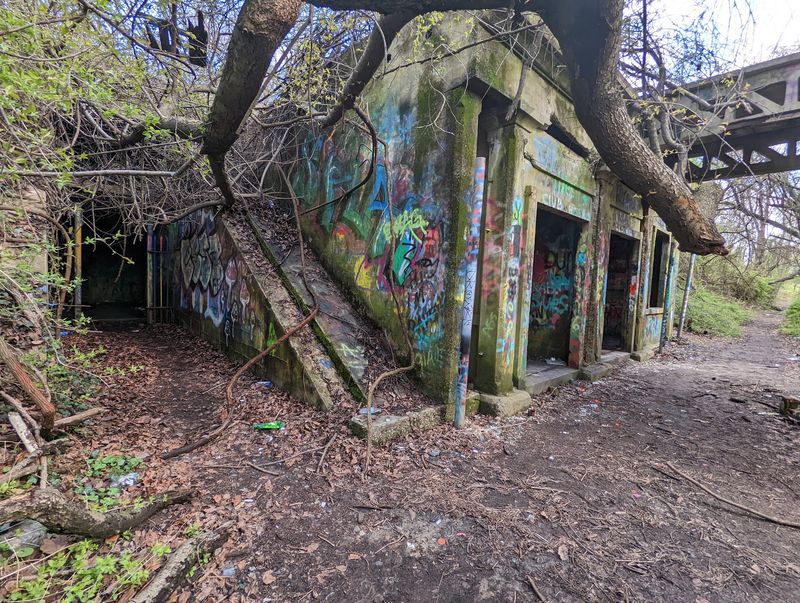
Fort Armistead occupies a peculiar and fascinating space between ruin and public park. Built between 1897 and 1901 as a coastal defense installation on Hawkins Point, the fort was designed to protect Baltimore Harbor with heavy artillery.
The guns were largely shipped overseas during World War I, and the base was never quite the same strategic priority after that. A brief reactivation as an ammunition storehouse during World War II was its last meaningful military chapter.
After the military left, the city eventually converted the grounds into a park. That sounds tidy, but the reality is far more interesting.
The fort’s tunnels and underground bunkers were not demolished. They were left in place, and over the years, local artists and graffiti writers have transformed their interiors into something genuinely striking.
The contrast between crumbling military concrete and vivid, layered street art gives the place an energy that most historical sites completely lack.
Nature has also been busy here. Vegetation has grown thick over the old fortifications, softening the hard military geometry into something that feels almost organic.
Walking the grounds, you move between dense greenery, open waterfront views of the surrounding bay, and the sudden darkness of a tunnel entrance. Each transition feels like a shift in atmosphere.
Fort Armistead is the rare abandoned site that feels genuinely alive despite its derelict bones. The fishing spots along the waterfront bring locals out regularly, which means you are never entirely alone here.
That combination of history, art, and everyday life makes it one of Baltimore’s most underrated outdoor destinations.
Address: Fort Armistead Road, Baltimore, MD 21226
