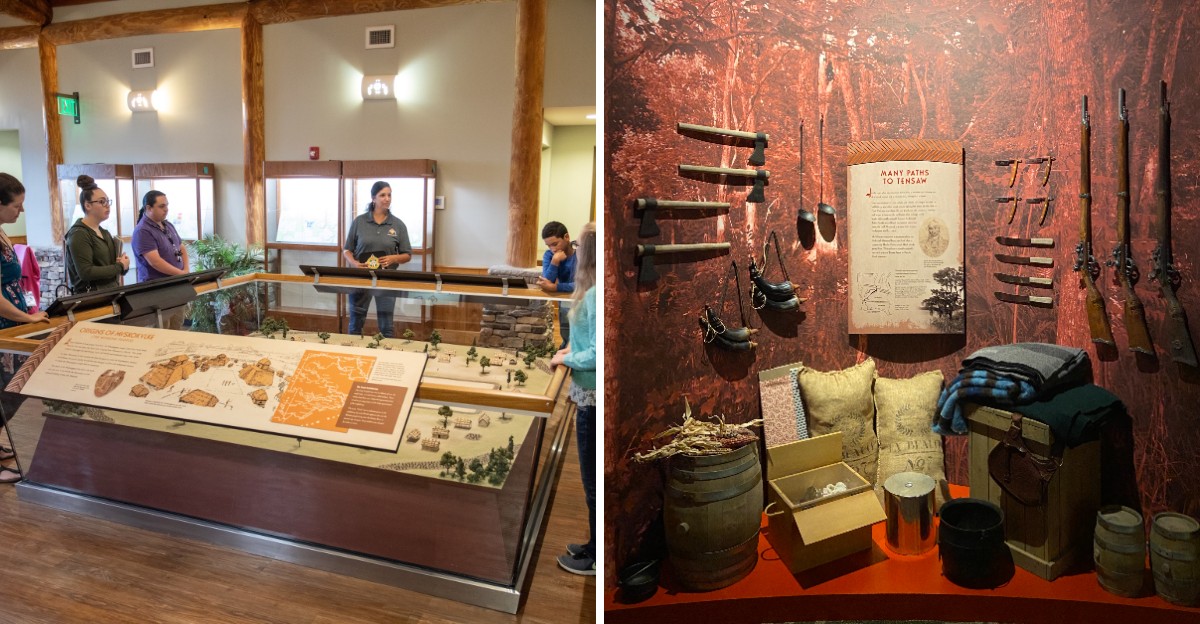
A museum does not need a giant dinosaur to surprise anyone. Sometimes a basket will do it.
Or a piece of pottery. Or a stack of papers that looks ordinary until you learn what they are.
This Alabama museum follows the story of the Poarch Creek Indians through handmade objects, tools, artwork, and original petition papers tied to a crucial chapter in the tribe’s history. The collection is free to enter and surprisingly easy to take slowly.
There is no pressure to rush through. No giant room telling you what to think.
Just one object leading to another. That is how a simple roadside stop turns into the kind of visit that changes what you thought you knew.
A Tribe That Never Left Its Homeland
Most stories about Southeastern tribes turn painful fast, ending with forced marches west in the 1830s. The Poarch Creek story goes a different direction, and that difference is the heart of everything inside the museum.
Unlike many Eastern Indian tribes, the Poarch Creek people were not removed from their ancestral territory. They stayed.
Families kept living in and around the same stretch of land near Poarch, Alabama, for close to two centuries, farming, working, raising children, and holding onto language and craft while the world around them changed shape.
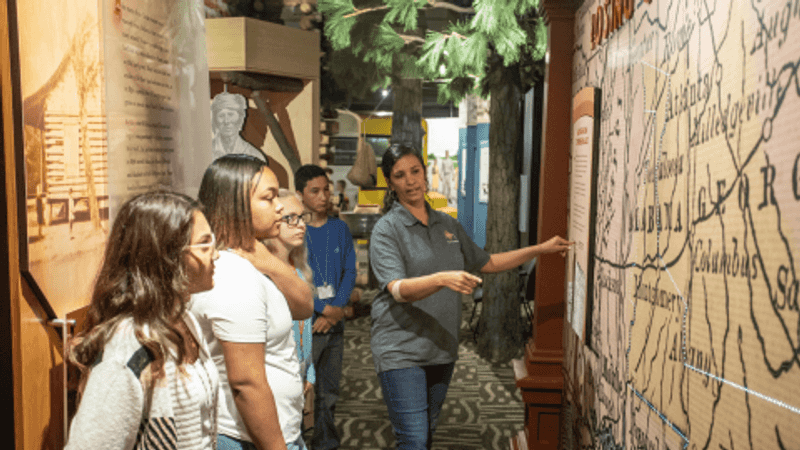
The exhibits make that continuity feel tangible rather than abstract. Displays trace ancestral Muscogee Creek lands that once stretched across much of Alabama and Georgia, then narrow down to the specific pine woods and creek bottoms surrounding Atmore.
Staying put came with its own costs. Remaining meant decades without formal acknowledgment, without the protections other tribes received, and with plenty of pressure to simply blend in and go quiet.
Reading through it, the phrase that keeps surfacing is quiet persistence. Not one dramatic moment, but generation after generation choosing to remain.
Visitors who grew up in south Alabama often admit they never learned any of this in school. That gap is exactly what the center was built to close, and it does the job without lecturing anyone.
Kerretv Cuko, the Building of Learning
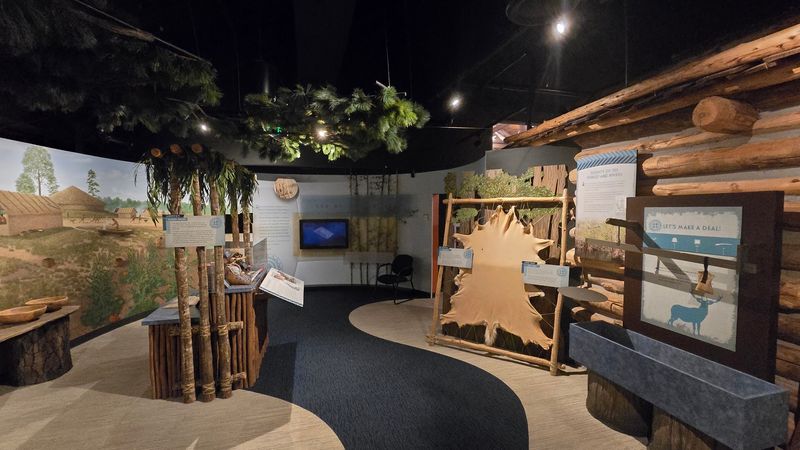
Names matter here. The center carries the Muscogee name Kerretv Cuko, which translates to Building of Learning, and the whole place seems built around that promise.
Find it at 5484 Jack Springs Road in Atmore, Alabama, a straightforward drive from the interstate that takes maybe ten minutes once the exit ramp is behind you.
Doors open Monday through Friday from 8 a.m. to 5 p.m., and the weekend closure catches a fair number of travelers off guard, so plan a weekday stop.
Admission is free. For a place this carefully assembled, that fact tends to surprise people walking back out to the parking lot.
The building does double duty. Beyond the museum galleries, it works as the first point of contact for anyone arriving on the reservation for tribal services or scheduled meetings, offering directions and check-in help at the front desk.
Inside, the layout flows in a logical loop, moving from deep history toward the present without any confusing backtracking. Lighting stays soft, signage stays readable, and nothing feels crammed together.
Small museum, big substance. That combination shows up again and again in how visitors describe it.
Artifacts That Show How Daily Life Actually Worked
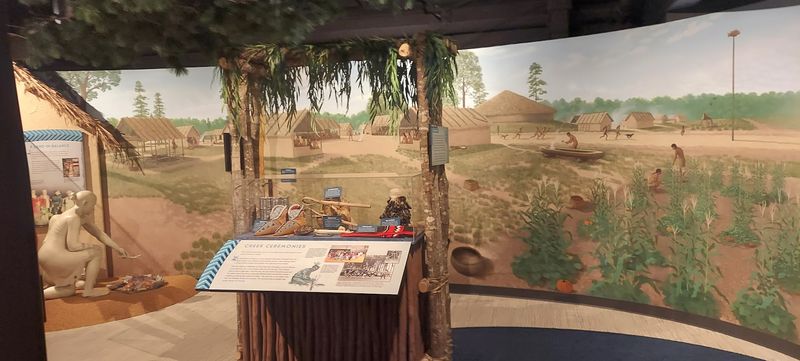
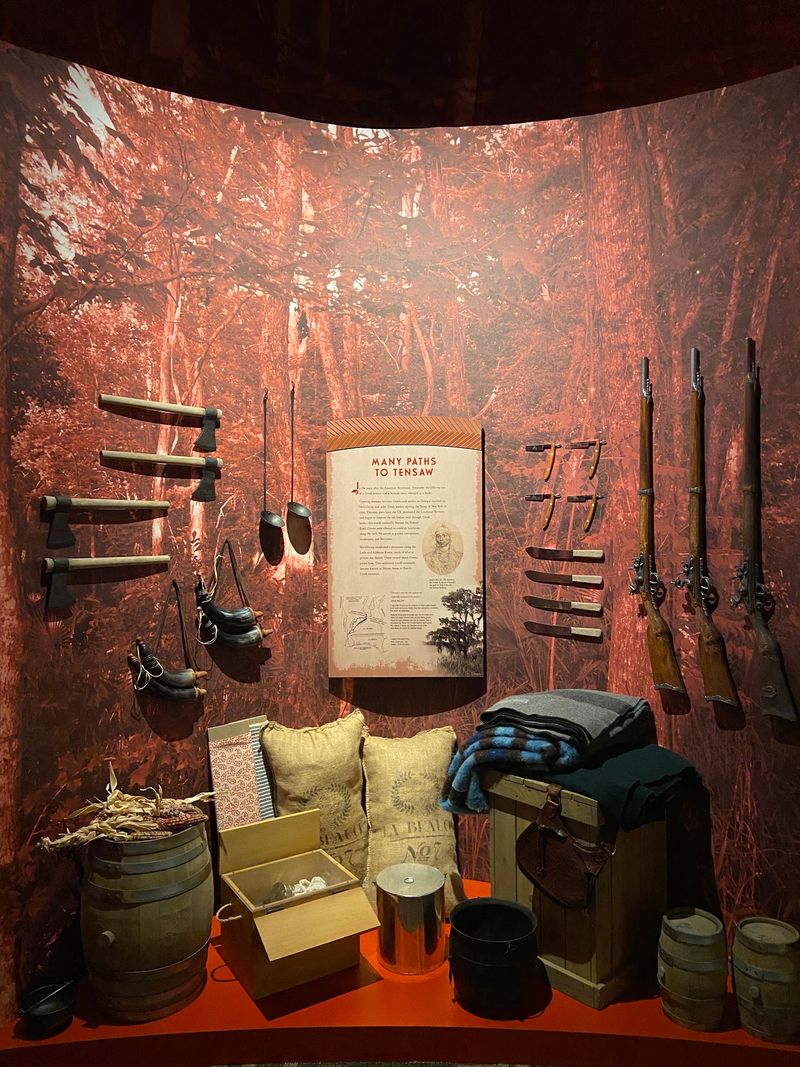
Stoneware, pottery shards, tools worn smooth by use, baskets, textiles. The collection leans toward objects people touched every single day rather than ceremonial showpieces, and somehow that makes it hit harder.
Exhibits reconstruct what village life looked like during the Mississippian era, when large settlements dotted the Southeast and trade networks moved goods across enormous distances.
From there, the timeline moves toward the formation of the Creek Confederacy, a political alliance that shaped the region long before Alabama existed as a state.
Individual pieces get room to breathe. A single cooking vessel, a bone tool, a fragment of woven fiber, each with explanation that connects the object to a real task like grinding corn or carrying water.
Interpretive guides fill in the gaps for anyone who wants more depth, and there is a good amount of reading available for the detail-hungry crowd.
What keeps it from feeling like a textbook is the hands-on element. Interactive displays let visitors handle, lift, compare, and test things out, which works especially well for kids who hit their limit with wall panels.
Audio components accompany the self-guided route, adding voices and sound to rooms that could otherwise stay silent.
Budget an hour minimum. Ninety minutes feels about right for a thorough walk-through.
The 1980 Petition and What August 11, 1984 Meant
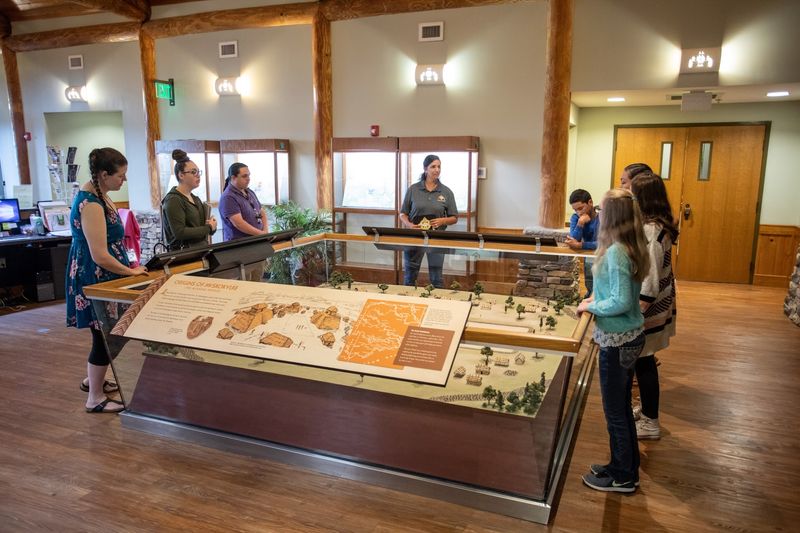
Tucked into one section sit original copies of the Petition for Federal Recognition, first submitted in 1980. Paper, typewriter text, official language.
Easy to walk past, and absolutely worth stopping for.
Behind those pages stretches a long, grinding process. Gathering genealogies, proving continuous community, documenting what everyone in Poarch already knew to be true but had to demonstrate to a federal government that required mountains of evidence.
Recognition finally came on August 11, 1984. That date turned the Poarch Band of Creek Indians into a sovereign nation in the eyes of the United States, with the right to self-governance that follows.
The exhibit treats it as a turning point rather than an ending. Recognition opened doors for tribal services, housing, education, and health programs that shape reservation life today.
Standing near those documents, the scale of the effort registers differently than reading a date in a history book. Someone typed those pages.
Someone carried them forward through years of waiting.
Several visitors mention getting unexpectedly emotional in this part of the building, particularly during the accompanying film about the struggle to exist as a recognized people.
Resilience is an overused word most places. Here it comes with paperwork to prove it, which somehow makes it more convincing.
Living Art, From Shellwork to Copper Tooling
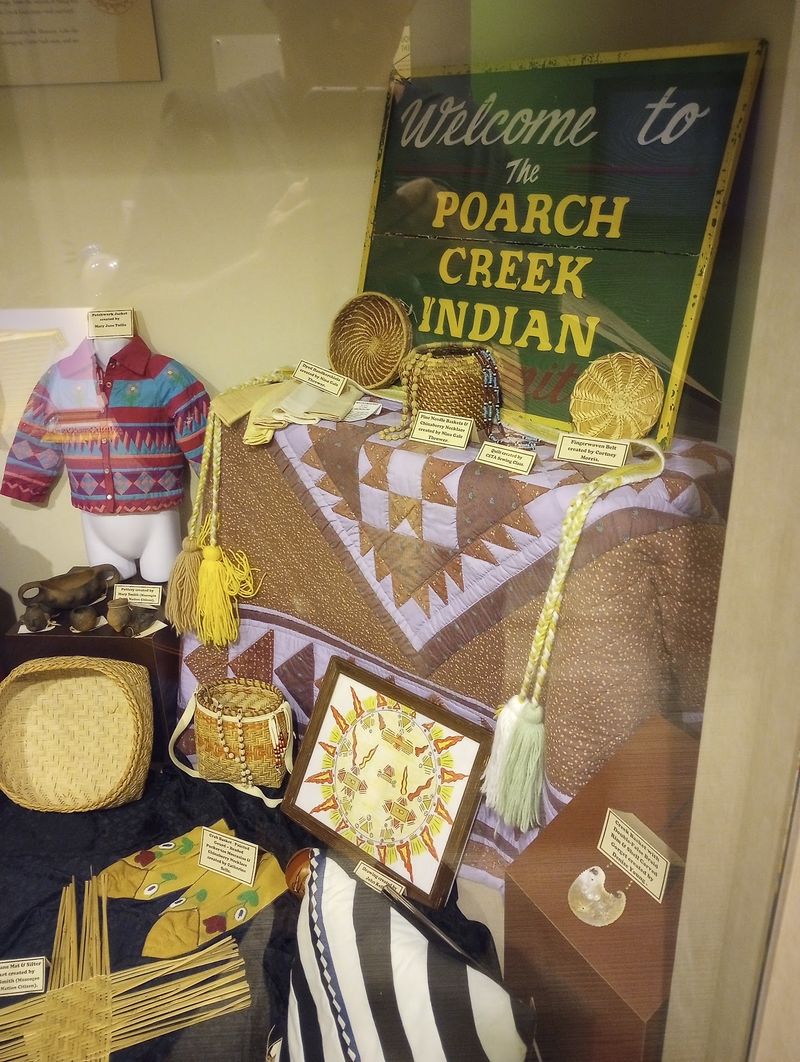
Craft takes up serious space here, and not as decoration. Intricately woven baskets, pottery, shellwork, copper tooling, quilting, and handwoven textiles fill display areas that double as a lesson in technique.
Look closely at the baskets and the coiling patterns start making sense. Every bend of pine needle or split cane represents a decision passed down through teaching, not invention.
One current exhibition, Illustrating the Native Southeast, Art, Culture, and Traditions, digs into how Southeastern Native craftsmanship and daily life were documented in influential historical publications. It also makes a point that lands well, these traditions are not museum relics.
They continue as active parts of Poarch Creek identity right now.
Copper tooling in particular tends to stop people. The hammered surfaces catch gallery light in a way photographs never quite capture.
Quilting sits comfortably alongside older forms, which says something about how tradition absorbs new materials without losing its center.
Fun detail worth knowing, the tribe hosts an annual Thanksgiving Pow Wow that has run for more than half a century, and much of the artistry displayed indoors shows up in motion during that gathering.
Anyone who enjoys handmade things will slow way down in this section. Plan accordingly, because rushing past woven work this careful feels a little rude.
Trailblazers of Identity and the 1970s Revival
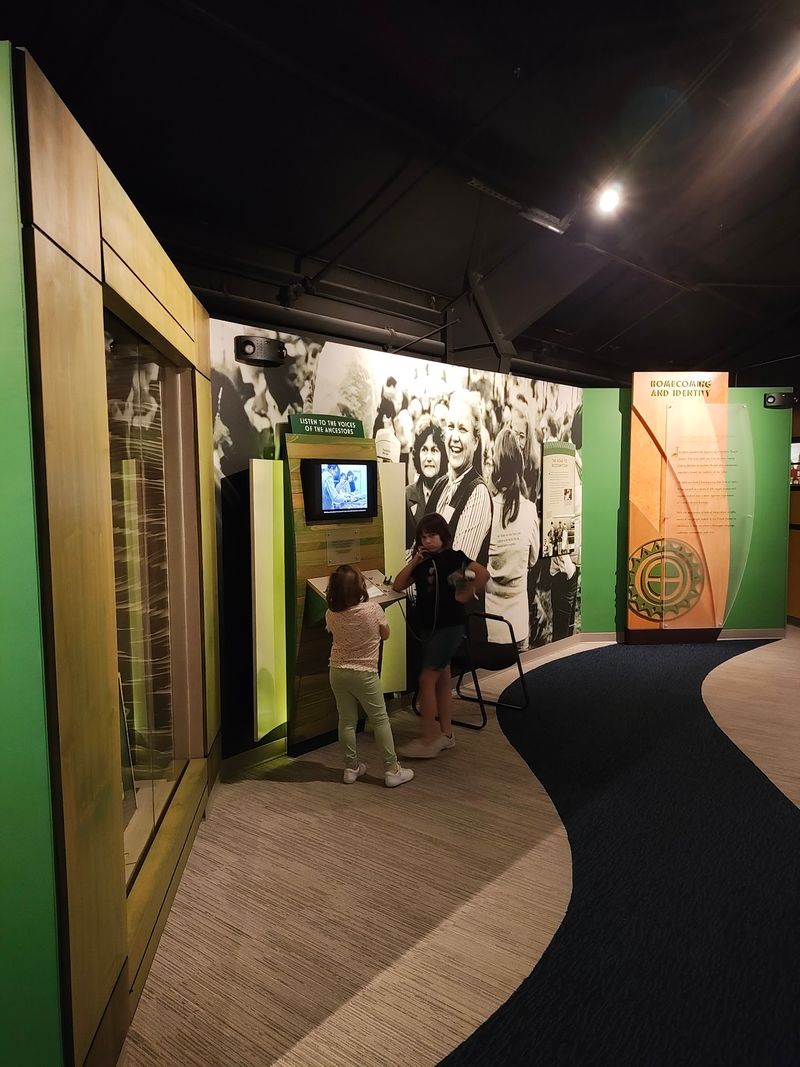
The 1970s get their own spotlight through an exhibition called Trailblazers of Identity, Advocating for Culture and Self-Determination. Bell-bottoms aside, that decade turned out to be pivotal.
During those years, Poarch Creek community members pushed hard to revitalize and reconnect with heritage that had been pressured into the background. Language, ceremony, community organization, all of it got renewed attention from people who refused to let it fade.
Advocacy work from that era laid the groundwork for everything that came later, including the recognition petition and the tribal government operating today.
The exhibit focuses on organizing and persistence rather than famous names. Meetings, letters, community gatherings, the unglamorous labor that actually changes outcomes.
Self-determination sounds like a policy term until it gets illustrated this way. Then it looks like ordinary people deciding what their own future would contain.
Pairing this section with the artifact galleries creates a nice arc. Ancient village life, long persistence, then a modern chapter where the community actively rebuilds what nearly slipped away.
Younger visitors connect with this part more than expected, maybe because the 1970s feel close enough to imagine.
Guided context from staff adds a lot here, so asking questions pays off. The people at the desk know the details and genuinely enjoy sharing them.
Friendly Guides, a Solid Film, and a Gift Shop Worth Browsing
Start with the film. Most visitors watch it before entering the galleries, and that order works beautifully because it sets up the history of the area and its people in clear, human terms.
Kids sit through it fine, which is not a small compliment for a museum video.
Staff and volunteers make a noticeable difference to the whole visit. Questions get real answers, guided experiences are available, and educational field trips plus cultural awareness tours can be arranged for groups.
Self-guided touring suits travelers who prefer their own pace. Audio elements throughout the route keep things moving without requiring a scheduled tour time.
Save a few minutes for the gift shop near the exit. Shelves hold authentic Native-made goods, educational books, beadwork, and cultural items, with purchases supporting tribal artisans and ongoing preservation work.
The book selection leans genuinely useful, covering Creek history in depth for anyone whose curiosity got stirred up in the galleries.
Families, solo travelers, history buffs, and beach-trip stragglers all fit comfortably here. The building stays welcoming in a low-key, unhurried way.
Leaving Atmore afterward, the drive back toward I-65 feels a little different. Same pines, same red dirt, brand new sense of who has been walking that ground all along.
