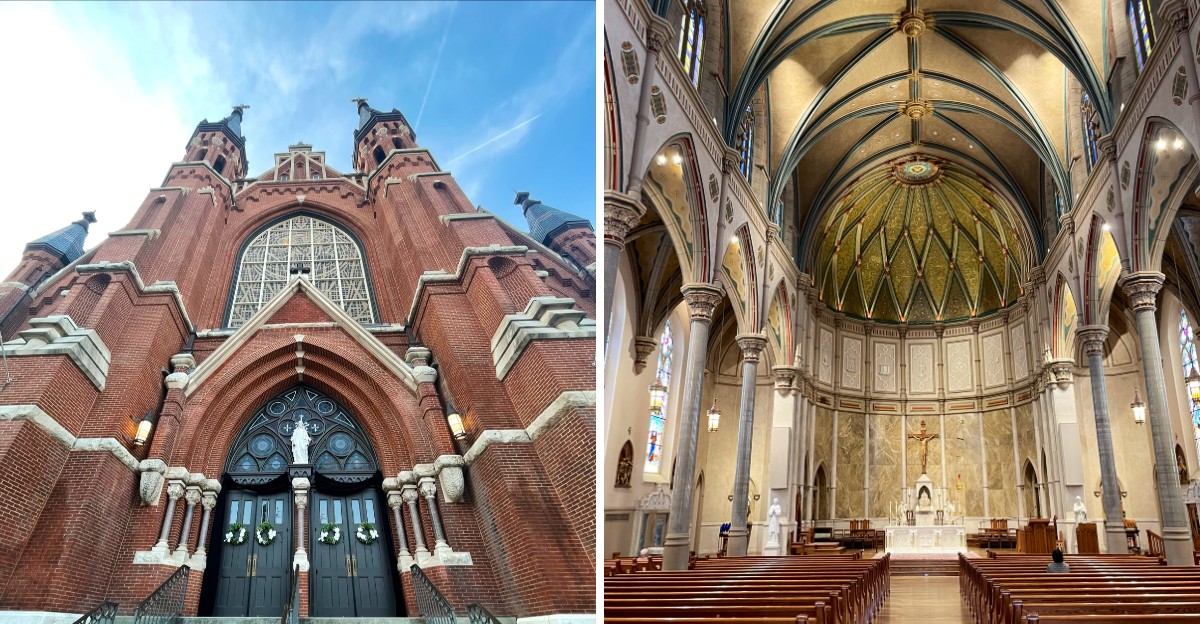
The city is loud. Then you open one door and everything changes.
Traffic disappears. So does the hurry.
Inside this Alabama cathedral, red brick gives way to cool air, colored light, granite columns, and stained glass glowing overhead. The ceiling is high enough to make even a quick glance upward last longer than expected.
Then there is the organ. You know the kind.
The one that could probably make the walls vibrate if given the chance. The building dates to the 1890s, yet it still feels very much alive.
Not preserved behind glass. Not frozen in another century.
Just sitting downtown, quietly waiting for someone to step inside and look up.
Red Brick and Limestone That Stop Traffic
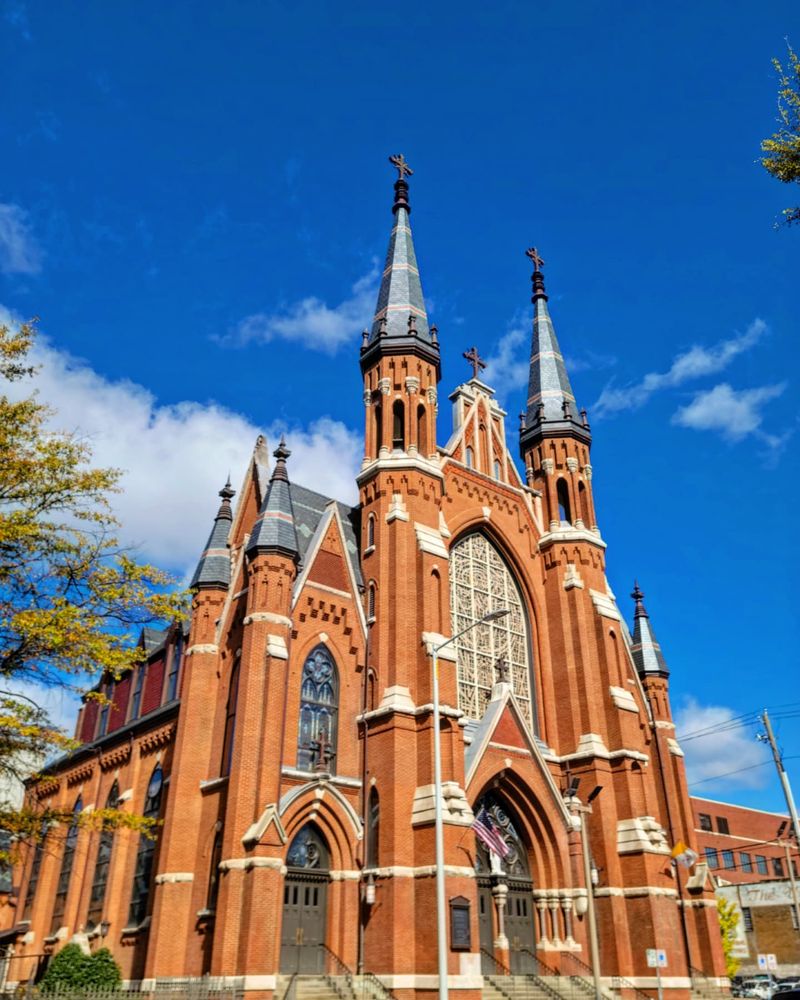
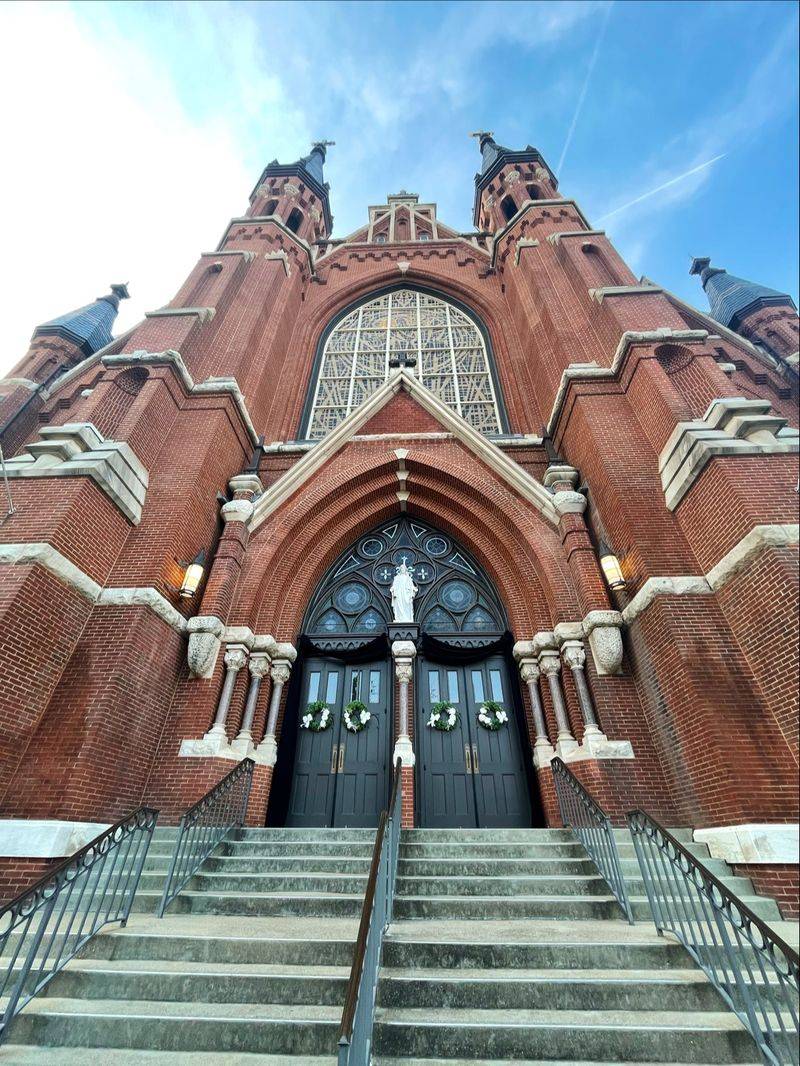
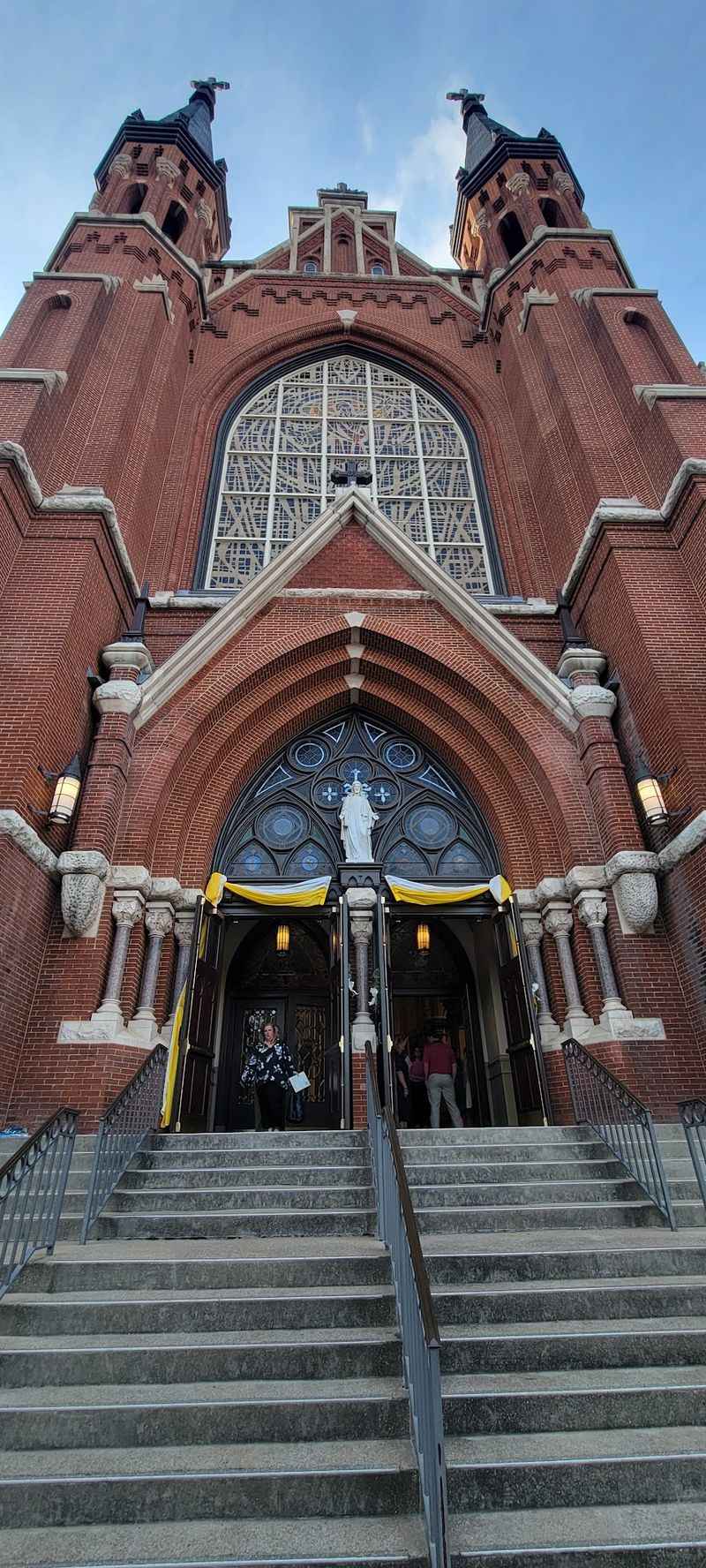
Few buildings in downtown Birmingham hold their ground the way this one does. Twin spires climb above the surrounding office blocks, and the walls mix native red brick with crisp white limestone in a pattern that catches sunlight differently as the day moves along.
Chicago architect Adolphus Druiding drew the plans, and the cornerstone went down on June 11, 1890. Dedication followed on November 30, 1893, after roughly ninety thousand dollars of work.
Historians often call it the most highly developed Victorian Gothic structure in the South.
The slate roof deserves a slow look. Bands of contrasting color run across it, a detail easy to miss from the sidewalk but obvious from across the street or from a nearby parking deck.
Above the main entrance doors sits a central statue of Christ, arms open toward 3rd Avenue North. Pigeons occasionally disagree about who owns the ledge.
A complete exterior renovation wrapped up in 2015, so the brickwork and stone look remarkably sharp for a structure well past its hundredth birthday. Photographers tend to favor late afternoon, when warm light rakes across the facade and deepens every shadow line.
Worth knowing before arriving: the cathedral replaced a small wooden frame church built in 1872, a reminder of how quickly the young steel city grew and how boldly it decided to build.
Ten Granite Columns and a Ceiling Worth a Sore Neck
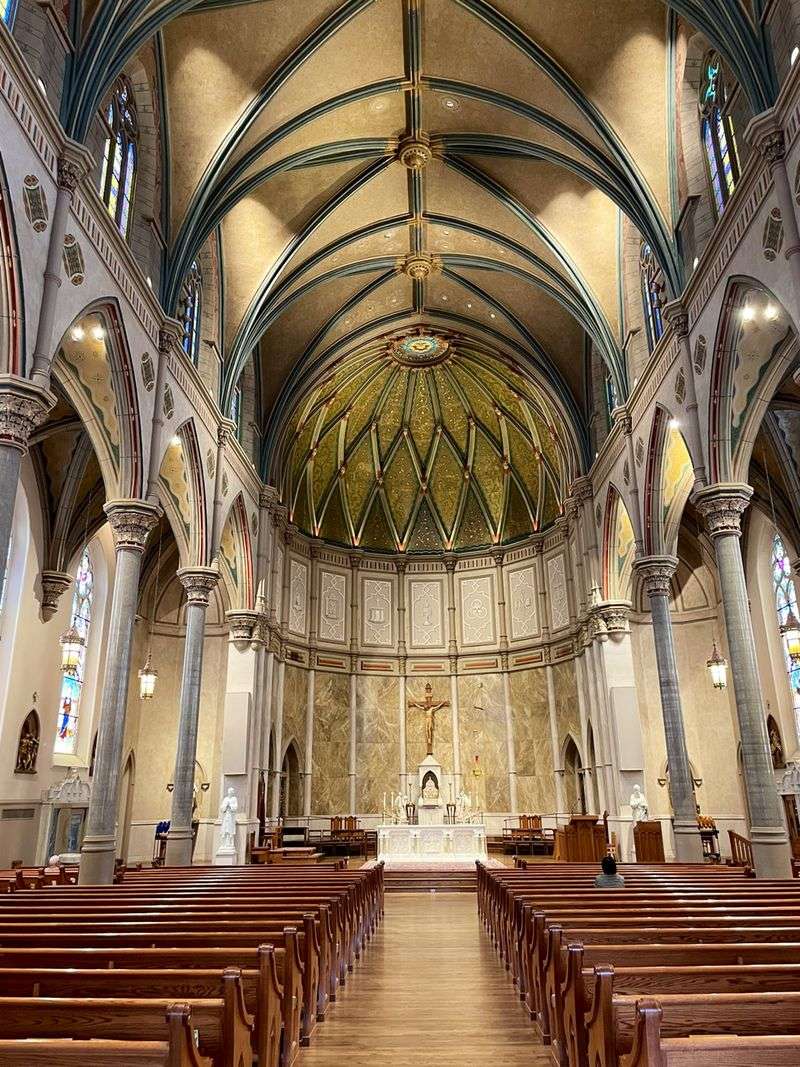
The interior takes the basilica shape seriously. A central aisle runs straight toward a semicircular domed apse, with two side aisles flanking it and wooden pews filling the space between.
Ten solid granite columns carry the weight of the vaults and arches overhead. Polished and cool to the touch, they line the nave like a stone honor guard.
Overhead, groin vaulting spreads across the ceiling with soft blue accents woven into the design. The effect is deliberate, since Neo-Gothic builders wanted eyes drawn upward and thoughts lifted along with them.
Visitors regularly comment that the space feels European, and the comparison makes sense once the scale registers. Ceiling height does most of the heavy lifting there.
Details reward patience. Arch edges, capital carvings, and the way afternoon light slides across the stone all shift depending on where a person stands.
Practical tip for anyone planning a stop: doors are generally open from 8 AM to 3 PM Monday through Friday, so a weekday lunch break works nicely. Weekends follow the worship schedule rather than tour hours.
Renovations have kept the interior steady through the decades, including major work in 1955 that added air conditioning and structural repairs in 1972. A centennial refresh arrived in 1992.
Sit near the middle of the nave, look up, and let the proportions do the rest.
Stained Glass That Turns Sunlight Into Storytelling
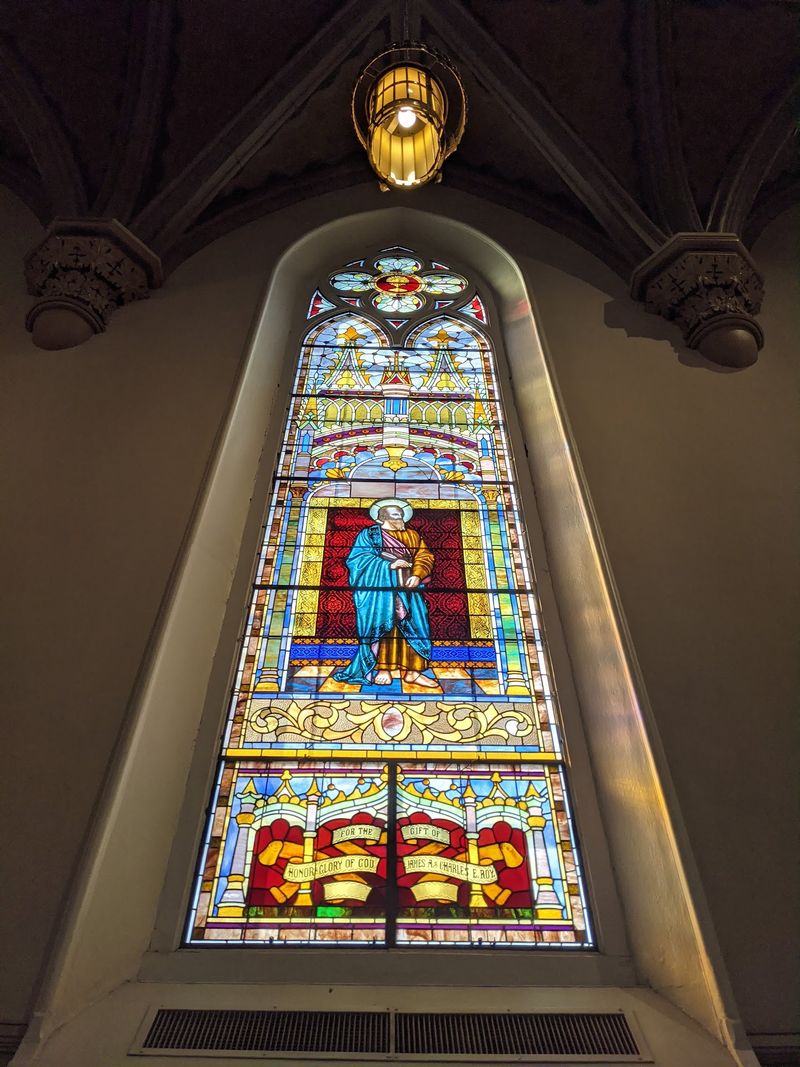
Sunlight hits the west side sometime in the afternoon, and the floor suddenly wears patches of ruby, cobalt, and gold. The stained glass here is the feature most visitors mention first.
Ten large windows fill the nave, crafted by the Cincinnati firm G. C.
Riordan and Company. Their scenes reflect nineteenth century Catholic piety, told through faces, robes, and symbols that meant a great deal to the immigrant families who first filled these pews.
Restoration work in the 1990s brought the nave windows back to full brightness. Glass of that age needs regular attention, and the care shows.
Above the main entrance hangs a window portraying Saint Paul himself, installed in 1972 after a storm damaged the earlier one. Standing beneath it and turning back toward the doors gives a completely different view of the church than the one most people take in on arrival.
Color intensity changes constantly. Morning light keeps things cool and quiet, while late afternoon pushes warm tones deep into the aisles.
Photography works best without flash, which flattens everything anyway. Let the exposure run a little long and the glass does the work.
Small observation: each window rewards a slow walk down the side aisles rather than a single sweeping glance from the center. Details hide in the borders.
A Carrara Marble Altar With Onyx and Ancient Relics
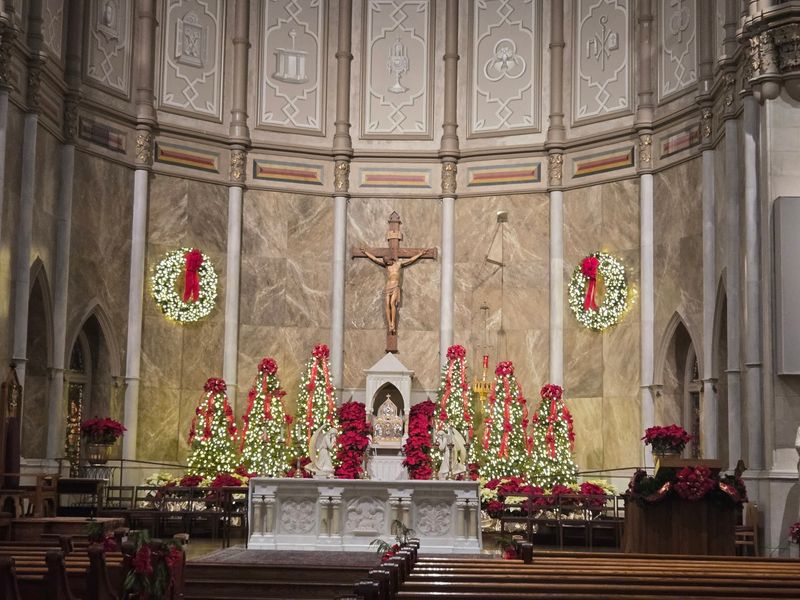
At the far end of the nave, the altar glows pale against the darker wood and stone around it. Carved from Carrara marble, the same quarry material favored by Renaissance sculptors, it anchors the entire sanctuary.
Mexican onyx columns add warmth and a faint translucence that changes with the light. The combination of white marble and honeyed onyx is unusual, and it reads as both elegant and grounded.
The centerpiece carving shows the Lamb of God seated on the Book with Seven Seals. Reliefs of wheat and grapes flank it, symbols tied directly to the bread and cup used in worship.
Tucked within the altar are relics of three early martyrs, Saints Placidus, Theodorus, and Tarcisius. Names that feel impossibly distant suddenly sit a few steps away in a steel town in Alabama.
Approach quietly. The sanctuary remains an active place of prayer, and visitors are asked to keep voices low, especially outside of scheduled tour times.
Craft nerds will appreciate the crispness of the carving after more than a century of use. Edges stay sharp, and the polish holds.
Spend a minute comparing the altar to the apse behind it, since the curved dome frames the marble almost like a stage set built for one specific object.
The Pipe Organ That Fills Every Corner of the Room
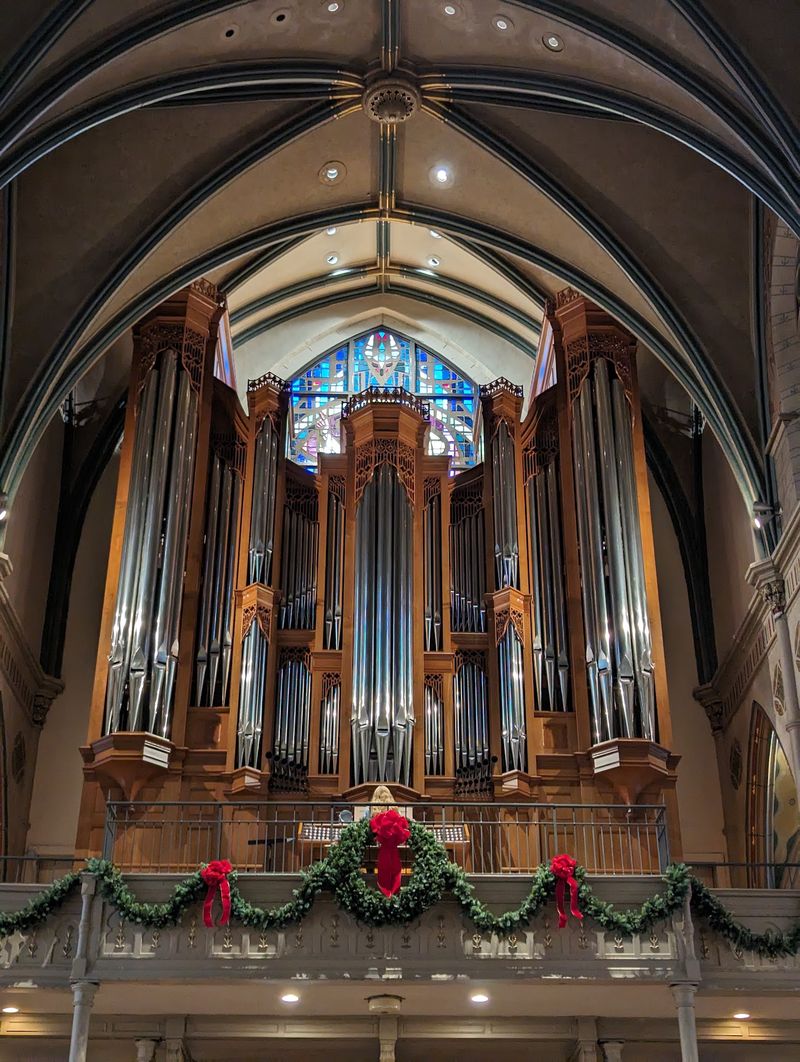
Music here arrives from behind and above, which surprises first-time visitors who instinctively look toward the front. The choir and organ live in the rear balcony.
In 2022 the Noack Organ Company installed the Anna Catharine Grace Memorial Pipe Organ. Its design carefully keeps the Saint Paul window above it visible, which is a thoughtful piece of problem solving given how much space an instrument like that normally swallows.
Acoustics inside the cathedral are genuinely exceptional, especially for voices. Sung lines hang in the air a moment longer than expected, and chant carries with almost no effort.
The parish also runs a concert program, so a weekday visit can occasionally overlap with rehearsal. Hearing scales roll through an empty nave is its own small gift.
Organ tours have been offered on the second Sunday of the month, sometimes including a look inside the instrument itself. Checking the cathedral website at stpaulsbhm.org before a trip is the smart move, since schedules shift.
Latin appears in parts of the liturgy, paired with the choir in the balcony, and the blend suits the architecture beautifully.
For the best listening spot, try a pew roughly two thirds of the way back. Sound gathers there, warm and full, without overwhelming anyone sitting directly beneath the pipes, located at 2120 3rd Ave N, Birmingham, AL 35203.
Layers of History Hiding in Plain Sight
Behind the polished stone sits a story with real weight. The building started life as a simple parish church, was raised to co-cathedral status in 1954, and became a full cathedral in 1969 when the Diocese of Birmingham in Alabama was established.
Recognition followed. The cathedral and its school joined the National Register of Historic Places in 1982.
Not every chapter is cheerful. Lawrence Scully, the contractor who built the place, died in a horse-drawn carriage accident shortly before construction wrapped up, never seeing the finished work.
Father James Coyle served here in the early twentieth century and faced open hostility from the Ku Klux Klan during a period of intense anti-Catholic feeling in Alabama. He was killed after performing a wedding that drew public anger, and his memory remains part of the parish story.
Knowing all this changes how the building reads. The soaring arches were raised by a community that was frequently unwelcome in its own city and chose to build something permanent anyway.
Docent-led tours cover much of this background, and the parish office can point visitors toward the historical details.
Give the visit an extra fifteen minutes for reading plaques and markers. The architecture impresses instantly, but the human history is what tends to stick on the drive home.
A Courtyard Made for Slowing Down
Step outside the main doors and around the property, and the pace drops another notch. The courtyard is small, green, and shielded enough from the street that conversation naturally softens.
Two former bishops, Joseph Vath and David Foley, are buried here. Their graves sit within the same walls where parishioners gather each week, which makes the space feel connected rather than solemn.
An outdoor altar dedicated to St. Joseph anchors one corner. On mild Birmingham mornings it catches early sun, and the brick underfoot holds the warmth.
Near the entrance inside, the baptismal font greets everyone arriving, a quiet reminder of beginnings before the nave even opens up.
Parking takes a bit of planning. Street spots along 3rd Avenue North are limited and time-restricted, while a parking garage sits in the adjacent block and several surface lots open up in the evening.
Pair the stop with a walk through downtown Birmingham, since the cathedral sits within easy reach of the city center. Five minutes of silence inside, a slow loop of the courtyard, then back into the noise, refreshed and probably still looking upward.
