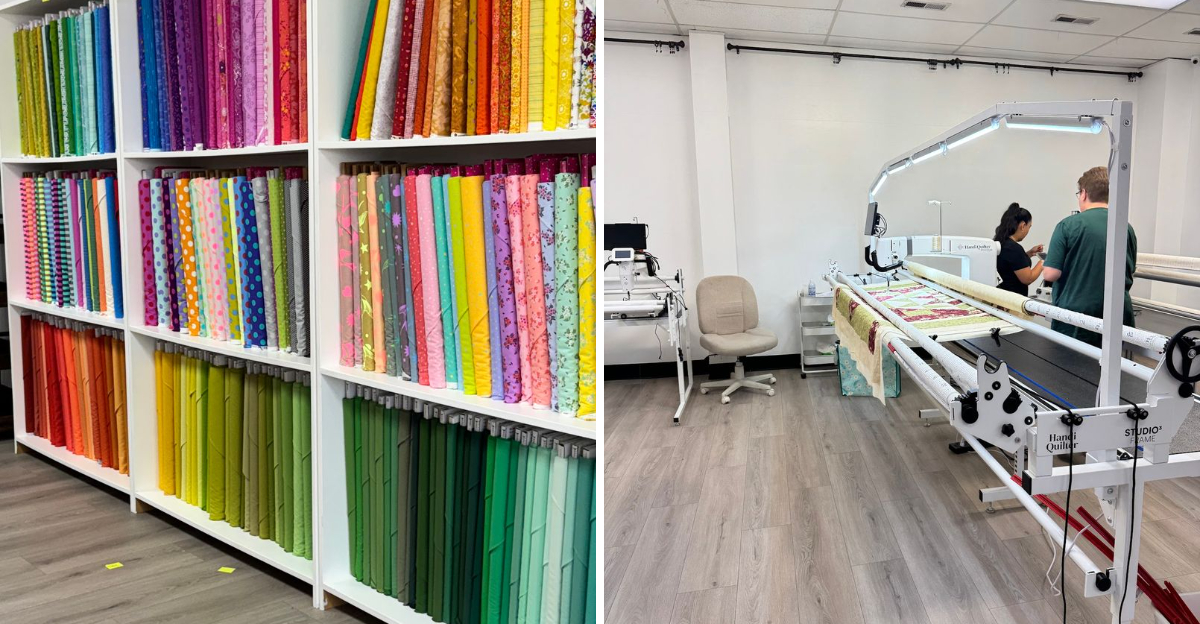
My grandmother used to keep scraps of fabric in a tin because you never knew when one might come in handy. Walking into this shop makes that habit seem perfectly reasonable.
There are bolts packed into room after room, quilts on the walls, and enough patterns to make a person suddenly remember three projects they have not started yet. Quilters travel from all over Alabama and beyond because certain fabrics are much easier to find here than online.
Sometimes the hardest part is not finding the right one. It is leaving it behind when you know exactly what you could make with it.
Rooms That Keep Going, Like A Fabric Maze
From the sidewalk, this building in Alabama gives almost nothing away. A door, a sign, a small parking lot off University Drive.
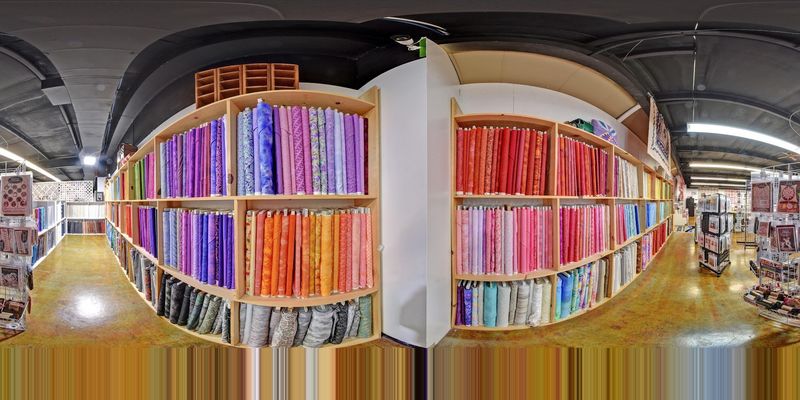
Then the space opens up and keeps opening. Machines greet visitors first, lined up near the entrance, followed by the register and a well used cutting table tucked among racks of rulers, notions and bag making supplies.
Shoppers who make it that far without stopping to admire a shiny new machine deserve some credit.
Beyond that, shelf after shelf of printed cottons stretches back, with patterns clipped to the ends and finished samples hanging overhead for inspiration. A set of double doors leads to another room stacked with prints.
Another set of doors leads to yet another, where the solids live in a full rainbow arrangement of Bella shades, and where tables sit ready for classes and quilt group meetings.
Regulars often describe the layout as deceptively deep, and that is fair. The footprint feels bigger inside than the exterior suggests, which is part of the fun.
Everything stays tidy and clearly grouped, so browsing does not turn into digging. Colors run in logical order.
Themes sit together.
Give the walk-through a solid hour before even thinking about the cutting table, because rushing this place is nearly impossible.
Browse Designer Fabrics You Won’t See in Every Store
Ask a quilter why the drive is worth it and the answer usually starts with names. Lori Holt.
Tilda. Tula Pink.
Kaffe Fassett. Alison Glass.
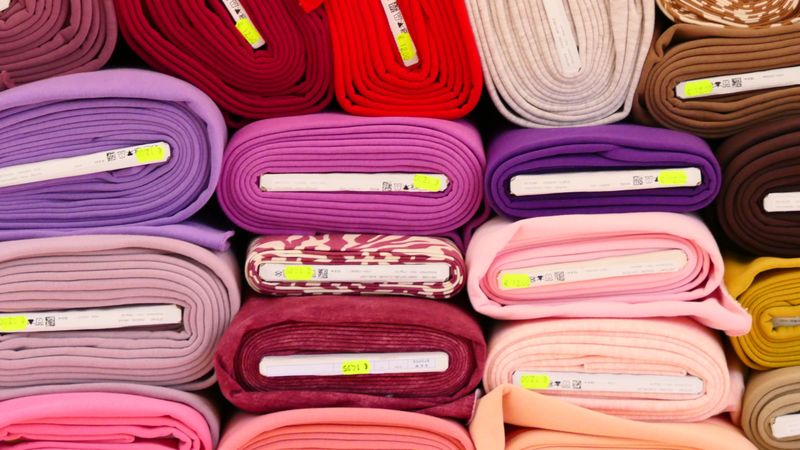
Those collections show up here in real depth, not just a token bolt or two. Modern geometrics sit near classic florals, saturated brights near soft muted tones, so a project can shift direction halfway through a visit without any trouble.
Quality matters as much as quantity. The cottons are premium quilt shop goods, the kind that press crisply and hold a seam, which is why shoppers who have handled cheaper substitutes notice the difference immediately.
Stock rotates often enough that a return trip a month later looks different. New arrivals appear, seasonal groupings come and go, and something unexpected always seems to be waiting at the end of an aisle.
There is also a practical angle worth remembering. Quilters who miscalculate yardage midway through a project sometimes find the exact print here after their original source sold out, and the shop ships orders too.
Wool turns up alongside the cotton, plus supplies for vinyl crafts and other sewn projects.
Bring a photo of the quilt top in progress. Matching becomes far easier with something to hold against the bolt.
Staff Who Actually Sew What They Sell
Helpful staff comes up in conversation about this shop more than almost anything else, and there is a reason for that consistency.
The people behind the cutting table are quilters and sewists themselves. Questions about batting weight, thread choice, or whether two prints fight each other get real answers rather than a shrug toward the shelf.
Newcomers seem to relax quickly here. Skill level does not change the welcome, and someone holding a first ever pattern receives the same patient attention as a shopper hunting a specific replacement print.
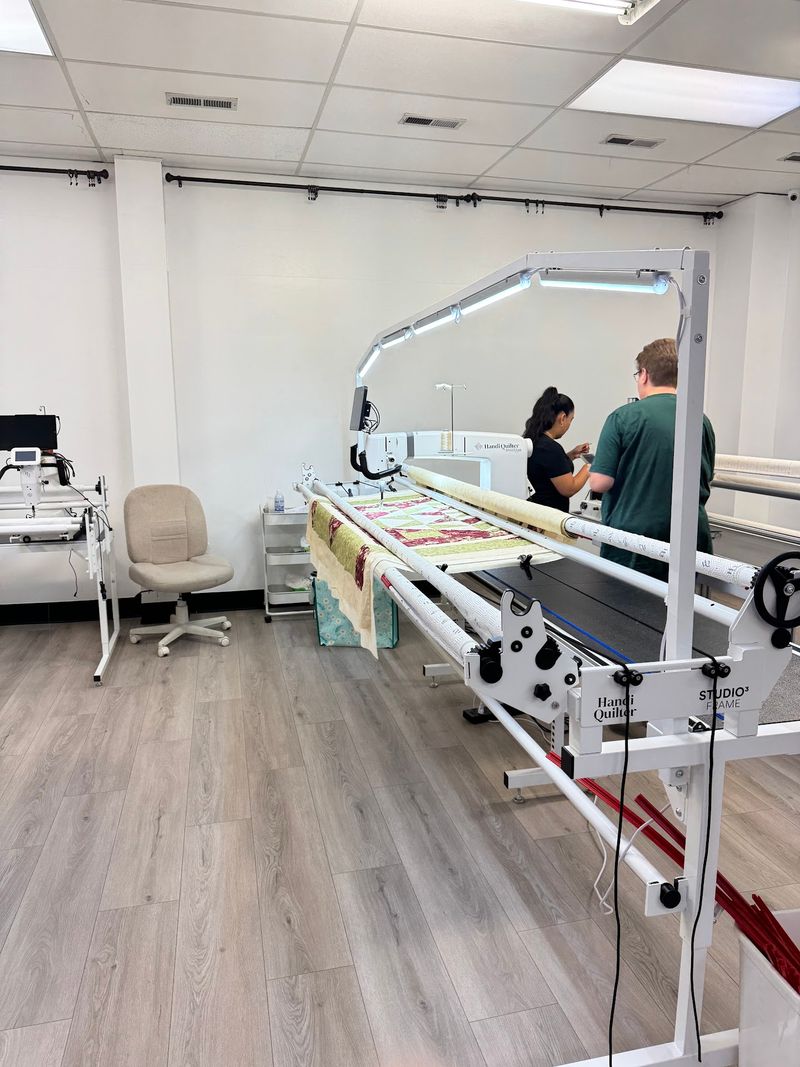
Practical help extends past shopping. Visitors stuck on how to finish a quilt top have talked through options at the counter and left with a plan, and the shop also handles longarm quilting, binding and adding a label for those who would rather hand off the final steps.
Appointments can be arranged for hands-on machine questions, including small stubborn problems like getting a buttonhole function working properly again.
Humor runs through the place too. Laughter carries from the back rooms, and the owners respond to customers by name in a way that feels like a small town shop rather than a chain.
Come with questions written down. They will get answered, and probably expanded on.
Classes Where Beginners And Longarm Fans Both Fit In
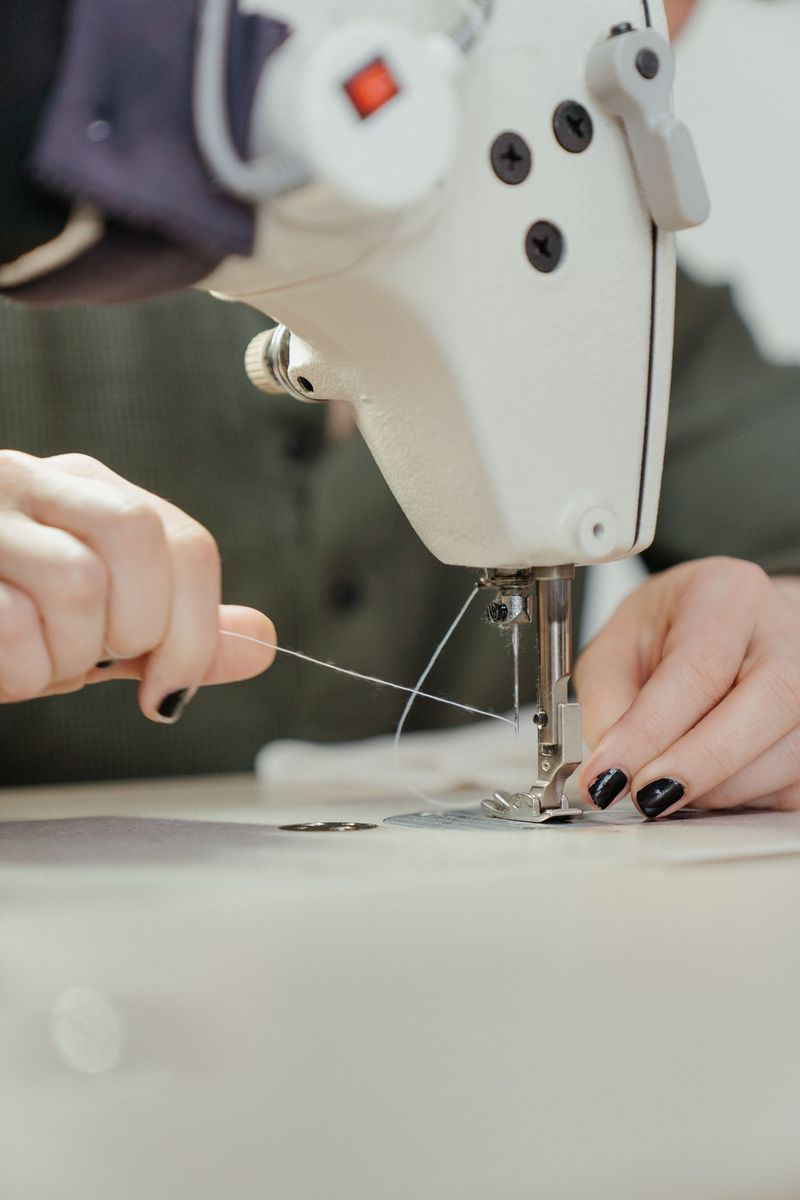
The back room does double duty. On quiet mornings it holds solid colors and open tables.
On class days it fills with machines, cutting mats and people who barely look up.
Course offerings run wide. Beginning Quilting covers the foundations for anyone who has never squared a block, while project based sessions walk students through designs such as Chain Link or Crossing Paths at a pace that makes complicated piecing feel manageable.
T-shirt quilt classes attract folks with boxes of old race shirts and team jerseys waiting for a purpose. Longarm classes get their own space, with room to move around the machine instead of elbowing a neighbor.
Instructors bring patience along with technical knowledge, which matters when a room holds several skill levels at once. Multi-day workshops have drawn quilters who travel in from a couple of hours away and stay for the whole run.
Even machine care gets attention. Featherweight Maintenance sessions teach owners of those beloved vintage machines how to keep them humming.
Meals have been provided at some longer classes, which takes one more decision off the day.
Check the schedule before planning a trip. Lining up a visit with a class turns a shopping run into something closer to a small retreat.
A Machine Wall Worth Lingering At
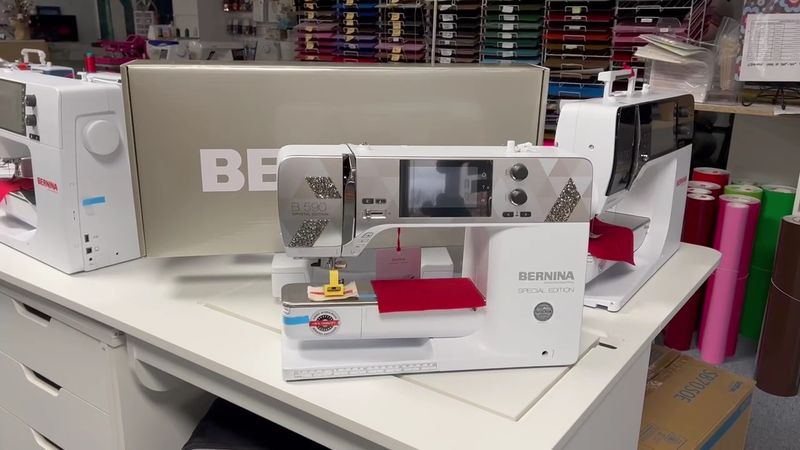
Machines get the front row treatment, and they earn it.
Sergers, coverstitch models, embroidery units, quilting machines and straightforward sewing machines line up near the entrance, which means the temptation starts about four steps inside the door. Handi Quilter longarms draw their own crowd of admirers.
Shoppers arriving as Juki fans often discover the lineup runs much broader than expected. Trying a machine before committing makes a real difference, especially for anyone upgrading after years on an old workhorse.
Service is part of the package. Sewing machine repair and maintenance are handled on site, with technicians familiar with Janome, Juki, Brother, Handi Quilter, Bernina and plenty of other brands.
Having that support close by matters more than it sounds. A machine down in the middle of a deadline project is a genuine crisis, and driving hours to the nearest technician makes it worse.
Anyone dropping off equipment should ask upfront about the diagnostic process and confirm what work will be approved before it begins, which keeps expectations clear on both sides.
Guidance on choosing a first quilting machine is available too, without pressure to buy the biggest option in the room.
Bring a fabric scrap along. Testing stitches on familiar material tells more than any brochure.
Bundles And Kits That Solve The Blank Page Problem
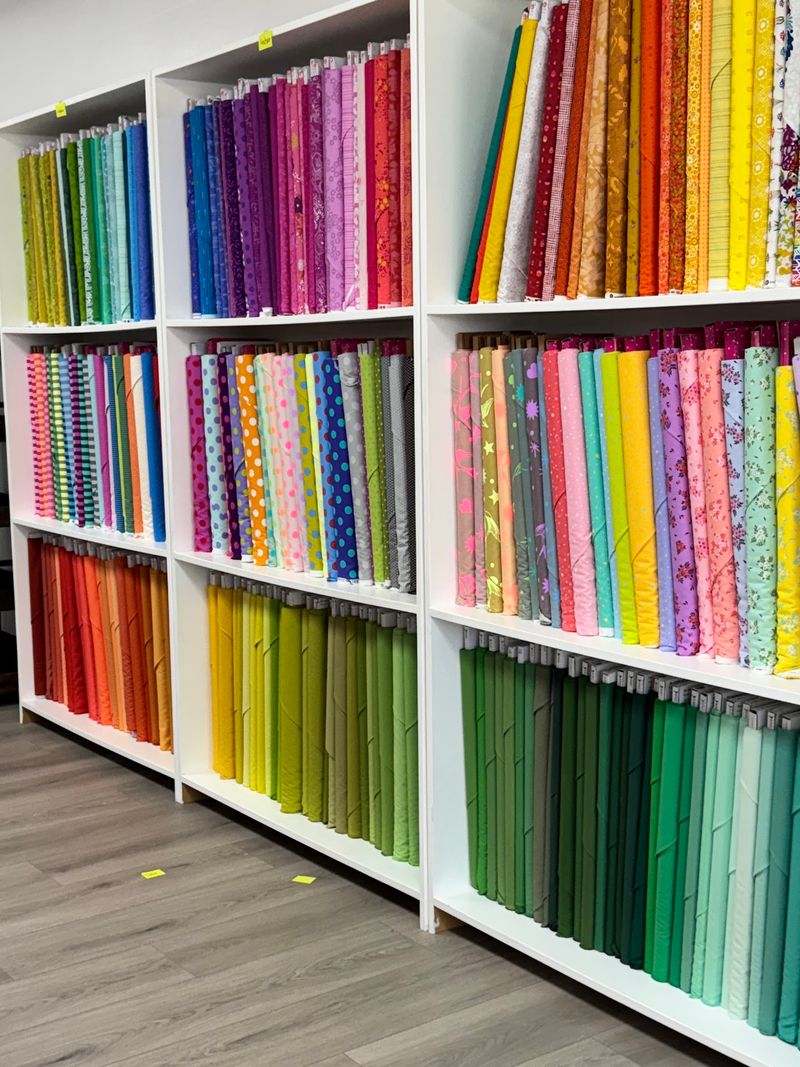
Choice paralysis is real in a shop this size. The bundle table exists for exactly that moment.
Three yard quilt bundles have become a favorite, and part of the appeal is the pairing. Combinations show up that most shoppers would never think to put together, and somehow they work beautifully once stacked.
Precut collections, coordinated fat quarter groupings and complete kits sit ready for anyone who wants to skip the decision making and start cutting the same evening. Seasonal and themed bundles rotate through as the calendar turns.
Patterns fill the racks nearby, covering quilts, garments and smaller sewn projects, from traditional blocks to sharply modern layouts. Bag making supplies deserve a mention as well, since hardware and interfacing can be surprisingly hard to source locally.
Notions run deep. Specialty threads, cutting mats, unusual rulers, marking tools and embellishments all have their place, which spares a second stop somewhere else.
Sample projects hanging throughout the store do quiet work here too, showing exactly how a bundle looks once pieced and quilted.
Anyone feeling stuck creatively should start at the bundles and let the fabric make the first suggestion.
Grab a basket early. Hands fill up faster than expected in a place like this.
Rocket City Makes A Fine Day Trip Around It
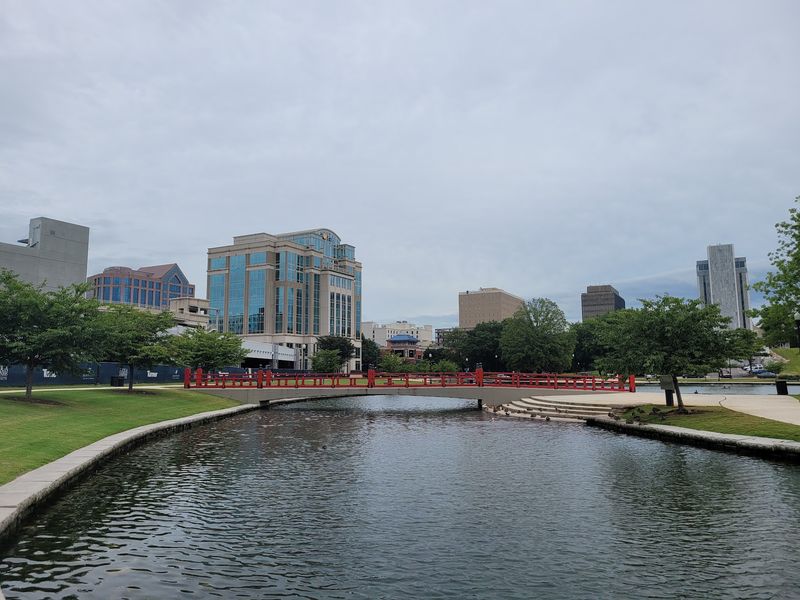
Huntsville, Alabama, wears the Rocket City nickname well, though the creative side of town surprises visitors who arrive expecting only space history.
A quilting stop pairs naturally with the rest of it. Lowe Mill Arts and Entertainment, a converted textile mill on Seminole Drive, houses artist studios and galleries where pottery, blacksmithing, candle making and other crafts happen behind open doors.
The textile connection makes it a fitting second stop for anyone who spent the morning among fabric bolts.
Local quilting culture runs strong here too. The Rocket City Modern Quilt Guild and the Heritage Quilters of Huntsville both keep active schedules, which explains part of the steady traffic through the shop doors.
Timing helps. The store opens at 10 AM Monday through Friday and closes at 5 PM, with Saturday hours running 9 AM to 2 PM, and Sunday closed.
Arriving early on a weekday leaves plenty of room to wander without feeling rushed.
Out of town quilters often build a full day around the trip. Fabric first, arts district after, dinner somewhere downtown before the drive home.
Address: 1847 University Dr NW, Huntsville, AL
