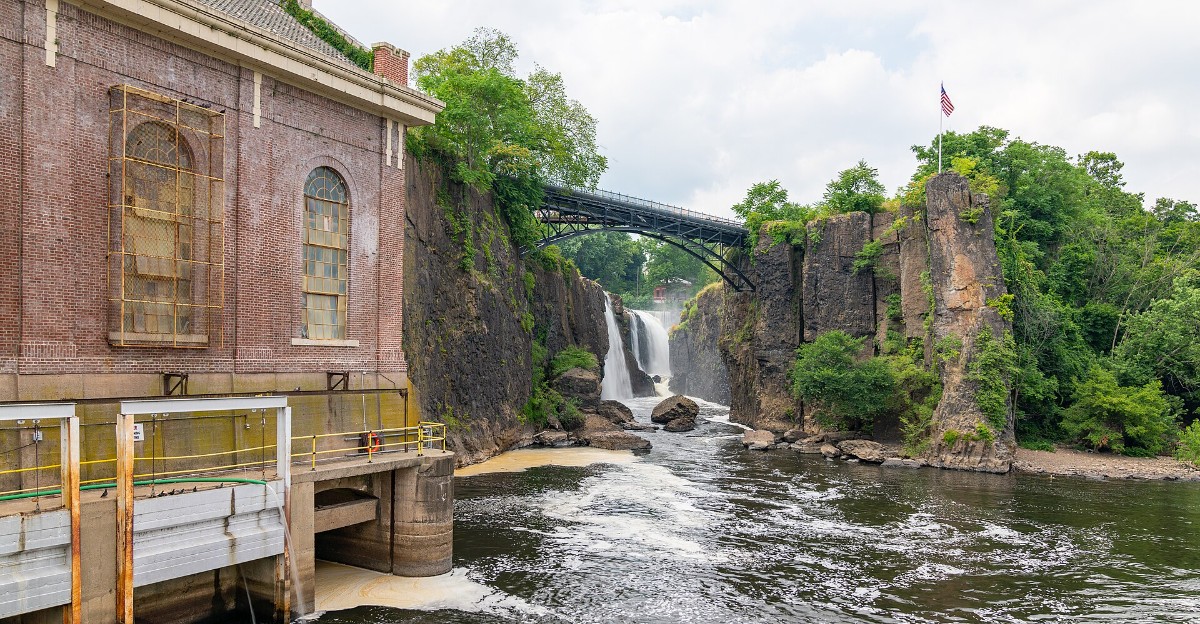
A 77-foot waterfall roars through the middle of a city, and a Founding Father once looked at it and saw factories. Yep, that really happened.
Alexander Hamilton saw this spot in 1778 and never stopped thinking about it.
The water drops into a chasm about 300 feet wide. By volume, it ranks among the largest waterfalls east of the Mississippi River.
That alone would make me curious.
Then there’s the twist. Hamilton helped plan an entire industrial city around this New Jersey waterfall, with canals carved to steer its power into mills.
Some of those old brick mills still stand nearby.
And you can walk right over the gorge on a footbridge. Okay, that would make me stop.
Who wouldn’t want to see that up close?
A Founding Father Looked At This Waterfall And Saw A Whole Economy
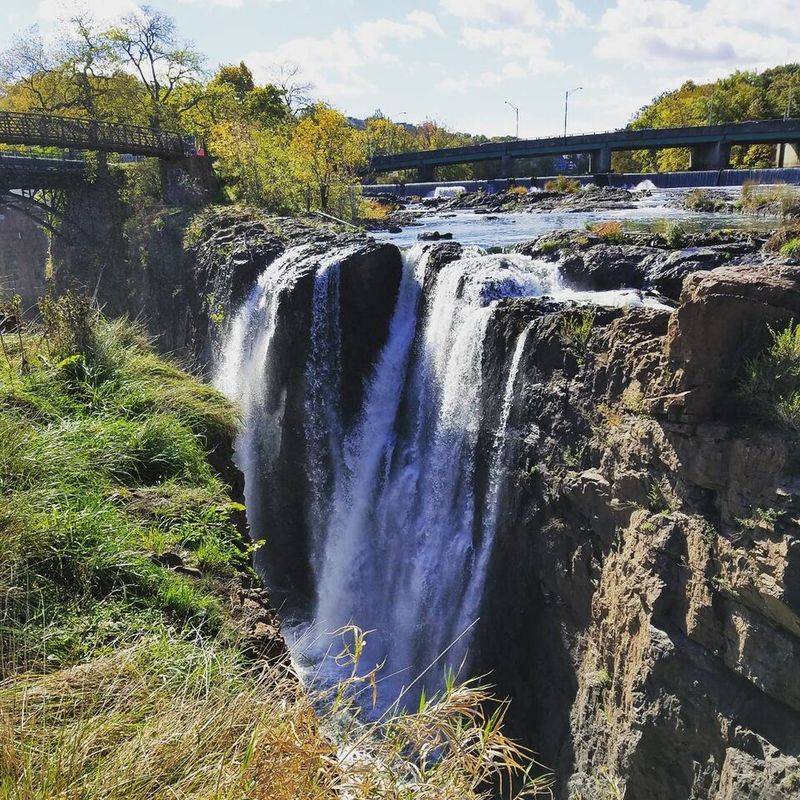
Most people see a waterfall and grab their phone. Alexander Hamilton saw one and pictured a country that could make its own goods.
That vision is the heart of Paterson Great Falls National Historical Park. Hamilton first visited the falls in 1778, during the Revolution.
He was impressed by how much power the rushing water could provide.
Years later, he became the nation’s first Secretary of the Treasury. In 1791, he helped found the Society for Establishing Useful Manufactures.
Folks usually just call it S.U.M., which is much easier to say.
The goal was big and bold. Hamilton wanted the young United States to stop relying on other countries for manufactured goods.
In May 1792, S.U.M. bought 700 acres of land around the falls. That purchase officially founded the city of Paterson.
The name honors William Paterson, who was New Jersey’s governor at the time.
So Paterson became America’s first planned industrial city. Not an accident, not a slow sprawl, but a deliberate plan built around one roaring river.
Standing near the falls makes that history feel real. You’re looking at the exact water that convinced Hamilton this place could change everything.
Pretty wild for a single river bend.
Get Ready For A Roar That Matches The Numbers
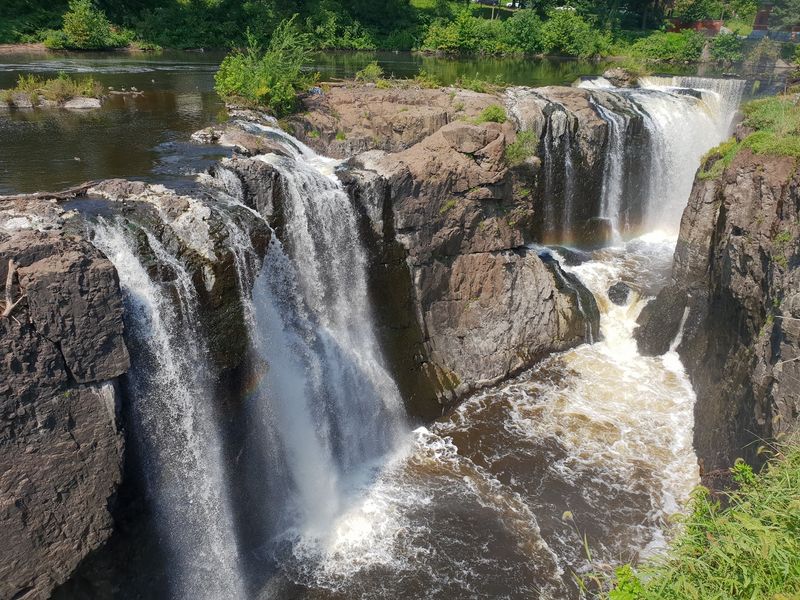
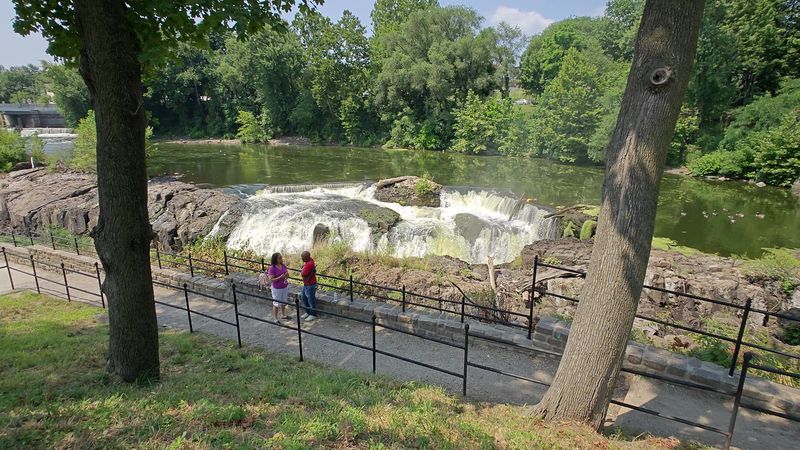
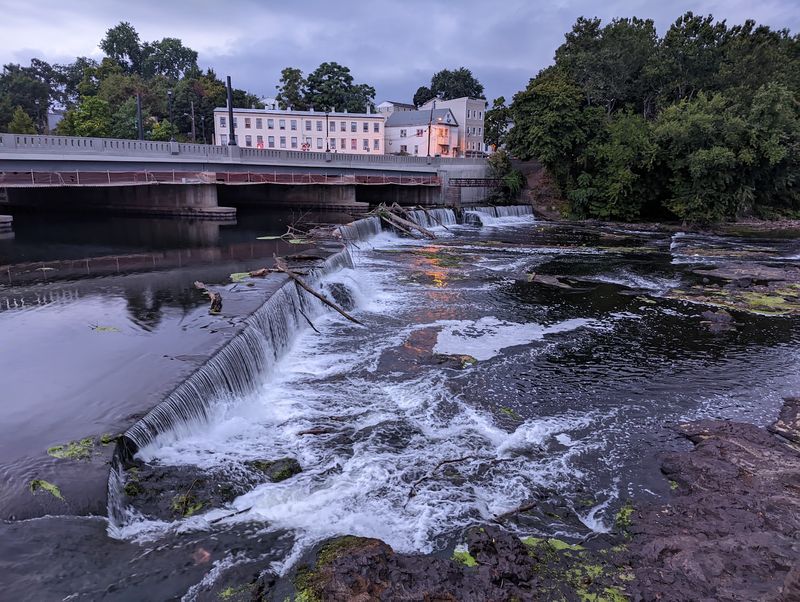
Seventy-seven feet. That’s how far the Passaic River drops at the Great Falls, and it doesn’t do it quietly.
The water plunges into a chasm about 300 feet wide. By volume, it’s one of the largest waterfalls east of the Mississippi River.
Not bad for a spot sitting inside a busy city.
The falls also hold the title of National Natural Landmark. That honor goes to places with outstanding natural features.
So the scenery here isn’t just pretty, it’s officially important.
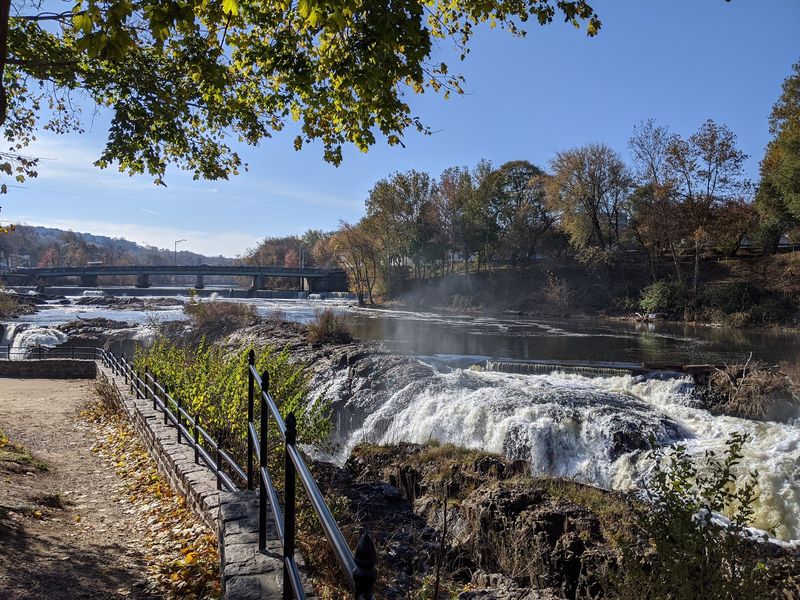
The flow changes with the seasons and the weather. After heavy rain or snowmelt, the river can surge with serious force.
During drier stretches, the falls may look calmer.
On sunny days, mist from the falls can catch the light. Rainbows sometimes form over the gorge, which feels like a bonus prize for showing up.
The best plan is simple. Bring a camera and expect to linger a bit longer than planned.
Watching that much water tumble over rock is oddly hard to stop doing.
Also, wear shoes with a good grip. Paths and steps near moving water deserve respect, especially after rain.
Cross The Footbridge If You Want The Gorge Right Under Your Feet
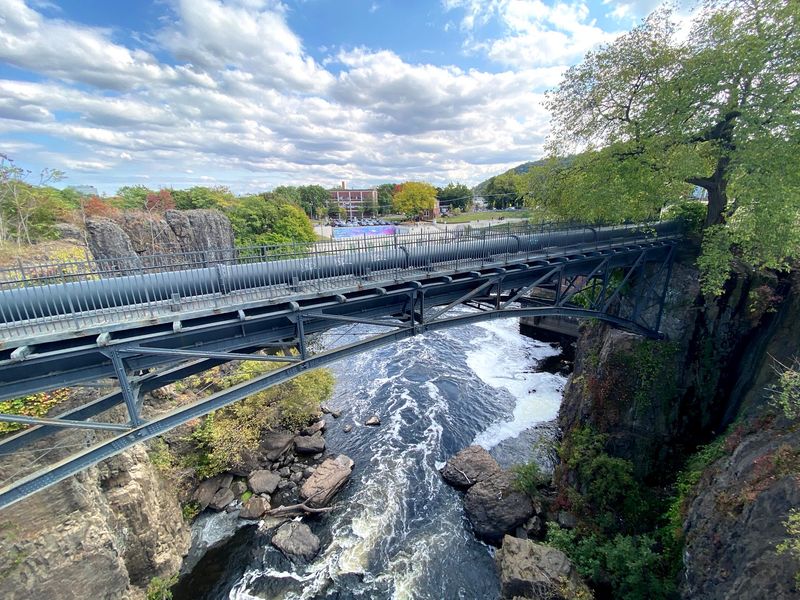
Overlooks are great, but a bridge over a gorge is a different level of fun. At Paterson Great Falls National Historical Park, a footbridge crosses directly over the chasm.
From up there, you get a view straight down at the rushing river. The rock walls and churning water look even more dramatic from above.
Yeah, I’d definitely be looking twice.
Reaching the bridge involves some steps. That’s helpful to know if you’re bringing a stroller or anyone who needs a smoother route.
Plan ahead so nobody feels stuck.
Once you’re across, you can see the falls from a fresh angle. Each viewpoint shows a slightly different side of the water and rock.
It’s like the waterfall has several good profiles.
Two other designated viewing areas help round out the experience. Overlook Park and Mary Ellen Kramer Park both offer their own looks at the falls.
A good approach is to visit all three spots. Start at one park, cross the bridge, then compare.
You’ll probably pick a favorite view and argue about it with whoever came along.
Just stay on marked paths and keep a close eye on kids near railings.
Canals Built To Bend A River To Work
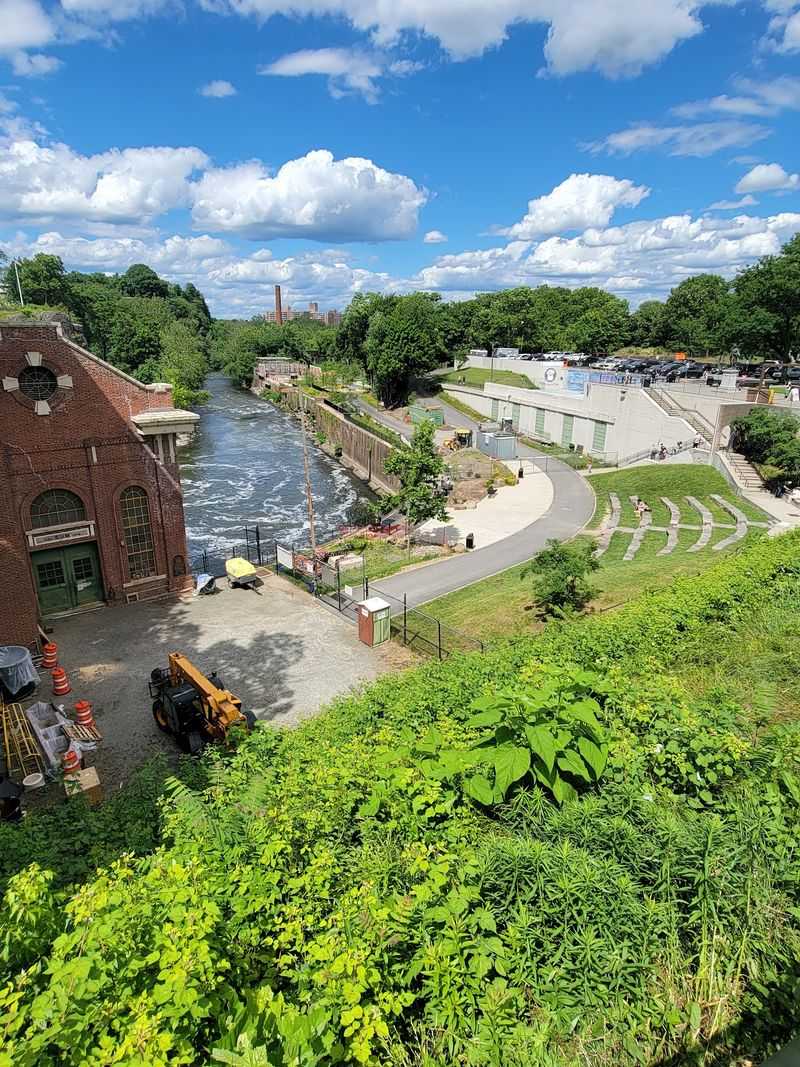
Here’s an engineering trick worth bragging about. Instead of building factories right on the falls, Paterson’s planners carved channels to send water where it was needed.
That network is called the raceway system. It was built and changed over many years, from 1791 to 1848.
Today it’s recognized as a National Engineering Landmark.
The idea was clever and practical. Water flowed through the raceways and turned wheels and machinery in the mills.
More channels meant more businesses could share the same river power.
Think of it as an early power grid, just with water instead of wires. Each mill tapped into the flow to run its equipment.
The falls basically became the city’s engine.
Walking the area, you can still trace how the system shaped the neighborhood. The mills line up along the routes where water once ran.
Streets and buildings follow the plan the water created.
For curious kids, this is a fun puzzle to solve. Ask them how they’d move water from a waterfall to a factory without pipes or pumps.
Then let the raceways reveal the answer. History lessons land better when you can follow them on foot.
Old Brick Mills With Surprisingly Busy Résumés
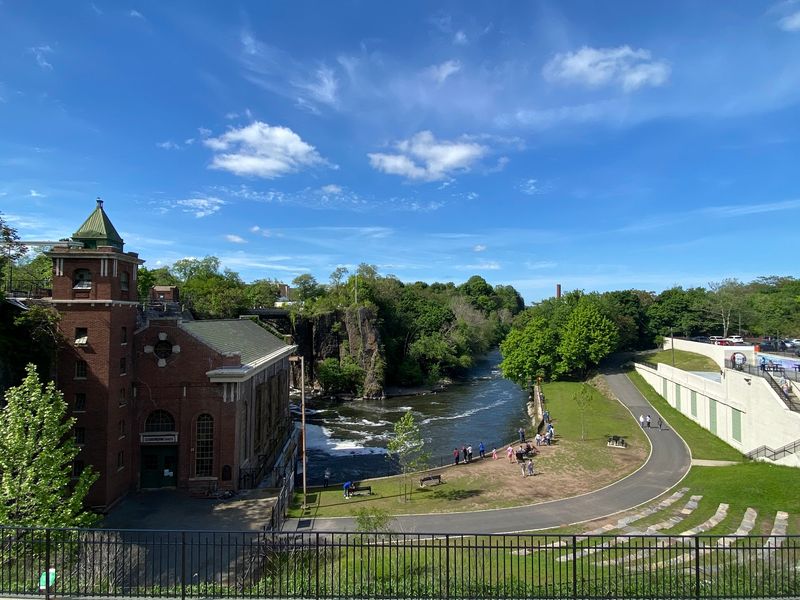
Silk, revolvers, locomotives, and aircraft engines. Paterson’s factories made all of that, which is quite a list for one city.
The town earned the nickname Silk City because it became famous for silk production. But that was only part of the story.
Workers here also built Colt weapons, railroad locomotives, textiles, and engines for aircraft.
Many historic mill buildings still stand around Paterson Great Falls National Historical Park. Their brick walls are a big reminder of how much the city helped grow American industry.
Some of these buildings have found new jobs. The Phoenix Mill, dating to 1813, and the Rogers Locomotive buildings have been repurposed for modern use.
Old bones, new purpose.
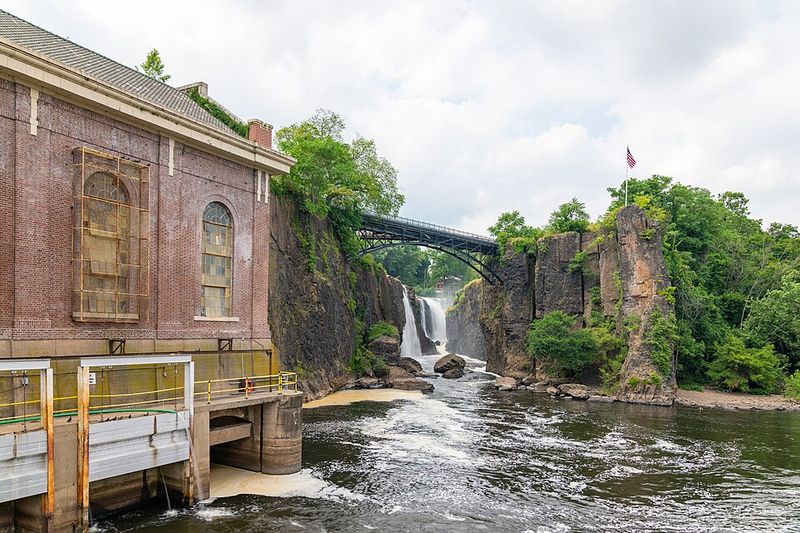
There’s also a power plant with impressive staying power. The S.U.M. hydroelectric power plant was constructed between 1912 and 1914 beside the Great Falls.
It still generates electricity today.
So the falls are still working, more than two centuries after Hamilton’s plan. Honestly, that’s the detail I can’t get over.
When exploring, look up at the rooflines and windows. These buildings were designed to hold machines and let in light for workers.
Every brick tells part of the story.
Rangers Turn A Quick Stop Into A Real Story
A waterfall is fun to watch. A waterfall with a good storyteller attached is even better.
Park rangers are typically available daily from 9:00 AM to 4:30 PM. They lead guided walking tours at scheduled times, depending on staff availability.
It’s smart to check the schedule before heading out.
Tours cover how the falls formed and why they mattered to American industry. You’ll also learn how Paterson grew into a manufacturing powerhouse.
Rangers connect the scenery to the people who shaped it.
Prefer to explore at your own speed? Self-guided walking tours are available too.
One option is the Mill Mile tour, which you can download or use through an app.
That flexibility makes planning easy for families and groups. Short attention spans can do the highlights.
History lovers can stretch the tour as long as they like.
Here’s a heads-up worth knowing. The park doesn’t currently have an indoor visitor center, so rangers are your main source for questions.
Bring curiosity and maybe a few questions for them. Ask about Hamilton, the mills, or the river itself.
You’ll walk away knowing way more than the signs alone could share.
Free Admission Makes Planning Almost Too Easy
No entrance fee at a national park? That’s a pleasant surprise for any family budget.
Paterson Great Falls National Historical Park sits at 72 McBride Ave Ext, Paterson, NJ 07501. The outdoor areas are generally open from sunrise to sunset.
Just show up and start exploring.
Amenities are simple but useful. You’ll find parking, picnic tables, and walking trails.
Portable restrooms are typically available from 9:00 AM to 4:00 PM, depending on staff availability.
Packing lunch is a smart move here. The picnic tables give you a scenic spot to eat near the falls.
Few lunch views beat a roaring river.
Shade can be limited in some areas, so plan for sunny days. A hat, sunscreen, and plenty of water are good ideas.
Comfortable walking shoes help too.
The parking lot is fairly small, so timing matters on busy days. Arriving early or on a weekday may make things easier.
Since there’s no indoor visitor center, dress for the weather. Rainy or cold days call for layers and waterproof gear.
With a little prep, this New Jersey park makes an easy and affordable outing for almost anyone.
Workers Here Pushed For Changes We Still Feel Today
Ever enjoyed an eight-hour workday? Some of the credit traces back to people who labored in Paterson’s mills.
The city’s industrial boom attracted waves of immigrants. Families arrived looking for work in the mills and factories.
Their effort helped power the American Industrial Revolution.
But the jobs were often tough, with long hours and hard conditions. Workers in Paterson spoke up.
Major strikes took place here in 1835 and again in 1913.
Those strikes became important chapters in American labor history. Young mill workers fought for shorter hours in 1835, while silk workers demanded an eight-hour workday and better working conditions in 1913.
That’s a lasting legacy for one river city.
This part of the story adds real depth to a visit. The falls weren’t just about machines and money.
They were about people, too.
For families, it’s a great conversation starter. Kids might be surprised that children once worked long shifts in factories.
Talking about it makes history feel personal.
Nearby, the American Labor Museum digs deeper into these themes. Pairing it with the park gives you a fuller picture of how Paterson’s workers helped shape everyday life across America.
Save Time For Two Neighbors Worth The Short Walk
One block away sits a museum packed with Paterson’s inventions. The Paterson Museum, at 2 Market Street, works as a partner site of the National Park Service.
Inside, exhibits explore the city’s industrial past. You’ll find textile machines and Colt revolvers on display.
It’s a perfect follow-up after seeing the mills from outside.
Seeing the actual machines helps everything click. The raceways, the mills, and the products suddenly fit together.
It’s like finding the missing puzzle pieces.
Sports fans have a reason to stick around too. Hinchliffe Stadium, a National Historic Landmark, is nearby.
It’s one of the last remaining Negro League stadiums in the nation.
The stadium reopened in May 2023 after a major restoration. Its story adds another important chapter to Paterson’s history, beyond the factories.
Together, these spots turn a quick waterfall stop into a full day. Start with the falls, stroll to the museum, then swing by the stadium.
Hamilton dreamed of a city built around this New Jersey waterfall. More than two centuries later, that city is still full of stories.
I can already see myself staying longer than I meant to.
