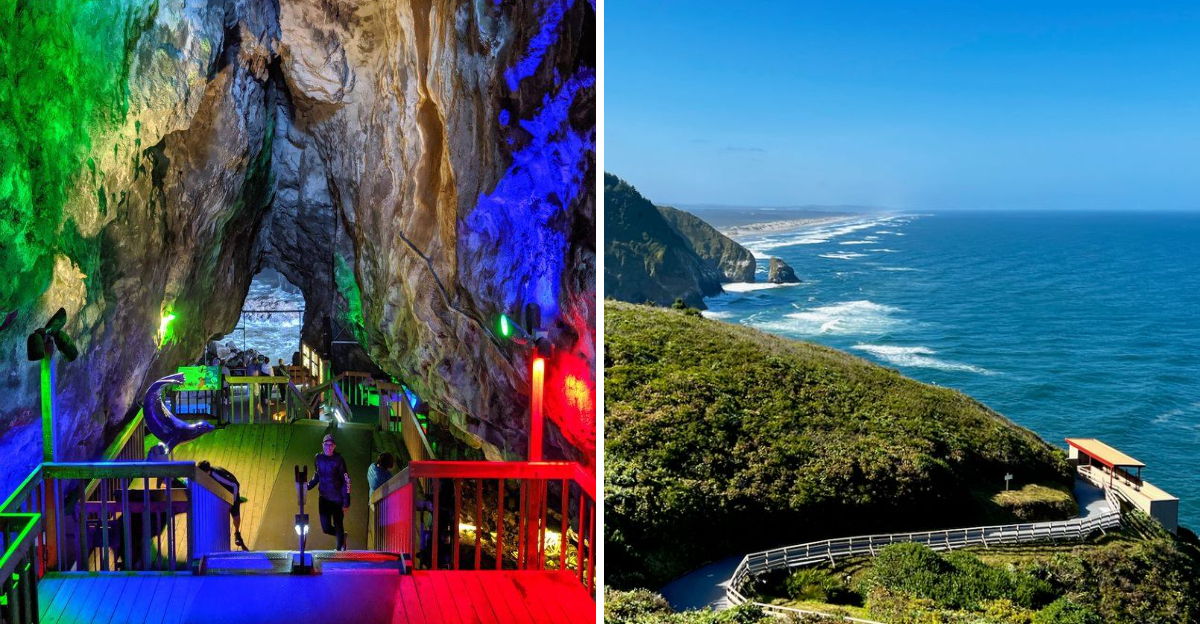
Something massive hides beneath the cliffs along this stretch of coast, and most drivers speed right past it without noticing a thing.
Step closer and the ground practically hums. Waves crash somewhere below, echoing through rock that’s been carved out over thousands of years. This isn’t some small roadside curiosity either. It’s the largest sea cave in the entire country, sitting quietly in Oregon like it’s not a big deal at all.
Barking fills the air before you even see them. Sea lions claim this space as their own, lounging on rocks far below while visitors lean over railings trying to catch a glimpse.
Oregon’s coastline holds plenty of surprises, but nothing quite compares to standing above something this enormous and ancient. Some wonders shout for attention. This one just waits to be discovered.
The Cave Itself, Bigger Than Anyone Expects
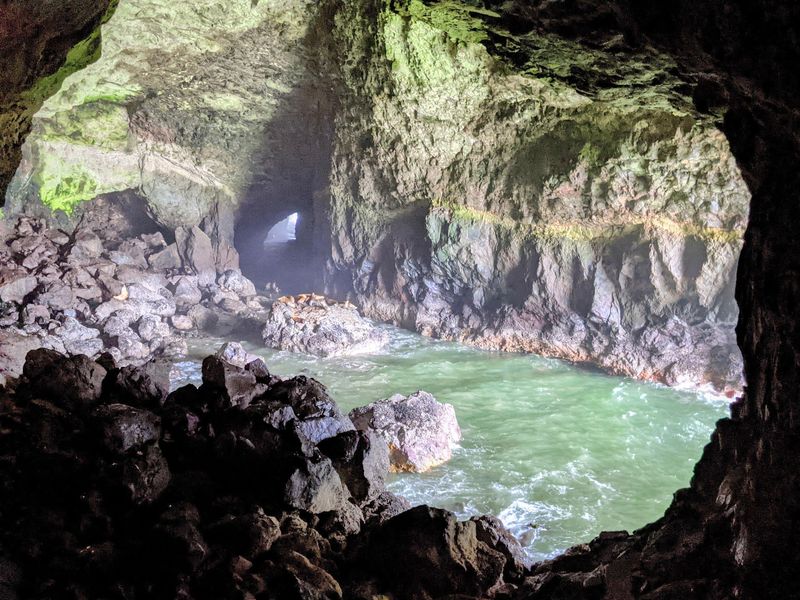
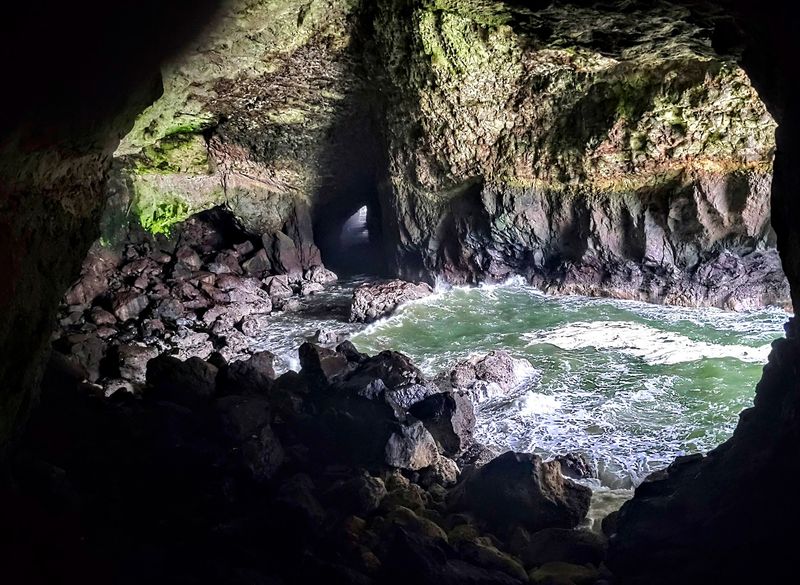
Numbers rarely mean much until you are standing inside them. The main chamber stretches roughly two acres across, with a rock ceiling arching about twelve stories overhead, which makes it the largest known sea cave in the United States.
Light comes in sideways from the ocean entrance, catching mist and turning the whole space a strange, moody green.
Sound is the part nobody warns about. Waves push into the chamber and the noise bounces off wet basalt, mixing with the low honking and bellowing of sea lions until it feels less like a viewpoint and more like a living animal.
The smell of salt and sea lion colony drifts up as well, adding another layer to the sensory overload.
Geologists estimate the cave formed over millions of years as surf slowly chewed through weaker rock in the headland. Bring a jacket, because the air down there stays cool and damp year round.
Give the viewing area at least fifteen unhurried minutes. Eyes adjust slowly, and the longer you look, the more shapes you notice tucked along the ledges and shadowed corners of the rock. Even seasoned visitors often admit the scale is hard to fully process on a first look.
Riding the Elevator Twelve Stories Into the Rock
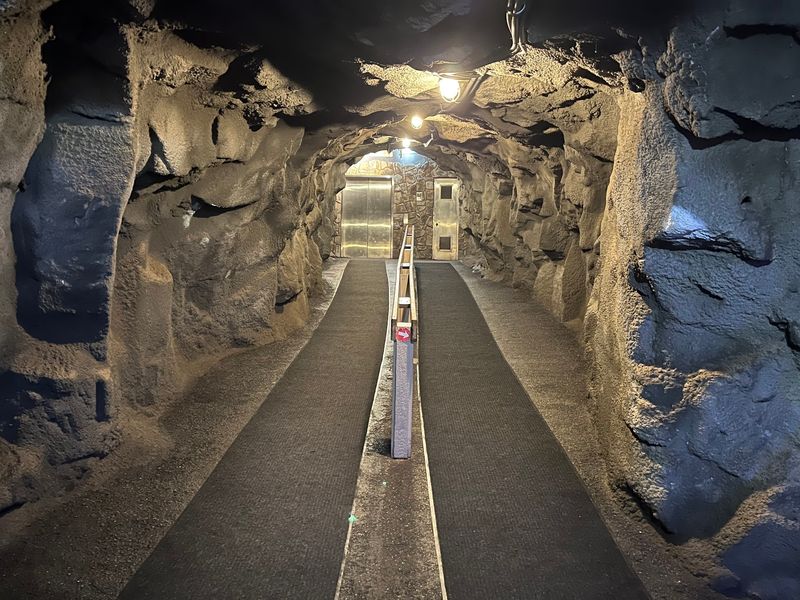
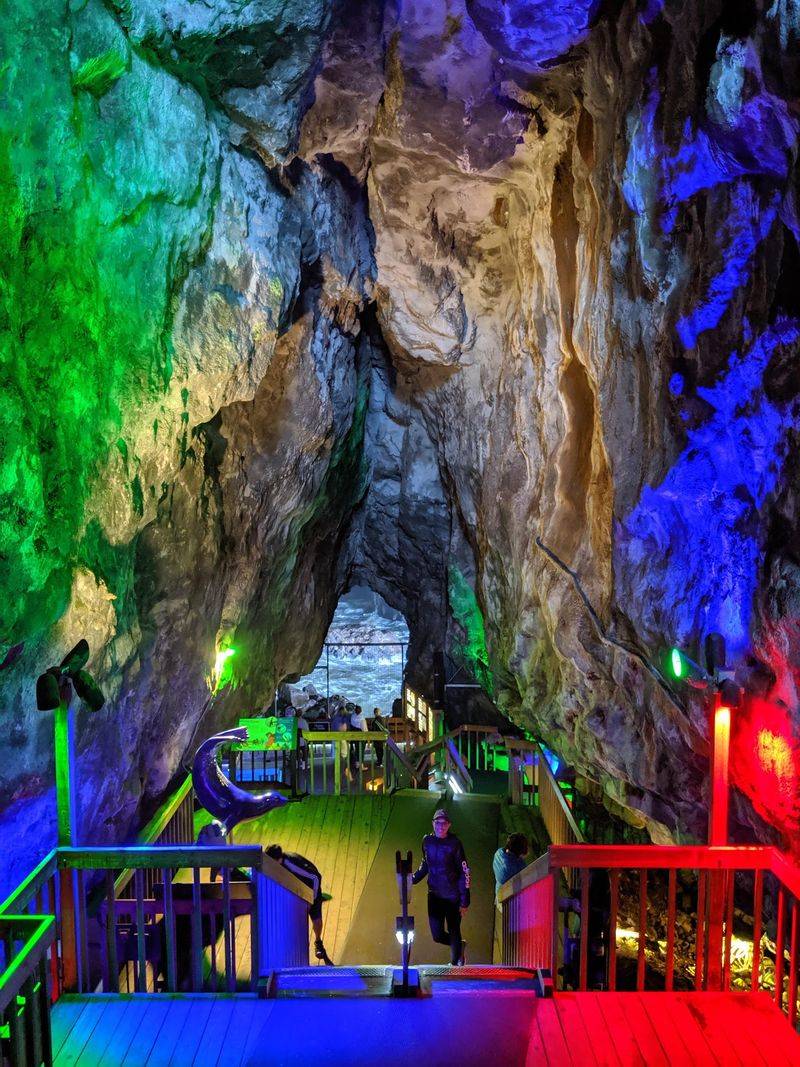
Few elevators have this kind of buildup. Access to the chamber runs through a shaft blasted straight down through the headland in the 1960s, dropping about 208 feet from the cliffside entrance to the cave floor.
The ride is short, smooth, and oddly quiet compared with everything waiting at the bottom.
Doors open onto a caged viewing area that keeps people safely separated from the animals, which is exactly how it should be. Cold air rolls in immediately, carrying salt, seaweed, and that unmistakable wildlife funk. The temperature drop alone is enough to catch first-time visitors off guard.
Before the elevator existed, reaching the cave meant a long, punishing staircase down the cliff face, and early visitors in the 1930s did just that. Staff usually load small groups, so waits stay reasonable even during busy summer afternoons.
One practical tip worth remembering: phones and cameras struggle in low light down there. Turn off the flash, brace against the railing, and let the eyes do most of the work instead. Patience pays off here more than equipment does.
Meeting the Steller Sea Lions Up Close
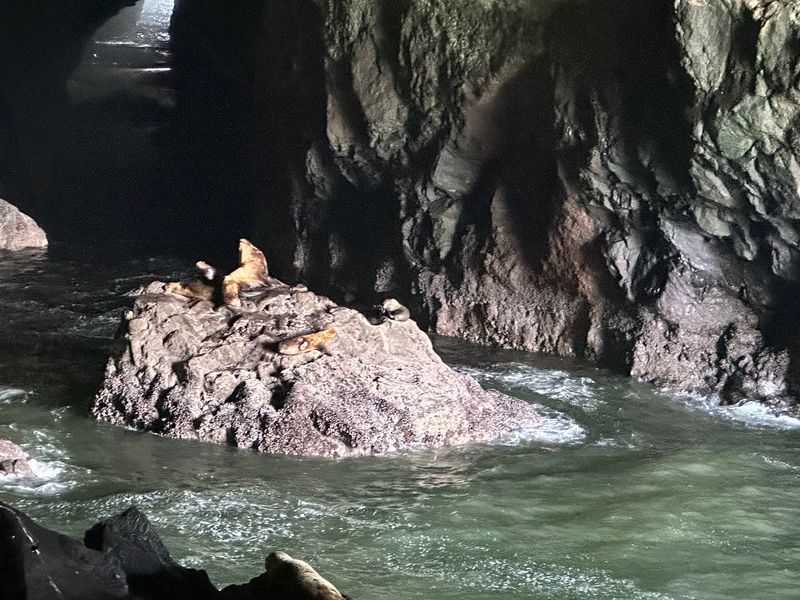
Steller sea lions are the heavyweights of the family, and the bulls make that obvious. A mature male can push past a thousand pounds, with a thick mane around the neck and a roar that carries clear across the chamber.
Watching one shove its way up a slick rock ledge is genuinely impressive, and slightly comical.
Numbers inside the cave shift with the seasons. During fall and winter, animals crowd the sheltered chamber; in spring and summer, most move outside to breed and sun themselves on the offshore rookery rocks.
Timing a visit around these shifts can make a big difference in what ends up being seen. Some days a dozen lounge below, other days the outdoor ledges hold well over a hundred.
Behavior worth watching for includes pups nursing, bulls squabbling over prime spots, and the endless shuffling as animals reposition. The commotion rarely settles for long, so it rewards visitors who linger rather than glance and move on.
Harbor seals sometimes appear too, smaller and far more discreet. Nothing here is staged or fed, which is exactly why the visit sticks with people long after the drive home.
That Unforgettable Smell Nobody Prepares You For
Let’s be honest about the aroma. A few hundred marine mammals sharing one enclosed rock chamber produces a scent that is pungent, fishy, and completely unforgettable.
Some visitors laugh it off, others pull a shirt over their nose within ten seconds of the elevator doors opening.
Intensity varies quite a bit. Windy days push fresh air through the entrance and thin things out, while still, humid afternoons concentrate everything nicely. Even staff who work there daily admit some shifts are noticeably rougher than others.
Winter, with more animals packed inside, tends to be stronger than a quiet summer morning. Kids usually find the whole situation hilarious, which helps.
A useful trick is breathing through the mouth for the first minute or two, because the nose adjusts faster than expected once the initial hit passes. By the time most visitors reach the railing, the smell has already faded into the background.
Far from ruining anything, the smell is part of the honesty of the place. Nothing has been sanitized or dressed up for tourists, and that raw, unfiltered quality is a big part of why the memory lingers.
Heceta Head Lighthouse From the Cliffside Overlook
Halfway down the paved path, the trees open and a view appears that stops nearly everyone. To the north, Heceta Head Lighthouse sits on its green bluff above the surf, white tower and red roof glowing against the headland.
Photographers love this angle because the cliffs frame the lighthouse perfectly.
A fenced overlook platform on the property gives the clearest sightline, and it costs nothing extra once inside the gate. Zoom lenses help, though even a phone camera captures something worth keeping. Even on hazy days the outline of the tower still manages to stand out against the coastline.
Heceta Head first lit its lamp in 1894, and the beam still sweeps out over the Pacific today. From the same spot, the offshore rocks below often hold dozens of sea lions basking in whatever sun breaks through.
Late afternoon light tends to be kindest here, warming the tower and softening the water. Many visitors end up lingering longer than planned, simply watching the light shift over the water. Wind whips across this ledge constantly, so hold onto hats and anything else that might take flight.
Whale Watching and Wild Birds From the Ledges
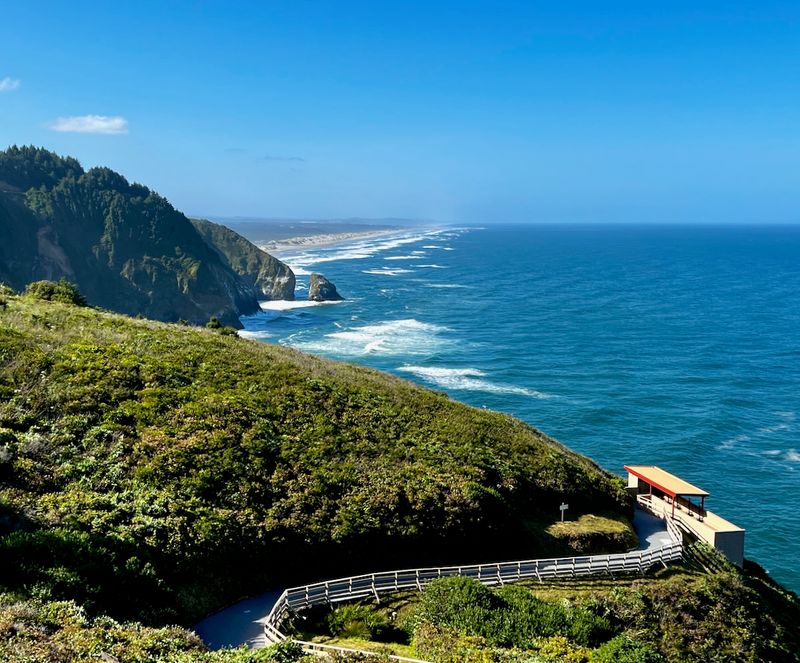
Patience pays off on these cliffs. Gray whales pass this stretch of coastline during their migrations, heading south from roughly December through January and north again between March and June, and a resident group lingers offshore through summer.
Look for the spout first, a quick puff of mist against dark water.
Birds provide steady entertainment between whale sightings. Cormorants, gulls, and pigeon guillemots nest on the rock faces, and Brandt’s cormorants have long used the cliffs around the cave entrance as a rookery.
Their constant activity on the ledges gives the eyes something to do while waiting for a whale to surface. Binoculars turn a decent view into a great one. Staff sometimes post notes about recent sightings, so a quick question at the counter is worth the effort.
Calm, clear mornings offer the best odds, since choppy water hides spouts and fins. Overcast skies, oddly enough, can actually make the spouts easier to spot against the flatter light.
Even without a whale, the scanning itself is oddly relaxing. Standing above the Pacific, watching swells roll in from nowhere, ranks among the more peaceful things the Oregon coast offers.
Planning the Stop, Paths, Timing and the Gift Shop
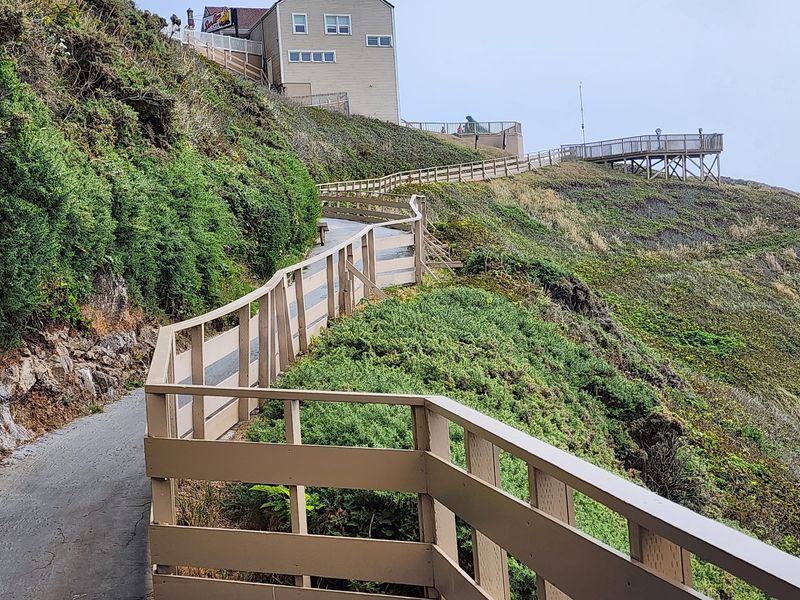
A little preparation makes this stop far more enjoyable. Tickets are sold inside the gift shop at the top, and parking sits across the highway, so cross carefully because traffic on 101 moves quickly. From there, staircases and a sloped ramp of roughly a quarter mile lead down to the elevator.
The return climb is the real workout. Take it slowly, pause at the overlooks, and treat the uphill as part of the experience rather than a chore. Benches along the way make it easy to catch a breath without feeling rushed. Wind can be fierce on that path, so a windbreaker earns its place in the car.
Late November through April brings the biggest crowds of sea lions inside the cave, while summer visits usually mean watching them outside on the rocks. Visiting during the shoulder months often offers a nice mix of both experiences.
Doors open at 9 AM daily and close in the late afternoon, and calling ahead helps with current conditions. Find it all at 91560 US-101, Florence, OR 97439, United States, just south of Heceta Head.
