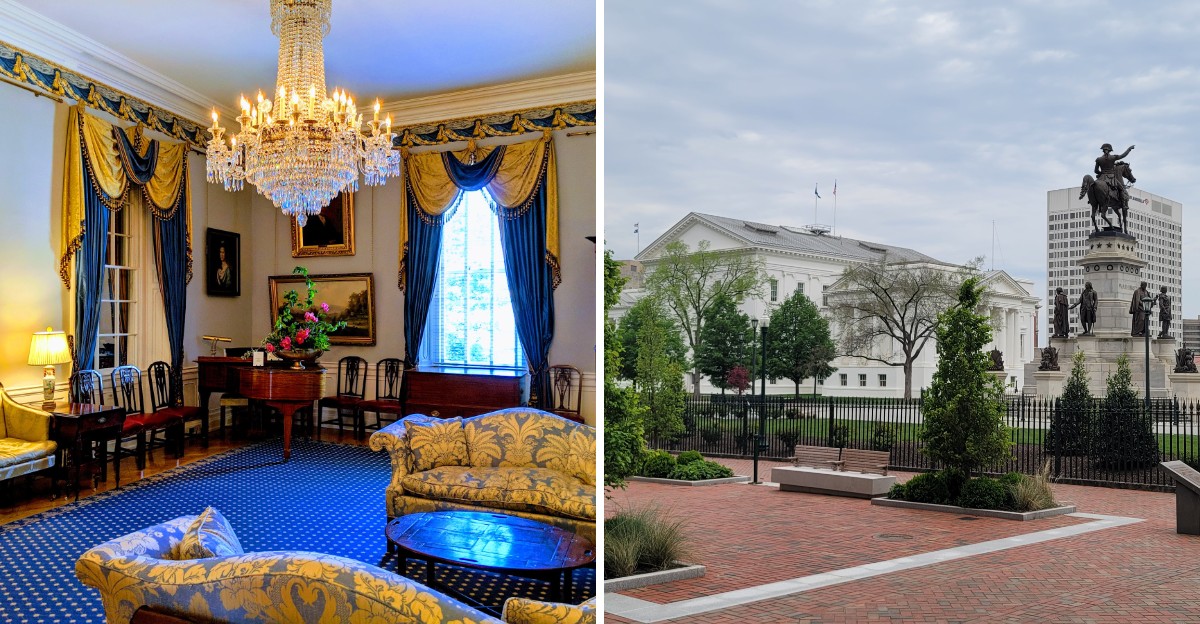
More than two centuries of governors have called the same historic mansion home. That’s an extraordinary record for a residence that still serves its original purpose, especially considering how much American life has changed since its earliest occupants arrived.
The Virginia landmark was designed in the Federal style by architect Alexander Parris and first occupied by Governor James Barbour in 1813. Its elegant rooms have welcomed presidents, foreign dignitaries, and other notable visitors throughout the years.
I find it fascinating that this isn’t simply a preserved historic house. It remains an active official residence, connecting modern government with generations of history.
The building has undergone renovations, but much of its architectural character survives. Public tours offer opportunities to appreciate that heritage when available.
How many historic homes can claim such an unusually continuous role in American public life?
A Home That Has Never Once Been Empty Of Its Purpose
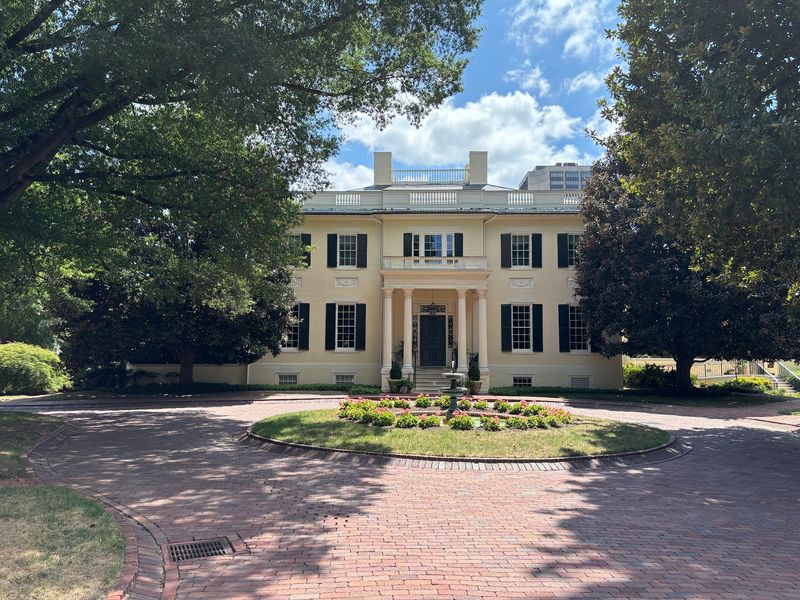
Two centuries is a long time to keep the same job. The Virginia Executive Mansion has done exactly that since its completion in 1813.
Every governor of Virginia since then has lived here with family. That streak makes it the oldest continuously occupied governor’s residence in the United States still used for its original purpose.
James Barbour, the state’s 18th governor, was the first to move in. Picture unpacking boxes in a brand-new mansion while the War of 1812 era unfolded around you.
Okay, maybe skip picturing it, but it’s a wild timeline.
The story even started with a famous signature. James Monroe signed the law authorizing construction on February 13, 1811.
Yes, that James Monroe, who later became president.
Plenty of historic homes are frozen in time with velvet ropes everywhere. This one keeps changing because people actually live in it.
Families celebrate holidays here, host guests, and handle everyday life.
That living quality is what makes a visit feel different. You aren’t touring a dusty relic.
You’re stepping into a working house with a very long memory and a very official mailing address.
Honestly, that combination is rare anywhere in America, and it’s sitting right in downtown Richmond.
A Boston Architect Gave Richmond Its Most Elegant Brick House
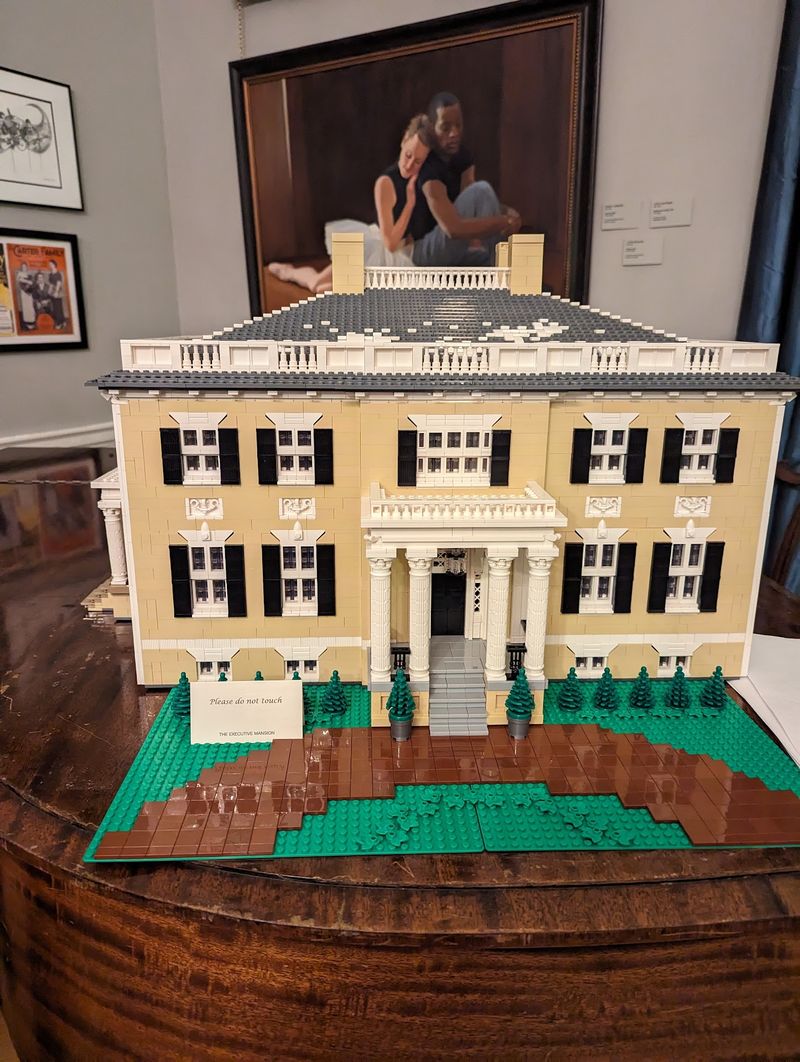
Alexander Parris came down from Boston with a plan, and Richmond got a Federal-style beauty. The two-story brick house shows off a calm, balanced look that still feels polished today.
Look closely at the front. The facade has five bays, with the center section pushed slightly forward.
It’s a subtle move, but it gives the whole house a confident little posture.
Between the first and second-story windows, you’ll spot decorative panels with carved relief swags. They’re the kind of detail you only notice once someone points them out.
After that, you can’t stop seeing them.
Then glance up at the roof. Chimneys are grouped toward the center, framing a balustraded platform that resembles a widow’s walk.
It almost looks like a lookout deck for keeping an eye on the Capitol next door.
Federal architecture loved symmetry, and this house is a textbook example. Everything lines up neatly, like it was designed by someone who straightened picture frames for fun.
Snap a photo from the front gate before your tour. The clean lines and warm red brick make it one of the most handsome buildings on Capitol Square.
Your camera roll will thank you.
Arches, A Ballroom, And An Oval Dining Room Wait Inside
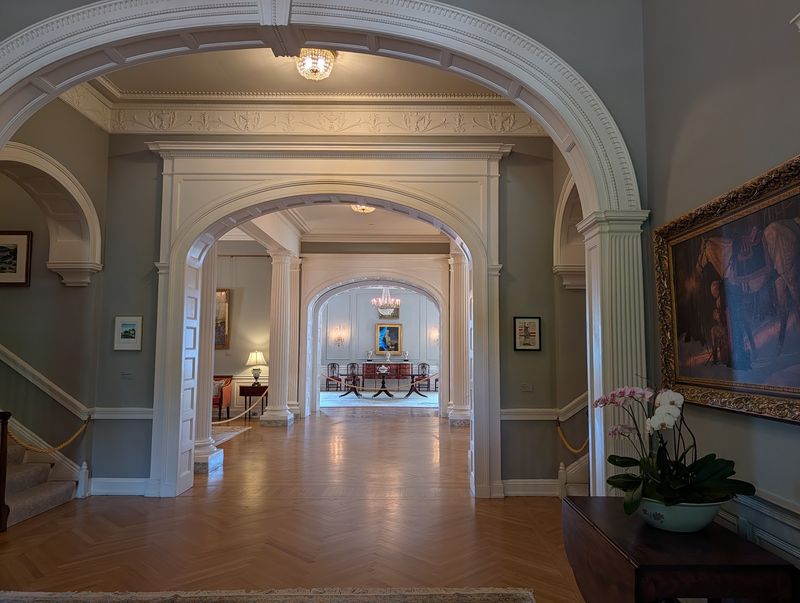
Inside, the house opens around a large central hall. Graceful arches and a plaster frieze set an elegant tone right away.
The layout follows a square plan, which keeps everything feeling organized. Two stairways climb upward.
One is a wide principal stair for grand entrances, and the other is a narrower service stair.
Fast forward to 1906, when a big change arrived. Two parlors were combined into one long ballroom, perfect for receptions and celebrations.
That same renovation added a formal dining room shaped like an oval.
An oval dining room sounds fancy, and it is. It also means nobody gets stuck in an awkward corner seat at dinner.
Smart planning, really.
Today the mansion holds about 13,500 square feet of usable space. That’s plenty of room for official events, family life, and a steady stream of guests.
Guided tours usually take around 30 minutes. That’s long enough to admire the main rooms without your feet staging a protest.
Guides share stories about past governors, renovations, and what’s still original.
Keep your eyes moving during the tour. Details like the frieze and arches reward people who look up instead of just straight ahead.
Royalty And Presidents Already Signed The Unofficial Guest List
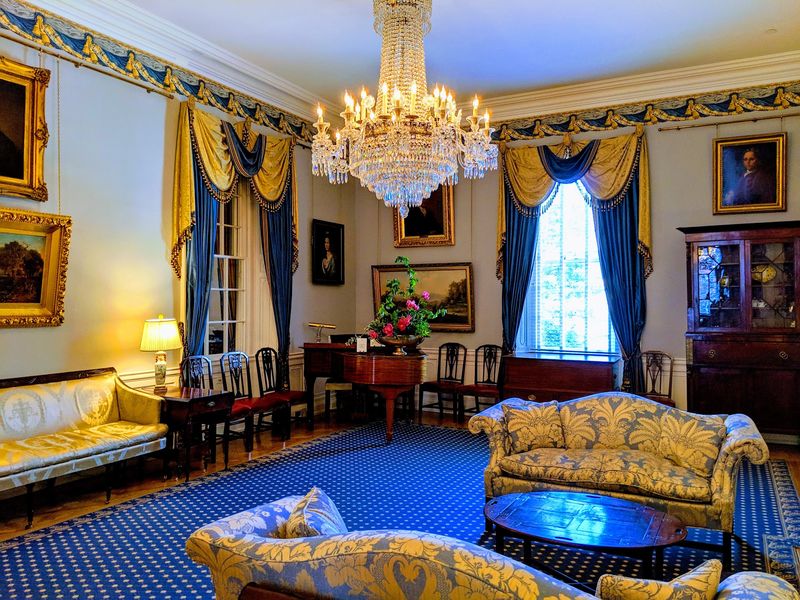
Prince Albert Edward stopped by long before he became King Edward VII. Queen Elizabeth II later visited too.
Not a bad pair of royal references for one Richmond home.
The guest list keeps getting better. Winston Churchill, the famous British prime minister, came through these doors.
So did aviator Charles Lindbergh, the man who made flying across the Atlantic look possible.
American presidents have shown up as well. Rutherford B.
Hayes and Theodore Roosevelt both visited the Virginia Executive Mansion. Teddy Roosevelt in a Federal-style parlor is a fun mental image, considering his big personality.
Why does this matter for you? Because you get to walk the same rooms they did.
Same house, same front hall, way less paparazzi.
Famous visitors also tell you something about Virginia’s role in history. The state has long been a place leaders wanted to see.
The mansion became the natural spot to welcome them.
Ask your guide about past visits if there’s time. Stories about famous guests often bring the rooms to life faster than any plaque could.
Suddenly that dining room feels a lot more exciting.
Bring Your Walking Shoes For These Gillette Gardens
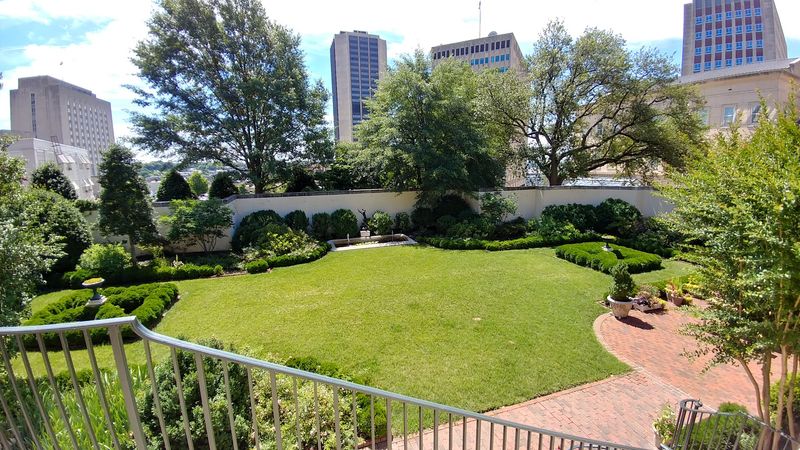
Boxwood fans, this one’s for you. The mansion’s gardens were redesigned in the 1950s by landscape architect Charles Gillette, a big name in Southern garden design.
The formal Gillette Garden sits on the south side of the house. It features dogwood blossoms, English boxwoods, Virginia cedars, azaleas, and crepe myrtles.
Spring and summer give it plenty of color.
A statue of Daphne, the Greek nymph, adds a classic touch. In the myth, she turns into a laurel tree, which feels oddly fitting for a garden.
The whole property covers about 1.2 acres within Capitol Square. That’s a surprisingly green pocket in the middle of a busy downtown.
Timing matters if gardens are your thing. The mansion takes part in Historic Garden Week, a popular springtime event in Virginia.
It’s a great chance to see the grounds at their showiest.
Even outside special events, the outdoor spaces deserve a slow stroll after your tour. Brick paths and greenery make for calm moments and lovely photos.
You might leave planning to plant boxwoods at home, which is a perfectly reasonable reaction.
Old Outbuildings Tell The Fuller Story Of The Property
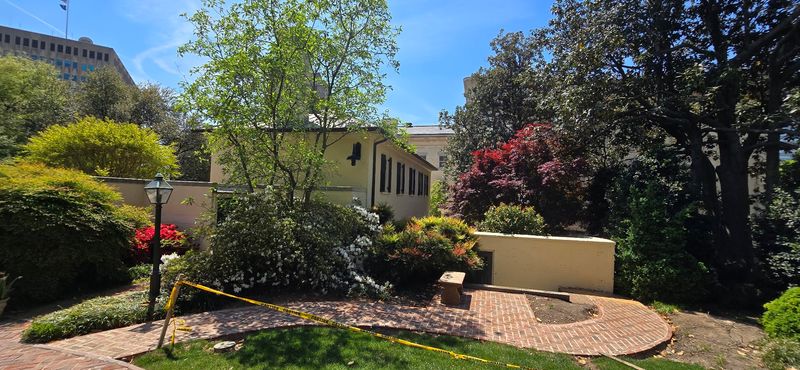
History here isn’t only about governors and grand parties. Of the original outbuildings, the cookhouse and carriage house still stand beside the main house.
Those buildings point to the daily work that kept the household running. Meals were prepared, horses and carriages were kept, and countless hands did the labor.
Many of those hands belonged to enslaved people. The mansion recognizes that history with the Valentine-Jackson Memorial Garden, created to commemorate enslaved families connected to the house.
That garden adds depth to a visit. It reminds you that a historic home is shaped by everyone who lived and worked there, not just the people in portraits.
The property has changed over time too. During the 1999 to 2000 renovation, former quarters of enslaved people were converted into guest bedrooms.
Taking a quiet moment here is worthwhile. It’s a thoughtful counterpoint to the elegant rooms inside, and it helps the whole story make sense.
Good history should feel honest, and this part of the grounds does that well. Kids and adults alike can come away with a fuller understanding of Virginia’s past.
Free Tours Only Happen Three Days A Week, So Plan Ahead
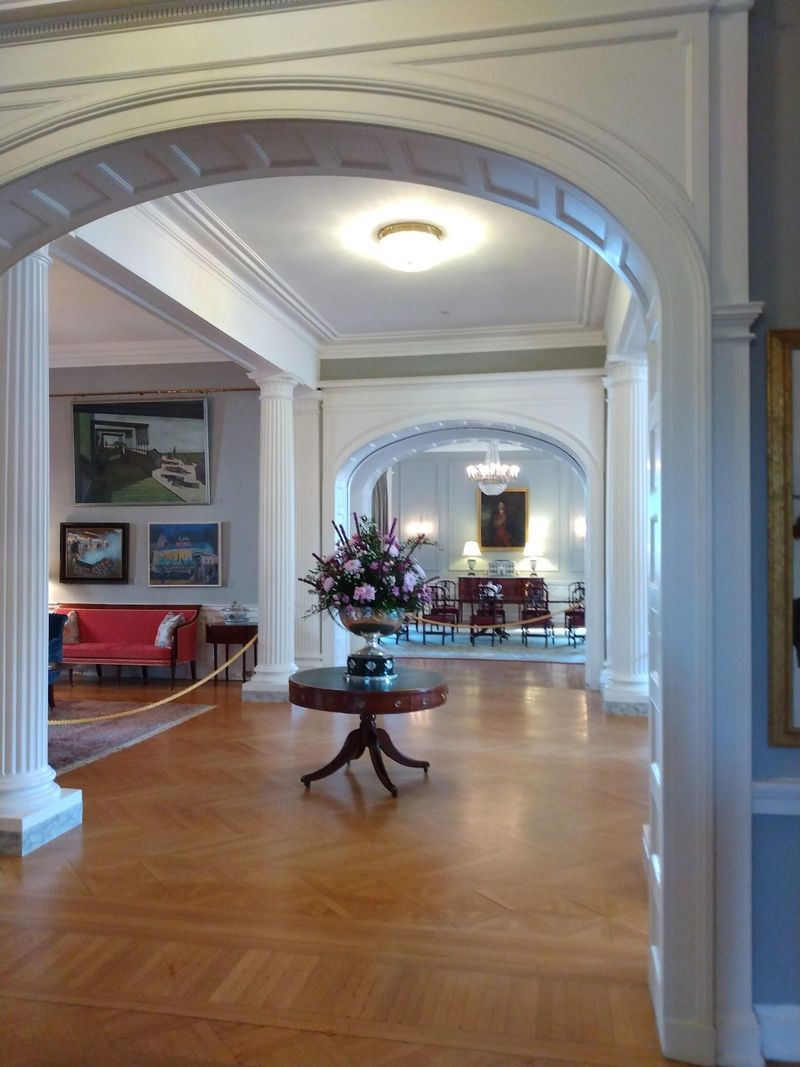
Mark Tuesdays, Thursdays, and Fridays on your calendar. Those are the days the Virginia Executive Mansion offers free public tours, from 10 a.m. to 2 p.m.
State holidays are excluded. December schedules may shift, and closures for maintenance or special events get posted on the official website.
A quick check before heading out saves disappointment.
Small groups don’t need reservations. If you’re bringing fewer than 20 people, just show up.
Larger groups should email the mansion ahead of time to arrange a visit.
Every visitor goes through a security screening first. Makes sense, since a sitting governor actually lives here.
Leave anything questionable at home and the process goes smoother.
Tours last about 30 minutes, which is perfect for younger travelers with limited patience. It’s also easy to fit into a busier day downtown.
Free admission makes this one of the best deals in Richmond. Where else can you tour a two-century-old governor’s home without opening your wallet?
Arrive with a little buffer time, especially on busy days. That way you can relax, enjoy the grounds, and not sprint toward the gate like you’re late for class.
Virginia Artists Get The Spotlight On These Walls
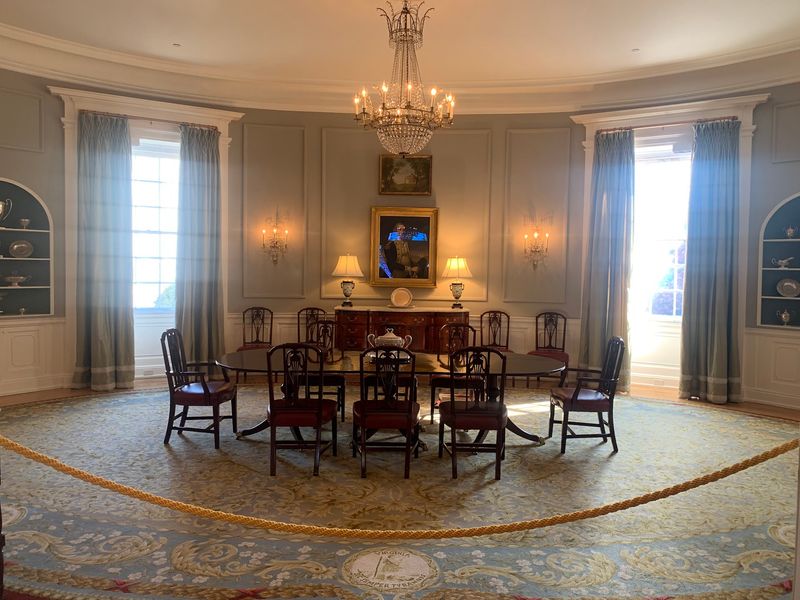
Art lovers, keep your eyes on the walls. The mansion showcases an Art Experience featuring works by Virginia artists.
It’s a clever idea. A historic house could easily stick with old portraits and call it a day.
Instead, the mansion highlights creative talent from across the state.
That mix of old architecture and newer artwork keeps things fresh. Federal-style rooms paired with Virginia-made art give visitors something unexpected to talk about on the way out.
The house also hosts meaningful public events. One highlight is the Teacher of the Year Awards, which honors educators from around the state.
Pretty great to see teachers celebrated in a room where royalty once stood.
Events like these show the mansion’s role as a gathering place. It’s a home, but it’s also a stage for honoring people who make Virginia better.
During your tour, pick one favorite piece of art. Then compare picks with your group afterward.
It’s a fun way to keep kids engaged and spark a little friendly debate.
You might discover an artist you want to follow later. Not bad for a free half-hour visit.
Your Trip Comes With The State Capitol Right Next Door
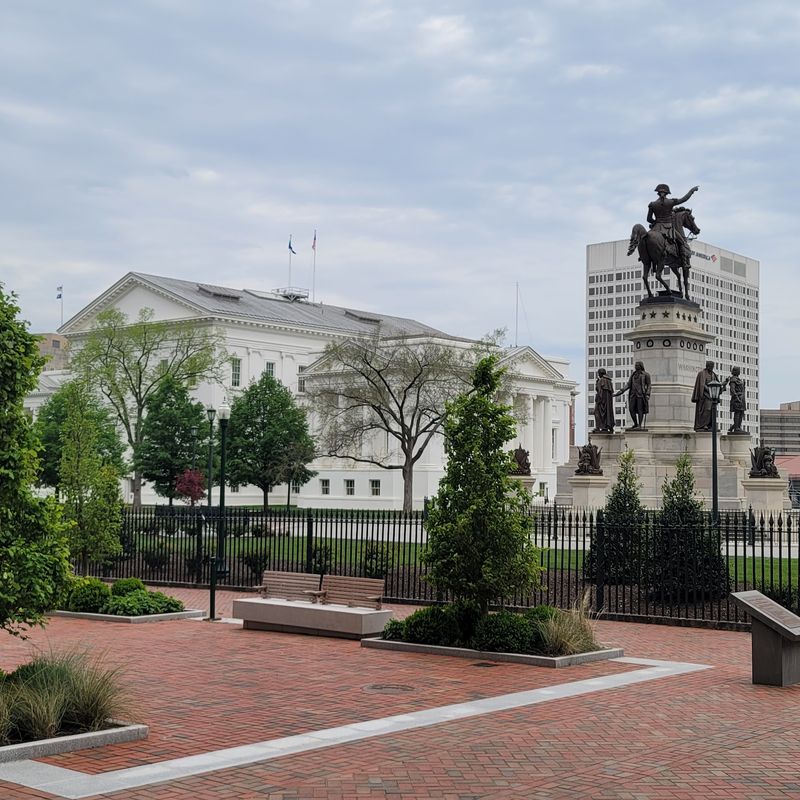
Location is a serious bonus here. The mansion sits on Capitol Square at Capitol Sq., Richmond, VA 23219, right beside the Virginia State Capitol.
That means one trip can easily cover several stops. Tour the mansion, wander the square, and then check out the Capitol building nearby.
Efficient sightseeing at its finest.
Capitol Square itself is a pleasant spot to walk. Trees, paths, and historic monuments make the space feel calm even in the middle of downtown Richmond.
Families will appreciate how compact the area is. Little legs won’t have to travel far between attractions, and nobody needs a long car ride in between.
The Virginia Executive Mansion also stays accessible for more people today. Its 1999 to 2000 renovation brought the building into compliance with the Americans with Disabilities Act.
That update matters for anyone traveling with mobility needs. History is better when more people can enjoy it comfortably.
So build a whole morning around this corner of Richmond. Start at the mansion, stroll the square, and finish with the Capitol.
By lunchtime, you’ll know more Virginia history than most people learn in a semester, and you barely broke a sweat.
