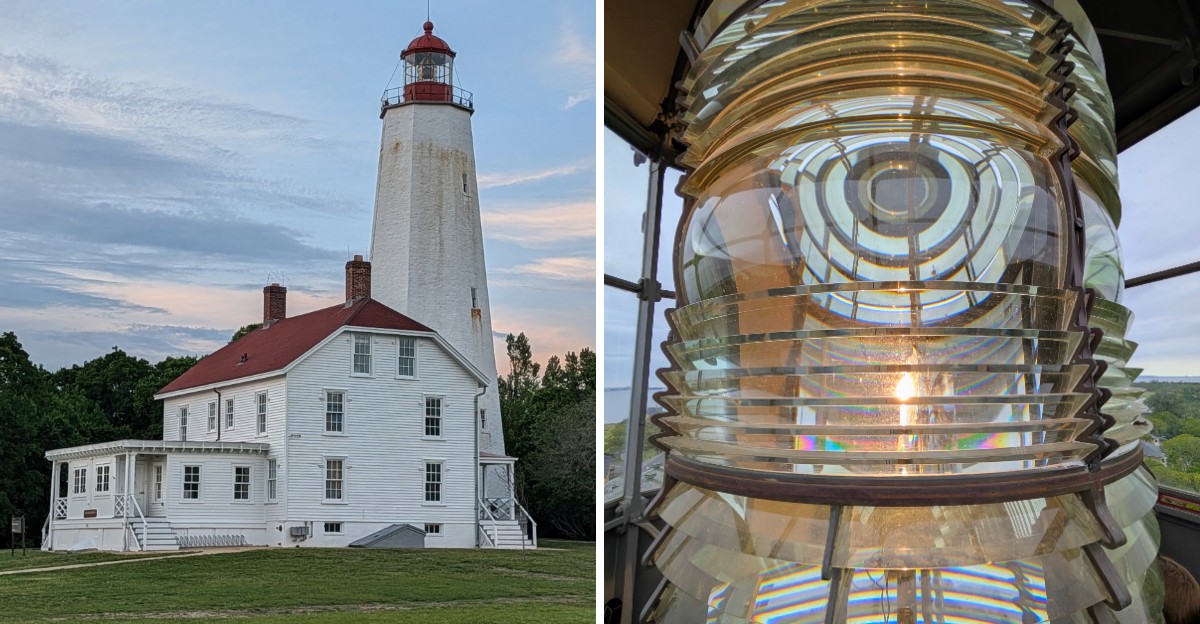
A lottery paid for it. Not a king, not a war chest, just colonial ticket sales back in 1764.
That’s the detail I can’t get over. New York merchants were tired of losing ships, so they gambled on a solution.
And the tower they built is still shining today.
What gets me is how little it has changed. The stone walls were never torn down or rebuilt.
Its steady white light still guides ships near New York Harbor, shining from the same historic tower more than 260 years after it was first lit.
The funny part is the beach has wandered off. Sand kept piling up for centuries, and the ocean slowly backed away.
So a lighthouse built near the tip now sits well inland. Yeah, I’m definitely looking twice at that.
A Colonial Lottery Ticket Paid For This Tower
Shipwrecks were piling up near New York Harbor in the early 1760s. Local merchants decided enough was enough.
They asked the Colonial Assembly of New York for help, and the answer was a lottery. People bought tickets, and the money paid for land and construction.
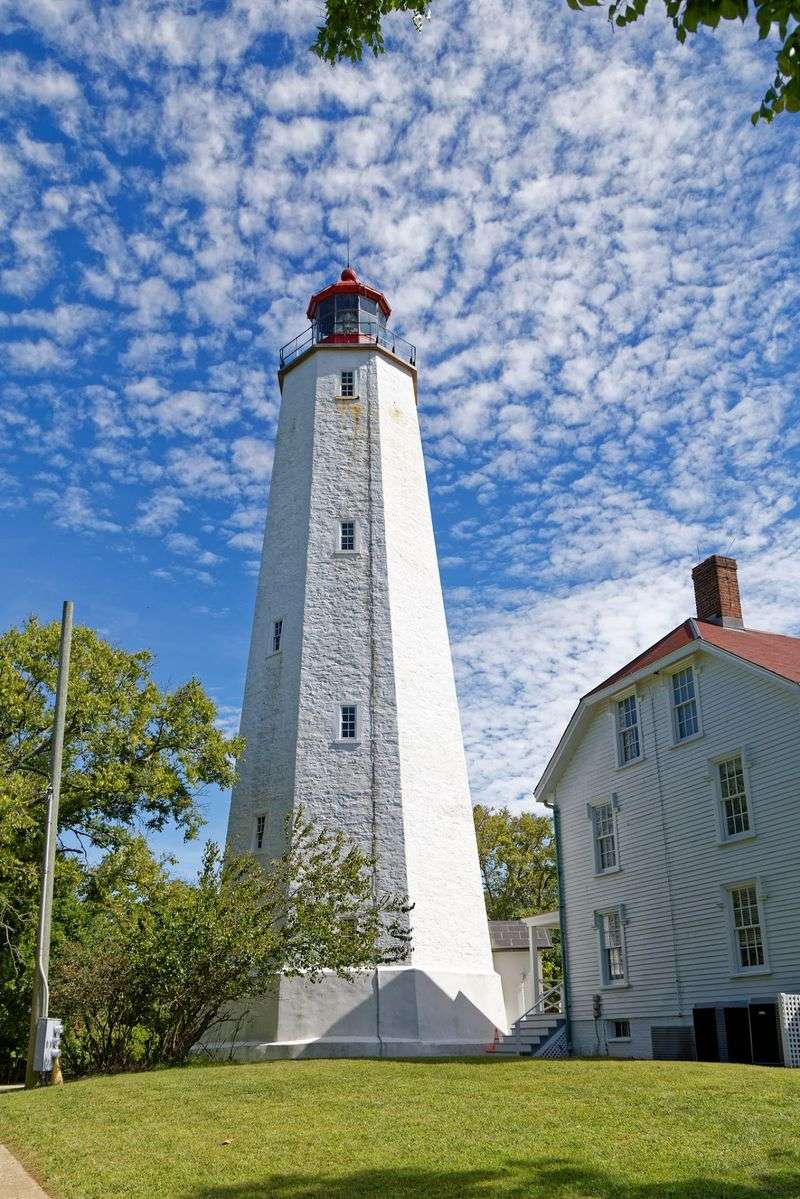
The Sandy Hook Lighthouse was finished and first lit on June 11, 1764. That’s more than a decade before the Declaration of Independence.
Back then, it wasn’t even called Sandy Hook. It went by the New York Lighthouse, since it guarded ships headed into that busy port.
Here’s what makes it truly special today. It’s the oldest operating lighthouse in the United States.
Plenty of early American lighthouses were knocked down and rebuilt over the years. This one never was, so the tower you see is the original.
That makes it a rare survivor in New Jersey and the whole country. Think about every storm and every season it has faced since 1764.
So the next time someone says lotteries never pay off, you have a great comeback. A few lucky tickets helped light the coast for more than 250 years.
Eight Sides, Thick Stone, And Serious Staying Power
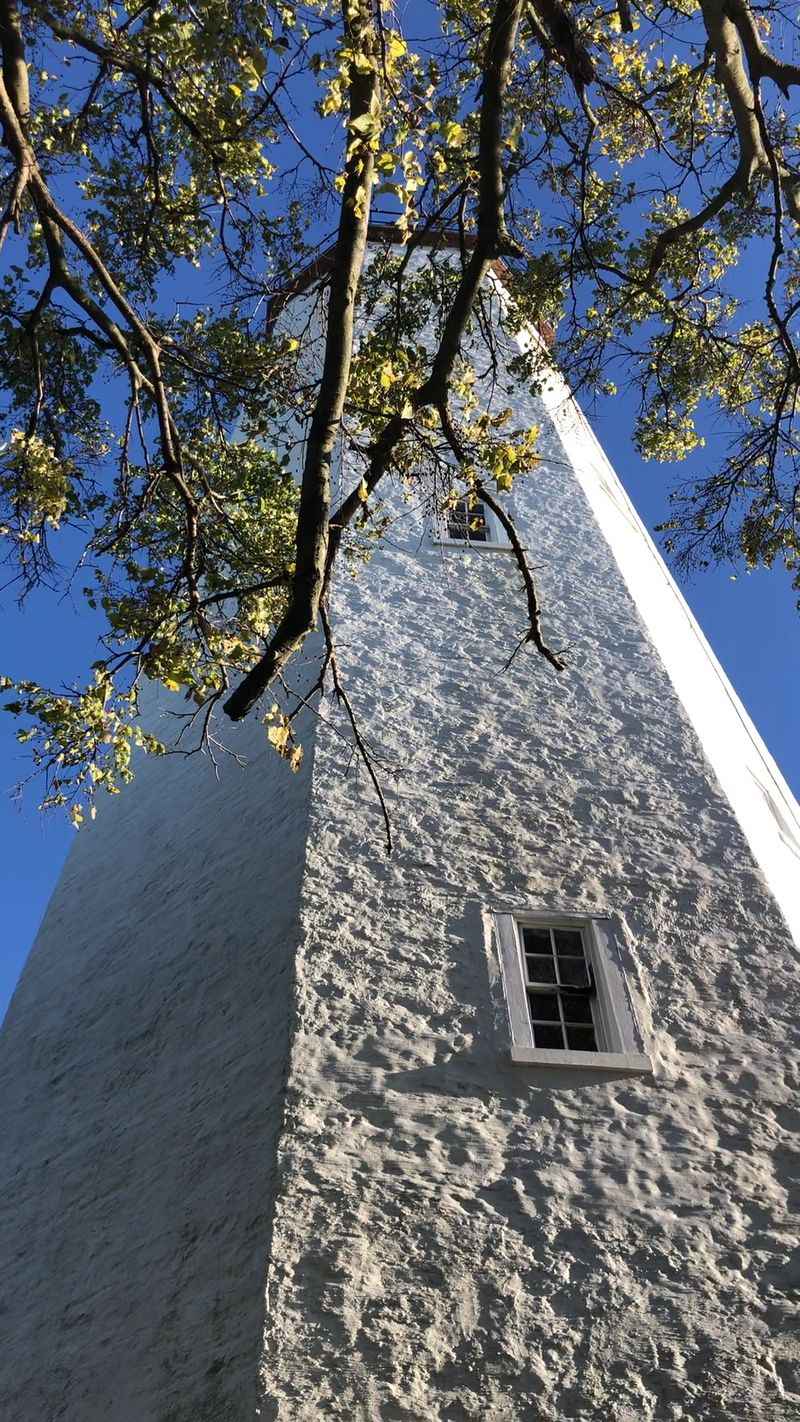
Count the walls and you’ll get eight. The tower is an octagon, with every side the same width.
At the base, it measures 29 feet across. It narrows to 15 feet at the top of the wall, giving it that classic tapered shape.
The builders used irregular rubble stone on the outside and brick on the inside. It sounds rough, but it worked beautifully.
In 1852, a Congressional inquiry called it one of the best-built lighthouses in the country. That’s quite a report card for a building nearly 90 years old at the time.
From bottom to top, the whole structure stands 103 feet tall. Up top sits the lantern room, once called the lanthorn.
That lantern house is 7 feet high with a 33-foot circumference. It’s made of iron and crowned with a copper-clad top.
Okay, that’s impressive engineering for the 1760s. No power tools, no cranes, just smart planning and very tired arms.
Take a slow walk around the base before you leave. Seeing those sturdy walls up close makes the long history feel real.
The Ocean Moved, But The Lighthouse Stayed Put
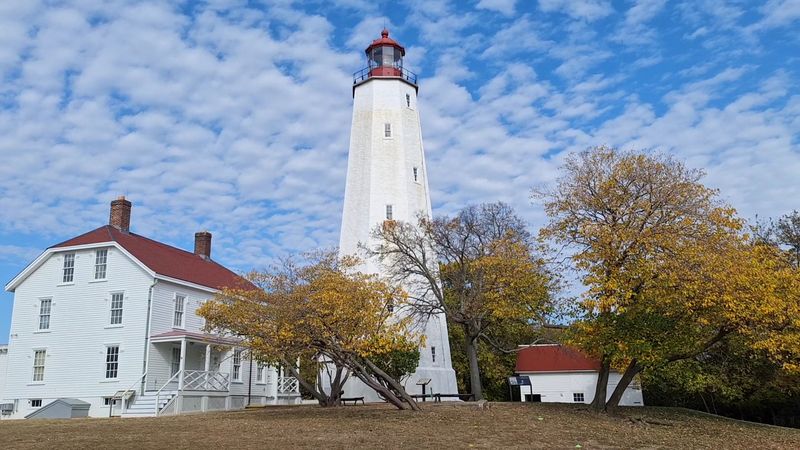
When it was brand new, the lighthouse stood only about 500 feet from the tip of Sandy Hook. Today, that tip is roughly a mile and a half away.
Nobody picked up the tower and carried it inland. The land itself grew instead.
Scientists call it littoral drift. It’s the natural movement of sand along a coastline, pushed by waves and currents.
Over two and a half centuries, all that drifting sand stretched the peninsula farther north. The lighthouse simply stayed where it was built.
I’d say that’s one of the coolest geography lessons in New Jersey. You can literally see how much a coastline can change.
It also explains why the lighthouse feels surrounded by trees and buildings instead of crashing waves. Don’t expect to find surf at its doorstep.
Bring a map of the peninsula, or snap a photo of one at the visitor center. Compare the lighthouse spot to where the land ends now.
That gap tells a long, slow story. Sand moved grain by grain while the tower kept doing its job every night.
You Can Climb 95 Steps And One Bonus Ladder
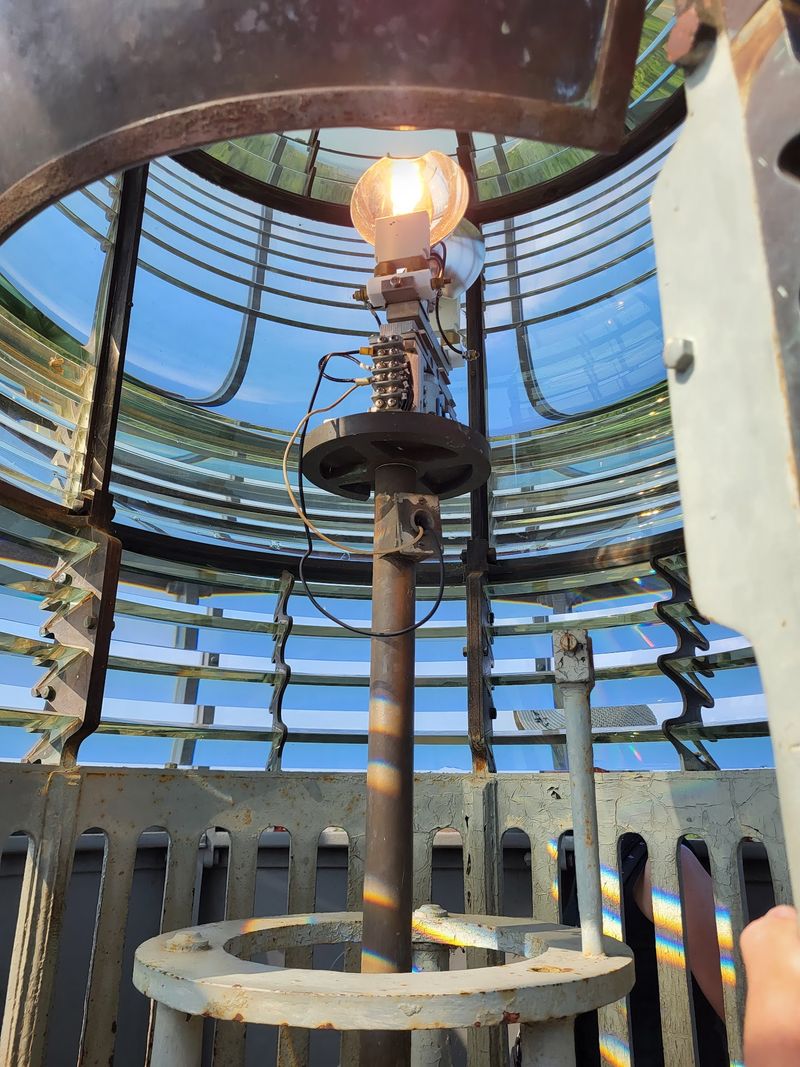
Ready for a workout with a view? Ranger-led tours take you up 95 stairs and a 9-rung ladder.
That ladder leads into the lantern room at the very top. You can’t climb alone, so a park ranger always comes along.
The National Park Service offers lighthouse climbs seasonally, with in-person sign-ups at the Sandy Hook Visitor Center. The published 2026 tour season ended October 31, so check for a new schedule before planning a climb.
It’s first-come, first-served, so early arrival helps. Groups are usually limited to eight people, and tours last about 30 minutes.
Kids need to be at least 48 inches tall to join. Measure ahead of time to avoid a disappointed little climber at the door.
Wear comfortable shoes with good grip. The winding stairs are narrow, and those last ladder rungs need steady feet.
Along the way, rangers share stories about the tower’s long life. You’ll learn plenty before you even catch your breath.
Not up for climbing? No problem at all.
The grounds and museum still offer lots to explore at ground level.
Nineteen Miles Of Glow From One Steady Lens
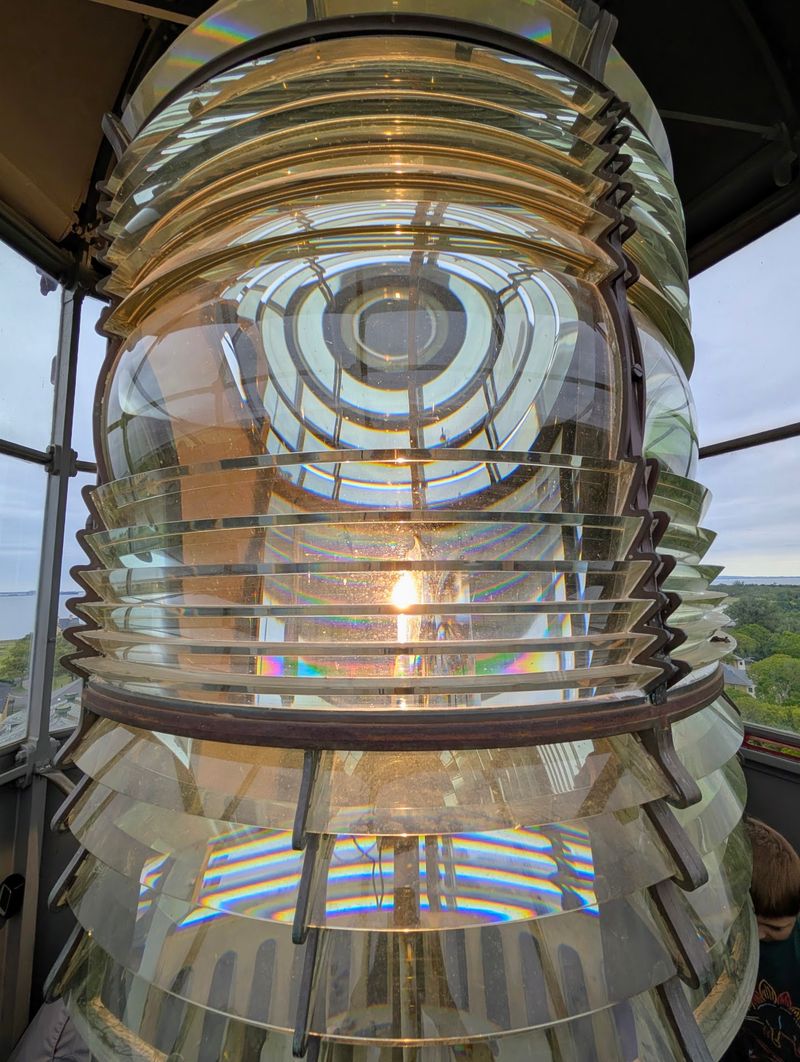
Glass prisms stacked in rings, all bending light toward the sea. That’s the third-order Fresnel lens sitting at the top.
It sends out a fixed white light, meaning it shines steadily instead of flashing. On a clear night, sailors can see it from up to 19 nautical miles away.
The light is automated and runs around the clock. The U.S.
Coast Guard maintains it, while the National Park Service owns the tower.
So two agencies team up to keep one old landmark working. Pretty good teamwork for a job that started in 1764.
The tower also has a place in lighting history. It’s reported to be among the first U.S. lighthouses to use electric lamps in the late 1800s.
The lighthouse was intentionally darkened during several conflicts, including the Civil War, the Spanish-American War, and both World Wars. Despite occasional interruptions over its long history, it remains an active navigational landmark.
Stick around after sunset if you can. Seeing that steady glow come on makes the history feel alive.
The Keeper’s Old House Now Tells The Whole Story
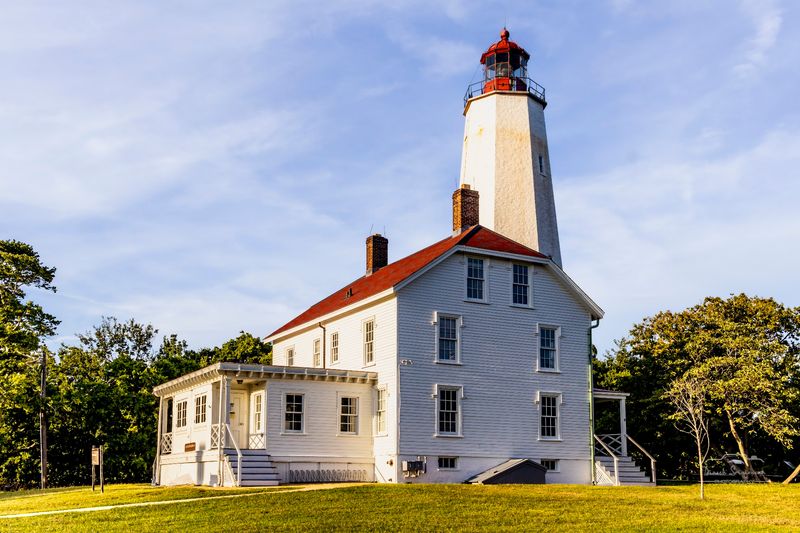
Lighthouse keepers needed a home close to their work. In 1883, a keeper’s house went up right beside the tower.
Today, that building serves as the Sandy Hook Visitor Center. It’s also where you sign up for lighthouse tours.
Inside, a museum features exhibits about lighthouses around New York City and New Jersey. It’s a great primer before or after your climb.
There’s a small gift shop too. Postcards and souvenirs make easy reminders of your trip.
I can see why so many families start here. The exhibits give you context, so the tower means more when you stand beneath it.
A short video near the base also shares the lighthouse history. It helps if tours aren’t running when you stop by.
The house itself is part of the charm. It shows how keepers lived just steps from the light they tended.
Give yourself time to browse. A quick visit easily turns into a longer one once the stories pull you in.
An Old Army Post Surrounds The Light
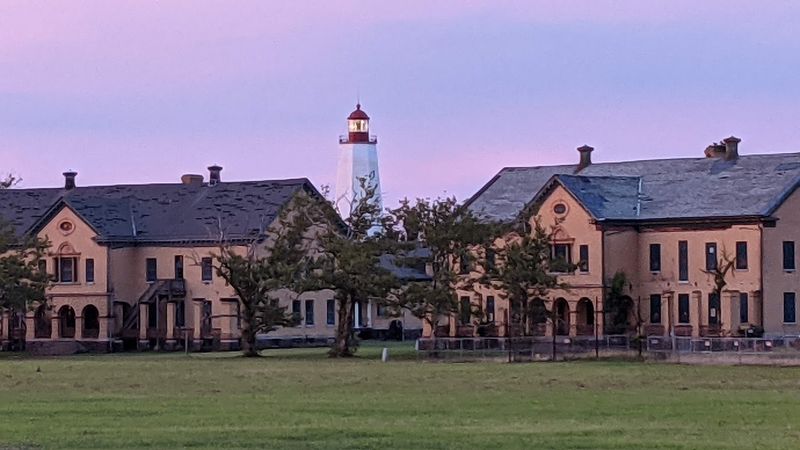
History doesn’t stop at the lighthouse door. The tower sits on the grounds of Fort Hancock, a former military post.
Historic buildings line the area, and some have been restored. Exploring them on foot adds a whole extra layer to your day.
The lighthouse is part of the Sandy Hook Unit of Gateway National Recreation Area. You’ll find it at 84 Mercer Rd, Highlands, NJ 07732.
Here’s a nice bonus for planners. Parking at Fort Hancock is free, even when beach lots charge a seasonal fee.
That makes the Sandy Hook Lighthouse an easy stop on a busy beach day. Park once and wander between the tower, the fort, and the coastline.
The lighthouse was designated a National Historic Landmark in 1964, the year it celebrated its 200th anniversary. It joined the National Register of Historic Places in 1966.
Fitting timing, right? The tower got honored on the very day it turned two centuries old.
Bring a camera and some curiosity. Every building around here has its own story waiting.
Holly Trees, Salt Marsh, And Hundreds Of Bird Species
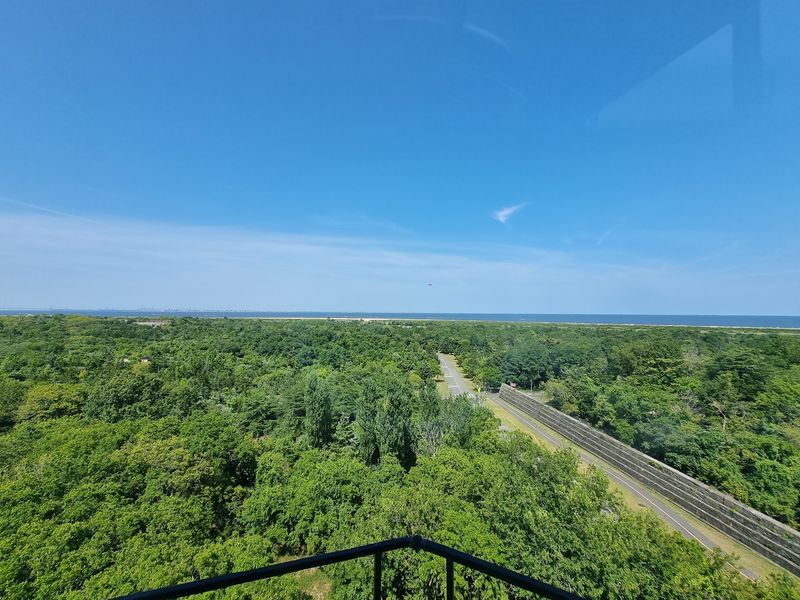
Bird lovers, grab your binoculars. More than 300 bird species have been recorded around the Sandy Hook peninsula.
That’s a lot of feathers for one strip of New Jersey land. Spring and fall can be especially exciting for spotters.
The peninsula also holds a spectacular holly forest. Those evergreen trees stand out beautifully against sandy coastal ground.
Salt marshes stretch along parts of the shore too. They’re peaceful places to slow down and watch nature at work.
Hiking trails connect many of these spaces. You can turn a lighthouse visit into a full afternoon outdoors.
Wear sturdy shoes and bring water. Sun and wind can be stronger out here than you’d expect.
A field guide or bird app makes the adventure more fun. Kids love checking off species as they spot them.
Stay on marked paths to protect the plants and wildlife. That way, the forest and marshes stay healthy for future visitors.
After all that walking, the lighthouse makes a perfect final stop. History and nature pair surprisingly well here.
Pack A Beach Bag And A Fishing Rod Too
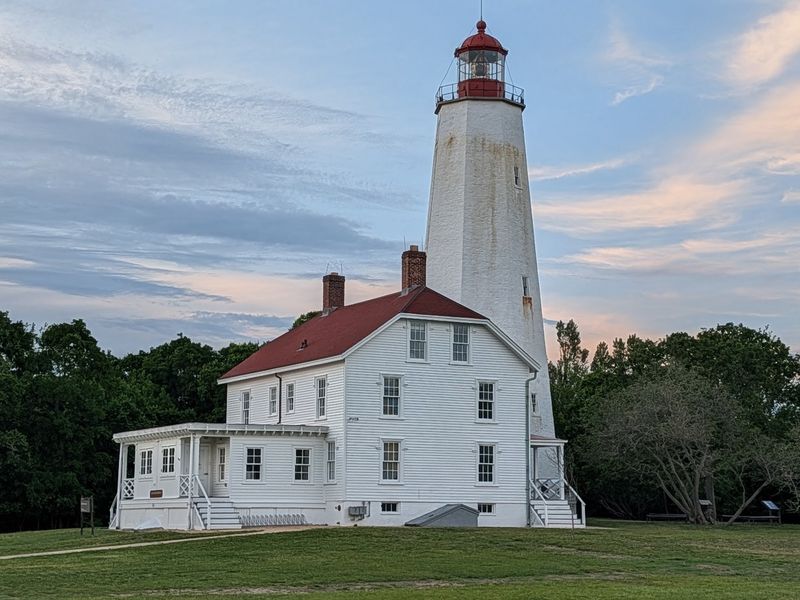
Sand between your toes and history over your shoulder. That combo is hard to beat on Sandy Hook.
Beaches line the peninsula, giving you plenty of room to stretch out after touring the lighthouse. It’s an easy way to round out the day.
Surf fishing is popular along the shore here. Anglers cast right into the waves hoping for a good catch.
Fair warning, beach parking may come with a seasonal fee. Plan ahead, especially on hot summer weekends.
Sunset is a great time to linger. The sky over the water can turn the whole peninsula golden.
Bring sunscreen, snacks, and layers for breezy evenings. Coastal weather in New Jersey can shift quickly.
Families can easily split the day in two. Spend the morning climbing the Sandy Hook Lighthouse, then relax by the waves.
I’d absolutely make a detour for that kind of day. Few beaches come with a 1764 landmark just down the road.
And when that steady light stands out against the evening sky, you’ll be looking at a tradition that began back in 1764.
