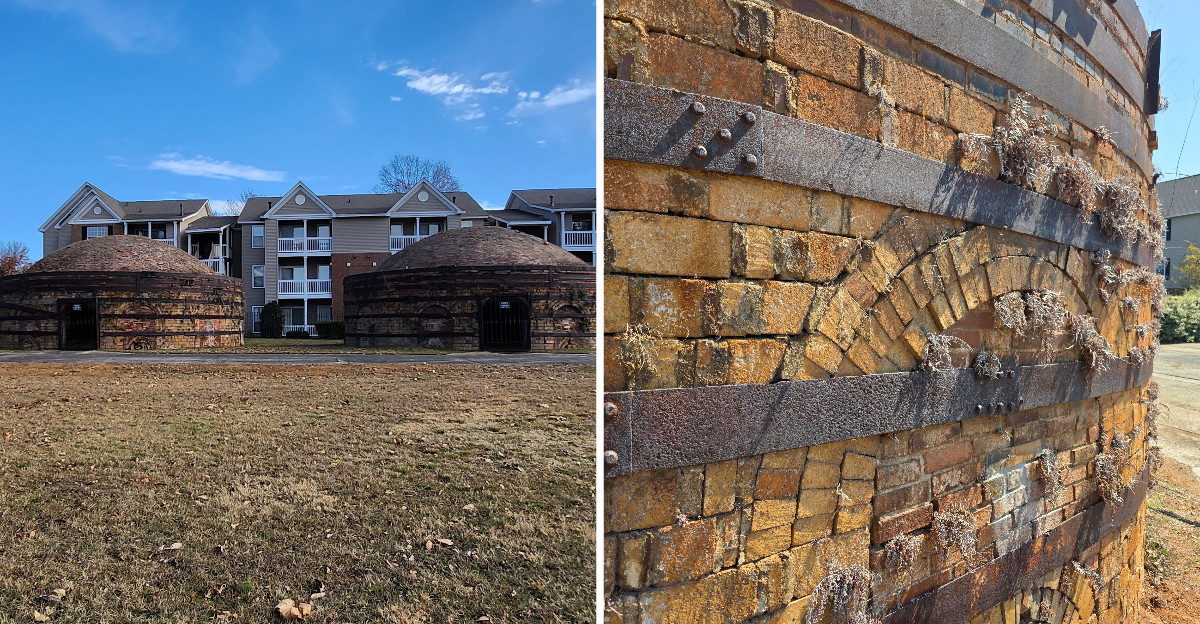
Four brick domes in South Carolina are easy to drive past without a second glance. I did not expect to spend an entire afternoon staring at them, but that is exactly what happened.
Clay was being fired on this spot as early as 1801, and by the 1890s the yard was turning out around two million bricks a year. The beehive kilns went quiet long ago, yet their arched firing tunnels are still right there, soot and all, close enough to crouch beside.
What surprised me most was how ordinary the setting looks until you understand what you are actually seeing. These domes are the only remaining structures of their kind in the state.
They sit beside a river and a greenway path where joggers pass without knowing the history under their feet. One small sign explains the process, but the silence does most of the talking.
Walking between the kilns, it is easy to imagine the heat and noise that once filled this yard. The stop is free, and it rewards anyone who slows down.
A Family Brickyard That Got Going in 1801
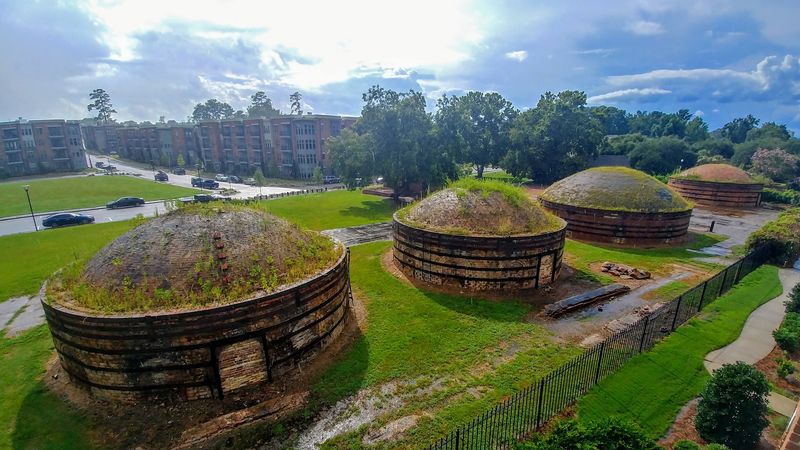
Two centuries is a long stretch for any workplace, and yet clay was already being shaped into bricks on this ground back in 1801. James Guignard began modestly, firing bricks for his own building projects rather than for paying customers.
Commercial sales did not start until around 1850, so the operation spent its first fifty years as something closer to a private workshop. I like that slow beginning.
By the 1890s the pace had changed completely, with roughly two million bricks leaving the yard every year. That leap from personal use to industrial output happened within one family’s hands, which is genuinely rare.
I kept thinking about how many generations passed through the same gates while I wandered the grounds. Descendants of the Guignard family still own the property today, and that continuity is part of why the kilns survived at all.
Plenty of old industrial sites get flattened and forgotten. Here, the story stayed attached to the land, carried by the same name for more than two hundred years.
Bring a little curiosity and the quiet lot suddenly reads like a timeline instead of a leftover. That shift in perspective is honestly the best souvenir you get.
Four Beehive Kilns Sitting in a Quiet Row
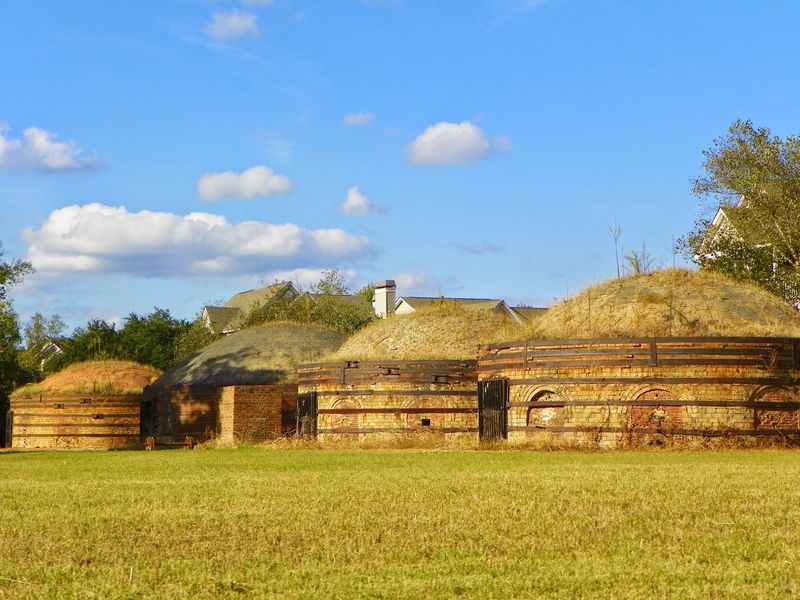
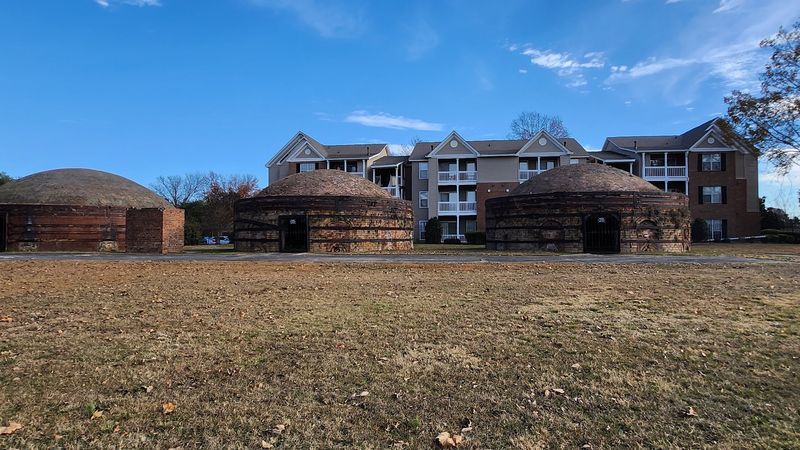
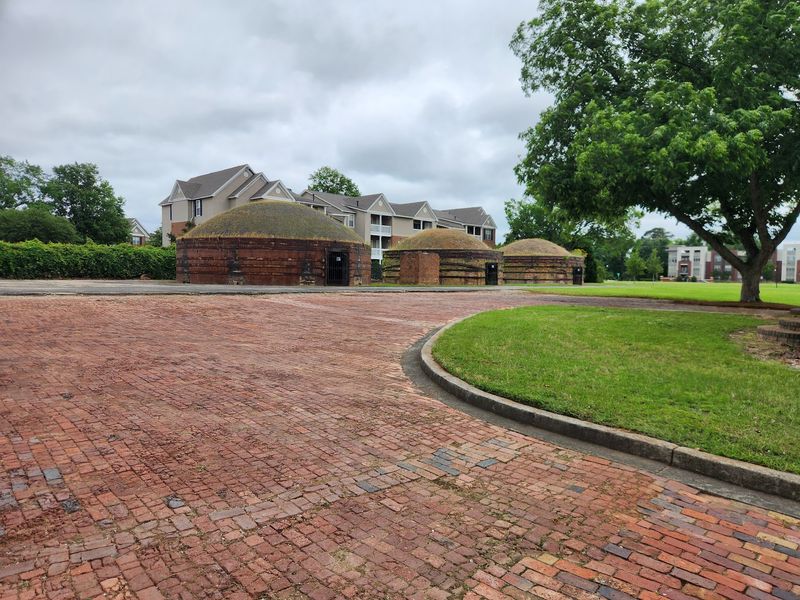
The first thing that grabbed me was the shape: squat brick domes that genuinely look like giant beehives set down in the grass.
Four of them remain, each a circular downdraft kiln standing about eighteen feet tall and stretching roughly thirty five feet across. Three were built around 1920, and the fourth was rebuilt in 1932 after fire destroyed the original.
Downdraft simply means heat was pulled down through the stacked bricks instead of escaping straight up, which made firing more even. Practical engineering, wrapped in a shape that looks almost playful.
Round kilns like these have been vanishing across the country for decades, torn down for redevelopment or left to crumble. Seeing four together, still holding their curves, feels like unusual luck.
I circled each one twice because the brickwork changes as you move. Some faces are sun bleached and pale, others darkened by decades of heat and weather.
Up close you notice small repairs, patched courses, and spots where mortar has worn into soft grooves. Run a hand along the surface and it is gritty, warm, and surprisingly solid.
Photographers will find low afternoon light especially kind to those rounded walls. Morning works too, with fewer shadows across the openings.
Arched Tunnels Where the Fires Once Roared
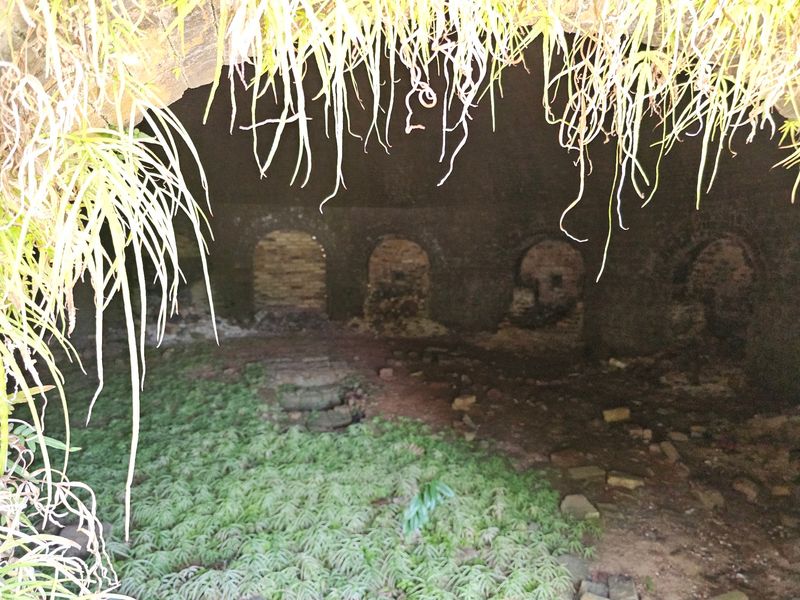
Crouching at one of the low arched openings was the moment the whole site clicked for me.
Each kiln has a series of short brick tunnels around its base, the channels where fuel burned and heat pushed inward. They are dark, cool, and narrower than you expect.
Peeking inside, I could see soot still staining the curved walls decades after the last firing. That black residue is basically a fingerprint of the work that happened here.
The tunnels are why people call the site haunting even on a bright day. Sound drops away when you lean toward them.
Stacking bricks inside and sealing the doorways was hot, heavy labor, and the tunnels made that labor possible by feeding steady fire around the load.
I would not recommend climbing into anything, since the structures are old and the footing is uneven. Looking is plenty, and honestly more interesting than crawling.
Bring a small flashlight if you want to study the interior brick patterns from outside. A phone light works in a pinch, though the beam scatters.
Kids tend to love this part, because the openings look like doors built for someone much smaller. Adults can peer in comfortably by bending at the knees.
Iron Bands That Kept the Domes From Bursting
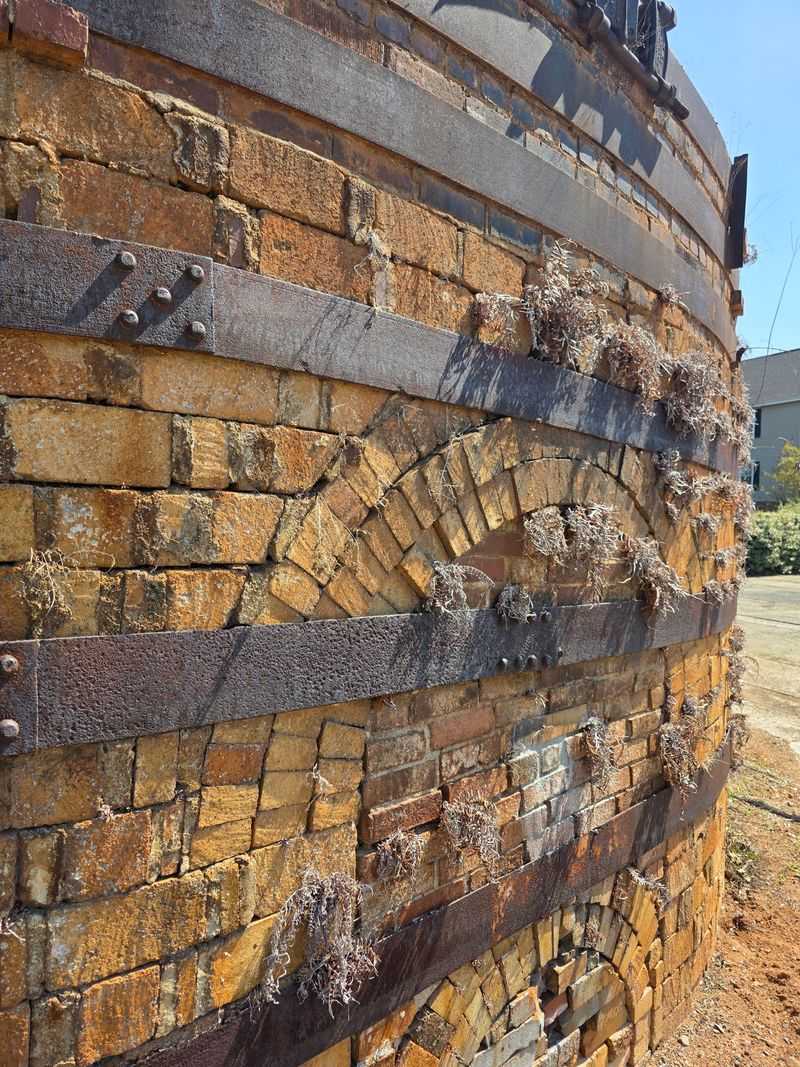
Look closely at the outside of each dome and you will spot thick iron bands wrapped around the brick like belts.
They were not decoration. Firing temperatures inside a kiln climb high enough to make brick expand and shift, and without reinforcement the structure could crack apart or even explode.
The bands held everything in tension, squeezing the dome together while the fire did its work. Simple, blunt, effective.
Rust has given the metal a deep orange tone that plays beautifully against the red and gray brick. I noticed it most on the kiln closest to the parking area.
Details like this turn a quick photo stop into a twenty minute study session. Once you understand the bands, you start reading the rest of the structure differently.
Some bands have loosened, a few bolts sit slightly proud of the surface, and certain sections show where heat stressed the brick anyway.
All of it reminds you that this was demanding, risky work carried out by people who understood fire better than most of us ever will.
I left with real respect for whoever tightened those bands by hand. Practical engineering rarely looks this photogenic, so bring a zoom lens if you have one.
Clay Pulled Straight From the Congaree River
Geography explains why the brickworks landed exactly here instead of somewhere more convenient.
The Congaree River runs close by, and its banks hold thick clay deposits that were ideal for brickmaking. Additional clay came from quarries along Congaree Creek.
Raw material, water, and transport all sat within easy reach, which is about as good as a nineteenth century industrial site could get.
I wandered toward the river afterward and the soil color makes immediate sense. Reddish, dense, and sticky after rain.
Knowing the bricks came out of the ground a few hundred yards away changes how you see the kilns. Nothing was imported, nothing was shipped in from far off.
The river also shaped the neighborhood, which today mixes greenway paths, newer housing, and pockets of woods. Traffic hums somewhere in the background.
If you have time, pair your visit with a short riverside walk so the whole picture connects. The contrast between quiet water and heavy industrial history is striking.
Mosquitoes can be enthusiastic near the water in warm months, so pack repellent. Sturdy shoes help too, since the ground near the banks stays soft.
Clay, it turns out, does not drain quickly.
Bricks That Ended Up Inside the State House
Here is the fact that made me stop scrolling and actually drive over.
Bricks fired in these kilns went into parts of the South Carolina State House interior, Columbia College, and a string of large textile mills including Capital City, Granby, Richland, and Olympia.
At two million bricks a year by the 1890s, the yard was quietly building a city.
Once you know that, Columbia looks different on the drive home. Old walls stop being background and start being evidence.
Several mill buildings around the area have been converted into apartments and offices over the years, so those bricks are still doing their job.
I like that the product outlasted the factory by such a wide margin. The kilns went cold, but the walls kept standing.
For anyone who enjoys connecting dots between places, the site makes a great starting point for a self guided brick tour of the city.
Photograph the kiln walls, then go find the buildings and compare color and texture.
It is a small game, and it makes an ordinary afternoon feel like detective work. History gets a lot more fun when you can touch it.
Try it once and you will keep noticing brickwork everywhere.
The Lone Office Building and Planning Your Visit
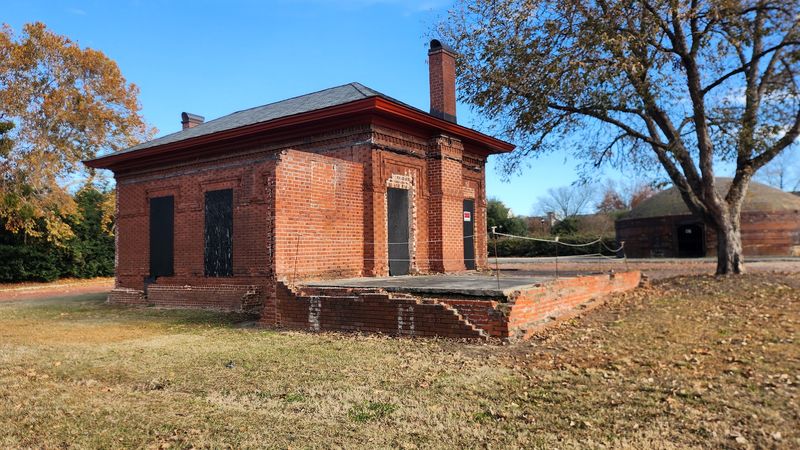
Beside the kilns sits a modest brick office, and I almost walked right past it.
The little building is part of the historic complex, a quiet counterpoint to the big domes. Paperwork happened here while fire happened out there.
Access is free and open, with the Three Rivers Greenway offering a pleasant route in on foot or by bike. Parking sits close by, though the lot is small.
Modern tunnel kilns arrived on the property by 1955 and made the beehives obsolete, while brick production continued until 1974 before shifting to Lexington. Boral Bricks bought the company in 1976.
Signage is thin, so reading a bit beforehand really pays off. I kept notes on my phone and glanced at them between photos.
Graffiti shows up here and there, and the grass gets scruffy depending on the season. Somehow that does not spoil the visit.
The place feels lived in rather than polished, which suits a two hundred year old brickyard just fine.
Thirty minutes covers it for most people, longer if old masonry makes you happy. Bring water in warm months, since shade is limited and brick holds heat.
Address: 100 Granby Crossing, Cayce, South Carolina 29033
