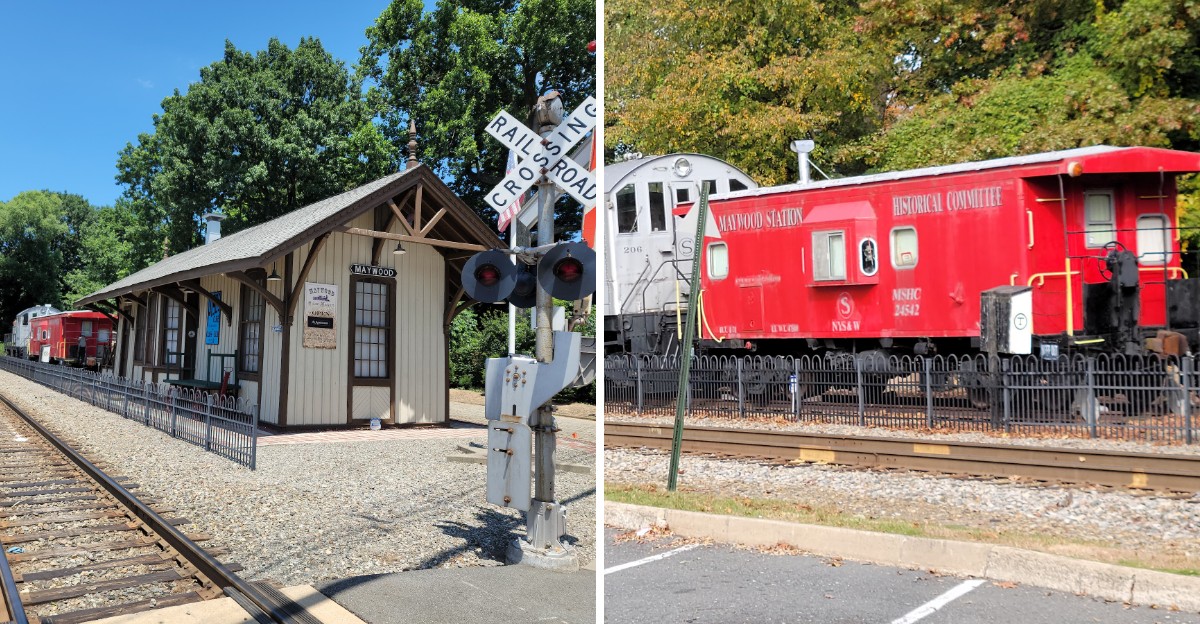
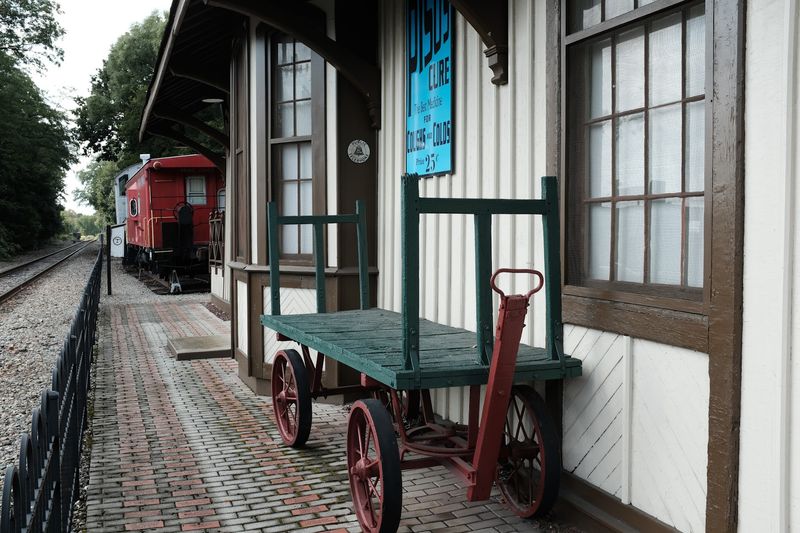
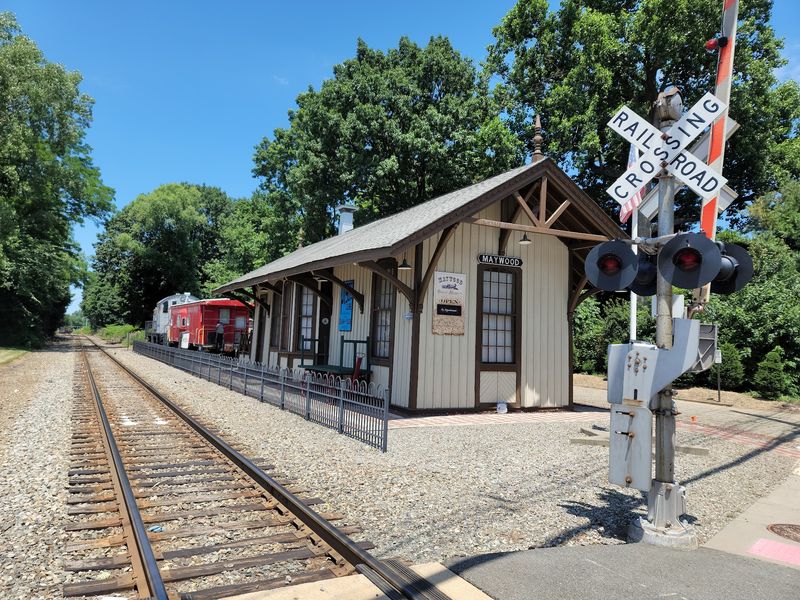
The front door of this old train depot used to be its back door. Yep, the side everyone admires today was once the rear of the building.
That’s the detail I can’t get over.
The little Carpenter Gothic station went up in 1872, making it one of the oldest railroad stations in New Jersey. Its paint colors weren’t guessed, either.
Experts tested old paint samples to match the original railroad shades inside and out.
Then there’s the yard outside. A 1942 diesel locomotive sits nearby, along with a caboose you can climb aboard.
Inside that caboose, a model train layout actually runs. Freight trains still roll past on the real tracks out front.
I’d absolutely make a detour for that kind of living history.
A Tiny Gothic Depot That Refused To Fade Away
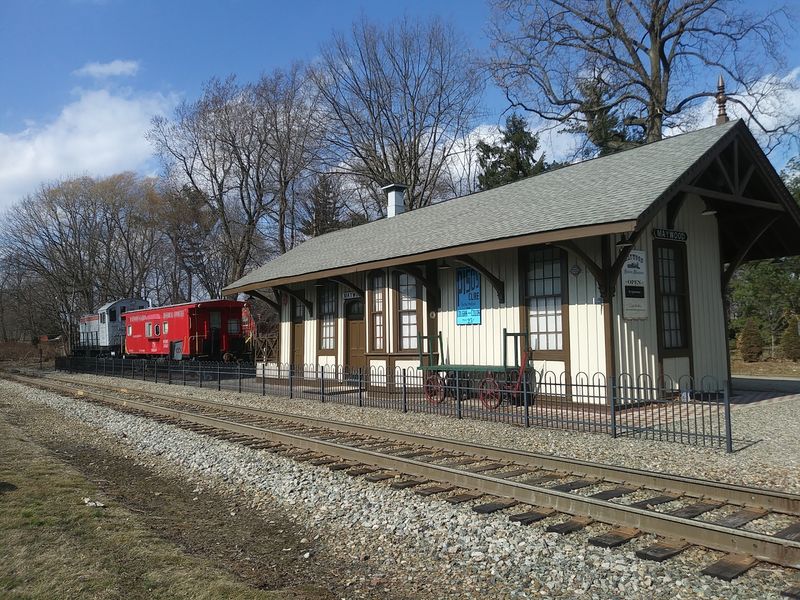
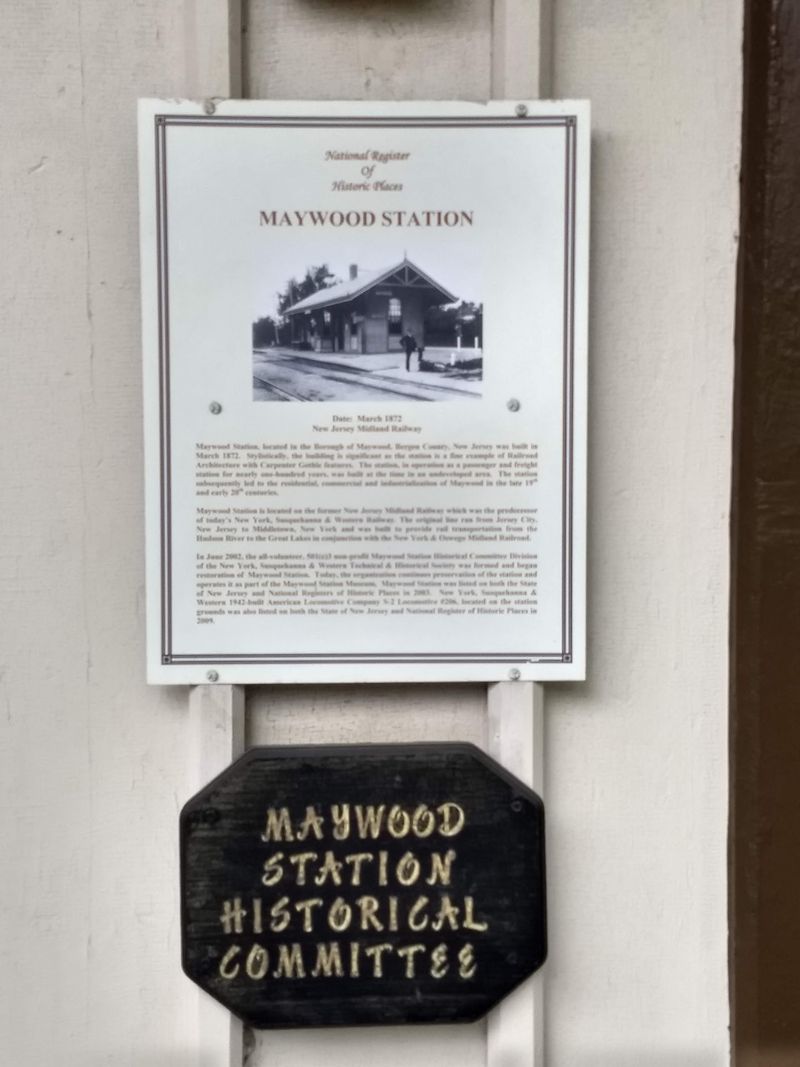
Old buildings rarely get a second chance this good. The Maywood Station Museum sits inside a depot built in 1872 by the New Jersey Midland Railway.
That railroad was an early ancestor of today’s New York, Susquehanna and Western Railroad. So the building has deep roots in local rail history.
The style is Gothic, with charming Carpenter Gothic touches. Think decorative woodwork and a look that feels straight out of a storybook.
Passenger service here ended on June 30, 1966. After that, only freight trains used the tracks out front.
For years, the station slipped into rough shape. Then local folks formed the Maywood Station Historical Committee in May 2002 to save it.
Restoration started that July and wrapped up mostly by summer 2004. The museum officially opened on September 25, 2004.
Recognition came quickly, too. The station joined the New Jersey Register of Historic Places in February 2003.
A few months later, in May 2003, it landed on the National Register of Historic Places. Not bad for a building that once looked ready to give up.
Today the all-volunteer committee runs the whole place as a nonprofit. That’s a lot of love poured into one small depot.
The Name Change And Mail Duty Nobody Expects
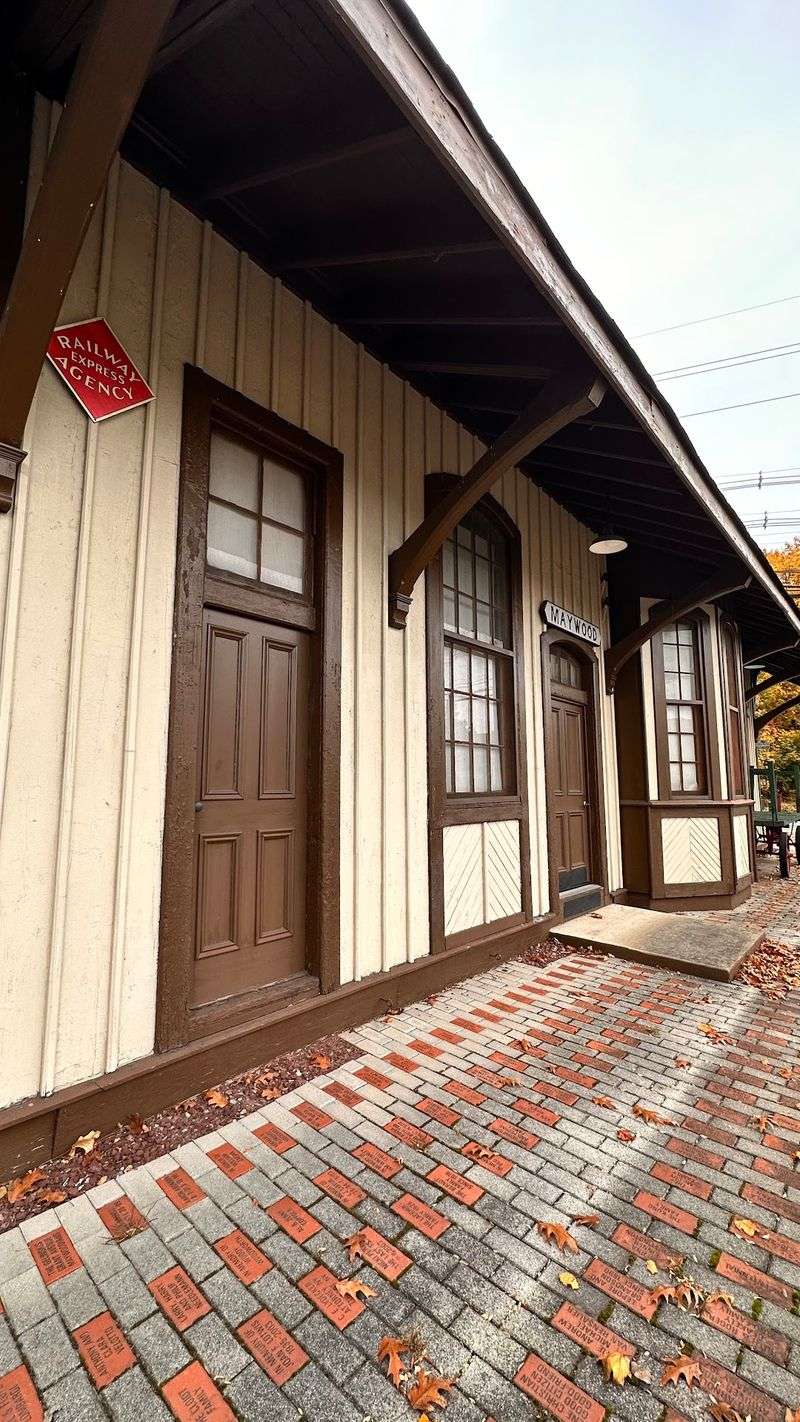
West Hackensack. That was briefly the station’s name before residents spoke up.
Locals asked for the name Maywood instead, and they got their wish. Honestly, it’s a pretty great example of a town shaping its own identity.
The building also pulled double duty for years. At various times between 1872 and 1910, it served as Maywood’s post office.
So this spot wasn’t only about catching trains. Neighbors likely stopped by for letters and packages, too.
Now for the quirkiest twist. The side visitors see as the front was originally the back of the building.
Yeah, I’m definitely looking twice at that. It’s the kind of fact that makes you study the walls more carefully.
These little stories show how a station grows with its community. Railroads helped towns like Maywood develop, and this depot sat right in the middle of it.
The museum’s main goal is sharing exactly that history. It focuses on the station, the railroad, and the growth of the Borough of Maywood.
Kids especially tend to enjoy surprises like a backward building. It turns a history lesson into a fun puzzle about how places change over time.
Those Paint Colors Came From Real Detective Work
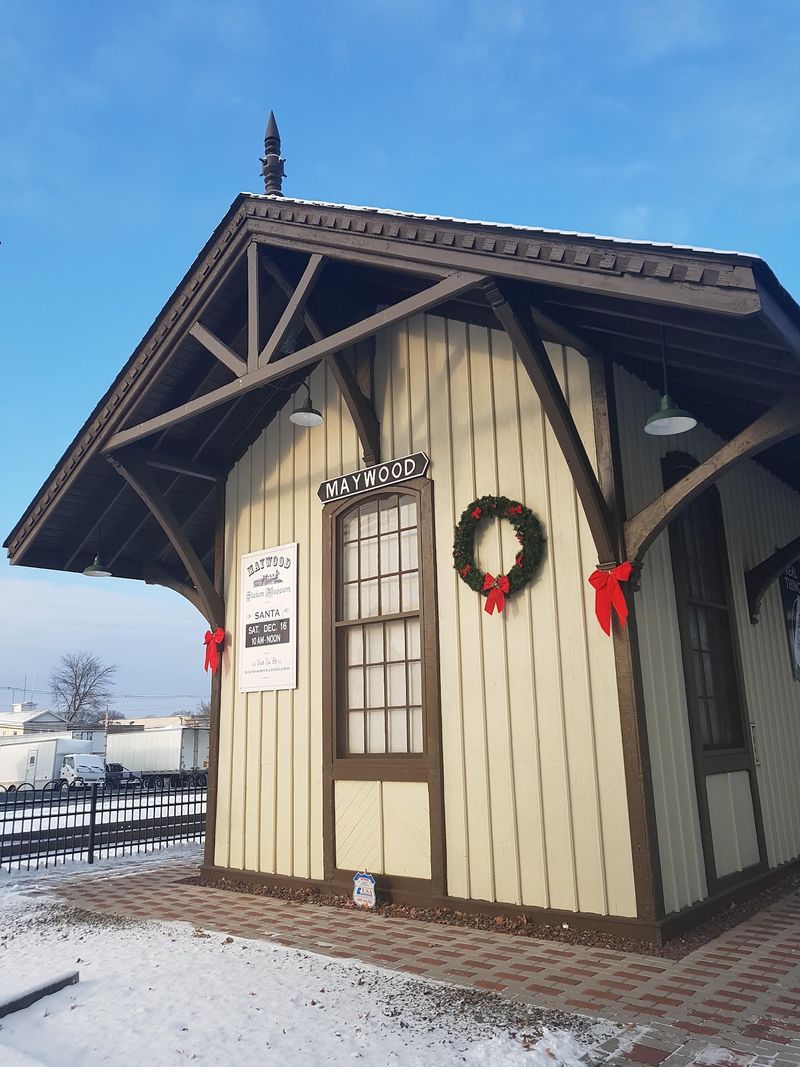
Paint usually isn’t the star of a museum visit. Here, it kind of is.
During restoration, experts ran professional analysis on old paint samples. They wanted to find the exact colors the New Jersey Midland Railroad used back in 1872.
The results now cover the building inside and out. Maywood Station Museum is the only restored station on the NYS&W line painted in those authentic original colors.
I have to admit, that’s a seriously nerdy level of care. And I mean that as a big compliment.
Inside, the original woodwork shows off the same careful approach. Some pieces are painted, while others are stained to match their 1872 look.
Look closely at trim, frames, and corners while you’re there. Small details tell you how much effort went into getting things right.
Photographers clearly notice this too. The station is a popular backdrop for weddings, engagement photos, modeling shoots, and even film productions.
Those sessions require an appointment and prior permission. Still, it says plenty that a small depot keeps attracting cameras.
Bring your own phone and snap the exterior colors in good light. You’ll be capturing a shade of history that took real science to recover.
Potbelly Stoves And Telegraph Keys Fill The Waiting Room
A potbelly stove sits inside like it’s still waiting for chilly passengers. It’s one of several original furnishings restored for the museum.
Nearby you’ll find the station agent’s desk and chairs. Those were the command center for running a busy little depot.
Telegraph keys are here, too. Before phones and texting, those tapping devices sent important railroad messages down the line.
Kids might find that wild. Imagine sending every update one click at a time.
There’s also an original freight scale. Workers used scales like that to weigh shipments before they rode the rails.
Look up and around for the lighting. Original Victorian-era fixtures and sconces still brighten the ceilings and walls.
Some items were rebuilt with impressive precision. The station benches and bay window area were reproduced to match their exact original specifications.
That bay window mattered a lot back then. It gave the station agent a clear view up and down the tracks.
Take a moment to stand in the room and look around slowly. The mix of originals and careful copies makes the space feel like a working station frozen in time.
Hundreds Of Photos And Maps Tell The Railroad Story
Photographs line this museum by the hundreds. Add in maps, documents, displays, and artifacts, and you’ve got a serious stack of history.
The collection covers Maywood Station and the New York, Susquehanna and Western Railroad. It also explores other local railroads and how the surrounding area grew.
What gets me is how much fits into such a small building. Every wall seems to have something worth reading.
Exhibits also change from time to time. That means a return trip could show you something brand new.
Behind the scenes, there’s even more. The museum serves as the official archive for the New York, Susquehanna and Western Technical and Historical Society.
That archive holds thousands of drawings, maps, track diagrams, photos, timetables, and records. Rail historians would call that a treasure chest.
For students, this is a great chance to connect trains with real local change. Railroads helped shape where people lived, worked, and shopped across New Jersey.
A smart tip is to bring a few questions with you. Ask about your own town or a nearby rail line, and see what history pops up.
It’s a quiet way to learn, but a surprisingly fascinating one.
You Can’t Miss The 1942 Diesel Out Back
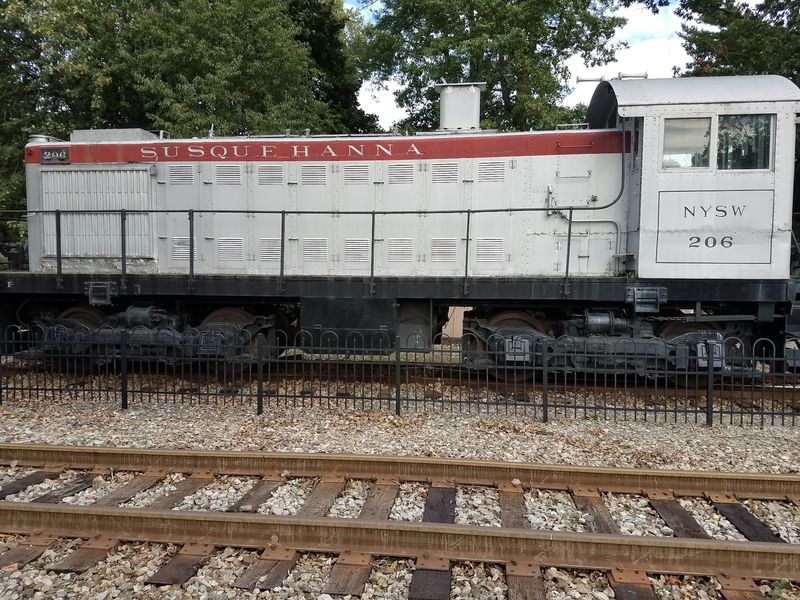
Locomotive #206 has had a long, hardworking life. The 1942 ALCO S-2 diesel served the NYS&W from 1942 until it retired in 1986.
That’s more than four decades on the job. Few machines can claim that kind of work record.
The museum acquired it in 2008 and gave it a cosmetic restoration. Later, it received fresh paint reflecting its 1960s and 1970s look.
So the engine looks like it just rolled out of an earlier era. Pretty sharp for an old-timer.
It holds some impressive honors, too. #206 is listed on the New Jersey Register of Historic Places and the National Register of Historic Places.
Yes, a locomotive made the national register. Okay, that’s impressive.
Switchers like this one usually handled shorter moves, shuffling cars around rail yards. They weren’t flashy long-distance stars, but railroads depended on them every day.
Walk around the whole engine to catch its details. The cab, the body shape, and the paint scheme all tell a story.
Little ones who love trains will probably want plenty of photos here. Plan some extra time, because leaving this engine behind can take serious convincing.
Climb Aboard A Caboose With A Model Railroad Inside
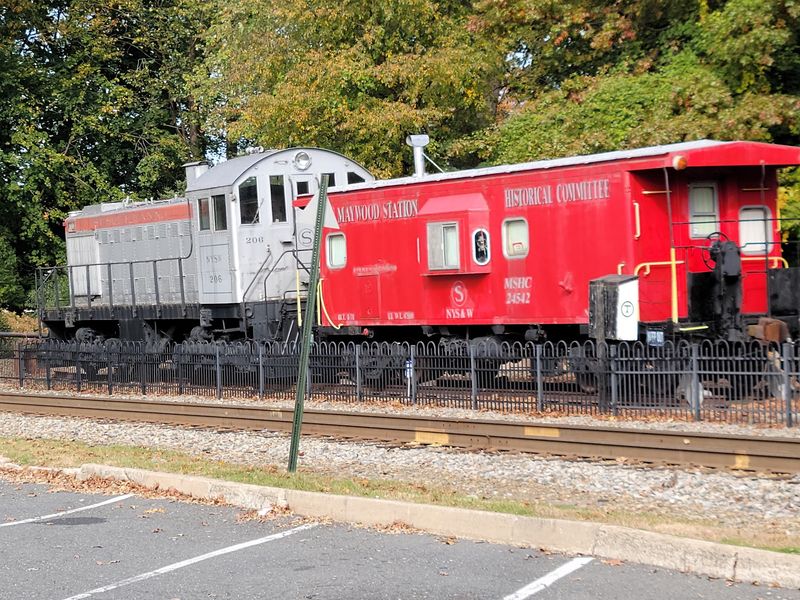
Cabooses once rode at the very end of freight trains. This one now rides nowhere, and honestly, that’s fine.
Caboose #24542 is a former Penn Central and Conrail N-12 class car. It was built in 1971 and retired in 2005.
The best part? You’re invited to climb aboard during open times.
Inside, you’ll find more displays about railroad life. There’s also an operating model train layout that runs right inside the car.
I’m not sure what’s more fun, the tiny train or the real caboose around it. Kids will probably vote for both.
The caboose got a fresh patriotic paint job, too. It was repainted to celebrate the 250th anniversary of the United States.
That makes it one of the most colorful pieces on the grounds. It’s a great photo stop for families.
Crews once used cabooses as rolling offices and lookout spots. Standing inside helps you imagine how they kept watch over long trains.
Just remember that interior access depends on when the museum is open. Plan around an open house or an appointment if boarding is your main goal.
Plan Ahead Because Open Days Are Worth Catching
Free admission is a pretty great deal for this much train history. Donations are welcome and help with preservation and upkeep.
You’ll find Maywood Station Museum at 269 Maywood Ave, Maywood, NJ 07607. It sits right in the heart of the borough, beside active freight tracks.
Inside hours work differently than many museums. The station opens to the public periodically during the year.
Open houses are your best bet for a casual visit. One is scheduled for Saturday, November 14, from noon to 3 p.m.
Groups can also book visits by appointment. Class trips, scouts, senior groups, and clubs all qualify.
Teachers, this could make a memorable field trip. Students get history, trains, and local stories all in one stop.
Volunteers run everything here, so a little patience goes a long way. Checking the schedule before you go will save you from surprises.
The station, engine, and caboose make a terrific trio for any train lover. Add the model layout and changing exhibits, and you’ve got plenty to enjoy.
For a small New Jersey stop, it delivers big railroad charm. I can see why folks keep coming back.
