Barely four inches tall, carved from wood, and carried by an eight-year-old girl who tucked it into her dress while her family pushed west in 1846. One of the harshest winters in American history swallowed most of their belongings in the Sierra Nevada snow, yet the tiny doll stayed hidden and safe.
Years later, it found a home in a whitewashed adobe outpost in California, the same place that helped rescue her family. I went looking for that story among smoky workshops, thick walls, and shady lawns sitting right in the middle of a modern city.
What I found was a place where one small toy opens the door to a much bigger chapter of history. The doll still sits on display, its painted face worn but intact, a quiet witness to a journey that killed many of the people who made it.
Standing there, the distance between 1846 and today felt very short.
Patty Reed and Her Pocket-Sized Secret
Picture a doll small enough to fit in your palm, with a carved wooden body and a painted face. I kept that image in my head the whole drive to Sacramento.
Her owner, Martha Reed, went by Patty and was born in 1838.
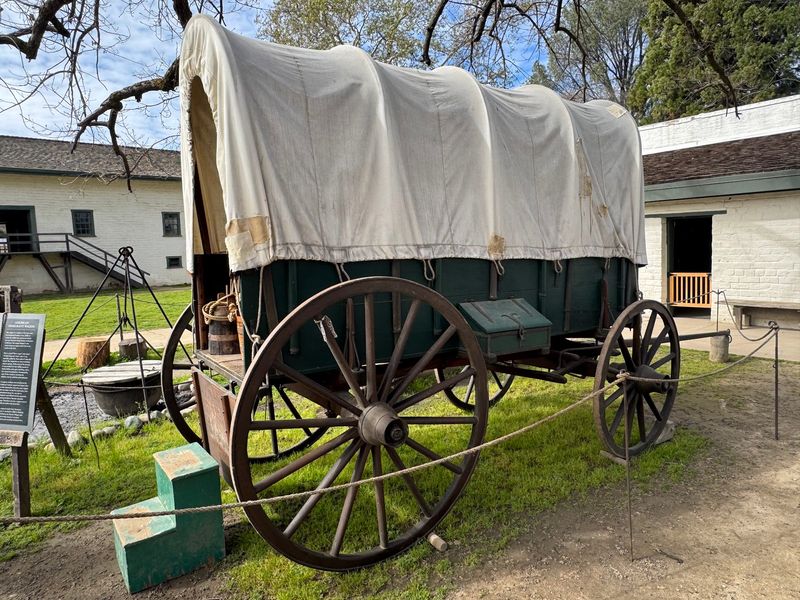
In 1846, her family left Illinois in wagons bound for California. The trip was long and rough, even for grown adults.
As the group got trapped by heavy snow in the Sierra Nevada, people had to leave things behind to survive.
Patty did not want to lose her little friend. So she quietly tucked the doll into the folds of her dress, where nobody would think to look.
That tiny act of love kept the toy safe through months of cold and hunger.
I find it easy to relate to her choice. Most of us have held onto a stuffed animal, a blanket, or some small keepsake when life felt scary.
For Patty, the doll was a piece of normal childhood in a world that had turned upside down.
Fun fact for curious readers: the Reed family was one of only two Donner Party families who lost no members at all. Patty and her doll both made it to California.
A Rescue Hub Built of Adobe
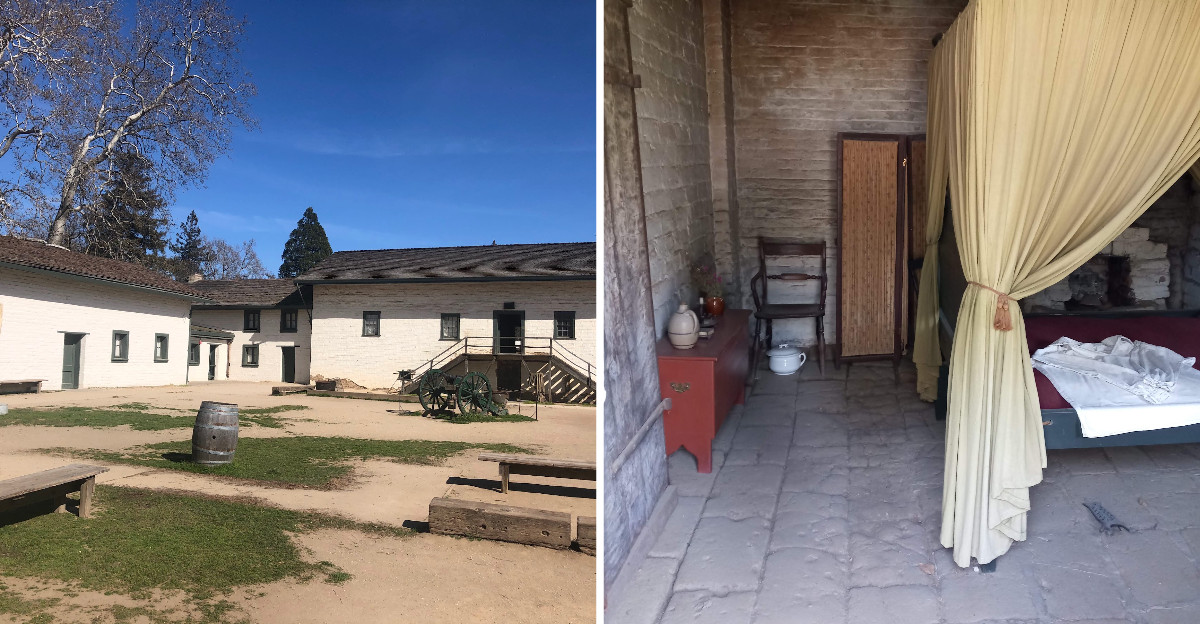
My first look at the fort’s bright white walls surprised me, because modern Midtown traffic rolls right past them. Back in the 1840s, though, this spot stood alone on the frontier.
John Sutter began building it in 1840, and it quickly became a meeting point for trappers, settlers, and travelers.
During the winter of 1846 and 1847, the fort took on a far more serious job. News of the trapped Donner Party arrived when Charles Stanton and William McCutchen came asking for supplies.
Later, James Reed, Patty’s father, reached the fort after being forced out of the wagon group earlier on the trail.
He didn’t rest for long. Reed helped organize rescue efforts to reach his wife, his children, and the other stranded families.
Supplies and support from the fort played a big part in those relief trips into the mountains.
When I traced the outer wall on foot, I tried to imagine exhausted survivors finally spotting it on the horizon. After weeks of snow and fear, those walls meant food, warmth, and safety.
Knowing that backstory changed how the whole place felt to me. It stopped being just an old building and became a lifeline.
Workshops Full of Frontier Sounds
A metal clang echoed across the courtyard before I even found the blacksmith shop. Following the sound turned out to be a fun way to start exploring.
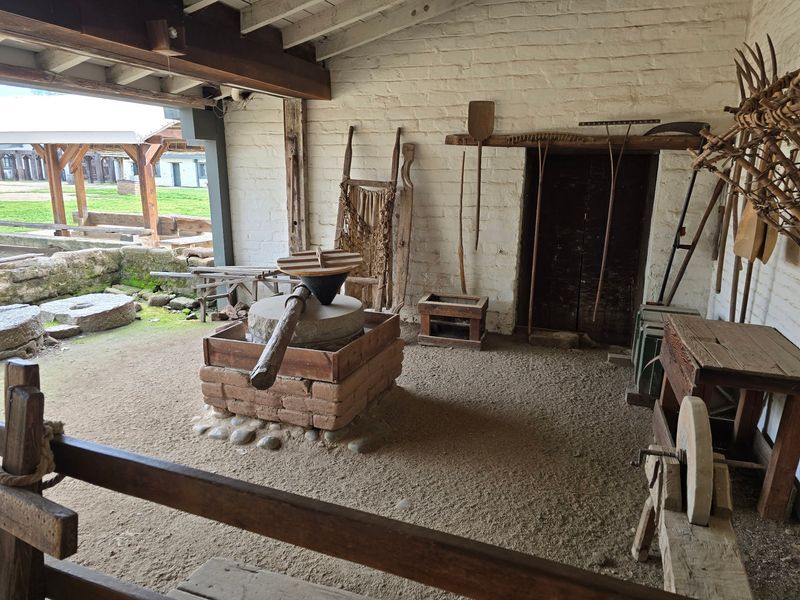
Inside, tools hung on the walls and the forge looked ready for work.
The fort was once a busy little town with its own trades. You can peek into rooms set up as a cooperage, where barrels were made, and a carpentry shop full of saws and planes.
Every space shows how people built and fixed what they needed by hand.
Here’s a helpful tip for your visit. Most rooms are viewed from the doorway, with the lower half of the door closed, so take your time and let your eyes wander over the details.
Small things like candle molds, baskets, and wooden bowls tell their own stories.
On some days, rangers or costumed docents show off skills like blacksmithing. Watching sparks fly made the 1840s feel a lot less distant to me.
For kids who remember Patty’s story, these rooms show what daily life might have looked like after the rescue. It was busy, hands-on, and full of work, a big change from the frozen camps in the mountains.
Healing Inside the Courtyard Walls
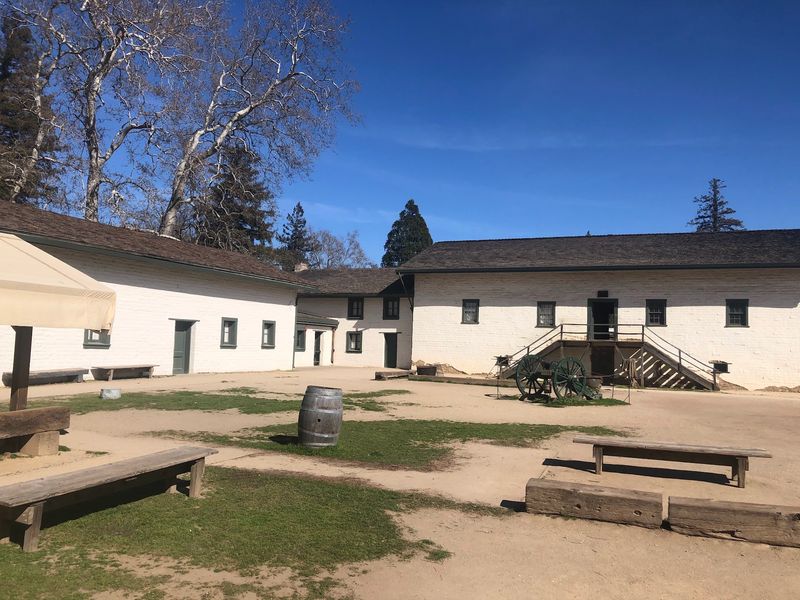
Quiet moments hit differently here. I sat on a bench in the courtyard and just listened to the breeze for a while.
It gave me time to think about what arriving here really meant for the Donner Party survivors.
Many of them came in weak, thin, and deeply sad. Some had lost parents, brothers, sisters, or friends in the mountains.
The fort offered a place to rest, eat, and slowly start healing.
For the Reeds, it was also a place of reunion. After months apart, the family was finally together again, and Patty still had her doll close by.
I love that small detail, because it shows that some pieces of childhood can survive even the worst times.
The big building in the middle is worth a close look. Much of the fort was rebuilt in the 1890s, but the central building is original, so those walls truly saw the 1840s.
If you visit with younger travelers, this is a great spot to pause and talk. Ask them what they would carry if they had to leave almost everything behind.
Their answers might surprise you, and it makes Patty’s choice feel very real and personal.
Why Dolly Is Taking a Long Nap
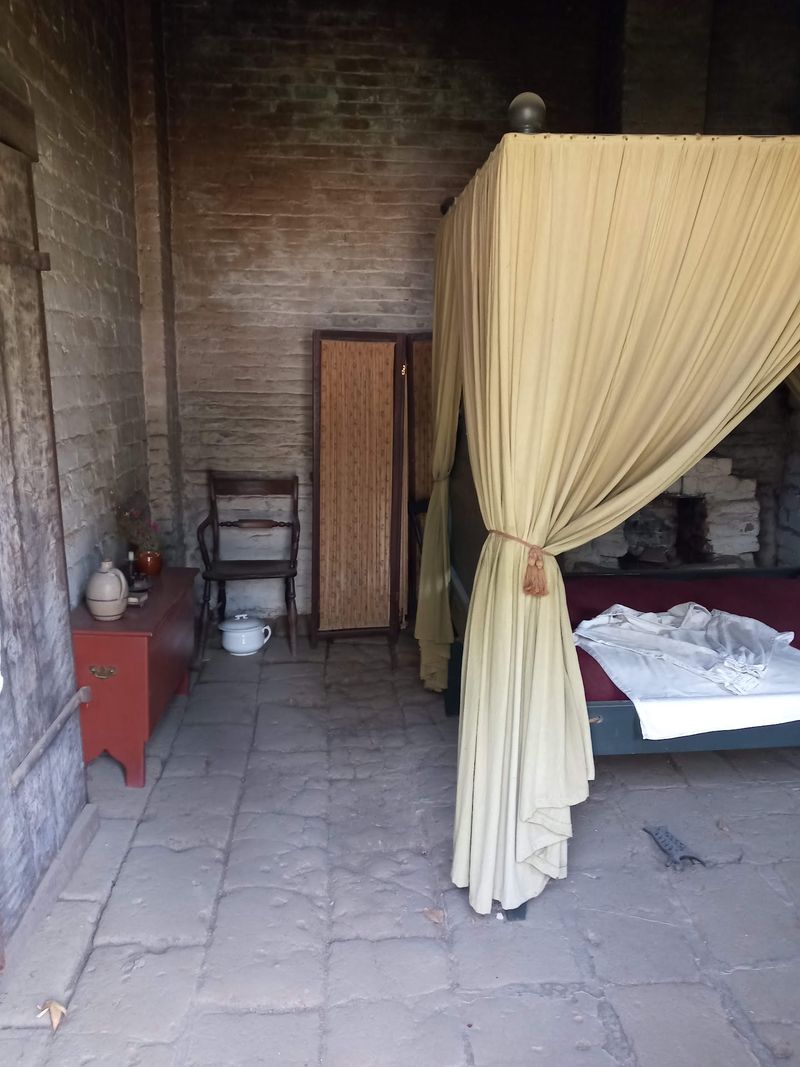
Honestly, I was a little bummed when I learned I wouldn’t see the doll in person. Then I found out why, and I understood completely.
Keeping a tiny wooden toy alive for over 170 years takes real care.
For many years, Patty’s doll was one of the most famous items on display at Sutter’s Fort. Visitors of all ages crowded close to see the little figure that survived the Donner Party journey.
Over time, though, light and handling took their toll.
Her painted face began to fade, and her wooden limbs started to split. The fabric of her dress also grew weak and fragile.
In 2020, the doll was removed from public display for conservation work and a long rest.
Experts now suggest a pattern of short exhibits followed by long breaks. Think of it like a nap that helps her last for future kids to enjoy.
My practical advice is simple. Check with the park before you go if seeing a specific artifact matters to you, since displays can change.
Even without the doll on view, the fort holds a large collection of Donner Party materials, and her story is still everywhere you look.
Cannons, Towers, and a Tiny Jail
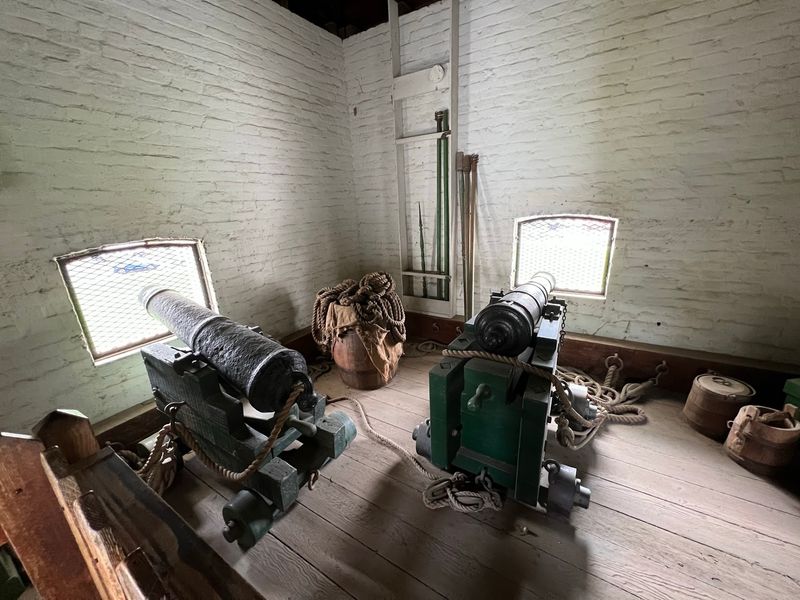
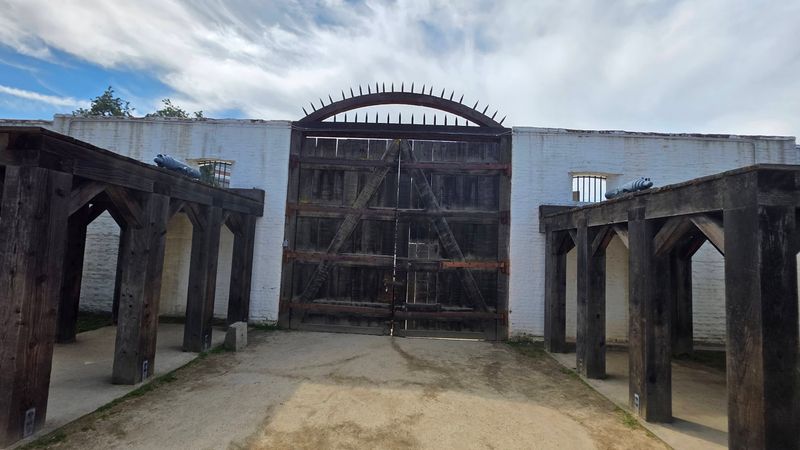
Climbing into a fort tower made me feel about ten years old again, in the best way. There are two of them on opposite corners.
Each one holds cannons placed to guard the walls and the people inside.
The views through the openings give you a sense of how open the land once was. Today you’ll spot city streets and trees, but back then it was wide valley country.
I stood there longer than planned, trying to picture wagons rolling in from the east.
Another room you can actually step inside is the jail. It’s small, plain, and a bit spooky, which kids usually love.
Most other rooms are seen from the doorway, so these spaces make a nice change.
Start your visit with the short informational video near the entrance. It sets the scene well and adds balance to the history, including the difficult parts about how Native people were treated at the fort.
A self-guided loop can take around thirty minutes, though history fans will want more time. Summer days can get hot with little shade, so bring water and a hat.
The fort is open daily from 10 a.m. to 5 p.m.
Ducks, Turtles, and a Shady Stroll Outside
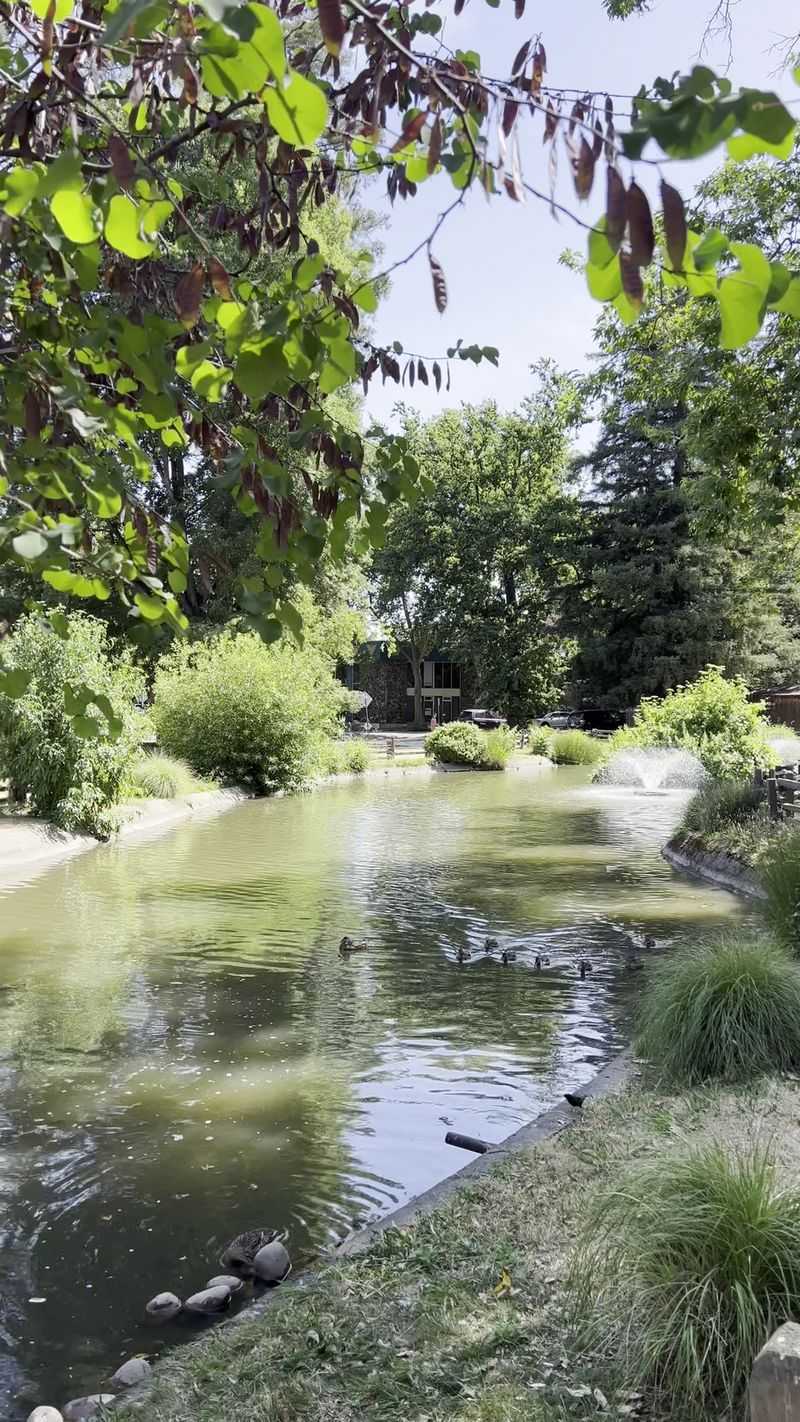
After all that history, my brain wanted a break, so I wandered the park that wraps around the fort. It turned out to be one of my favorite parts of the day.
Ducks paddled across the pond while turtles sunned themselves on the edges.
A little bridge crosses the water, and there’s a huge evergreen tree that seems older than the neighborhood. Locals walk dogs here, and families let kids burn off some energy.
It feels like a green pocket tucked into the heart of Sacramento.
The city itself grew up around this very fort. Walking the outer path, you can see modern buildings rising just beyond the old walls, and that contrast really shows how much has changed since Patty’s time.
Right next door sits the State Indian Museum, which pairs perfectly with your fort visit. It shares the stories of California’s Native peoples, whose labor and land were central to the fort’s history.
Parking is on nearby streets, and weekend visits can feel extra relaxed. Grab a snack at a spot across the street, then find a bench by the water.
It’s the right place to think about a brave girl and her doll.
Address: 2701 L Street, Sacramento, CA
