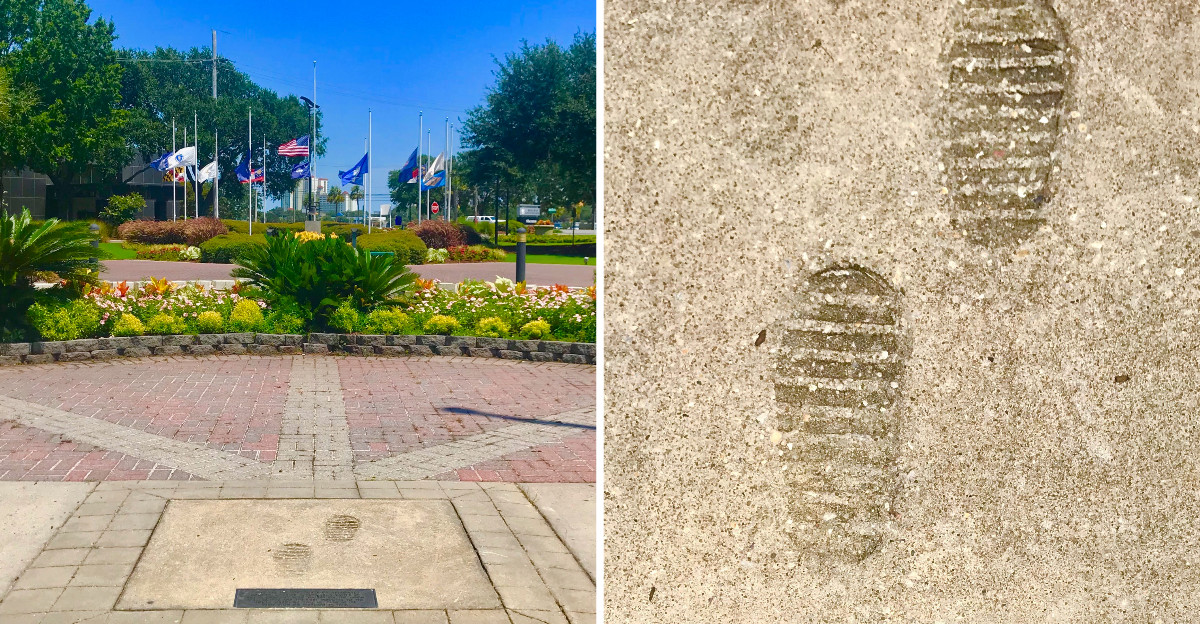
Concrete boot prints pressed into the ground near a convention center are not what anyone expects to find on a beach vacation. A South Carolina beach trip was the plan, but sand and mini golf got pushed aside when I learned what those prints actually were.
They belong to a man who walked on the moon. A lunar module pilot left them in 1973, less than a year after his moonwalk.
The prints sit quietly in a small stand of trees, with no flashing signs or ticket booth, just a plaque and a bit of shade. Thousands of people stroll past every year without a clue.
I stood there with my jaw hanging open, staring at the ground while the ocean breeze moved through the trees. Once you know the story, this little patch of cement becomes one of the coolest stops on the coast.
It is the kind of discovery that makes a familiar vacation spot feel brand new.
A Moonwalker With South Carolina Roots
My first surprise was learning that Charlie Duke grew up just a few hours from the beach. He was born in Charlotte, North Carolina, but his family moved to South Carolina when he was around 10 or 11.
He went to high school in Lancaster, a small town that probably never guessed one of its students would someday bounce across the lunar surface. That hometown pride shows up right on the plaque here, which calls him a native of South Carolina.
Honestly, after reading his story, I think the state has earned the right to claim him.
Duke served as the lunar module pilot for Apollo 16. On April 20, 1972, he stepped onto the moon at just 36 years old, making him the youngest person ever to walk there.
More than fifty years later, nobody has broken that record.
He was also the 10th of only 12 people who have ever walked on the moon. Think about that for a second.
Out of billions of humans, a dozen have left footprints up there, and one of them left a matching pair here in Myrtle Beach.
Knowing this before you visit changes everything. The prints stop being a random curiosity and start feeling like a handshake from a local kid who went very, very far from home.
Finding the Prints Takes a Little Detective Work
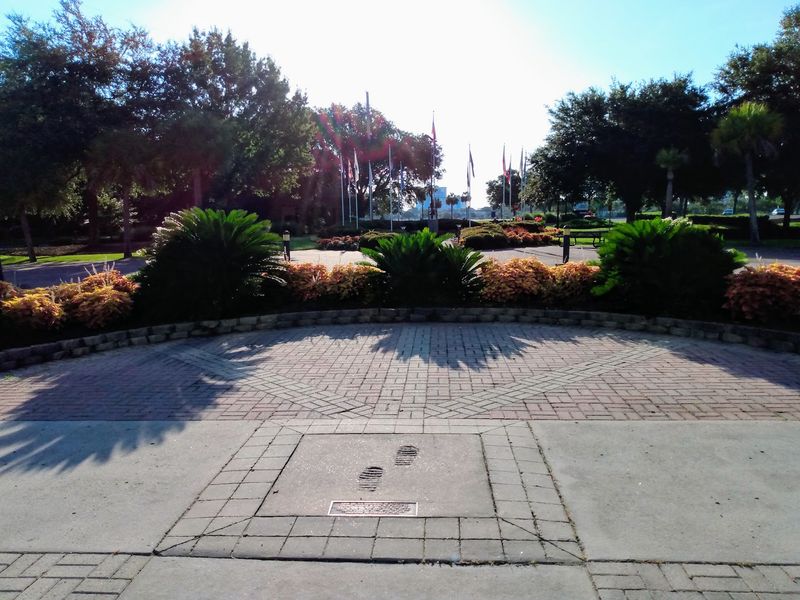
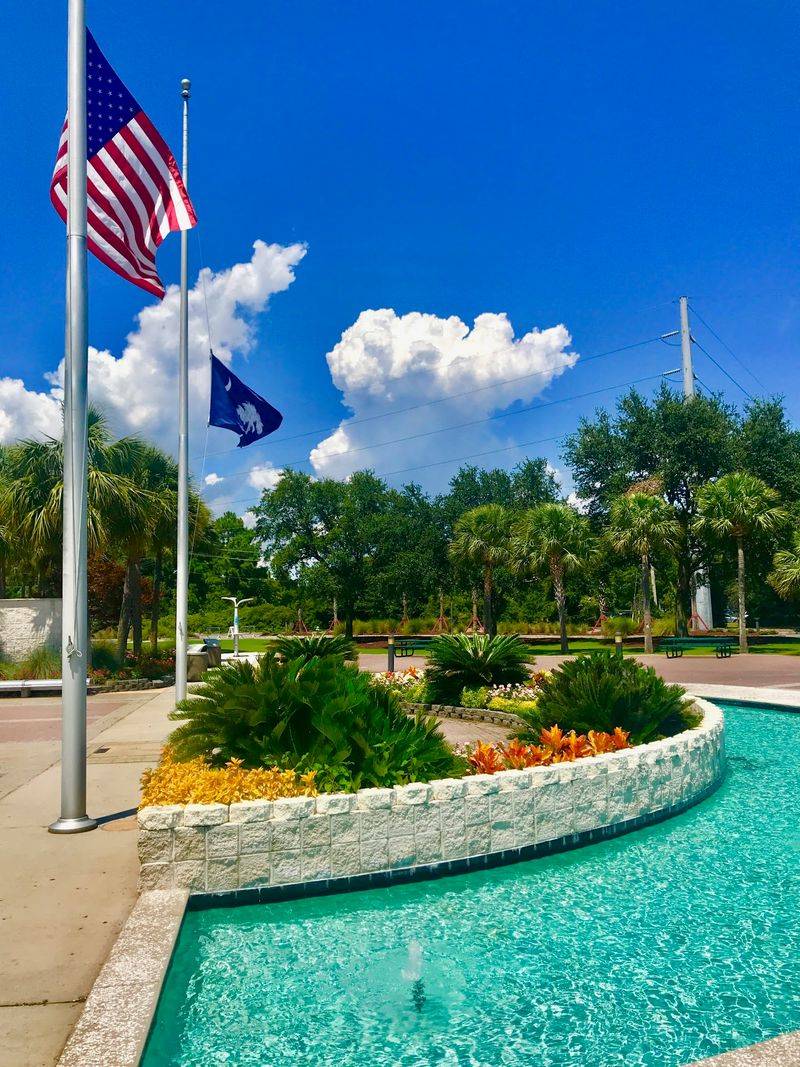
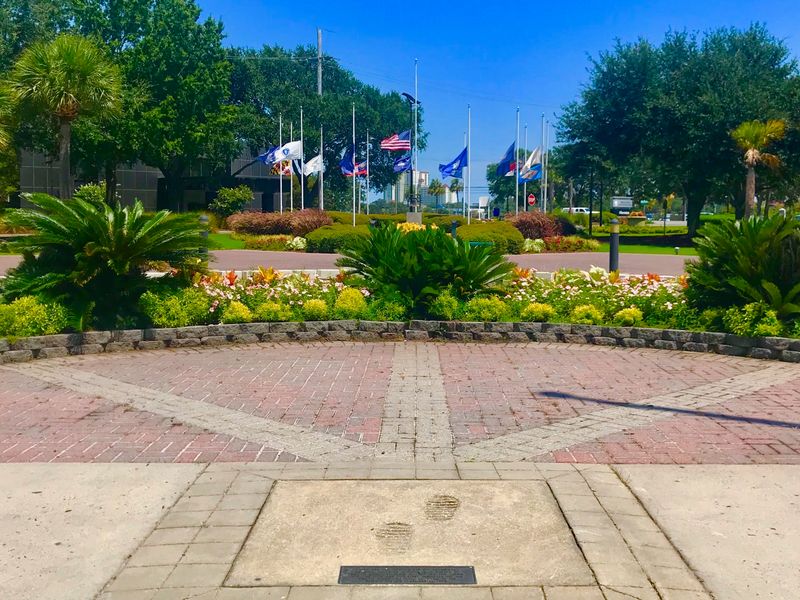
I circled the Myrtle Beach Convention Center twice before I spotted them, and I was not even embarrassed. There is nothing raised or tall to catch your eye, just flat concrete resting in a little stand of trees.
That quiet setting is exactly why this spot feels so unexpected. Myrtle Beach is famous for loud, bright attractions, so a piece of space history hiding in the shade seems almost sneaky.
It rewards people who slow down.
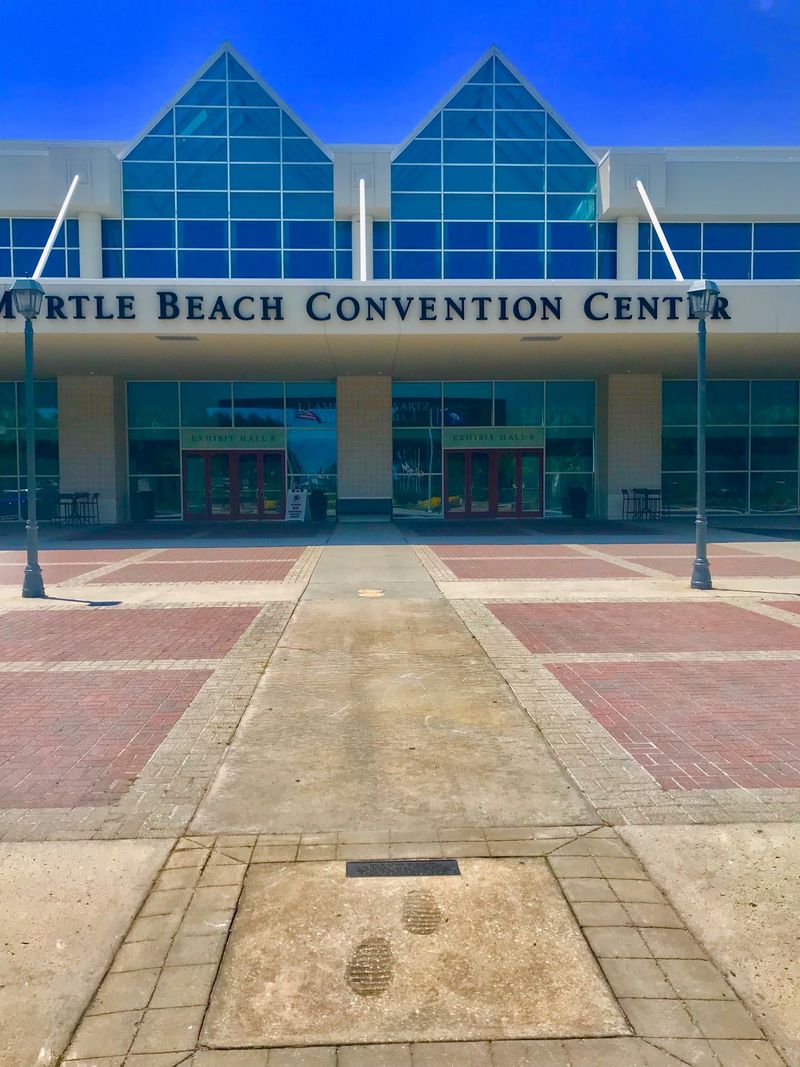
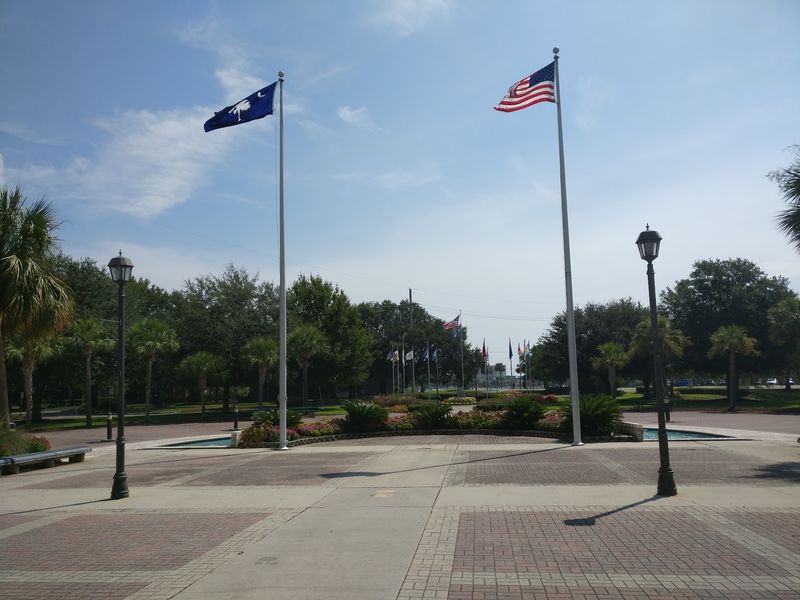
The prints sit near the front of the South Carolina Hall of Fame, which is located on the convention center grounds. Head toward that area, then scan the ground carefully.
Look for a small plaque beneath two wide, ribbed boot shapes.
A few tips helped me out:
Check online photos of the spot before you go so you know what the setting looks like. Visit in daylight, because the prints are flat and easy to miss in low light.
Also, the convention center has seen construction work, so the area may sometimes be blocked off. Calling ahead or checking recent updates can save you a wasted trip.
Once you find them, you get a funny little thrill, like winning a scavenger hunt nobody else knew was happening. That feeling alone makes the search worth it.
Reading the Plaque Word for Word
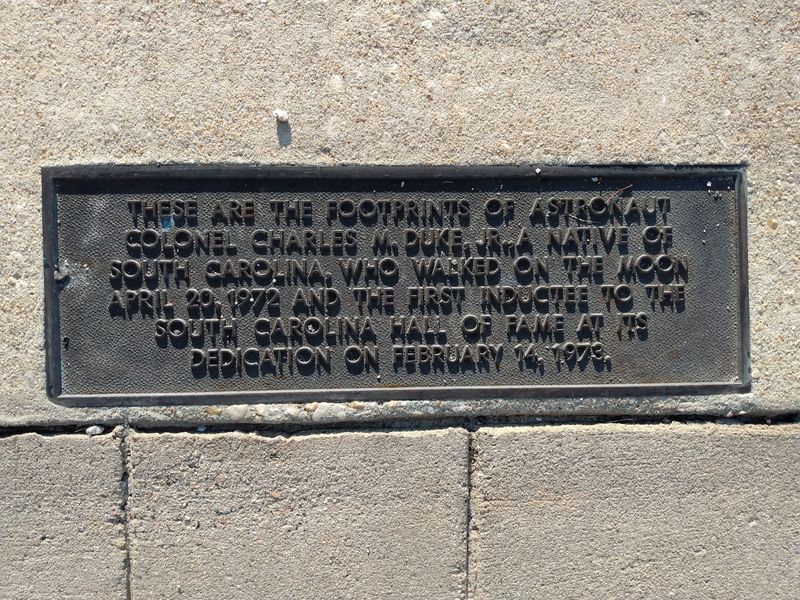
Crouching down to read the plaque felt a bit like reading a letter someone left for strangers. The words are simple and proud, and they tell the whole story in just a few lines.
The inscription reads: These are the footprints of Astronaut Colonel Charles M. Duke, Jr., a native of South Carolina, who walked on the moon April 20, 1972, and the first inductee to the South Carolina Hall of Fame at its dedication on February 14, 1973.
Notice that last date. Duke pressed his boots into the fresh cement on Valentine’s Day, which I find oddly sweet.
It was less than a year after he came home from space, so the moment was still fresh for everyone.
He was also the very first person ever inducted into the South Carolina Hall of Fame. Out of all the famous names the state could have picked to open its brand new honor roll, it chose a man who had just come back from the moon.
That tells you how big a deal the Apollo missions were back then.
Take a moment to read it aloud if you have kids with you. Hearing the dates and details out loud helps the history click, and it turns a quick stop into a small lesson they may actually remember.
Those Chunky Soles Were Built for Lunar Dust
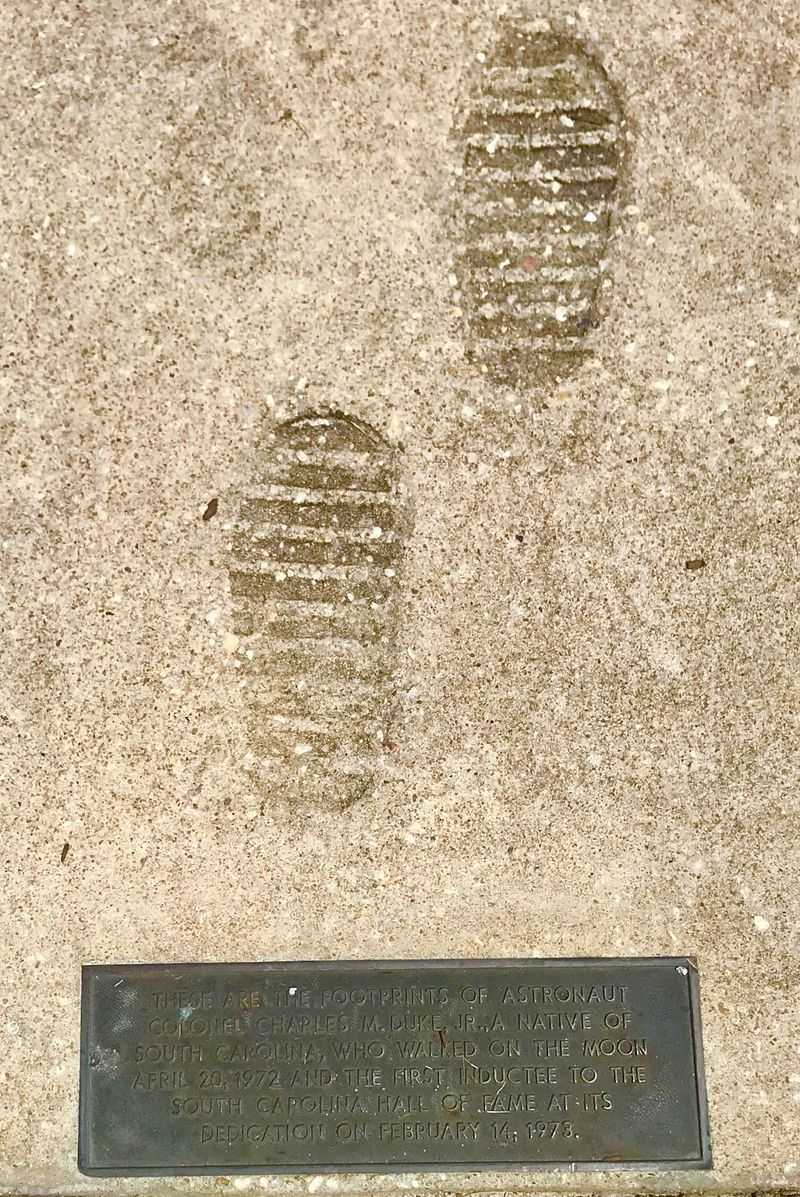
Put your own sneaker next to one of these prints and you will laugh at how tiny it looks. The moonprints are wide and blocky, with straight, thick ribs running across the soles.
That tread pattern was not about fashion. Apollo boots were made to grip loose, powdery lunar soil while astronauts hopped around in bulky suits, so the soles needed to be sturdy and broad.
Seeing the grooves up close, I could almost picture gray moon dust packed between them.
There are two prints side by side, and they have held up surprisingly well for over 50 years. South Carolina’s mild weather helps a lot, since the area rarely deals with harsh freezes that crack concrete.
Being tucked slightly away from heavy foot traffic has protected them too.
Here is a fun thing to try. Snap a photo of your shoe beside the print for size comparison, then look up pictures of Apollo boot tracks on the moon.
The shapes match in a way that gives you goosebumps.
Kids especially love tracing the ribs with a finger. Just be gentle and respectful, because this is a real historic marker.
It deserves to stay crisp and clear for the next fifty years of curious visitors, too.
Seventy-One Hours on the Moon
Standing over the prints, my brain kept jumping to one number: 71. That is how many hours Duke and his crewmate spent on the lunar surface during Apollo 16.
Three days on the moon sounds wild enough, but they were busy the entire time. Duke helped collect a record 210 pounds of lunar rock and soil samples to bring back to Earth.
Scientists used those samples to learn more about how the moon formed and changed over time.
Imagine lugging rocks around in a stiff spacesuit while trying not to tip over in low gravity. It was hard, careful work, not a vacation stroll.
Every scoop of soil had a purpose.
Did you know? Apollo 16 took place in April 1972, during the later part of the Apollo program, which ran from July 1969 to December 1972.
Only one more moon landing followed it.
When you look down at the boot prints in Myrtle Beach, you are seeing the same shape of boot that crunched across that faraway surface. It connects a sunny beach town with a silent gray world about a quarter million miles away.
I left with a much bigger respect for how much effort went into those famous missions.
Making It Part of a Beach Day
Nobody needs to plan a whole afternoon around these prints, and that is part of their charm. I tucked my visit between breakfast and the beach, and it took less time than finding a parking spot on a summer Saturday.
The convention center sits in a central part of town, so it is easy to add to your Myrtle Beach plans. After you see the prints, you can head toward the ocean, grab lunch, or wander somewhere shady if the sun gets fierce.
Morning works best in the warmer months. The air is cooler, the light is softer for photos, and you can look around without feeling rushed.
Wear comfy shoes too, since you may need to poke around the grounds a bit before you find the right spot.
Families with space-loving kids should absolutely make the stop. Bring a small notebook so young visitors can jot down the dates from the plaque, or sketch the boot tread.
It turns a quick detour into a mini adventure.
Also check for construction updates before heading over. The convention center has undergone work at times, which can block the area.
A quick look online helps you avoid disappointment and keeps the day rolling smoothly.
Why This Quiet Spot Sticks With You
Days later, back home with sand still stuck in my bag, I kept thinking about those two prints more than any ride or souvenir shop. Something about their quietness made them unforgettable.
Myrtle Beach is full of noise and color, which is a big part of its fun. Yet this humble patch of concrete holds a story that reaches all the way to the moon.
It reminds you that amazing history can hide in plain sight, sometimes right beside a parking lot.
These prints also celebrate a very human achievement. A kid who went to high school in Lancaster grew up to become the youngest moonwalker ever.
That kind of story can light a spark in young visitors who dream big.
Many people walk past without noticing. Being one of the folks who stops, reads, and really looks feels special, almost like joining a small secret club.
I left with a grin and a new favorite fun fact to share.
So next time you are cruising the Grand Strand, carve out a few minutes for this surprising little landmark. Look down, find the ribbed soles, and picture them on the moon.
You might be surprised how much it moves you.
Address: 2101 North Oak Street, Myrtle Beach, SC 29577
