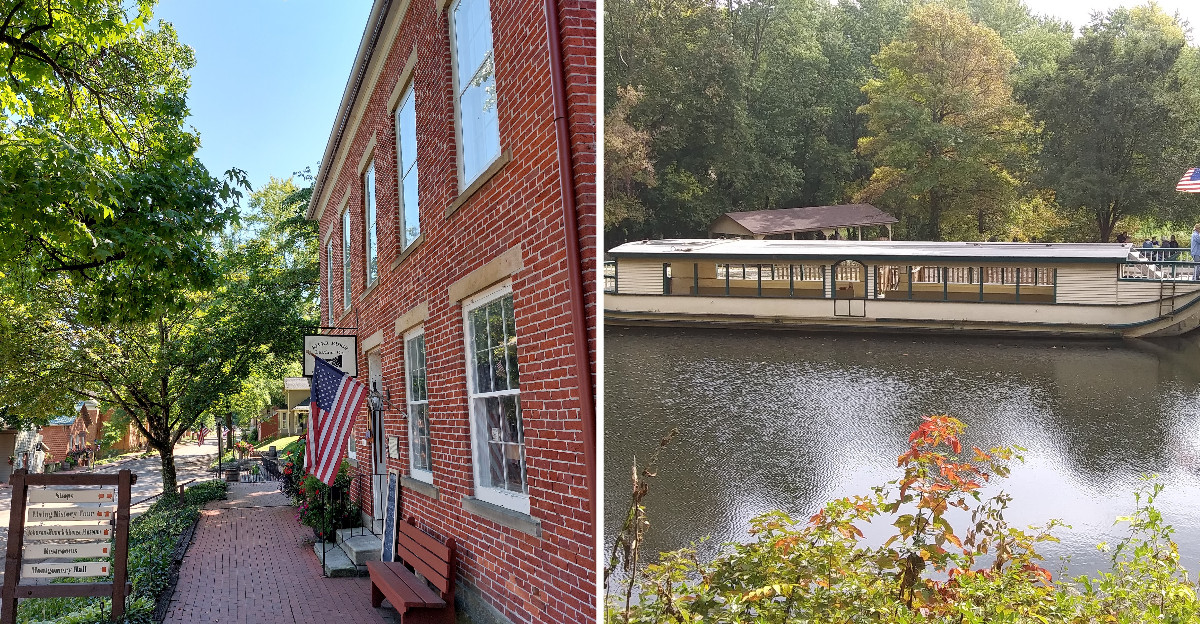
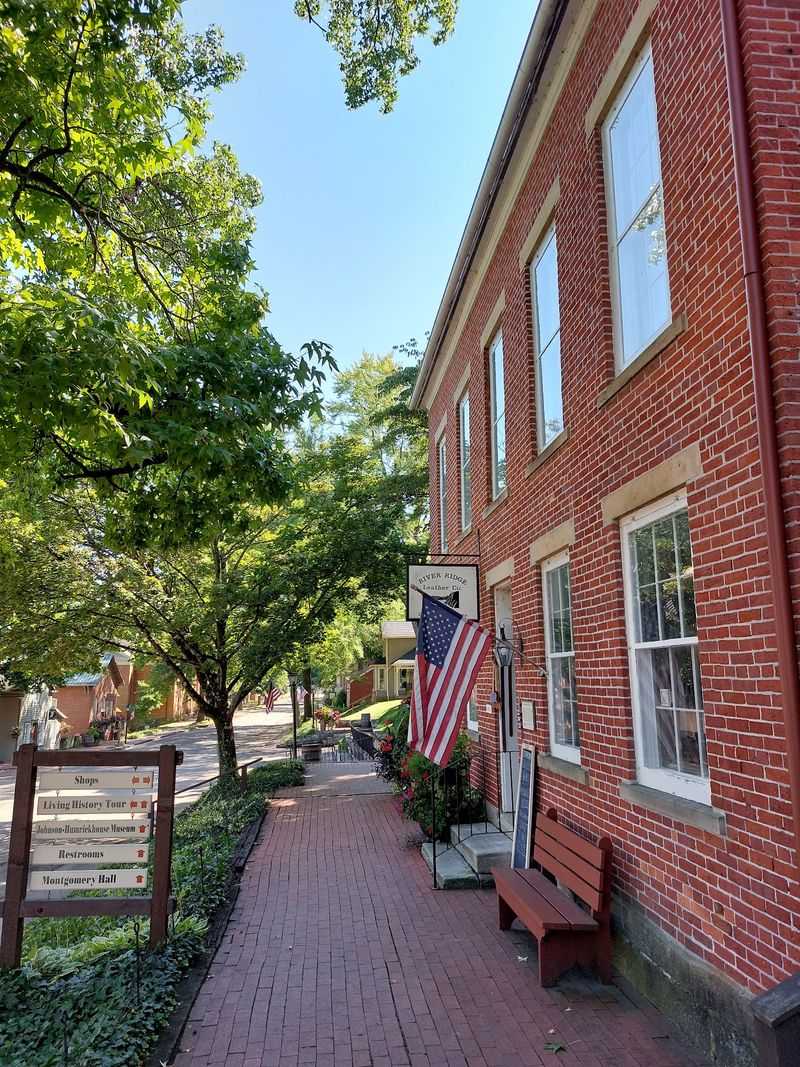
A quiet brick-lined street holds the bones of a wheat port that once hummed with canal boats and boot traffic. Almost two hundred years ago, this spot in Ohio was a busy stop on the Ohio and Erie Canal, loud with commerce and travelers.
Then the railroads arrived, a massive flood swept through in 1913, and the whole thing nearly disappeared from the map. What saved it was a restoration effort that began in the 1960s.
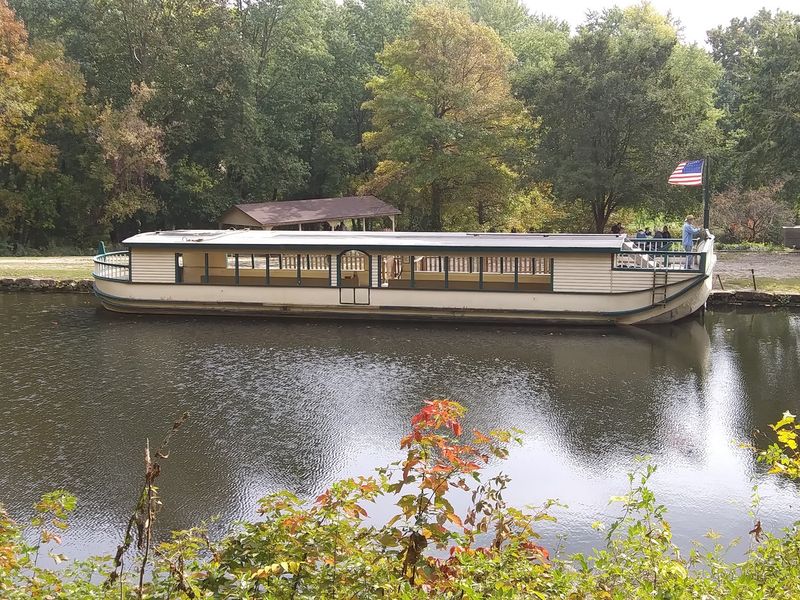
Today the street looks much as it did in the 1800s, with a working blacksmith, a horse-drawn canal boat, and shops selling candy and old-fashioned goods.
A quick stop turned into most of a day, and the story behind the place kept pulling me deeper.
The buildings are original, the brick sidewalks are worn, and the canal still runs alongside the road. Muddy shoes, a bag of candy, and a much better understanding of how Ohio got built came home that evening.
The Visitor Center Sets the Whole Story Straight
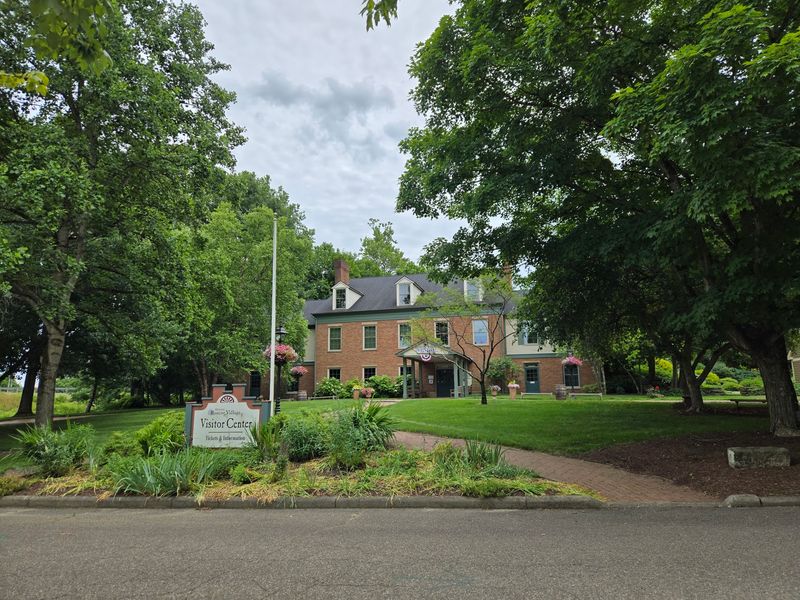
My first stop was the Visitor Center, and honestly it changed how I saw everything afterward. There is an introductory film that lays out the canal era in plain language, and it takes only a few minutes.
Without that context, the street outside is just a pretty row of old buildings. With it, you start noticing why the village sits where it does and why the land slopes toward the water.
Tickets for the living history tour are sold here, and staff will hand you a map marking which buildings are open that day. I would ask about the canal boat schedule right away, since it does not run every single day of the week.
Upstairs there is a small museum space worth a few minutes of your time. Parking is free and plentiful in the lot, which beats hunting for a spot along the street later in the afternoon.
Arriving early matters more than most people expect. Buildings close by four in the afternoon, so a late start means missing the interpreters and demonstrations that make the whole visit click.
Caldersburgh, How a Merchant Started It All in 1816
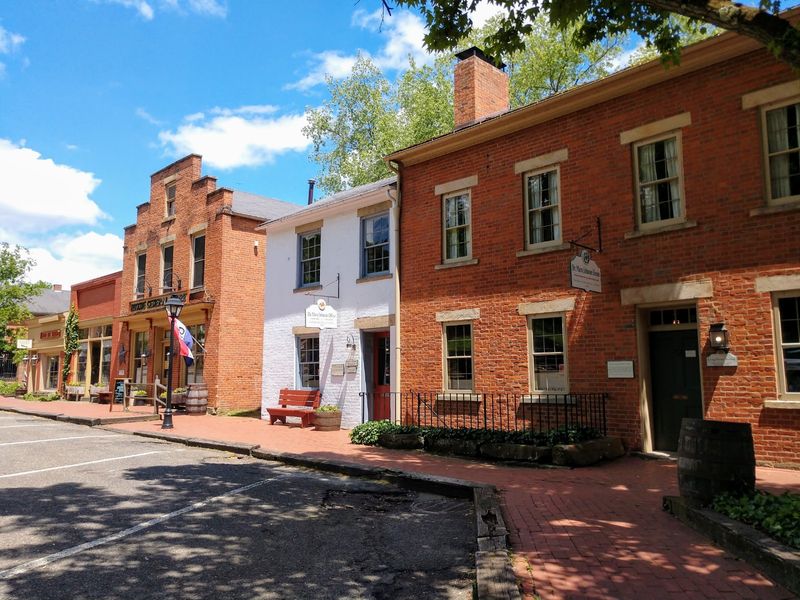
Before it was Roscoe, the settlement carried a much clunkier name. A merchant named James Calder laid out the town in 1816 and called it Caldersburgh, which is exactly the kind of thing a founder does when he gets to pick.
The name lasted only fourteen years. In 1830 the village was renamed Roscoe in honor of William Roscoe, an English author and abolitionist, which tells you something about what the people here valued.
I found that detail surprisingly moving. A small Ohio settlement chose to name itself after a writer who fought slavery in another country entirely, long before the Civil War.
Walking the street with that in mind gives the place a different weight. These were not accidental buildings thrown up by chance, but a planned community with people who read, argued, and paid attention to the wider world.
The interpretive displays inside several buildings cover the founding years well. Take a moment at each one instead of breezing past, because the early chapters explain why the canal arrival mattered so enormously to a town already positioned and waiting for it.
August 21, 1830, The Day the Monticello Changed Everything
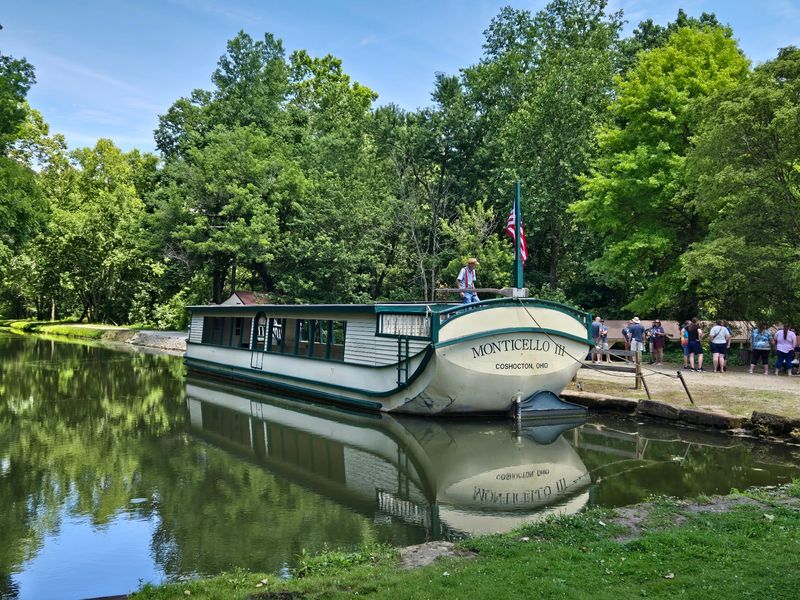
Picture the entire town crowding the banks to watch one boat arrive. That is essentially what happened on August 21, 1830, when the canal boat Monticello reached Roscoe and the Ohio and Erie Canal finally connected the village to the rest of the country.
Everything shifted after that. Goods that once crawled overland by wagon suddenly moved cheaply by water, and people could travel without weeks of misery on rutted roads.
Roscoe climbed fast, becoming the fourth largest wheat port along the entire canal. Farmers from miles around hauled grain here because this was where it could actually reach a buyer.
I like that the current canal boat carries the same name, Monticello III. It is a small tribute, but it keeps that 1830 date alive for anyone who bothers to ask about it.
Staff and displays throughout the village return to this moment repeatedly, and for good reason. Nearly every business that followed, every warehouse and every shop, traced back to a single summer day when the water route opened.
Blacksmiths, Coopers and the Trades That Built a Boomtown
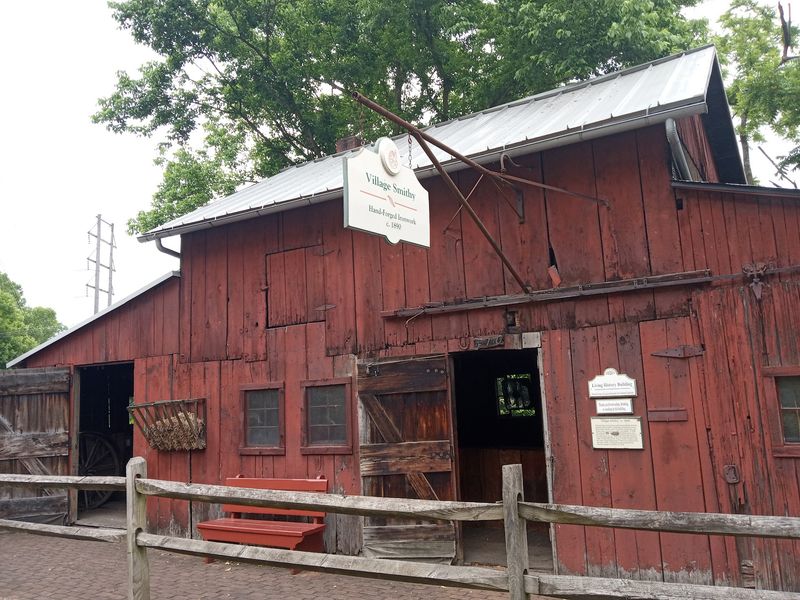
The blacksmith shop was my favorite stop, and I was clearly not alone based on how many visitors clustered around the forge. Heat rolls out the doorway, the hammer rings off the anvil, and the smell of hot metal sticks with you.
Canal prosperity created demand for skilled hands. A cooperage turned out barrels for shipping grain, blacksmiths shod horses and made hardware, and a mill, hotel, and several stores filled in around them.
Weaving and candle-making demonstrations appear in other buildings, depending on the day and season. Broom making shows up too, and watching someone bind straw by hand is oddly hypnotic.
A few stops rely on recorded narration rather than a live person, which some visitors find less engaging. I would plan your route so you hit the staffed buildings while interpreters are definitely working.
Bring curiosity and actually ask questions. The people demonstrating these trades know an enormous amount about how the work fit into daily canal-town life, and they are generally happy to explain the tools sitting right in front of you.
When the Railroad Rolled In, the Canal Went Quiet
Nothing ended the canal faster than something simply faster. Railroads spread across Ohio in the late 1800s, hauling freight in hours rather than the slow plodding days a mule-drawn boat required.
Merchants made the obvious choice. Grain and manufactured goods shifted to rail lines, and the warehouses along the canal gradually lost the traffic that had made them valuable.
Roscoe did not vanish overnight, but the momentum drained away steadily. Businesses that depended on boat crews, cargo handling, and travelers passing through found fewer and fewer customers.
Standing near the restored canal now, that transition feels almost gentle. Water sits still, birds move around the towpath, and it is hard to imagine the commercial urgency that once filled this corridor.
The village displays handle this decline honestly rather than glossing over it. I appreciated that, because the rise-and-fall arc is genuinely what makes Roscoe interesting compared to a museum that only celebrates the good years.
Technology moved on, as it always does, and an entire way of life quietly folded up behind it.
The 1913 Flood That Washed the Port Away
A single storm system finished what the railroads had started. The Great Flood of 1913 tore across Ohio, and Roscoe took a brutal hit that it never fully recovered from as a working port.
Water swept through streets and infrastructure, destroying what remained of the canal operation here. Statewide, lock gates were dynamited in a desperate attempt to drain flooded towns, which effectively ended canal navigation for good.
Canals had still been limping along in a reduced form before that spring. Afterward there was nothing left worth repairing.
Learning this while standing on a peaceful brick sidewalk was a strange feeling. The village looks so settled now that the idea of it being underwater seems almost impossible.
Interpretive panels and the introductory film both cover the flood, and it is worth paying close attention. Many Ohio canal towns simply faded into farmland after 1913, with nothing left but a name on an old map.
Roscoe came close to that same fate, which makes what happened fifty years later feel like unusually good luck.
A Mural, a Couple, and the Rescue That Began in the 1960s
Restoration here started with a painting. Dean Cornwell’s Canal Days mural showed Roscoe in its 1850s prime, and around 1960 that image helped spark the idea that the real village could be brought back.
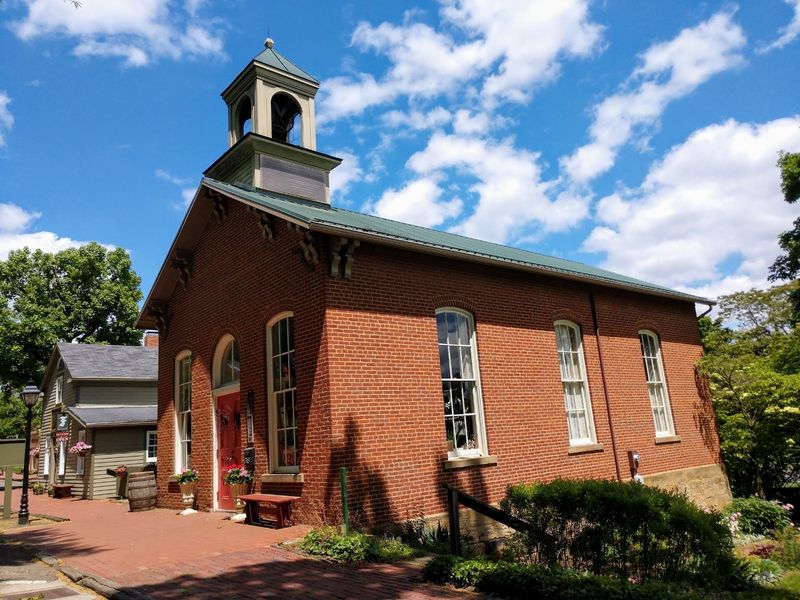
Retired Coshocton industrialist Edward E. Montgomery and his wife Frances took the first concrete step by purchasing the 1840 Toll House.
From there the project grew into a full restoration of the street.
Their goal was a living museum, not a frozen display case. That ambition explains the costumed interpreters, the working demonstrations, and the choice to keep real shops and eateries operating alongside historic exhibits.
I think that mix is why the place holds up. You can look at a restored trade shop, then walk twenty steps and buy ice cream, and neither feels out of place.
Gardens are maintained throughout, and the brick sidewalks tie everything together visually. Consider how easily all of this could have been bulldozed instead, and the whole village starts feeling like a genuinely lucky survivor.
Planning a Day Along Whitewoman Street
Give yourself three to six hours and you will actually enjoy this place instead of rushing it. The village is one walkable street, so distances are short and easy even with kids along.
Show up close to opening. Buildings run roughly ten in the morning to four in the afternoon Tuesday through Sunday, with Mondays closed, and the canal boat has its own limited schedule.
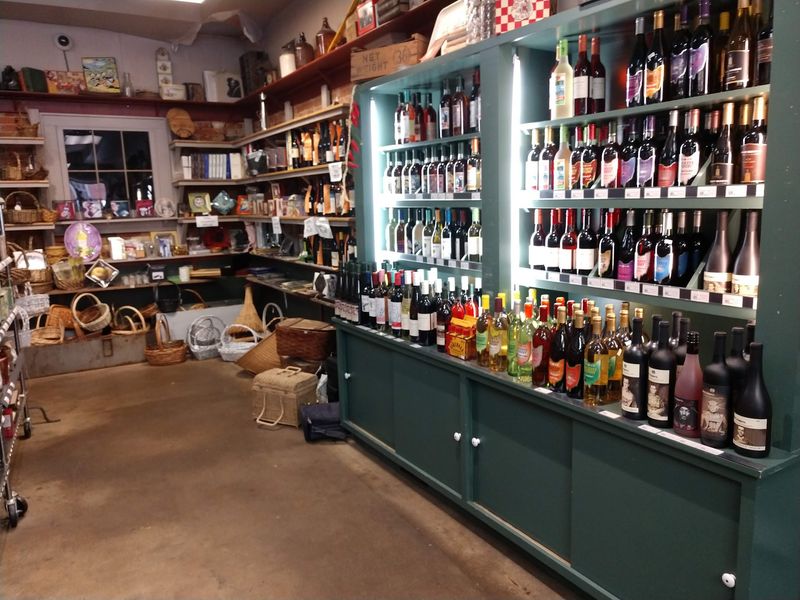
Eat before or after the standard lunch rush, because the restaurants fill up quickly and seating gets tight. Several spots serve barbecue, sandwiches, coffee, and sweets within a couple minutes of walking.
Note that the Johnson-Humrickhouse Museum is a separate attraction from the living history tour, so ask at the counter before assuming one ticket covers everything.
Shops are genuinely fun to browse, especially the leather shop and the handmade craft stores. Fall brings the Apple Butter Festival and December brings candle lighting, both worth planning around.
Address: 600 N Whitewoman Street, Coshocton, Ohio
