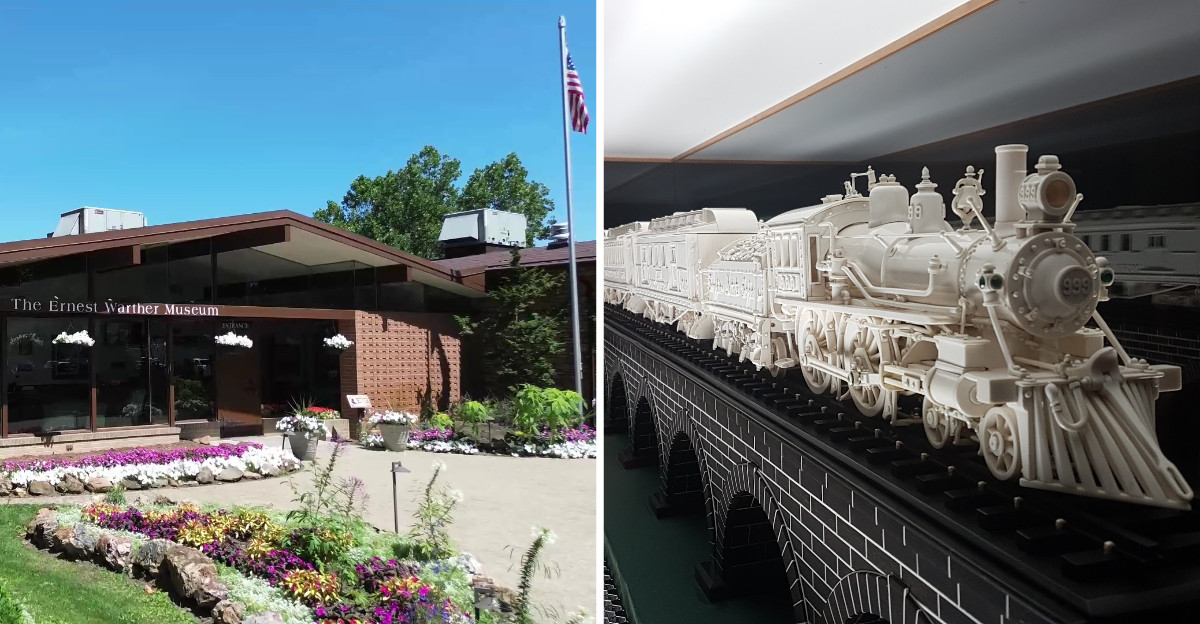
Five hundred and eleven tiny pliers, all moving at once, form a tree that no one expects to find in a quiet Ohio neighborhood. The building sits in Amish Country, a family-run museum where a self-taught carver turned scrap metal and wood into wonders.
He left school after the second grade and still earned the nickname World’s Master Carver. Walking in for a quick look, hours disappeared while leaning over glass cases, grinning like a kid at a magic show.
Carved trains, a wall of buttons made by his wife, and a little workshop out back tell one big story about patience and love. The pliers tree moves with a turn of a crank, and every piece inside has a story.
Visitors can turn the crank themselves and watch the tiny jaws open and close. The museum is small, but the collection is enormous.
This Ohio spot deserves a spot on any travel list.
The Plier Tree That Broke the Rules of Math
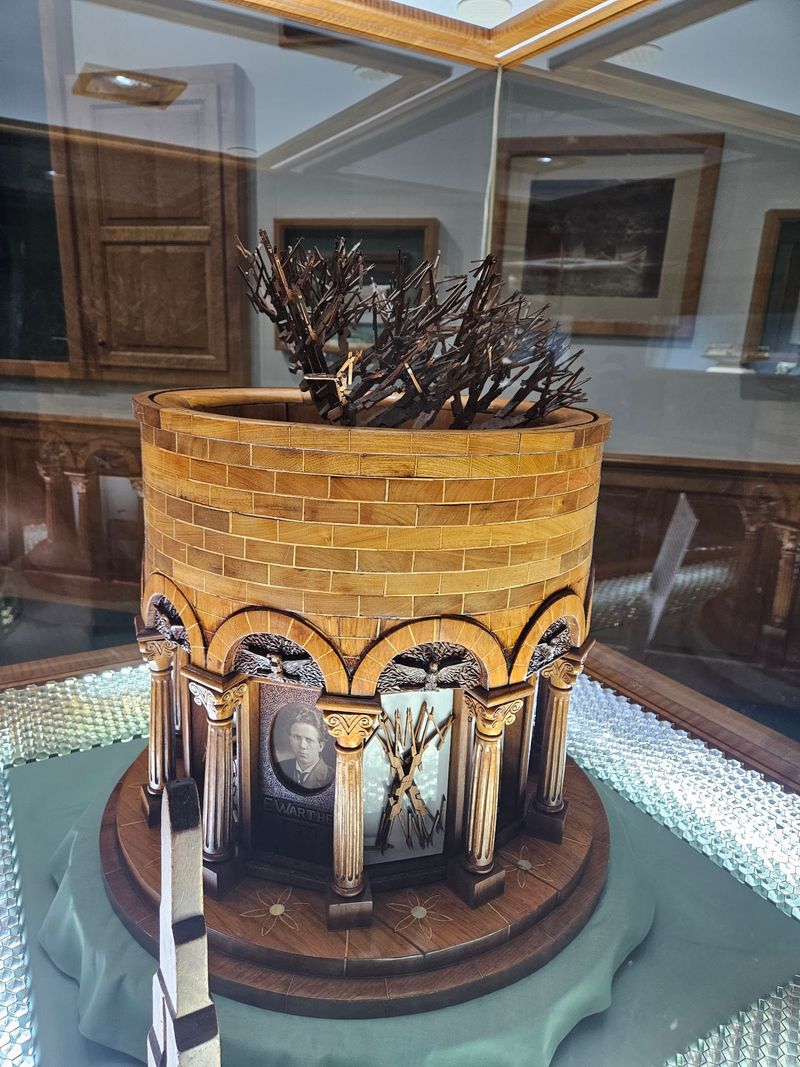
My jaw honestly dropped the first time I saw it. Picture a fan-shaped tree about the size of a lampshade, made entirely of little pliers linked together like a puzzle.
Every one of those 511 pairs came out of a single block of walnut. Mooney Warther made more than 31,000 careful cuts to free them, with no glue and no extra pieces added later.
He started on June 24, 1913, and finished on August 28, 1913, about eight weeks later.
Here is the part that surprised me most. He reportedly worked on it for only two hours a day, because the focus it needed was so intense.
That sounds like smart advice for any big project, if you ask me.
For years, many mathematicians thought a piece like this simply could not be made. The pliers had to fit together so perfectly that one wrong cut would ruin everything.
Today the tree rests on a pedestal Warther also carved himself. It has been coated in lacquer, which means it can never fold closed again.
That is a little sad, but it also keeps this one-of-a-kind treasure safe for future visitors.
My tip is to stand still and look at one small section for a full minute. You will start to see how each tiny hinge connects to the next, and it gets more amazing the longer you stare.
A Rusty Pocketknife and a Second-Grade Education
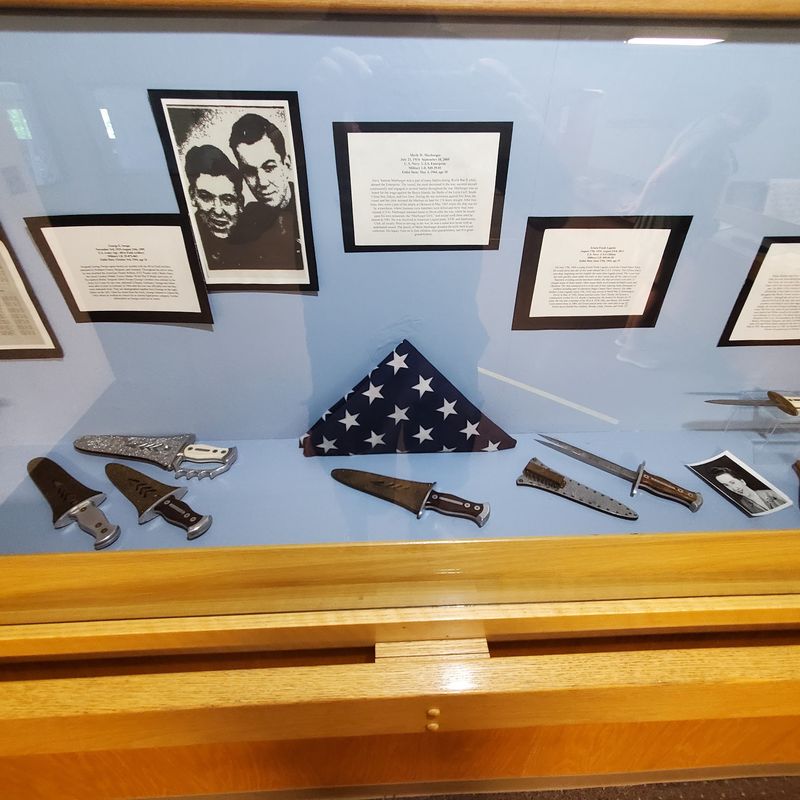
Some of the best stories start with something tiny. For Ernest Warther, it was a rusty pocketknife he found when he was just five years old.
That little blade changed his whole life. He began whittling as a young boy and never really stopped, even though his time in school ended after the second grade.
I kept thinking about that fact as I moved through the museum. It is easy to believe that big talent needs fancy training, yet Warther learned by doing, over and over, with steady hands and a lot of curiosity.
He also picked up the trick of carving pliers from a single block of wood from a hobo he met. That one lesson grew into the famous Plier Tree years later, which feels like a reminder that you never know who might teach you something important.
For 23 years, Warther worked in a steel mill. Carving was what he did in his spare hours, and eventually he gave his whole life to it.
The guides tell his early story in a warm, easy way that makes you feel like you know him. I left feeling a bit braver about my own hobbies.
If a kid with an old knife could end up famous around the world, then maybe practice really does beat perfection.
Steam Engines Carved From Ebony, Ivory, and Walnut

Train fans, get ready to lose track of time. Between 1905 and 1971, Warther carved more than sixty pieces showing how the steam engine changed over the years.
These are not simple toys. Each model is built from thousands of tiny parts made of ebony, ivory, and walnut, and many of them actually move like real trains, with pistons pumping and wheels turning.
His favorite was the Great Northern Mountain type 4-8-4 locomotive. It holds 7,752 separate carved pieces, which is a number my brain still has trouble picturing.
Right nearby sits the New York Central 4-6-4 Hudson type locomotive, made from 7,332 pieces. You can also spot early engines like the DeWitt Clinton and the B&O Besler, which show how far railroad design traveled in about a century.
The Smithsonian Institution has called these carvings priceless works of art. After seeing the tiny rivets and polished rods up close, I understood why.
A quick suggestion from me is to crouch down to eye level with the wheels. From that angle, the black ebony and creamy ivory look almost like real steel and steam.
Even people who do not care about trains usually end up hooked. The display turns history into something you can see, count, and marvel at, one little part at a time.
Honoring Lincoln With a Funeral Train
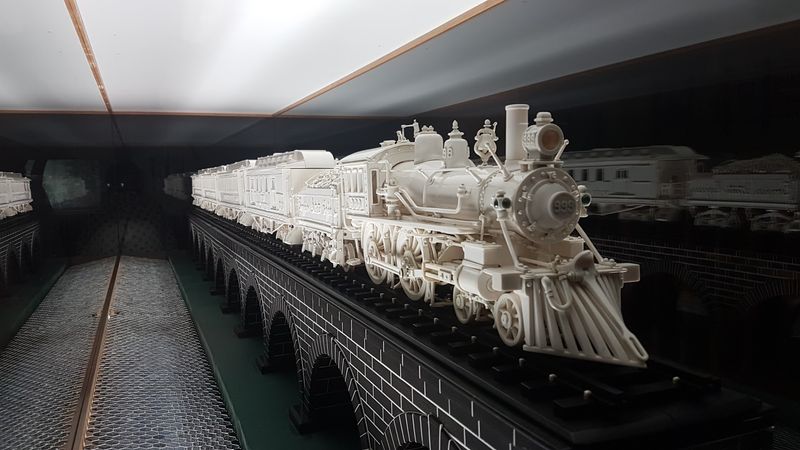
Among all the shiny engines, one carving feels quieter and more personal. It shows Abraham Lincoln’s funeral train, and it carries a special kind of weight.
Warther held Lincoln in very high regard and saw him as a personal hero. You can feel that respect in the careful details, from the shape of the cars to the neat, calm lines of the whole piece.
I found myself slowing down here. The other trains made me want to count parts, but this one made me think about history and about how people show love for the leaders who inspire them.
It is a nice spot to pause if you are visiting with kids. You can talk about why Lincoln mattered so much and how an artist chose to honor him with patience instead of words.
The carving also shows that Warther was not just a technical genius. He was a storyteller who used wood to share the things he cared about most.
Guides on the tour usually share more about this piece, so it helps to listen closely. Their stories add feeling that you might miss on your own.
Before moving on, look at how the funeral train fits into the larger timeline of steam engines nearby. It turns a single sad moment into part of a much bigger American journey.
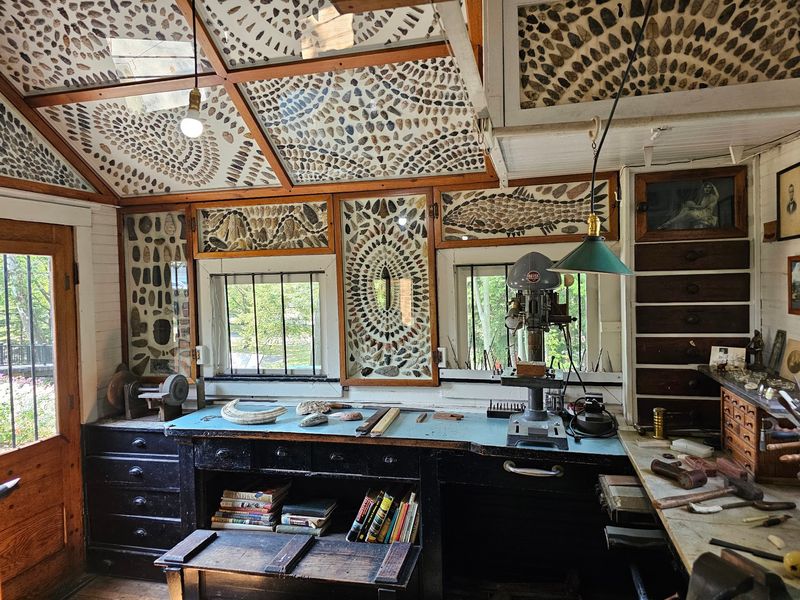
The Backyard Workshop Where It All Happened
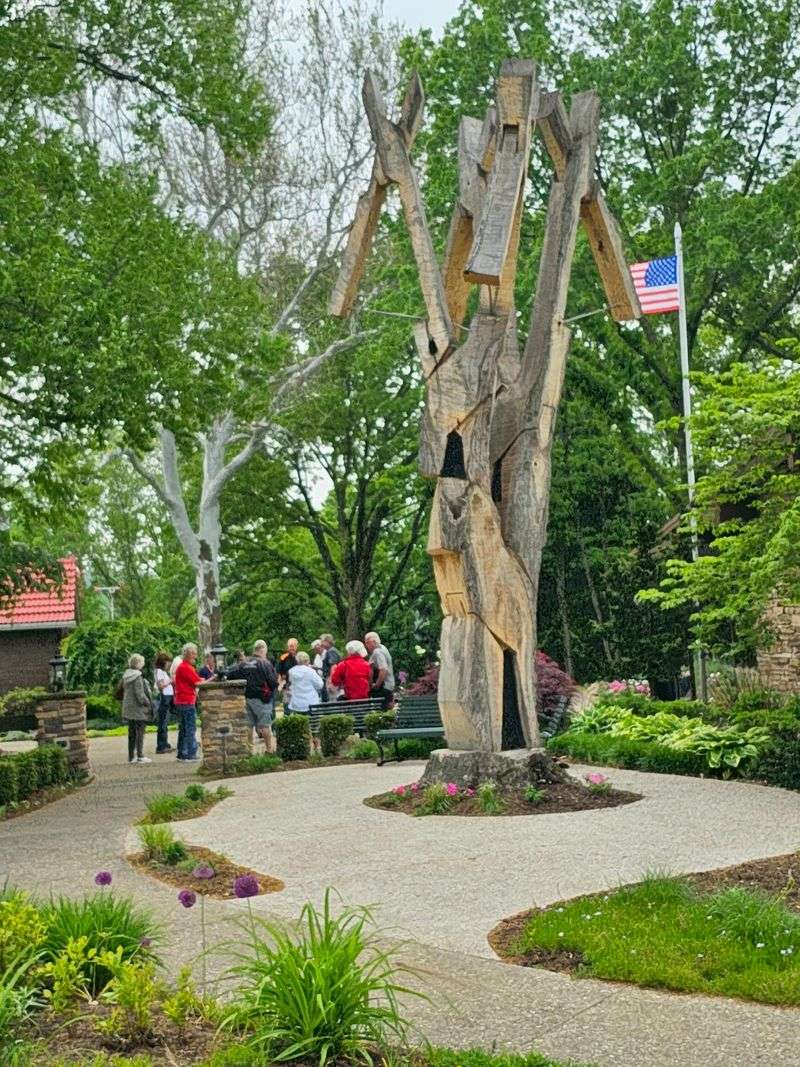
Tiny rooms can hold giant stories. The original workshop at the museum is small and simple, yet it is where so much of this wild creativity came to life.
Warther opened his museum in 1936, right in his own backyard. That detail made me smile, because it shows how close his art stayed to his everyday family life.
The workshop has been kept just as it was, so you get a real peek at his creative space. Seeing the workbench and tools made the carvings feel less like magic and more like the result of steady, honest effort.
I liked imagining him bent over a piece of walnut here, slowly shaping one hinge at a time. It is the kind of place that makes you want to go home and clean off your own desk to start a project.
If you are a maker of any kind, give yourself extra time in this spot. Notice how little space he really needed to create world-famous work.
A fun activity for families is to guess what each tool was used for before asking a guide. Kids especially love this little guessing game.
Of all the stops, this one felt the most human to me. It is proof that big dreams can start in a plain room behind the house.
Frieda and Her 73,000 Buttons
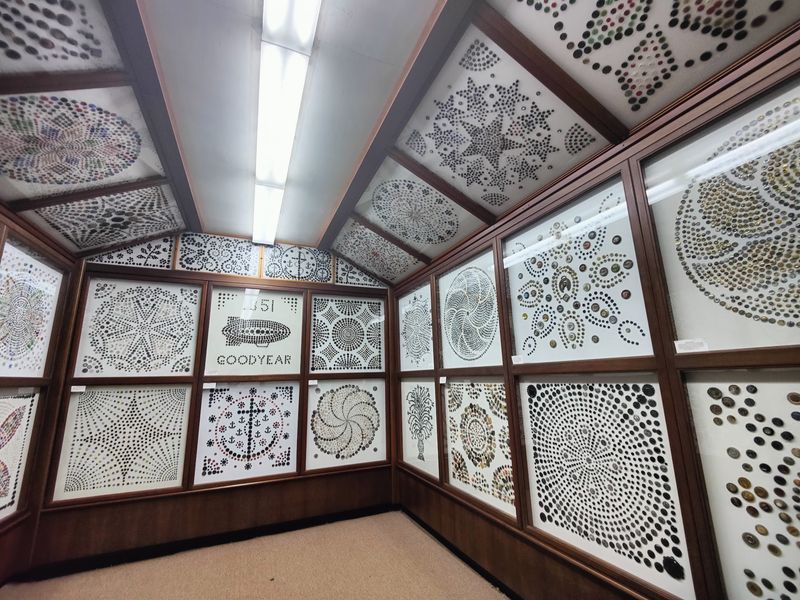
Mooney was not the only artist in this family. His wife Frieda gathered more than 73,000 buttons, and she turned them into something far more exciting than a jar on a shelf.
Her collection lives in its own building, often called the Button House. The buttons are arranged in bright designs and patterns that cover the walls like colorful quilts.
Honestly, I did not expect to love this part as much as I did. Every panel seemed to sparkle a little differently, with shiny metal buttons next to soft pastel ones and bold dark ones in between.
It is a gentle reminder that art can come from everyday objects. Frieda took something ordinary that most people toss in a drawer and made it beautiful.
Try picking out one tiny button in a big design and following the pattern around it. You will start noticing shapes and color choices you missed at first glance.
The Button House also balances out the visit nicely. After all the dark ebony and heavy trains, this room feels cheerful and light.
For me, it made the museum feel like a true love story. Two people, two very different hobbies, and one backyard filled with the results of their patience and joy.
Swiss-Style Flower Beds Worth a Slow Stroll
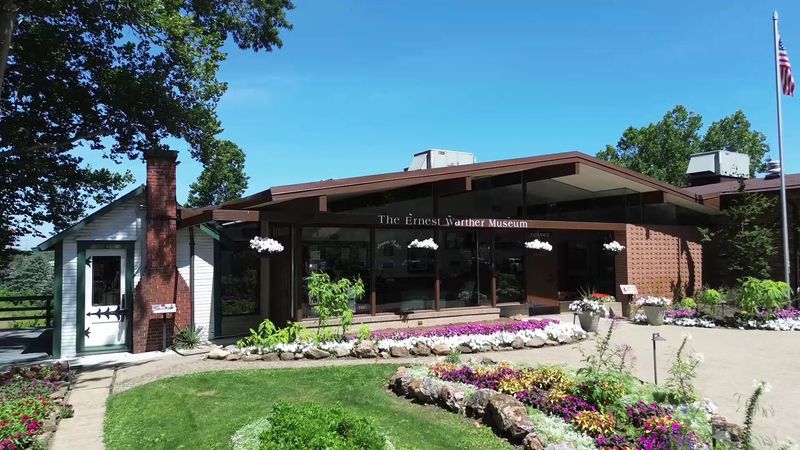
Fresh air feels extra sweet after staring at tiny carvings for an hour. Out on the grounds, Frieda’s Swiss-styled flower beds give your eyes a colorful break.
The gardens are not huge, but they are lovely and carefully kept. Paths wind between beds of flowers that look planned with the same neat attention you see inside the museum.
Timing matters here. Late spring and early summer are when the blooms really shine, so plan for those months if flowers are high on your list.
If you come in winter, you will still enjoy the carvings, just with a quieter garden. That trade-off can be nice, because the colder months often bring smaller crowds.
I would suggest wearing comfy shoes. Some walkways are narrow or a bit steep, which is good to know if you are pushing a stroller or helping someone who uses a wheelchair.
Take a slow lap before heading to the next building. The gardens tie the whole property together and make it feel like a real family home instead of just a museum.
It was one of my favorite quiet moments of the day. I stood near the flowers for a bit, letting my brain rest after all those numbers like 31,000 cuts and 7,752 pieces.
Planning Your Visit to the Warther Family Legacy
Family still runs the show here, and that warmth is easy to feel. The museum is kept going by Warther’s third and fourth-generation relatives, who keep his story alive for new visitors.
The doors open every day from 9 AM to 5 PM. That makes it easy to fit into a weekend trip through Ohio’s Amish Country, whether you are a morning person or not.
I strongly recommend the guided tour. The guides share stories and small details that bring each carving to life, and you will likely leave knowing far more than a sign could ever tell you.
Give yourself at least one to two hours to see everything properly. The museum, Button House, gardens, and family home all deserve some unhurried attention.
Around the holidays, the museum is known for its Christmas tree display. It adds a festive twist if you happen to visit in winter.
Some visitors even get to see a family member demonstrate how the famous pliers are carved. That hands-on moment can turn a regular visit into something kids remember for years.
I left feeling inspired, a little humbled, and already planning a return trip.
Address: 331 Karl Ave, Dover, Ohio 44622
