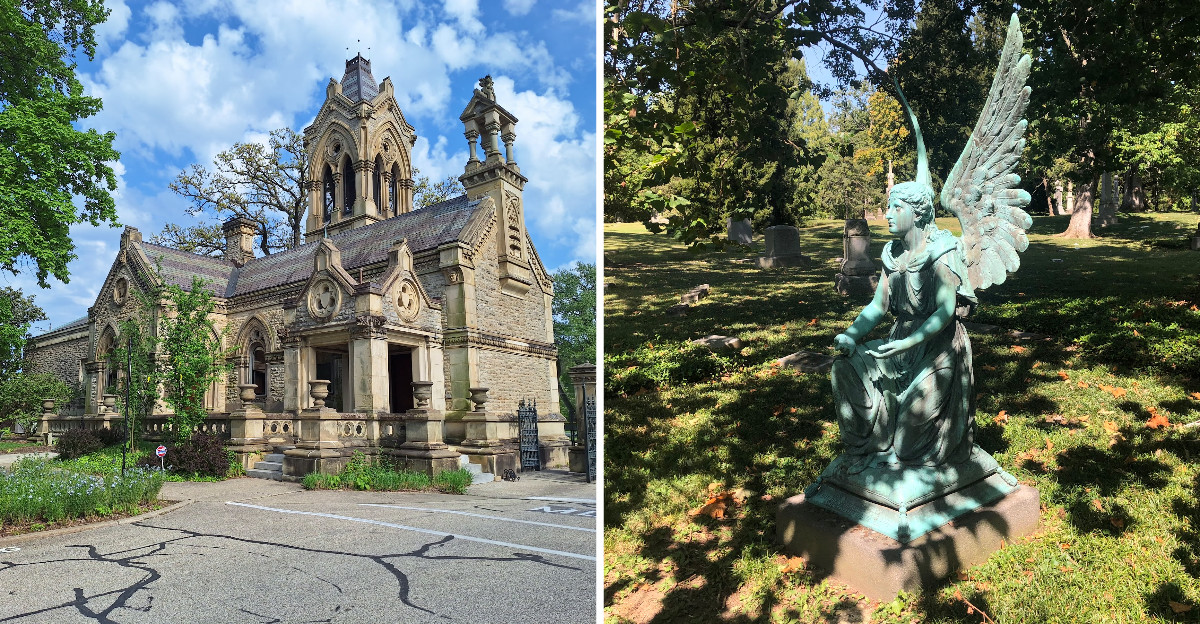
Speeding carriage drivers once got locked up in a tiny jail inside an Ohio cemetery, which sounds like a tall tale until you see the building for yourself. That quirky detail pulled me to a place that kept me wandering for hours.
Swans glide across quiet ponds, giant old trees spread their branches over stone monuments, and the roads curve slowly through hundreds of acres. The grounds stretch across 733 acres, so the next bend always brings something unexpected.
This is a working cemetery, a National Historic Landmark, and a sprawling arboretum all at once. Walking the paths, the quiet feels different than most places.
History, nature, and a touch of humor share the same space. The little jail still stands, a reminder that even cemeteries have their oddities.
Here is what I learned while wandering the grounds, starting with that famous lockup.
The Basement Jail Under Norman Chapel
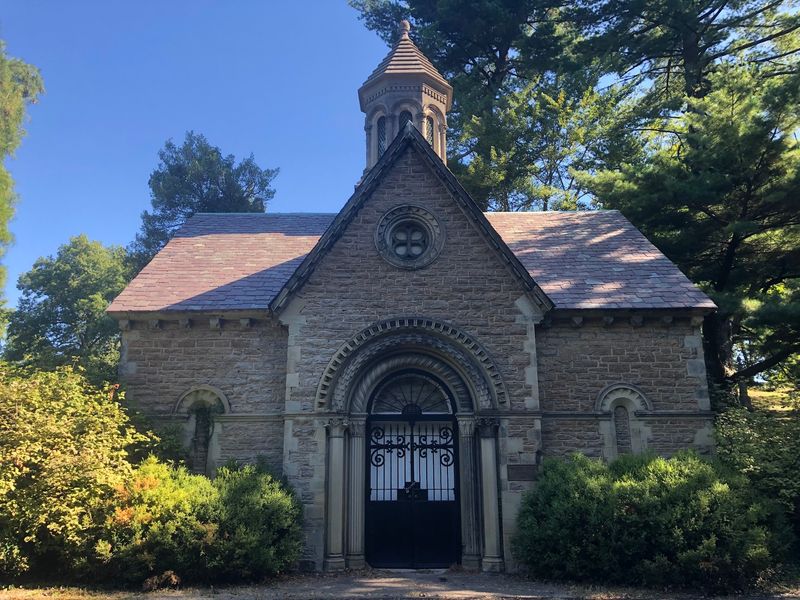
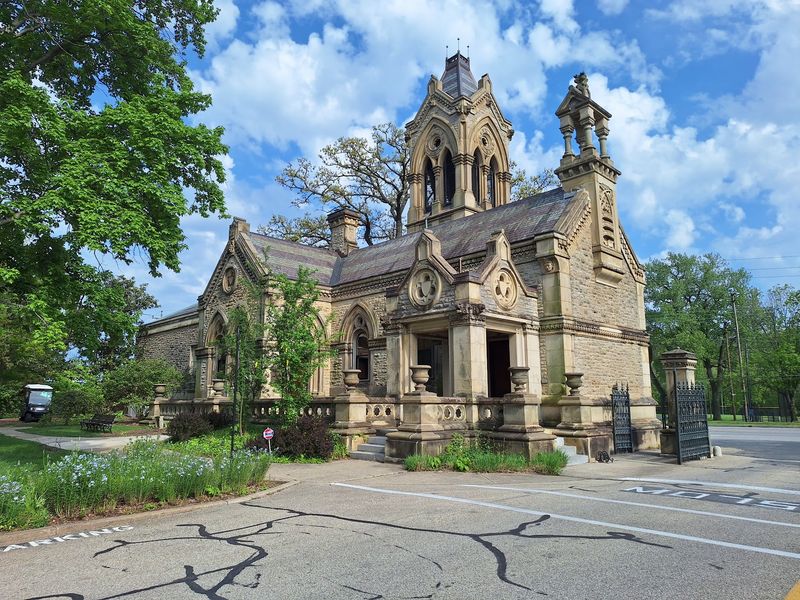
Honestly, I expected the jail story to be a myth, so learning it was real made me grin. The cell sits in the basement of the Norman Chapel, a sturdy stone building finished in 1880 that looks like it wandered over from the European countryside.
Back then, cemetery watchmen were deputized by the county sheriff. If a driver sent a horse and carriage racing down the peaceful lanes, those watchmen could arrest them on the spot.
Vagrants could end up there too, and some unlucky folks spent the night below the chapel thinking about their choices.
The idea sounds funny today, yet it shows how seriously the founders protected the calm of this place. A cemetery was meant for quiet reflection, not a carriage race.
When cars arrived, the rules shifted. Motor vehicles were banned at first, then finally allowed in April 1911 under strict rules, and the old jail kept speeding drivers in check for a new era.
Today the cell is used for storage, so you will not tour it. Still, I liked knowing it was right beneath my feet as I admired the chapel walls.
Fun fact: the speed limit now is 20 MPH, so please drive gently!
A Landscape Built to Feel Like a Park
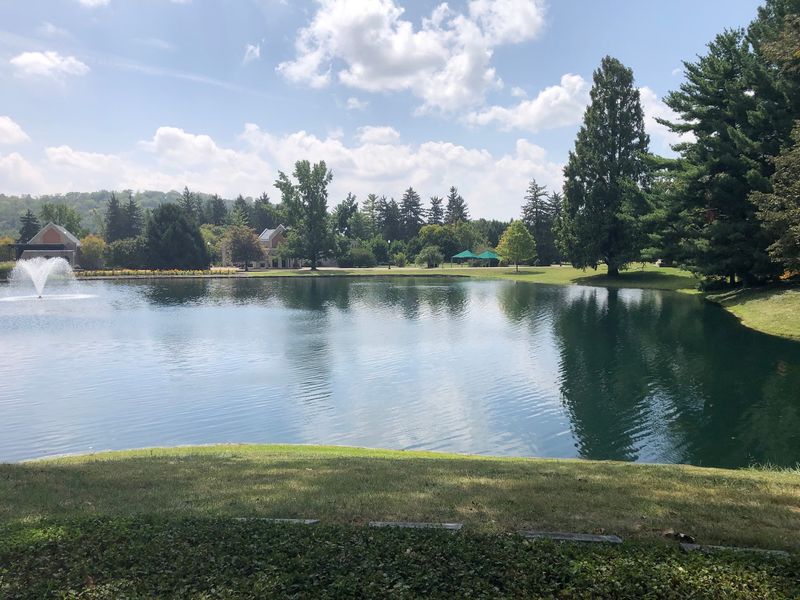
My first long drive through the grounds felt more like touring a country estate than visiting a graveyard. That feeling is no accident at all.
Spring Grove was founded in 1844 by members of the Cincinnati Horticultural Society. They wanted a rural cemetery, inspired by famous places like Pere Lachaise in Paris and Mount Auburn in Massachusetts.
The goal was a peaceful, park-like spot away from the busy city.
Howard Daniels drew the first design, but the real magic came in 1855 with landscape architect Adolph Strauch. He created the lawn plan, which swapped crowded fences and clutter for open lawns, lakes, trees, and shrubs.
Cemeteries across the country later copied his idea, and you can see why once you are here.
The grounds stretch across 733 acres, with about 450 acres carefully landscaped. Roughly 45 miles of paved roads curve between hills and water, which is why getting a little lost is almost part of the fun.
My advice is to pick one area per visit instead of trying to see everything. Roll down the windows, go slow, and let the wide green spaces do the talking.
You will notice something new on every curve.
Ponds Full of Swans and Quiet Ripples
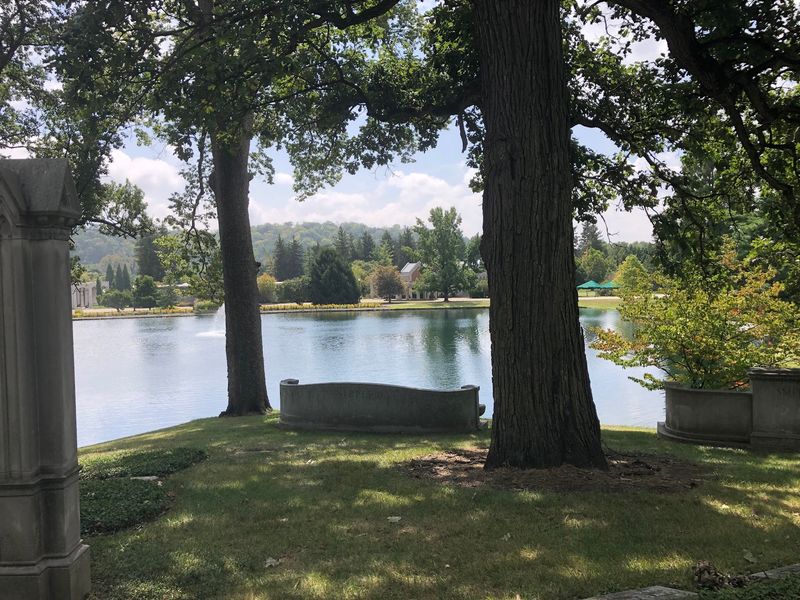
Swans were the last thing I expected to see in a cemetery, and yet there they were, floating like they owned the place. In a way, they kind of do.
Spring Grove has 12 ponds and lakes scattered across the property, and many sit near the main entrance. Ducks and geese paddle around the edges, while turtles sometimes sun themselves on rocks nearby.
Big carp drift just under the surface if you look closely.
The water gives the whole landscape a softer, slower mood. Reflections of trees and monuments shimmer on calm mornings, which makes it a favorite spot for photographers.
I found a bench near one of the lower lakes and simply watched for a while. A goose waddled past like it had somewhere important to be, and I could not stop smiling.
Here is a practical tip. The lakes near the south side are easy to reach on foot, so you can park and stroll without wandering too far.
Keep a respectful distance from the birds, though, since swans protect their space with serious attitude.
Bring a camera, some patience, and maybe a light jacket for breezy days by the water.
Champion Trees and a Living Arboretum
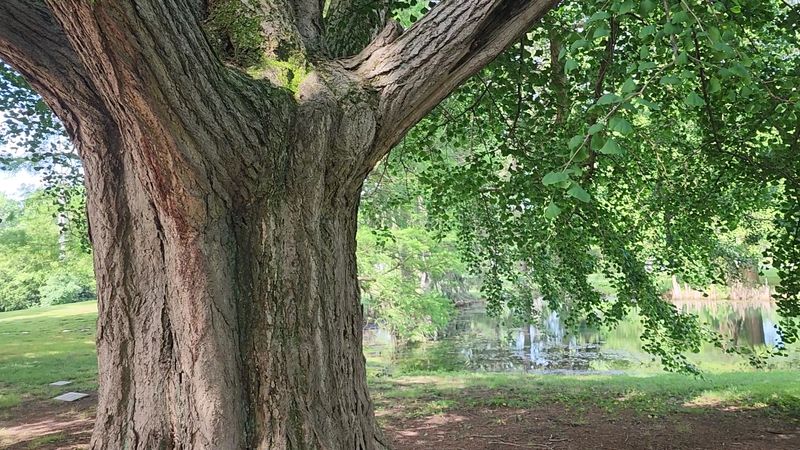
Some of these trees made me stop the car just to stare up at them. Their trunks are wide enough to hide a small crowd.
Spring Grove is not only a cemetery. In 1987, it officially became Spring Grove Cemetery and Arboretum, honoring its huge collection of native and exotic plants.
The grounds hold several State and National Champion Trees, which means they rank among the largest of their kind.
Many plants have labels, so you can learn names as you wander. I turned it into a little game, guessing the tree before reading the sign.
I lost most rounds, but it was still fun.
Seasons change everything here. Spring brings tulips and flowering bushes, summer offers deep shade, and fall paints the hills in fiery reds and golds that look unreal in photos.
The cemetery even got its name from the natural springs on the land. Those springs help keep the grounds lush and green year after year.
If you love nature, plan a visit for autumn. Bring comfy shoes and a notebook to jot down favorite trees.
Just remember not to pick flowers or take plants, since everything here is cared for with real dedication.
Stone Art That Rivals a Museum
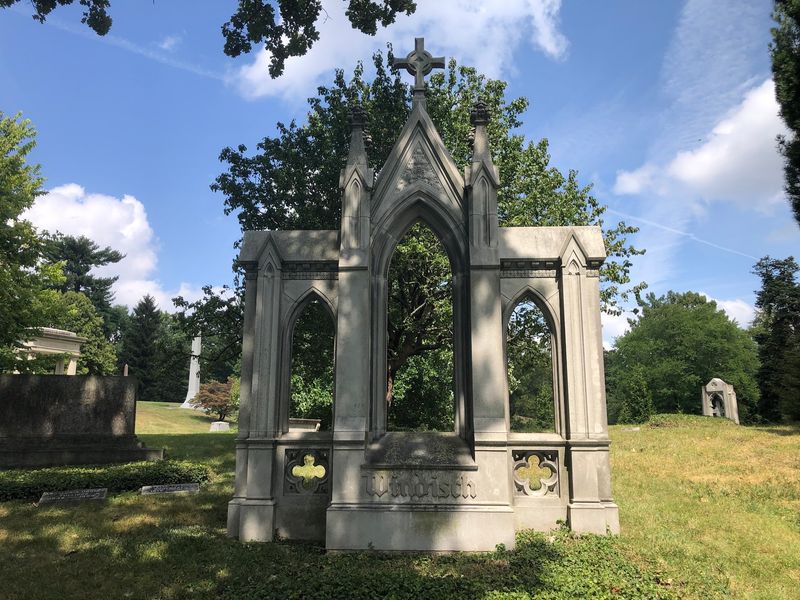
Picture a mini Parthenon sitting on a grassy hill in Ohio. That is the Fleischmann family mausoleum, and it was the moment I realized this place is basically an outdoor gallery.
Across the grounds, mausoleums and monuments show off styles from many eras. Gothic Revival touches appear all over, and Congressman William Slocum Groesbeck has a striking sphinx-like mausoleum that grabs attention fast.
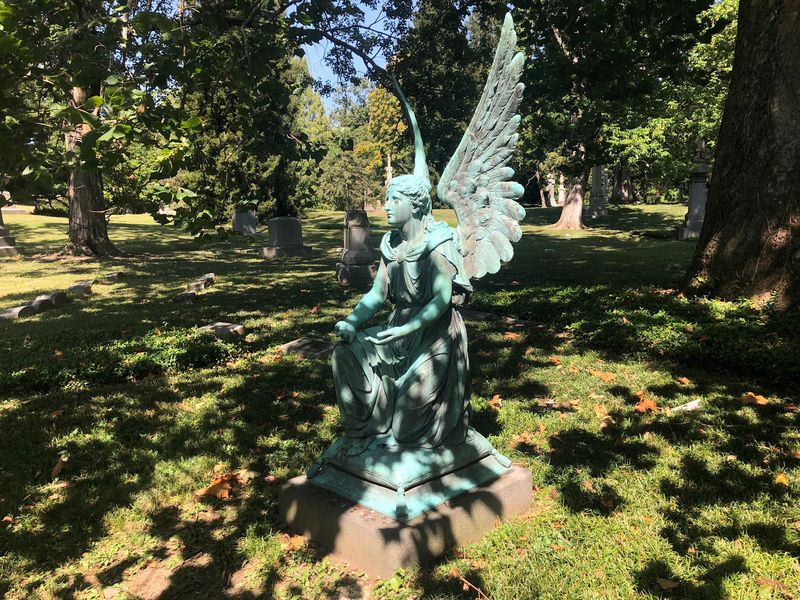
Older gravestones are my favorite part. Weather has softened their carvings, yet you can still spot angels, draped urns, tall obelisks, and tiny details that someone spent hours shaping by hand.
Each one feels like a quiet story told in stone.
The variety keeps things interesting. One turn reveals a grand temple, and the next shows a simple marker with a sweet, short message.
A few rules matter here. These sculptures are privately owned and fragile, so climbing or sitting on them is not allowed.
Gravestone rubbing is also prohibited, since it can damage old surfaces.
Instead, take photos from a respectful distance and zoom in on the details. I found that slowing down and studying just one monument closely was more rewarding than rushing past twenty.
Generals, Governors, and Surprising Stories
History lovers, get ready, because the list of people buried here is long and impressive. I kept bumping into names I recognized from school.
Spring Grove holds 40 Union Civil War generals and one Confederate general. In 1862, the cemetery donated land for Civil War soldiers, and today more than 999 rest there.
Their headstones form circles around upright cannons, a sight that left me quiet for a long moment.
Ten governors from Ohio, Kentucky, and Arizona are buried here too. Salmon P. Chase, who helped establish the cemetery, also rests on these grounds. Families tied to big Cincinnati names like Kroger and Procter and Gamble add even more local history.
Then there is a quirky bit I loved learning. George Reeves, the actor who played Superman in the 1950s, had his body held in a vault here for a time before cremation, and his ashes were later sent to California.
My tip is to grab a map before searching for famous graves. Plots can be tricky to find, and the winding roads can confuse even good navigators.
Treat these spots with care, since real families still visit and remember their loved ones here.
Smart Tips for a Respectful Visit
Planning ahead saved me a lot of wandering on my second trip. A little prep goes a long way in a place this big.
The gates open daily from 8 AM to 6 PM, and summer can bring longer hours on certain evenings. Visiting is free.
Start at the Customer Service Center just inside the main gate, where you can pick up maps that make finding highlights much easier.
Driving is welcome, but stick to the 20 MPH limit and stay on paved roads. Never park or drive on the grass.
After hearing about that old jail cell, I followed the speed rule extra carefully, just in case!
Pets are not allowed, except for service dogs. Bikes need a permit, while scooters, skateboards, and rollerblades are off limits.
Walking is the best way to soak it all in, and the perimeter loop runs around five miles for anyone wanting a workout.
Wear sturdy shoes, since some roads climb steep hills with lovely views at the top. Bring water, check the weather, and leave decorations alone at graves.
Above all, remember this is still an active cemetery where people grieve. Quiet voices and kind manners keep it peaceful for everyone.
Address: 4521 Spring Grove Avenue, Cincinnati, OH 45232
