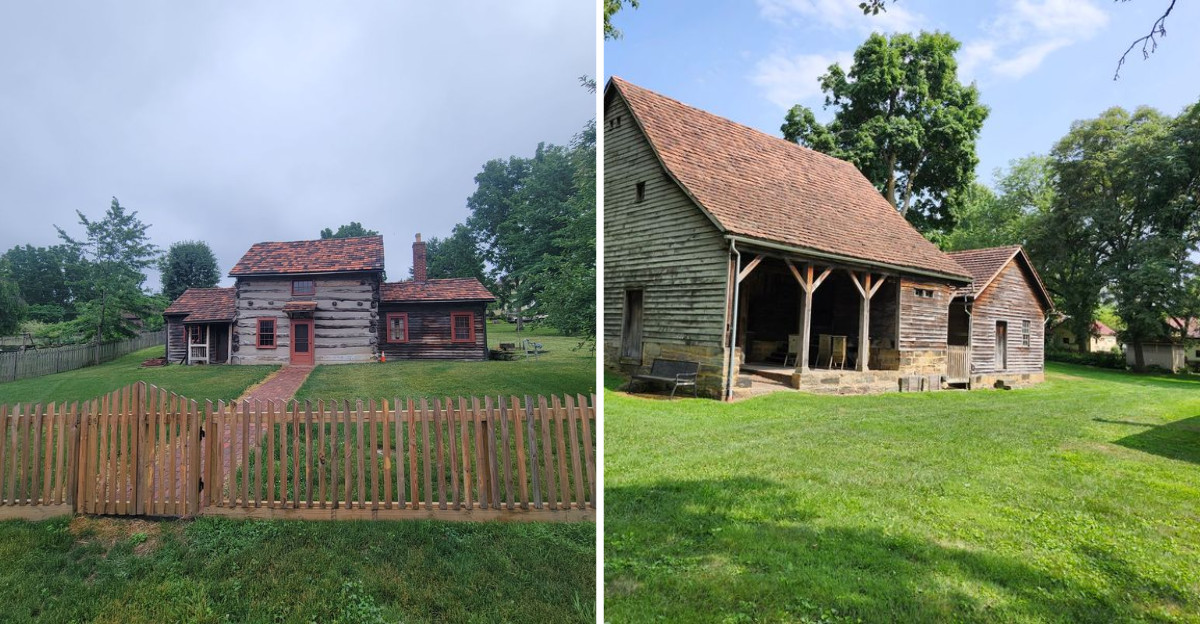
Street layout and deliberate design tell you something happened in that Ohio village, something organized and a little bit stubborn. I pulled off the highway in Tuscarawas County expecting a quick stretch of the legs and ended up staying most of the afternoon.
Back in 1817, around two hundred German religious separatists settled this ground and later pooled everything they owned into one shared pot, and for about eighty years it worked.
The society dissolved in the late 1890s, yet the buildings simply stayed put, and dozens of them are still standing along Main Street today.
Some are museums with costumed guides inside, others are private homes with cars parked out front and porch lights on. I loved that mix of frozen history and ordinary daily life happening on the same block.
The street itself is a kind of museum, with the original brick and timber houses holding their shape after more than a century, and the gardens still blooming where they were planted generations ago.
Some places preserve history behind glass, and this one just keeps living in it.
Number One House and the Story of Joseph Bimeler
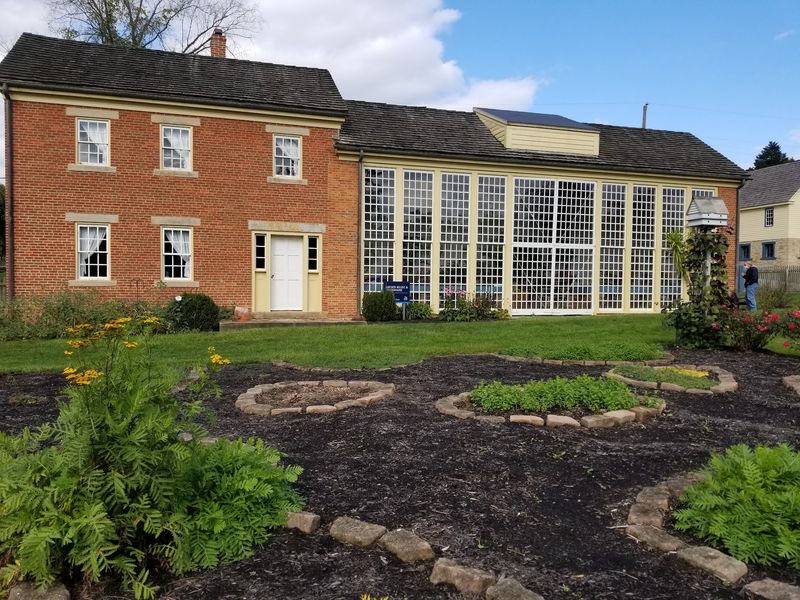
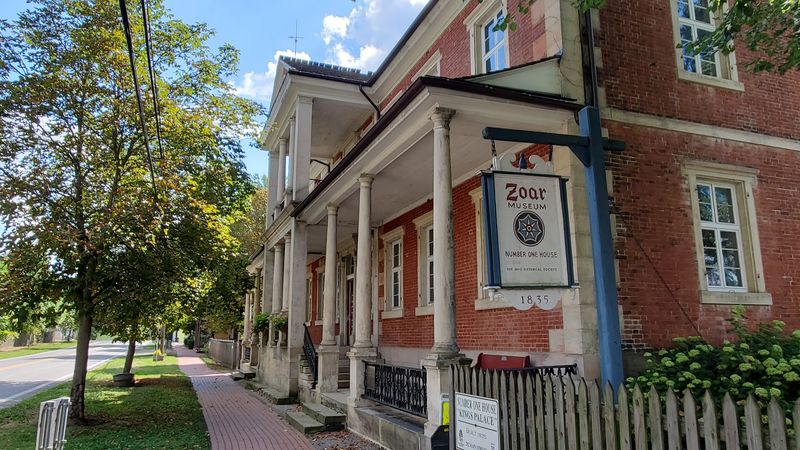
Of all the buildings here, the one that stopped me longest was the big brick place at the corner, built in 1835 and known simply as Number One House. The plan was for it to shelter the society’s elderly members.
Instead it became the home of Joseph Bimeler, the leader who guided the group through its strongest decades. He passed away in 1853, and the community slowly lost momentum after that.
Inside, the rooms are furnished with pieces the Separatists actually made or used, which matters more than you might think. A lot of living history sites borrow furniture from elsewhere, and you can usually feel it.
Here the connection to the original families is direct.
The scale of the building surprised me too. Three stories of solid brick in a farming village in the 1830s was a serious statement about what shared labor could accomplish.
Guides walk you through room by room and answer questions without rushing, which I appreciated. Ask about how work assignments were handed out, because the answers get interesting fast.
Worth knowing before you go: the house is one of the anchors of the guided tour, and the guided version gets you inside buildings that self-guided visitors cannot enter on their own.
The Zoar Garden, Planted as a Living Sermon
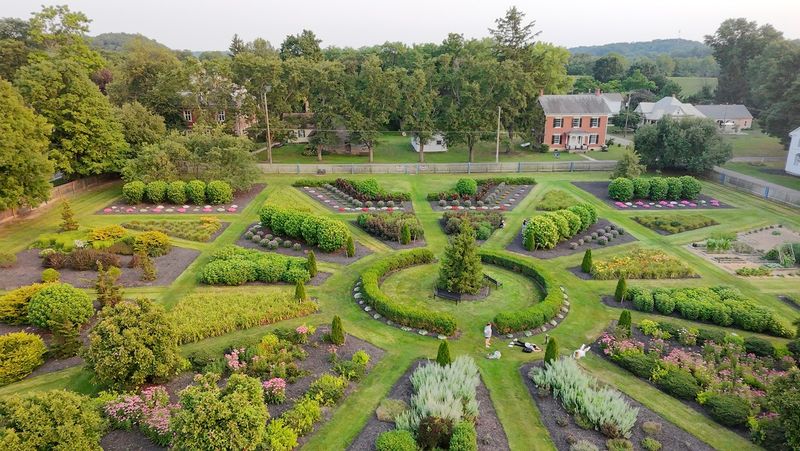
Every town has a centerpiece, and Zoar’s happens to be a 2.5-acre garden laid out in 1829 that doubles as a theology lesson. The design is geometric and deliberate.
A tall Norway spruce stands at the middle, representing the Tree of Life, with plantings radiating outward in a pattern drawn from scripture.
You do not need to know any of that to enjoy it. The beds are immaculate, butterflies work the flowers all summer, and there are benches where you can just sit and do nothing for twenty minutes.
What I found remarkable is that the layout has stayed true to the original plan for nearly two centuries. The center tree has been replaced over time, but the bones are the same ones the Separatists drew.
A greenhouse solarium sits at the back edge, and on a clear day the light bouncing off the glass makes the whole plot look staged.
Go early or late if you want photographs without harsh shadows. The garden is free to walk through, and it stays open even when some of the museum buildings are not.
Reviewers mention it more than any other feature in the village, and after one lap around the paths I understood exactly why.
Zoar Store and Visitor Center, Where Everything Starts
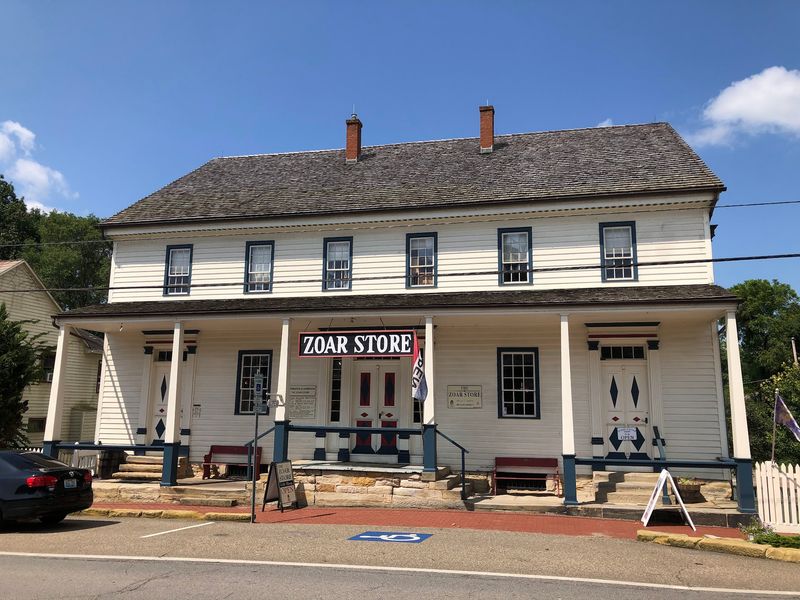
Tickets, maps, restrooms, advice: it all funnels through the 1833 Zoar Store, and skipping it would be a mistake. Back in the commune days, this building was the business brain of the whole operation.
Trade with the outside world ran through here, along with the post office and the society’s account books.
Now it functions as the visitor center, and the staff behind the counter tend to be generous with their time. I heard about a volunteer who talks history with anyone who lingers, and the store still stocks goods worth browsing.
Guided walking tours meet here and run roughly two hours. Wristbands get handed out at the counter, and there is a self-guided option if you would rather set your own pace.
Parking is a small lot in front plus a larger one across the street, where you will also find the public restroom. Keep that in mind before you wander to the far end of Main.
My suggestion: grab the printed map even if you plan to wing it. Buildings are scattered across several blocks and the map keeps you from doubling back.
Hours run Wednesday through Sunday, so a Monday visit will leave you looking at locked doors.
Bakery, Dairy, and Tin Shop, Trades You Can Smell and Taste
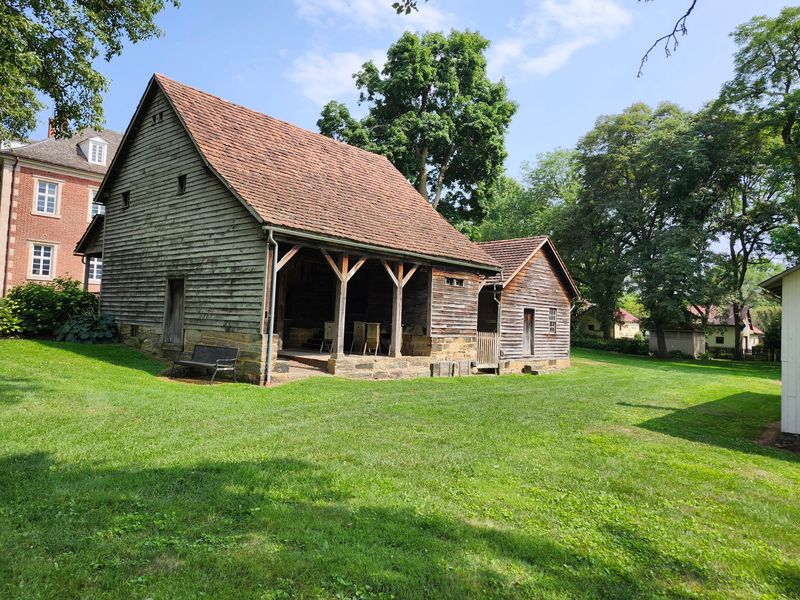
Nothing sells history to a hungry visitor like a working bakery. Zoar’s bakery hands out samples during tours, and the smell finds you before the building does.
Nearby, the dairy and springhouse tell the story of what was actually a major industry for the community. Cheese samples show up on tours here too, which is a small detail that makes the whole trade feel real rather than theoretical.
The tin shop is a personal favorite. Rows of hand tools, sheets of metal, and finished pieces show how much skill the society kept in-house rather than buying from outside.
Blacksmithing demonstrations run on certain days, and the sound of hammer on iron carries down the block. Kids who were bored two buildings earlier tend to perk right up.
Classes and demonstrations appear seasonally, including pretzel making and weaving, so checking the schedule before your drive is smart planning.
What ties these workshops together is a simple idea: the Separatists made almost everything themselves. Bread, cheese, tinware, wagons, cloth, nails.
Seeing those trades clustered within a few hundred feet of each other is the clearest picture I got of how self-sufficient a village of a few hundred people could actually be.
Red Brick Sidewalks and the Homes Nobody Tours
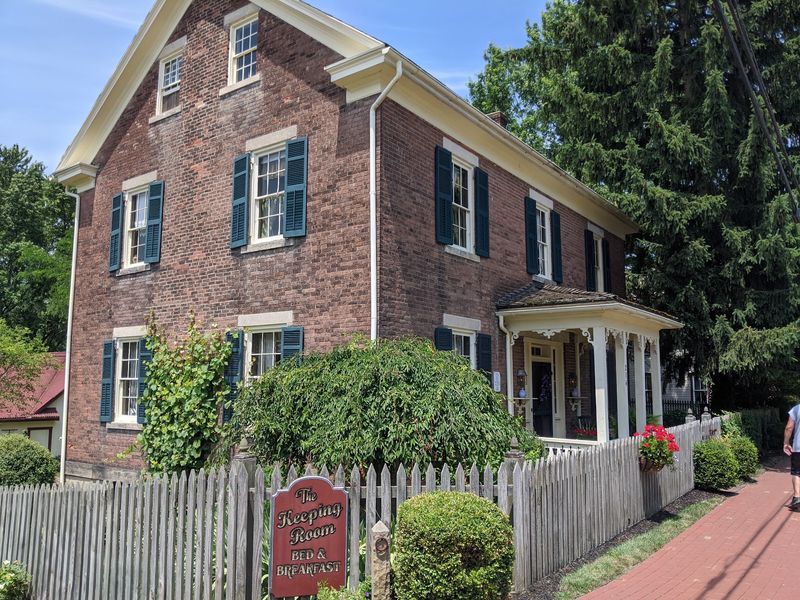
Half the pleasure of Zoar costs nothing at all. Red brick sidewalks run along Main Street and the side lanes, connecting museum buildings with houses that are simply somebody’s address.
Roughly 45 structures from the commune era survive, and only ten to twelve are operated as museum properties by the Ohio History Connection. The rest are private homes, shops, inns, and restaurants.
Walking past them, you start noticing the original bones under later updates. Steep German rooflines, thick masonry, small deep-set windows.
Some houses have been restored with real care, right down to period paint colors and hand-built fences. Others wear modern siding, and honestly that mix is part of what makes the place feel alive instead of embalmed.
Take the loop slowly. Village streets are short, the traffic is light, and the whole walkable core can be covered in under an hour if you are not stopping constantly.
Fair warning for anyone pushing a stroller or using a wheelchair: the brick surfaces are uneven in stretches, and a driving tour with short walking stops is a reasonable alternative.
Zoar earned National Historic Landmark District status in 2016, and one lap on foot makes it obvious why that designation fits.
Bimeler Cabin, the Town Hall, and the Bookends of a Society
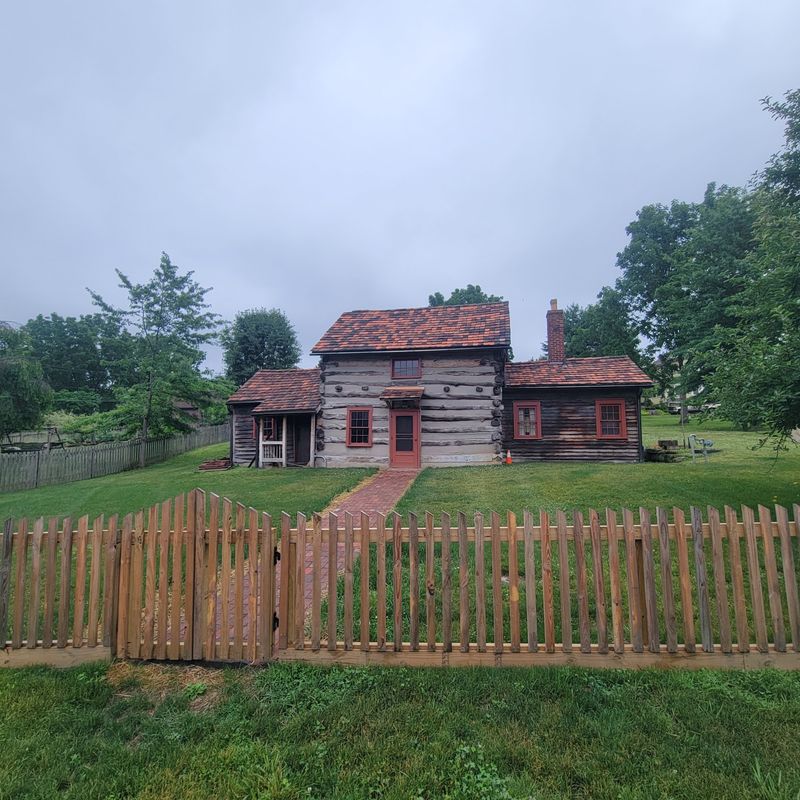
Two buildings sit at opposite ends of the Zoar timeline, and visiting both in one afternoon does something to your sense of scale. First there is Bimeler Cabin, the plain log structure where the leader lived in the earliest years.
It is small. Genuinely small, the kind of space that makes you rethink what starting from nothing looked like in 1817.
Then there is the Town Hall, built in 1887, one of the last major structures the society raised before it disbanded eleven years later. Solid, confident, built by people who assumed the arrangement would continue.
Seeing the cabin and the hall in the same walk tells the arc better than any placard could. Log walls to civic architecture in seventy years, then dissolution.
The Meeting House at the southeast corner of Main and Fifth belongs in that same thread, since worship was the reason the group left Germany in the first place. They were fleeing persecution in Württemberg and named the settlement after the biblical town where Lot found refuge.
One detail I keep thinking about: women in this society could vote and hold office, decades before that was common anywhere in America.
Festivals, Ghost Walks, and Picking the Right Day to Visit
Timing changes this trip more than almost any other factor. Show up on a quiet weekday and you get peaceful streets, a gorgeous garden, and a handful of open buildings.
Come during an event and the village turns into something else entirely. Maifest brings crowds and music, Civil War reenactors travel in from states as far as New York and Virginia, and Christmas in Zoar lights up the whole main strip in December.
Evening ghost walks meet at the Zoar Store during their season, with stories told building by building and warm drinks waiting at the end. Even if you are not the ghost-story type, the night air and lantern-lit streets make it worthwhile.
Museum hours run 10 AM to 5 PM Wednesday through Saturday and noon to 5 PM on Sunday, with Monday and Tuesday closed. Calling ahead at 330-874-3211 saves disappointment, because building availability shifts by season and staffing.
Local restaurants and shops sit within the village itself, so lunch does not require leaving.
Pair the stop with Fort Laurens or the nearby Towpath Trail if you want a fuller day out in Tuscarawas County.
Address: 198 Main Street, Zoar, Ohio 44697
