Potato chip cans and cemeteries do not usually share the same thought. Yet in Ohio, one quiet graveyard holds the ashes of the man who designed the famous stackable chip tube.
He loved his invention so much that his family placed part of his ashes inside one. Grinning at that story happens without warning, even now.
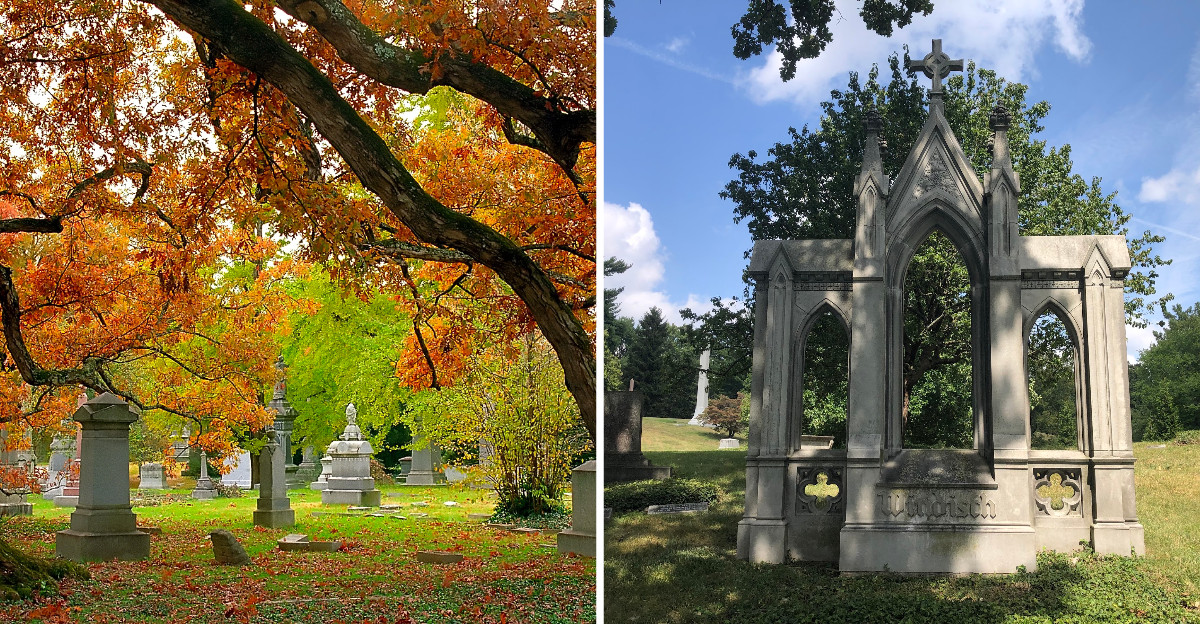
The cemetery itself turns out to be just as surprising, with swans gliding on quiet ponds and giant trees older than most towns. Walking the grounds, the mind wanders between potato chips and the peaceful hills.
The grass is soft, the paths are shaded, and the only sounds are birds and the rustle of leaves. It feels less like a cemetery and more like a park that happens to hold graves.
Ohio keeps both the inventor and his creation close, a strange and sweet pairing. Hours slip away among the headstones and the water.
Here is what I found while wandering one of the most beautiful places in the state.
The Chip Problem One Chemist Solved
Crushed chips at the bottom of a bag used to be a normal part of snack time, and I bet you remember that sad handful of crumbs. Fredric J.
Baur decided there had to be a better way. He was an organic chemist and food storage technician at Procter and Gamble right here in Cincinnati, Ohio.
His big idea was a tall, round can that could hold chips stacked neatly on top of each other. The chips themselves were shaped like little saddles, all the same size, so they nested together like spoons in a drawer.
That clever pairing of shape and container kept them whole and fresh.
Baur received a patent for his design in 1970, and snack aisles were never quite the same. Next time you pop open a tube, take a second to notice how perfectly everything fits inside.
It sounds simple, but someone had to think of it first.
Knowing this backstory made my visit to Spring Grove feel personal. I was not just strolling past old stones; I was searching for the resting place of a guy whose work I had held in my hands a hundred times.
Few cemetery trips start with a snack, but mine did, and I loved it.
How Cholera Sparked a Garden of Rest
Cincinnati in the 1840s was a tough place to be, especially when cholera outbreaks swept through town again and again. The old church graveyards were crowded and poorly kept.
Grieving families needed somewhere calmer and more dignified.
In 1844, members of the Cincinnati Horticultural Society stepped up with a bold plan. They wanted a rural cemetery that felt more like a peaceful park, close enough to reach but far from city noise.
Their inspiration came from Pere Lachaise in Paris and Mount Auburn in Massachusetts.
The land they picked was dotted with natural springs and leafy groves, which is how the name Spring Grove came about. I love when a name tells you exactly what you will find.
The cemetery was officially chartered in 1845, and the first burial took place on September 1 of that year.
Thinking about that history changed how I saw the grounds. Every winding lane started as an answer to sadness and sickness.
Instead of something gloomy, those founders created a spot where people could breathe fresh air and remember loved ones surrounded by beauty, and that idea still shapes the place today.
A Final Wish in Original Flavor
Back in the 1980s, Baur told his kids he wanted part of his ashes buried in a Pringles can. According to his eldest son, Larry, the family laughed at first.
Over the years, though, it became clear their dad truly meant it.
Fredric Baur passed away on May 4, 2008, at age 89, after living with Alzheimer’s disease. His children kept their promise.
On the way to the funeral home, they stopped at a Walgreens to pick up a can and actually paused to choose a flavor.
They settled on Original, which feels exactly right to me. The can was bought just for him and was never sold to anyone else.
Only a portion of his ashes went inside it, while the rest went into a regular urn, and some were given to a grandchild.
I found this story oddly heartwarming. It shows a man who felt real pride in his life’s work and a family that respected him enough to honor a quirky request.
If you visit, remember that this is a real family grave, so a quiet moment of respect goes a long way.
Rolling Lawns Shaped by Adolph Strauch
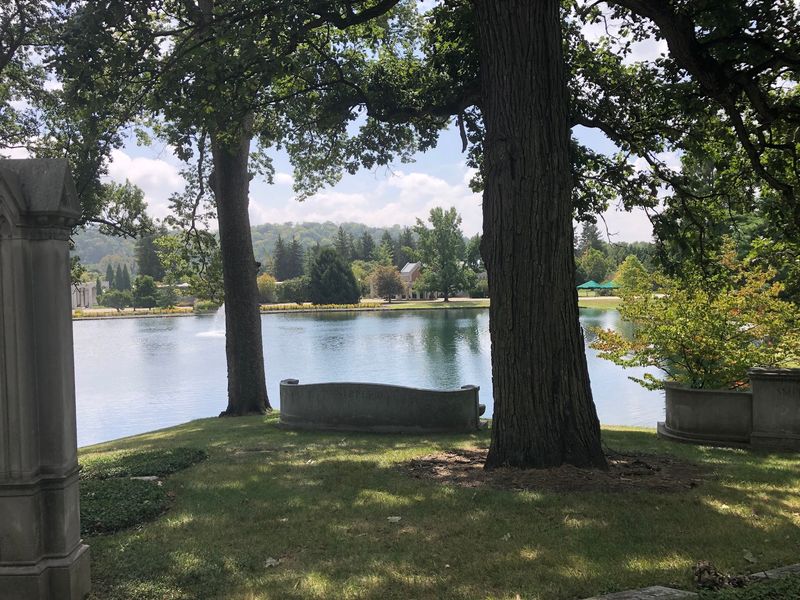
My favorite surprise was how open everything looked, with sweeping lawns instead of cramped rows of stones. That airy feeling is the work of Adolph Strauch, a landscape architect hired in 1855.
He reshaped the grounds into a true garden cemetery.
Strauch introduced something called the lawn plan, which kept wide green spaces open and let the scenery shine. People thought it was pretty radical back then.
Eventually, cemeteries all across the country copied his approach, and even Frederick Law Olmsted praised the results.
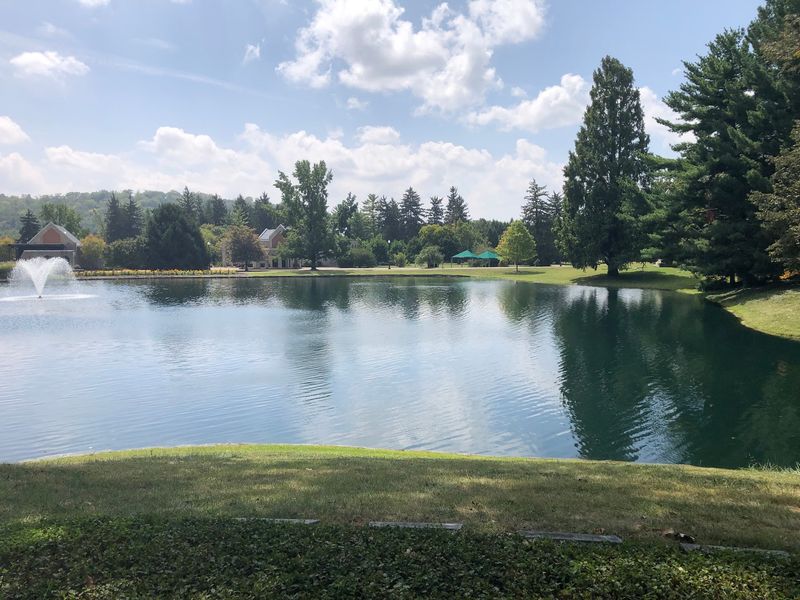
Today Spring Grove covers 733 acres, with roughly 400 to 450 acres landscaped and cared for. There are 12 ponds scattered around, and I spotted swans, ducks, and geese paddling lazily across them.
One swan seemed fully convinced it owned the whole lake.
In 2007, the cemetery became a National Historic Landmark District, one of only seven cemeteries in the nation with that honor. My tip is to park near a pond and simply walk for a while.
Follow the curves of the roads, let the hills reveal new views, and notice how carefully every tree and path seems to belong exactly where it is.
Champion Trees Worth a Slow Stroll
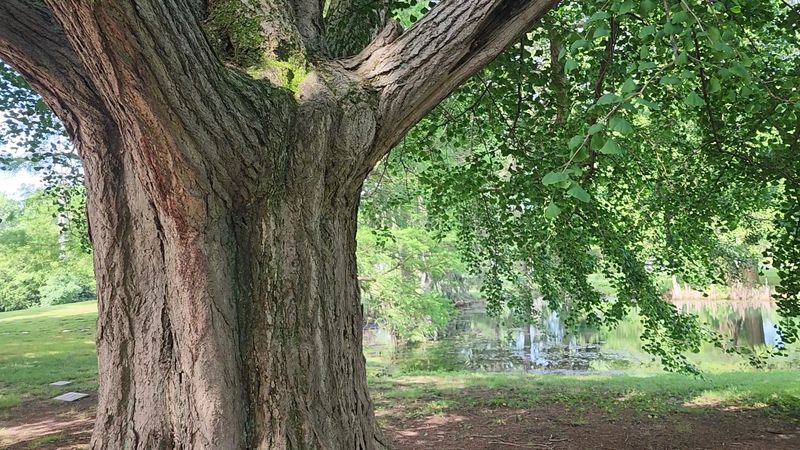
Look up. Seriously, I spent half my visit staring at treetops with my mouth slightly open.
Spring Grove is also an official arboretum, and in 1987 its name became Spring Grove Cemetery and Arboretum. More than 1,200 different labeled trees and shrubs grow across the developed grounds.
Some come from right here in Ohio, while others traveled from faraway corners of the world.
Among them are State and National Champion Trees, recognized for their impressive size and age. There is also a Centenarian Collection of trees that have stood for over a hundred years.
Imagine all the seasons those branches have seen, from horse carriages to modern cars rolling by.
The arboretum holds Level III accreditation, which means it takes education and research seriously. Those little labels are a free science lesson, so read a few as you wander.
Kids especially enjoy hunting for the strangest tree names.
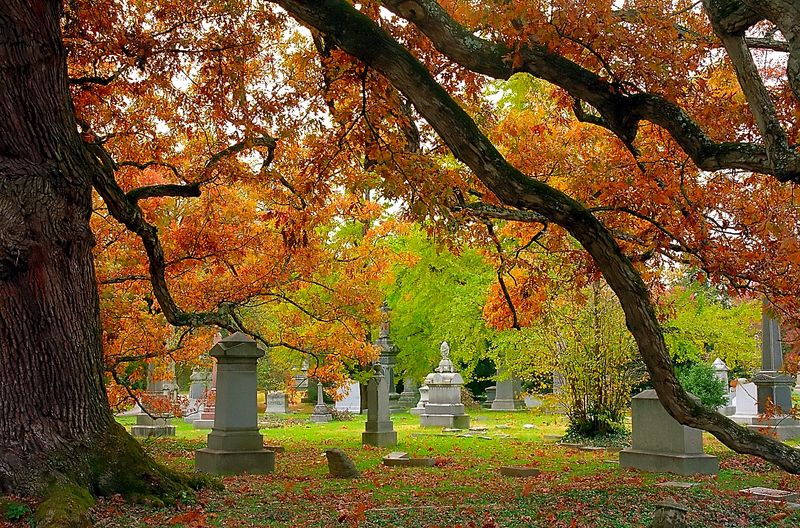
Fall is magical here, with reds and golds lighting up the hills, but spring brings tulips and blossoms too. Bring a camera, wear comfy shoes, and give yourself permission to wander without a plan.
Trees this grand deserve a slow pace and a little bit of wonder.
Famous Names Carved in Stone
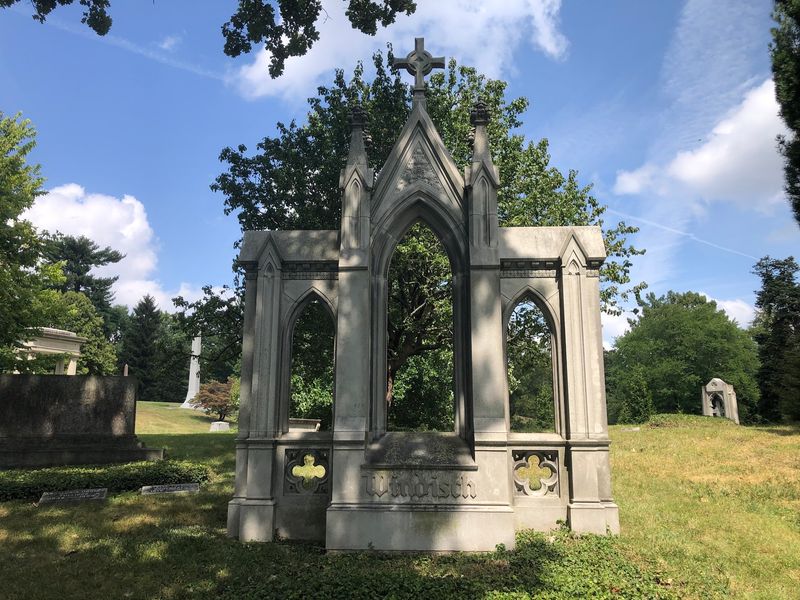
Some names here sound like a grocery trip or a laundry shelf, and that made me smile. Families like the Tafts, Krogers, and Procters rest among these hills.
Their stories helped build Cincinnati into the city it is today.
Fittingly, Baur shares the grounds with names tied to the very company where he worked. I liked picturing the inventor of the Pringles can in such familiar company.
It feels like a quiet reunion of Cincinnati’s biggest ideas.
As you explore, you will pass towering obelisks, carved angels, and mausoleums that look like tiny temples. Some sections honor Civil War generals and Congressional Medal of Honor recipients.
Every marker hints at a life with its own chapter in American history.
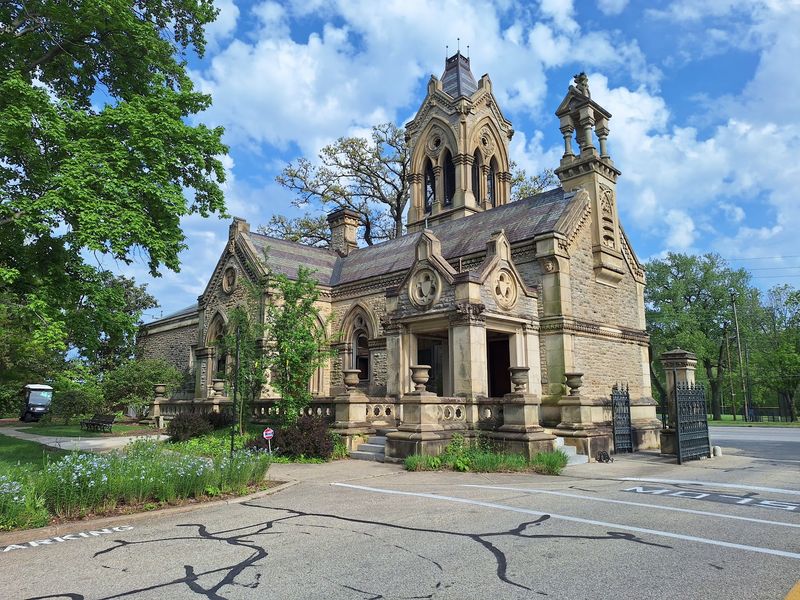
Finding specific graves can be tricky because the roads twist and loop. Stop at the visitor center near the main entrance and grab a map before you head out.
It saves a lot of guessing.
I treated it like a treasure hunt, matching names to stories I had read about. Even when I could not find a certain stone, I stumbled upon something beautiful instead.
Honestly, that happy accident might be the best way to experience this place.
Planning a Peaceful Visit
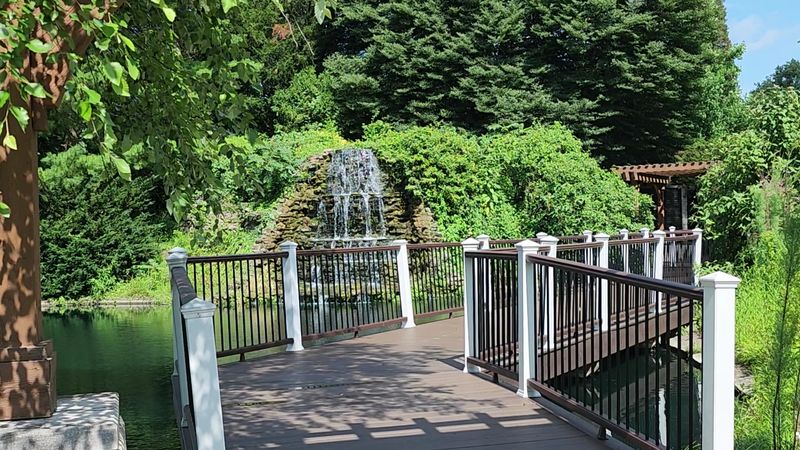
Plan for more time than you think you need, because this place is huge. I wandered for hours and barely scratched the surface.
The perimeter loop alone stretches around five miles.
Spring Grove is open every day from 8 AM to 6 PM, and admission is free. You can drive the winding roads slowly or park and explore on foot.
Walkers, joggers, and cyclists all share the lanes, so stay alert and keep to the side.
Remember that this is still an active cemetery where families visit loved ones. Keep voices soft, give funeral gatherings plenty of space, and leave grave decorations untouched.
Pets are not allowed, but kids are welcome, and they usually love spotting turtles and swans by the water.
Wear sturdy shoes, especially if you climb the higher ridges, since damp grass gets slippery. Up top, clear days reward you with views that stretch for miles.
Pack water and a snack, maybe even a can of Pringles in Baur’s honor.
Leaving that afternoon, I felt calm and oddly cheerful. A chip can, a garden, and a city’s memories all fit together perfectly here.
Address: 4521 Spring Grove Avenue, Cincinnati, OH 45232
