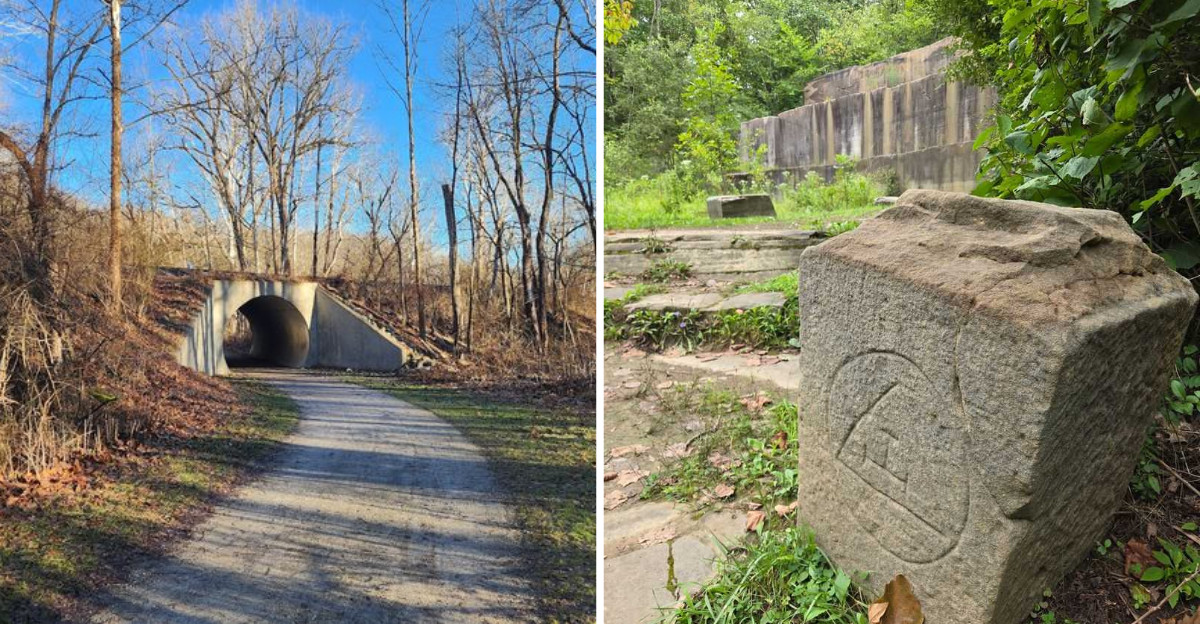
A gravel road in Ohio led to a sandstone wall taller than a house, and I pulled in expecting a quick walk in the woods.
I found myself standing beside a relic of the state’s industrial past instead, a metro park tucked inside a river valley that hides one of the strangest, most satisfying pieces of history I have come across.
Workers here cut Berea sandstone out of the hillside for more than a century, sending blocks off to build canal locks, sidewalks, and buildings in cities across the region.
What surprised me most were the leftovers scattered through the trees, half-finished millstones, crumbling foundations, and stone ruins the forest has been quietl reclaiming.
The trail is short, shaded, and easy enough that you can bring the whole family without anyone complaining too loudly. I walked past old quarry walls and imagined the men who swung hammers and chisels here, their work now half-swallowed by moss and roots.
If you like your hikes with a side of mystery, this one delivers in under two miles.
The Sandstone Wall That Stops You Mid-Step
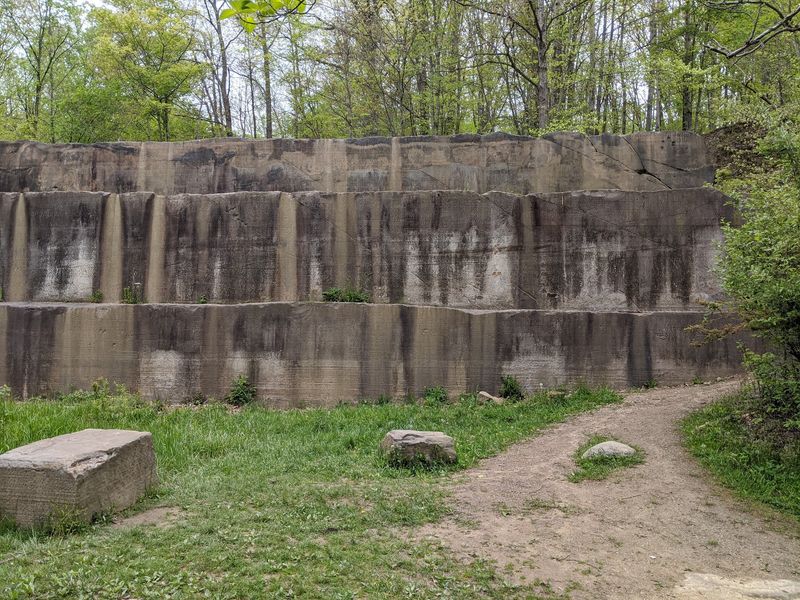
My first glimpse of the quarry face came through a gap in the trees, and I actually stopped walking. The wall rises straight up, streaked with rust-colored stains and softened by moss, with squared corners that only a human hand could have made.
Berea sandstone was the prize here, and it was popular because it cut cleanly and held its shape. Crews chiseled it into blocks, then hauled those blocks down to the canal for shipping.
Standing at the bottom gives you scale, but the better view comes from the trail that loops around the back side and climbs to the rim. Several people I passed mentioned the same thing, and they were right.
From up top you look down into the old pit, now a green bowl full of ferns and fallen trees. It is quiet in a way that feels almost staged.
The footing near the wall gets rocky and slick after rain, so decent shoes matter more than you would guess for such a short hike. I would also recommend giving yourself a few extra minutes here rather than rushing past.
Lock 28 and the Deepest Drop on the Canal
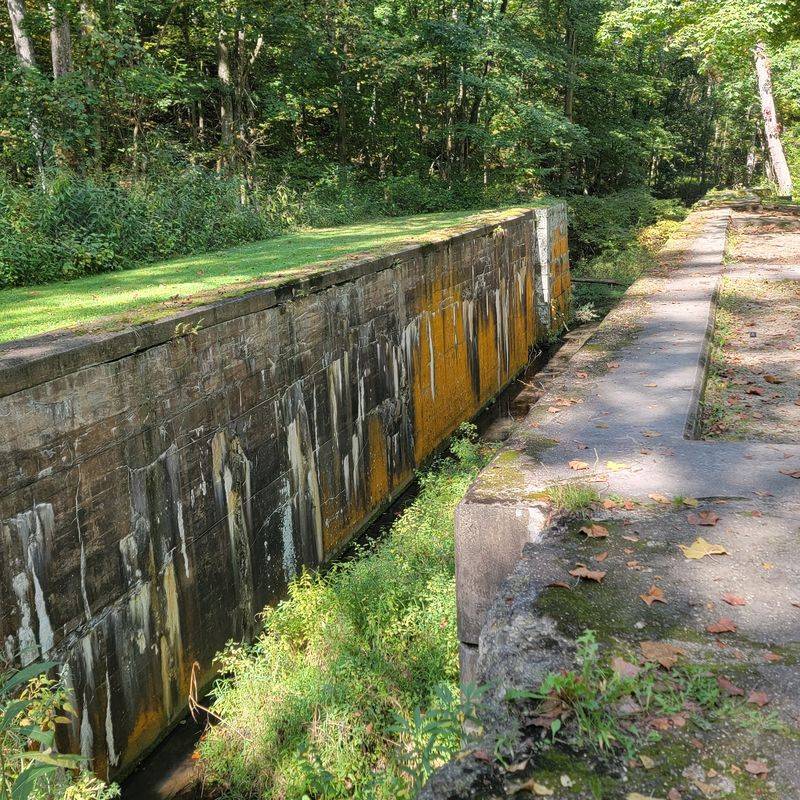
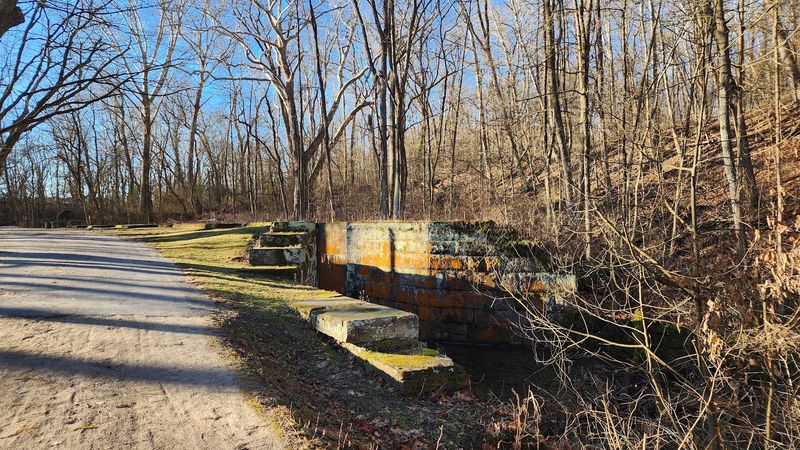
The park gets its name from a piece of engineering, not from the quarry itself. Lock 28 sits near the towpath, and at seventeen feet deep it was the deepest lock along the entire Ohio and Erie Canal.
Peering down into it, I tried to picture a loaded boat sinking slowly between those walls while water rushed out. The stone is still stacked tight, which says something about the quality of what came out of the ground here.
What makes the connection satisfying is that the sandstone used for canal locks came from these very quarries. The material and the machine sat within walking distance of each other.
Interpretive signs nearby fill in the details, and they are worth reading rather than skimming. Kids seem to like the lock more than the quarry, probably because it looks like a giant stone bathtub.
If you want the full canal experience, walk the towpath in either direction and watch how the valley opens and narrows. The flat gravel surface makes it easy on the legs, even after the rockier quarry loop.
Millstones Left Where the Work Stopped
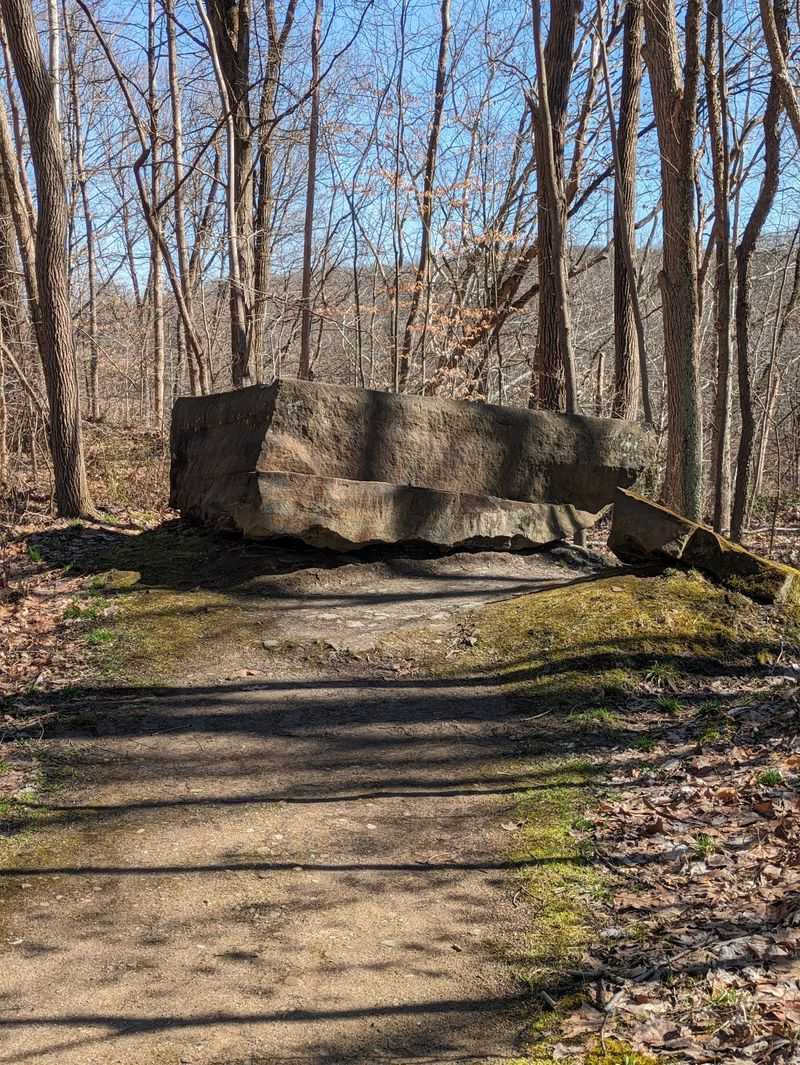
Nothing prepares you for the millstones. They sit in the leaves like enormous stone coins, some finished, some abandoned halfway through shaping, as if the workers set down their tools one afternoon and never came back.
Here is the fun part of the story. Ferdinand Schumacher, known as the Oatmeal King and a founder of American Cereal Works, the company that became Quaker Oats, used sandstone from this quarry for millstones that ground oats and stripped their hulls.
So your breakfast cereal has a distant cousin lying in the woods outside Peninsula. I did not expect that link when I started the walk.
The stones are easy to spot along the path, and a few sit close enough to touch. Running a hand over the surface, you can still feel the tool marks.
Grindstones, pulp stones, and hull stones all came out of this operation too. Products from here traveled far beyond Ohio, shipped to markets as distant as Japan, Germany, and Russia, which is a wild thing to consider while standing in a quiet Ohio forest.
Stone Ruins the Forest Is Slowly Swallowing
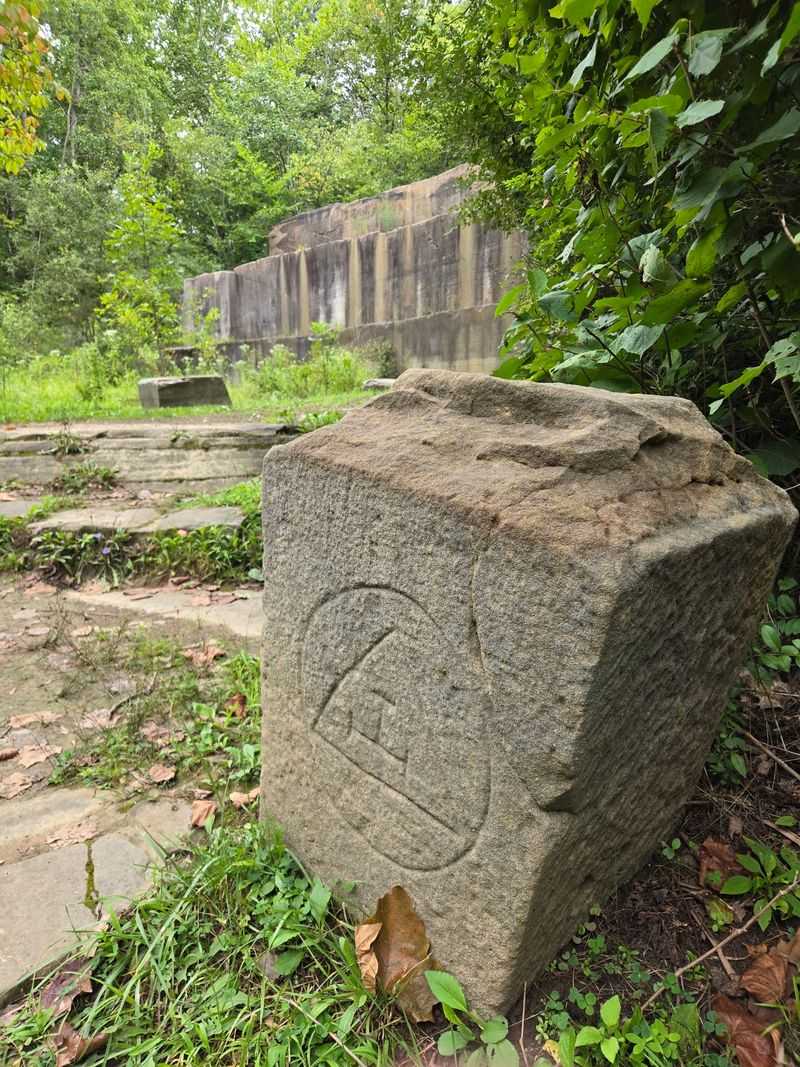
Scattered through the woods are low stone walls and foundations that no longer connect to anything. Trees grow straight out of some of them, roots gripping the blocks like fingers.
These are the remains of the industrial operation that ran here, the buildings and structures that supported cutting, shaping, and moving stone. Time and weather have knocked most of it down to knee height.
One reviewer summed up the mood perfectly by joking about a previous civilization needing further exploration, and honestly that is the feeling. You keep spotting rectangles in the underbrush that clearly were not made by nature.
Rusted bits of old equipment turn up too, half sunk in soil. I found myself slowing down and scanning the forest floor instead of watching the trail ahead.
Quarrying started here as early as the 1820s or 1830s, with three separate pits operating at different times, so the ruins span generations of work. The last stone left in the 1930s, when the Civilian Conservation Corps used it for park projects.
Bring curiosity, take photos, and leave everything exactly where you found it.
A Trail Short Enough for Anyone, Interesting Enough for Everyone
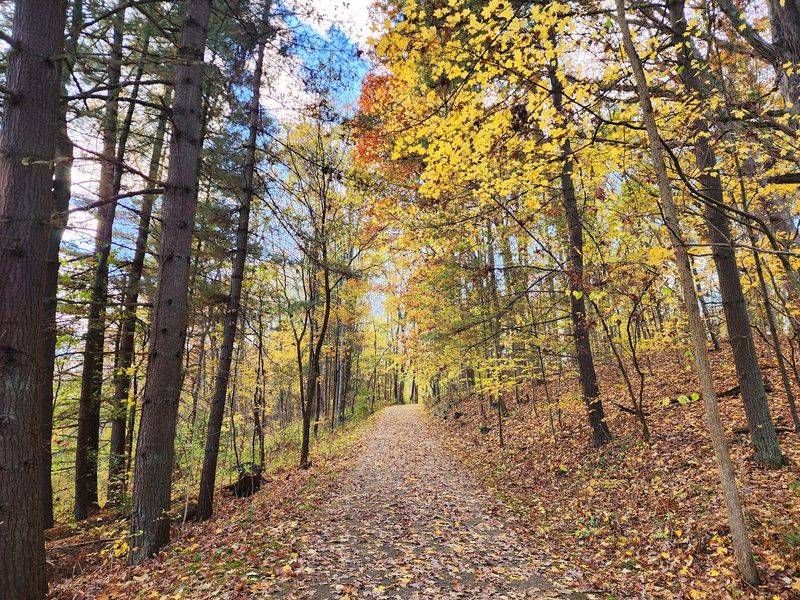
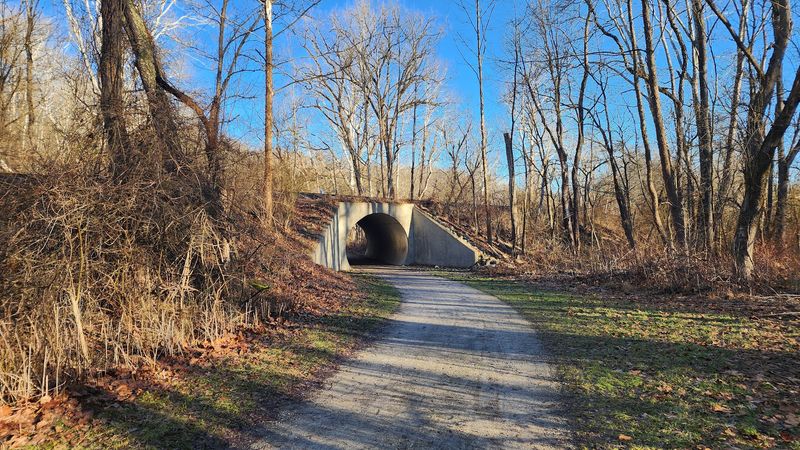
Under two miles total, the main loop here is the kind of walk you can finish before your coffee gets cold. It combines a paved section near the trailhead with an unpaved path that climbs toward the quarry.
There are a couple of noticeable inclines, nothing brutal, but enough to get your legs working. Roots and loose rock show up in patches, and moss makes some stretches slippery.
Shade covers nearly the whole route, which turns this into a smart pick on a hot afternoon. Benches appear at good intervals if anyone in your group wants a breather.
Interpretive markers line the path and explain what you are looking at, which transforms an ordinary walk into something closer to an outdoor museum. Parents seem to appreciate that the kids stop asking how much longer.
Poison ivy grows along the edges in places, so keep an eye on where hands and legs wander. Leashed dogs are welcome, and cleaning up after them is expected.
Sturdy shoes beat sandals every time here, especially if you plan to climb to the quarry rim for the overlook.
How Akron and Cleveland Grew From This Hillside
Think about the sidewalks, curbs, and building foundations that shaped Akron and Cleveland as those cities boomed. A surprising share of that stone started right here on this hillside above the Cuyahoga River.
Peninsula’s sandstone quarries were the area’s leading industry, and Deep Lock alone held three sites. The State Quarry opened in the 1820s, the South Quarry followed in 1837, and the North Quarry began work in 1863.
Beyond buildings, the operation produced flagstone for walkways, street curbing, and riprap used to armor seawalls and harbors. That is a lot of infrastructure from one patch of woods.
What I like about knowing this is how it changes the walk. The trees and ferns look peaceful now, but this was once a loud, dusty, hardworking place full of hammers and hauling.
Stone kept leaving until the 1930s, when the Civilian Conservation Corps took the last of it for park construction, including Pioneer Shelter over at Goodyear Heights Metro Park.
The park itself opened to visitors in 1964, turning an industrial site into something restful. History and recovery, layered on the same ground.
Planning a Visit That Feels Unhurried
Timing makes a real difference at this park. Weekday mornings feel calm and almost private, while fall weekends can fill the lot fast because the valley colors are hard to resist.
Gates open early at 6 AM and stay open until 11 PM, which gives you plenty of room to plan around the crowds. I would take the early slot for the light alone.
Parking is generous, including accessible spaces, and there are non-flushing restrooms right by the trailhead. Six picnic stations with tables and grills sit near the entrance, so a packed lunch works nicely here.
A trail legend at the start helps you get oriented before you head into the trees. If you want a longer outing, park at Lock 29 in the village of Peninsula and walk the towpath over to the quarry and back.
The park is a Summit Metro Parks site sitting inside Cuyahoga Valley National Park, so you can easily string it together with other stops nearby. Give yourself two hours if you want to linger at the ruins.
Address: 5779 Riverview Road, Peninsula, Ohio
