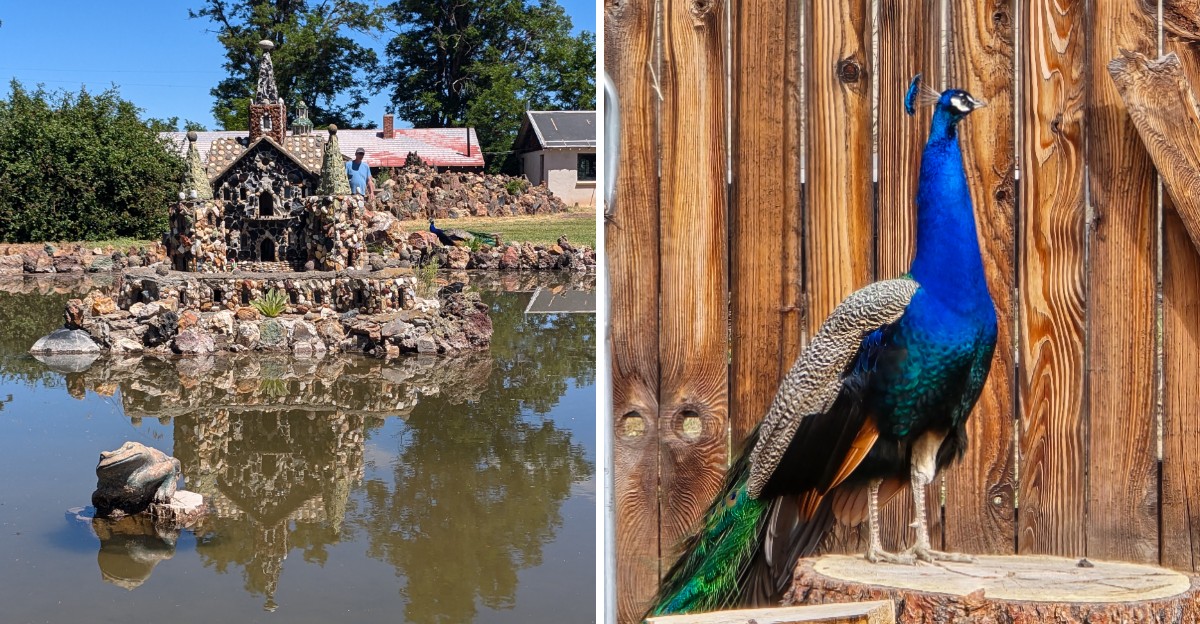
A Danish-born farmer turned the rocks he cleared from his fields into tiny castles, churches, and bridges. He started at age 52 and kept building for about 17 years.
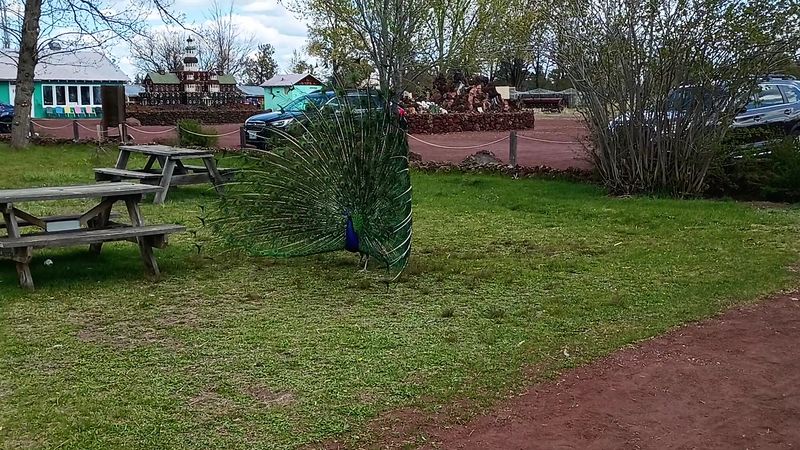
Then came the peacocks. Around 40 of them now strut freely between the stone towers like they own the deed.
I’m particularly drawn to the stones themselves. Agate, jasper, obsidian, thundereggs, and petrified wood all came from within 85 miles of his Oregon farm. One detail I find worth mentioning is a 7-foot Statue of Liberty built from that same local rock.
The whole place sat closed for years and nearly slipped away. Volunteers brought it back, castle by castle.
A Farmer Started Stacking Rocks At 52 And Never Really Stopped
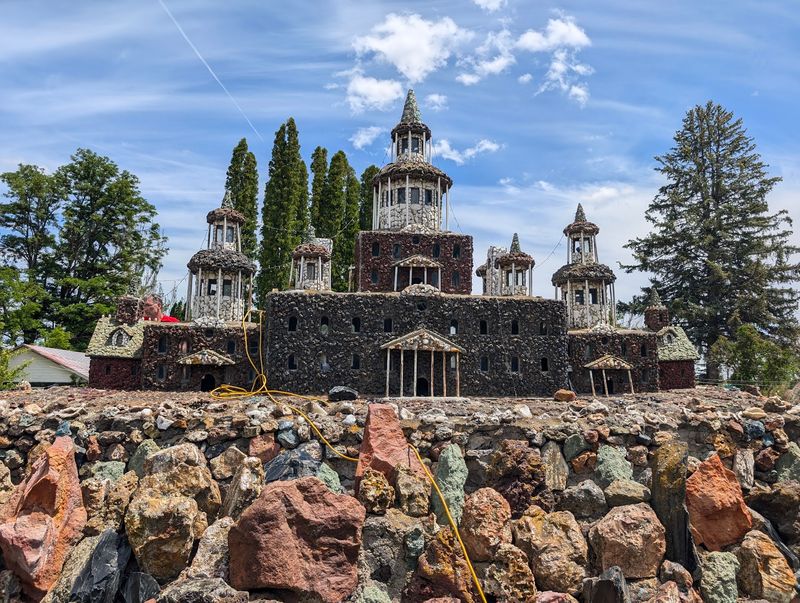
Rasmus Christian Petersen claimed an 80-acre homestead near Redmond in 1906. His fields came with a bonus crop nobody wanted, which was rocks.
Most farmers would pile those stones along a fence line and move on. Petersen had bigger plans, and in 1935, at age 52, he started building.
Petersen Rock Garden & Museum grew from that decision. He turned ordinary field stones into miniature castles, churches, bridges, and monuments. Some of these little buildings look ready for a very small king.
He was a Danish immigrant who came to Central Oregon in the early 1900s. That European background shows up in the castle shapes and towers. You get a slice of old-world fairy tale in the middle of high desert farm country.
Petersen kept working on the garden until 1952. That’s roughly 17 years of hauling, sorting, and setting stone. It’s the kind of patience most of us save for untangling holiday lights.
Nobody handed him a blueprint or a big budget. He used what the land gave him and what he could gather nearby. That makes the whole site feel personal, like a diary written in rock instead of ink.
Every Stone Has An Oregon Address
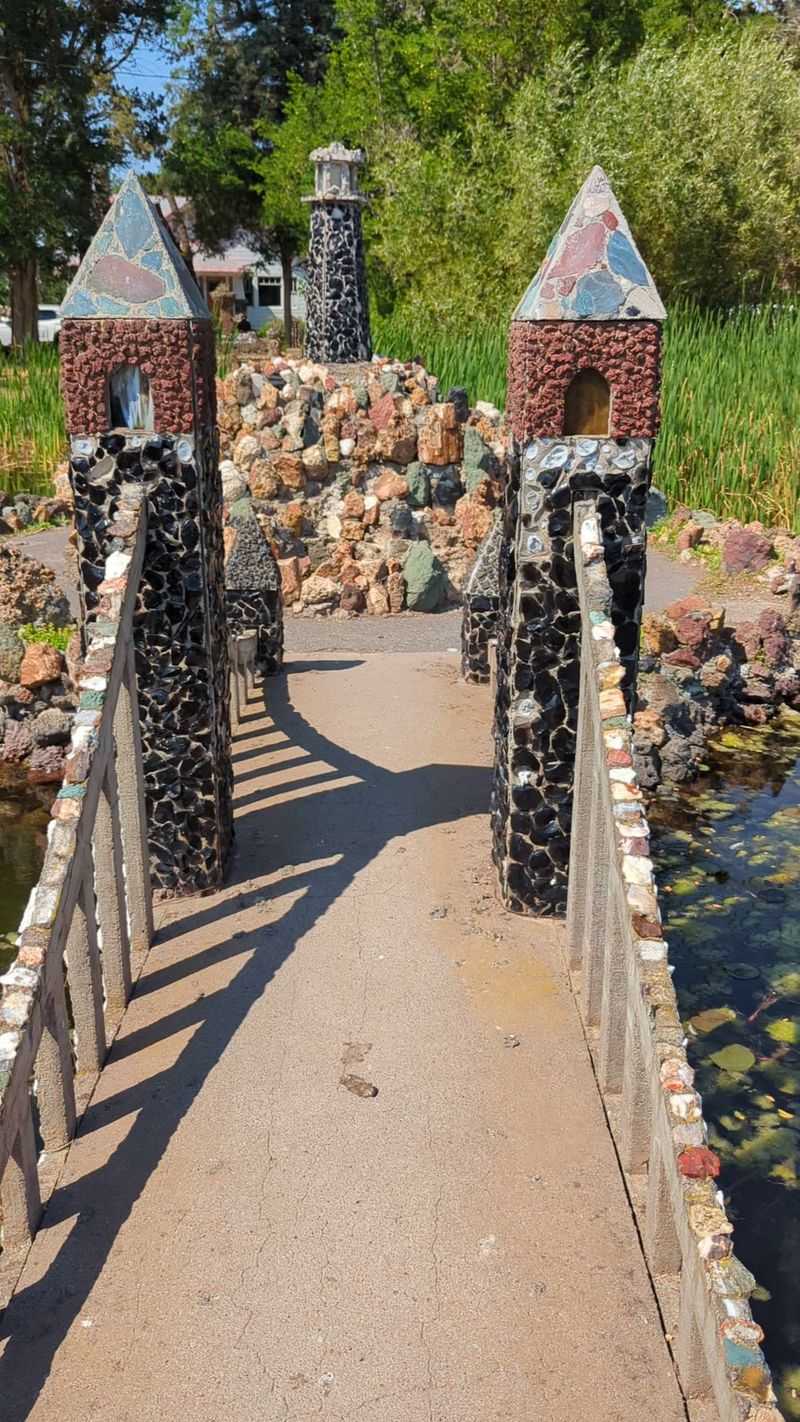
Look closely at any wall and you’ll spot shine. Petersen didn’t just stack plain gray rocks and call it a day.
He gathered semiprecious stones from within about 85 miles of his home. Agate, jasper, obsidian, thundereggs, petrified wood, and lava all made the cut. Central Oregon basically served as his personal hardware store.
That local sourcing makes the garden a geology lesson you can walk through. Each structure shows off the variety of rock this part of Oregon produces. Rockhounds will want to slow down and study every corner.
Obsidian is volcanic glass, which explains its dark, glossy look. Thundereggs look plain outside but often hide colorful patterns inside. Petrified wood is ancient wood that slowly turned to stone over a very long time.
Now picture finding enough of those to build a castle. Then several more castles. Then bridges and churches too.
Here’s a fun way to explore with kids. Turn it into a scavenger hunt and see who can spot obsidian, agate, and petrified wood first. It keeps young eyes busy and teaches them to tell rocks apart.
Lady Liberty Stands Seven Feet Tall In Rock
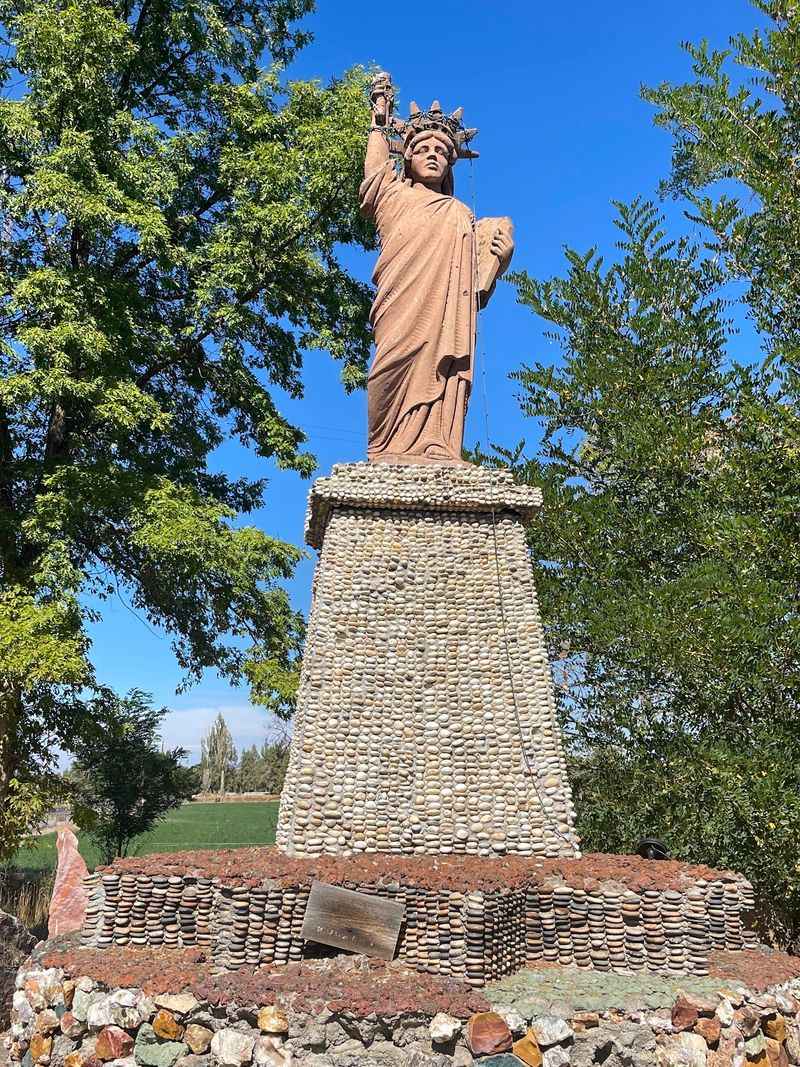
Petersen loved his adopted country, and he said so in stone. The proof stands about seven feet tall.
His replica of the Statue of Liberty is one of the garden’s best-known pieces. It’s built in the same rock-and-concrete style as the castles. Liberty looks a little rugged here, which feels right for Central Oregon.
Nearby you’ll find a concrete American flag. Both pieces were made as a tribute to the United States. For a Danish immigrant who homesteaded in 1906, that gratitude clearly ran deep.
Check out the plaque below the statue. It reads “Enjoy Yourself, It Is Later Than You Think,” a line from a popular 1949 song. That’s solid life advice, and it’s set right into the rock.
The message hits a little differently once you know Petersen’s story. He started this garden in his fifties and kept going for years. He clearly took his own advice to heart.
These patriotic pieces make great photo stops for families. Grab a group shot in front of the statue. You can tell friends you visited Lady Liberty without leaving the high desert.
Take a moment here before moving on. It’s one of the most personal spots on the property.
Ponds And Moats Turn Castles Into Tiny Islands
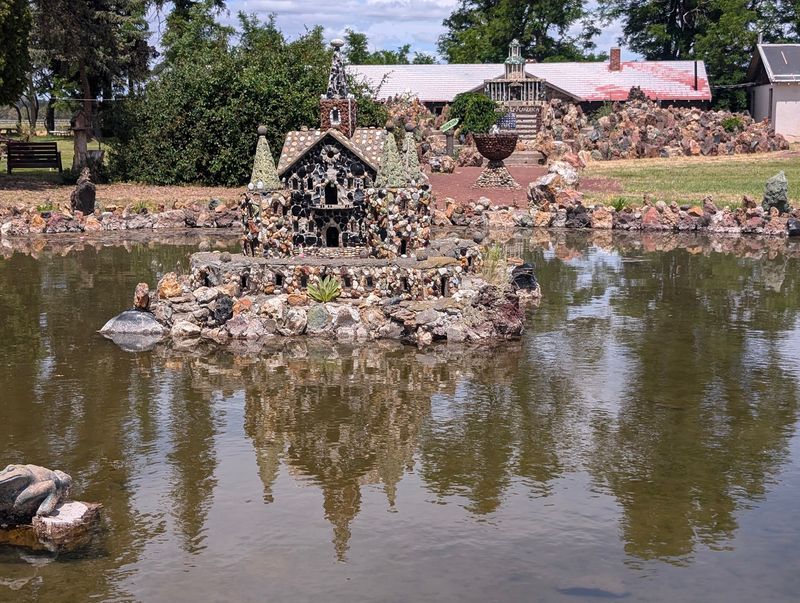
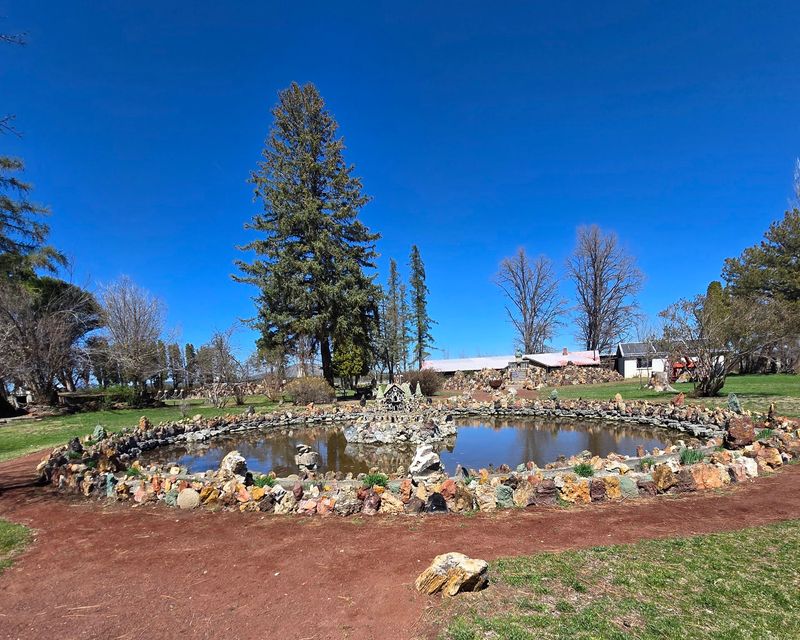
Castles need moats. Petersen apparently agreed, because water features show up across the property.
The historic site covers about 4 acres. Ponds, moats, and natural landscaping wrap around many of the rock structures. Some buildings sit on little islands, which makes them look even more storybook.
Don’t skip the section near the front of the property. The area with water and islands sits across the entrance driveway, and it’s easy to overlook. Swing by that side before you leave.
Water levels can change with the season and ongoing restoration. Pond restoration is actually one of the garden’s current needs. So what you see may depend on when you go.
Still, even dry moats help you understand Petersen’s vision. He wasn’t just placing buildings at random. He designed little scenes, complete with bridges arching over water.
Those bridges are some of the most charming pieces here. They connect islands and paths in ways that feel playful and planned at once. It’s like a model railroad layout, minus the trains.
Photographers should look for reflections when the ponds hold water. A stone tower mirrored on still water is a gorgeous shot. Early in the visit, the light tends to be softer too.
About 40 Peacocks Act Like They Run The Place
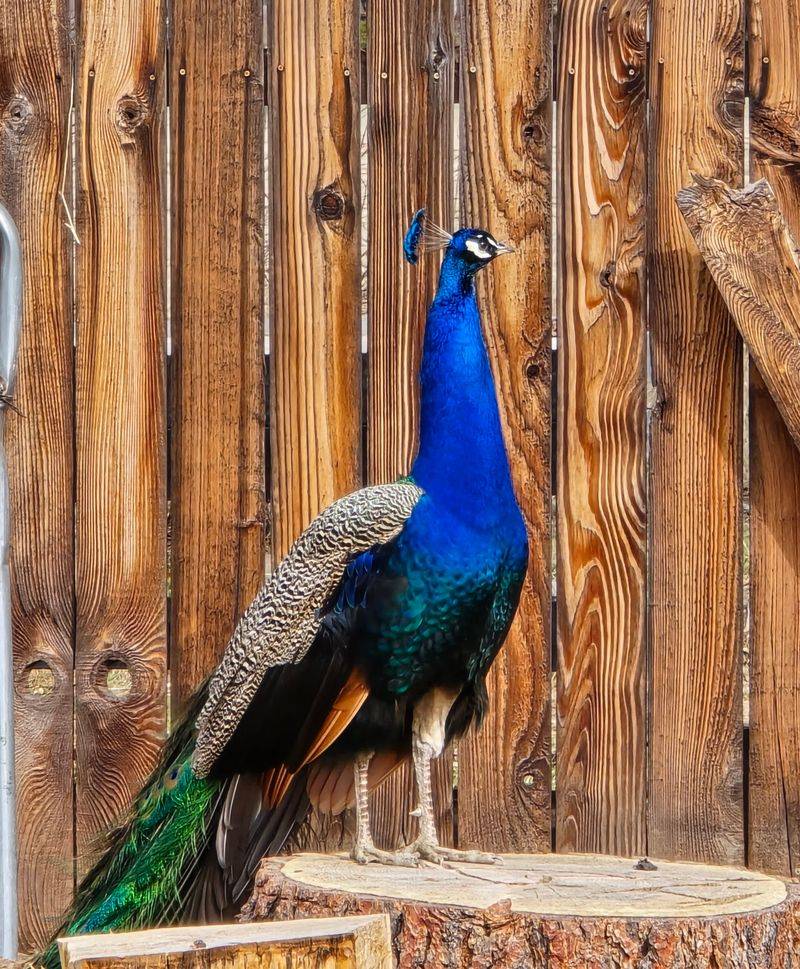
Forget guard dogs. This garden comes with roughly 40 peacocks that wander the grounds as if they signed the paperwork themselves.
The birds roam freely around the stone structures. Their bright blue and green feathers pop against the gray and rusty tones of the rock. It’s a combination you won’t see at your neighborhood park.
Fair warning about the noise. Peacocks have loud, distinctive calls that can sound surprisingly dramatic. If something nearby seems to shriek at you, relax, it’s just a bird with opinions.
Staff and volunteers look after the flock. Their diet includes corn, sunflower seeds, and wild bird seed. Those birds eat better than some college students.
The grounds are part of what’s officially called a peacock sanctuary. That word fits, because these birds clearly feel at home. They stroll between castles and bridges like tiny royal inspectors.
Chickens and cats also live on the property. The peacocks still steal most of the attention, which seems to suit them just fine.
Kids especially tend to light up around them. Just remind little ones to give the birds space and keep hands off the stone creations. Everyone, feathered or not, deserves a calm visit.
Rocks From Around The Globe Fill The Museum
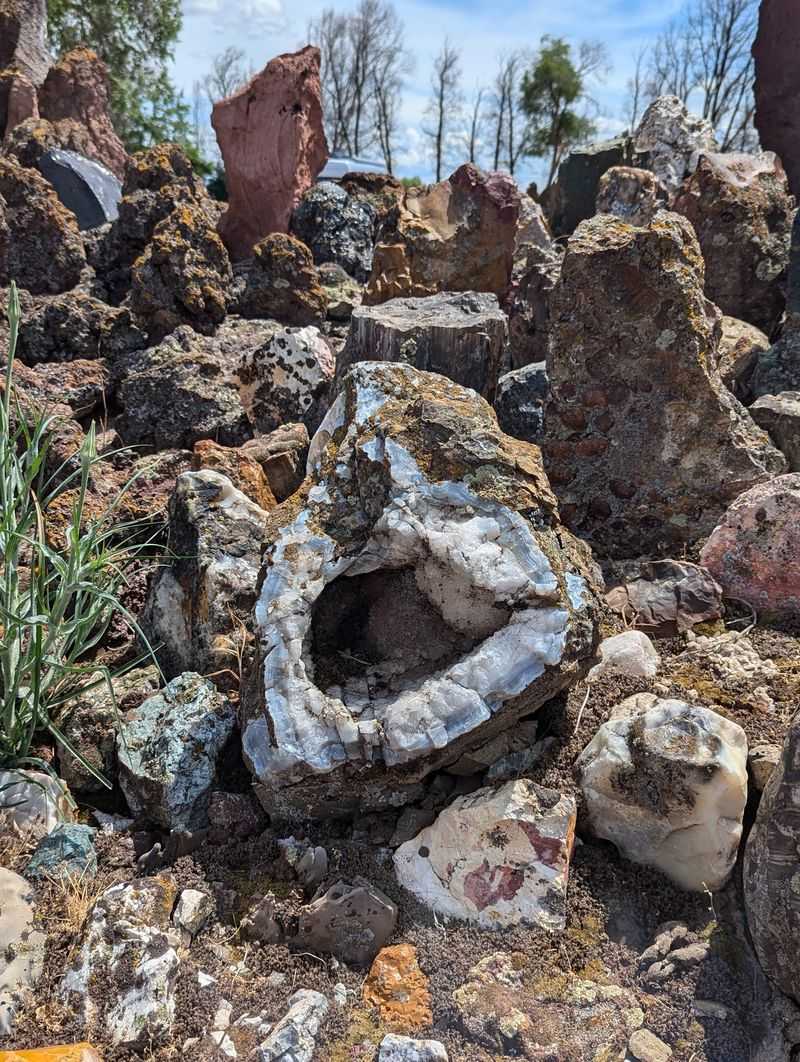
Outside you get castles. Inside, the museum hands you a whole planet’s worth of rocks.
The collection includes rocks, fossils, shells, and semiprecious stones. Some pieces come from Central Oregon, while others traveled from around the world. It’s a nice contrast to the local stone used in the garden.
Native American artifacts are on display too, along with other historical items. That adds depth beyond pure geology. You get a sense of the people and history tied to this landscape.
Many visitors make a beeline for the black light room. Certain minerals glow under ultraviolet light in bright, surprising colors. And no, nobody painted them, that glow comes straight from nature.
Thundereggs make a great example of how cool this gets. They look like lumpy brown balls until you see the patterns inside. Under the right light, the show gets even better.
Plan some time for this building, especially with curious kids. It’s easy to think you’ll just peek in. Then twenty minutes vanish while everyone points at shiny things.
The museum also ties back to Petersen’s own passion for stone. His obsession with rocks didn’t stop at building. Collecting and displaying them fits the spirit of the whole place.
Closed, Nearly Lost, Then Rescued By Volunteers
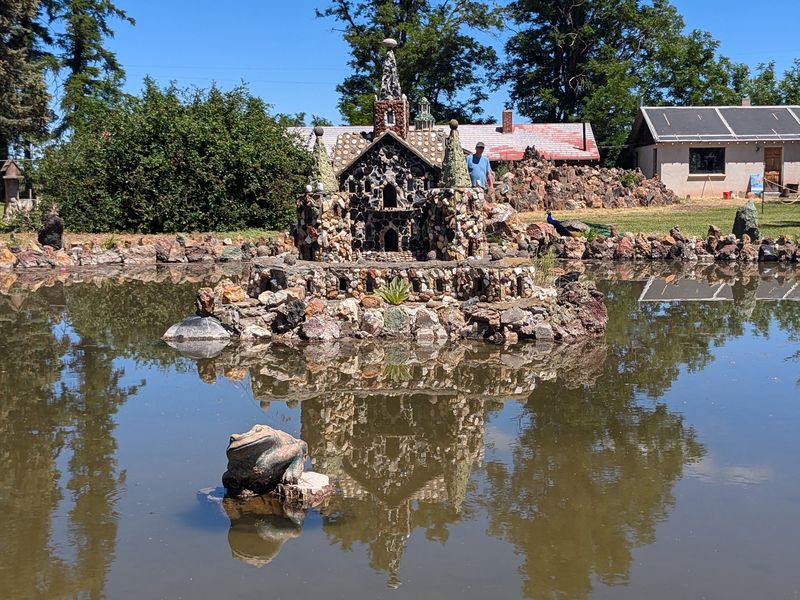
For a while, this story almost had a sad ending. The comeback makes it even better.
In 2011, the garden was named one of Oregon’s Most Endangered Places. Two years later, in 2013, it joined the National Register of Historic Places. Recognition helped, but it couldn’t pay every bill.
In September 2016, the garden closed indefinitely. Repair costs had piled up, and its insurance got cancelled. Petersen’s castles sat waiting, with no visitors to admire them.
Then things turned around. Marci Wayman purchased Petersen Rock Garden in 2022, and volunteers began restoring the historic property. Volunteers spent about a year restoring the site, supported by grants, which led to a grand reopening.
Today it operates as a non-profit. That means community support really matters here. Your visit helps keep the gates open.
Restoration is still very much a work in progress. Current needs include red cinders for paths, roofs, pond work, landscaping, and lapidary equipment. They also welcome Oregon rocks and crystals, plus rock garden memorabilia.
Even the animals have a wish list. Food for the peacocks, chickens, and cats counts as a real need. Somebody has to keep 40 peacocks fed and fabulous.
Pack A Picnic And Bring Cash For Peacock Snacks
Good news for budget planners. There’s no mandatory admission fee here.
Instead, the garden asks for a suggested donation of about ten dollars. Inside the museum, they accept cash, credit cards, and Venmo. That donation goes straight toward keeping this non-profit running.
The gift shop is worth a browse. It offers a variety of souvenirs, including rocks. Taking home a piece of stone feels fitting after seeing Petersen’s handiwork.
Peacock food is sold in the museum as well. Feeding the birds is a favorite activity, especially for kids. Just stay calm when a crowd of feathered fans suddenly finds you very interesting.
Picnic sites are available on the grounds. Packing lunch turns a quick stop into a relaxed afternoon. Eating a sandwich while peacocks stroll past is a pretty unusual lunch view.
The experience is self-guided and family-friendly. You can wander at your own pace and linger wherever you like. Some folks zip through, while others spend a couple of hours.
A few tips help the day go smoothly. Wear comfortable shoes for the paths and bring water, since the high desert can get dry and sunny. A hat never hurts either.
Plan Around A Friday-To-Monday Schedule
Timing matters here, because the gates aren’t open every day. Check the calendar before you load up the car.
Petersen Rock Garden & Museum is open Friday through Monday from 10 a.m. to 4 p.m., but starting November 1, 2026, it closes at 3 p.m. instead. It’s closed Tuesday, Wednesday, and Thursday. That makes it a natural fit for a long weekend.
You’ll find it at 7930 SW 77th St, Redmond, OR 97756. The garden sits in Deschutes County, between Bend and Redmond. It’s easy to fold into a Central Oregon road trip.
That location is a real perk. Bend and Redmond both make handy bases for exploring the region. You can pair the garden with other outings and still have time to relax.
Arriving earlier in the day gives you more breathing room. You’ll have time for the garden, the museum, and a picnic. Rushing through feels like a waste when the details are this fun.
Oregon has plenty of scenic stops, but few feature hand-built castles and a peacock patrol. This one earns a spot on your weekend list. Petersen would probably tell you to enjoy yourself, since it’s later than you think.
