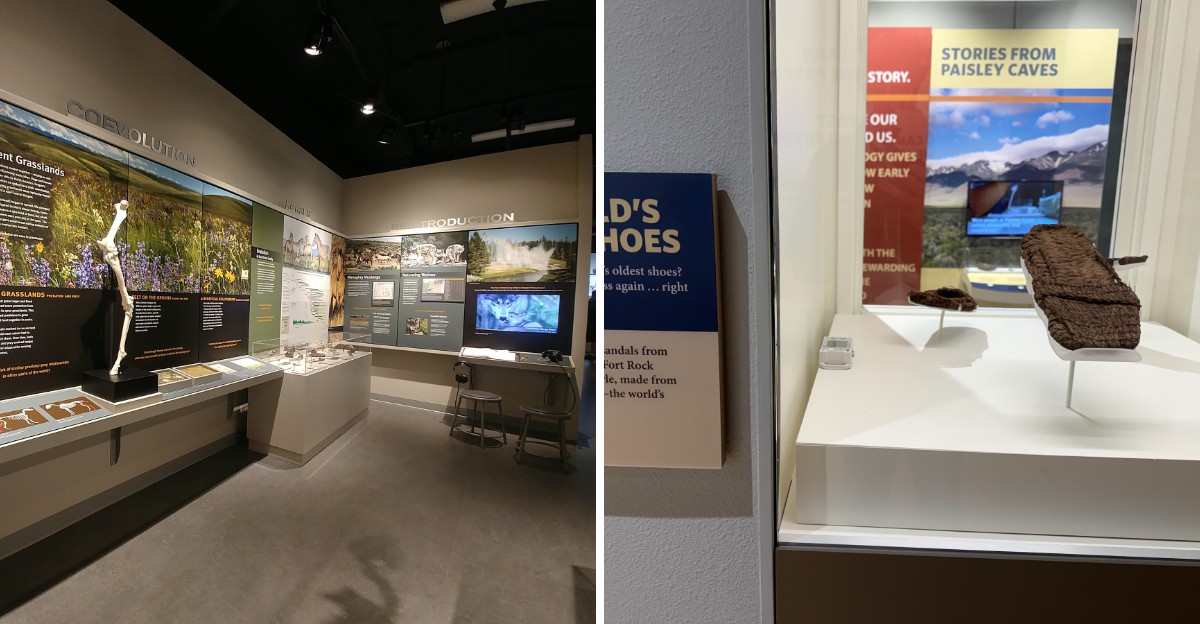
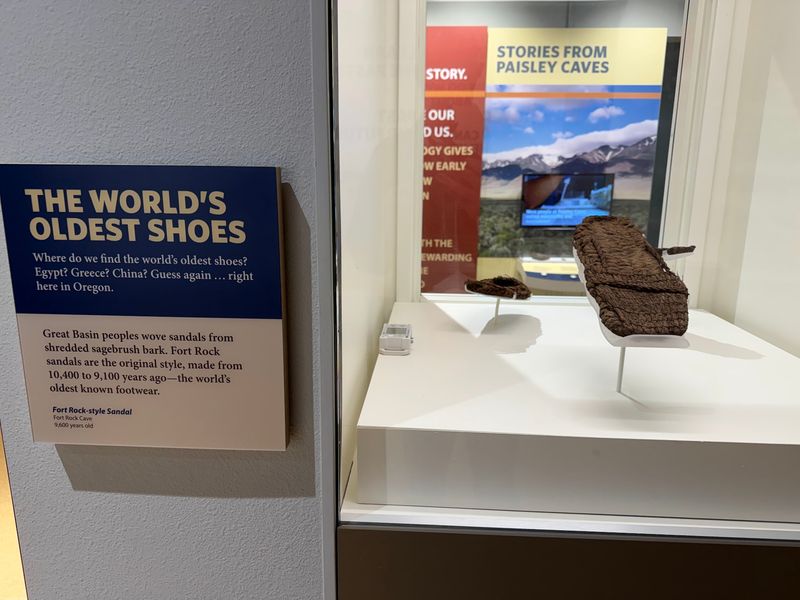
Someone wove a pair of sandals out of sagebrush bark more than 10,000 years ago. Those sandals still exist, and you can see them in Oregon.
I find that fact almost hard to believe. Nearly a hundred of these twined sandals and fragments turned up in a single cave, and some came in kid sizes.
One detail I find worth mentioning is how they survived. A thick layer of volcanic ash sealed them away, like nature’s own storage box.
The ash came from the same eruption that created one of the most famous lakes in the West. So the oldest known shoes on Earth are tied to a volcano, a cave, and a family walking through the desert. Who wouldn’t want to see that up close?
These Sandals Have Outlasted Every Shoe You’ve Ever Owned
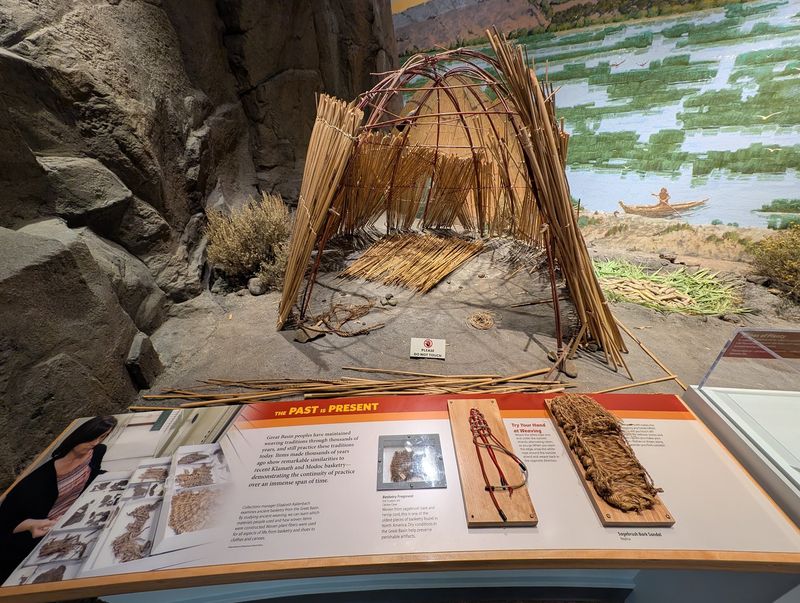
Your favorite sneakers might last a few years if you’re lucky. The Fort Rock sandals at the Museum of Natural and Cultural History have lasted more than 10,000.
Radiocarbon dating places these sandals between about 9,300 and 10,500 years old. Some of the oldest pieces date back roughly 10,400 years, making them the world’s oldest directly dated footwear.
Ancient makers crafted them from shredded sagebrush bark and other plant fibers. They used a twining technique that gives the sandals a tight, woven look you can still spot today.
The details make them feel surprisingly personal. Some sandals show signs of wear, so people clearly walked plenty of miles in them.
Others carry small burn marks, likely from sparks popping out of a campfire. That’s a very relatable problem, honestly, since anyone who has camped knows how sneaky sparks can be.
The collection also includes sizes for both adults and children. That means families once moved across this land together, sandals and all.
Seeing them in person gives you a real sense of scale. These aren’t mysterious objects from a distant planet. They’re everyday gear made by skilled hands, and they still hold their shape after thousands of years.
A Volcano Basically Saved Them For Us
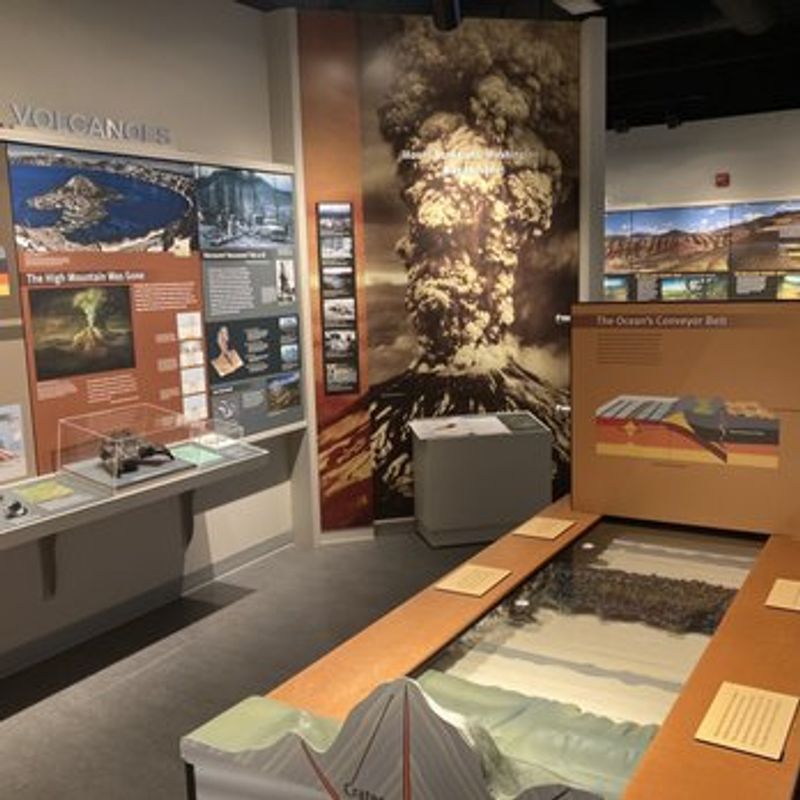
Credit for this incredible find partly goes to an explosion. Mount Mazama, a volcano in southern Oregon, erupted around 7,600 to 7,700 years ago.
That blast was massive enough to collapse the mountain and form Crater Lake. It also blanketed huge areas with volcanic ash.
Inside Fort Rock Cave, that ash settled over the sandals like a heavy lid. It sealed them away from moisture and weather for thousands of years.
Plant fibers usually break down fast in the open. Without that ash layer, these sandals probably would have vanished long ago.
The ash also helped scientists figure out the timeline. Because the sandals sat beneath the ash, researchers knew they were older than the eruption itself.
Later radiocarbon testing confirmed just how old they were. The numbers went far beyond what many experts expected at the time.
So the next time you see a photo of Crater Lake’s deep blue water, remember the backstory. That same eruption quietly protected the oldest known footwear on the planet.
It’s a nice reminder that geology and human history often overlap. At this museum, you get to see exactly where those two stories meet, which makes the sandals even more fascinating.
Meet The Archaeologist Who Found Them In 1938
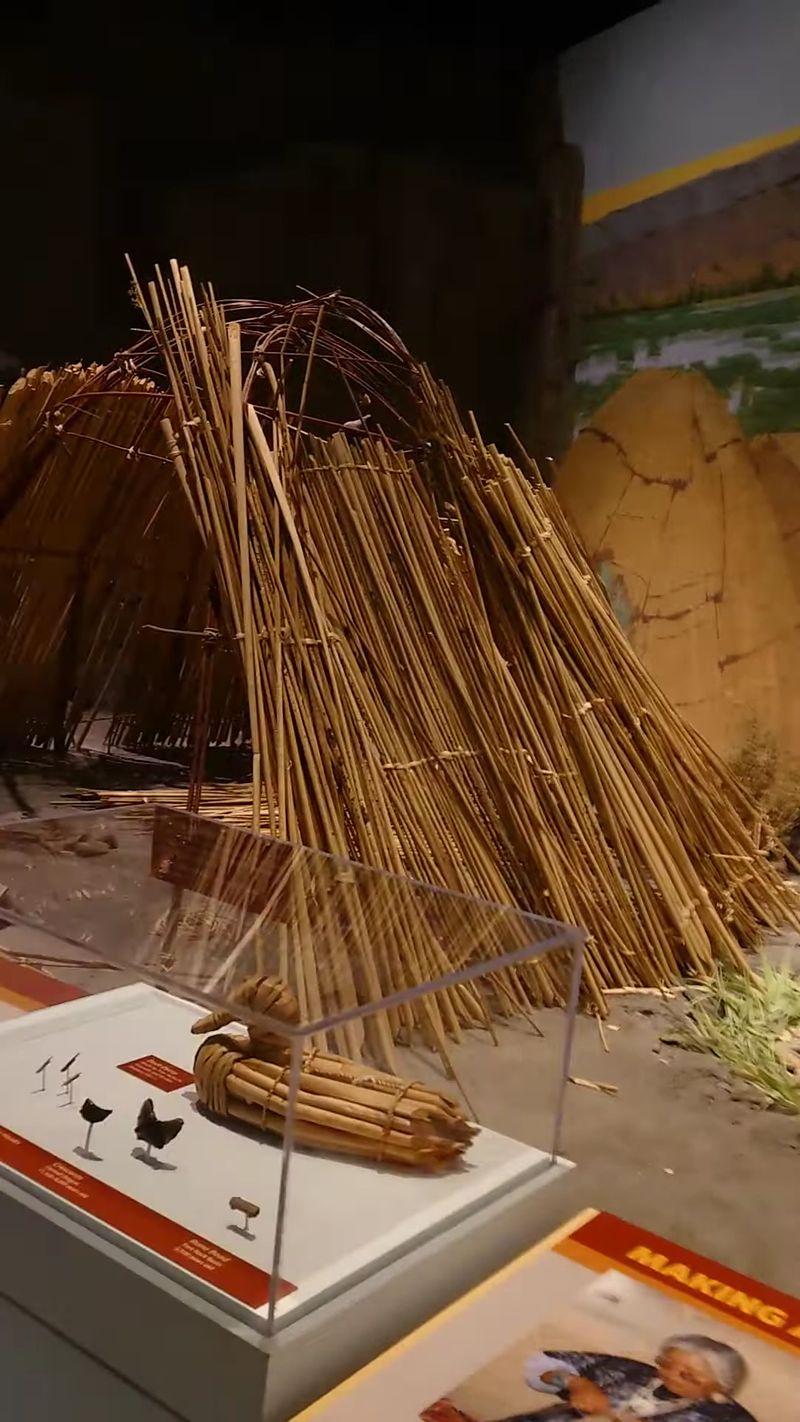
Luther Cressman was a University of Oregon archaeologist with a big idea. In 1938, he led the excavation at Fort Rock Cave in southern Oregon.
His team uncovered nearly a hundred sandals and fragments there. That’s an astonishing haul from a single site.
At the time, many scholars doubted people had lived in North America that early. Cressman’s work pushed back against that thinking.
Proof took a while, though. Radiocarbon dating didn’t exist yet in 1938, so confirming the sandals’ true age had to wait.
When testing finally happened, the results backed up his claims in a big way. Those humble sandals helped reshape how people understand early life in the region.
Fort Rock Cave itself sits in the high desert, far from Eugene. It’s the kind of dry, rugged landscape where preservation has a fighting chance.
The connection to the University of Oregon makes this museum the natural home for the collection. The sandals came out of the ground through university research, and they stayed close to that legacy.
When you see them on display, you’re also seeing the payoff of one researcher’s persistence. Patience, it turns out, can stretch across decades.
The Building Itself Pays Tribute To Northwest Longhouses
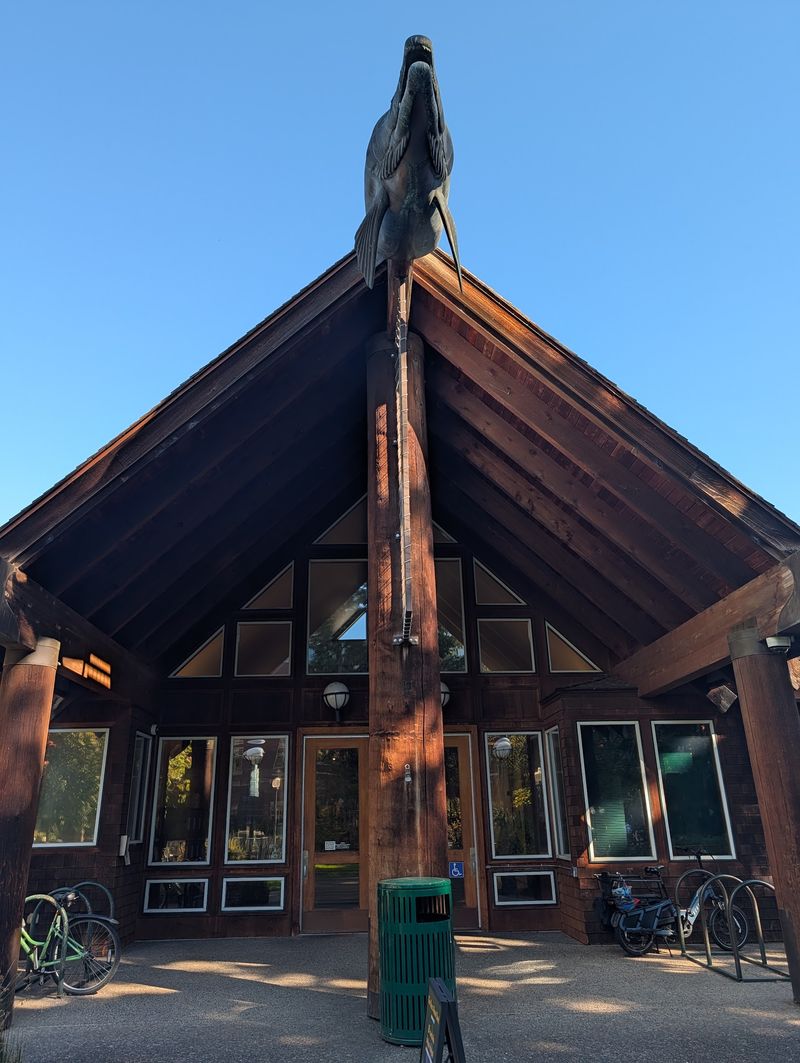
Plenty of museums look like boxes with signs out front. The Museum of Natural and Cultural History took a more thoughtful route with its design.
Its building draws inspiration from Pacific Northwest Native longhouses. That choice fits the stories told inside, since so many exhibits center on Indigenous history in Oregon.
The museum’s roots stretch back much further than the building. Geology professor Thomas Condon started a fossil collection at the University of Oregon in 1876.
Over the decades, that collection grew and changed. By 1936, it had evolved into the museum’s current form.
Today, it holds accreditation from the American Alliance of Museums. That’s a respected stamp of quality in the museum world.
It also serves as Oregon’s official repository for publicly owned archaeological and paleontological collections. In plain terms, many of the state’s important finds end up here for safekeeping and study.
The museum calls itself small but mighty, and that description fits. It isn’t sprawling, yet it carries serious scientific weight.
Knowing that history makes a visit feel richer. You’re not just seeing cool objects. You’re stepping into a place that has protected Oregon’s past for well over a century.
Fifteen Thousand Years Of Human Stories Wait Inside
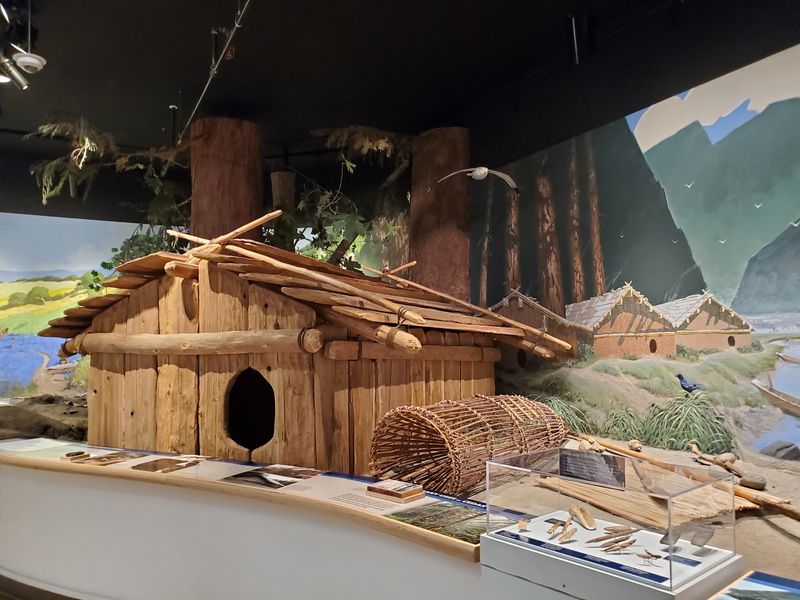
The sandals are a showstopper, but they have plenty of company. The cultural history galleries cover about 15,000 years of human life in Oregon.
Exhibits include material on the Paisley Caves, another key Oregon archaeological site. Research there adds even more depth to the story of the region’s earliest people.
The galleries trace Indigenous cultures from the First Americans all the way to contemporary Tribes. That long view matters, because it shows living communities, not just ancient ones.
Rare artifacts, striking images, and hands-on displays help bring those stories forward. It’s easy to spend extra time reading here.
A tip worth remembering: a docent can add a lot. Getting some background before you wander helps the details click.
Right now, the special exhibit America at 250, Before, Between, Beyond is on view through March 2027. It highlights Indigenous people and other communities of color through rarely seen artifacts.
Its text panels appear in English, Spanish, and Chinuk Wawa. That trio of languages makes the exhibit feel welcoming and rooted in the Northwest.
Give this part of the museum your full attention. The sandals make more sense once you see the long human journey surrounding them.
A Giant Prehistoric Salmon With Spike Teeth Is Absolutely A Real Thing
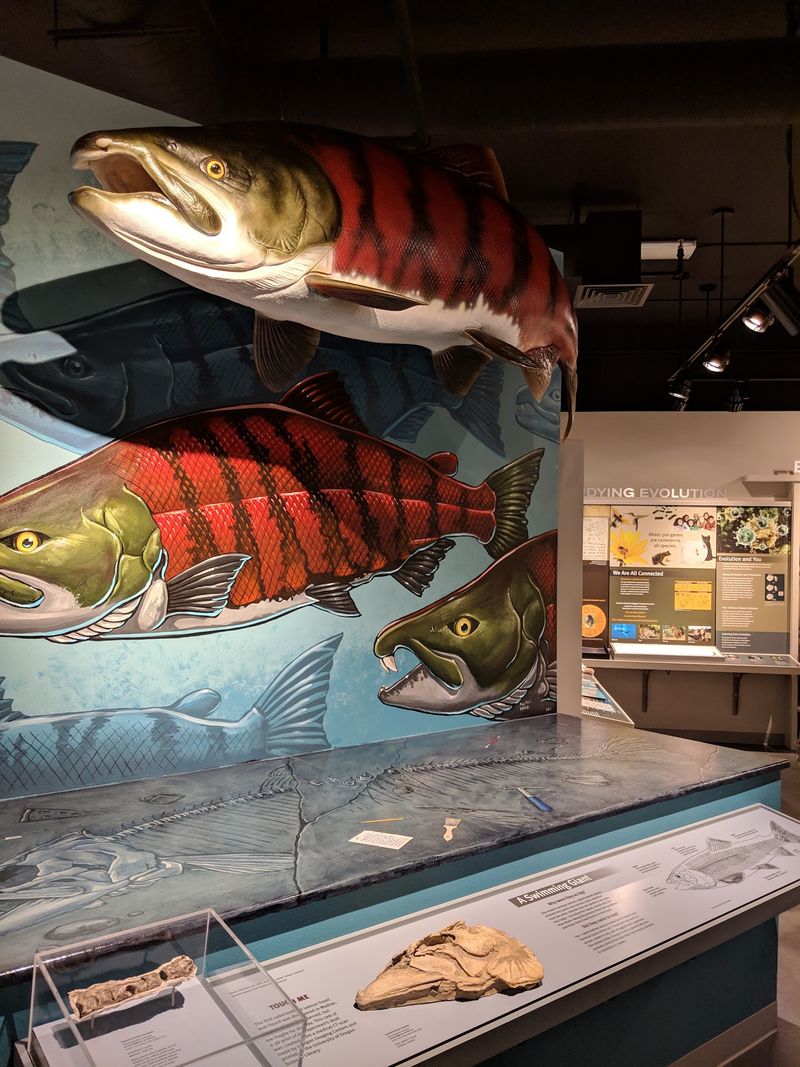
Salmon with spiky teeth sound like something a kid would doodle in class. The natural history galleries feature the giant spike-toothed salmon, an extinct species whose enormous teeth projected sideways from its jaws
This ancient fish once swam through the region, and it was huge. Standing next to the replica gives you a fresh appreciation for Oregon’s prehistoric waters.
Nearby, fossils of a giant sloth grab plenty of attention. The sloth skeleton ranks among the most memorable sights in the building.
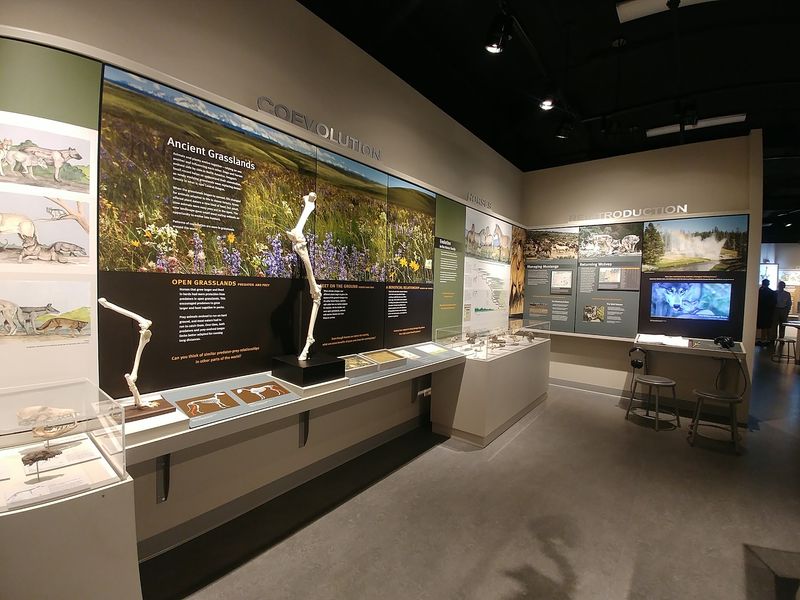
Then there’s a 33-million-year-old horse skeleton. It’s a fun look at how horses have changed over a very long stretch of time.
Overall, the natural history galleries explore around 300 million years of Oregon’s geology and life. That’s a lot of history packed into one wing.
Fossils, rocks, and maps help explain how the landscape formed. Videos add extra context for anyone who prefers watching over reading.
The pairing of cultural and natural history works well here. One side shows how people lived, while the other shows the ancient world they inherited.
Young Fossil Hunters Get Their Own Lab
Kids rarely want to stand still and read plaques. The good news is that this museum gives them plenty to touch, explore, and figure out.
A paleo lab for children lets young visitors get hands-on with the science of fossils. It turns big ideas into something they can actually play with.
An Oregon fossil map adds another fun layer. Families can see where different discoveries happened across the state.
Interactive exhibits pop up throughout the galleries too. They keep curious minds busy without making learning feel like homework.
Plan for about 90 minutes to two hours. That window usually lets everyone explore without anyone hitting a wall.
Discounts can also help families. The museum offers reduced admission for EBT, WIC, and Oregon Trail card holders, plus affordable access memberships.
Veterans and active-duty military get in free year-round. Their families also get free entry each summer through the Blue Star Museums program.
Students may find a deal too, so it’s worth asking at the front desk. A trip here can be educational, affordable, and genuinely fun, which is a rare trio for any family outing.
Step Outside For A Meteorite And A Walk Through Time
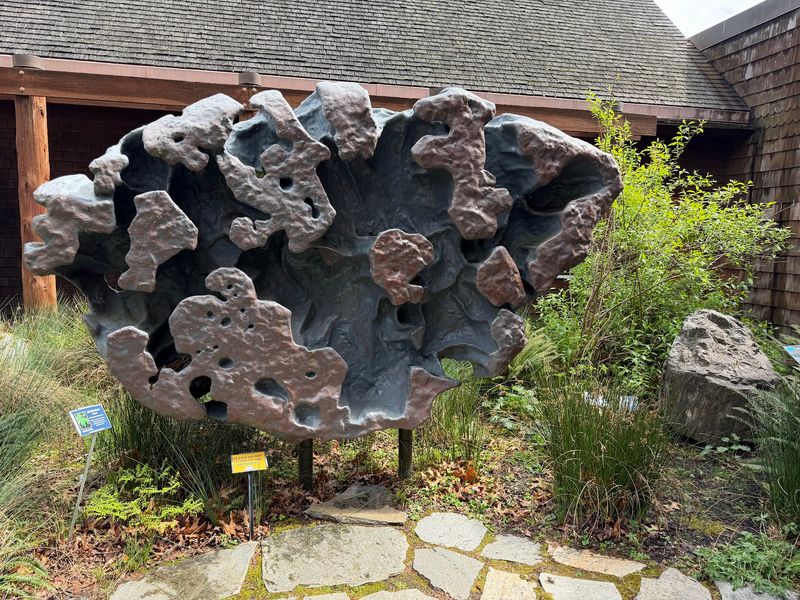
Don’t rush back to the car after the galleries. The museum grounds hold a few treats worth a slow stroll.
A replica of the Willamette Meteorite sits outside. The real meteorite was found in Oregon and ranks among the most famous space rocks in North America.
Seeing a replica up close helps you grasp its size. It’s a great conversation starter, especially for kids who love anything from outer space.
The grounds also feature a geological timeline. Walking along it gives a physical sense of how deep Earth’s history really goes.
A Native plant garden rounds out the outdoor space. It connects nicely to the cultural exhibits inside, since plants like sagebrush shaped daily life for early people.
Remember those sandals made from sagebrush bark? The garden makes that link feel more real and less abstract.
Spending a few extra minutes outside also gives your brain a break. After absorbing thousands of years of history, fresh air helps.
The outdoor features don’t take long to enjoy. Still, they add texture to the visit and show how the museum extends its storytelling beyond its walls.
Plan Your Trip Around Thursday Evenings And Smart Parking
Finding the museum is easy once you know the campus layout. It sits at 1680 E 15th Ave, Eugene, OR 97403, on the University of Oregon campus.
The building stands between the Knight Law Center and Global Scholars Hall. Keep those landmarks in mind if campus streets feel confusing.
Hours run from 10 a.m. to 5 p.m. on most open days, with Thursdays stretching until 8 p.m. Hours can shift, so check the schedule before you head out.
Parking takes a little strategy because the area sits next to a busy university. A small lot sits just west of the building on 15th Avenue.
Here’s a handy tip: ask at the front desk about temporary parking permits. The museum has offered them to visitors, which can save you a long walk.
The building is fully wheelchair accessible. That makes it a comfortable stop for visitors of all mobility levels.
Before leaving, browse the museum store. It carries science gear, local and Native art, and Northwest-focused books, and you don’t need an admission ticket to shop.
Picking up a book about Oregon’s past makes a fitting souvenir. After meeting the world’s oldest shoes, you’ll want the full story.
