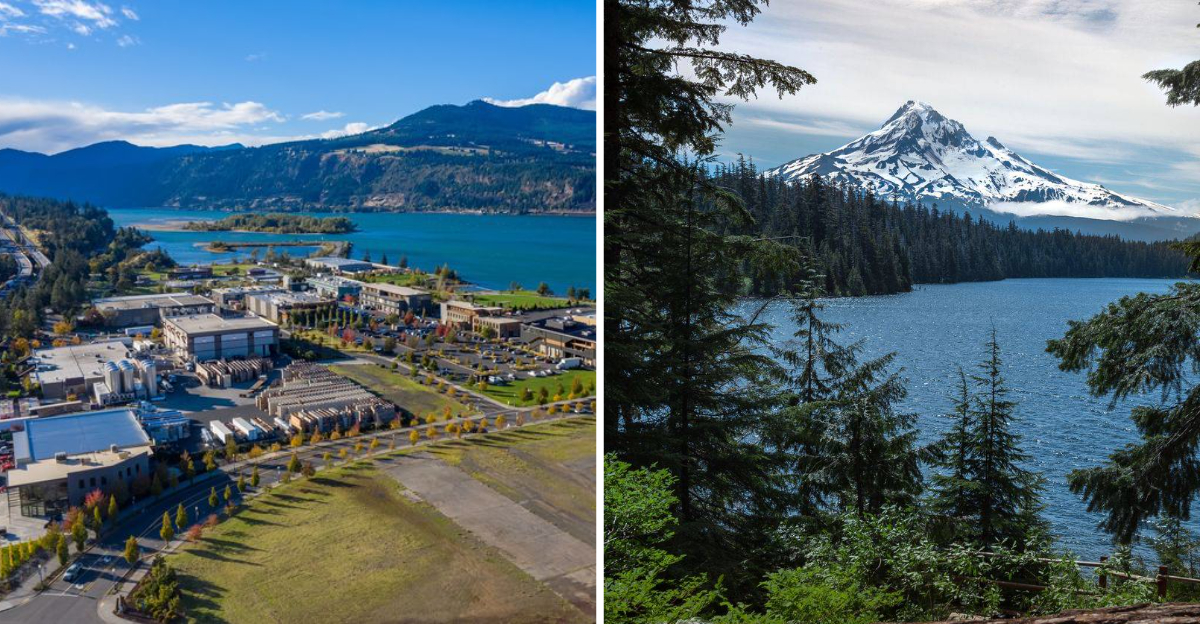
You know that feeling when a place you already love suddenly gets the recognition it deserves? That’s exactly what’s happening with this Oregon town right now. Travel + Leisure just named it America’s Best Small Mountain Town for 2026, and honestly, it’s about time.
It’s not just about the mountain views, though those are incredible. The judges highlighted a cool new art scene, the town’s first full-service hotel in over a century, and a creative energy that sets it apart from typical ski towns. It’s the kind of place that makes you want to stick around and explore.
The locals have known the magic for years. Now the rest of the country is catching on, and this Oregon town is finally getting its due.
The Waterfront Where the Wind Does All the Talking
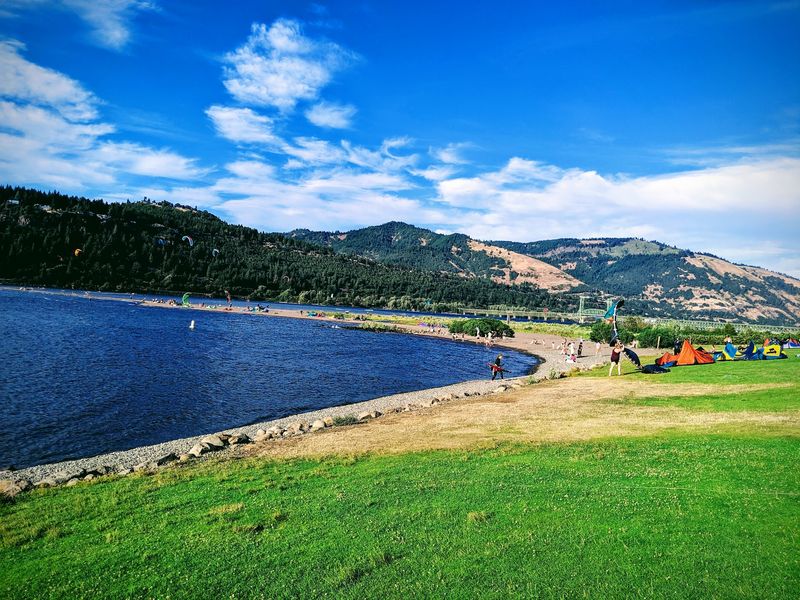
Bright sails cut across the Columbia here like scattered confetti, and the wind never seems to take a day off. Hood River sits at a natural bend in the Gorge where air gets squeezed and accelerated, which turned this stretch of water into one of the most famous windsurfing spots anywhere.
Watching from the grass at Waterfront Park became my favorite low-effort activity. Riders launch, get flung downriver, and come back grinning.
The park itself is genuinely family friendly, with a sandy swimming beach, a playground, and a wide lawn where dogs chase tennis balls all afternoon. Rental shops and schools line the area for anyone brave enough to try a first lesson.
Bring a windbreaker even in July, because the breeze has a bite to it. Sunset turns the water metallic silver while the last sails come ashore, and that quiet shift from action to calm is worth staying for.
Downtown Streets Built for Slow Wandering
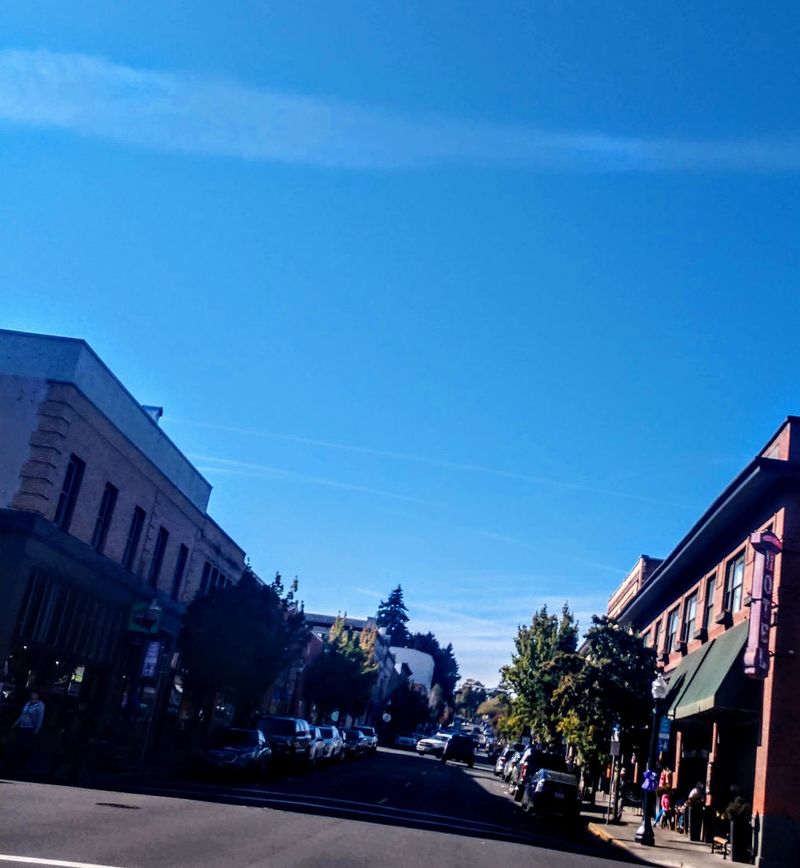
Six or seven blocks. That is basically all of downtown Hood River, and it still took me two full afternoons to get through it properly.
Brick storefronts from the early 1900s hold bookshops, gear stores, art galleries, and bakeries that smell impossible to walk past. Oak Street and Cascade Avenue form the main spine, and both slope gently toward the river, which means you get surprise views of water and mountain.
What I liked most was how unhurried everyone seemed. Shop owners chat with customers about trail conditions. Cyclists lean their bikes against benches without locking them.
There is a working movie theater, a few outfitters who will happily tell you which roads are still snowed in, and enough coffee spots to keep anyone caffeinated for a week. Parking gets tight on summer weekends, so leave the car once and walk everywhere.
Come on a weekday morning if quiet appeals to you, because the whole district wakes up gradually rather than all at once.
The Fruit Loop and Its Endless Orchards
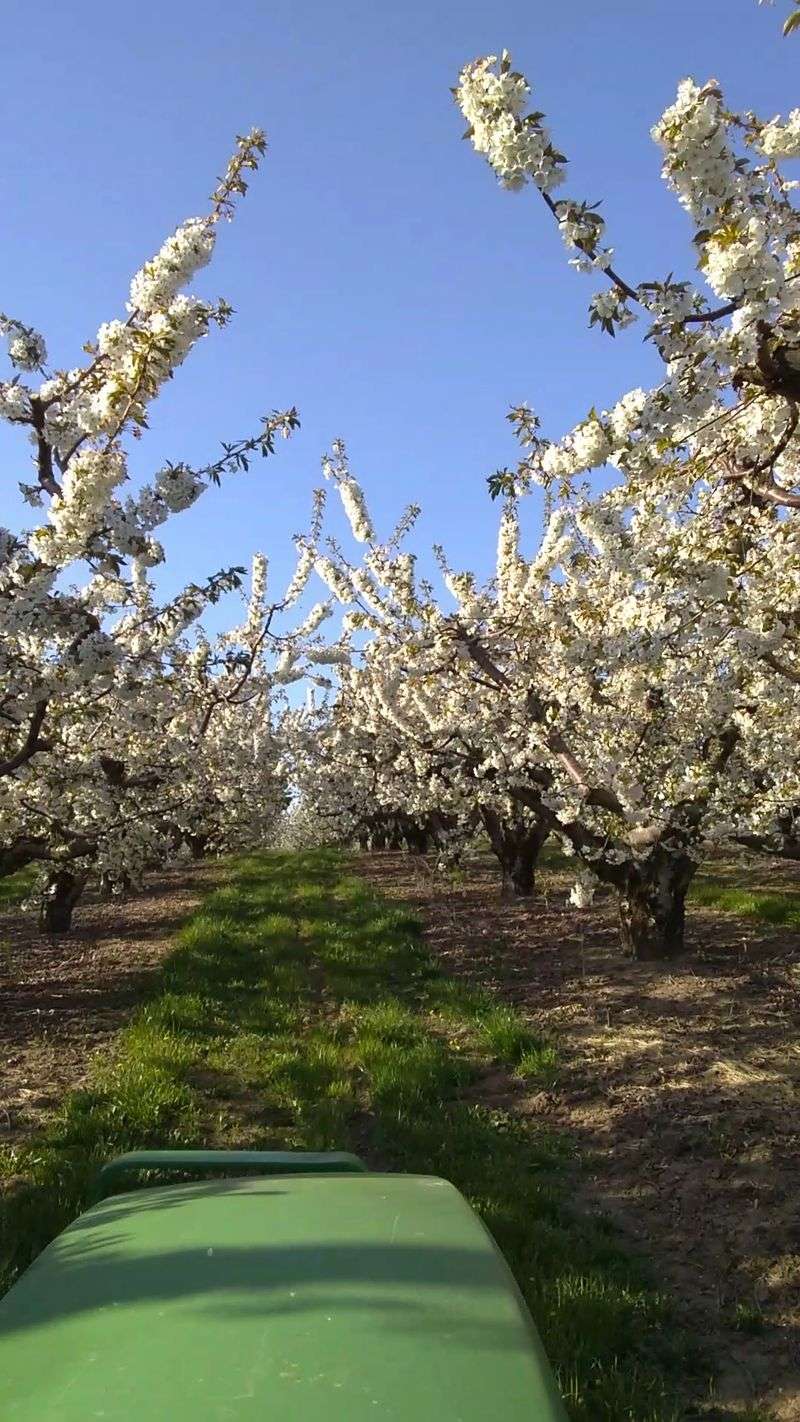
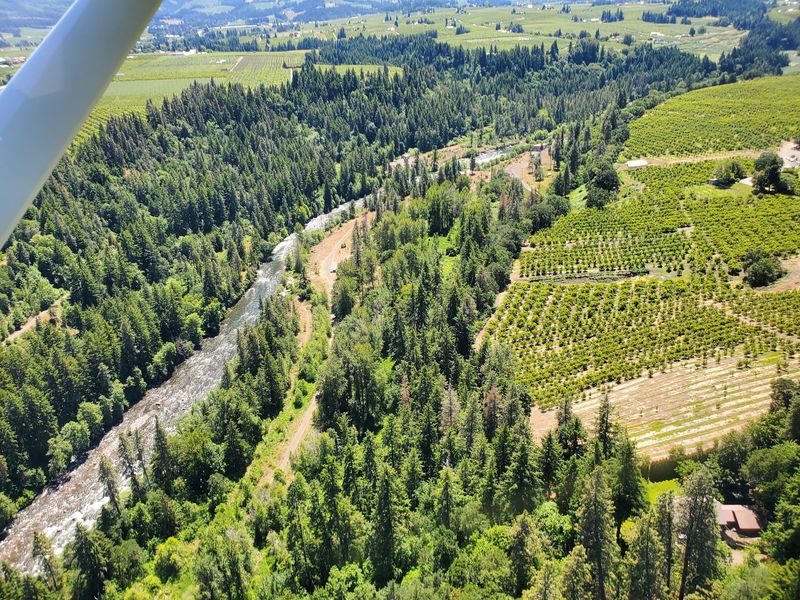
Pears. Millions of them. Hood River Valley grows more winter pears than almost anywhere in the country, and the orchards roll south from town in tidy green rows.
The Hood River County Fruit Loop is a signed 35-mile driving route linking farm stands, lavender fields, alpaca farms, and family orchards. It sounds touristy, and it is, but in the most charming farm-stand way possible.
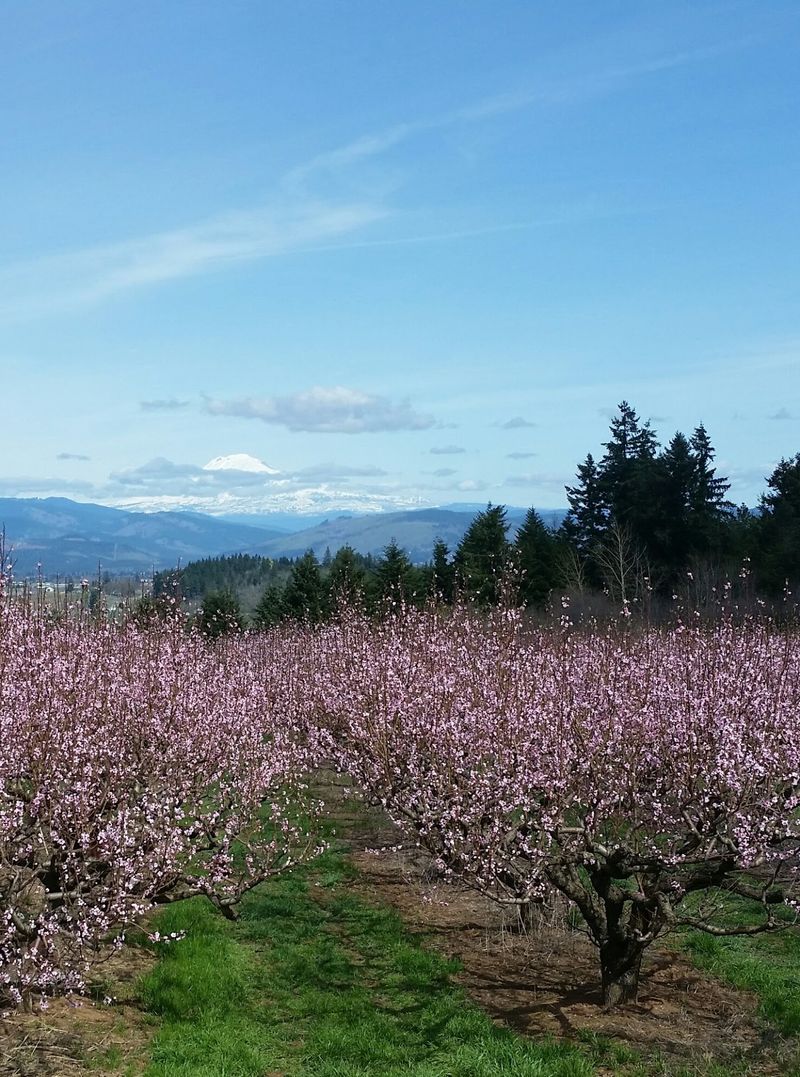
April brings blossom season, when the entire valley turns white and pink beneath the mountain.
Late summer and fall are peak picking time for apples, peaches, cherries, and those famous pears. Many farms let visitors pick their own, and several have bakeries turning out pies and turnovers that disappear fast.
I stopped at three places and left with more fruit than my cooler could hold. No regrets.
Give yourself half a day minimum, since the fun is in pulling over on impulse. Weekday visits mean shorter lines and more time chatting with the folks who actually grow the stuff.
Mount Hood Looming Over Everything
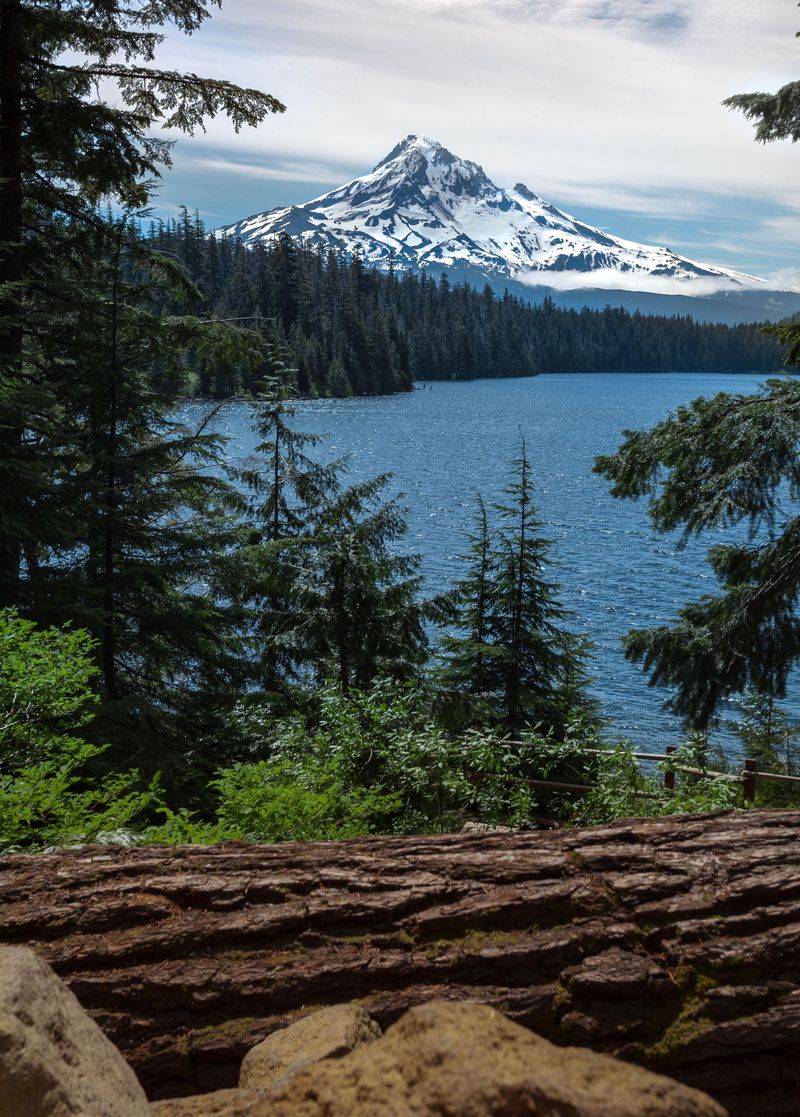
Mount Hood does not politely stay in the background. At 11,249 feet, Oregon’s tallest peak fills the southern skyline and shows up in almost every photo taken in town, whether you planned it or not.
The drive south on Highway 35 climbs from river level into forest and alpine terrain in under an hour. Snow lingers up high well into summer, which is why Timberline Lodge keeps lifts spinning long after most resorts shut down.
Skiing in June while wearing sunglasses and a t-shirt is a genuinely strange experience, and I recommend it.
Winter brings serious snow to Mount Hood Meadows and Cooper Spur, and locals treat powder mornings like a holiday. Summer flips the mountain into hiking and huckleberry territory, with trails around Tamanawas Falls and Cloud Cap offering big payoffs for moderate effort.
Check road conditions before heading up between November and April, since chains or traction tires are often required. The mountain sets the rhythm of life here, season by season.
Waterfalls Hidden Just Minutes Away
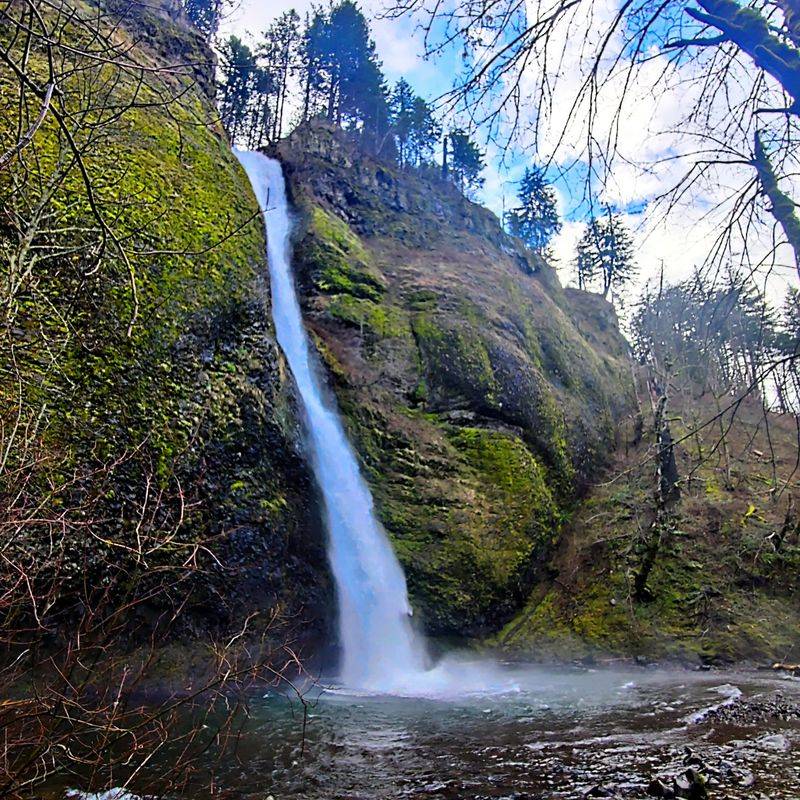
Some towns have one waterfall and build a whole identity around it. Hood River sits inside a gorge with dozens.
Head west and the Historic Columbia River Highway delivers a string of cascades, including Multnomah Falls, the tallest in Oregon at 620 feet. Quieter options like Punch Bowl Falls and Tamanawas Falls near Mount Hood reward short hikes with cool mist and mossy basalt walls.
Spring runoff makes everything roar. By late summer the flows soften and the swimming holes warm up slightly.
Trails here range from paved and stroller-friendly to rocky and root-tangled, so check distances before setting out. Waterproof shoes help more than you would think, since spray coats the rocks near the base of most falls.
My advice is to go early, both for parking and for that low golden light filtering through the trees. Some popular Gorge trailheads now use timed permits during busy months, so a quick check online saves disappointment at the gate.
Bike Trails That Follow an Old Highway
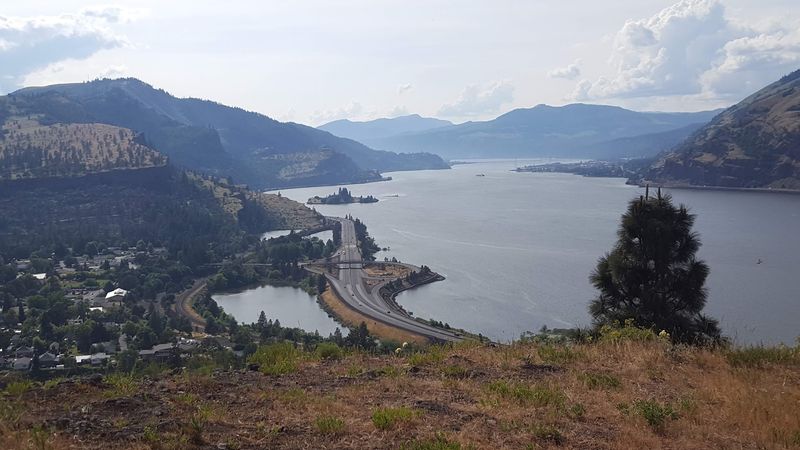
Abandoned highways make excellent bike paths, and Hood River proved it. Sections of the original Columbia River Highway, built in the 1910s, were closed to cars and reopened as the Historic Columbia River Highway State Trail.
The Mosier Twin Tunnels route starting east of town is the standout, a paved and mostly gentle stretch that passes through two arched tunnels blasted through rock. Views open suddenly over the river, and the old stone guardrails still curve along the edges.
Riding through those tunnels felt like pedaling through a piece of history.
Mountain bikers get their own playground at Post Canyon just northwest of town, with flowy singletrack, jumps, and enough options for both cautious riders and total show-offs. Rental shops downtown will set you up with a bike and a map without much fuss.
Mornings are calmer and cooler on the paved trail. Wind can push hard on the return leg, so plan the harder direction first and coast home happy.
A Food Scene That Punches Above Its Size
For a town of roughly 8,300 people, the eating here is ridiculous in a good way. Orchards, ranches, and river farms sit close enough that menus change with whatever just got harvested.
Breakfast is the meal I would fight for. Bakeries downtown pull out laminated pastries and thick slices of quiche, and the doughnut situation is genuinely dangerous for anyone with limited willpower.
Lunch tends toward big sandwiches and bowls built for people who have been outside all morning.
Dinner leans casual, with wood-fired pizza, Mexican kitchens serving handmade tortillas, and a handful of places doing careful farm-driven plates without any stuffiness. Nobody expects you to change out of hiking clothes, which I appreciated more than any tablecloth.
Food carts cluster near the waterfront during warmer months, and the picnic-table seating puts you right in the breeze.
Reservations help on summer weekends, especially for smaller dining rooms. Otherwise, wander Oak Street, read a few chalkboard menus, and follow whichever smell wins.
Riding the Mount Hood Railroad Through the Valley
Trains here have been running since 1906, originally hauling lumber and fruit out of the valley. The Mount Hood Railroad still uses those tracks, only now the cargo is passengers with cameras.
Departing from the historic depot downtown, the route climbs south through orchards, past farmhouses and creek crossings, with Mount Hood appearing and disappearing behind ridgelines. The pace is slow enough to actually look at things, which is rare.
Blossom season in spring and harvest season in fall are the standout times to ride.
Seasonal themed excursions run through the year, including holiday trips that fill up early with families. Kids seem to love the whole thing, though I noticed plenty of adults pressed against the windows too.
The depot itself is worth a few minutes, an old wooden building that has watched this valley change for over a century. Book ahead during summer and the winter holidays, since seats go quickly. Dress in layers, because open-air cars catch that Gorge wind.
Viewpoints That Make You Pull the Car Over
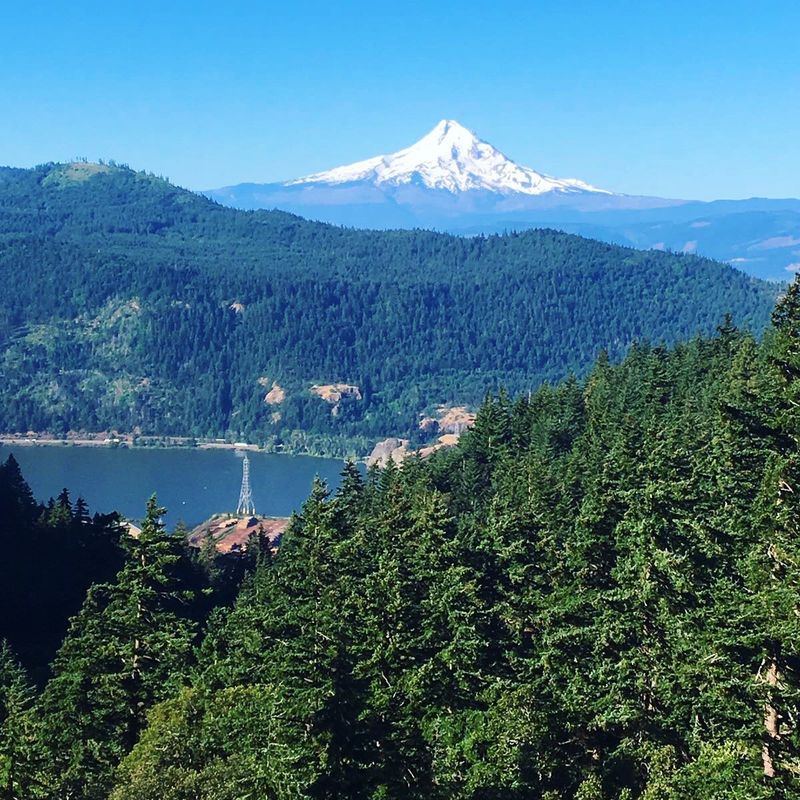
Pulling over constantly is just part of driving around here. The Gorge stacks up cliffs, water, and mountain in a way that makes every bend feel like a reveal.
Rowena Crest, about 20 minutes east, delivers the famous horseshoe curve in the old highway plus wide views over the river where the landscape shifts from forest to dry grassland. Wildflowers explode across the nearby Tom McCall Preserve in spring.
Panorama Point County Park, just south of town, frames orchards with Mount Hood behind them. Easy walk, huge payoff.
Across the river, the Washington side offers a different angle entirely, and the drive over the bridge takes only a few minutes. Sunset light hits the Oregon cliffs beautifully from there.
Bring a jacket to any high viewpoint, since exposed spots catch wind that can feel twenty degrees colder than downtown.
Fog often settles low in the mornings, which sounds like bad luck but sometimes creates the strangest, prettiest scenes of the whole trip.
Why the Small Mountain Town Title Fits
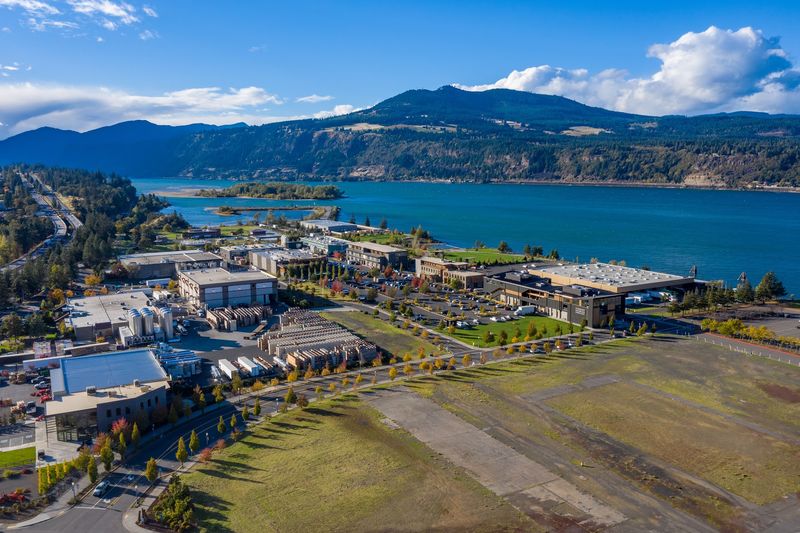
Plenty of places claim mountain-town charm and deliver a parking lot with a view. Hood River earns it differently, by actually functioning as a working town first.
Farmers move fruit through here. Kids ride bikes to school. Gear shops fix boards and skis for people who use them constantly, not occasionally.
Travelandleisure.com named it America’s best small mountain town, and the reasoning shows up in how easily the pieces connect. River, orchards, forest, and summit all sit within a short drive of the same few blocks.
Spring means blossoms and waterfalls at full volume. Summer brings sails and swimming. Fall turns the valley gold and heavy with fruit, and winter drops snow on the mountain while town stays green and mild.
What stuck with me was the lack of pretense. Nobody here seems to be performing outdoorsy-ness, they just live it. Base yourself downtown, give it three days minimum, and let the weather decide the plan.
