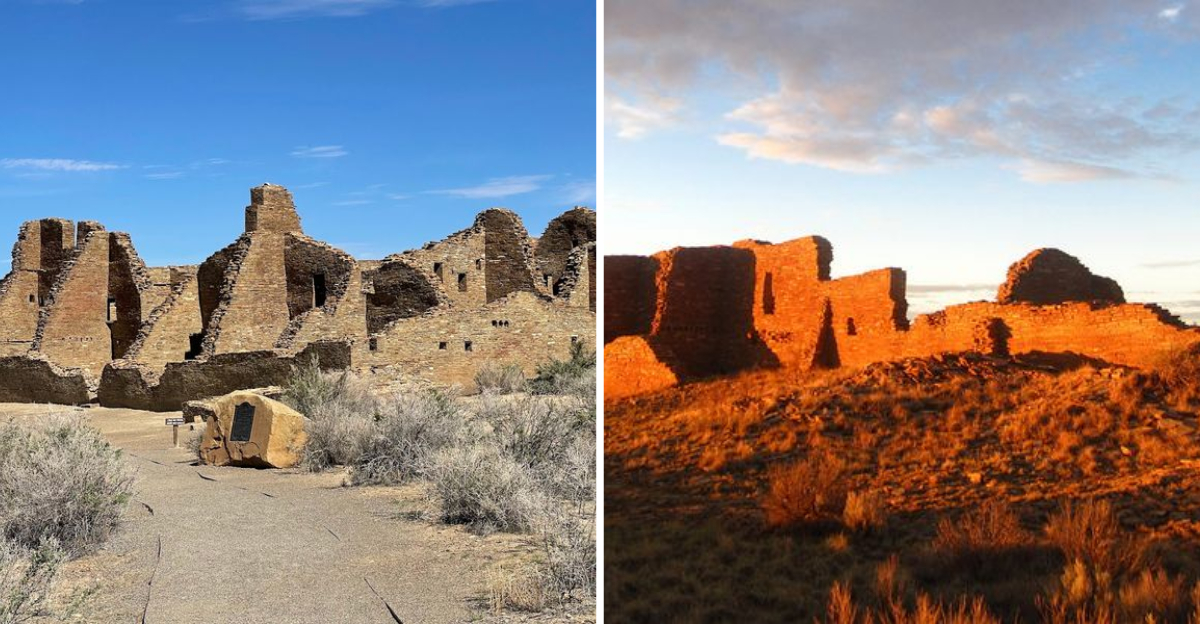
Massive stone structures rise from the high desert of New Mexico, built over a thousand years ago by a civilization that left its mark on the region long before the United States was even a thought. I had heard about those ruins for years before finally making the drive, and nothing quite prepared me for the scale of what I found.
These are not small ruins tucked into a hillside. They are enormous, carefully engineered buildings that once stood four stories tall, surrounded by a landscape so quiet and vast it almost hums.
I walked through the great houses, the walls still standing after centuries of wind and sun, and felt the weight of everything that had happened there. The silence was the loudest thing I have ever experienced, broken only by the wind moving through the canyon and the occasional call of a bird.
I stood in the center of one of the great plazas and tried to imagine the thousands of people who had once gathered there, their voices and footsteps long gone but the stones still holding the memory of it all.
Pueblo Bonito: The Heart of an Ancient World
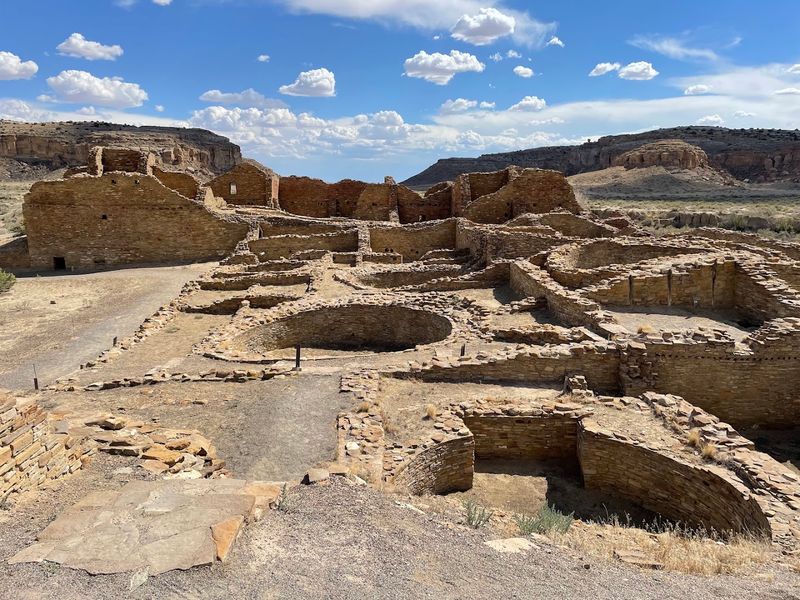
Nothing in any travel photo fully prepares you for the moment you round a bend in the canyon and Pueblo Bonito comes into full view. It is enormous.
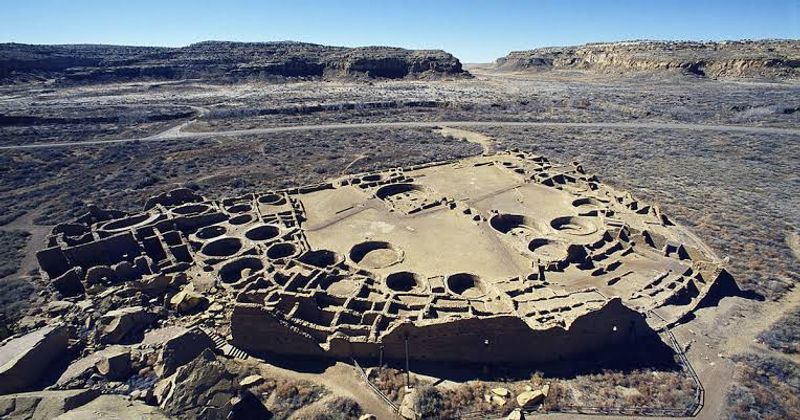
Built in stages between the mid-800s and early 1100s, this great house once contained over 600 rooms and at least 40 kivas, reaching four stories at its tallest point. For centuries, it was among the largest structures in all of New Mexico and North America.
What makes it even more striking is the craftsmanship. The walls are built with a technique called core-and-veneer masonry, where a rubble core is sandwiched between carefully shaped stone faces.
The precision is almost hard to believe when you consider the tools available at the time. Builders planned the entire structure from the start, aligning rooms and doorways with solar and lunar cycles.
Visitors can walk directly through the ruins along a well-marked trail. Rangers lead guided walks of Pueblo Bonito year-round, and those tours are genuinely worth joining.
The ranger I walked with pointed out subtle architectural details I would have completely missed on my own, like the way certain doorways frame the rising sun at specific times of year.
Pueblo Bonito is the centerpiece of the park, and most people spend the most time here. Bring water, wear sturdy shoes, and give yourself at least an hour to explore slowly.
The site deserves that kind of attention. It is not just a ruin.
It is a record of an entire civilization written in stone.
Great Houses Across the Canyon Floor
Pueblo Bonito may be the most famous, but the canyon holds several other great houses that are just as fascinating to explore. Chetro Ketl sits just a short distance away and shares a parking area with Pueblo Bonito.
It is the second largest great house in the park, with walls that once rose three to four stories and a complex of rooms that stretched across an enormous footprint.
Hungo Pavi is positioned near natural drainages and feels more rugged and raw than the heavily studied sites. Una Vida, located close to the visitor center, remains largely unexcavated, which gives it a different kind of energy.
There is something quietly powerful about a site that has not yet been fully uncovered, like a story still being told.
Pueblo del Arroyo, whose name means village by the wash, was built over a relatively short time span compared to other great houses. That compressed construction timeline makes archaeologists curious about the social organization required to complete it so quickly.
Each of these structures tells a slightly different chapter of the same long story.
The 9-mile Canyon Loop Drive connects all the major sites, making it possible to visit several in a single day. Driving the loop first gives a good sense of the canyon’s scale before you start walking the trails.
I found it helpful to stop at each pullout briefly before deciding where to spend the most time. Every site rewards a slower, more deliberate pace.
Casa Rinconada and the Mystery of the Great Kivas
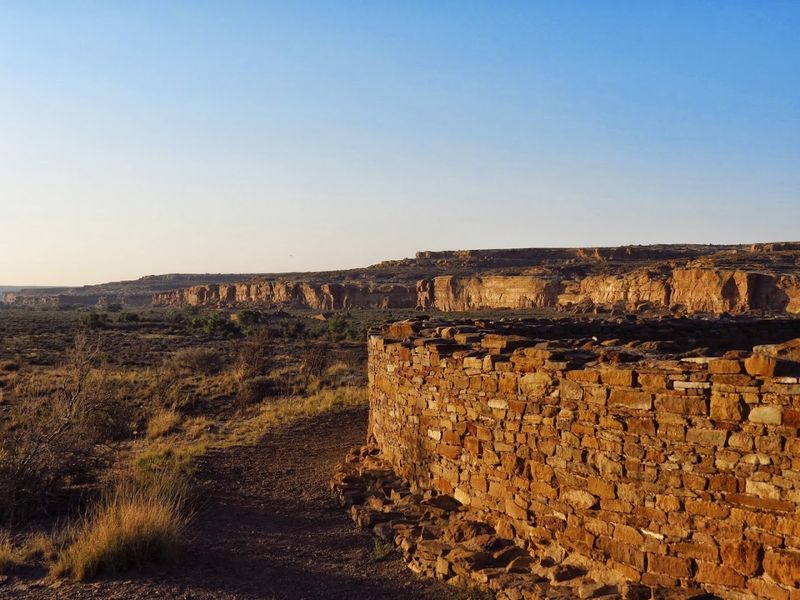
On the south side of the canyon, away from the cluster of great houses, Casa Rinconada sits in quiet isolation. It is the largest excavated great kiva in the park, and its circular shape is immediately striking.
Kivas were ceremonial spaces used by the Ancestral Pueblo people, and great kivas were larger communal versions that could have held gatherings of significant size.
The scale of Casa Rinconada is hard to appreciate until you are standing at its edge looking down into it. The circular chamber is carefully aligned with the cardinal directions, and researchers believe certain features were designed to interact with sunlight at specific times of the year.
That level of astronomical awareness built into the architecture is one of the things that makes Chaco so different from other ancient sites.
The trail to Casa Rinconada also passes numerous smaller house sites along the way, which adds context to the larger structures. Seeing the contrast between the modest everyday dwellings and the massive ceremonial kiva helps paint a more complete picture of how the community was organized.
Not everyone lived in a great house. Most people lived in smaller structures clustered nearby.
Early morning is a particularly good time to visit this side of the canyon. The light hits the stone walls at a low angle and brings out textures and colors that disappear later in the day.
The trail is easy and well-marked, suitable for most visitors. Plan at least 45 minutes to walk the route comfortably and take it all in.
Hiking the Mesa: Pueblo Alto and the Ancient Road Network
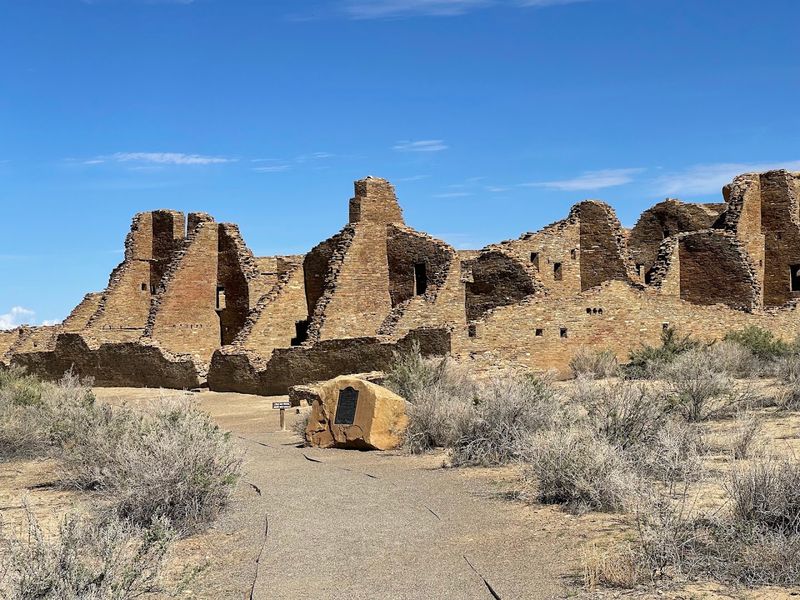
Getting up onto the mesa changes everything about how you see Chaco. The Pueblo Alto Loop trail climbs through a narrow slot in the canyon wall and opens onto a wide, flat plateau with views that stretch for miles in every direction.
Up here, the scale of the entire Chacoan world becomes visible in a way it simply cannot from the canyon floor.
Pueblo Alto itself sits at the junction of dozens of prehistoric roads, which is one of the most remarkable aspects of the entire Chaco system. The Ancestral Puebloans built a network of roads radiating outward from the canyon, some stretching for hundreds of miles across the desert.
These were not casual paths. They were engineered routes, often 30 feet wide, cut straight across the landscape with ramps and stairways carved into cliff faces where needed.
From the overlook near Pueblo Alto, you can look down directly onto Pueblo Bonito and see its D-shaped footprint clearly. That view alone is worth the climb.
The trail is rated moderate, with the steepest section being the initial ascent through the rock slot. Once on top, the walking is relatively easy across open ground.
Backcountry trails in the park, including the Pueblo Alto Loop, require a free permit available at the visitor center and trailheads. Bring more water than you think you need.
The high desert environment is deceptively dry, and the sun on the mesa is relentless. The hike typically takes two to three hours at a comfortable pace.
Stargazing and Dark Skies at an International Dark Sky Park
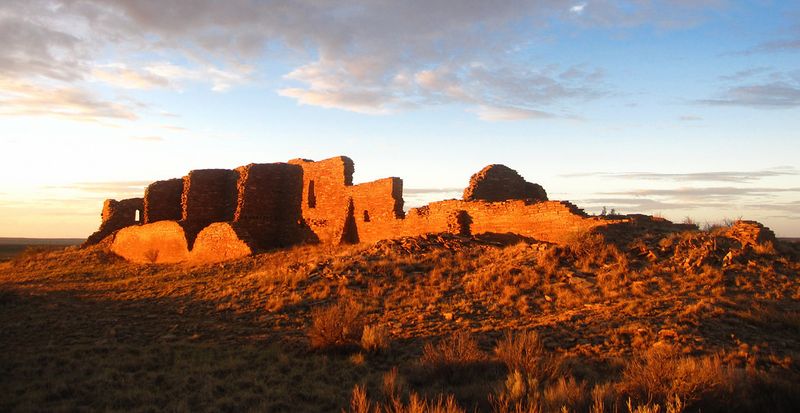
Chaco Canyon after dark is a completely different experience from the daytime visit. The park is a certified International Dark Sky Park, meaning the night sky here is among the clearest and darkest in the entire country.
On a moonless night, the Milky Way appears as a thick, glowing band stretching from one horizon to the other, and the number of visible stars is genuinely startling if you are not used to seeing skies without light pollution.
This is not just a modern attraction. The Ancestral Puebloans were sophisticated astronomers, and their architecture reflects a deep knowledge of celestial cycles.
Many of the great houses incorporate alignments with the sun, moon, and stars. The people who built these structures were watching the same sky thousands of years ago, using it to mark time, plan ceremonies, and orient their buildings.
The park operates a public observatory on Tuesday, Friday, and Saturday evenings during summer months. Evening programs often include talks about the astronomical practices of the ancient Puebloans alongside actual stargazing with telescopes.
Campfire talks are also offered regularly and are a relaxed, informative way to end a day of exploring.
Staying at Gallo Campground overnight is the best way to fully experience the dark sky. The campground is open year-round and sits surrounded by petroglyphs and canyon cliffs.
Each site has a picnic table and fire grate. Reservations are recommended, especially during warmer months when the park sees more visitors.
Planning Your Visit, What to Know Before You Go
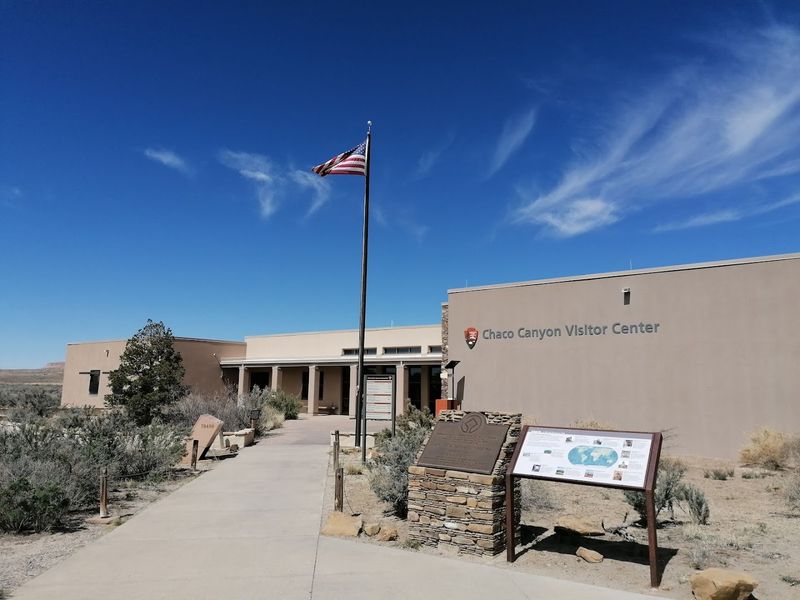
Getting to Chaco takes some planning, and that is honestly part of what makes the experience feel special. The park is accessed primarily via unpaved dirt roads, and the recommended route comes from US 550, turning onto CR 7900 and then CR 7950.
The last stretch of road is rough, and most visitors recommend a high-clearance vehicle, though passenger cars do make the drive when conditions are dry.
There is no cell service inside the park. Download offline maps before you leave, and do not count on GPS to guide you once you turn off the main highway.
The park is open year-round from 7 AM to 7 PM, and the visitor center offers exhibits, ranger assistance, and a bookstore where you can pick up trail guides. The Junior Ranger program is available for kids and is a genuinely fun way to keep younger visitors engaged throughout the day.
Food and fuel are not available anywhere near the park. Fill your tank before leaving the main highway, and pack enough food and water for the entire day.
Drinking water is available at the visitor center, but not at the trailheads or campsites. Sun protection is essential.
The high desert at Chaco is exposed and intense, especially in summer, and the elevation means temperatures can swing dramatically between day and night.
Plan to spend a full day at minimum. Most people who try to rush through the canyon loop feel like they missed something.
The park rewards slow, curious exploration. Address: 1808 CR 7950, Nageezi, New Mexico 87037.
