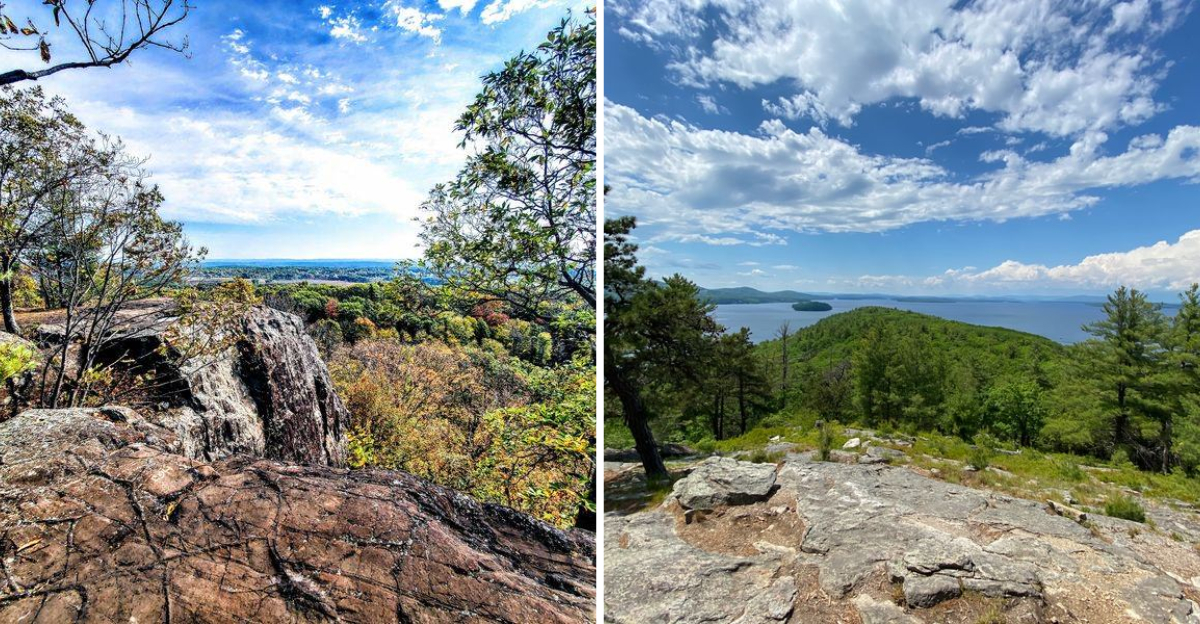
Timber rattlesnakes are critically endangered in New England, clinging to sun-warmed ledges and boulder fields that most hikers walk right past without noticing.
I planned this route through nine documented areas in New Hampshire because each one tells a different story about wild land, old names, and careful protection.
You will almost certainly never see a rattlesnake on these trails, and that is exactly the point, since these snakes are shy, secretive, and few. What you will find are ridgelines, glacial boulders, river valleys, and island shorelines that feel older than any trail map.
I stood on a sun-baked ledge once, scanning the rocks below, knowing something ancient and quiet was probably watching me back. That knowledge changed how I moved through the woods, slower, more aware, more present.
This is a slow tour of the Granite State’s wilder edges, where knowing what lives nearby makes every step feel a little more meaningful.
1. Bear Brook State Park (Allenstown/Hooksett)
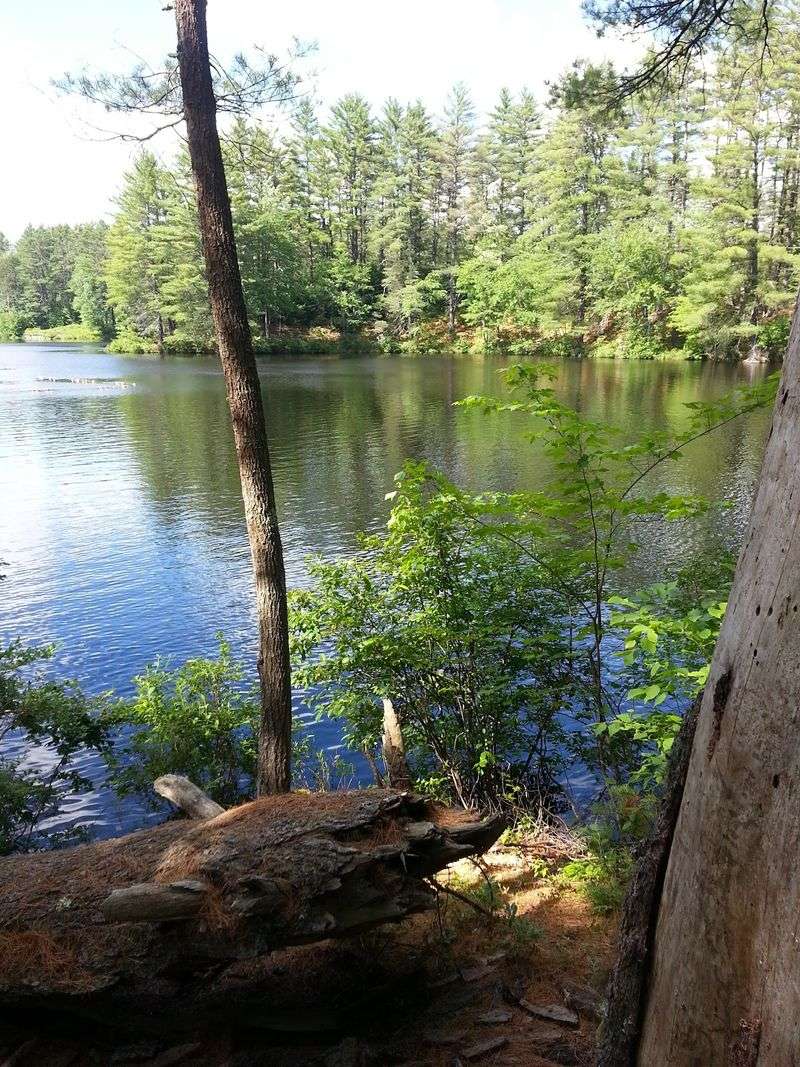
Over 10,000 acres of forest, marsh, and low rocky ridges make this the largest developed state park in New Hampshire, and it swallows crowds easily. I have hiked here on a Saturday and gone an hour without passing another person.
Timber rattlesnakes have been documented within these woods, and biologists believe the park may hold some of the strongest numbers left in the state. The mix of warm ledges for basking and deep hardwood shade for hunting suits them well.
Trails here spread out in every direction, shared by hikers, mountain bikers, and riders on horseback. Some paths drop toward quiet ponds where frogs go silent as you approach, then start up again once you have passed.
What I like most is the ordinariness of it. There are picnic tables, a swimming area, and families fishing with bobbers, all sitting alongside habitat that matters enormously to a species hanging on by a thread.
Stay on the trail, keep dogs leashed, and let any snake you spot go about its day. That small courtesy costs nothing and protects something irreplaceable.
Address: 158 Deerfield Rd, Allenstown, NH 03275
2. Dan Hole Pond (Tuftonboro)
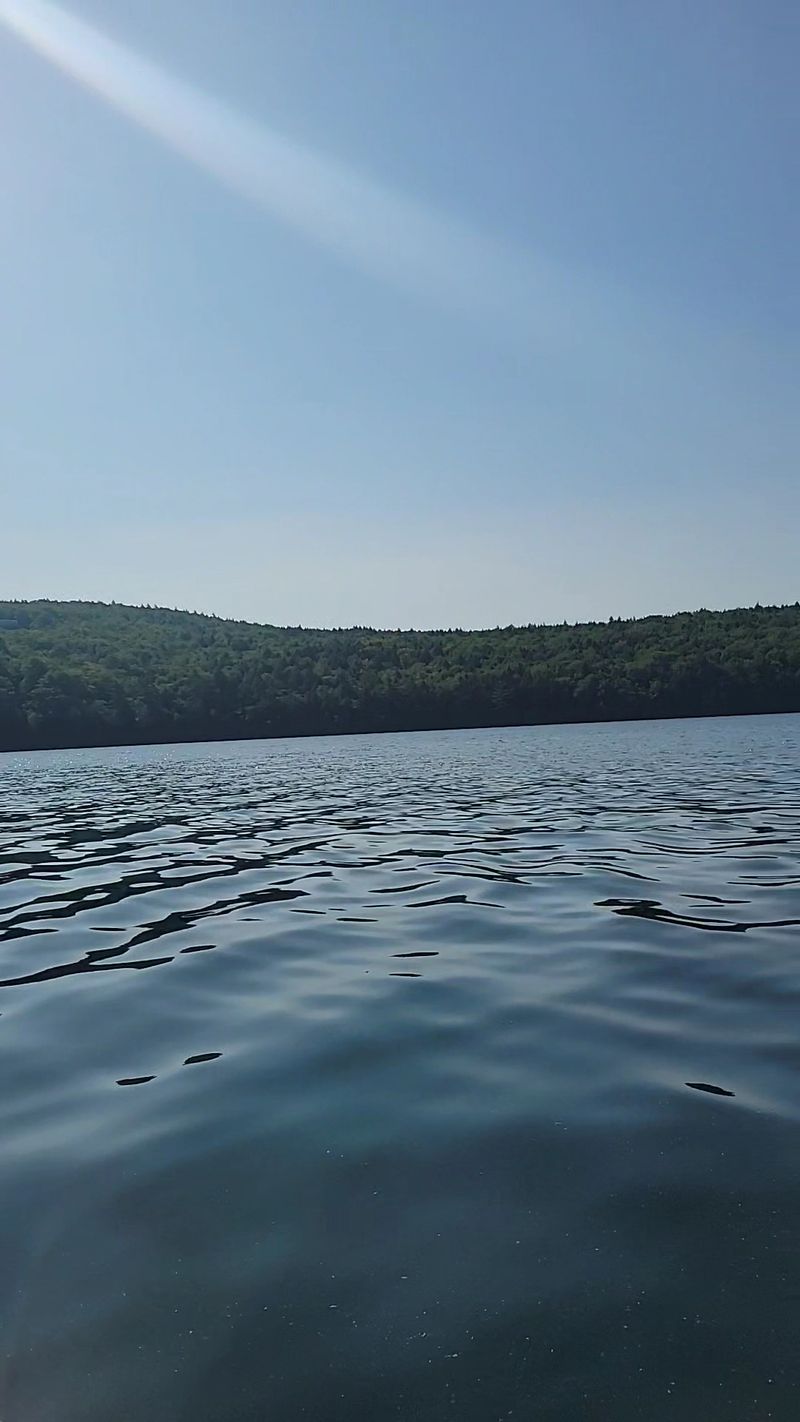
Clear water, granite shoreline, and hardly any noise. That combination is what pulled me toward this quiet corner of the Ossipee foothills in the first place.
Historical records place timber rattlesnakes in this general area, part of the scattered mosaic of sites where the species was once noted before its range in New Hampshire shrank to almost nothing. Warm rock, dense cover, and rodent-rich woods explain the appeal.
The surrounding land is a patchwork of conserved parcels and old woods roads, so exploring here rewards patience more than ambition. There is no big summit payoff, just slow, pleasant walking.
Loons often work the water in summer, and their calls carry a long way across the surface at dusk. I have sat on a boulder and listened until the light was completely gone.
Access is limited and much of the shoreline is private, so this is a place to respect boundaries carefully. Look for public conservation trailheads rather than wandering wherever a road appears.
It feels like the kind of overlooked spot that keeps its secrets, which may be exactly why rare wildlife lingered here at all.
3. Mt. Wantastiquet (Hinsdale/Chesterfield)
The climb starts almost immediately, no warm-up stretch, just switchbacks grinding upward through oak and hemlock. My legs remembered it for two days.
Rattlesnakes have been documented low on this mountain, near the river where sun hits the rock early and holds heat late. Those thermal pockets are exactly what a cold-blooded animal needs in a northern climate.
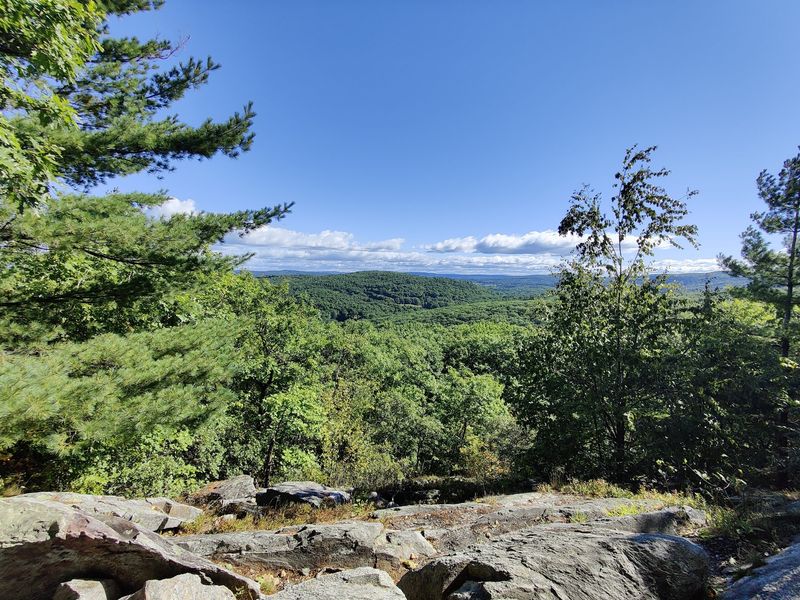
Higher up, the old carriage road eases off and opens onto ledges with a long view across the Connecticut River into Vermont. Rooftops, church spires, and river bends all lay out below like a model.
I found the summit area strangely peaceful for a spot so close to a busy river town. Turkey vultures ride the updrafts here, tilting without effort.
Footing on the ledges can be slick after rain, and the exposed rock gets genuinely hot in July, so morning starts are smarter. Bring more water than feels necessary.
Between the geology, the vistas, and the knowledge of what basks unseen below, this hike carries more weight than its modest elevation suggests. It has become one of my favorite short climbs in the southwest corner.
4. Rattlesnake Mountain (Hinsdale/Chesterfield/Swanzey/Winchester)
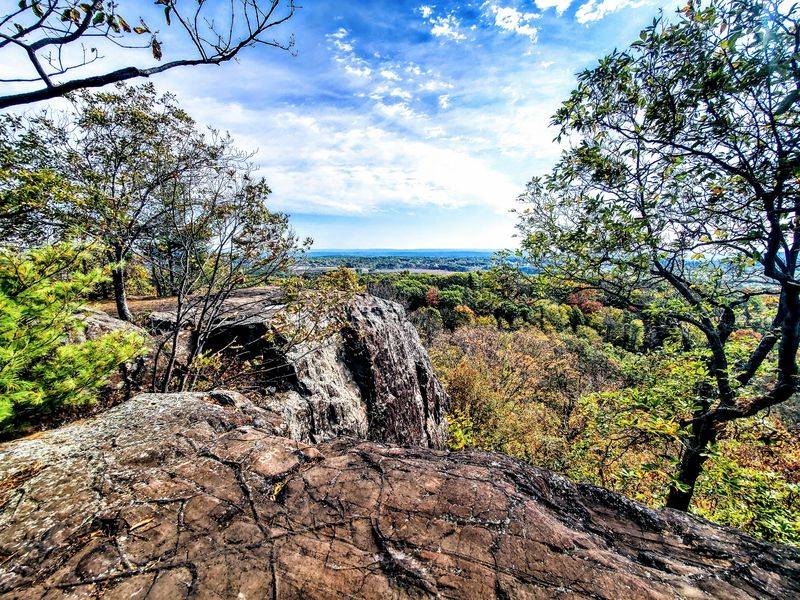
Some place names are just decoration. This one is a record.
The mountain took its name from the timber rattlesnakes that historically denned along its ledges, back when the species was far more widespread across southern New Hampshire. Today sightings are extremely rare, but the broader area spanning Chesterfield, Swanzey, and Winchester is still recognized as potential habitat.
Terrain here alternates between shadowy oak forest and abrupt outcrops where the canopy breaks and heat pools on bare stone. You feel the temperature change within a few steps.
I walked a section in late September, when acorns were dropping loudly enough to make me flinch every few minutes. Chipmunks were everywhere, which says a lot about the food supply.
Trail signage varies depending on which side you approach from, so a downloaded map helps more than guesswork. Some old routes cross private land, so pay attention to posted notices.
Reading a landscape through its name feels like flipping through a natural history book written by people who lived here centuries ago. That connection between language and wildlife is rare, and worth noticing while you climb.
5. Fall Mountain (Walpole)
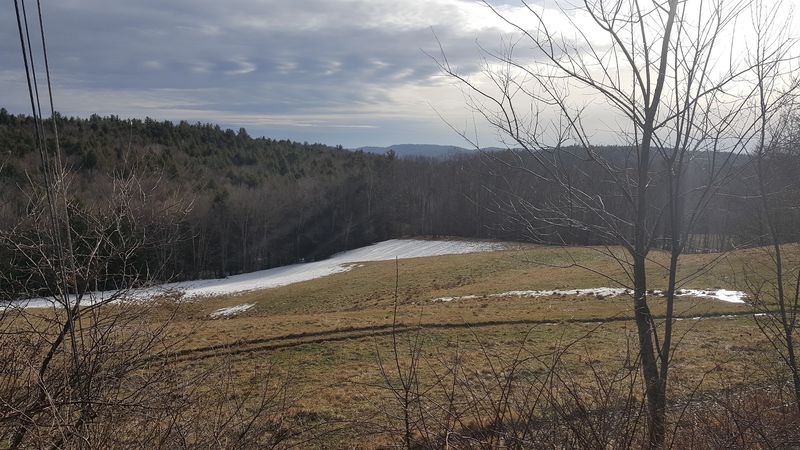
Walpole surprised me. I expected farmland and got a proper little mountain with a view worth the effort.
Historical rattlesnake records exist for towns in this part of the Monadnock Region, including Walpole and Fitzwilliam, tying the local hills to a wilder past. Ledges here catch afternoon sun in a way that would suit a basking snake perfectly.
The trail climbs steadily through maple, beech, and oak, with stone walls appearing at odd intervals as reminders of old pasture. Leaf litter muffles your footsteps almost completely.
Near the top, the trees thin and the countryside spreads out in long green folds toward the river. I sat there eating a sandwich longer than planned.
Autumn turns the whole climb into a color show, though mud season can make the lower sections messy. Sturdy shoes matter more than fancy gear.
There is something modest and unhurried about this hike, the sort you can finish before lunch and still feel like you traveled somewhere. It fits the character of the region nicely.
Address: Mountain View Road, North Walpole, NH
6. Rattlesnake Island (Lake Winnipesaukee, Alton)
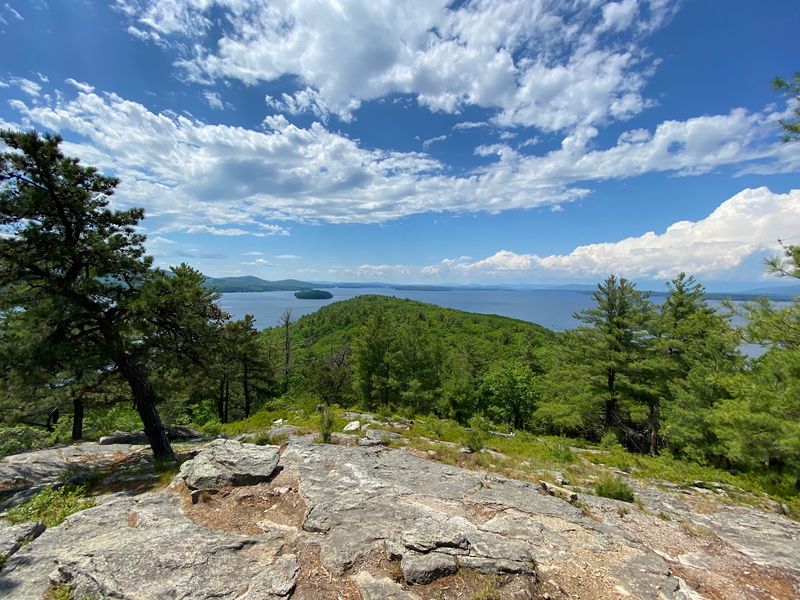
Getting here requires a boat, which already makes the day feel like an expedition. Water taxi, private craft, or an organized trip, but no bridge.
Tradition holds that the island earned its name from a population of timber rattlesnakes that once lived among its ledges, and the steep sun-facing rock would have made excellent habitat. Confirmed sightings are said to be many decades in the past, though the area is still noted as possible range.
Roughly two miles long, the island rises sharply from the water on one side and tapers into gentler peninsula ground on the other. Hiking the interior means real elevation gain, not a stroll.
From higher openings, the lake spreads out in blue arms with the White Mountains stacked on the horizon. I stood there thinking the view alone justified the boat ride.
Public access to the conservation land is managed by the Lakes Region Conservation Trust, generally requiring membership and a host present. Plan ahead rather than showing up hopeful.
Address: Rattlesnake Island, Alton, NH
7. Mt. Thorn (Bartlett)
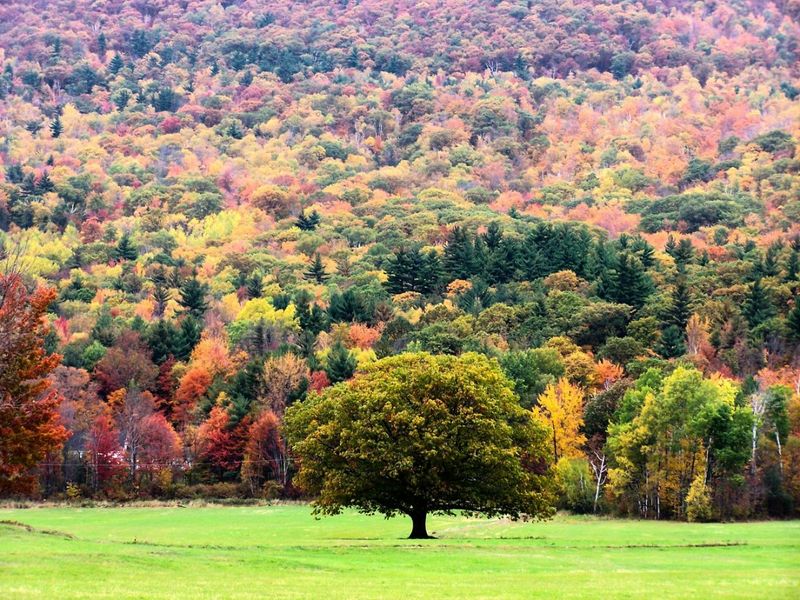
Way up in the Saco valley, tucked behind better-known peaks, sits a mountain most visitors never bother to learn the name of. That anonymity is part of its charm.
Rattlesnake records for this White Mountains locality are historical and unusual, sitting far north of where the species survives today. Whether those old accounts represent a lost outlying population or something else, they hint at a warmer, wider past range.
The slopes here are steep and rocky, with talus, birch stands, and enough spruce to make the air smell sharp. Footing demands attention.
I came through in early autumn when fog filled the valley below and burned off in slow patches. Peregrines and ravens work these cliffs, and their calls bounce off the rock.
Trails in the area are less trafficked than the famous Bartlett hikes, so navigation skills matter and cell service is unreliable. Tell someone your plan.
For me the appeal is imaginative as much as physical, standing in country that once may have held rattlesnakes and now belongs to bears, bobcats, and wind.
8. Mt. Monadnock Area
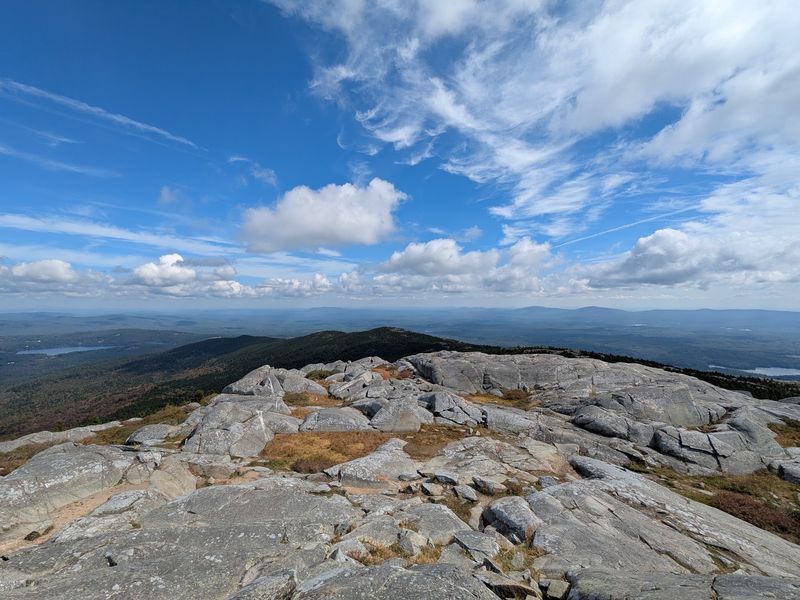
Few mountains in New England get climbed as often as this one, and the bare gray summit is recognizable from thirty miles away. I have hiked it three times and it never feels routine.
The surrounding region ranks among the state’s most historically significant rattlesnake country, thanks to talus slopes, broken ledges, and rock that holds warmth long after sunset. Those features are textbook habitat.
State park land covers close to 6,000 acres with roughly 36 miles of trails threading through it. White Dot climbs hard and fast, White Cross takes a slightly kinder line, and both end on open rock.
Views from the top can reach across several New England states on a clear day. On a hazy one you still get that odd sensation of standing on a stone island above a sea of forest.
Go early, especially on weekends, because parking fills and the ledges get crowded by midmorning. Wind on the summit bites even in August.
Address: 116 Poole Rd, Jaffrey, NH 03452
9. Connecticut River Valley (Southwest Corner)
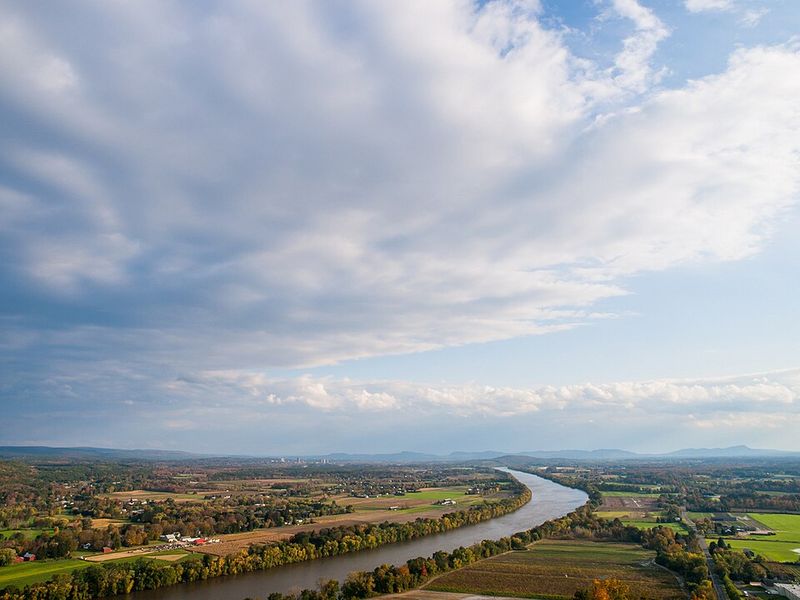
Driving the back roads here, I kept slowing down for no reason other than the view. Corn fields, river bends, and hills stacked in soft layers.
Biologists have long recognized this corner as part of the timber rattlesnake’s historical range in the region, with the warm south-facing slopes above the river offering the sort of exposure the species depends on. Encounters are uncommon, but not impossible.
The valley itself blends working farmland with woodland, small towns, and covered bridges that look almost too tidy to be real. Paddling stretches of the river gives you a completely different angle on the same landscape.
Great blue herons stalk the shallows, and bald eagles show up more often than they used to. Fishing access points dot the shoreline if you prefer sitting still.
Because so much land here is private, sticking to marked conservation areas and public boat launches keeps things simple. Local land trusts often post trail information online.
Knowing a rare, ancient reptile still shares this gentle farm country reframes the whole drive for me. Wildness does not always look dramatic.
