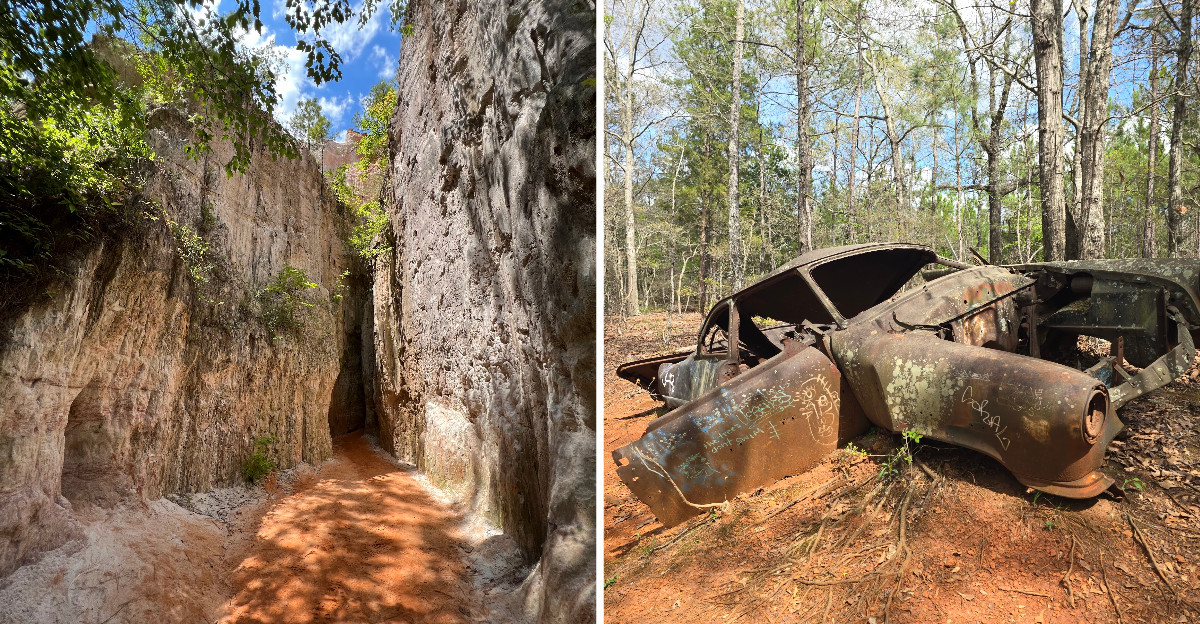
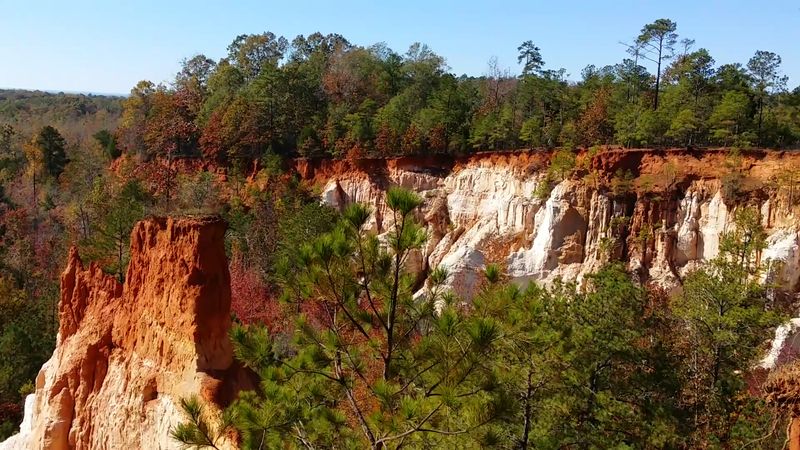
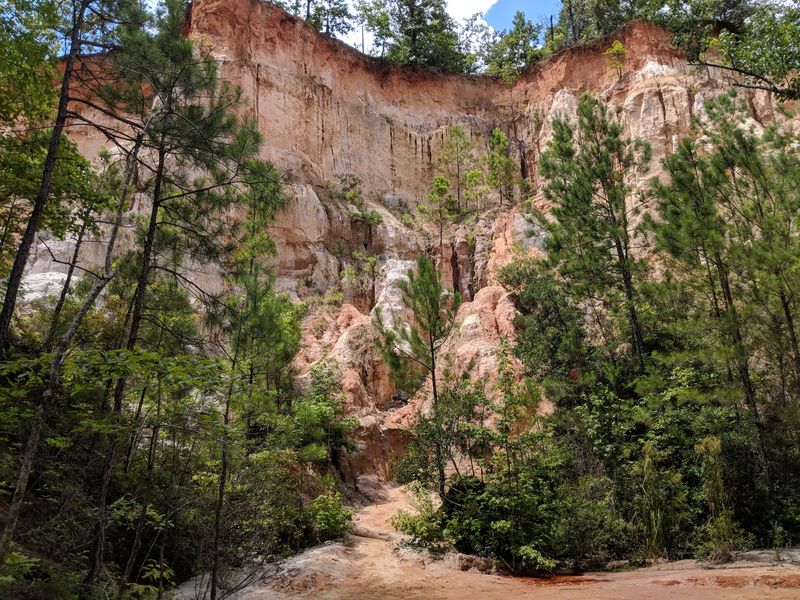
Pink and orange cliffs rising out of rural southwest Georgia are not what anyone expects to find at the end of a dirt road, which is exactly why laughing out loud is the only reasonable response. Giant gullies drop as deep as 150 feet, painted in bands of red, purple, white, and gold that shift with the light.
Early morning brings soft pastels, and late afternoon sets the whole canyon glowing like a furnace. What stuck all day was the wild part: these canyons were not carved by an ancient river over millions of years, but by rainwater rushing across farm fields that were plowed the wrong way in the 1800s.
Bad farming created a masterpiece. Hours disappeared while hiking the rim and squishing through the muddy canyon floor.
The mistake turned into something beautiful, and that contradiction lingers long after the mud dries. Places with a surprising backstory belong on any list, and this one delivers.
A Mistake Written in the Dirt
Reading the history sign near the visitor center gave me goosebumps, mostly because the story is so simple. After the Treaty of Indian Springs in 1825, settlers moved onto land that had belonged to the Creek people.
They cleared the forest and planted cotton, row after row.
Nobody used crop rotation or contour plowing back then, which are tricks farmers now use to keep soil in place. Without tree roots holding the ground together, every heavy rain washed away a little more dirt.
Small ditches showed up in the early 1800s. By 1850, some of those ditches were already three to five feet deep, and they kept growing faster than anyone could fix them.
Photos from 1893 show real gorges where fields used to be.
Some people say the canyons formed in less than 50 years. That is shockingly fast when you compare it to canyons out west, which took millions of years to form.
I found it helpful to learn this before hiking, because it changed how I saw every wall and gully. You are basically looking at a giant lesson in what happens when land is not cared for.
Kids especially seem to get it right away. Stop by the visitor center exhibits first, since the displays and short presentations make the rest of the trip feel like a story you already know.
Forty-Three Shades of Sand
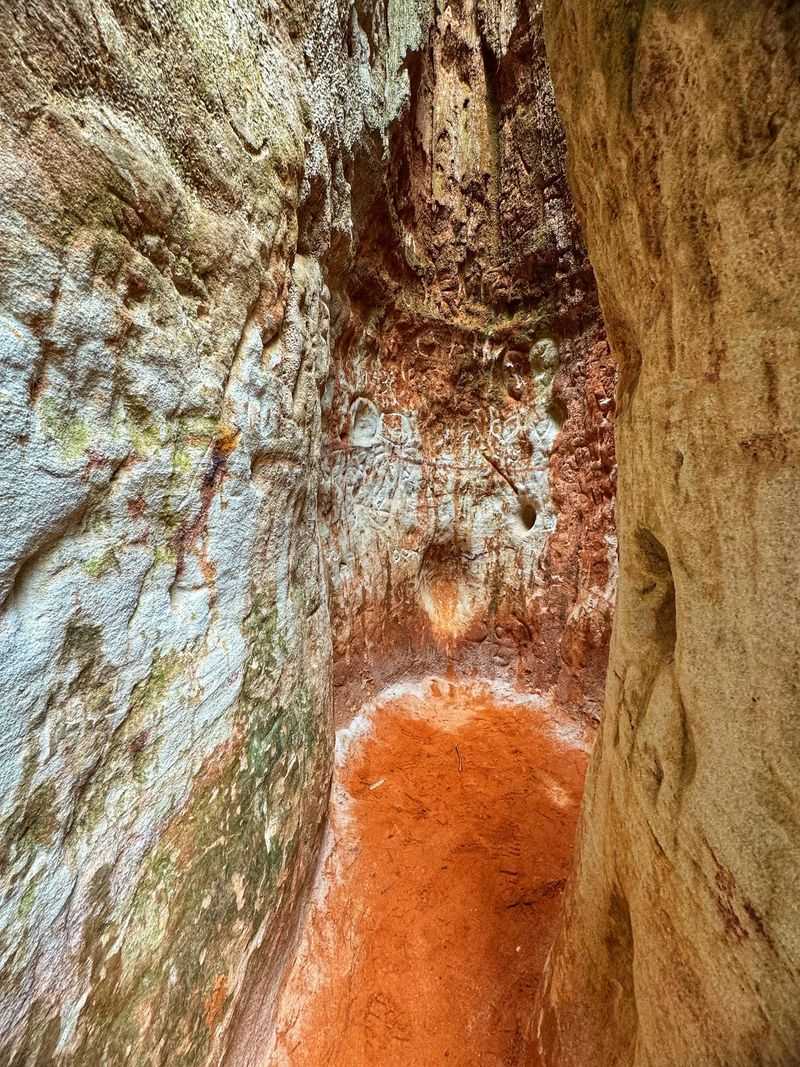
My camera roll from this trip is almost all walls, and I am not even a little sorry. Geologists have counted 43 different shades of sand here, and once you start looking, you notice new ones everywhere.
So where do the colors come from? Minerals do the painting.
Iron oxides make the reds and oranges, manganese adds purples and pinks, limonite gives yellows and tans, and kaolin creates that chalky white.
The layers themselves are really old. They were laid down between 59 and 74 million years ago by ancient streams, seas, deltas, and beaches, back when this part of Georgia was near the coast.
Scientists group the layers into four formations called Baker Hill, Clayton, Providence, and Ripley. Each one adds its own stripe to the canyon walls, kind of like pages in a very dusty history book.
Here is a tip I wish I had known earlier. Colors look richest in soft morning or late afternoon light, while bright noon sun can wash them out a bit.
Please keep your hands off the walls, though. Some visitors carve names into the soft sand, and it damages the very thing everyone came to see.
Snap photos, take in the colors, and leave the walls exactly as you found them for the next person.
Looping the Rim on the Canyon Loop Trail
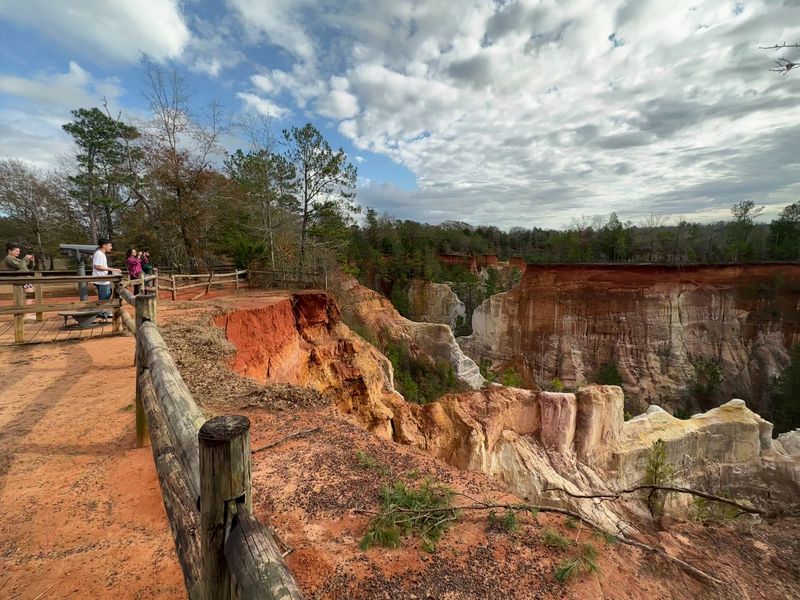
Sweaty, happy, and a little muddy is how I finished the Canyon Loop Trail, and honestly that is the goal. The loop runs about 2.5 miles and circles nine of the park’s 16 canyons.
It is rated easy to moderate, but do not let that fool you completely. Parts of the trail climb steadily, and the walk back out of the canyon is mostly uphill, so pace yourself.
The trail is marked with white blazes, and there are overlooks along the way. Some viewpoints get covered by leaves in summer, which means fall and early winter give you clearer looks over the edge.
A smart move is to grab a paper map outside the visitor center before you start. Plenty of hikers also like pairing that map with a hiking app, since trail markers can be a bit confusing at a few junctions.
Shade is patchy, so sunscreen and a hat help a lot. I also carried more water than I thought I needed and drank every drop.
If you only want the views without the hike, good news. Some of the best lookouts sit close to the parking areas along the rim, so everyone in your group can enjoy the canyon, even if not everyone wants a workout.
Squishing Through the Canyon Floor
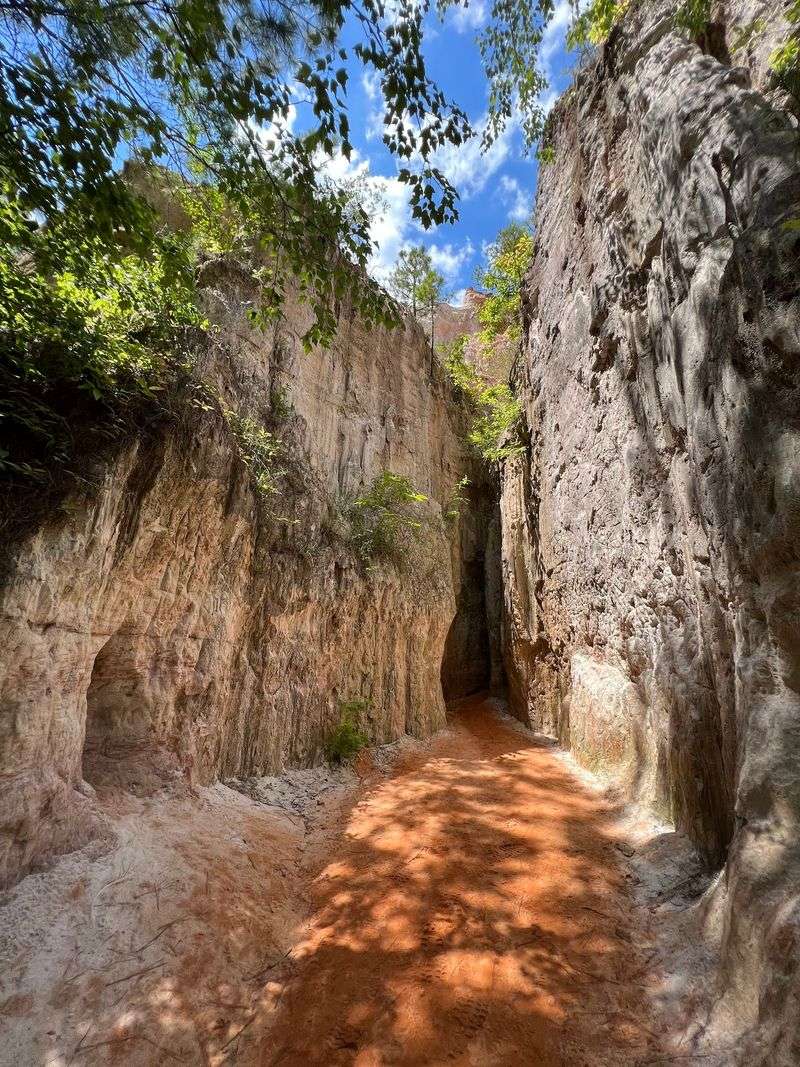
Mud. That was my very first souvenir from the bottom of the canyons, and it stayed on my shoes for a week.
Down on the floor, a thin creek winds through soft sand, and puddles pop up almost everywhere.
Hikers are allowed to explore the floors of canyons 1 through 9. Many visitors say canyons 4 and 5 are the real showstoppers, with tall, bright walls rising on both sides like a giant hallway.
Canyons 6 and 8 are worth adding if you have extra energy. The first few canyons are pretty but tend to be muddier and less dramatic.
Waterproof hiking boots make a huge difference here. Rain can raise the creek fast, sometimes up to shoe level in minutes, and then it drops again once the sky clears.
Watching that happen is actually a live lesson in erosion, which is exactly how these canyons were made. Still, check the weather before heading down.
Climbing the walls is not allowed, whether you start from the bottom or the rim. The sand is fragile and can crumble easily.
When you climb back out, look for the shoe-rinsing station near the visitor center. Trust me, your car floor will thank you for using it.
Rusty Cars Hiding in the Woods
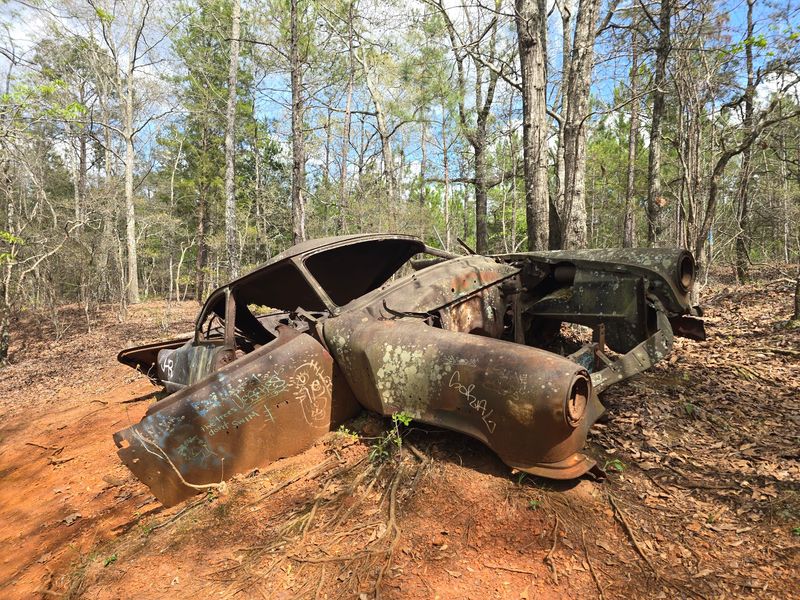
Out of nowhere, a rusty old car appeared beside the trail, and I stopped so fast my water bottle sloshed. Tucked into the forest is an abandoned homestead with cars and trucks from around the 1950s slowly melting into the ground.
Vines curl through empty windows. Trees grow right beside the fenders, and moss covers parts of the metal like a green blanket.
Why not haul them away? Removing the vehicles could cause more damage to the fragile land than just leaving them in place, so the park lets nature take over.
I loved how strange and quiet the spot felt. It is part history lesson and part art project, made by time instead of people.
Photographers tend to linger here, especially when light slips through the leaves and hits the orange rust. The colors almost match the canyon walls, which feels fitting.
Please admire the cars from the trail and do not climb on them. Sharp metal edges and old rotting parts are not something you want to test with your knees.
For families, this is a fun treasure hunt moment. Tell kids to keep their eyes open for the old cars as you hike, and watch how quickly boredom disappears.
Hawks, Foxes, and a Very Rare Azalea
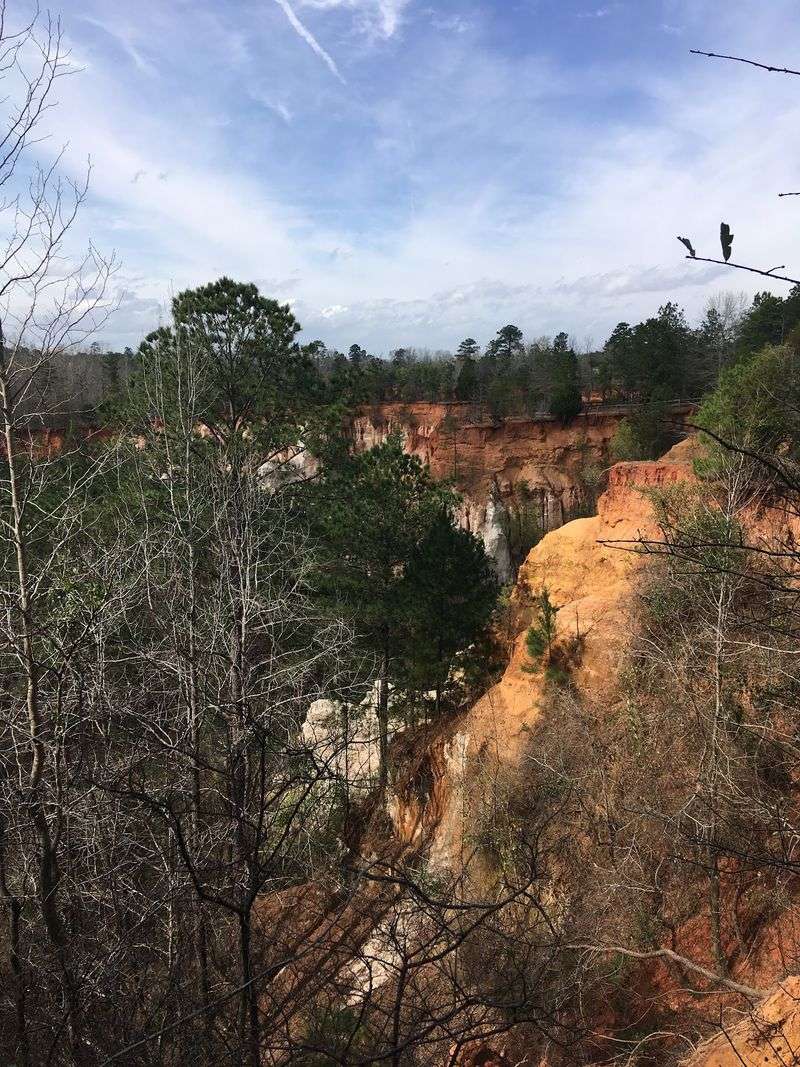
A red-tailed hawk circled over the rim while I ate a granola bar, and I think it was judging my snack choice. These big birds are often seen gliding above the canyon, riding warm air without flapping much at all.
Plenty of other creatures live here too. White-tailed deer, red and grey foxes, raccoons, armadillos, frogs, snakes, and lots of songbirds all call the park home.
Early mornings are your best bet for spotting animals. Move slowly, talk quietly, and keep a little distance so everyone stays comfortable.
Now for the plant that makes botanists excited. The plumleaf azalea grows naturally only in southwestern Georgia and eastern Alabama, and this park is one of the places you can see it.
Unlike most azaleas, it blooms in mid to late summer instead of spring. Its flowers are a fiery orange-red that really pops against green leaves and pale sand.
Bring bug spray, since summer insects can be busy. A few visitors have also mentioned bees near the canyon bottom, so stay calm and give them space.
Binoculars are a great thing to pack. They turn a far-off speck into a hawk with actual feathers, and that moment never gets old.
The Backcountry Trail and Nights Under the Stars
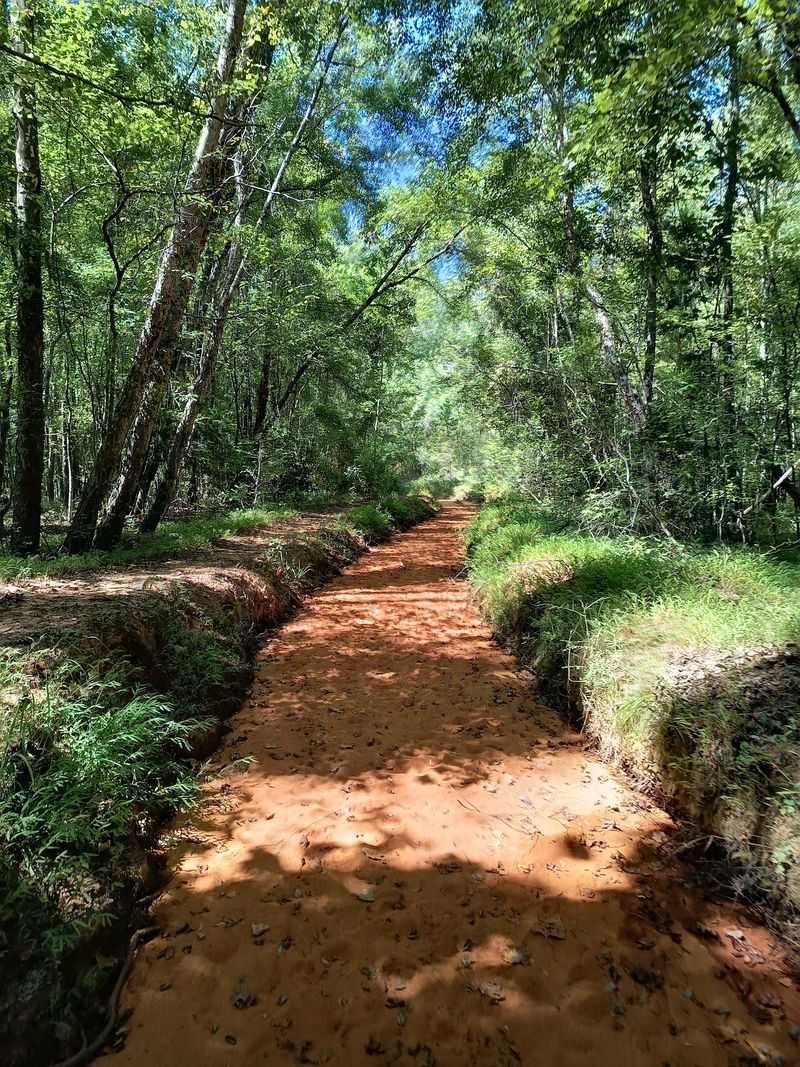
Serious hikers, this one is for you. The Backcountry Trail stretches about 7 miles and is rated extremely rugged and difficult, so it is a very different day than the loop.
It winds away from the canyons into thick forest, with lots of ups and downs. In a few spots, you may walk through creek water, so waterproof shoes are almost a must.
I would plan for several hours if you combine it with the other trails. Pack snacks, plenty of water, and a basic first aid kit.
The best reward might come after sunset. Primitive campsites along the trail let you spend the night deep in the woods, far from city lights.
With less light around, stargazing gets really good. On a clear night, the sky fills up with more stars than most of us ever see at home.
The park also has pioneer campsites if you want something closer to the main area. Reservations are a good idea, especially on weekends.
Remember to pack out everything you bring in. Leaving no trace keeps the woods wild and clean.
Waking up to birdsong, with cool morning air and a canyon waiting nearby, is a pretty great way to start a day.
From Farm Failure to Georgia Treasure
Funny enough, the canyons were almost too human to become a national park. By the 1930s, people were already calling this spot Georgia’s Little Grand Canyon, and some pushed for national recognition.
Because farming mistakes sped up the erosion, it did not qualify. Instead, it became Providence Canyon State Park in 1971, with Governor Jimmy Carter playing a part in making it happen.
Today, the Georgia Department of Natural Resources lists it as one of the state’s Seven Wonders. Not bad for a pile of washed-out cotton fields.
Planning is simple. The park opens at 7 am and closes at 9 pm daily, and there is a parking fee you can pay by scanning a QR code at the entrance.
With 65 picnic tables and two shelters, lunch with a view is easy. A grassy picnic area just down the road from the main lot has restrooms and a lovely canyon overlook.
The visitor center sells snacks and souvenirs and has clean restrooms. Spring and fall are the most comfortable seasons, since summer gets very hot and sticky.
It is roughly a two hour drive from Atlanta, making it a great day trip.
Address: 8930 Canyon Road, Lumpkin, GA 31815
