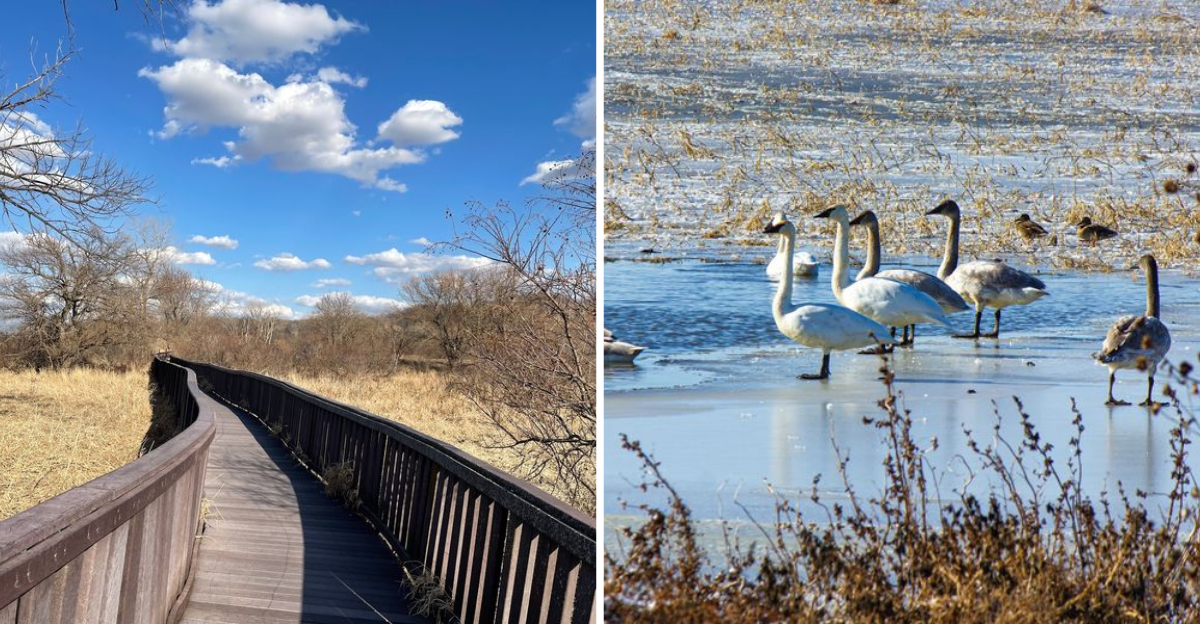
A wall of honking snow geese so loud you laugh out loud in your own car. That is the first thing that hits you on the gravel loop at a Missouri wildlife refuge, a place where the sound of thousands of birds rolls across miles of shallow water and fills the sky.
I had driven up from the interstate expecting a quiet pond or two, and instead found eagles sitting in bare cottonwoods like ornaments, close enough to see without binoculars. The wind-blown hills rise green and steep behind you, a landform you really only find here and in one region of China.
The auto tour stretches for miles, a slow roll through wetlands that host hundreds of thousands of migratory birds each year. I planned to spend an hour.
I stayed for almost three, stopping every few hundred feet to watch another wave of geese lift off the water. Some places are worth a detour.
This corner of Missouri is worth a whole trip.
The Wild Goose Auto Tour, Ten Miles at a Snail’s Pace
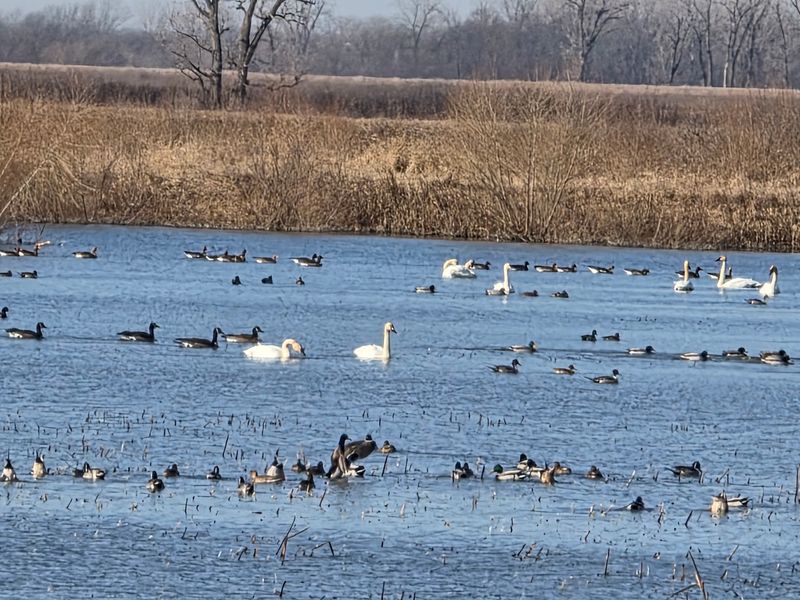
Ten miles sounds quick until you actually try it here. My drive took closer to ninety minutes, and I still felt rushed at the end.
The one-way gravel loop hugs the edges of the refuge pools, so your car basically becomes a rolling blind that birds mostly ignore.
Going slow is the whole point. Most visitors report the loop taking forty-five minutes to an hour without stops, and every stop adds time you will not regret.
Pull-offs let you park without blocking the single lane, and I found it easiest to keep my camera on the passenger seat rather than buried in a bag. Roll the windows down even when it is chilly, because sound tells you where things are before your eyes catch up.
The road surface is mostly unpaved and can get soft after heavy rain, so a low-clearance car is fine in dry weather but check conditions first. There is no cell service worth trusting out on the loop.
Bring a printed map or download the refuge tour information ahead of time. Half the fun is guessing what the next bend hides.
Every rut and puddle forces you to slow down, and that is exactly what the birds need you to do. The road curls through a landscape that feels increasingly wild with each passing mile, and the rhythm of the drive becomes meditative.
By the time you reach the end of the gravel, you realize the journey was never about getting anywhere quickly — it was about being present for whatever shows up in the next bend.
Winter Eagles That Outnumber the Cars
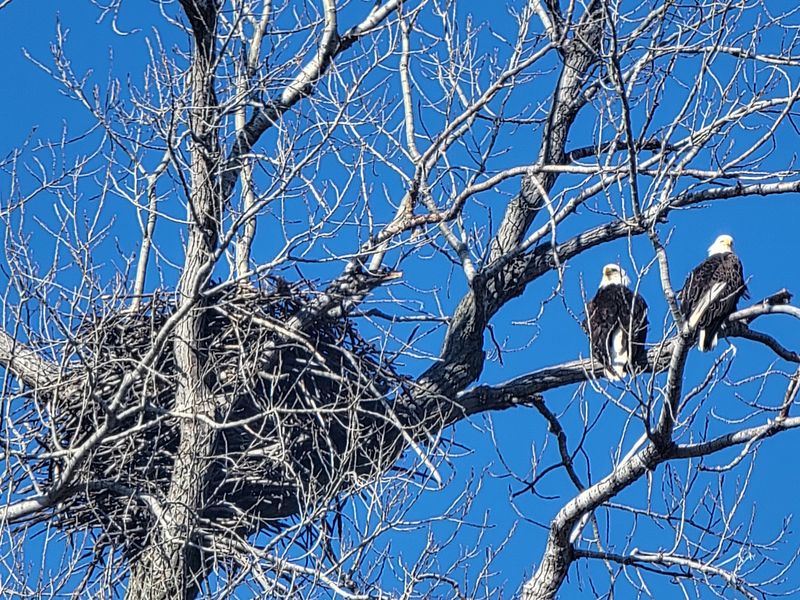
Nowhere else in Missouri have I counted eagles by the dozen without leaving my seat. December and January turn Loess Bluffs into one of the best bald eagle spots in the region, with survey counts that have topped 600 birds and a record of 662 during a 2020 count.
They come for food, plain and simple. Fish and weakened waterfowl draw them in, and the open water keeps them around.
Look at the tree lines first. Eagles favor big bare limbs with a clear view of the pools, and once you spot one, you usually spot five more nearby.
Early morning is the sweet spot. Visitors who arrive around sunrise regularly report seeing far more activity than midday travelers, and the low light makes those white heads glow against dark branches.
The refuge hosts Eagle Days each year, usually the first weekend of December, with live eagle programs and extra viewing stations set up along the tour route. Even outside that weekend, winter rarely disappoints.
Dress warmer than you think you need to, because standing still in wind off open water gets cold fast.
When a Million Snow Geese Lift Off at Once
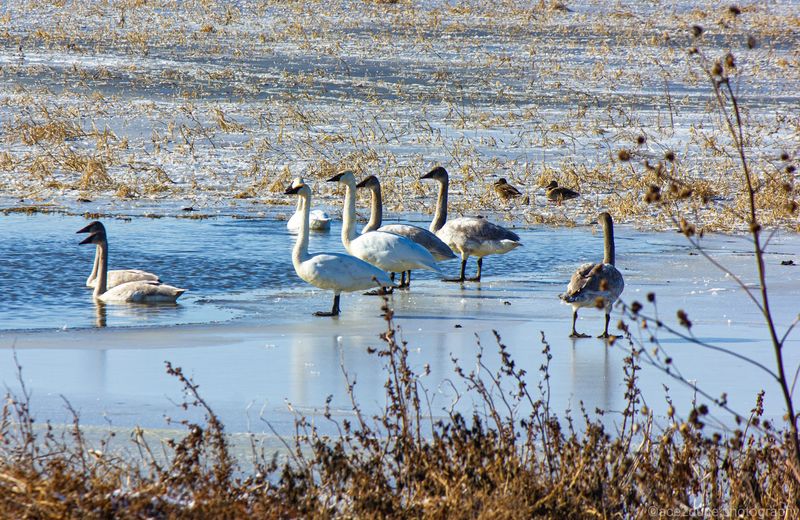
Imagine a snowstorm that flies. Peak spring migration in mid-March brings snow geese to Loess Bluffs in numbers that genuinely reset your sense of scale, and in February 2013 the count passed one million birds.
When something spooks them, the whole raft rises together with a roar you feel in your chest.
Visitors drive up from Kansas City, Lawrence, and St. Joseph just for this, and the reason becomes obvious within about thirty seconds of arriving. Hundreds of thousands of birds pour in and out of the pools all day.
Timing matters more than luck. Watch the refuge updates in late February and early March, since the flock moves north quickly once the ice breaks.
Keep your engine off while you watch, and avoid slamming doors near resting flocks. Startling them wastes energy the birds need for a long journey, and honestly the natural liftoffs are more spectacular anyway.
Trumpeter swans share the water during the same stretch, with nearly 4,200 counted in early 2024. Between the geese and the swans, white fills almost every inch of open water.
Three Hundred Species and the Joy of Not Knowing Them All
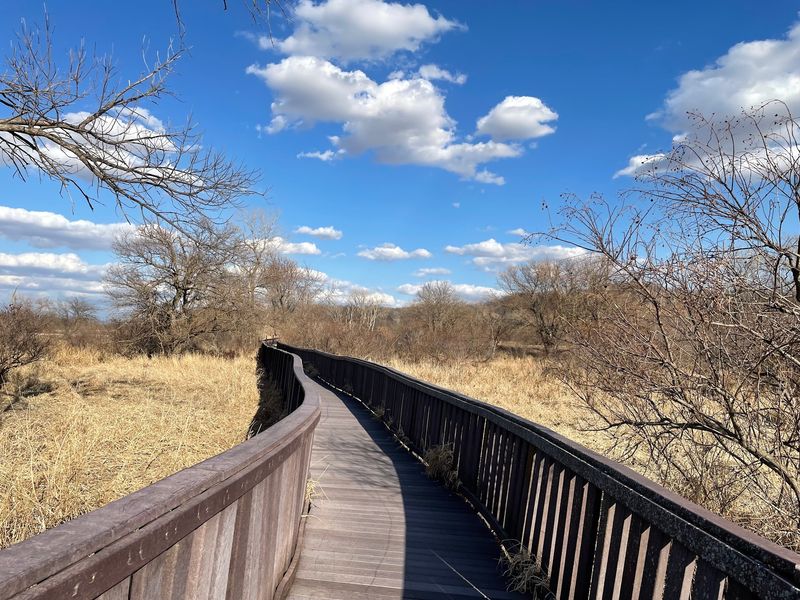
My bird identification skills are mediocre at best, and it did not matter one bit. Over 300 species have been recorded here, and the National Audubon Society designated the refuge a Globally Important Bird Area back in 2001.
It also sits along the Great Missouri Birding Trail, which explains the serious optics you see mounted on car windows.
Shorebirds alone account for roughly 38 species and about 60,000 individual birds each year, including greater yellowlegs and pectoral sandpipers picking through the mudflats. Rarer visitors like black-necked stilts and ruddy turnstones turn up too.
Songbird fans get about 250 passerine species to chase, with prothonotary warblers, dickcissels, and scarlet tanagers among the highlights. Great blue herons stalk the shallows almost year round.
A field guide app helps, but the simplest trick I learned was watching how a bird moves rather than fussing over color. Bobbing, wading, hovering, and diving each narrow things down fast.
Keep a small notebook in the car. Half the pleasure is looking things up later and realizing what you actually saw.
Climbing the Bluffs for a Three-State View
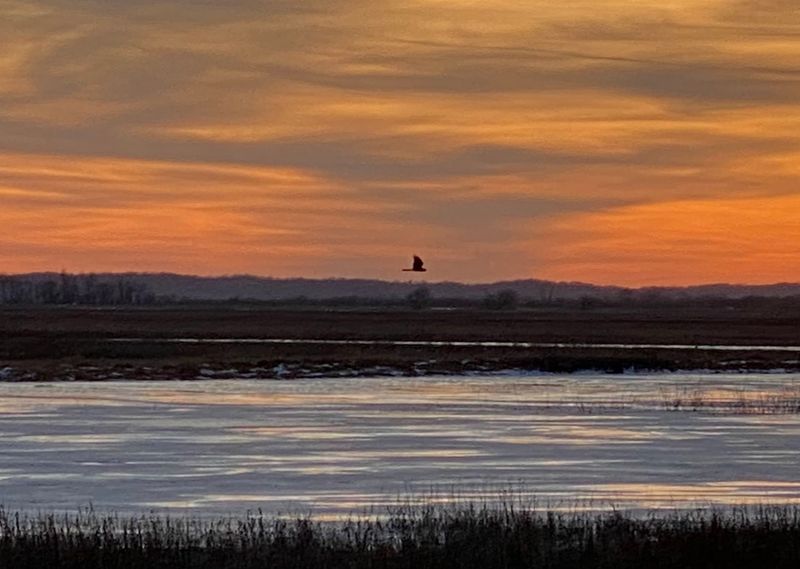
Legs get restless after an hour in the car, which is exactly when the trails behind the visitor center earn their keep. More than four miles of hiking wind through the bluffs, and the short quarter-mile climb built by the Civilian Conservation Corps in the 1930s rises about 200 feet to an overlook.
From the top you can see across Missouri into Kansas and Nebraska on a clear day.
The Loess Bluff Trail includes 200 hand-laid stone steps, and I will admit I stopped twice to catch my breath. Worth every step.
These hills are geologically unusual, formed from fine wind-blown silt left behind after glacial periods. Outside of one region in China, nowhere in the world has loess formations of this size.
Wear real shoes, since the steps can be slick with leaves in fall and damp moss in spring. Ticks are common in warmer months, so long pants help.
Sunset from the overlook, with the pools glinting below and birds moving in, ranks among the better free views in Missouri.
Observation Tower, Scopes, and the Visitor Center
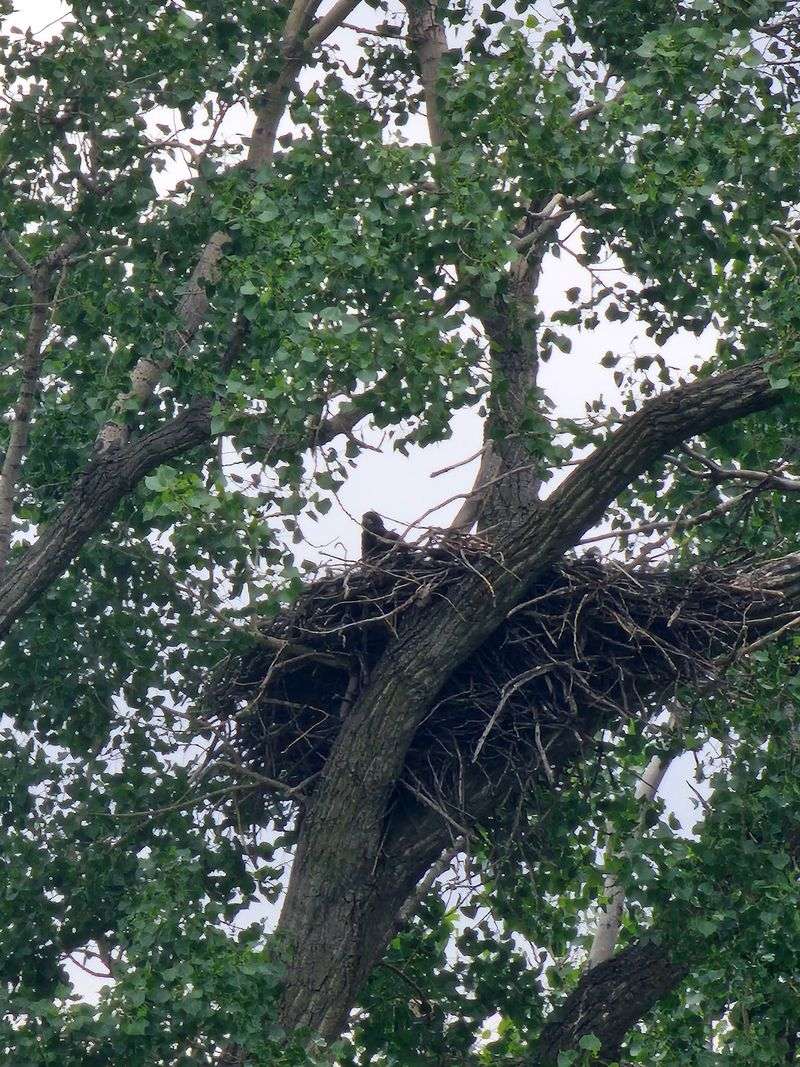
Free spotting scopes changed my whole visit. Near the start of the auto tour sits an observation tower completed in 1995, an accessible raised platform looking out over Eagle Pool, where waterfowl and eagles concentrate.
Additional scopes are placed along the tour route and near the trails, which is a small thing that feels generous.
The visitor contact station holds exhibits about the wetlands and a Nature Shop, and staff can tell you what has been showing up recently. Hours run 10 AM to 3 PM Tuesday through Saturday, with the building closed Sunday and Monday, so plan around that if you want inside time.
One thing to know: the auto tour and pools stay accessible even when the center is closed.
Restroom facilities near the water side can be basic, sometimes a pit toilet or portable unit, so factor that into a family trip. Pack water and snacks, because the nearest services sit back toward Mound City.
Call ahead at 660-442-3187 if you are driving a long way and want current conditions.
Beyond the Birds, Muskrats, Deer, Lotus Blooms and Quiet Summers
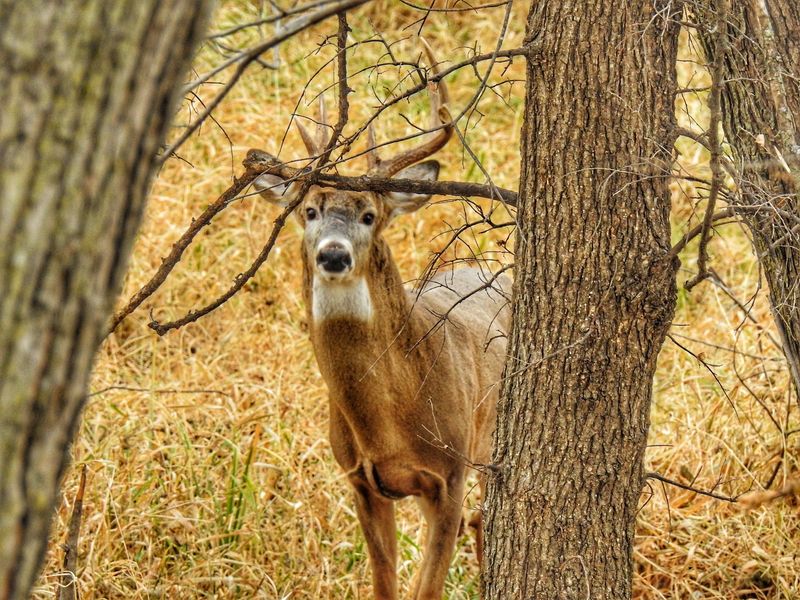
Summer gets overlooked here, and I think that is a mistake. Once the huge flocks head north, the refuge settles into something softer, with nesting songbirds, great blue herons, and white-tailed deer fawns tucked in the grass.
The lotus blooms alone are worth the trip, spreading pink and green across whole sections of water.
Beyond birds, the refuge supports 41 known mammal species including beavers, otters, coyotes, and muskrats, plus 37 reptile and 25 amphibian species. The state-endangered massasauga rattlesnake lives here too, which is a good reason to stay on marked paths.
Muskrats get mentioned constantly by visitors, usually swimming with a V-shaped wake behind them.
Morning and evening remain the best wildlife hours in any season, when animals move and the light goes golden. Fishing, photography, and educational programs round out the options.
The refuge was established on August 23, 1935, making it Missouri’s first national wildlife refuge. Nearly a century later it still feels like a working piece of restored wetland rather than a manicured park.
Address: 25542 Highway 159, Forest City, Missouri.
