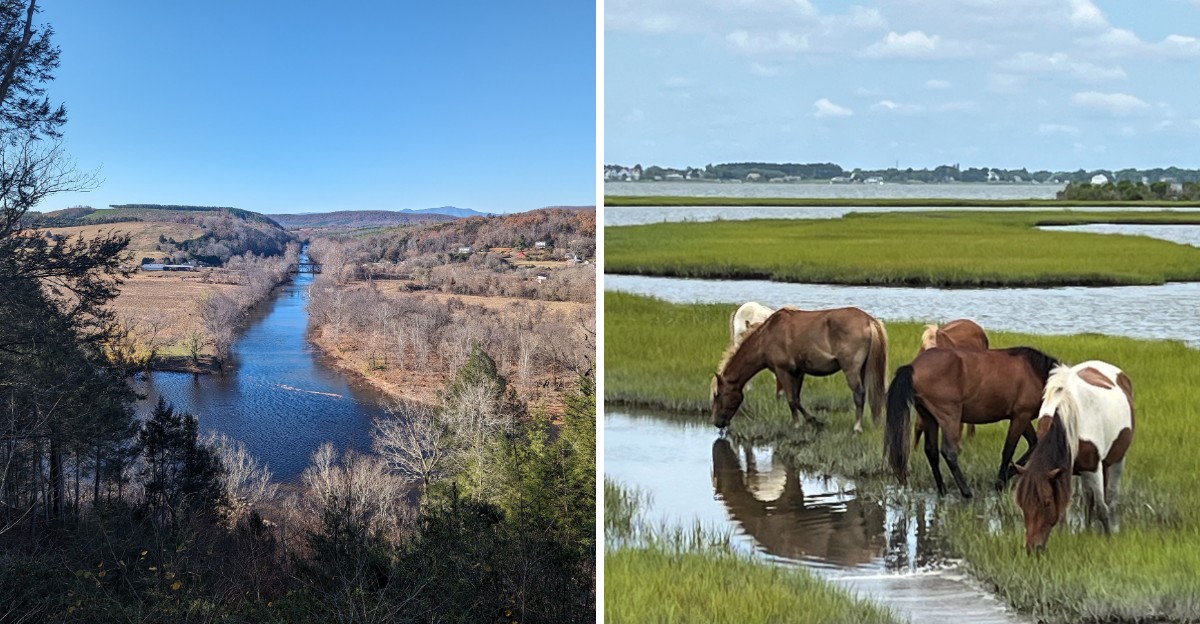
Late summer is the best time for stargazing in Virginia. The nights are warm, the skies are clear, and if you find the right spot, the Milky Way stretches across the sky in full view.
This list has nine beautiful Virginia parks where the stargazing is exceptional. Some are remote and dark, far from city lights.
Others are closer to home but still offer impressive views. A few have astronomy programs and telescopes available for public use.
The common thread is darkness, the kind that lets you see the stars the way our ancestors did. Bring a blanket, a red flashlight, and a sense of wonder.
Virginia has plenty of parks, but these are the ones that shine at night.
1. Staunton River State Park
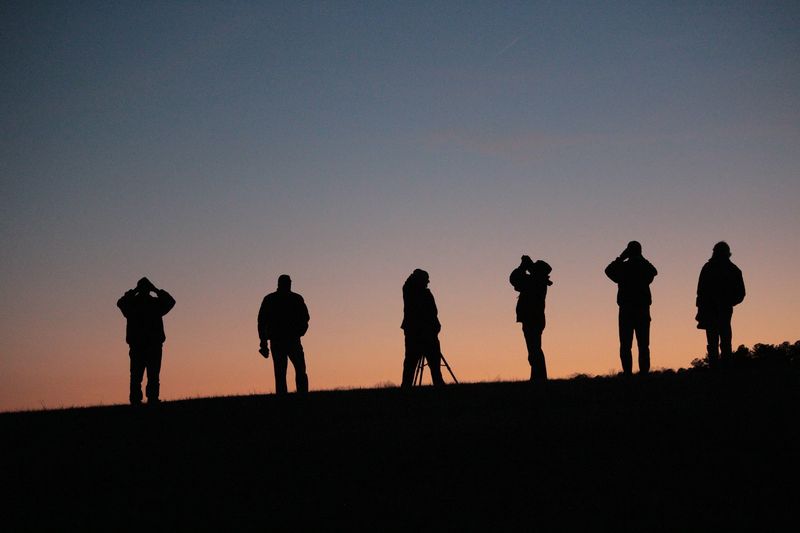
Southern Virginia hides a certified star factory, and it sits where the Dan and Staunton rivers spill into Buggs Island Lake. Staunton River State Park earned International Dark Sky Park status, and the night sky here backs up the paperwork.
Find it at 1170 Staunton Trail, Scottsburg, VA 24589, comfortably far from any glow worth complaining about.
Daylight hours fill easily. Multi-use trails welcome hiking, biking, and horseback riding, while anglers work the water for bass, bluegill, and crappie.
Then the sun drops, and everything changes character. Warm late-summer air keeps you outside long past bedtime, and the galaxy core rises like someone slowly turning up a dimmer switch.
Park programs often include guided stargazing sessions, with staff walking you through constellations and pointing out what your eyes keep missing.
Telescope loans through the visitor center let you skip the expensive gear phase entirely. Binoculars work beautifully too, especially aimed at the dense star clouds near Sagittarius.
Cabins built by the Civilian Conservation Corps give the whole trip a woodsy, old-fashioned charm, and sleeping onsite means no groggy midnight drive home.
A practical tip worth remembering: arrive before dusk, park once, and let your eyes adjust for a solid half hour without checking your phone. Red flashlights are your friend here.
Bring bug spray, a reclining chair, and layers, because riverside humidity cools fast after midnight.
Few places on the Atlantic side deliver this combination of quiet water, deep forest, and sky that genuinely earns the word spectacular.
2. Sky Meadows State Park
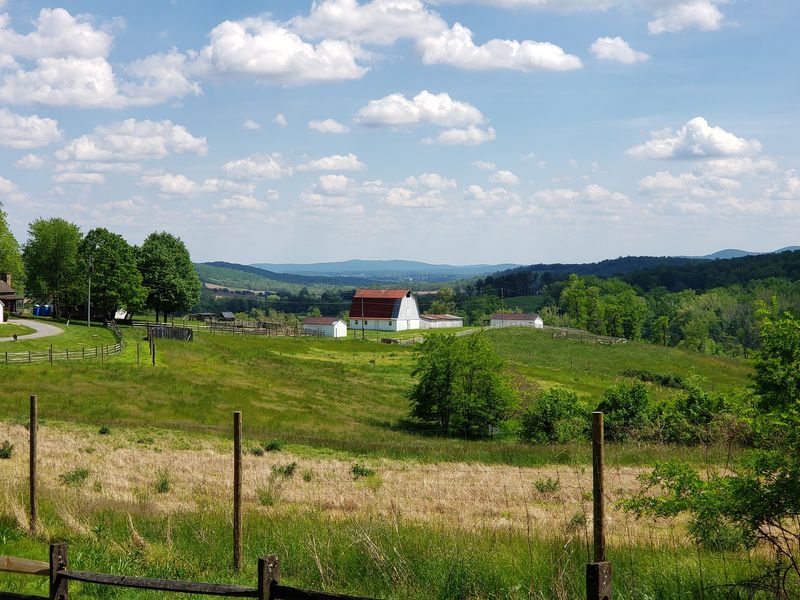
Rolling farmland, stone walls, and a sky that behaves itself. Sky Meadows State Park sits on the eastern flank of the Blue Ridge and carries International Dark Sky Park credentials, which explains why astronomy clubs treat it like a second home.
The address is 11012 Edmonds Lane, Delaplane, VA 20144.
Walking comes first. Roughly 22 miles of hiking trails and about 10.5 miles of bridle paths thread through pastures and woodlands, with a connector running up to the Appalachian Trail.
Turner Pond holds the good stuff after dark. Designated as a Dark Sky Observation Area, it stays open for self-guided sky watching beyond regular park hours, which is a rare and generous arrangement.
Astronomy programs run regularly, led by volunteers who haul in serious telescopes and cheerfully aim them at nebulae, double stars, and whatever planets happen to be showing off.
History fans get extras. Nature and heritage programs run year-round, and certain Saturdays feature hearth cooking and blacksmithing demonstrations at the historic farm.
Late summer suits this landscape perfectly, when meadow grasses go gold and evening air finally loses its stickiness.
Plan for a short uphill walk from the parking area with your gear, and choose shoes that handle dewy grass.
Lawn chairs beat standing around, and a thermos of something warm makes the two in the morning stretch far more pleasant.
Fog sometimes settles in the low fields, which sounds like a problem but photographs like a dream under starlight.
3. James River State Park
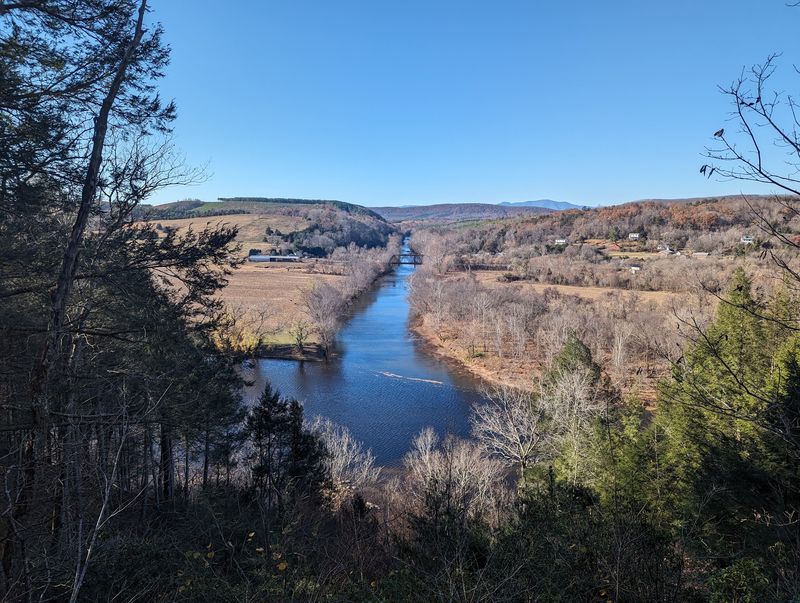
Three miles of shoreline along one of the most storied rivers in the country, plus a sky certified dark since 2019. James River State Park makes a strong case for river valley astronomy.
Head to 104 Green Hill Drive, Gladstone, VA 24553, tucked into the Blue Ridge foothills.
Grasslands roll into quiet forest here, and around 22 miles of multi-use trails keep hikers and cyclists busy while the sun is up.
Paddlers get the better deal. Canoe and kayak trips on the James turn a hot afternoon into something genuinely refreshing.
Three freshwater ponds sit ready for fishing, and a universally accessible pier means the water is open to everyone.
Once darkness settles, staff-led Dark Sky interpretive programs take over, frequently joined by regional astronomy clubs who bring telescopes and endless enthusiasm for star clusters and planets.
Picture the galaxy arching above a river that has been flowing through this valley since long before anyone thought to name it. Reflections on the surface double the drama.
Overnight options range from cabins and lodges to primitive campsites, so you can match your comfort level to your budget.
Riverside meadows collect moisture overnight, so pack a ground tarp if you plan to lie back and watch.
Moonless weeks in August and September deliver the deepest views, and meteor activity often adds surprise punctuation.
Check the park calendar before committing, since program dates shift with weather and moon phase.
Quiet, wide open, and refreshingly uncrowded after sunset.
4. Natural Bridge State Park
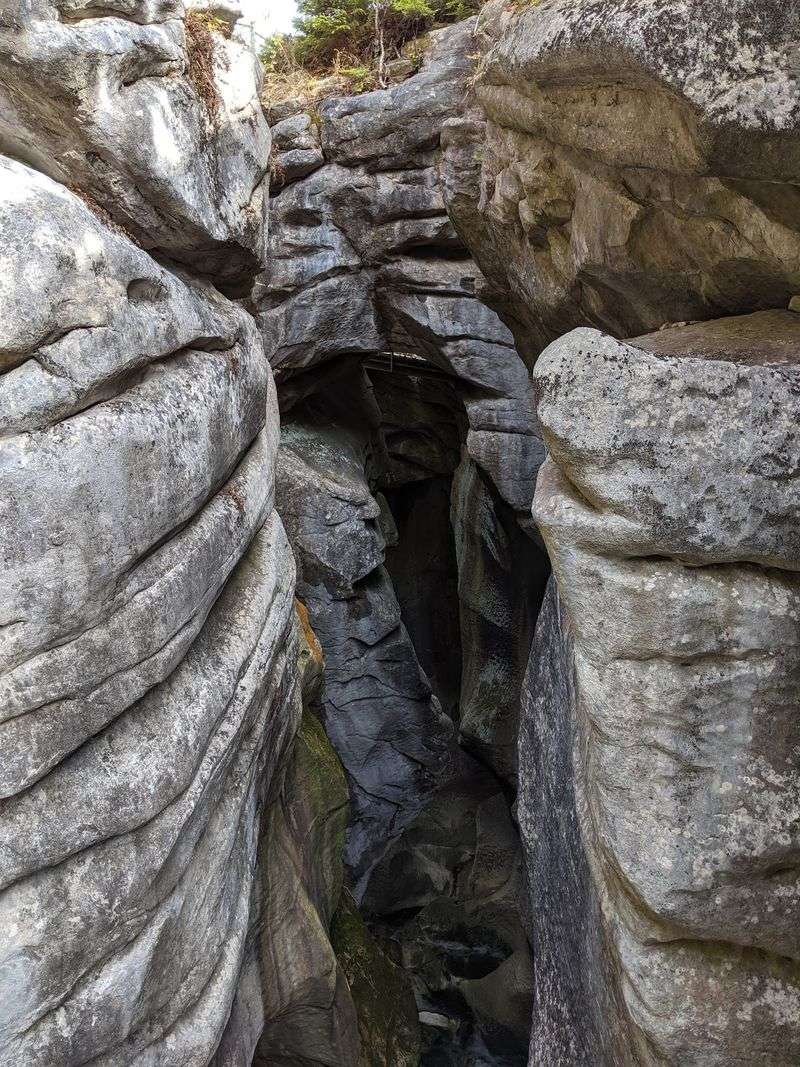
A 215-foot limestone arch, surveyed long ago by George Washington, standing beneath a sky so clean it earned International Dark Sky Park status in 2021. Geology and astronomy rarely share a stage this well.
Look for 6477 South Lee Highway, Natural Bridge, VA 24578.
More than seven miles of trails wander through the property. The accessible Cedar Creek Trail leads from the visitor center directly under the arch, past the Monacan Indian Village, and onward to Lace Falls.
Standing beneath that span is humbling in daylight. After dark, with constellations crowding the gap overhead, it borders on unreal.
Guided Dark Sky Night programs run through the season, helping you sort constellations from random bright dots and offering telescope time on nebulae and planets.
Occasionally a haywagon shuttles the group out to prime viewing ground, which is both practical and delightfully old-school.
Surrounding ridgelines of the Blue Ridge and Appalachians create a dark horizon in nearly every direction, cutting stray glow to a minimum.
Bring a light jacket. Cool air pools in the creek gorge even in August, and the temperature drop catches people off guard.
Comfortable shoes matter on the stairs and paved grades leading down to the creek.
Arrive early enough to explore before sunset, then let the transition happen slowly around you.
Very few places let you admire a natural wonder and the Milky Way within the same hour, from the same patch of ground.
5. Shenandoah National Park
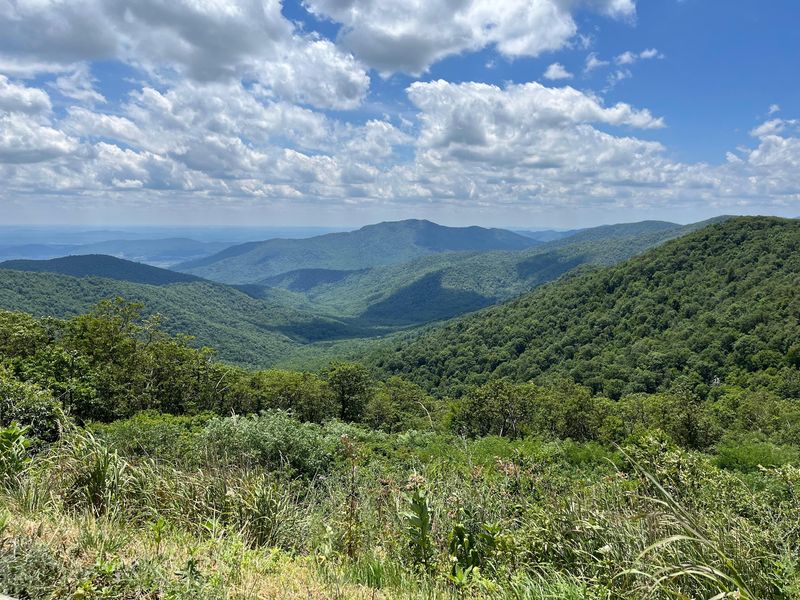
Elevation is the shortcut to better stars, and Skyline Drive hands it to you on a silver platter. Running 105 miles along the crest of the Blue Ridge, this road strings together nearly 70 overlooks perched above valley light.
Main entrances include Front Royal at 21073 Skyline Drive, Front Royal, VA 22630, and Thornton Gap near Luray off Highway 211.
Big Meadows is the crowd favorite for good reason. Its wide open expanse near the Rapidan Fire Road gives you sky from horizon to horizon with almost nothing blocking the view.
Skyland’s amphitheater offers another solid perch, especially when ranger programs are scheduled.
Daytime here is its own reward. Waterfall hikes, rocky summits, and a trail network that could occupy you for weeks make the wait for darkness painless.
Starlit hikes and evening ranger talks appear on the park calendar through the warmer months, worth checking before you drive up.
Mountain weather changes its mind constantly, so carry an extra layer even when the valley is sweltering.
Clouds sometimes sit below the ridgeline, which means the view from up top stays crystal clear while the towns beneath sit in soup.
Drive slowly after dark. Deer and black bears use this road as their own, and the speed limit exists for excellent reasons.
Give yourself a full 30 minutes of darkness before judging the sky. Patience pays enormous dividends here.
6. Rappahannock County Park
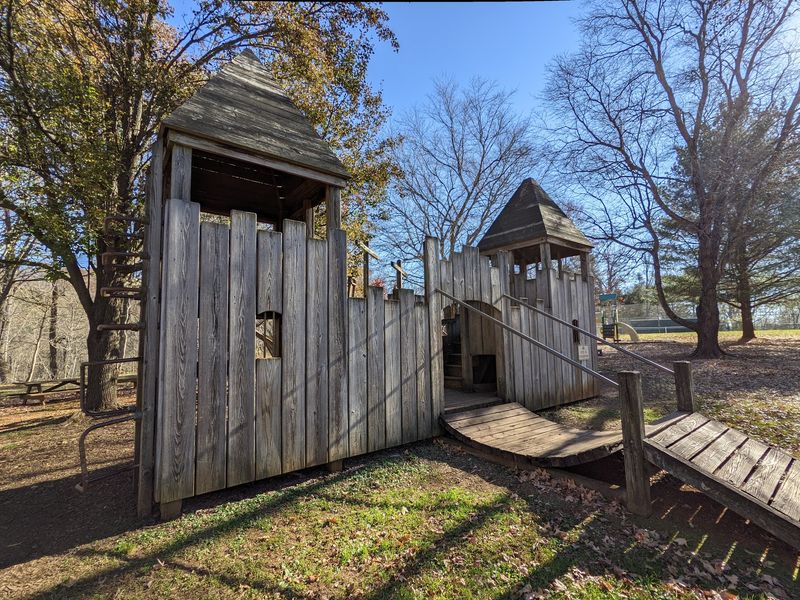
Modest acreage, enormous sky. Rappahannock County Park picked up International Dark Sky Park recognition in 2019, an achievement that usually goes to sprawling western preserves rather than a community park in a small mountain town.
You will find it in Washington, Virginia, a village so tiny it inspired the nickname Little Washington.
The designation reflects serious local effort. Shielded lighting, community buy-in, and stubborn resistance to unnecessary glare keep the darkness intact here.
Native plant sanctuaries anchor the daytime appeal, supporting pollinators and showing off the region’s wild botanical side without any manicured fussiness.
A volunteer-maintained Bluebird Trail runs through the property, and those nest boxes have helped the species flourish across the county.
Accessible natural areas and easy walking paths make the park welcoming for a wide range of abilities, which matters more than acreage ever will.
Stargazing events pop up on the community calendar, drawing folks who want the galaxy without a three-hour drive into the backcountry.
Nearby Washington offers dining and lodging if you want civilized comfort bookending your cosmic evening.
Park courteously and keep headlights off once you settle in, since a single car door left open can ruin night vision for everyone nearby.
Late summer brings the galaxy core high over the southern ridges, and the surrounding hills block stray light beautifully.
Consider it proof that dark skies are a choice communities make, not just an accident of geography.
7. Assateague Island National Seashore
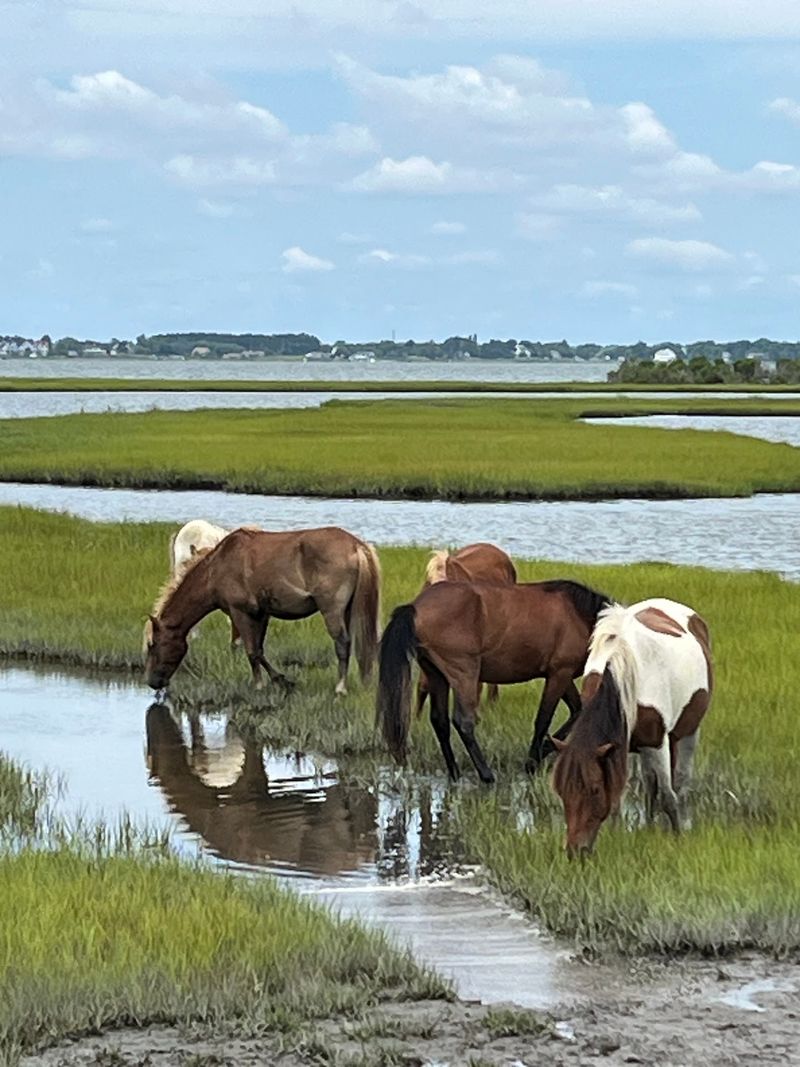
Waves for a soundtrack, wild horses for company, and no boardwalk neon anywhere in sight. The Virginia end of Assateague Island National Seashore is reached through Chincoteague, and it rewrites what a beach night can feel like.
Undeveloped shoreline stretches for miles, which is exactly why the darkness holds up so well out here.
The barrier island runs about 37 miles, and the famous free-roaming horses graze the marshes on both the Virginia and Maryland sides.
Wildlife goes far beyond the horses. More than 200 bird species pass through, joined by white-tailed deer, foxes, and plenty of marine life just offshore.
Salt marsh, maritime forest, and open dune all sit within a short walk of each other, making daytime exploring genuinely varied.
Once the sun sets over the bay, spread a blanket on the sand and let your eyes adapt. Meteor showers and the galaxy core both perform beautifully against that wide ocean horizon.
Walking farther south down the beach puts more distance between you and any residual glow from the mainland.
Check seasonal access rules and closures before planning a late night, since beach hours and wildlife protections shift through the year.
Mosquitoes and biting flies take their duties seriously here, so repellent is non-negotiable.
Give the horses room. They look calm and they are absolutely still wild animals.
Nothing else in this state pairs constellations with breaking surf quite like it.
8. Whitetop Mountain
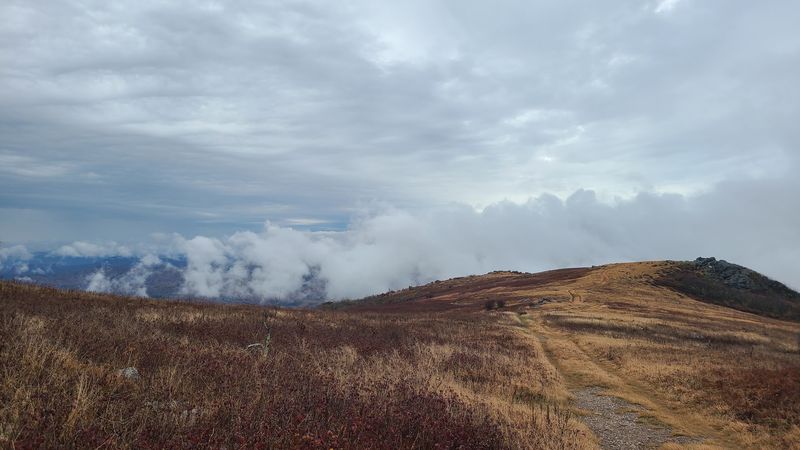
Second-highest independent peak in the state, wrapped in grassy balds and served by the highest navigable road around. Whitetop Mountain sits in the southwest corner, inside the Mount Rogers National Recreation Area near where North Carolina and Tennessee meet.
No dark sky certification hangs on the gate, and honestly, the remoteness and elevation handle that job without a plaque.
Panoramic views reach across three states from the open summit meadows, which makes sunset here something of a local legend.
Stick around after the color fades. That is when the real program starts, with the galaxy stretching overhead and zero town glow to interfere.
Dispersed camping within Jefferson National Forest lets you sleep right up top, and established fire rings help once the mountain air turns genuinely chilly.
Bring warm layers regardless of the calendar. Summit temperatures run far cooler than the valleys below, and wind adds bite.
Daytime options nearby are excellent. The Virginia Creeper Trail and the Appalachian Trail both pass through the region, offering everything from gentle downhill cruising to serious ridgeline mileage.
The access road is gravel and narrow in places, so take it slowly and avoid attempting it in bad weather.
Cell service is spotty at best, which means downloading maps and star charts beforehand saves frustration.
Clear high-pressure nights in late summer produce views so sharp the Milky Way looks textured rather than hazy.
Worth every mile of winding mountain road.
9. Natural Tunnel State Park
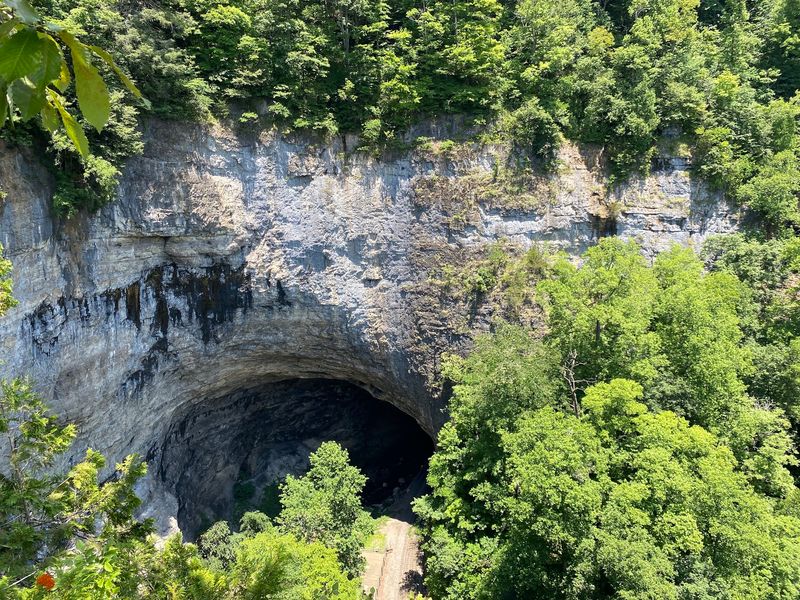
Nature carved an 850-foot tunnel through solid limestone, ten stories tall, and left behind one of the strangest landscapes in southwest Virginia. Natural Tunnel State Park makes a compelling case for pairing geology with astronomy.
The address is 1420 Natural Tunnel Parkway, Duffield, VA 24244.
Star parties and astronomy programs run here regularly, hosted by volunteers who set up at the Gazebo, widely considered the best viewing platform on the property.
Telescopes usually appear alongside them, aimed at planets, clusters, and whatever deep-sky targets the season favors.
Daytime keeps pace nicely. Cave tours reveal the underground side of this karst country, while canoe trips on the Clinch River explore one of the most biologically rich waterways in North America.
The Cove Ridge Center handles environmental education, and a chairlift saves your knees on the descent toward the tunnel floor.
Standing near that gaping stone mouth, then looking up into a sky crowded with stars, creates a strange double sense of scale. Deep time below, deeper space above.
Campsites and cabins make an overnight easy, which beats navigating mountain roads at midnight.
Ridge walls create a genuinely dark pocket here, far from any significant population center.
Verify program dates ahead of time, since star parties depend on moon phase and forecast cooperation.
Pack a red headlamp and skip the bright phone screen entirely.
Grab your blanket, chase a moonless night, and let the state’s darkest corners put on the show.
