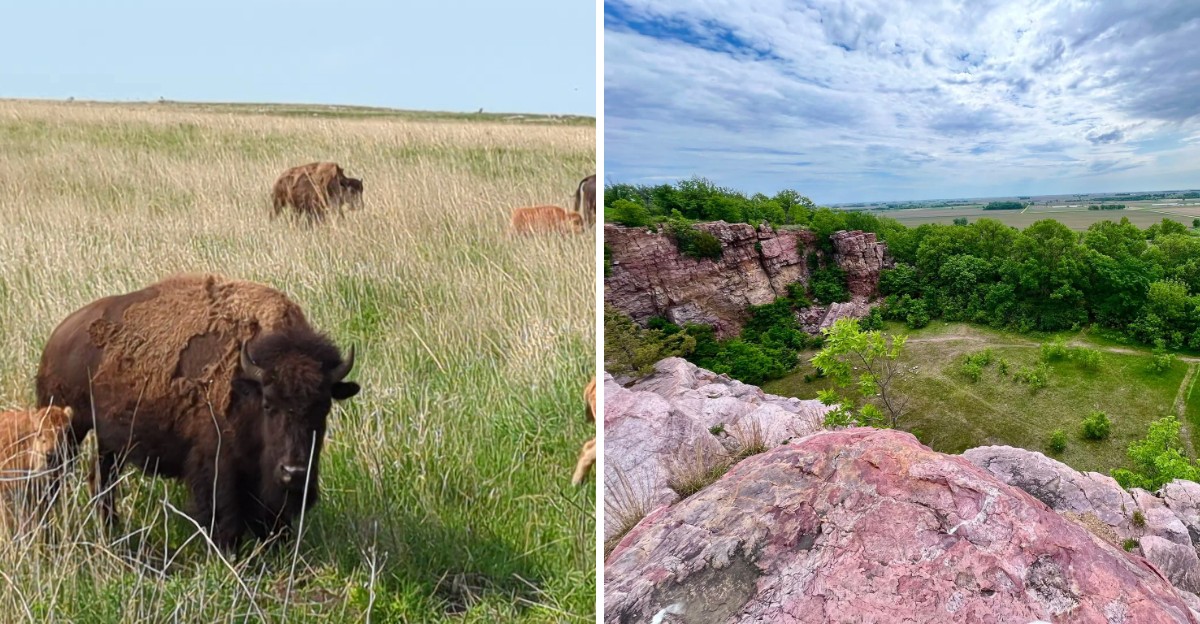
A herd of genetically diverse plains bison grazes on a prairie in Minnesota, right below a rock wall nearly two billion years old. That alone made me stop and read twice.
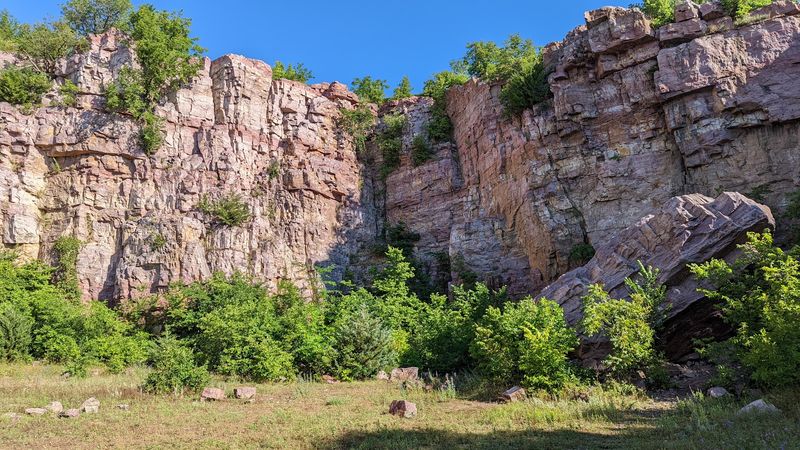
The cliff rises up to 100 feet and runs about a mile long. Its stone glows in shades of pink, purple, and deep red, thanks to iron oxide.
One detail I find worth mentioning is the cactus. Prickly pear grows on the sunbaked ledges and blooms bright yellow in early summer. Cactus, in Minnesota, next to bison.
I’m particularly drawn to how many surprises fit into one park. There’s a mystery line of stones, campsites beneath wide prairie skies, and a tour vehicle that rolls right into the bison range.
Hop On The Bus That Drives Right Into Bison Country
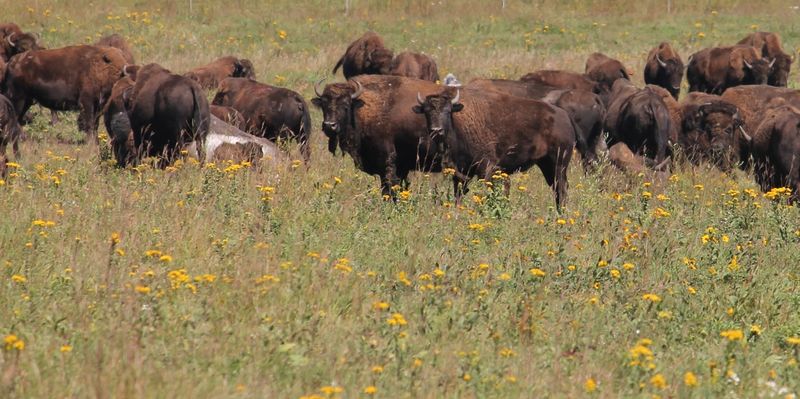
Seventy-five feet. That’s how close you might get to a full-grown bison on the Prairie and Bison tour.
Naturalists lead these 90-minute rides into the bison range itself. The tours run seasonally from late May into October, with a reduced schedule during the fall.
You’ll find them on Fridays, Saturdays, and Sundays. That makes them easy to fit into a summer weekend trip.
The ride does more than deliver a close look. Your guide shares facts about the herd, the prairie, and how the two depend on each other.
Bison eat grass, roll in dust, and wander wherever they please. Their grazing actually helps shape the prairie around them.
Now for the honest part. Sightings aren’t guaranteed, because these are wild animals with their own plans.
Some days the herd strolls right up to the route. Other days they hang out far across the range and act like you don’t exist.
Either way, the trip takes you into a part of the park most visitors never walk. Pack a camera with good zoom, plus a little patience.
Bison don’t do schedules, but they’re worth waiting for.
No Tour Ticket? The Deck And Trail Still Deliver
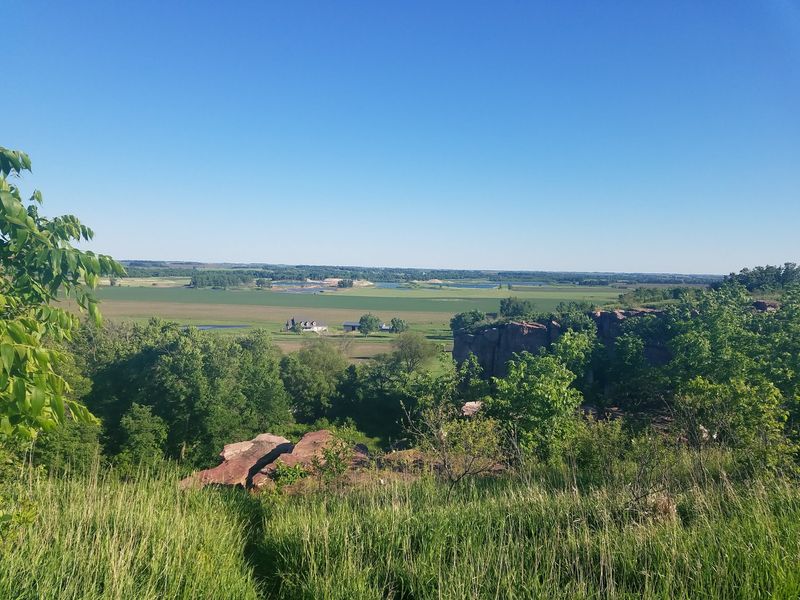
Plenty of people visit without hopping on the tour bus. Good news, the bison are still on the menu, visually speaking.
The park has an observation deck that looks out over the range. A spotting scope sits right there for a closer view.
That scope is handy because the herd moves around a lot. One hour they’re near the fence, and the next they’re specks on a hill.
Hikers have another option too. The Western Loop Trail runs along the edge of the bison range.
Walking it gives you a chance to see the herd from the ground. Grass sways around you, and the big animals graze just beyond the fence.
Bring binoculars if you own a pair. They turn a brown blob into a bull with a massive head and a scruffy beard.
Timing matters, but luck matters more. Bison don’t post their plans, so check a few different spots if the first one comes up empty.
One tip worth repeating is to stay on the right side of the fence. These animals look calm, but they’re big, fast, and very much wild.
Those Pink Cliffs Are Older Than You Can Picture
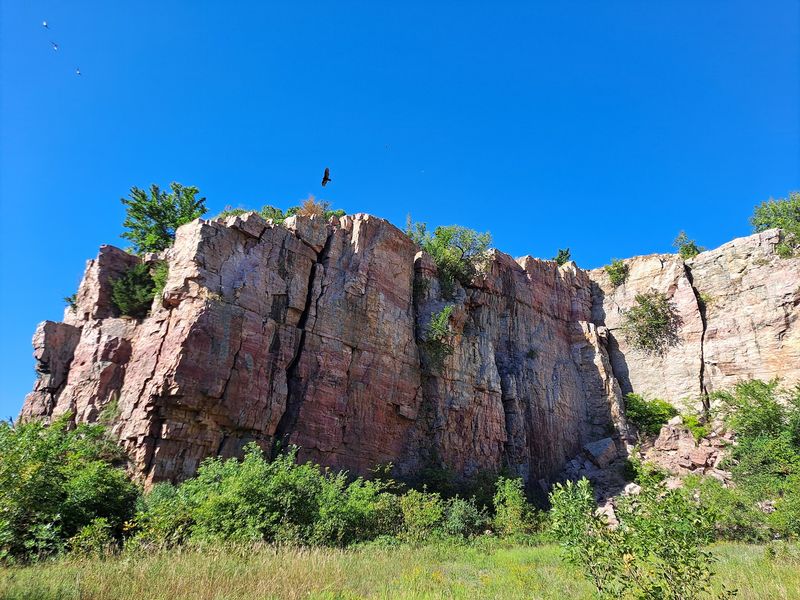
Nearly two billion years. Scientists estimate the Sioux quartzite here formed somewhere between 1.6 and 1.7 billion years ago.
At Blue Mounds State Park, that ancient stone forms a cliff up to 100 feet tall. It stretches about a mile across the landscape.
The color is the showstopper. Iron oxide tints the rock from pale pink and purple to deep red.
So why call it Blue Mounds? Early settlers saw the cliffs from a distance, where they often looked bluish, especially at dusk.
Get up close, though, and the pink takes over. Sunlight makes the warm tones pop against green prairie grass.
Look carefully at the rock surface. You may spot cross-bedding, ripple marks, and even raindrop imprints from ancient streams.
Yes, raindrops. Rain that fell over a billion years ago left marks you can still find today.
The stone is also incredibly tough. It ranks among the hardest rocks on the continent, which explains why it’s still standing so proudly.
Bring your camera for this one. Pink cliffs, blue sky, and waving grass make a pretty strong case for Minnesota’s southwest corner.
Climbers, Quarry Fans, And Rock Nerds Get Their Turn
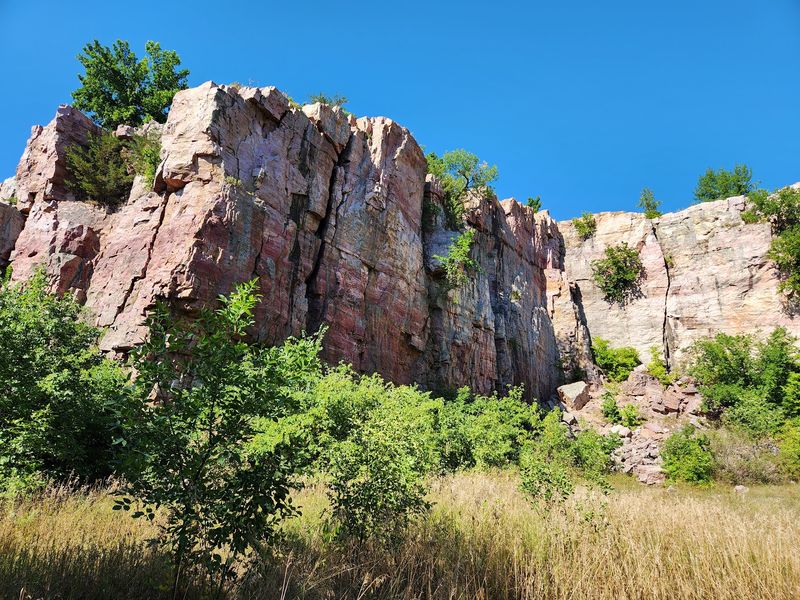
Hard rock makes for fun climbing. The quartzite cliff here holds many established routes with different difficulty levels.
That variety means newer climbers and experienced ones can both find something to tackle. The rough, sturdy stone gives a solid grip under your hands.
Not into ropes and harnesses? The park still has plenty of rock history to explore on foot.
An old quarry sits within the park boundaries. Sioux quartzite was once a prized building stone, and workers cut it right here.
You can still see that stone in buildings around nearby Luverne. Driving through town afterward feels a bit like a scavenger hunt.
The quarry area also offers a different view of the rock. Cut walls show the layers and colors in a way natural cliffs sometimes hide.
Kids tend to love scrambling around boulders, so keep an eye on little ones. Edges can be steep, and the drop is no joke.
Wear sturdy shoes with good grip. Quartzite is tough, but loose gravel and sloped surfaces can surprise you.
For anyone who likes rocks with a story, this corner of the park is a total win.
The Bison Here Carry Some Seriously Rare Genes
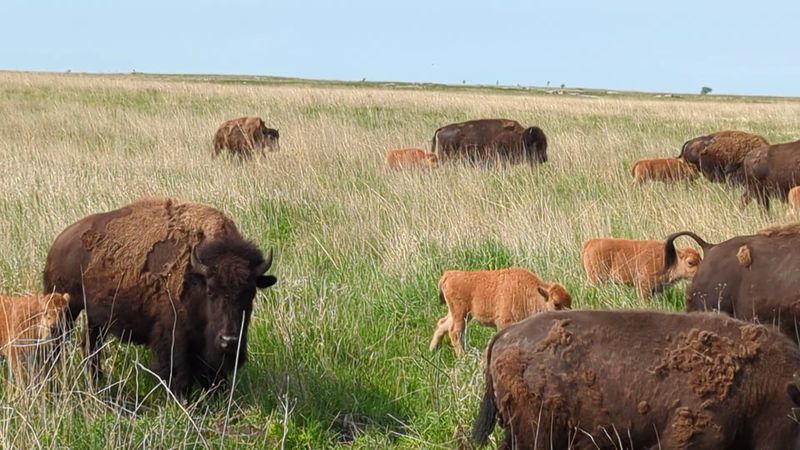
Genetics might sound like a science class topic, but at Blue Mounds State Park they matter a lot. The bison here belong to the Minnesota Bison Conservation Herd.
These animals belong to a conservation herd of plains bison managed to preserve genetic diversity. Their carefully managed genetics make them an important part of bison conservation in Minnesota.
Most bison today carry a little cattle DNA from long ago. Genetic testing has found approximately 2% cattle DNA in the Minnesota Bison Conservation Herd, which is carefully managed to maintain healthy genetic diversity.
The animals graze on a 530-acre prairie range. That space can support about 80 to 90 bison at a time.
Every spring brings roughly 20 to 30 new calves. Those orange-tinted babies are a big reason late spring and summer feel so lively here.
Keeping the herd healthy takes planning. Each fall, some bison get a health checkup and are chosen for an annual auction.
New bulls also join the herd now and then. Some have come from places like Yellowstone National Park to add fresh genes.
So when you spot a shaggy bull chewing grass, you’re seeing living history. You’re also looking at a careful conservation effort that keeps a rare bloodline going strong in Minnesota.
Yes, Cactus Really Blooms Up Here
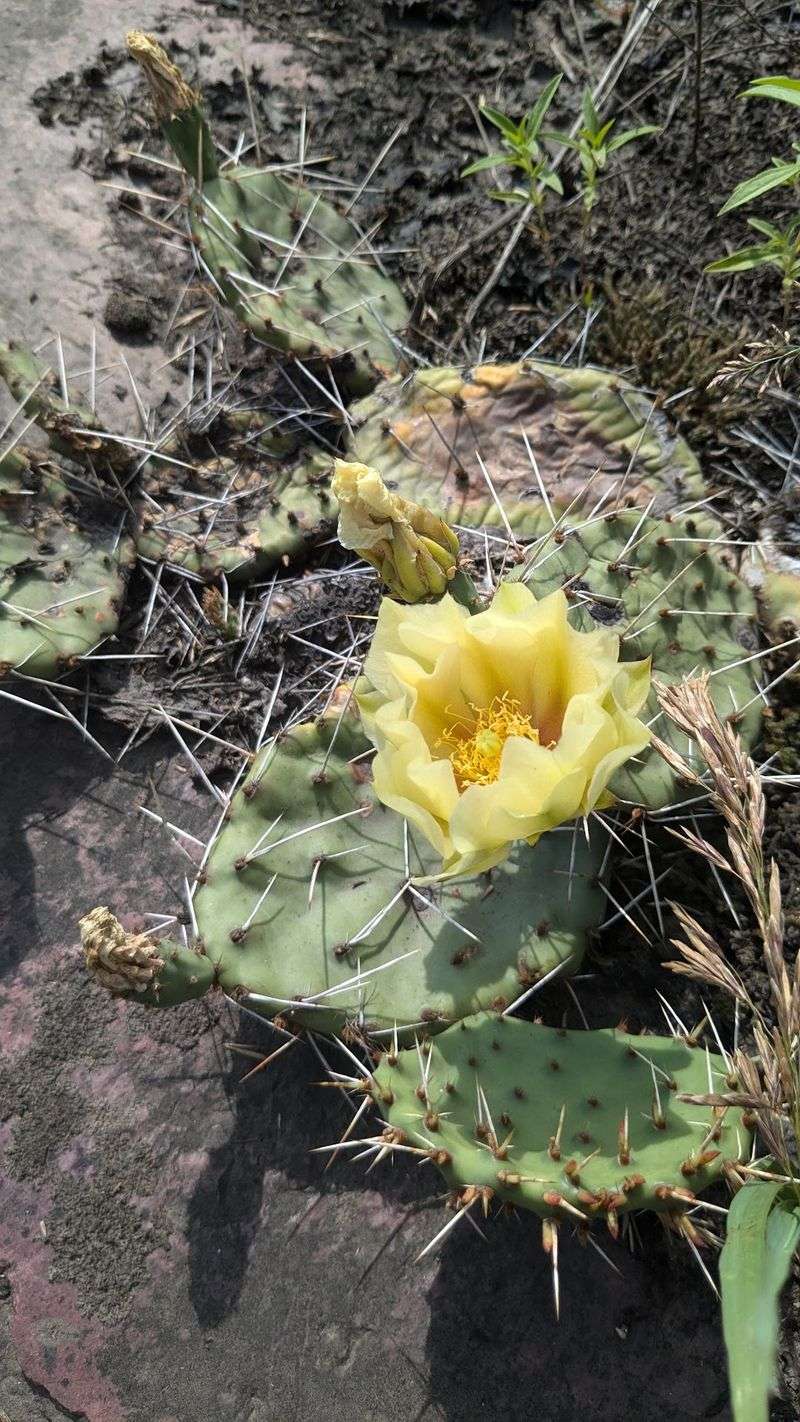
Cactus in Minnesota sounds like a prank. Yet prickly pear grows right on the sunbaked rock ledges at Blue Mounds State Park.
In June and July, those spiny pads burst into waxy yellow flowers. Against the pinkish stone, the colors look almost too bright to be real.
The cactus loves the thin soil and heat on top of the quartzite. It’s a rare sight this far north.
Around it, the park protects one of the state’s largest and most important prairie remnants. The park protects extensive native tallgrass prairie, including areas where conservation work helps restore native grasses and wildflowers.
Wildflowers bloom through the warm months. The scene changes from week to week as new colors pop up.
Walk the trails on a breezy day and the grasses move like ocean waves. It’s oddly relaxing to watch.
Birders have reasons to visit too. The park draws prairie birds, including nesting blue grosbeaks.
Watch your step near the cactus, of course. Those spines don’t care how cute your sandals are.
Summer prairie hikes can get hot with little shade. Bring water, a hat, and sunscreen, and you’ll enjoy every bloom.
A Mystery Line Of Stones Lines Up With The Sun
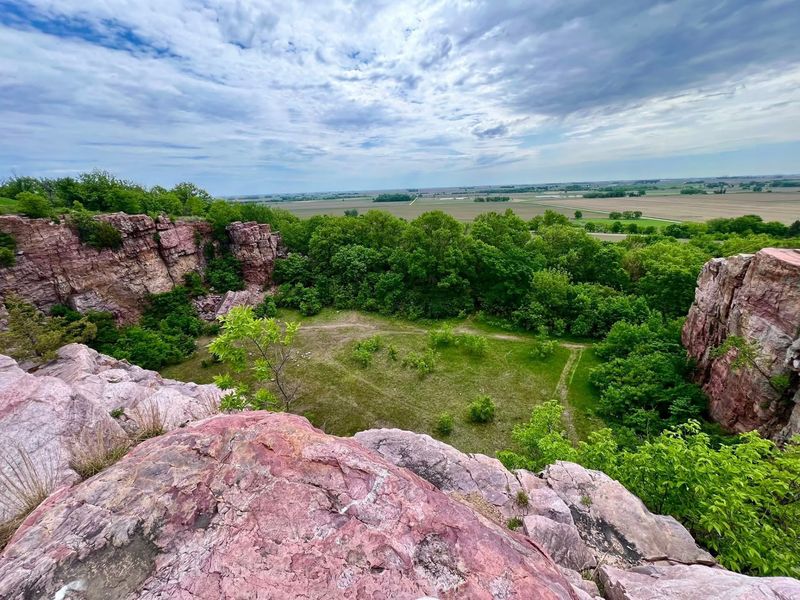
Some mysteries sit right under your feet. On top of the mound, a line of stones stretches about 1,250 feet.
Nobody knows for sure who placed them or exactly when. That uncertainty is part of the appeal.
Researchers have noticed something cool, though. The line aligns with sunrise and sunset during the spring and fall equinoxes.
That has led some to suggest ceremonial or astronomical meaning. It’s a quiet, thought-provoking spot on a wide-open hill.
Another piece of history sits nearby. Author Frederick Manfred, known for his Siouxland novels, built his home from local quartzite here.
His former house later served as the park’s interpretive center at Eagle Rock Vista. It’s been closed since 2015 because of structural problems and is slated for removal.
The Minnesota DNR plans to redevelop that area. Ideas include parking updates, trailhead amenities, a picnic shelter, and gathering spaces.
The park also holds the Upper Mound Lake Dam. The Works Projects Administration built it in 1937, back when water recreation was a main draw.
History here comes in layers, a lot like the rock. Every stop adds another chapter.
Camp Beneath The Wide Open Prairie Skies
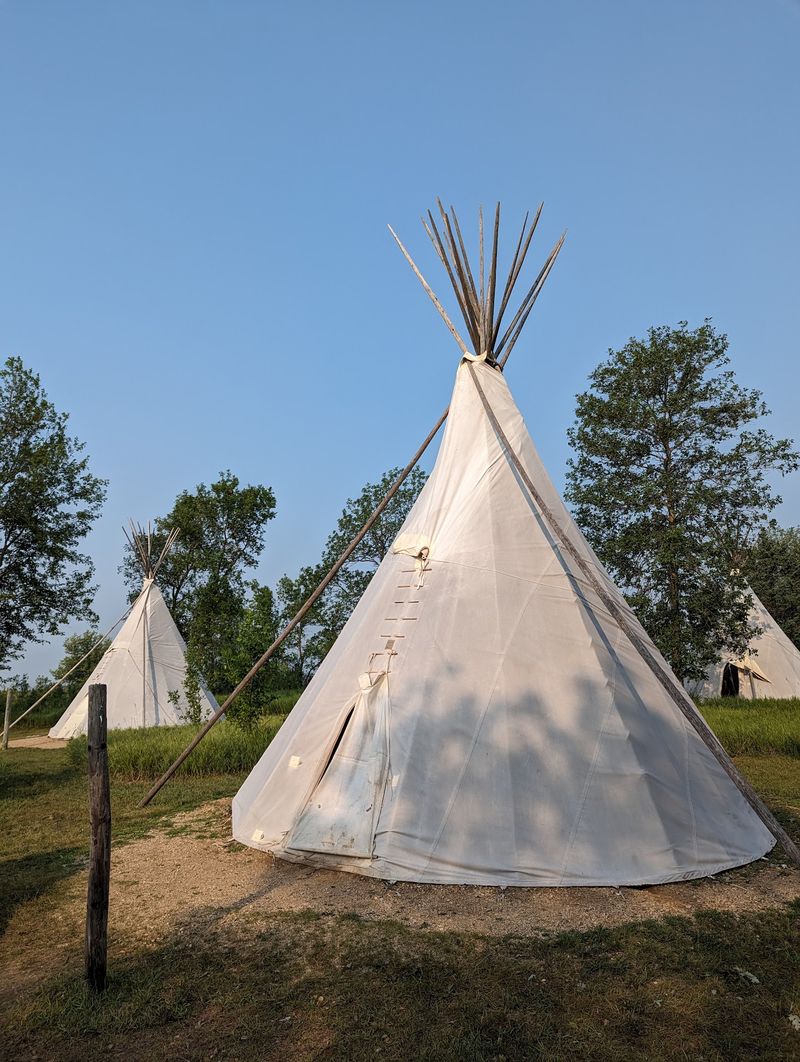
Camping beneath the wide-open prairie skies offers a memorable overnight experience. Blue Mounds State Park offers traditional campsites for overnight stays, but its former tipi camping option has been discontinued.
Prefer a classic setup? The campground has 40 electric sites and 33 non-electric sites.
Groups get their own camp facilities. Cart-in campsites offer a little more quiet for folks who don’t mind hauling gear a short way.
The main campground includes two shower and restroom buildings. After a dusty prairie hike, that’s a welcome perk.
Trails start close to camp, so you can head out without moving the car. Morning walks are an easy win here.
The park stays open year-round. Ranger station hours vary by day and staffing, so plan check-in times with that in mind.
Camping overnight also gives you more chances to see bison. They might be hiding at noon and grazing in plain sight by evening.
Stargazing is another bonus of open prairie land. Wide skies mean fewer trees blocking your view.
Reserve campsites ahead of time during busy summer weekends. Popular campsites can fill quickly during the summer season.
Pedal Into Town Or Road Trip To Sacred Stone
Thirteen miles of hiking trails give your legs plenty to do. Bikers get a treat too, with a paved trail about 6 miles long.
That path connects the park straight to Luverne. It’s part of the larger Luverne Loop trail system.
Riding into town makes a great half-day plan. Grab a meal, look for those quartzite buildings, and pedal back.
You’ll find the park at 1410 161st St, Luverne, MN 56156. It sits in Rock County, in the far southwestern corner of Minnesota.
South Dakota and Iowa are both a short drive away. Sioux Falls visitors can easily make it a side trip.
Want more history nearby? Pipestone National Monument is about 30 minutes away.
Native Americans have long quarried pipestone there for ceremonial pipes and other items. It pairs well with a day of ancient rock at the park.
Heading to the bison tour? Follow park signs to the right building, because map apps can get confused.
Put it all together and you’ve got bison, pink cliffs, cactus, and a bike ride. Not bad for one corner of Minnesota.
