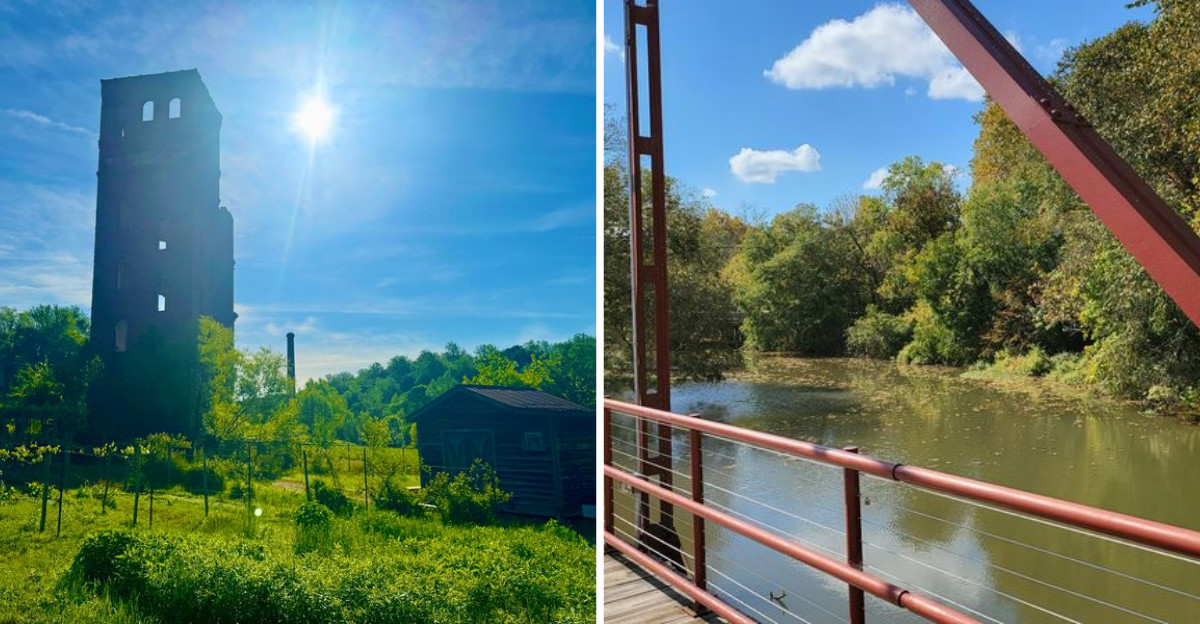
Water spilled over an old mill dam, a steady rush that reached me before I even saw the brick, and I pulled off a narrow South Carolina road expecting a quick photo stop. I ended up staying the whole afternoon.
The crumbling walls wrapped in vines and the 1902 tower still standing tall made me forget I had anywhere else to be, even though the mill closed in the early 1960s.
Kids skipped rocks below the falls while a couple of hikers crossed a pedestrian bridge covered in padlocks, and the whole place hummed with the kind of quiet that only comes when a site has outlived its original purpose and settled into something new.
The brick is stained and soft at the edges, and the water still rushes through the same channels that once turned the turbines. There is something about this spot that mixes history and creek water in a way I have not found anywhere else in the region.
I keep telling friends about it, and now I am telling you.
The Waterfall Over the Old Mill Dam
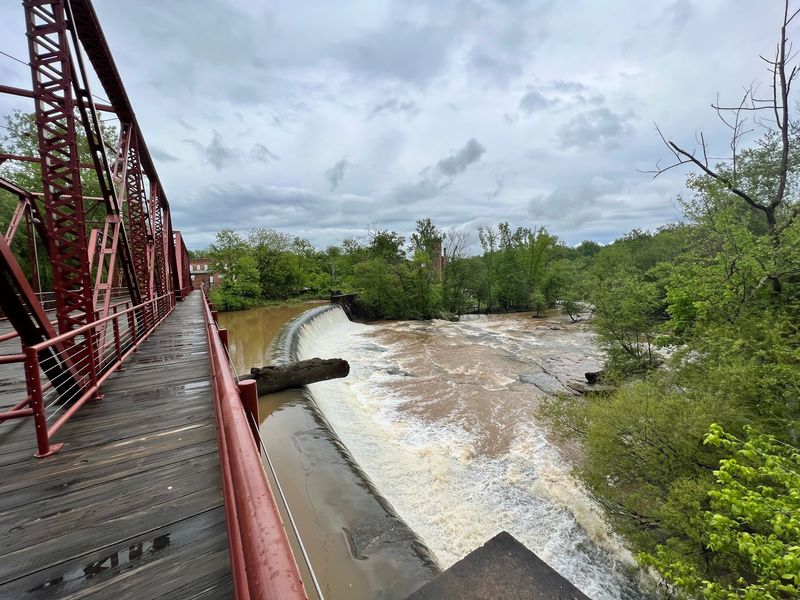
My favorite sound at Glendale Shoals arrives before you even park. Water pours across the top of the old mill dam and drops into Lawson’s Fork Creek in a wide, foamy curtain that keeps going all day long.
The dam was built to power the textile mill, so the falls you admire today exist because someone needed to spin cotton nearly two centuries ago. Function turned into scenery.
Below the drop, the creek spreads out over enormous flat boulders. People wade, sunbathe, and hop from rock to rock, and I watched one family spend an hour just seeing who could skip a stone the farthest.
A word of caution from someone who slipped once already: the rocks are slick where the water runs thin, and the rapids just under the dam move faster than they look. Shoes are required, and honestly they are a good idea anyway.
Morning light hits the falls beautifully, and the crowd is thinner then. Bring a towel, sit on a warm rock, and let the noise of moving water do what it does best.
Brick Ruins Left Behind by the 2004 Fire
On March 21, 2004, fire tore through the main mill building, and what the flames left behind is what visitors wander past today. Roofless brick walls, empty window arches, and low foundations trace the outline of a factory that once hummed with machinery.
Grass grows where the floor used to be. Vines climb the corners.
I found myself doing math in my head while walking the perimeter, trying to picture how many hundreds of people worked inside a building this size, day after day, for over a hundred years.
The ruins were fenced off for years, which frustrated a lot of locals. Since the Spartanburg Area Conservancy acquired the 17-acre mill site in 2022, the grounds have been opened up and cleaned so you can actually walk among them.
Climbing on the structures is not allowed, and that rule exists for a good reason. Old masonry after a fire is unpredictable, and the walls are the whole point of preserving the place.
Photographers love the texture here, especially late in the day when the brick glows warm orange.
That Iconic 1902 Tower
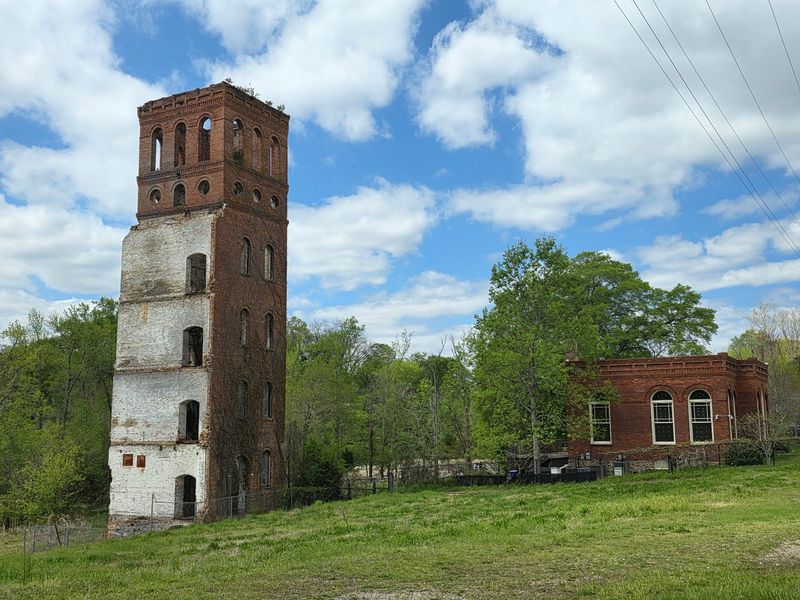
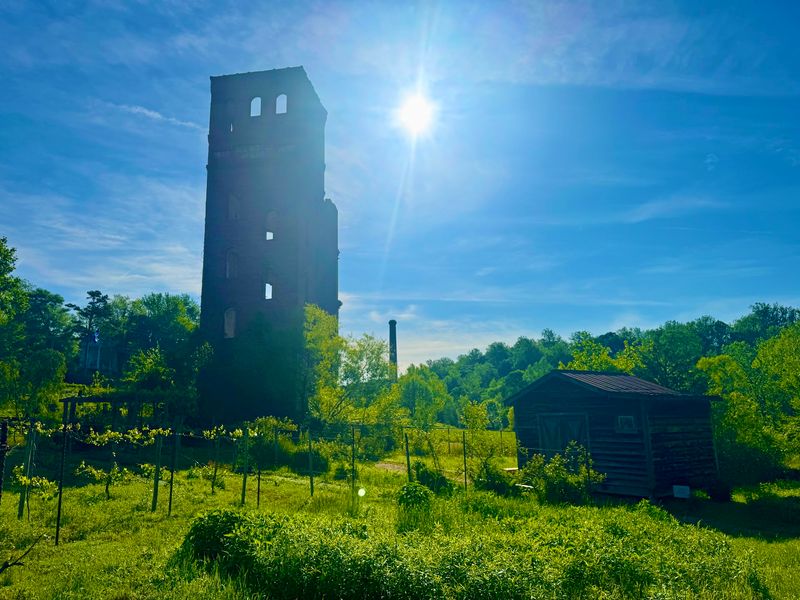
Nothing at the site grabs your eye faster than the tower. Built in 1902, it survived the fire that flattened almost everything around it, and now it stands alone above the treeline like a stubborn brick exclamation point.
Towers like this one usually held stairwells and water tanks, sometimes a bell or a clock to keep workers on schedule.
I circled it a few times just to see how the light changed on the different faces of the brickwork. From the pedestrian bridge you get the classic view, tower rising behind the ruins with the creek below.
What struck me most was the scale of it compared to everything else. When the mill was running, that tower would have been the tallest thing for miles in a village of small houses, a church, and a company store.
Locals treat it as a landmark, the kind of structure that shows up on t-shirts and community logos. Stand under it and the whole story of Glendale suddenly feels less like a history lesson and more like something you can touch.
Crossing the 1928 Pedestrian Bridge
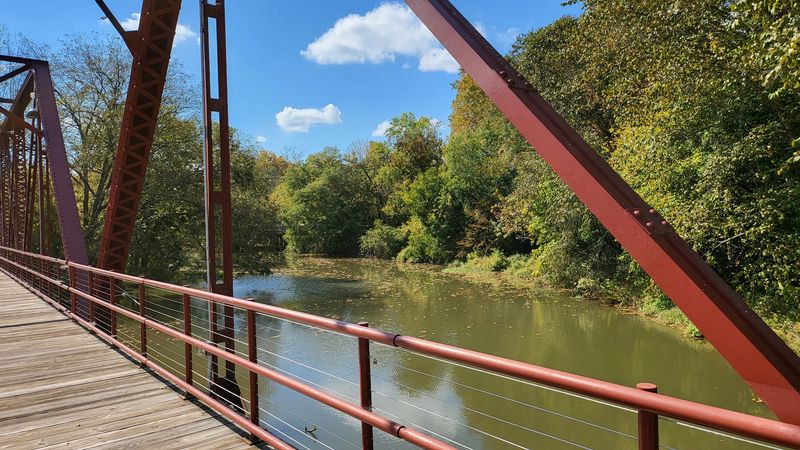
Padlocks. Hundreds of them, clipped along the railings with names and dates scratched into the metal, some shiny and new, some rusted into permanent silence.
The bridge dates to 1928 and once carried cars over Lawson’s Fork Creek. Now it belongs entirely to people on foot and bikes, which makes it the best viewing platform on the property.
Standing mid-span, you get the falls on one side and the ruins on the other, and I honestly could not decide which direction to face first.
If you bring a lock, add it to the collection. It has become a tradition here, and couples show up regularly for engagement photos and family portraits with the water in the background.
Cross to the far side and turn right, and you will find access to trails and quieter stretches of creek bank where fewer people wander.
Stairs lead down from near the bridge to the rock shelf below. They are a little rough in spots, so take them slowly, especially with small children or a dog on a leash.
Trails Through the 29-Acre Preserve
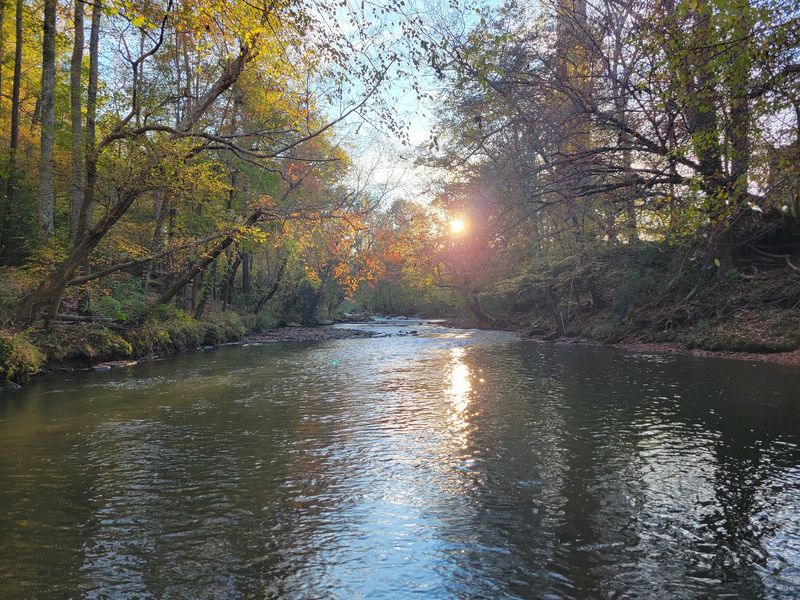
Anyone worried about a punishing hike can relax. The trail network at Glendale Shoals Preserve runs roughly 1.5 to 3.5 miles depending on which loops you string together, and most of it is flat, natural-surface walking along the creek.
Beginners handle it fine. Moderate hikers can add distance by connecting into the neighboring Glendale Nature Park, which covers 945 acres.
Combined, that is close to 1,000 acres of woods and water, which is a genuinely surprising amount of green space for a place tucked into an old mill village.
I spotted woodpeckers, a heron working the shallows, and more butterflies than I could count near the open areas. Spring wildflowers and fall color both make strong arguments for repeat visits.
The preserve is managed through a partnership involving the Spartanburg Area Conservancy, Palmetto Conservation Foundation, and Wofford College, which explains why the trails feel cared for rather than accidental.
Dogs are welcome on a leash. Motorized vehicles, camping, and fires are not, and picking plants is off limits too.
Where Bivingsville Became Glendale
Here is a fact that surprised me: the town was not always called Glendale. Dr. James Bivings founded the Bivingsville Cotton Factory here around 1831 or 1832, making it one of the earliest textile mills in South Carolina.
He picked the spot because Lawson’s Fork Creek, a tributary of the Pacolet River, dropped fast enough to turn machinery.
Money troubles hit in the late 1840s and the operation went bankrupt. Dexter Converse bought it in 1856, rebuilt the business, and expanded production in a big way.
In 1878 his wife suggested a new name, and Bivingsville became Glendale. The mill kept that name through two world wars, when demand for cloth pushed output higher, until it finally shut down in 1961.
Interpretive signs scattered around the site fill in these details, and I recommend actually reading them before you explore. The ruins mean more once you know a full village of workers lived, shopped, and raised families in the streets around them.
History here is not locked behind glass. It is under your feet.
The Goodall Environmental Studies Center and Its Garden
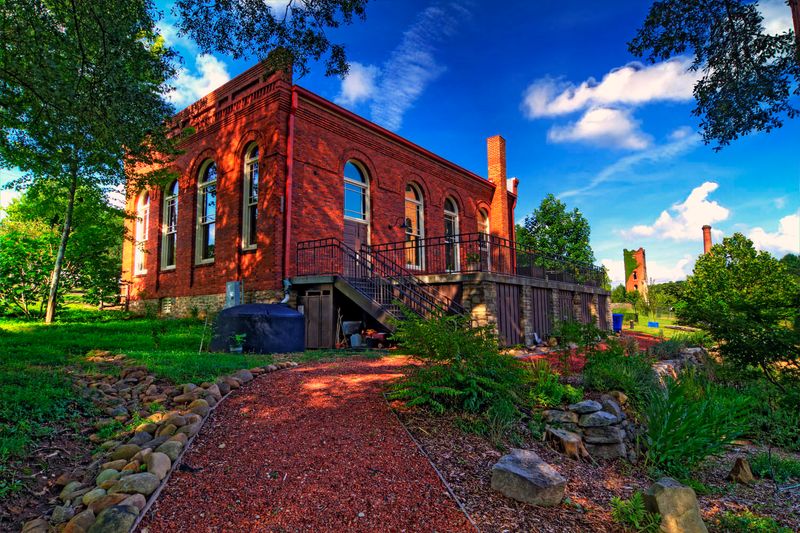
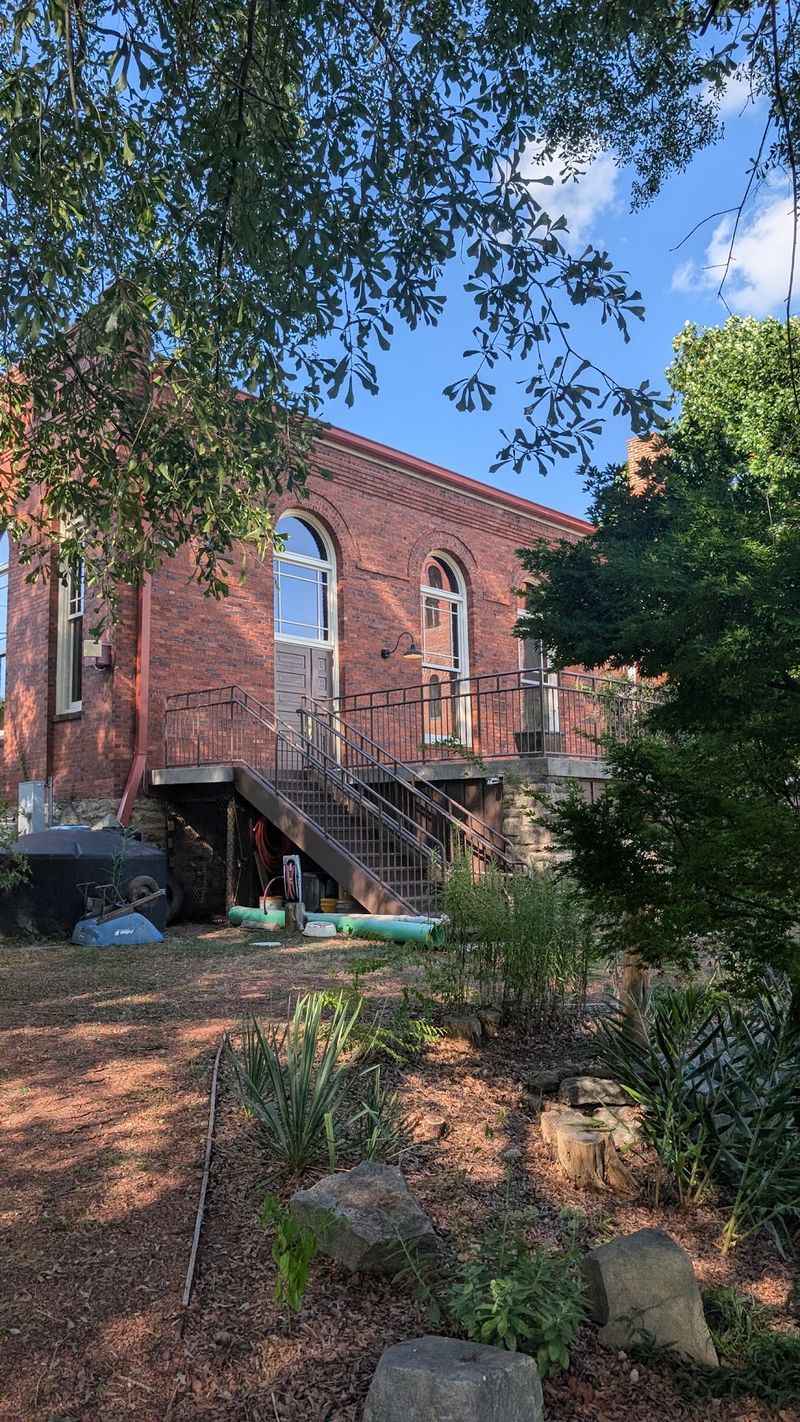
Not everything burned in 2004. The old mill offices survived, and Wofford College turned them into the Goodall Environmental Studies Center, which sits right at the heart of the site.
Inside there are laboratories and a classroom. Outside there is a garden, a small vineyard, and an amphitheater built into the slope.
I stumbled onto the pollinator garden almost by accident and ended up lingering there longer than at the falls. Lavender, coneflowers, and native plants draw bees and butterflies in steady traffic, and the whole patch smells wonderful on a warm afternoon.
Seeing a science center operating out of a textile mill office feels like a fitting second act for the building. The same rooms that once tracked cotton orders now support students studying the creek and the woods around it.
The center hosts programs and events through the year, so check ahead if you want to catch something specific.
Even without a program, the grounds are pleasant to stroll, with bench swings and shaded spots to sit for a while.
Planning a Visit, Parking, and Practical Tips
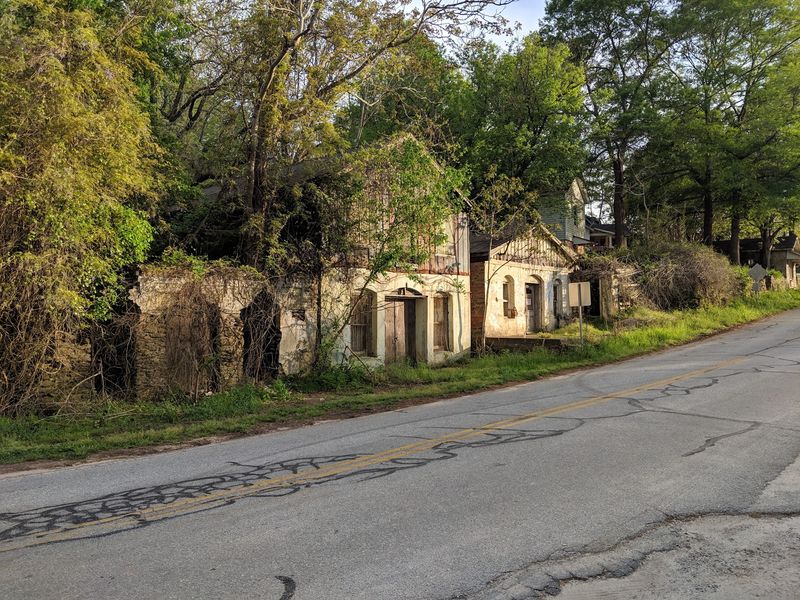
Parking is the one honest gripe I have. The lots are small, so arriving early on a weekend saves you from circling or squeezing into an awkward spot along the road.
The preserve runs sunrise to sunset. Posted hours generally show 8 AM to 8 PM, and there is no entry fee.
Two access points make life easier. The main one at 351 Broadway Street brings you to the Goodall Environmental Studies Center and the preserve, while the Southern Trailhead at 135 Glendale Avenue puts you close to the ruins.
Kayak and canoe launches are available if you want to paddle Lawson’s Fork Creek, though water levels change quickly after rain.
Pack water and snacks since there are picnic tables but no concessions, and I did not find a public restroom. Sturdy shoes beat flip flops every single time on these rocks.
Hunting, firearms, paintball, camping, and climbing on the structures are all prohibited. Pack out whatever you bring in, because volunteers work hard to keep this place worth returning to.
Address: Emma Cudd Rd, Glendale, South Carolina 29346
