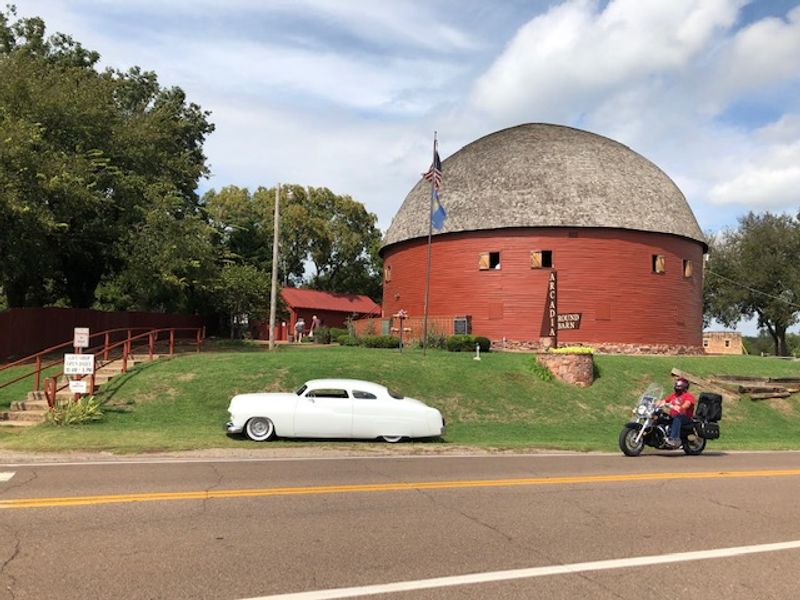
Somewhere past the last gas station snack, a splash of red showed up on the horizon, and I hit the brakes before I even knew why. It was round.
Not square, not boxy, but round like a giant cake left out on the Oklahoma prairie. I only meant to stretch my legs, yet I walked out an hour later with a head full of stories and a new favorite stop on the old highway.
A Red Circle on the Old Highway
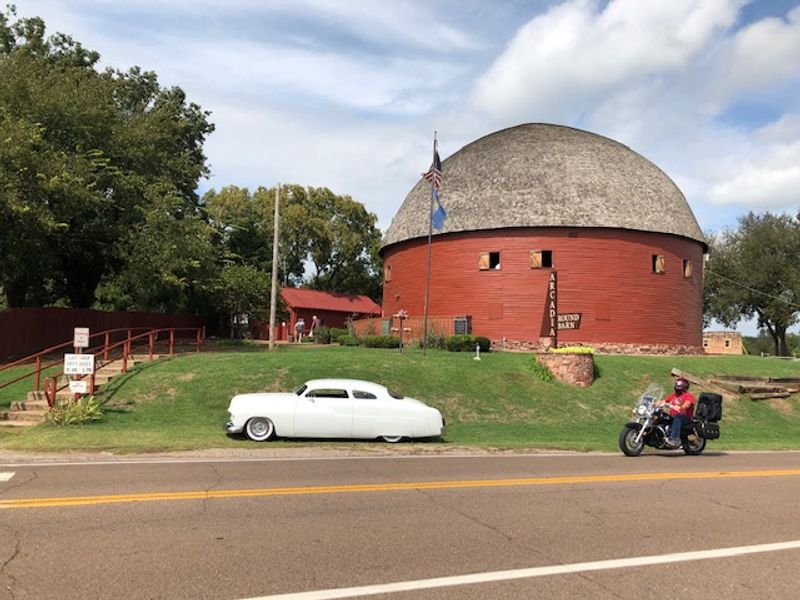
Picture a two-lane road east of Oklahoma City, and then picture a barn shaped like a giant red drum sitting right beside it. That is the Arcadia Round Barn, and it lives at 107 OK-66 in the small town of Arcadia, Oklahoma.
Visitors often say it sits about 15 minutes outside OKC, which makes it one of the easiest Route 66 detours around. Tulsa folks can reach it in well under two hours by following the old road west.
For many families, that is a simple yes for a Saturday drive.
The building is officially listed as a historical landmark. Today it works as a free roadside museum, a gift shop, and an event space all rolled into one curved package.
The bright red paint pops against the open Oklahoma landscape, so you really cannot miss it.
Travelers love that it is not some new attraction built to cash in on nostalgia. The barn has stood here since 1898, long before cars rolled past.
It feels tied to the land and the people around it.
Short on time? A quick photo out front still counts.
But as you will see, stepping inside is where the real fun starts.
William Odor’s Bold 1898 Idea
Farmers in 1898 built barns in rectangles, plain and simple. William Harrison Odor, a local farmer, had other plans.
He decided his barn would be perfectly round.
Why round? Round barns were thought to be sturdy against strong winds, and anyone who has felt an Oklahoma gust understands that thinking.
The finished barn measured 60 feet across and rose 43 feet high. That is roughly as tall as a four-story building.
Odor first used the barn for practical farm jobs. It held hay, grain, and livestock, just like any other barn in the area.
Still, its shape made neighbors stop and stare, and that habit has never really ended.
Here is a fun bit of trivia. Odor reportedly said the barn’s acoustics reminded him of the famous Mormon Tabernacle.
Sound bounces around that curved space in a special way, which later shaped the barn’s whole future.
Standing outside today, it is easy to imagine horse-drawn wagons pulling up instead of minivans. The prairie around Arcadia has changed a lot over 125-plus years.
The barn, though, still carries the stubborn, creative spirit of the man who dreamed it up.
Bur Oak Bent by River Water
Ever tried to bend a piece of hard oak? It does not want to cooperate.
Odor solved that problem with patience and a nearby river.
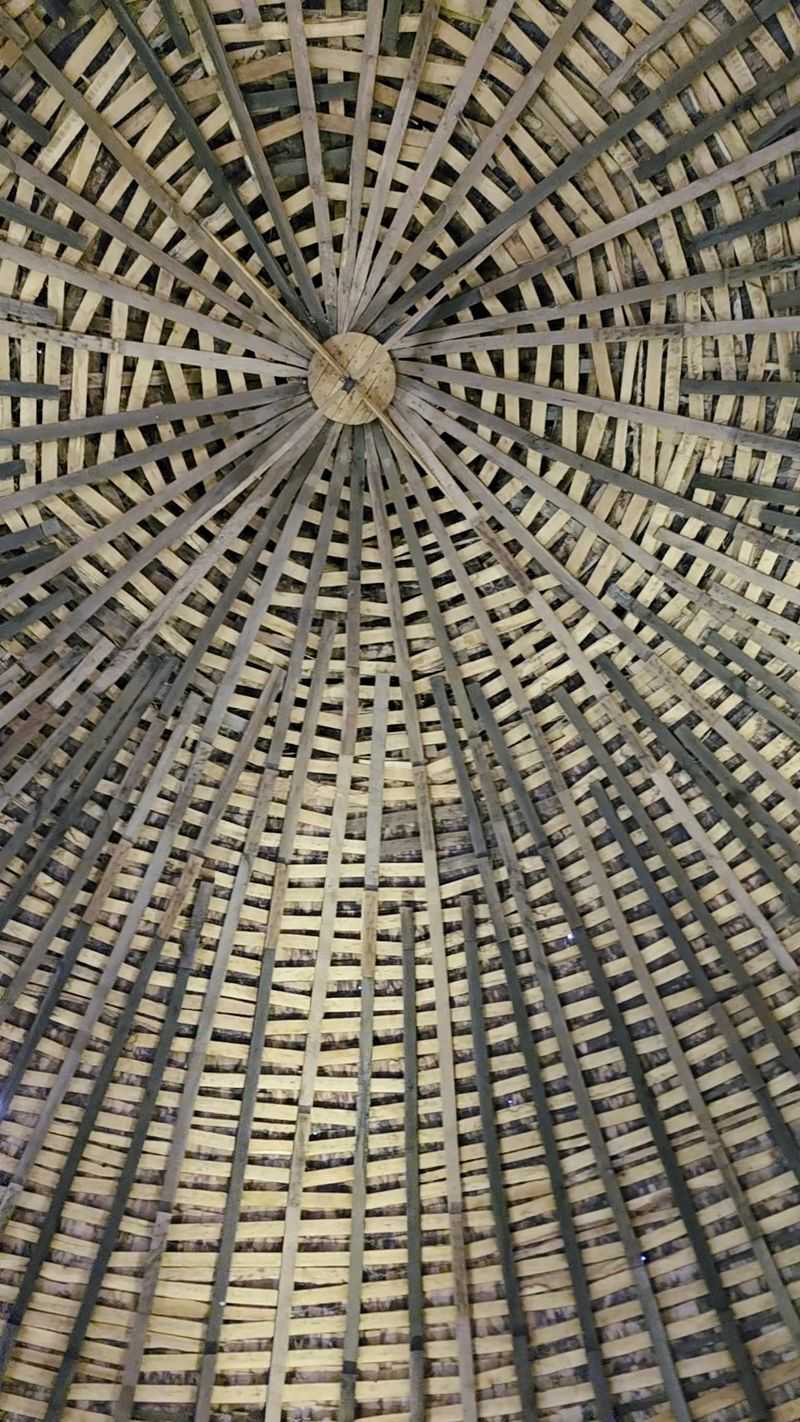
The walls and roof rafters were made from native bur oak. Workers soaked the timbers in the river until they became soft enough to bend.
Then they shaped the wet wood into curves and let it dry in place.
Once dry, the oak held its new shape. That trick gave the barn its smooth, round walls and that famous domed roof.
Visitors who learn this detail inside often walk back out and stare at the walls with fresh eyes.
The foundation tells its own local story. It was built from red Permian rock found right in the area.
So the barn literally stands on Oklahoma ground, made from Oklahoma materials.
Kids usually love this part because it sounds like a science experiment. Adults tend to appreciate the sheer amount of work it took without modern tools.
Either way, it is a reminder that clever building does not always need fancy machines.
Look closely at the curves during your visit. Every bend began as a soggy log in a river more than a century ago.
Barn Dances in the Hayloft
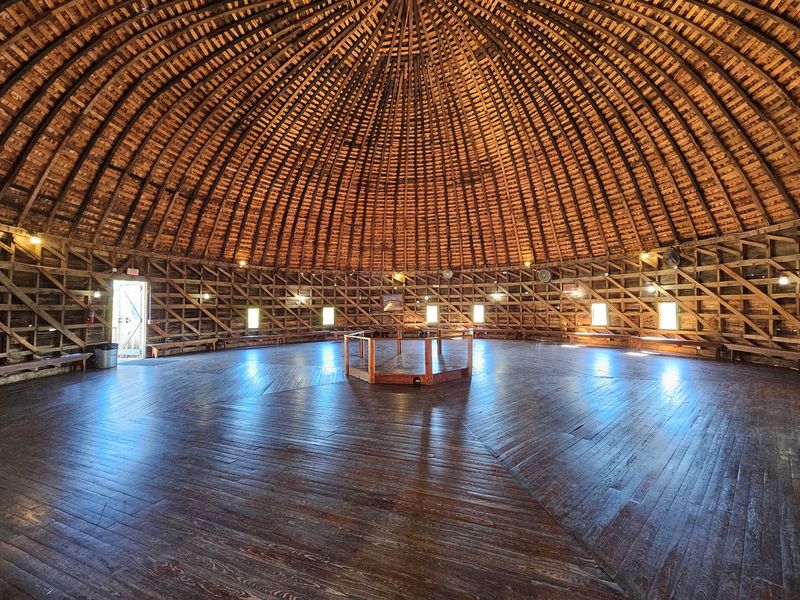
Three young workers saw something special in that big upper floor. They talked Mr. Odor into putting down hardwood flooring instead of a rough hay surface.
Their idea? Dancing.
Turns out they were right. For more than twenty years, the loft filled with music, laughter, and boots tapping across the boards.
Crowds came from all over the area for these barn dances.
Remember those great acoustics Odor bragged about? They made the loft a natural music hall.
A fiddle or guitar could fill the whole round room without much effort.
Back then, life on the farm meant long days and few chances to gather. A Saturday night dance was a big deal.
People caught up on news, met neighbors, and maybe found a sweetheart or two.
That spirit has not faded. One recent pair of visitors even took a quick spin around the loft dance floor before heading back to the road.
It is hard to resist when you stand on those same boards.
So if you feel the urge to twirl your partner, go for it. You would be keeping a very old Arcadia tradition alive.
When Route 66 Came to the Front Door
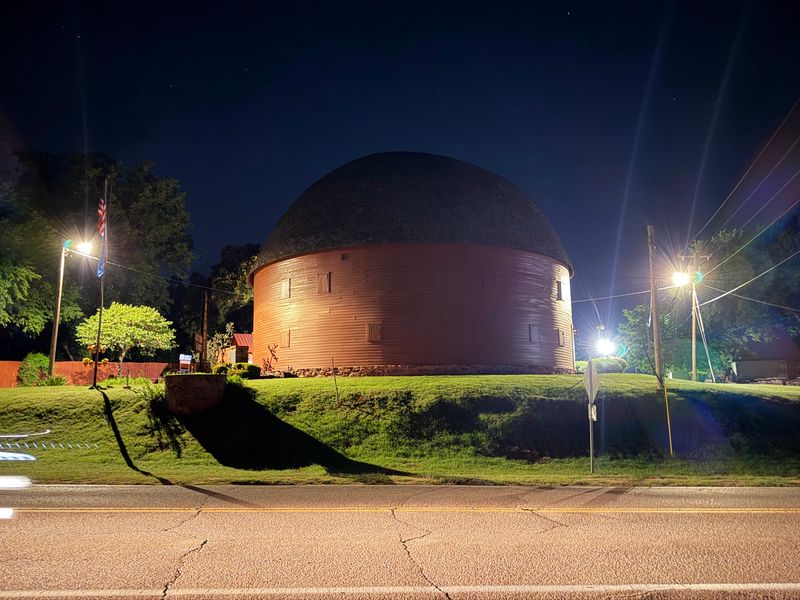
In 1928, the barn got a brand-new neighbor: U.S. Highway 66.
The famous Mother Road was routed right through Arcadia, putting the barn directly in front of passing travelers.
Suddenly, a farm building became a roadside star. Families heading west snapped photos and pointed out the windows.
For generations, the round barn served as a can’t-miss landmark along the route.
It also holds a couple of impressive titles. It is known as the only wooden round barn in Oklahoma.
It is also called the only truly round barn still standing on Route 66.
In 1977, the barn was added to the National Register of Historic Places. That listing recognized it as a real piece of American heritage, not just a quirky sight.
Today, the barn is often counted among the most photographed icons on the whole Mother Road. With Route 66 marking its 100th anniversary, interest in stops like this one has only grown.
Travelers working through Oklahoma’s Route 66 Passport often make it a must-have stamp.
Standing on the shoulder, watching cars roll by, you get a small taste of what drivers felt nearly a century ago.
The Over-the-Hill Gang Rescue
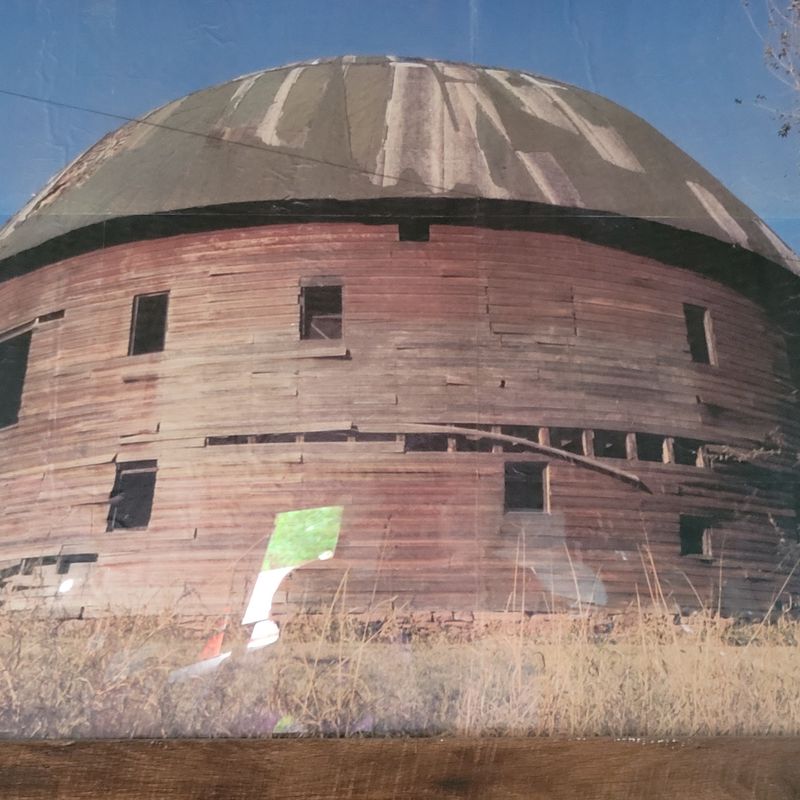
History does not always get a happy ending, but this barn almost did not get one at all. By the late 1970s and early 1980s, it had fallen into rough shape.
Then, in 1988, a big chunk of the roof caved in.
Many people might have given up. A group of volunteers refused.
Led by folks like Luke Robison and the Arcadia Historical and Preservation Society, they began a restoration in 1989.
The crew got a cheerful nickname: the Over-the-Hill Gang. Many were retirees with skill, grit, and plenty of time to give.
They copied the original building methods, even soaking timbers to bend them just as Odor had done.
The work took years. In 1992, the barn reopened to the public.
The society later earned a National Preservation Honor Award for the effort.
One visitor shared that her husband saw the barn in ruins as a child. Coming back to find it beautifully restored was a moving moment for them.
They even bought a commemorative brick honoring his mother, who was born in Arcadia.
That kind of personal connection is everywhere here. The barn was saved by neighbors, for neighbors.
Ground-Floor Museum and Farm Relics
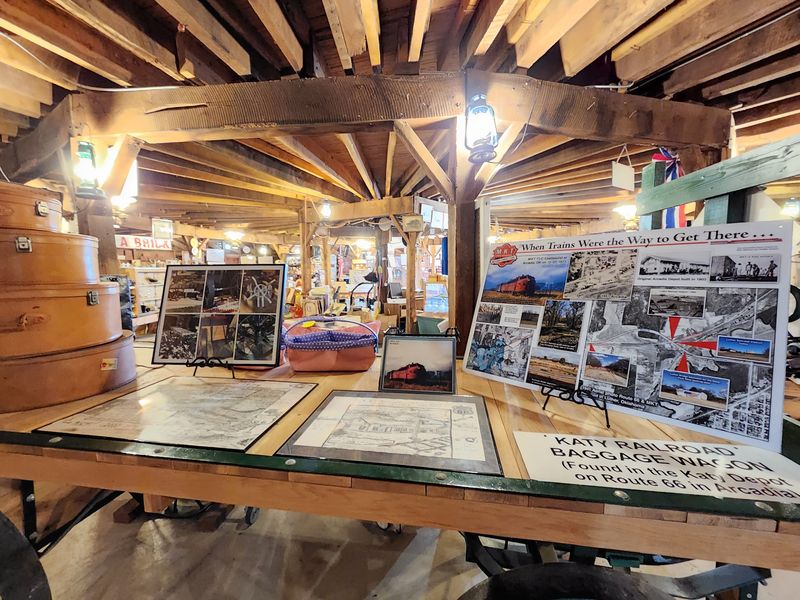
Step through the door and you will find something between a cozy museum and a vintage shop. The first floor holds displays about the barn’s history and its long restoration.
Antiques fill the space. Old farm equipment sits both inside and outside on the tidy grounds.
Route 66 memorabilia adds a road-trip flavor to the rural setting.
Curious readers will want to slow down here. Visitors mention maps, binders of information, and even details about other round barns.
If you love reading every sign, you could easily spend a long while.
Not a big reader? No problem.
Skimming the highlights still gives you a solid picture of how the barn came to be and how it was saved.
Many guests sign the guest book on their way in. It is a small but fun touch, especially when you flip through and see hometowns from far away.
Parents traveling with kids may find a scavenger hunt mentioned by some visitors, which can keep younger eyes busy. Grandparents often enjoy spotting farm tools they remember from childhood.
There is a little something for every age, all under one curved roof.
Fifteen Steps to the Basket-Weave Roof
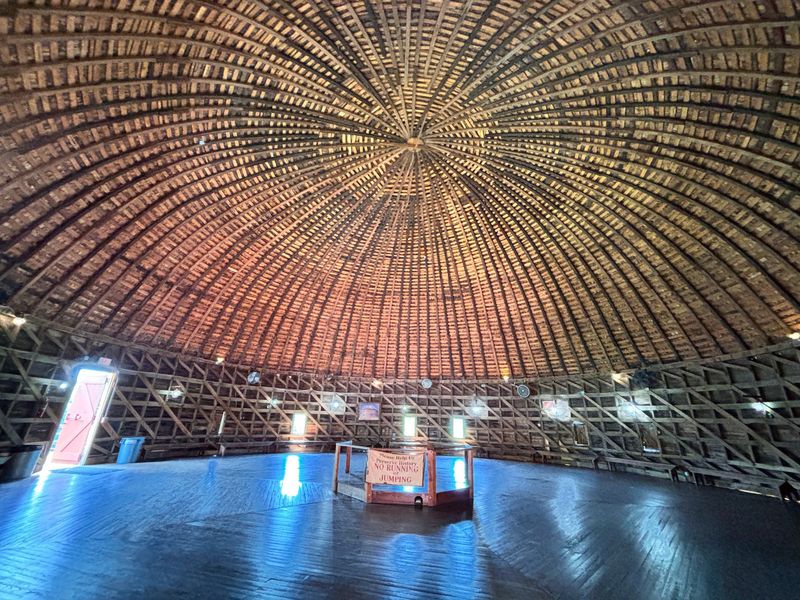
Here is the best advice anyone can give you: go upstairs. Seriously, do not skip it.
About 15 steps lead you to the upper loft, and the view is worth every one.
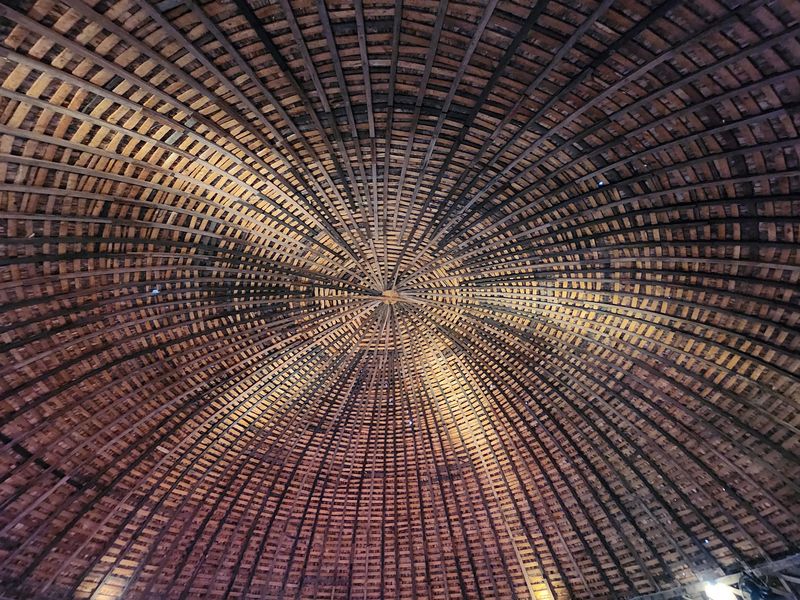
Look up, and the ceiling seems to spin. Wooden beams radiate out across the huge round roof in an intricate pattern.
Several visitors compare it to a giant basket weave.
Photos never quite capture it. Guests often say the craftsmanship feels more impressive in person than on any screen.
Standing under that timber dome, you really sense how much skill went into it.
The loft itself is wide and open, with a polished floor that once hosted those old barn dances. Some folks call it a ballroom, and that word fits.
It feels airy and calm, even with a crowd.
One visitor who had biked past the barn many times finally went inside. The roof was what made the stop unforgettable.
Plenty of others echo that reaction.
Quick note for planning: the loft is not wheelchair accessible, since stairs are the only way up. The main floor, however, appears to be accessible for most guests.
Gift Shop Finds and Rose Rocks
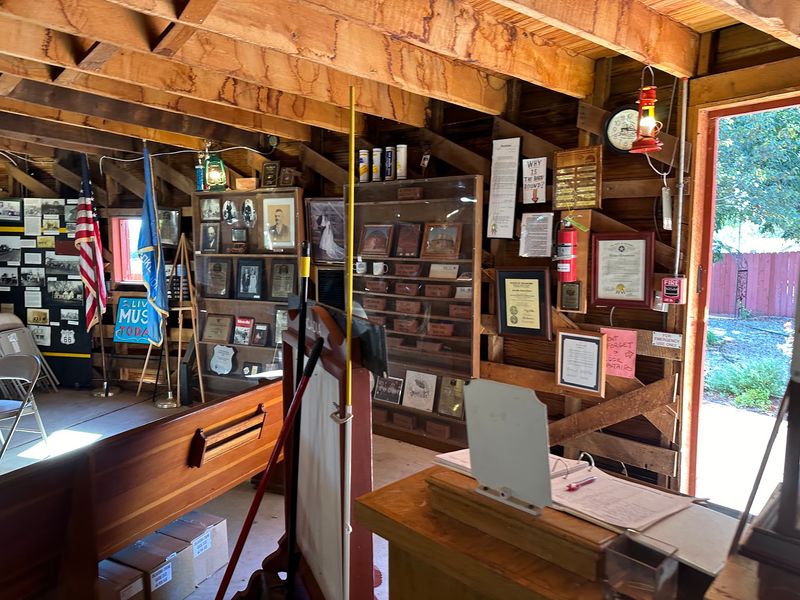
Souvenir hunters, this is your corner. The gift shop gets mentioned more than almost anything else at the barn, and for good reason.
It is a quaint little shop on the first floor, mixed right in with the museum displays. You will typically find Route 66 keepsakes and items tied to the barn’s story.
Some antiques are also for sale.
One fun local touch is rose rocks. These reddish stone clusters are Oklahoma’s official state rock, and spotting them here feels very fitting.
They make a small, meaningful gift for someone back home.
Collecting Route 66 Passport stamps? The barn is a popular stop for that too.
A few lucky travelers even say volunteers handed them an Oklahoma Route 66 passport, which made their day.
Prices are not listed online, so plan on browsing to see what fits your budget. The shop feels modest and friendly, not flashy.
Buying something here also helps keep the barn going. Since entry is free, shop sales and donations matter a lot for upkeep.
A postcard or rose rock might be the easiest way to say thanks for the visit.
Volunteers Who Love Sharing the Story
A building is just wood and nails until someone tells you its story. At the Round Barn, the storytellers are the real treasure.
Visitors again and again mention friendly, knowledgeable volunteers. Many describe ladies at the front who greet everyone warmly and seem truly happy to chat.
Travelers often leave wishing they had asked a name.
These hosts clearly care about the place. They explain how the barn was built, how it was saved, and why it matters to Arcadia.
Their enthusiasm makes the history feel personal instead of dusty.
Timing can help. One couple arrived between larger groups and got a host who walked them through all kinds of details.
On a quiet day, you might get that same one-on-one treatment.
Overseas and out-of-state visitors are often surprised by the warmth. That small-town hospitality is a big part of what Oklahoma does well.
So do not rush past the front desk. Say hello, ask a question, and let the conversation wander.
Plenty of guests say the people turned a quick roadside stop into one of the highlights of their whole trip.
Weddings, Parties and Loft Concerts
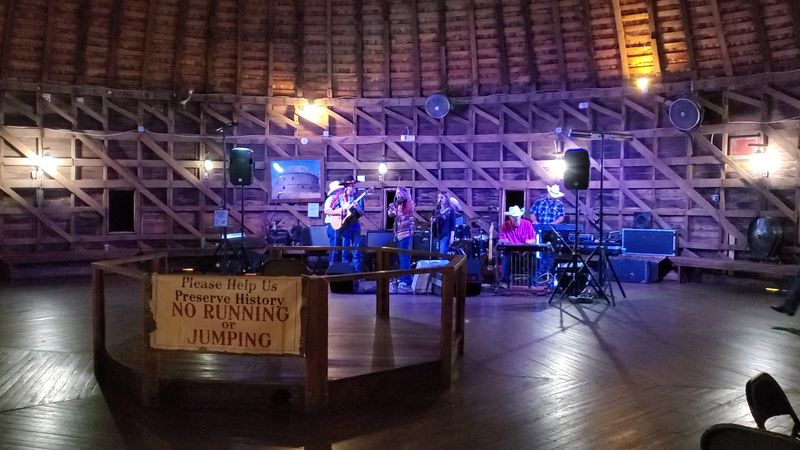
Planning something special? That gorgeous loft is not just for looking.
It can typically be rented for weddings, parties, and other gatherings.
Guests describe the space as very roomy, with that stunning timber roof as a built-in decoration. You hardly need extra frills when the ceiling already steals the show.
It is easy to see why the barn gets noticed as a wedding venue.
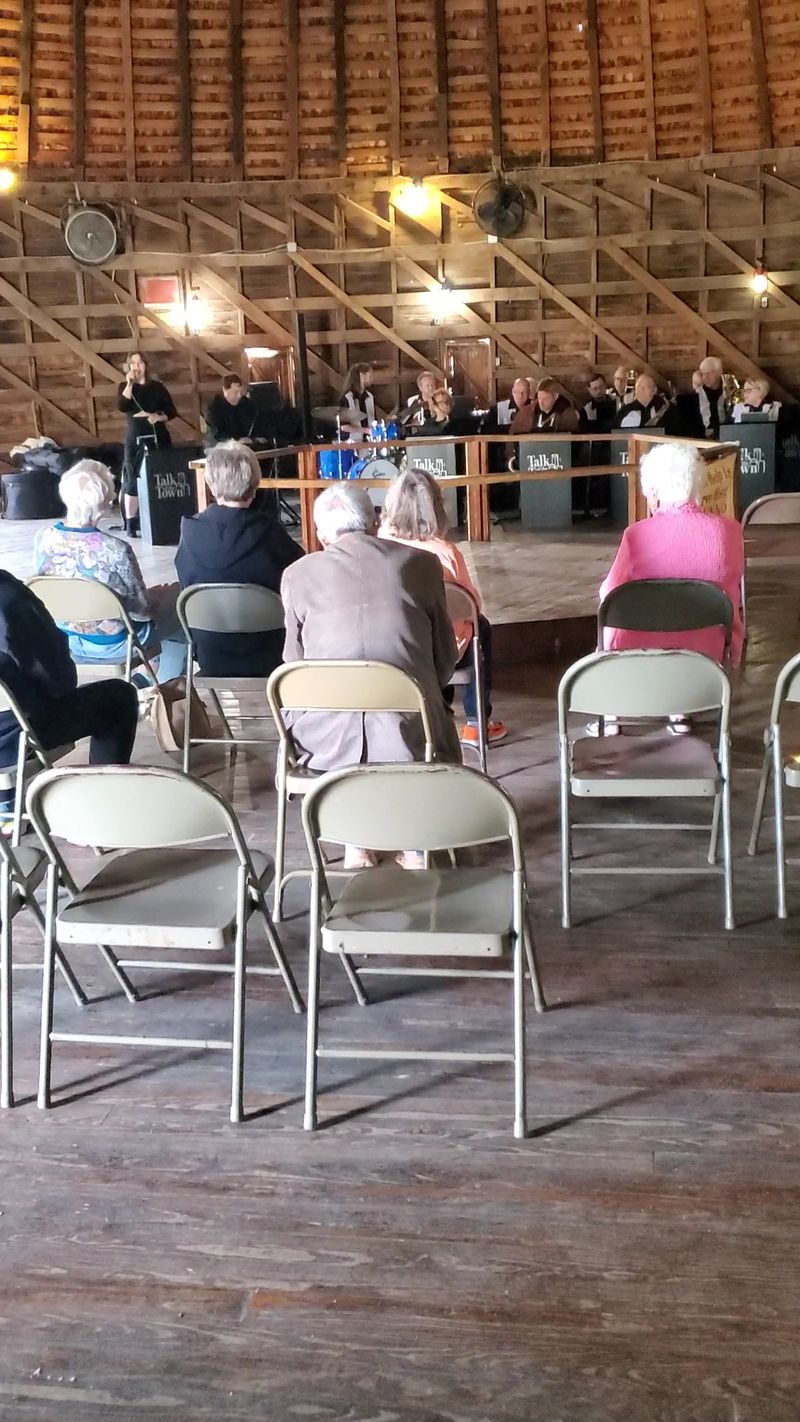
The loft also hosts live music and local concerts at times. That ties right back to the barn’s early days, when fiddles echoed across the same floor.
History has a funny way of repeating itself here.
For details on availability, booking, or upcoming shows, it is best to check with the barn directly. You can call 405-396-0824 or visit arcadiaroundbarn.com.
Schedules may change, so confirm before you plan around an event.
Families celebrating a reunion or a milestone birthday might find this a memorable, down-to-earth choice. It is rustic, historic, and full of character without feeling fancy or pricey.
Just remember that stairs lead to the loft. Guests with mobility needs may want to discuss options ahead of time.
Hours, Parking and Free Admission
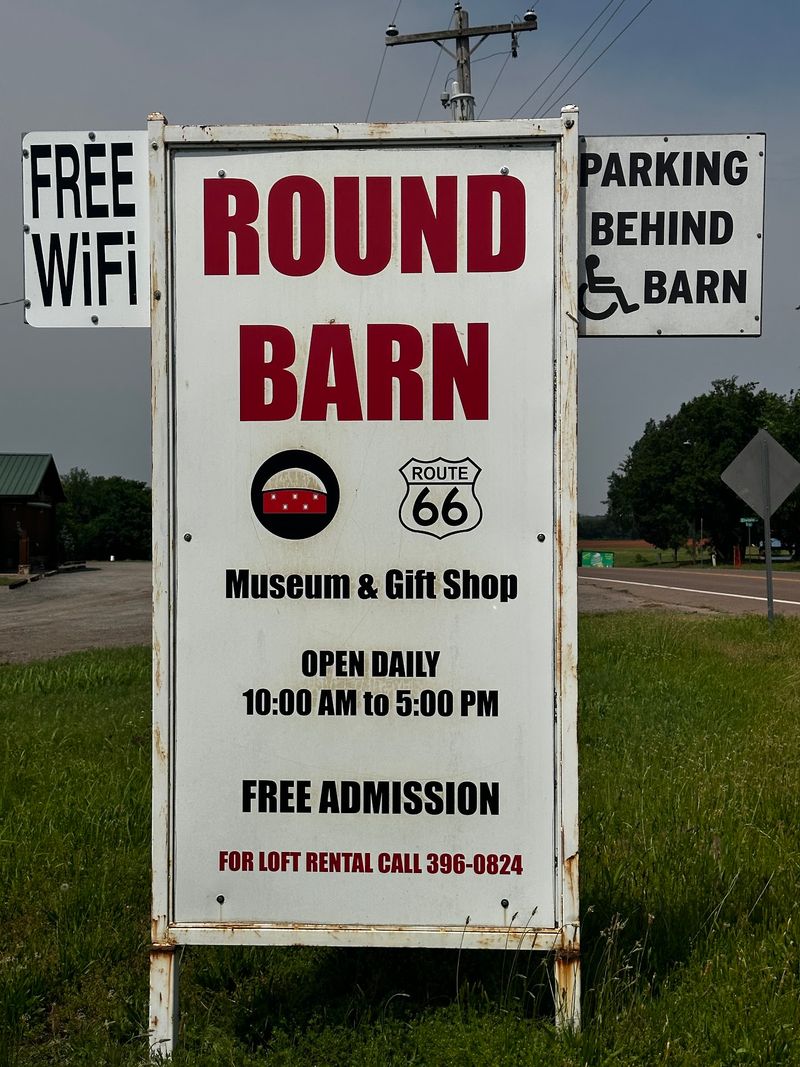
Good news for budget travelers: admission is free. Donations are welcome and appreciated, since they help keep this old structure standing strong.
The barn is typically open daily from 10 am to 5 pm, seven days a week. Hours may shift around holidays or private events, so a quick call to 405-396-0824 is smart before a long drive.
Parking sits behind the building. Visitors say the easiest approach is turning onto the side street just before or after the barn.
From there, it is a short walk to the entrance.
Restrooms are in a separate building next to the barn, and guests note they are air conditioned. That is a welcome relief during a hot Oklahoma summer.
Pack water anyway, especially if you plan to wander the grounds.
How long should you budget? Many people say 20 to 30 minutes covers the highlights.
Folks who read every display could happily stay much longer.
There is usually no wait to get in. Simply walk through the door, sign the guest book, and start exploring.
For a free outing so close to OKC, it is hard to beat.
Worth Pulling Over For
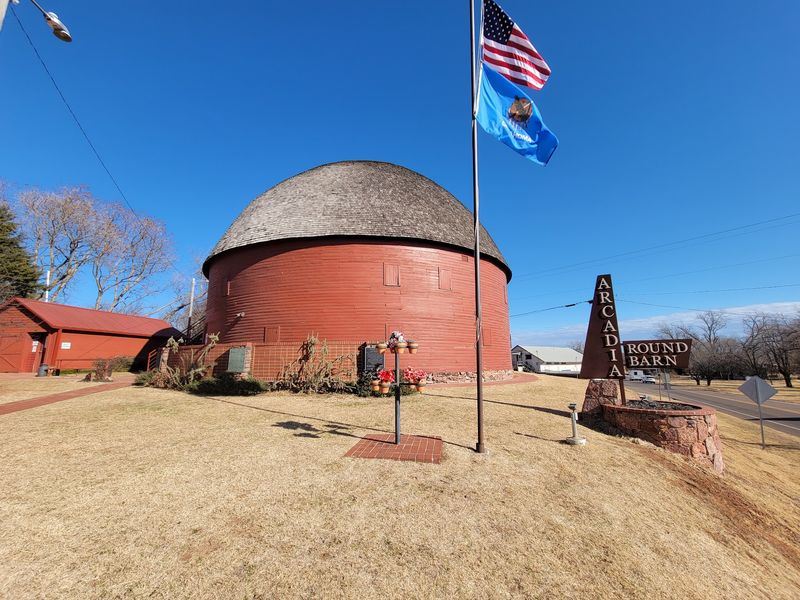
Some roadside stops are cute for a minute and then forgotten. This one sticks with you.
The shape, the story, and the people all add up to something bigger than a simple barn.
Who will love it most? Route 66 fans, history buffs, and anyone who enjoys old-fashioned craftsmanship.
Grandparents often enjoy the farm relics, while kids get a kick out of a barn that is round. Photographers will want that shot with the flags out front.
It also pairs nicely with other stops. Visitors note that this stretch of the Mother Road has several attractions within about a mile.
That makes Arcadia an easy half-day outing from Oklahoma City or a solid break on a longer drive.
The barn reminds us what a community can do when it cares. A farmer built it with river-soaked oak, dancers filled it with music, and retirees brought it back from ruin.
Now it welcomes travelers for free.
So next time you are cruising east of OKC, watch for that red circle on the horizon. Pull over, climb those steps, and look up.
You will probably be glad you did.
