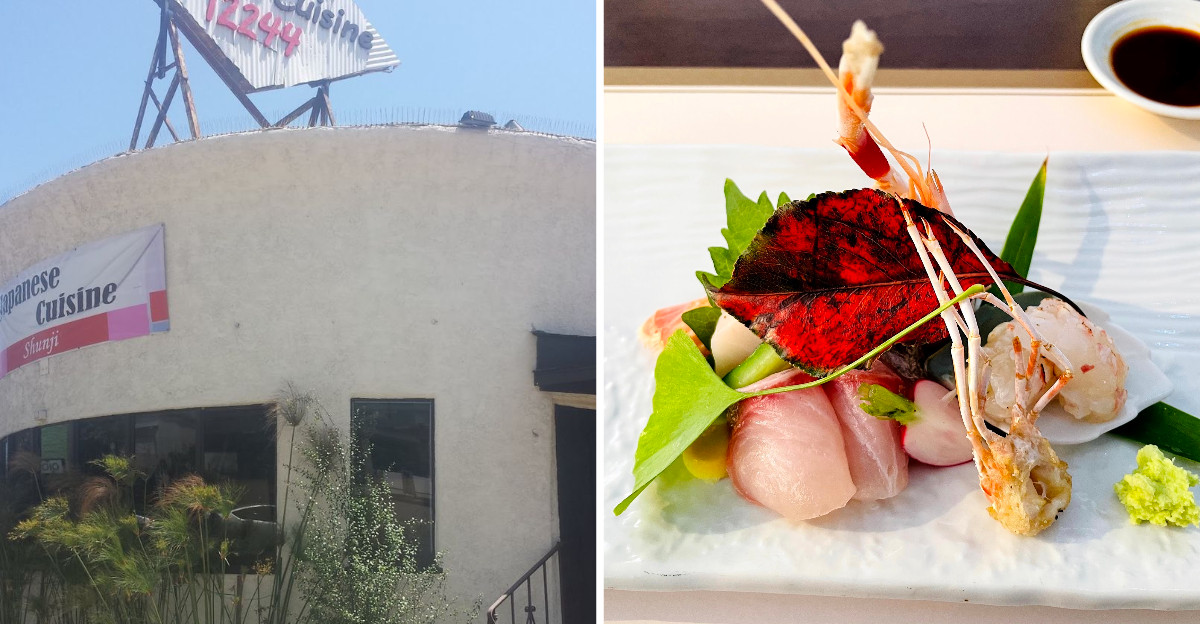
Giant chili bowls were once a common sight on California streets, built to look like the food they sold. Most are gone now, but one round white building survived by changing its menu entirely.
I laughed out loud the first time I saw it, because it really did look like a bowl someone forgot to wash. Then I learned the best part: inside that goofy old structure, a famous chef was serving some of the finest sushi in the state.
The story starts in the 1930s, when restaurants were designed as literal advertisements for their food. This bowl outlasted almost all of its brothers by reinventing what was on the plate.
Chili gave way to raw fish, and the building kept its shape. That kind of stubborn charm is rare.
Grab a snack, because this tale of transformation is one of my favorite slices of old California.
When Buildings Looked Like Lunch
Old photos of 1930s Los Angeles always make me grin, because the streets looked like a cartoon. Cars were brand new and everywhere, so business owners needed a way to grab drivers zooming past at full speed.
Their answer was simple and brilliant: make the building look like the product.
Picture a coffee shop shaped like a giant kettle. A hot dog stand might look exactly like a hot dog, bun and all.
Experts call this programmatic architecture, while fans lovingly call it California Crazy.
Southern California had wide roads, sunny weather, and lots of open land, so it became the perfect playground for these silly shapes. In fact, the LA area ended up with one of the biggest collections of them anywhere in the country.
Here is a fun way to think about it. Back then, a building was basically a billboard you could walk into and eat lunch inside.
Nobody needed a fancy sign when the roof itself shouted the menu.
Sadly, most of these playful structures disappeared as the city grew and tastes changed. That is exactly why the few survivors became so precious to history lovers.
One of them, a round little bowl, would end up with a surprising second life.
A Boxer, a Joke, and a Big Idea
My favorite origin stories start with a joke, and the Chili Bowl chain has a great one. A former amateur boxer named Art Whizin opened his first Chili Bowl in Los Angeles in 1931.
The story goes that a truck driver slid a chili bowl across a counter and told him to do something with it.
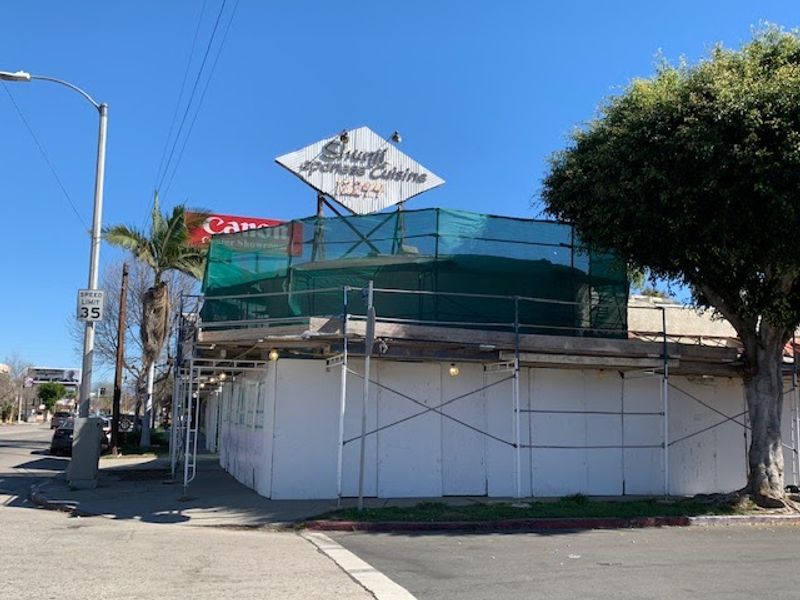
Whizin took that challenge seriously. He built restaurants shaped exactly like huge stucco chili bowls, complete with a slightly flared rim at the top.
He even painted Pat. Pending on the sides, hoping to patent the look.
Inside, each bowl had a circular counter with 26 stools. Everyone sat facing the cooks in the middle, which made service fast and friendly.
It sounds like the perfect spot to chat with strangers over a hot meal.
The star dish was the chili size, an open-faced hamburger buried under chili. College students worked the counters, and during World War II some locations stayed open 24 hours for aircraft workers from nearby Douglas Aircraft in Santa Monica.
By 1941, the chain had grown to as many as 22 bowls around LA County. By 1947, though, every original Chili Bowl restaurant had closed.
The Bowl That Moved Across Town
Can a building travel? This one did, and I find that wonderfully strange.
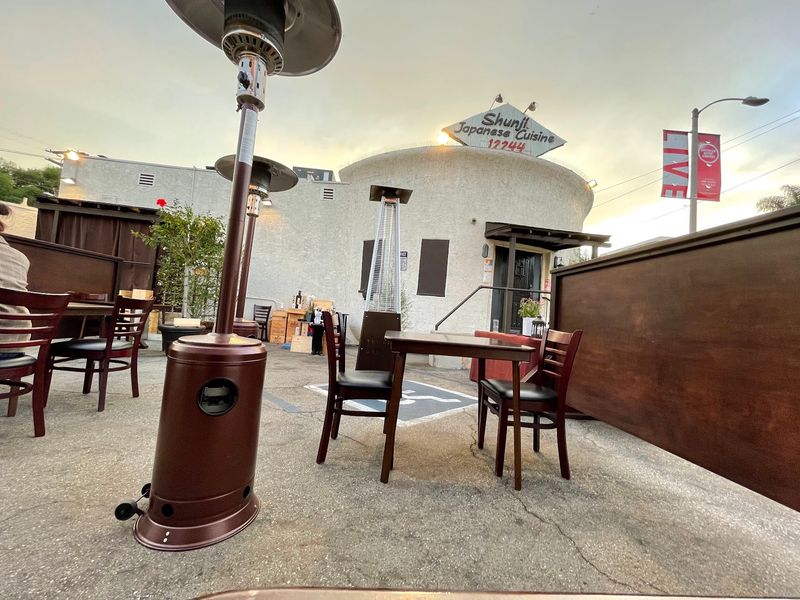
The bowl that ended up at 12244 W Pico Boulevard was first built in 1935 in Silver Lake as the seventh Chili Bowl in the chain.
Around 1939 or 1940, it was moved to its spot in West Los Angeles. Imagine seeing a giant bowl rolling down the road on a truck.
Drivers must have done a double take.
Once settled on Pico, the little round building became a survivor. It was one of the last Chili Bowls still standing and probably the most intact of them all.
Even better, it kept serving food for decades in one form or another.
The tenant list reads like a fun trivia game. It was a Mexican restaurant called Pancho’s and later a spot called Roundhouse, a perfect name for a round house.
It also spent time as a toy store and even a real estate office.
For many years before sushi arrived, the bowl was home to Mr. Cecil’s California Ribs. Generations of Angelenos drove past it and smiled.
Each new owner added another layer, like toppings stacked on a very old lunch.
Chili Out, Sushi In
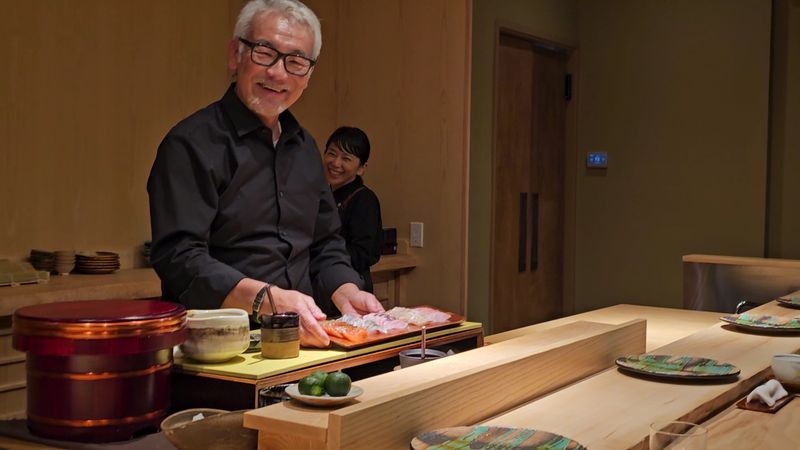
Honestly, I cannot think of a funnier mix than a classic American chili joint turning into an elegant Japanese restaurant. That is exactly what happened in 2012.
Shunji Japanese Cuisine soft-opened in the bowl in February, then held its grand opening in March.
The man behind it was Chef Shunji Nakao, a true legend of the LA sushi scene. He started cooking as a teenager in Yokohama, Japan, and moved to the United States in 1984.
His resume is seriously impressive. He was one of the original chefs at Matsuhisa in Beverly Hills, a restaurant that changed how the world saw Japanese food.
Later, he and his brother opened Asanebo in Studio City, which became famous for beautiful sashimi.
So when Chef Nakao put his own name on the round building, sushi fans paid attention fast. People came for his skill, then stayed amazed by the setting.
I love how this switch saved the building in a way. A business that brings in hungry crowds keeps the lights on and the doors open.
Chili built the bowl, but sushi gave it a brand new reason to exist for another full decade.
Calm Inside a Curved Little World
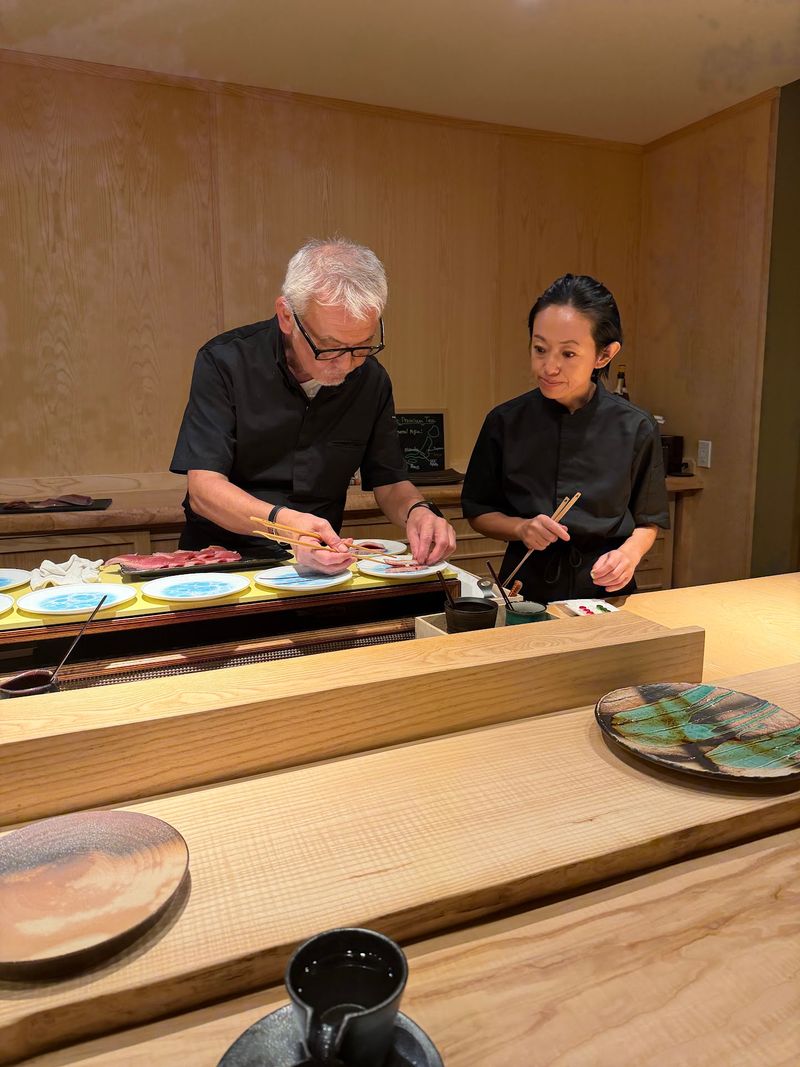
Something about sitting inside a round room makes me feel cozy, like being tucked into a giant teacup. The quirky outside of the bowl hid a surprisingly peaceful space.
Inside, everything felt simple, soft, and focused.
The decor stayed minimal, with blonde wood counters and gentle lighting. Natural materials gave the room a warm glow without any flashy extras.
Most guests sat right at the sushi counter. That setup turned dinner into something personal, since you could see every careful move the chef made.
It felt less like a regular restaurant and more like a small, quiet show where the performers happened to be making your food.
There is a neat connection to history here too. Remember how the old Chili Bowls had a circular counter where everyone faced the cooks?
In a way, the sushi bar kept that same friendly spirit alive, just with chopsticks instead of spoons.
My advice for anyone visiting an intimate counter like this is easy. Put your phone down, relax, and enjoy the rhythm of the room.
Small spaces reward patient guests, and the calm mood was every bit as memorable as the food served across that smooth wooden counter.
Trusting the Chef, One Bite at a Time
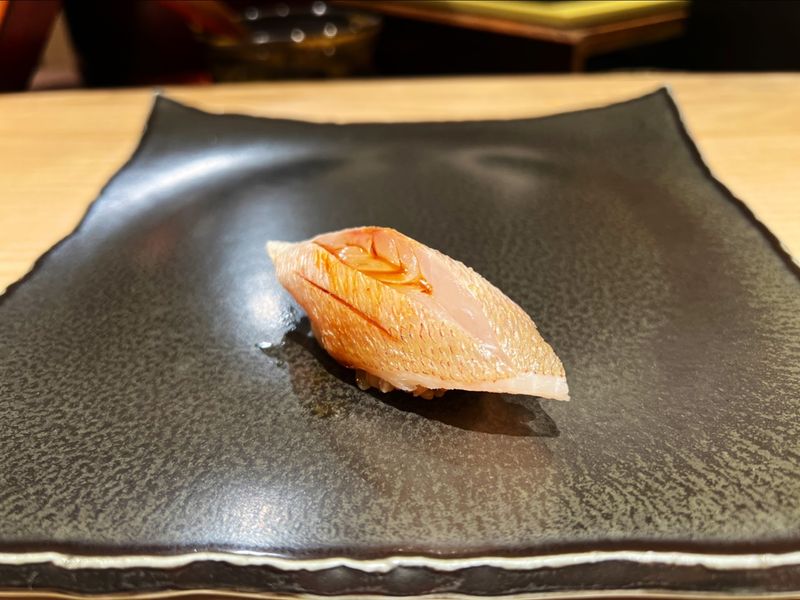
Omakase is my favorite kind of food adventure because you get to skip the menu entirely. The word means I leave it up to you.
The chef picks every dish based on the freshest seasonal ingredients.
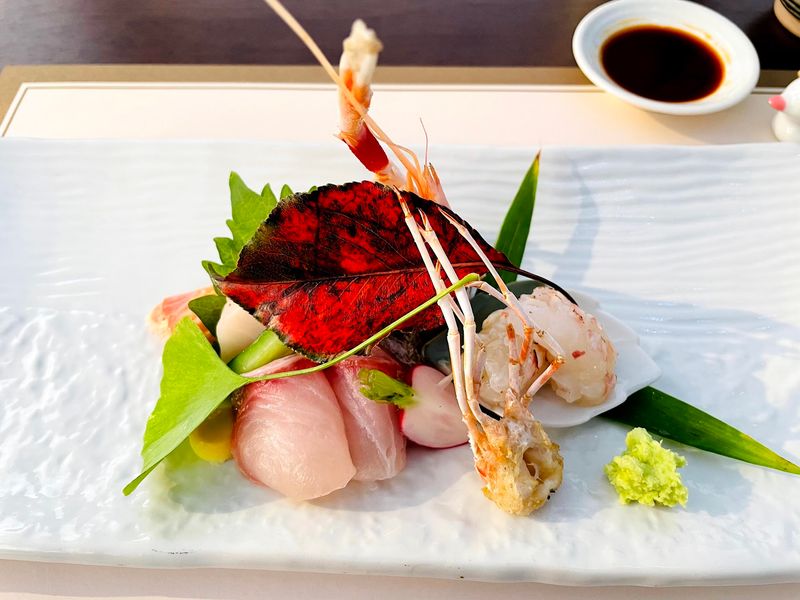
Chef Nakao was known for building thoughtful, creative courses. Diners loved his special touch with vegetables, which often showed up between the seafood dishes.
One famous favorite was his tomato tofu, a bright little cube resting in a fragrant dashi broth.
Of course, the sushi itself was the main event. His Edomae-style nigiri focused on balance, with fresh fish, perfectly seasoned rice, and real grated wasabi.
Nothing was piled on just for show.
Fans also raved about his warm kitchen dishes and his broths, which changed with the seasons. A winter visit might bring a clam dashi, while summer offered something completely different.
That made coming back feel like a new trip every time.
Here is a tip if you ever try omakase anywhere. Tell the staff about allergies early, then just relax and trust the process.
Eating slowly helps you notice small flavors, and the steady pace turns dinner into a story with many tasty chapters.
A Star, a Goodbye, and a New Home
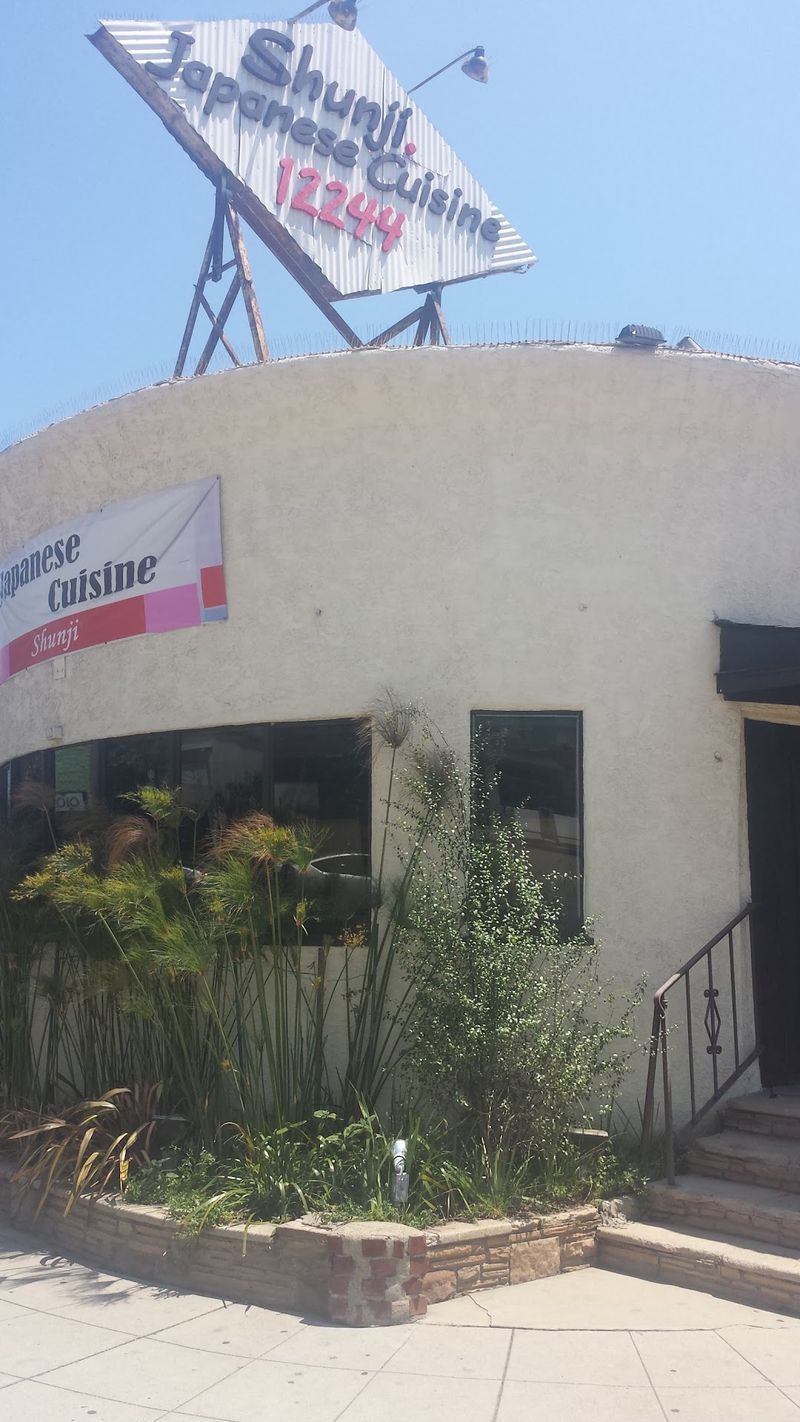
Big news landed in 2019, and it still makes me cheer. Shunji earned a Michelin star while cooking inside that old chili bowl.
A building made for burgers and chili was now home to one of the most honored sushi spots in the city.
The building itself had a harder road. Preservation groups, including the Los Angeles Conservancy, worked hard to protect it as a Historic-Cultural Monument.
The City Council denied the nomination, and dismantling began in February 2022.
Some reports said the bowl might be stored for a possible future move, though no details were shared. The Pico site is planned for a six-story residential building.
For fans of quirky LA history, it was a tough moment.
Happily, the restaurant kept going strong. Shunji moved to a calm, beautiful space in Santa Monica, with blonde wood counters, a minimalist look, and the same careful omakase guests adore.
It is easy to miss, so keep your eyes open for the low-key door.
The bowl may be gone from the street, but its story lives on in every plate. I think that is a pretty sweet ending for a building that started as a joke.
Address: 12244 W Pico Blvd, Los Angeles, CA
