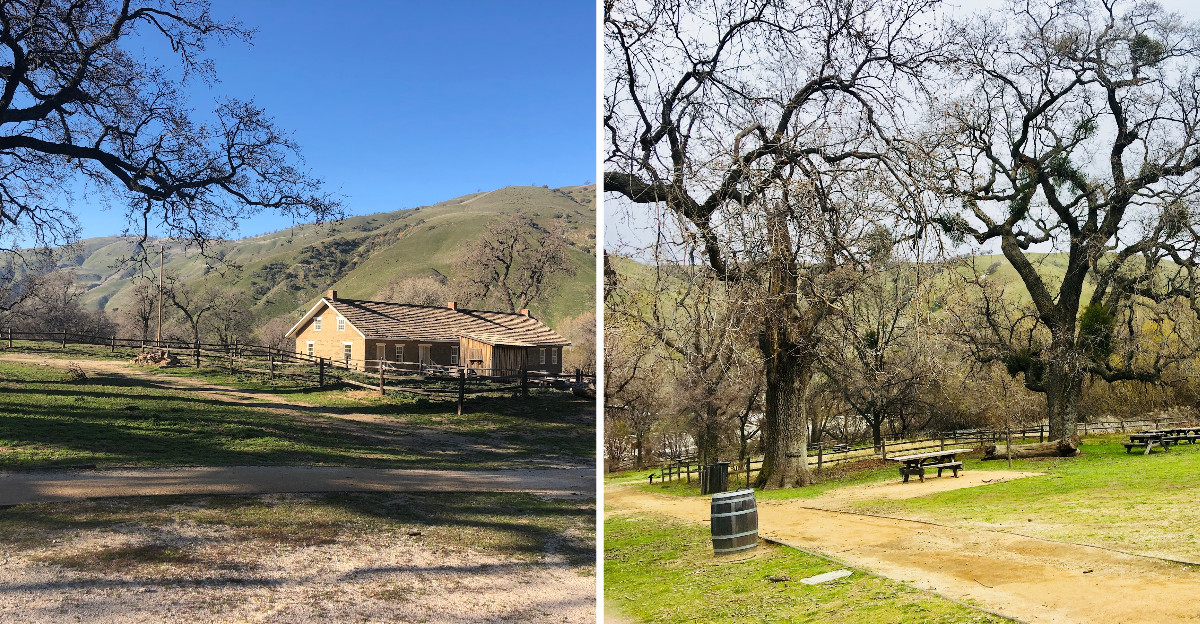
Exit signs for a historic fort on the interstate are easy to ignore when you are rushing somewhere else. One afternoon, needing only to stretch my legs, the pull-off finally happened, and almost two hours disappeared.
The air in the hills above the valley was noticeably cooler, and the first thing I noticed was wind moving through enormous oak branches. Adobe walls sat quietly in the grass, a parade ground stretched out where soldiers once drilled, and a deer wandered across the lawn like it owned the place.
What surprised me most was learning how short the fort’s story actually was, built in 1854 and closed for good ten years later.
California hides chapters like this along its highways, and this one feels like a paused moment rather than a finished story.
Why the Army Chose This Canyon in the First Place
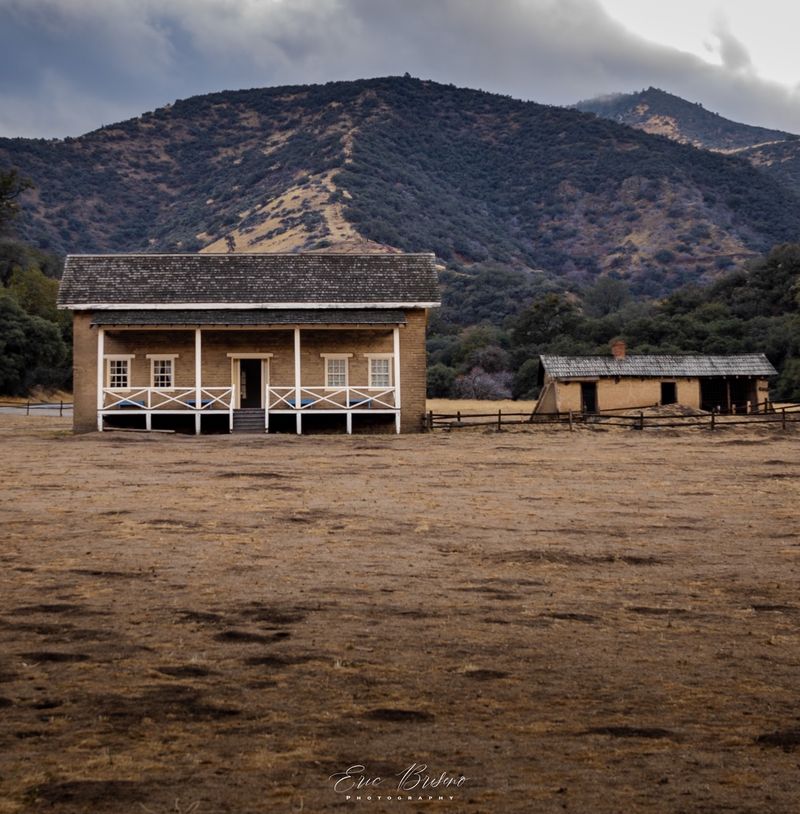
Geography explains almost everything about this place. Grapevine Canyon was the main route linking California’s Central Valley with the southern part of the state, which meant whoever controlled the pass controlled the traffic.
The United States Army garrisoned Fort Tejon on August 10, 1854, sending the First U.S. Dragoons up into these hills to build from scratch.
Over 40 military buildings eventually went up here, which is a staggering amount of construction for such a remote spot in the 1850s.
Standing near the old parade ground, I kept thinking about the logistics of it all. Every brick, every beam, every barrel of supplies had to travel these same winding roads.
The fort’s purpose was layered and tangled up in the difficult social realities of the era. Soldiers were stationed here to oversee and control Native American communities living on the Sebastian Indian Reservation, and also to shield both those communities and arriving settlers from raids by desert groups including the Paiutes, Chemehuevi, and Mojave.
Stock rustling was another constant headache, and the dragoons spent real time chasing stolen livestock across rough country.
Reading the interpretive panels here gave me a much clearer picture of how complicated early California really was. Nothing about the fort’s mission fits neatly into a single sentence, and I appreciated that the park does not pretend otherwise.
Adobe Walls, Viewing Windows, and the Small Museum Up Front
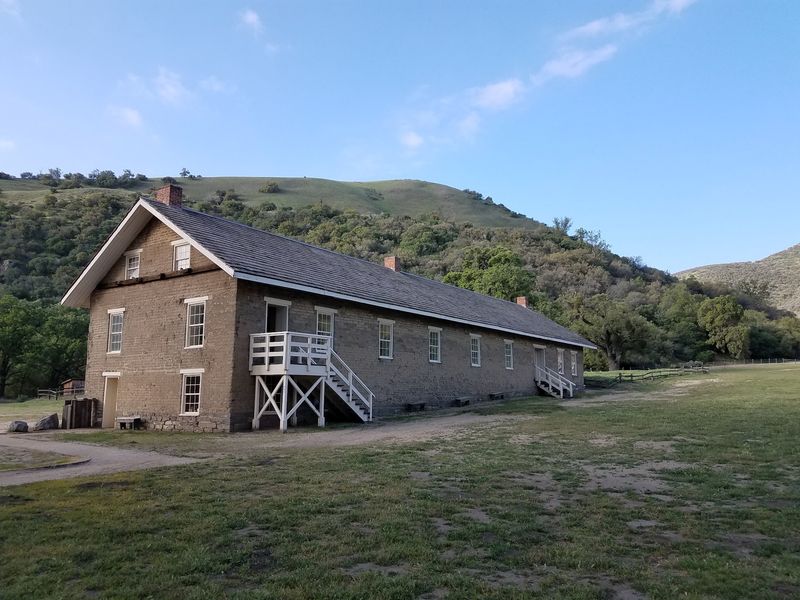
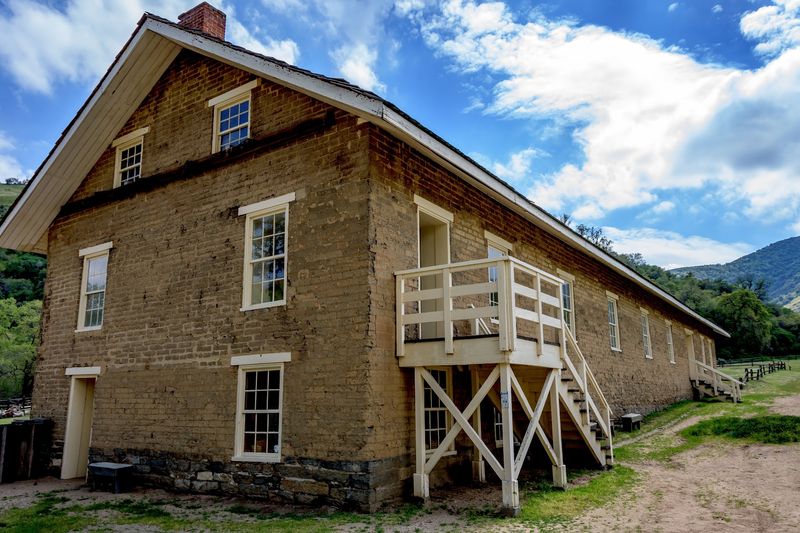
My favorite part was the barracks. The restored adobe buildings still hold that thick, cool, slightly earthy feeling that old adobe always has, and even when the doors are locked you can peer through viewing windows into the rooms.
Bunks, kitchen gear, weapon displays, officer quarters. All of it laid out the way it might have looked when the dragoons were here.
There is a compact museum room near the entrance with exhibits on army life and regional history, and honestly it packs in more than I expected for its size.
Grab the self-guided brochure from the visitor center before you start walking. It turned a pleasant stroll into something that actually made sense, pointing out which structures are original and which were rebuilt.
The loop around the existing buildings runs roughly half a mile, flat and easy, with benches placed along the narrow road.
Small details stuck with me. A chicken coop with live hens clucking away, a couple of old wells, a blacksmith shop that sometimes has smoke rising from it during special events.
Restrooms here are clean and accessible, which matters more than people admit when you are breaking up a long drive. Plan on anywhere from thirty minutes to two hours depending on how much reading you do.
The Camel Experiment Nobody Expects to Hear About
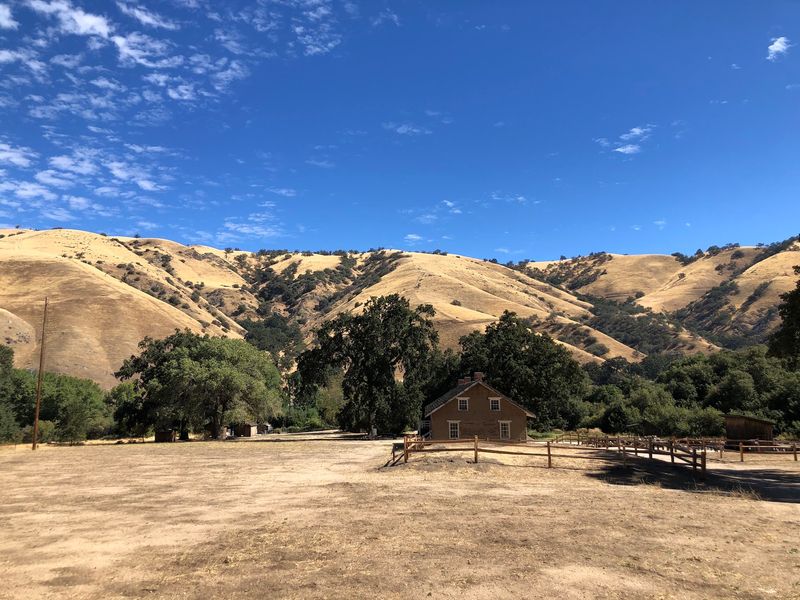
Camels. In California.
That is the fact that made me stop mid-sentence at the exhibit panel and read it twice.
In 1859 the United States Army brought camels to Fort Tejon as part of a wider effort to solve transportation problems across the dry Western territories. On paper the logic held up, since camels handle heat and sparse water far better than horses.
Reality was less cooperative. The animals arrived in rough shape and turned out to be expensive to feed, and within less than a year they were shipped off to the Los Angeles Quartermaster Depot.
From there they were tried again on messenger routes between Los Angeles and Fort Mojave, hoping to cut costs. That attempt fizzled too.
Eventually the camels ended up at the Benicia Army Arsenal and were sold at auction, closing out one of the odder experiments in state military history.
Visitors talk about the camel story constantly, and I get why. It is the kind of detail that makes history feel human rather than distant, full of people trying big ideas that did not quite work.
Picture it while you walk the grounds. Camels plodding past these same oak trees, dragoons watching, and the whole thing quietly falling apart within months.
An Earthquake So Big It Got Named After the Fort
Few places get a major earthquake named after them. Fort Tejon does.
The 1857 Fort Tejon earthquake ranks among the strongest ever recorded in United States history, with an estimated moment magnitude of 7.9. The San Andreas Fault ruptured along roughly 350 kilometers, a length that is genuinely hard to picture until you trace it on a map.
I tried imagining that morning from where I was standing. Adobe walls shaking, horses panicking, the ground itself tearing open across hundreds of miles of empty country.
What surprised me is that historical accounts report only two tragedies. The region was thinly populated at the time, which spared an enormous amount of loss.
The fort took damage, though adobe construction proved more forgiving than you might guess, absorbing movement rather than shattering.
Knowing all this while wandering the quiet grounds adds a strange weight to the visit. The same fault that shaped these mountains is still right there beneath the grass, patient and unbothered.
For anyone traveling with kids who like dramatic facts, this one lands well. It connects a peaceful picnic spot to one of the largest seismic events the state has ever experienced, and suddenly the landscape stops looking so sleepy.
How the Civil War Emptied the Place Out
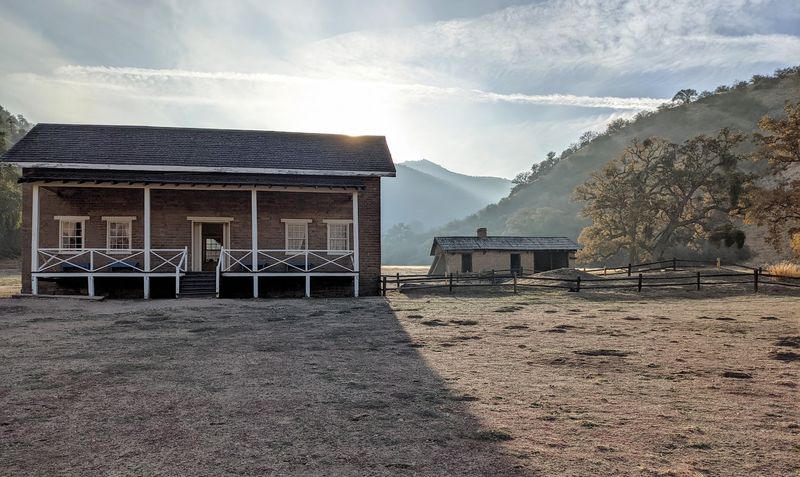
Ten years. That is the entire active life of a fort that took enormous effort to build, and the reason it closed had almost nothing to do with the mountains around it.
When the American Civil War broke out, priorities shifted fast. The First U.S.
Dragoons, the fort’s original garrison, were transferred east in July 1861 to support Union efforts, and the buildings here went quiet.
California volunteer troops did re-occupy the site in 1863, giving the place a brief second chapter.
It did not last. Fort Tejon was permanently abandoned on September 11, 1864, less than a decade after the first soldiers arrived.
Settlement patterns across California had shifted too, and frontier defense simply stopped being where the resources went.
Something about that timeline sits with me. All those adobe bricks, all that hauling and hammering, and then the whole operation folded while the buildings were still practically new.
Walking the empty parade ground, that short lifespan becomes the most interesting thing about the site. Most historic forts feel like they wore themselves out slowly, but this one was set aside while still perfectly usable.
The quiet here is not neglect. It is what happens when history moves on and a place gets left behind intact.
Ancient Oaks, Wandering Deer, and the Best Picnic Stop on I-5
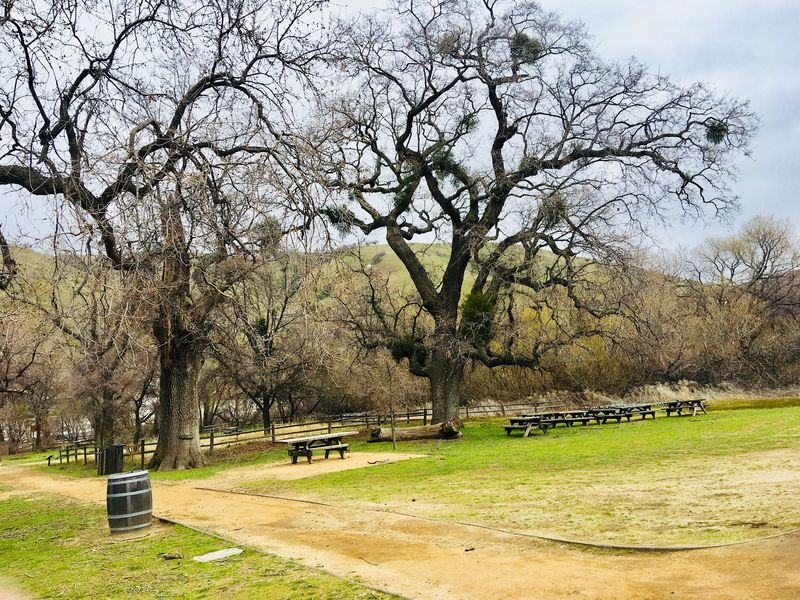
The trees nearly steal the show. Enormous valley oaks spread across the grounds, some of them centuries old, with branches so wide they create their own pools of shade.
On the afternoon I visited, the temperature felt several degrees cooler than the valley I had just driven up from. That alone makes this a smarter break than a standard rest area.
Picnic tables sit scattered under the oaks, and plenty of travelers use them for a proper lunch stop. Bring your own food, since there is nothing sold on site.
Deer show up regularly, especially near dusk, moving across the lawns without much concern for visitors. Squirrels and birds keep things busy too.
Spring turns the place green and full of wildflowers, while fall brings changing oak leaves that photographers clearly love.
A short, easy trail heads toward the base of the hills, gentle enough for kids and anyone who just wants to move after hours in a car.
Leashed dogs are welcome, which is handy on a road trip.
Somewhere in the grounds is the marker connected to Peter Lebeck, whose name gave the nearby town of Lebec its spelling. His story was discovered when bark was removed from a tree around 1890.
Planning Your Visit, Plus the Living History Days Worth Timing
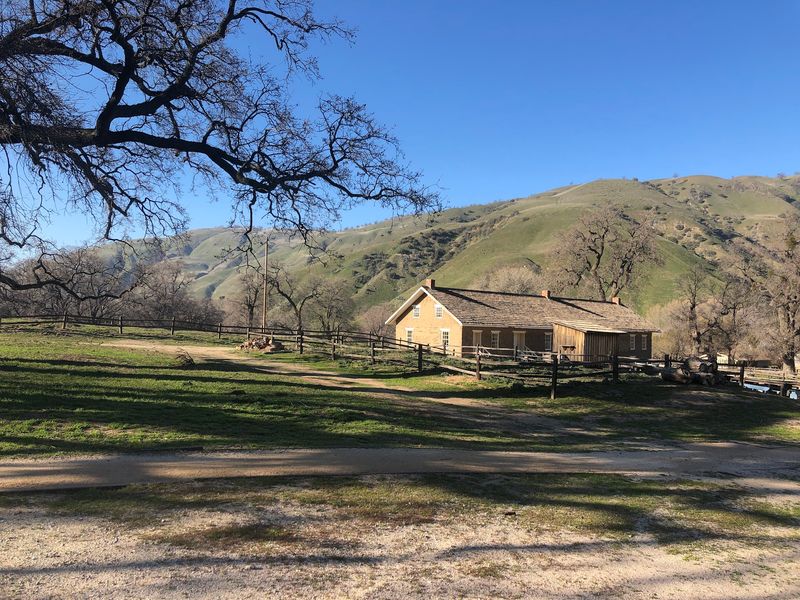
Timing changes this visit completely. Show up on a random weekday and you may have the entire fort to yourself, which has its own peaceful charm.
Catch a living history program, though, and the grounds come alive with volunteers demonstrating daily life from the 1850s. Blacksmithing, carpentry, brick making, drills in period uniforms.
On select Sundays from May through September, Civil War battle demonstrations take place, and the visitors who plan around those events tend to leave the most enthusiastic.
Park grounds are open sunrise to sunset, but keep in mind that sunset here effectively means when the sun drops behind the mountain ridge.
The visitor center and building exhibits run 9:00 AM to 4:00 PM, Tuesday through Saturday, so the interiors are locked outside those hours. If seeing inside the barracks matters to you, check before you drive up.
There is a parking fee that supports maintenance, and the lot sits close enough to the freeway that the detour costs you maybe fifteen extra minutes.
My honest advice is to go midmorning on a clear day, walk the loop slowly, then eat lunch under the oaks before getting back on the road. It is one of those stops that quietly outshines the destination you were driving toward.
Address: 4201 Fort Tejon Road, Lebec, California 93243
