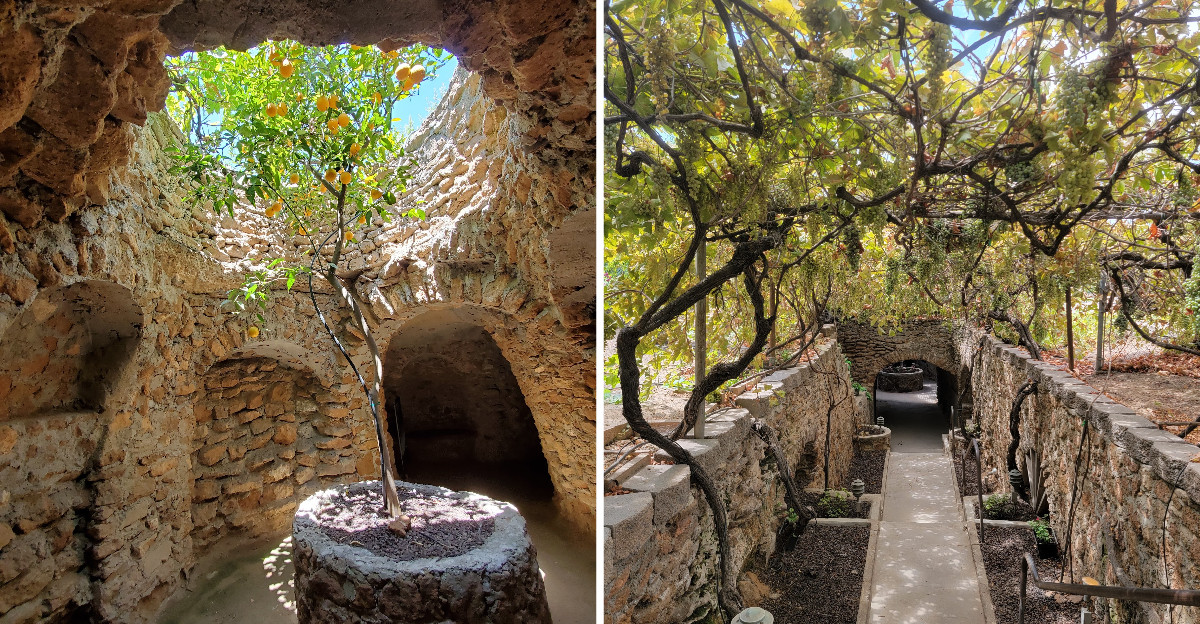
One Italian immigrant spent forty years digging an extraordinary underground world beneath the hard soil of California’s Central Valley. What began as an escape from the summer heat became a remarkable network of tunnels, courtyards, living spaces, and fruit trees growing below street level.
I still have trouble picturing the determination it took to build such a place with hand tools. Baldassare Forestiere began his project in 1906 after discovering that the land he hoped to farm contained a stubborn layer of hardpan beneath the surface.
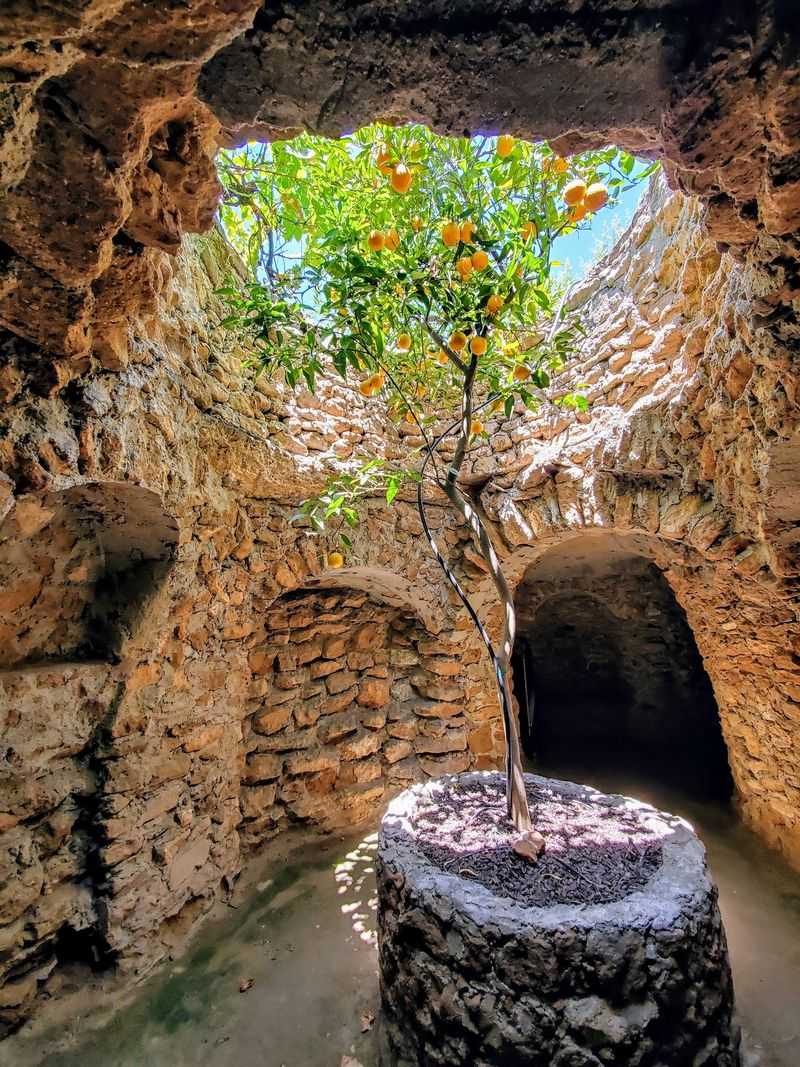
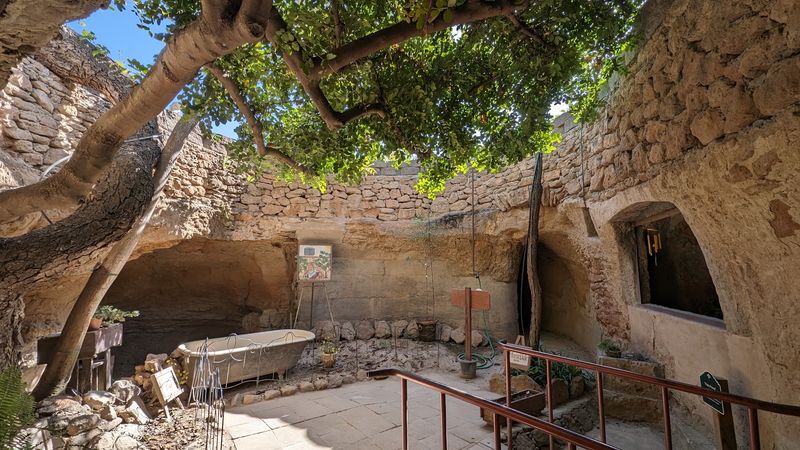
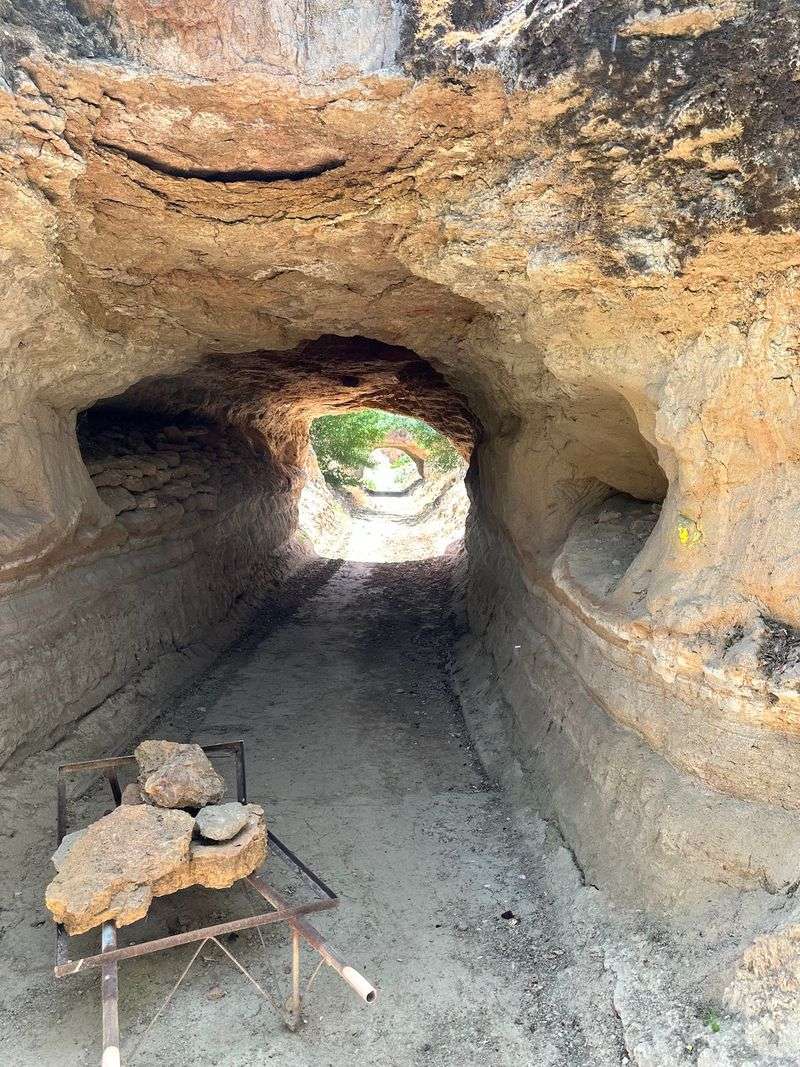
Instead of abandoning his dream, he carved rooms and passageways, reusing excavated material to build arches and walls. Open-air skylights allowed sunlight to reach fruit trees planted underground.
I find it fascinating that his creation remains open to visitors more than a century after the first excavation, offering a glimpse into one man’s extraordinary ingenuity.
A Sicilian Dream That Started With Disappointment
Born in 1879 in Filari, near Rometta in Sicily, Baldassare Forestiere came to the United States in 1901 with citrus on his mind. He had worked on tunnel and subway projects on the East Coast, which gave him skills he never expected to use on a farm.
When he bought land in the Fresno area in the early 1900s, the reality was rough. Beneath a thin layer of topsoil sat hardpan, a dense layer almost like cement, and tree roots simply could not push through it.
Plenty of people would have sold the property and moved on. He did something stranger and far more interesting, choosing to break through that stubborn layer instead of fighting it from above.
I find the timeline remarkable. In 1906 he began digging what was meant to be a modest cellar, a cool place to escape the brutal valley summers.
That small hole turned into a life’s work lasting until his death in 1946. Forty years of swinging a pickaxe, hauling dirt, and shaping rooms out of raw ground, all because the land would not cooperate the way he had hoped it would.
Hand Tools, Two Mules, and Zero Blueprints
No architect drew plans for any of it. Forestiere worked from images in his own head, carving each chamber as the idea came to him, then moving on to the next one.
His toolkit was almost comically simple. A pickaxe, a shovel, a wheelbarrow, and eventually a pair of mules to help move the endless piles of excavated hardpan.
Standing in one of the wider courtyards, I kept doing the math and failing. Every bucket of soil, every arch, every step was lifted and placed by a single pair of hands over four decades.
What surprises visitors most is how little waste there was. The broken hardpan he dug out became the stones for walls, planters, and archways, so the earth he removed built the structure that replaced it.
Guides explain that he sometimes reworked sections for years, widening a passage or reshaping a ceiling until it satisfied him.
There is no straight-line efficiency here, no grid, no symmetry. The whole place feels improvised in the best way, like a sculpture that grew slowly instead of being planned.
Roman Arches Built From Broken Ground
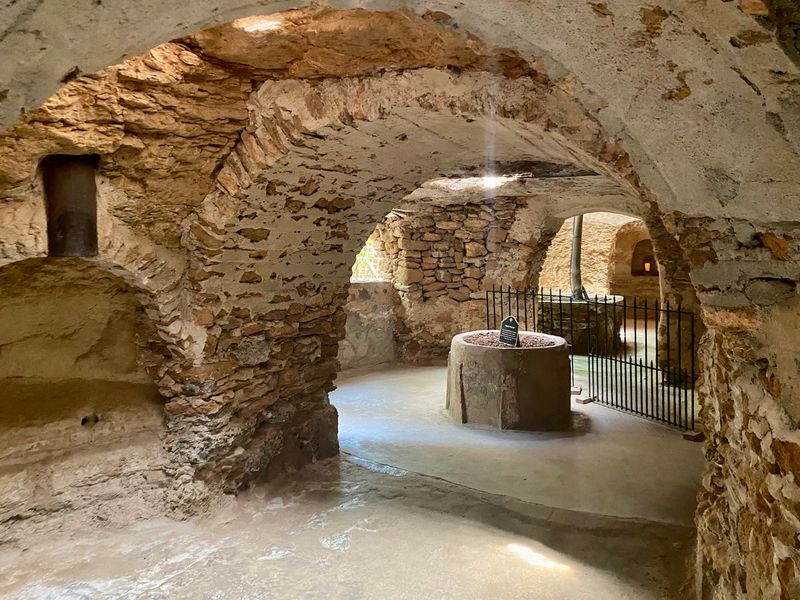
Anyone who has seen photos of Roman ruins will recognize the shapes down here. Forestiere admired the catacombs and old cellars he knew from Italy, and those memories show up in curve after curve.
Arches appear everywhere, some wide enough for a group to pass through comfortably, others so low you instinctively duck. Vaulted ceilings spread the weight of the soil above, which is why the structure has held for over a century.
The mortar work is honest and uneven, and I loved that about it. You can see where a hand pressed stones into place, one after another, without any machine smoothing things out.
Walls are built from the same hardpan chunks he pried loose while digging. Rough on the surface, warm in color, and surprisingly cool to the touch even in triple-digit weather.
Light behaves oddly in these passages, sliding down from above and bouncing off pale stone.
It all adds up to something that feels far older than it is, less like a California roadside stop and more like a small town buried in another century.
Skylights That Turned Tunnels Into Orchards
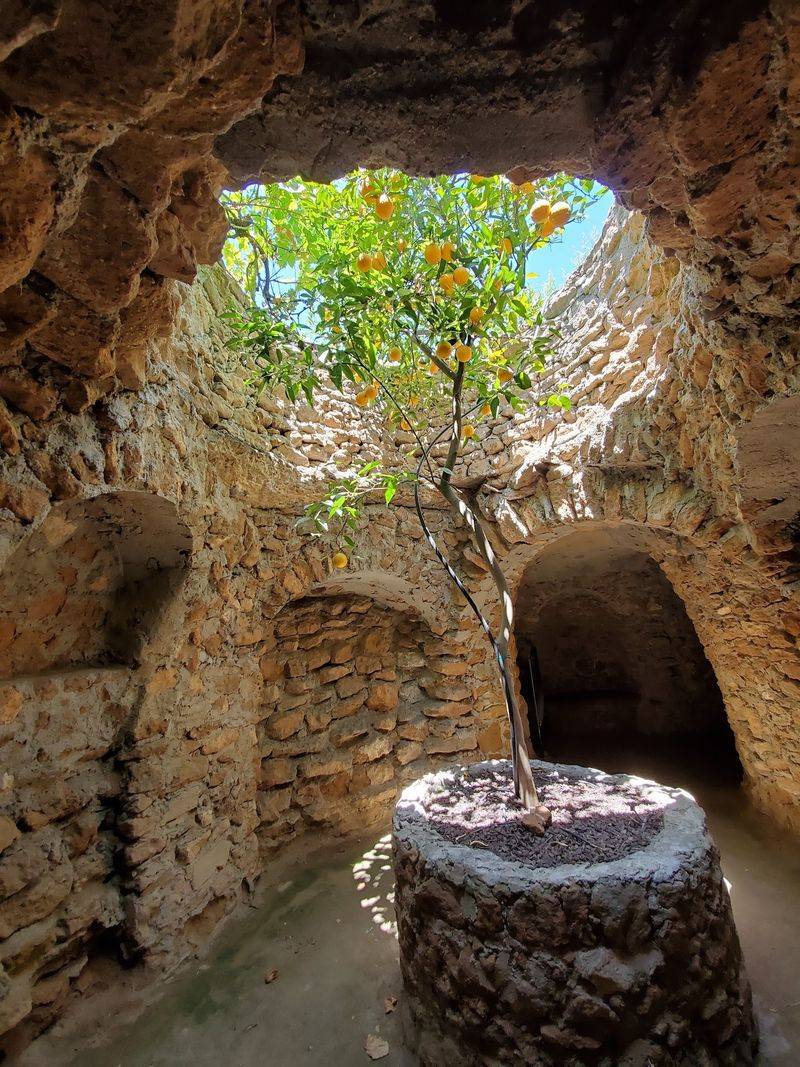
Clever is the word that kept coming to mind as I looked upward. Instead of sealing his rooms off from the sun, Forestiere cut open-air skylights above the planting areas so daylight could pour straight down onto the trees.
Some openings are narrow shafts. Others are broad garden courts wide enough to feel like sunken patios, ringed with stone and green with leaves.
Each opening creates its own little pocket of climate. Air sinks, moisture lingers, and the shaded stone holds coolness through the hottest part of the afternoon.
According to the attraction, the underground gardens are typically 10 to 20 degrees Fahrenheit cooler than the surface, offering welcome relief during Fresno’s hot summers.
Winter works in reverse, with the earth acting like a blanket that protects tender plants from frost damage.
Modern builders talk a lot about passive cooling and natural ventilation. He figured out the same principles by paying attention to the ground, the sun, and the seasons, decades before anyone gave those ideas fancy names.
Living Quarters Carved for Comfort
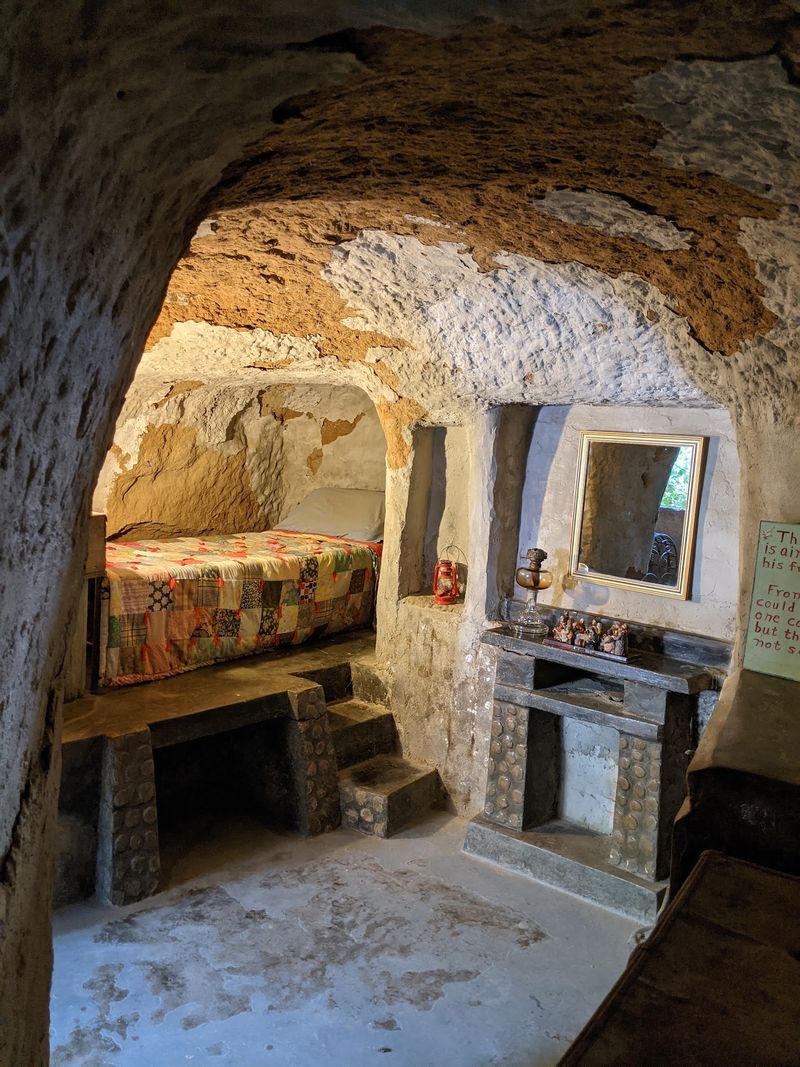
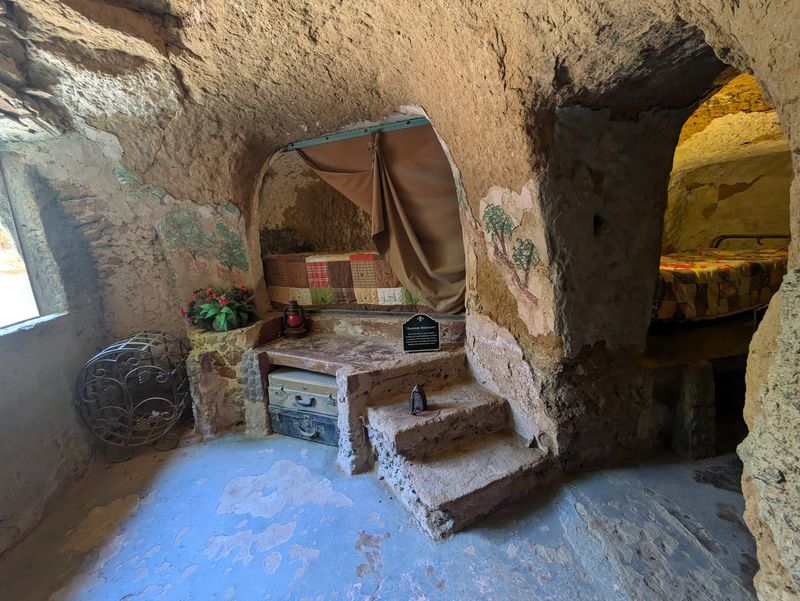
He did not just dig here. He lived here, and the domestic rooms are some of the most touching parts of the visit.
The living areas include bedrooms, a kitchen, a bath, and a sitting space, all shaped from the same excavated hardpan as the tunnels outside.
One bedroom was insulated specifically for winter use, which tells you he thought carefully about the seasons rather than just tolerating them.
Details are humble. Small alcoves, built-in ledges, and openings placed to catch a breeze or a beam of light at the right time of day.
I stood in the kitchen space and thought about how quiet it must have been at night, with soil absorbing every sound from the world above.
There is something moving about how practical it all is. No decoration for its own sake, just careful solutions to the problem of staying comfortable in a punishing climate.
Knowing he spent decades sleeping underground while continuing to dig makes the scale of the project land differently. Home and worksite were the same place for forty years.
The Chapel, the Fish Pond, and Other Surprises
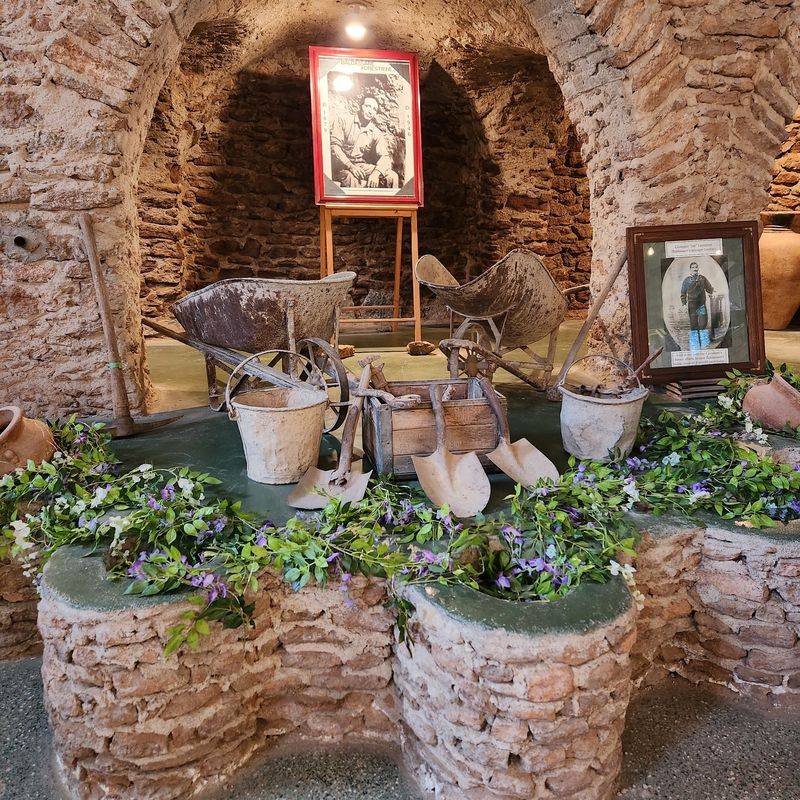
Just when the tour seems to settle into rooms and orchards, it throws something unexpected at you. A chapel space, quiet and simple, carved into the stone like a pause in the middle of a long sentence.
Not far off sits an underground fishing pond, which sounds made up until you are standing beside still water twenty feet below a Fresno street.
There was also a glass-bottomed aquarium, designed so people could look down into water from above. It is no longer in use, but the concept alone says a lot about his imagination.
Visitors I overheard kept mentioning the chapel as their favorite stop, and I understood why once I saw it.
Bath areas, planting courts, and small nooks round out the mix, each one solving a different need.
What holds it together is personality. These are not museum exhibits assembled by a committee, they are the ideas of one persistent person who kept thinking of new things to build and then built them himself.
Protected as a National and State Landmark
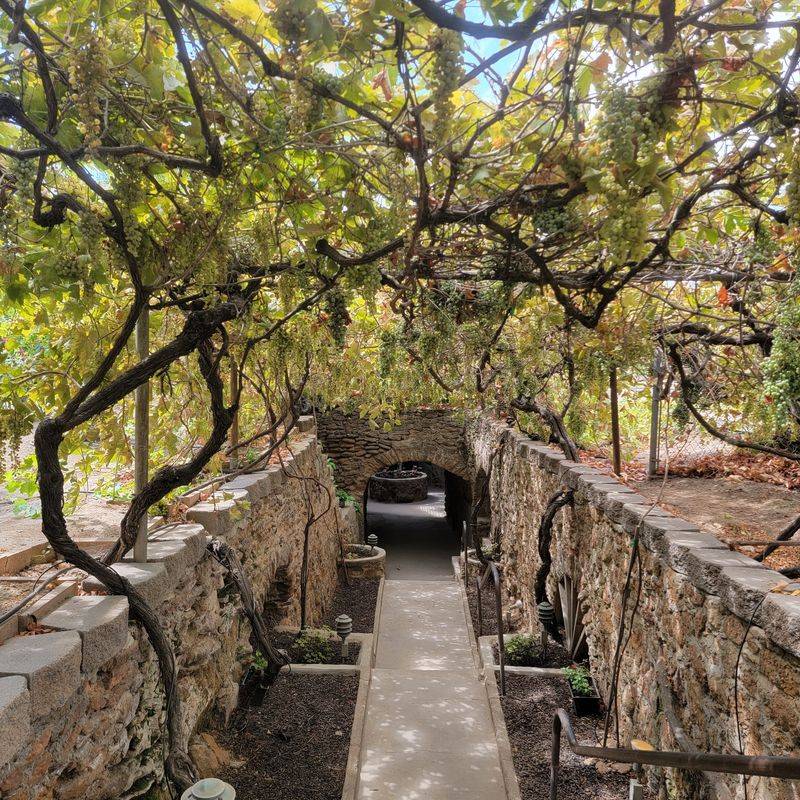
Recognition came long after the digging stopped. The site joined the National Register of Historic Places in 1977 and became California Historical Landmark No. 916 in 1979.
Those designations matter because they help protect something genuinely irreplaceable. You cannot rebuild forty years of hand-carved tunnels once they are gone.
The property is still operated by members of the Forestiere family through the Forestiere Historical Center, which gives the whole visit a different feel.
Guides speak about Baldassare with real affection rather than rehearsed lines, and the sense of stewardship comes through clearly.
Preservation work is ongoing. Paving has been added along parts of the route, which cut down on mud and made the walk far easier than it once was.
Fresno sits in the middle of California’s agricultural heartland, surrounded by the farms and orchards that shaped the region.
Having a landmark that celebrates one immigrant farmer’s ingenuity feels exactly right for this part of the state. It connects the big story of valley agriculture to one very human, very specific life.
How the Guided Tour Actually Feels
Reservations are the way to go. Tours are guided and groups stay small, which keeps the narrow passages comfortable and makes it easy to ask questions.
The walk generally lasts around forty-five minutes to an hour, though it covers far more ground than that suggests.
Guides carry the experience. Every visitor account I came across mentions how much the docents know about Baldassare’s life, his family, and the way each room came together.
Small presentations happen along the route, and the group stays together rather than wandering freely.
Underground temperatures run noticeably cooler than the surface, so a light layer is worth bringing even on a scorching day.
Strollers, backpack carriers, and car seat carriers are not permitted because of stairs and tight tunnels, though front carriers and slings work. Children under sixteen need an adult along.
An alternate tour route is available for standard wheelchairs up to 26 inches wide, although the uneven terrain requires a companion to assist. Motorized wheelchairs and scooters cannot be accommodated, and visitors should confirm route availability before booking.
Visitors are advised to arrive at least 20 minutes before their tour because nearby construction may affect traffic and street parking.
Planning Your Stop Along the Central Valley Route
Honest heads-up: the exterior gives away almost nothing. From the street it looks unremarkable, and more than one visitor has admitted to driving past the entrance before spotting it.
Parking is along the street, so arriving early makes life easier and saves you a longer walk.
Guided tours operate seasonally, generally from March through November, with dates and departure times listed on the attraction’s official booking calendar.
Seasonal scheduling applies too, so checking before you commit to a driving detour is worth the minute it takes.
A gift shop sits near the end of the route, and proceeds support the site’s upkeep. Citrus-flavored treats have earned an enthusiastic following among visitors.
Fresno makes a natural pause between the Bay Area and the southern half of the state, or on the way toward Yosemite and Kings Canyon.
Slotting this stop into a longer drive gives your trip a story nobody else will have. I left thinking about persistence, and about how one person with a shovel reshaped a patch of stubborn California ground.
Address: 5021 W Shaw Ave, Fresno, CA 93722
