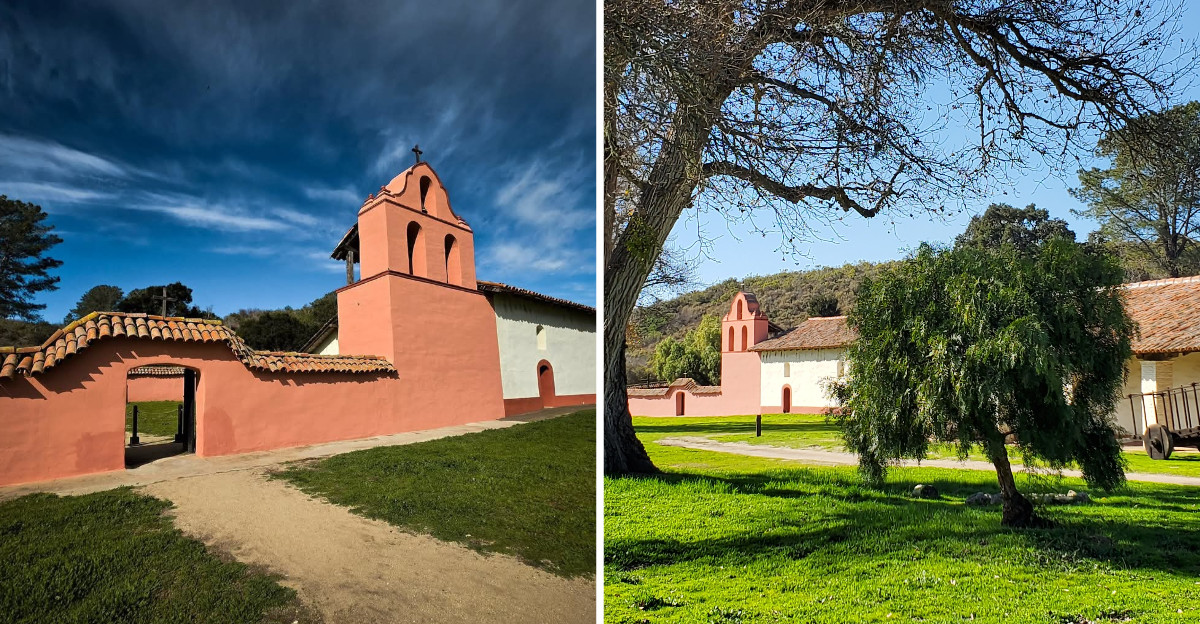
The first thing I noticed at this mission was the quiet, broken only by a longhorn chewing grass beside a row of whitewashed adobe buildings. This California place looks so authentic that it is easy to forget most of it was rebuilt by hand in the 1930s.
By then, the old mission had crumbled into a pile of melting mud walls after nearly a century of neglect. Young workers brought it back brick by brick, turning it into one of the most completely restored missions in the state.
Today visitors can wander through ten furnished buildings, peek into workshops, smell the gardens, and hike trails that follow the old road. The adobe walls glow in the afternoon sun, and the gardens are full of birds.
I left with dusty shoes and a head full of stories, and I have been telling friends about it ever since. The quiet lingers, and so does the sense of stepping back in time.
Before the Adobe Walls Went Up
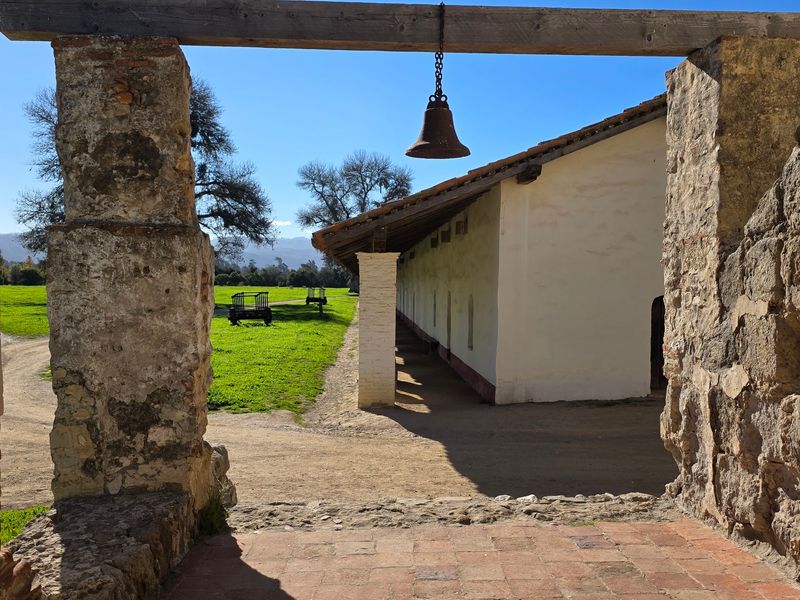
History buffs, this one starts with a date worth remembering. On December 8, 1787, Father Fermín Lasuén founded La Purísima on the Feast of the Immaculate Conception, which is exactly where the mission got its name.
It became the eleventh of California’s 21 missions. The first site sat about a mile south of what is now downtown Lompoc, on land the Chumash people called Algsacpi.
Planners liked the spot because it filled a gap between the missions at San Luis Obispo and Santa Barbara.
I spent a few minutes at the visitor center exhibits trying to picture that early world. Hundreds of Chumash people lived and worked at the mission, and their labor shaped nearly everything that grew there.
Thousands of cattle and sheep roamed the hills, while workshops turned out woven cloth, pottery, and leather goods.
The original complex measured about 330 feet on each side. Inside lived two priests, a handful of soldiers, Chumash families, and unmarried Chumash men and women, all gathered around a chapel.
One tip made my visit richer. Spend time in the visitor center before heading to the buildings, because the Chumash story told there adds weight to every adobe wall you see.
It is honest about the hard parts too, including how disease devastated the Native population, and that context stays with you after you leave.
The Morning the Ground Shook
Earthquakes are part of life in California, but the one on December 21, 1812, hit this mission especially hard. A powerful quake cracked and toppled many of the adobe buildings, and heavy rains and aftershocks finished off much of what was left.
I tried to imagine the people who had spent 25 years building that first mission. Watching it crumble in a matter of days must have been crushing.
Father Mariano Payeras got permission to start over about four miles to the northeast. The Chumash called this valley Amúu, and the Spanish knew it as La Cañada de los Berros, the Canyon of the Watercress.
It offered better water, a milder climate, and an easier connection to El Camino Real.
Work began in April 1813. Builders hauled salvaged materials from the ruined site, and within about ten years a new mission stood in the valley.
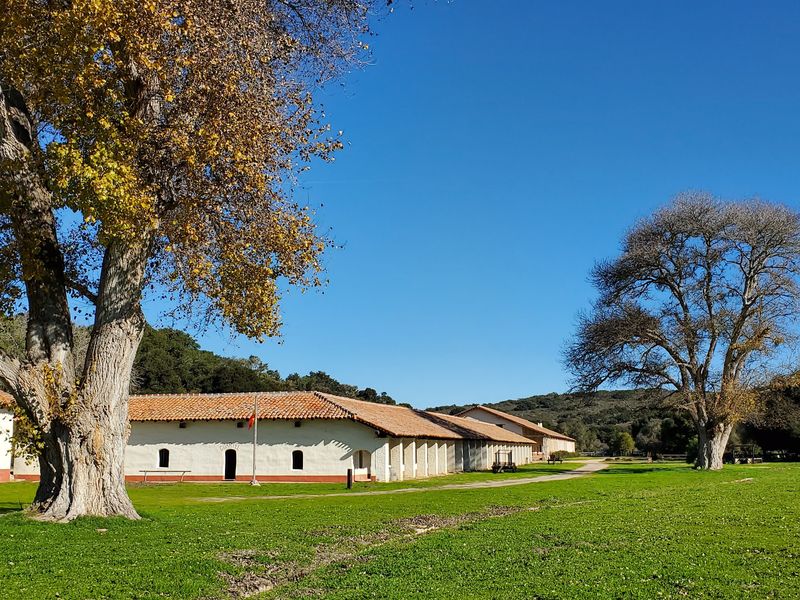
What surprised me most was the shape. Most California missions were built around a closed square, but La Purísima stretches out in a long line.
Historians think the design may have helped people escape quickly during another quake or flood, which feels very practical for a community that had just lost everything.
Keep an eye out for that layout as you explore. Following the buildings from one end to the other shows how daily life flowed from church to workshop to living quarters.
A Hundred Quiet Years
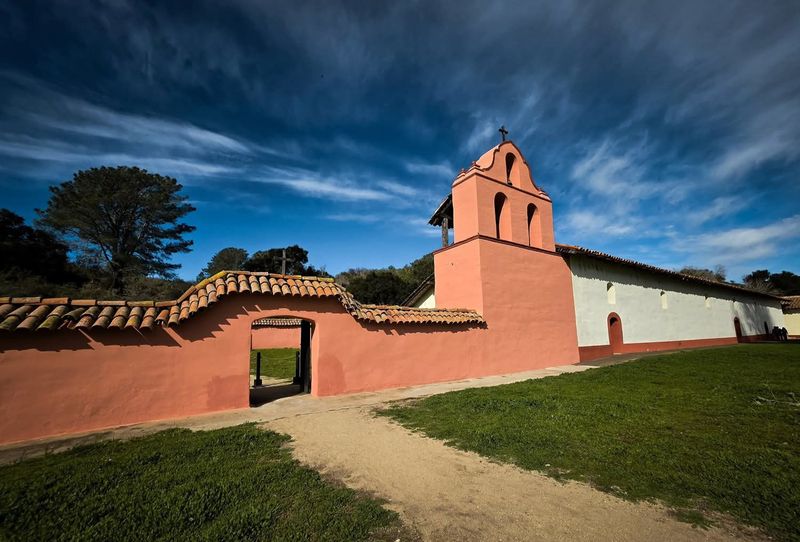
Some places fade slowly, and La Purísima is a good example of that. After Mexico won independence from Spain, the missions went through secularization between 1834 and 1843.
On paper, control moved from the Catholic Church to civil authorities, and mission lands were supposed to go to the Native people who lived there. That promise was rarely kept.
Many Chumash people were pushed aside and often exploited, a part of the story that deserves more attention than it usually gets.
The mission itself was abandoned and passed into private hands. Without anyone to patch roofs or replaster walls, the adobe slowly melted under winter rains, and tiles slid to the ground one by one.
By the early 1930s, the place was described as a complete ruin. Crumbling walls and overgrown paths were about all that remained of a community that once kept thousands of animals and busy workshops.
I found it strangely moving to think about those decades. Adobe is basically mud and straw, so once the protective roof goes, the walls really do return to the earth.
It made me look at every rebuilt wall with fresh eyes.
If you like comparing then and now, the visitor center exhibits on the restoration help you picture how much was lost. Seeing that contrast makes the next chapter of this story even more impressive.
Young Men, Mud Bricks, and a Big Idea
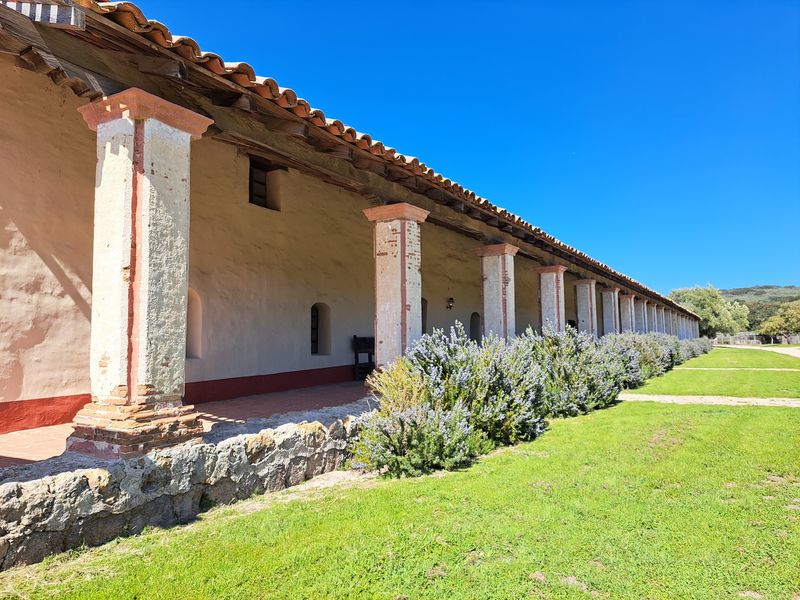
Picture a crew of young men in the middle of the Great Depression, mixing mud by hand to rebuild a place none of them had ever seen standing. That is how La Purísima came back to life, and I think it is one of the best stories in California history.
It started in 1933, when the Union Oil Company deeded land parcels to the State of California. California State Parks, Santa Barbara County, and the National Park Service teamed up, and the Civilian Conservation Corps, better known as the CCC, did the heavy lifting.
The crews learned archaeology on the job. They uncovered the ruins of 13 buildings, and what they found guided every step of the rebuild.
Here is the fun part. Workers made tens of thousands of adobe bricks and roof tiles by hand, using soil and clay from the nearby hills.
They even built furniture and forged hardware in onsite carpentry and blacksmith shops, just like mission workers would have done.
The goal was to show the mission as it looked in the 1820s. The main work was dedicated as a State Historical Monument on December 7, 1941, the same day as the attack on Pearl Harbor.
Quick tip: look closely at the bricks and tiles as you tour. The slight differences in shape and color are a reminder that real hands shaped each one.
Why No Other Mission Compares
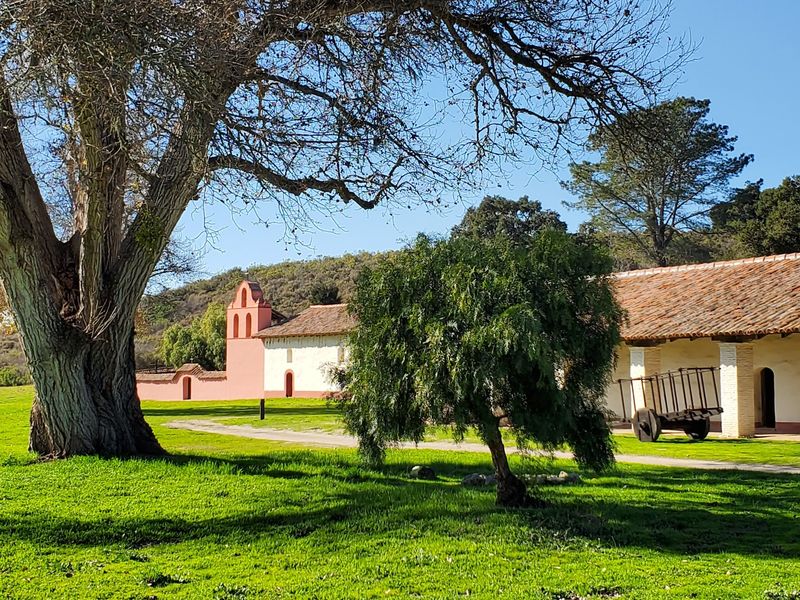
Ten furnished buildings. That number alone explains why La Purísima is often called the most completely restored mission in California, and why it is the only place in the state to see a full mission complex.
I wandered from the church to the living quarters to the blacksmith shop, and every room felt set up for a purpose. There were kitchens, bedrooms, offices, and workshops for weavers, tanners, and millers.
What really sets this mission apart is the land around it. Many missions are now surrounded by busy streets and shopping centers, but this one still sits in open country.
The park stretches across close to 2,000 acres of hills and valleys, and not a single skyscraper interrupts the view.
Then there are the animals. Burros, horses, longhorn cattle, sheep, and goats graze in the pastures, and chickens and turkeys wander near the buildings.
It is hard not to grin when a longhorn lifts its head to watch you pass.
A small bit of advice: wear sturdy shoes. Paths can be uneven, and many doorways have steps, so comfortable footwear makes the whole visit easier to enjoy.
The quiet is the real gift here. With no traffic noise drifting in, it becomes surprisingly easy to imagine the mission bustling with life two hundred years ago.
Water, Gardens, and Clever Engineering
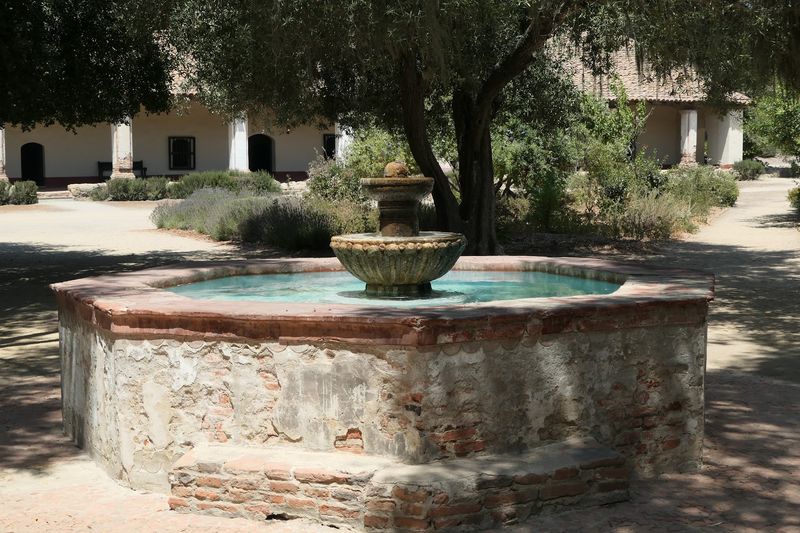
Water was everything at a California mission, and La Purísima’s builders knew it. I followed parts of the rebuilt water system and came away genuinely impressed by how smart it was, especially for a system built without modern machines.
Springs more than a mile away fed a system of stone channels, cisterns, and holding ponds. Water flowed downhill into fountains, gardens, and fields, which kept crops growing and people supplied through dry summers.
One spot worth finding is the Spring House. It is often described as a filter house, where water passed through sand before flowing toward the fountains at the main complex.
That is a surprisingly modern idea for the early 1800s.
The gardens were my favorite quiet corner. They hold a wide collection of plants from early California, both native species and ones brought in during mission times.
Helpful signs explain how each plant was used for food, medicine, or weaving.
I loved reading those little labels and then spotting the same plants out on the hillsides. It turns a simple stroll into a mini science lesson, and kids tend to enjoy it as much as adults.
Bring water and maybe a hat on warm days. Some of the best water system features sit along the trails, and a bit of shade goes a long way.
Mission Days, Long Trails, and Planning Your Visit
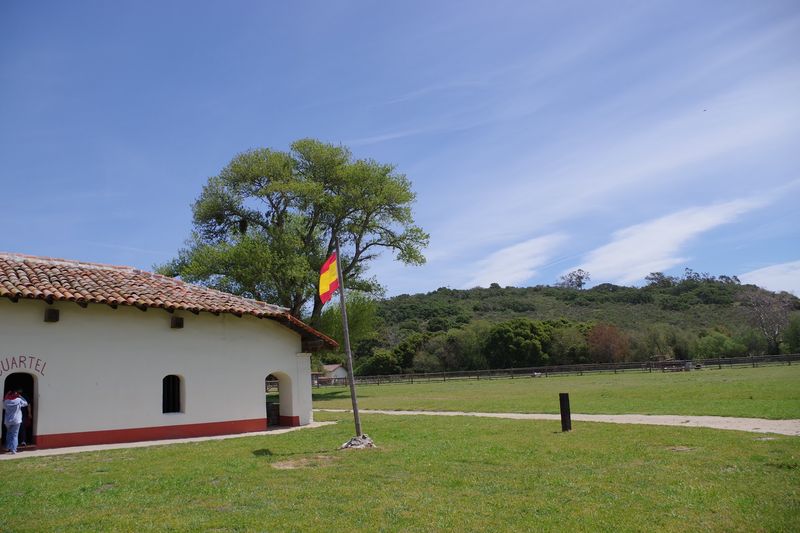
On certain days of the year, the mission fills with the sounds of work again. During special events and Mission Days, docents in period clothing demonstrate the crafts that kept the community running, from weaving to blacksmithing.
I think these events are the best way to experience the park. Watching skilled hands at work turns history from something you read into something you can hear and smell.
Check the park calendar before you go.
Guided tours are another great choice, since guides can open rooms that stay locked during self-guided visits. Families with fourth graders will find plenty that connects to what they learn about California missions in school.
The land beyond the buildings deserves its own afternoon. More than 25 miles of trails wind through the park, including a stretch of the California Missions Trail along the old El Camino Real.
The short climb on the Vista de la Cruz trail rewards you with wide views over the valley.
Plan on at least a couple of hours, more if you want to hike. Pack snacks and plenty of water, and remember the park is open from 9 AM to 5 PM every day except Monday.
La Purísima is part of California State Parks, not run by the Church, so it welcomes everyone as a public park and outdoor classroom.
Address: 2295 Purisima Road, Lompoc, CA 93436
