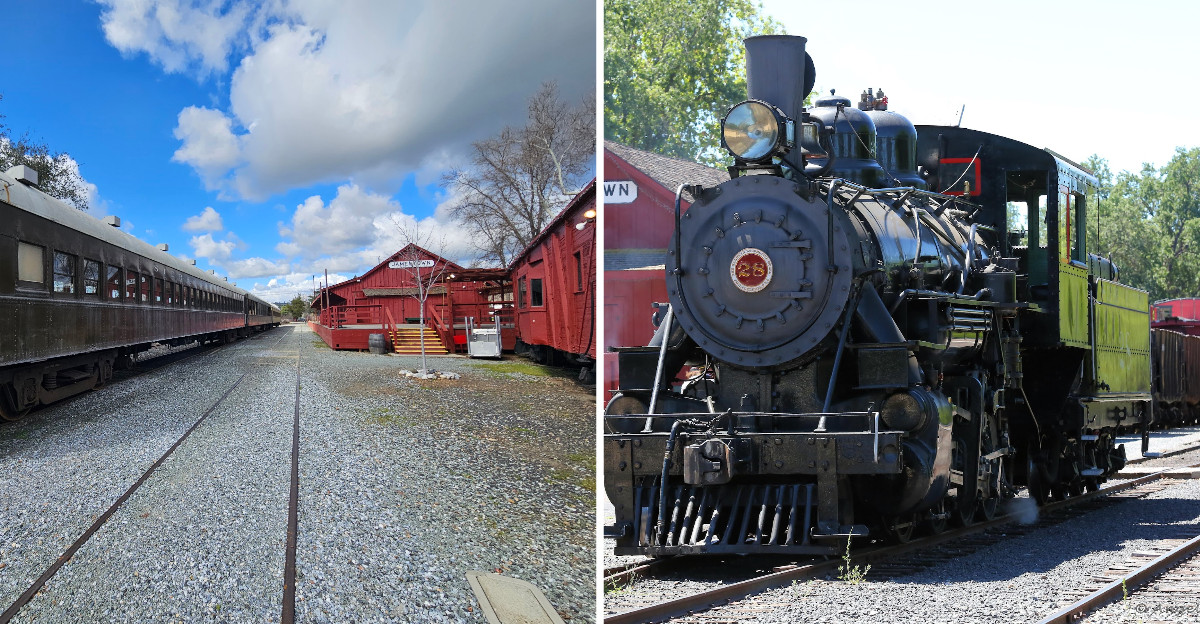
Coal smoke, warm oil, and dry oak leaves hang in the air of a California train museum that has been busy since the 1890s. Walking into the old buildings, leather belts turn overhead and lathes still shave metal for locomotive parts.
Volunteer guides lead small groups through the roundhouse, pointing out engines that have appeared in movies. Kids ring a bell somewhere behind, and a whistle answers in the yard.
Climbing into an open-air car for a ride through the foothills makes it clear why people drive hours to spend an afternoon here. The shop floor smells like work, not like a display.
Tools are still arranged on benches, and the machinery is oiled and ready. Every corner holds a piece of history that is still in motion, not frozen behind glass.
This is not a museum that asks you to look and leave. It invites you to watch, listen, and smell the industry that built the West.
The Jamestown Shops Where Repairs Never Stopped
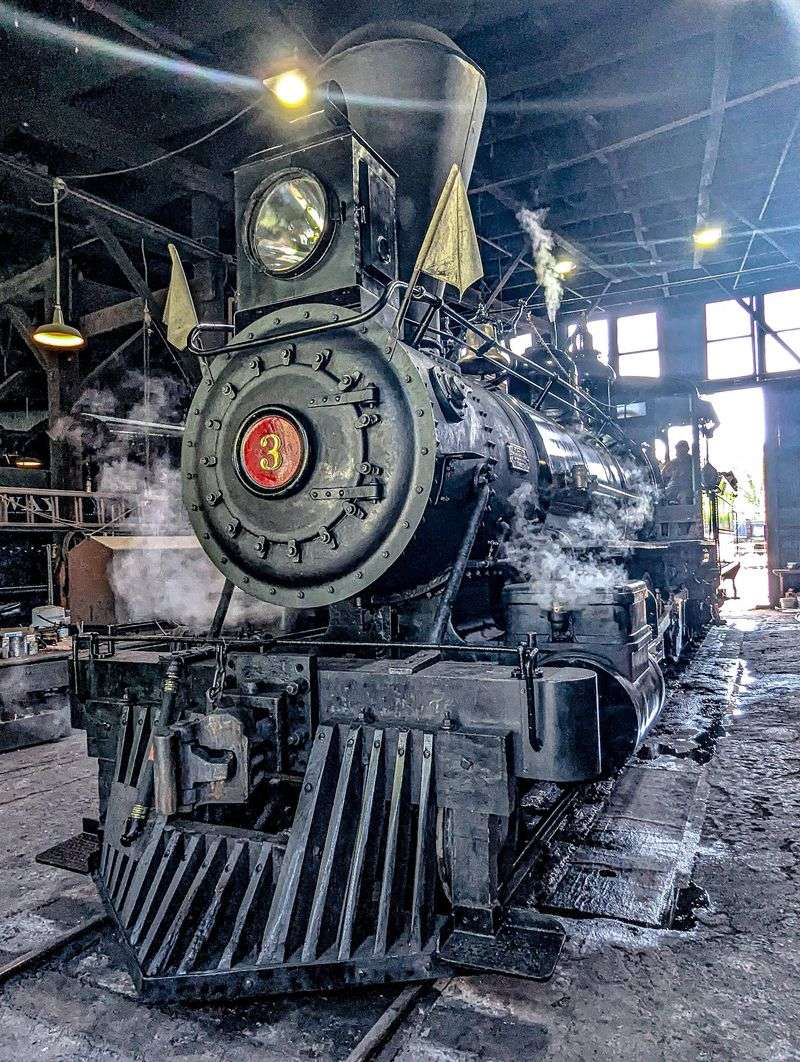
My first surprise came before I even reached the trains. The Jamestown Shops are not a recreation or a tidy display behind glass, they are a functioning steam locomotive repair and maintenance facility with parts of the complex dating back to 1897.
Heavy doors swing open onto a space that smells like metal shavings and old timber. Work happens here on a regular schedule, with locomotives and rolling stock inspected, repaired, and rebuilt much the way crews handled them generations ago.
What struck me most was how ordinary it all looked to the people working. Nobody was performing for visitors, they were simply doing the job the buildings were designed for.
If you go, give yourself time to slow down in this part of the park. Read the small signs, look up at the beams, and notice how the floor has been worn smooth in the paths workers walked most often.
Guided tours are included with admission, and the volunteers know these buildings inside out. Ask them what project is currently underway, because the answer changes throughout the year.
Photographers should bring a lens that handles low light well, since much of the interior relies on windows and open doors rather than bright fixtures. The shadows are part of the atmosphere, honestly, and they make the whole place feel older than any label could.
Leather Belts, Line Shafts, and a Machine Shop From 1898
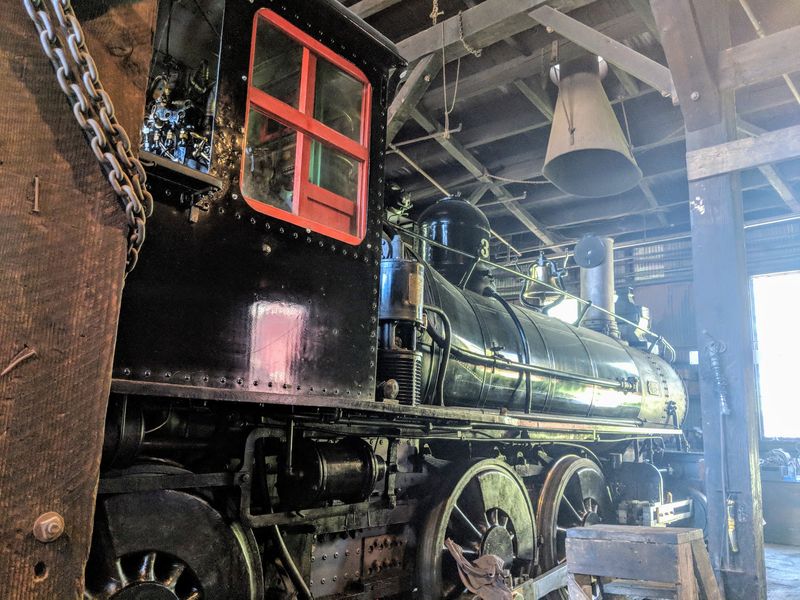
Here is the part that genuinely stopped me in my tracks. The Machine Shop dates to 1898, making it one of the oldest buildings in the whole Jamestown complex, and it began life as an engine house before being converted around 1900.
Inside, the machinery is not decorative. Most of the heavy equipment still runs off a single 20-horsepower electric motor, which sends power up to an overhead line shaft and then down through a network of leather belts to each machine.
Very few original railroad machine shops anywhere still operate with an overhead belt system like this one.
I watched the belts move and thought about how loud and slightly nerve-wracking this room must have been at full production. Engine lathes, a shaper, a wheel press, and a hand car all sit in the space, each one built for a specific job in keeping steam giants alive.
Guides explain how a single motor could run an entire shop, which is a clever bit of engineering worth understanding before you look around.
Bring curiosity and maybe a notebook, because the mechanically minded among you will have questions.
Kids tend to love the sheer strangeness of the moving belts, and it beats a screen any day.
Inside the Only Continuously Operating Steam Roundhouse in the Country
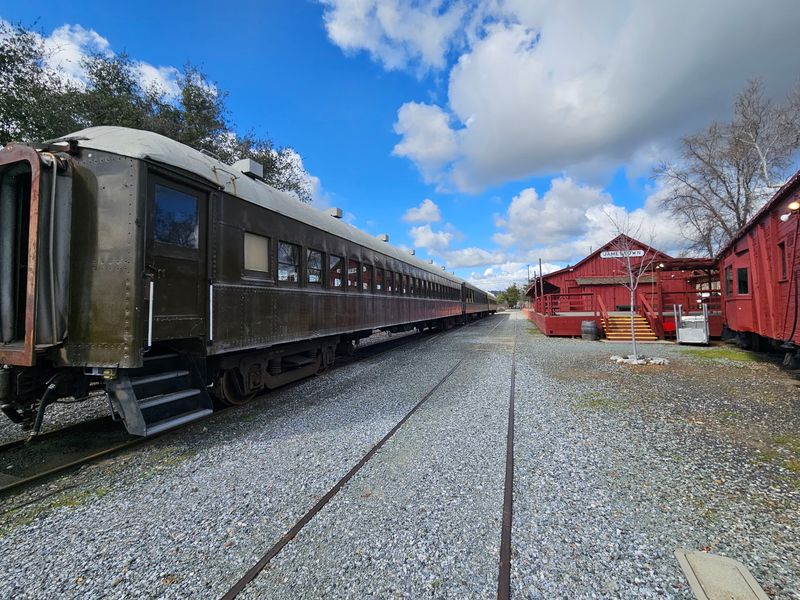
Ask anyone at the park what to see first and the roundhouse comes up immediately. Built in 1910 after fire destroyed an earlier wooden structure that same year, the semi-circular building was designed so locomotives could roll in, get serviced, and roll back out.
It holds a title no other building in the United States can claim, being the only continuously operating steam locomotive roundhouse in the country.
For decades this was the busiest corner of the Sierra Railway, with engines coming through almost daily until diesel power started taking over in 1955. Plenty of roundhouses across the country were torn down after that shift.
Hollywood is a big reason this one survived, because film crews kept needing authentic steam equipment and a believable setting.
Standing among the stalls, I kept catching details I did not expect, like the soot patterns on the ceiling and the pits beneath the tracks where mechanics worked underneath the engines.
Tours of the roundhouse run regularly and are genuinely worth waiting for, even if you are not a train person. Guides point out which locomotive is which and share the working history behind each one.
Wear closed shoes, since the floor is uneven in places, and know that the area is accessible for wheelchairs and mobility devices too.
Fire, Anvils, and the Blacksmith Shop of 1899
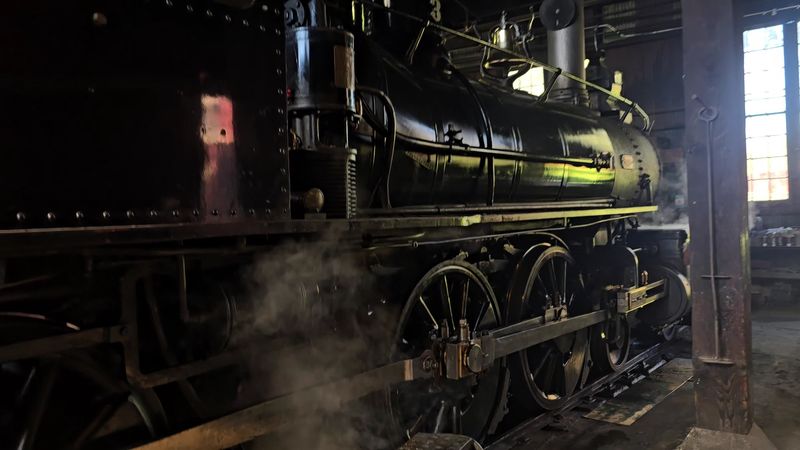
A short walk from the machine shop sits a low building that feels heavier somehow, darker, with soot worked into every surface. Erected in 1899, the Blacksmith Shop handled the metal work that kept both locomotives and rail cars in service.
Bearings, castings, and specialized tools all came out of this room, shaped by hand under hammer and heat.
Railroads could not simply order a replacement part overnight back then, so the blacksmiths made what was needed. That level of skill is hard to picture until you see the tools laid out where they were used.
I ran my eyes over the hanging tongs and hammers and tried to imagine the noise, the sparks, and the constant heat coming off the forge.
It is a good reminder that railroading was never just about engines, it was about people who knew metal the way a cook knows dough.
Guides often connect this shop to the machine shop next door, explaining how rough forged pieces moved from one building to the other for finishing.
Take a minute here even if it looks small from outside. The building is easy to breeze past on the way to the trains, and that would be a shame, because it is where a lot of the real problem-solving happened.
The Movie Railroad and Its Famous Locomotive
Turns out I had already seen this place dozens of times without knowing it. Railtown 1897 carries the nickname The Movie Railroad, and its equipment and scenery have appeared in more than 200 films, television productions, and commercials.
High Noon was shot here. So was Back to the Future Part III, and the television series Petticoat Junction used these rails as well.
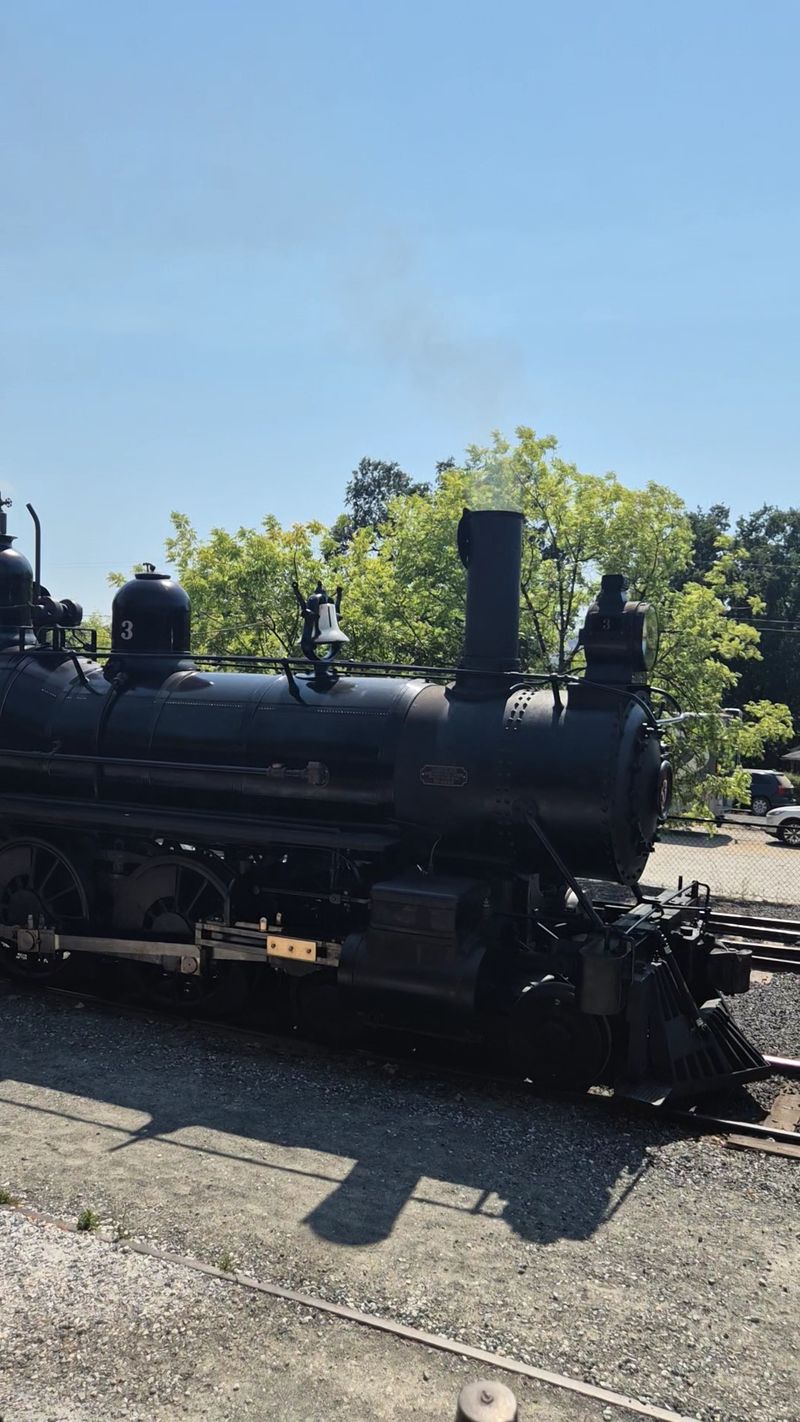
The star of the collection is Sierra No. 3, an engine affectionately called the Movie Star Locomotive. Seeing it in person after recognizing it on screen produced a strange little jolt, the kind you get meeting someone famous in a grocery store.
There is a movie exhibition on site, and guides love pointing out which angles show up in which productions.
Film work is also the practical reason the park exists in its current form, since ongoing Hollywood demand kept the shops and roundhouse from being scrapped after the diesel era arrived.
Preservation sometimes comes from unexpected directions.
Fans of classic westerns should budget extra time and ask about specific titles, because the volunteers usually have details about what was filmed where.
Even visitors who care nothing about trains tend to walk out of the exhibit grinning, which says plenty about how well the two histories fit together.
Sierra Railway and the Boom That Built It
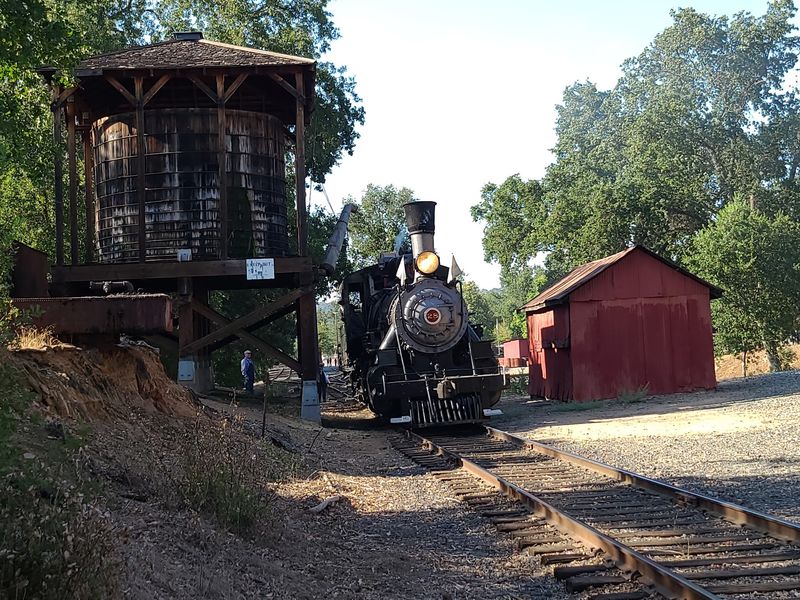
Founded in 1897 during California’s second gold rush boom, the Sierra Railway of California was built to move things that mattered to the state’s growth. Timber and ore topped the list.
Logging companies depended on it heavily, including the West Side Lumber Company, and the line carried lumber out of forests that would have been nearly impossible to reach otherwise.
Mining operations leaned on the same rails. Communities grew around the stops, and goods that once traveled by wagon suddenly moved in quantity.
Learning this changed how I looked at the engines parked in the yard. They stopped being pretty antiques and started looking like tools that reshaped a region.
The park does a nice job connecting the shops to that larger story, and guides will explain how the geography of the foothills shaped where track could go.
If you have kids studying California history in school, this is a field trip that will stick with them far longer than a textbook chapter.
The setting itself helps, with oak groves and rolling hills right outside the fence line looking much like they did when freight trains ran through daily.
Give yourself a slow lap around the grounds and read the interpretive panels. The context makes everything else on the property land harder.
Riding the Rails Through Gold Country
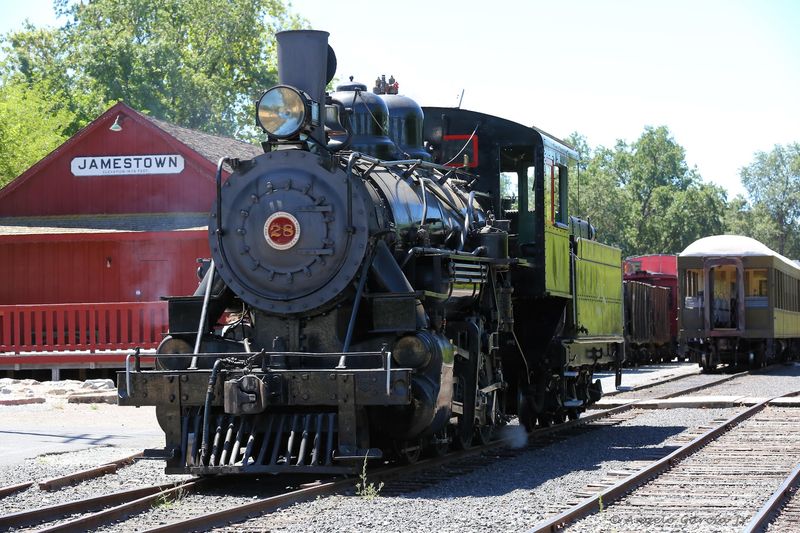
Saving the train ride for last was the right call. Seasonal excursion trains run a 6-mile round trip that takes about 45 minutes, rolling past rolling hills and oak groves that look like a postcard in spring.
I chose the open-air observation car and got exactly what I hoped for, wind in my face and an unobstructed view.
The whistle is louder than you expect. So is the rhythm of the wheels, and a narrator shares history and stories as the landscape slides by.
One important planning note, rides do not operate every day of the week, so check the schedule before driving out. Several visitors arrive midweek and miss them entirely.
The park itself is open daily from 9:30 AM to 4:30 PM, with guided tours included in admission, and there is a lift available for riders who need accessible boarding.
Picnic tables sit under shade near the yard, making this an easy half-day or full-day stop depending on how deep you go.
The gift shop carries postcards, hats, and pins if you want something small to take home.
Address: 10501 Reservoir Rd, Jamestown, CA 95327
