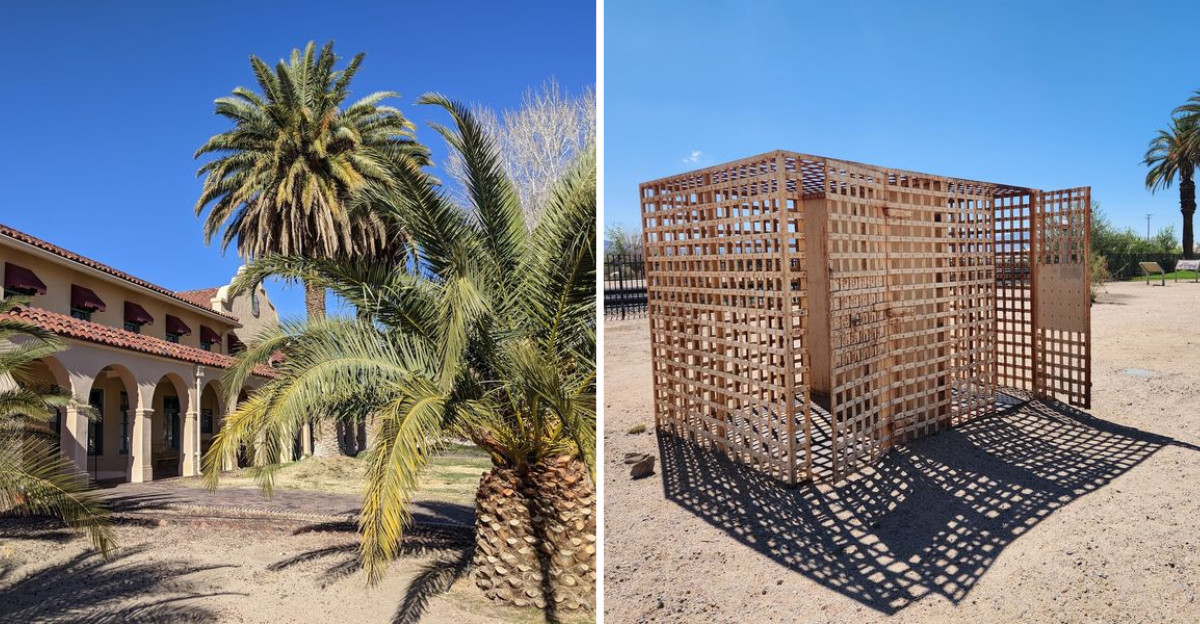
White roof tiles and a row of palm trees appeared out of the creosote flats during a long, empty drive through the California desert, and I had started to think my map had glitched.
That building was once the beating heart of a railroad town where hundreds of people lived, worked, and ate together, and it still stands in the middle of nowhere like it was dropped there by mistake.
I pulled into the gravel lot, stepped out into that dry desert quiet, and heard nothing but wind and a distant freight train grinding through the landscape somewhere beyond the horizon.
The heat shimmered off the pavement, and the only movement came from the palm fronds swaying in a breeze that had crossed miles of open ground before reaching me.
Something about the whole scene stuck with me for weeks afterward, the way the building held its ground against all that empty space, a reminder that even the loneliest places can hold a story worth stopping for.
If you ever find yourself crossing this part of the state, this is the stop I would tell a friend not to skip.
A Spanish-Style Building in the Middle of Nowhere
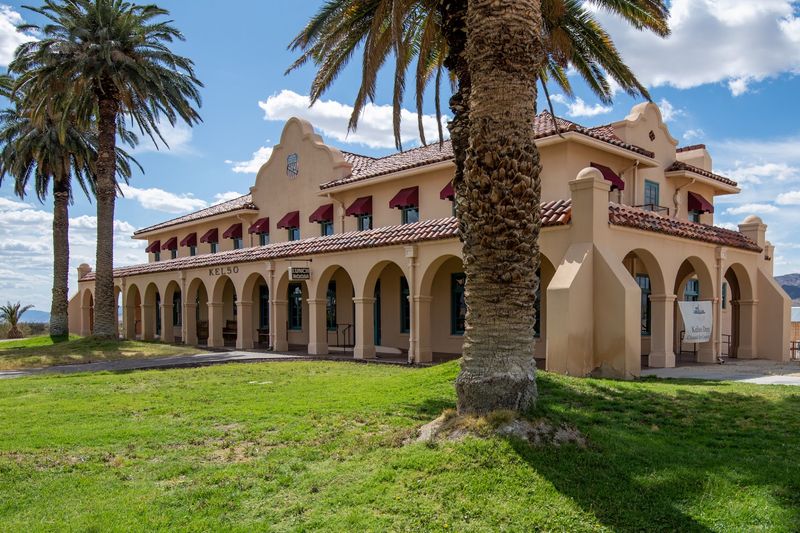
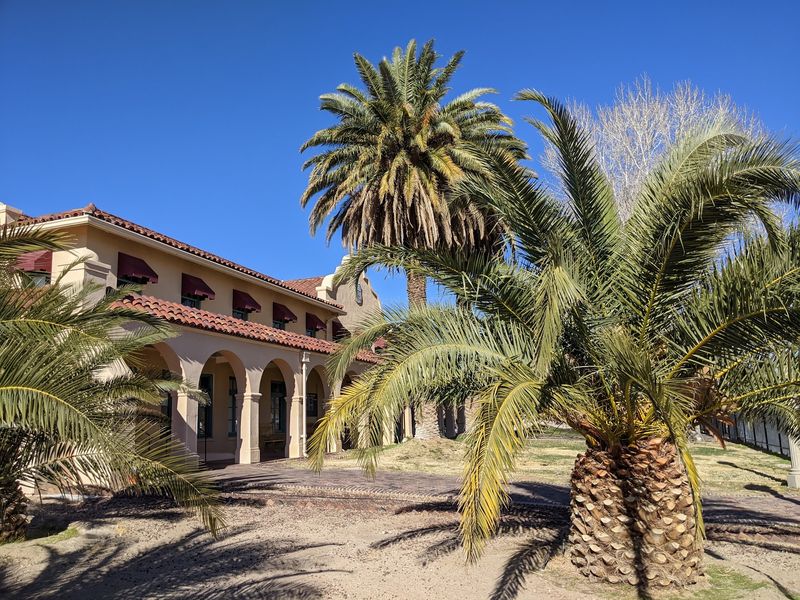
My first reaction was pure disbelief at the architecture. Arched openings, thick white walls, a red tile roof, and palms lined up out front like a small plaza in an old California mission town.
The building went up starting in 1923 and opened its doors in 1924, replacing a smaller depot from 1905. Railroad planners wanted something impressive, an oasis feeling for crews who spent their days in heat and dust.
Mission Revival and Spanish Colonial Revival styles were popular then, and both show up here in the curved parapets and shaded arcade.
What surprised me most is how well the proportions work against the desert. The pale walls throw back the sunlight, and the deep arches create shade you can actually feel when you step under them.
Photographers will want early morning or late afternoon light, when the red roof glows and the shadows stretch long across the gravel.
Bring a hat. The lawn out front is small, and the shade under the arcade is the coolest spot around.
Sitting on one of those benches, listening to the wind, felt like the best possible break from a highway drive.
Why the Railroad Picked This Exact Spot
Geography decided everything here, which I found genuinely fascinating once a plaque spelled it out. Trains heading east from Kelso faced a steep two percent climb toward Kessler Summit, later renamed Cima.
Steam locomotives could not manage that grade alone with heavy freight. Extra engines, called helper engines, waited at Kelso to push and pull trains up the hill.
Water sealed the deal. A dependable spring in the nearby Providence Mountains gave steam engines the one thing the desert usually refuses to hand over.
So the San Pedro, Los Angeles and Salt Lake Railroad built a depot in 1905, and the operation grew from there. That railroad later became part of the Union Pacific.
Understanding the grade changed how I looked at the landscape. The valley floor around the depot really does tilt upward toward the mountains, and once you notice it, you cannot unsee it.
Drive the road toward Cima afterward if you have time. The slow, steady climb makes the whole helper engine story click in a way no exhibit can.
It is one of those rare places where the reason for its existence is still written into the ground.
The Beanery and the Clubhouse Upstairs
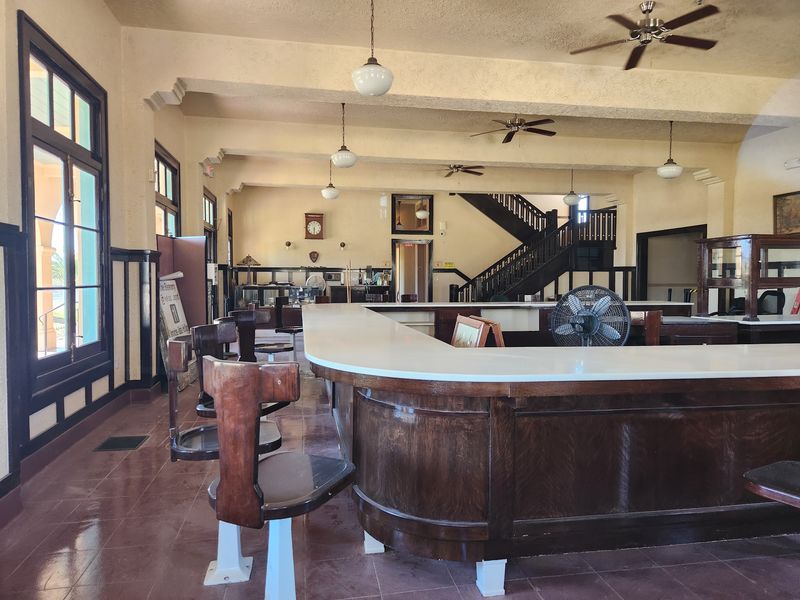
Here is the detail that charmed me the most: the depot had a restaurant nicknamed The Beanery. Railroad crews ate there at all hours, because the kitchen and the telegraph office ran around the clock during the busy years.
The building was never just a place to buy a ticket. It held a ticket office, telegraph office, baggage room, reading room, billiard room, locker room, and dormitory rooms for staff.
Crewmen boarded upstairs between shifts, which is why the whole place was often called the Kelso Clubhouse and Restaurant.
Several rooms have been furnished the way they would have looked decades ago, and the counter area was later reworked into the visitor center gift shop.
I kept thinking about how much life passed through those doors. Meals, card games, mail, gossip, sleep, and then back out to the tracks.
Visitors who love social history will get more out of this than train buffs alone. The story here is really about workers far from cities finding comfort in a shared building.
Reading about it before you arrive makes the empty rooms feel surprisingly crowded.
When Nearly Two Thousand People Called Kelso Home
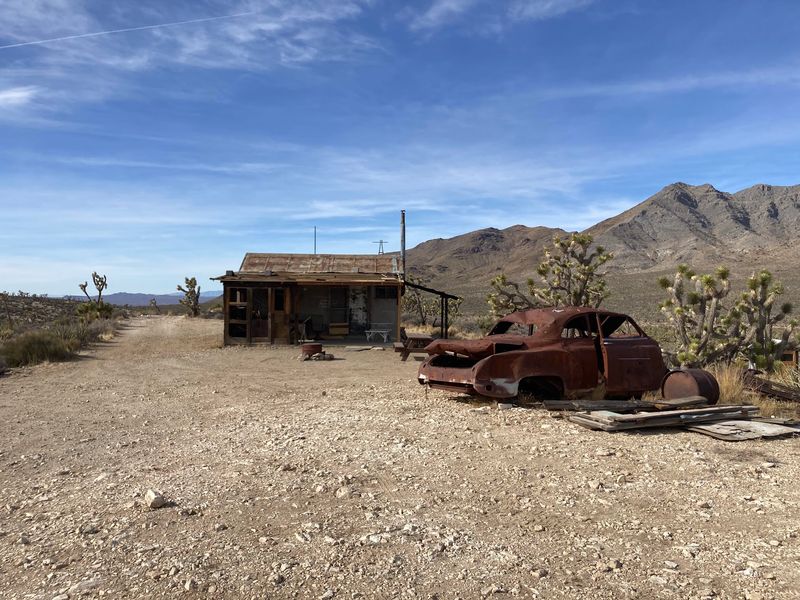
Hard to picture now, but a real town spread out around this depot. Railroad employees brought families, and homes, a school, and services followed.
Wartime pushed the numbers highest. During World War II, Kelso swelled toward roughly two thousand residents, largely because of nearby Kaiser’s Vulcan mine, which shipped iron ore for the war effort.
Ore moved out by rail, workers moved in, and the little desert stop briefly buzzed.
Only fragments remain today. A handful of weathered structures sit near the tracks, quiet and sun bleached, and the emptiness around them does the storytelling.
I walked slowly and kept my distance from anything unstable, which is the smart move with old desert buildings. Snakes, loose boards, and rusted metal all deserve respect.
Standing there with the wind moving grit across the road, I found myself doing math on how many kids once waited for a train here.
Practical tip: there is no cell service in this area, so download maps and let someone know your route.
The vanished town is the reason this depot feels heavier than a pretty building deserves.
How Diesel Engines Quietly Ended It All
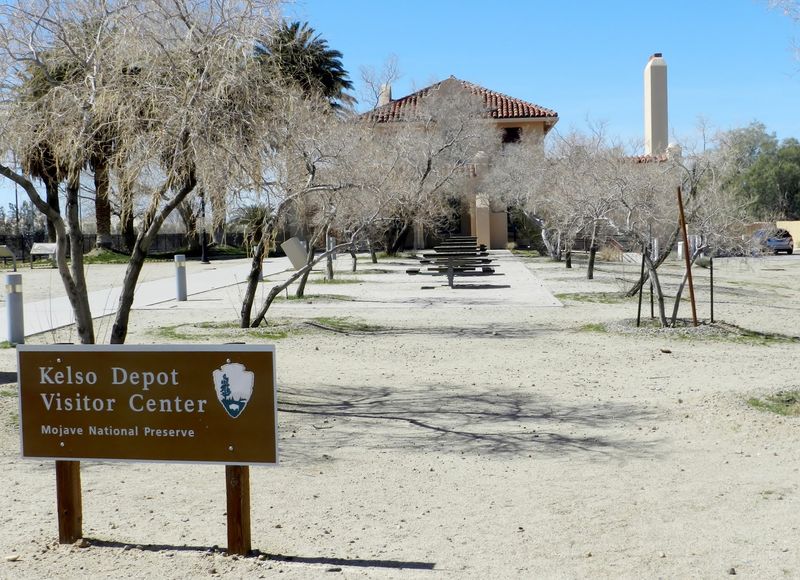
Progress closed this town, not disaster. Diesel locomotives did not need water stops, and they hauled heavy loads up grades without extra help.
By 1959, helper engines and water stops at Kelso were no longer needed. The Vulcan Mine had already shut down in 1947, which cut freight and passenger traffic even further.
The depot’s main railroad function ended in 1962, and passenger service stopped in 1964.
Amazingly, the restaurant and boarding rooms hung on until 1985, when Union Pacific finally closed the building for good. Demolition was proposed that same year.
Trains still roll past, though, and that contrast is the strangest part of visiting. An active Union Pacific line runs right beside the depot, separated by an iron fence.
I stood there while a long freight thundered by, engines growling, cars clattering, and the old building just watched it happen.
Train watchers should plan extra time and patience, since schedules are not posted for the public.
Never cross the tracks. The fence exists for a reason, and the view from the depot side is plenty good.
Rescued From the Wrecking Ball
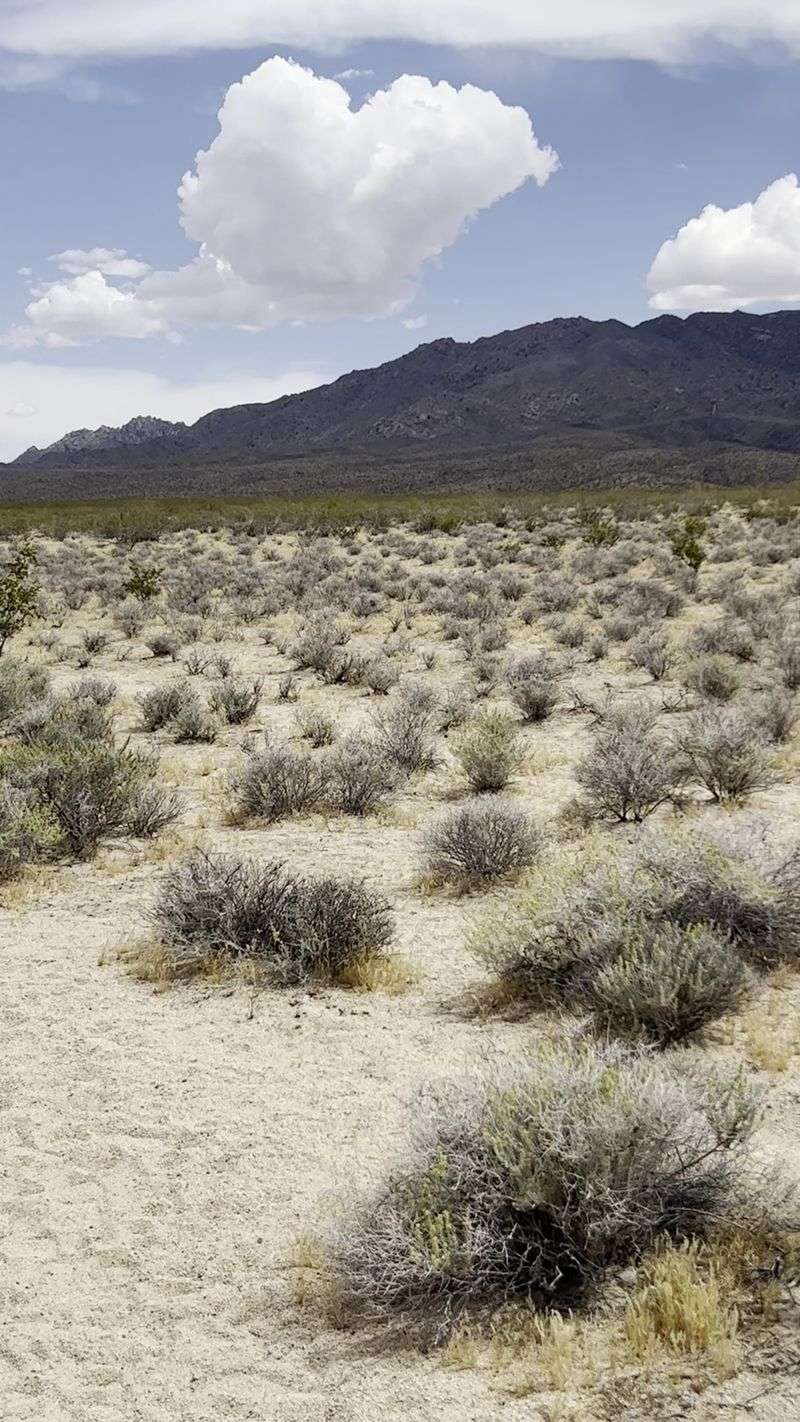
Losing this place was very nearly the ending. Union Pacific wanted it torn down in 1985, and plenty of buildings like it disappeared the same way.
People pushed back instead. Preservation efforts led to the depot transferring to the Bureau of Land Management in 1992, then to the National Park Service in 1994, when Mojave National Preserve was established.
Major renovation work started in 2002, and the depot reopened in October 2005 as the preserve’s main visitor center.
Reading that timeline on a plaque outside, I felt oddly grateful to strangers I will never meet. Somebody wrote letters and made phone calls so I could stand there taking photos.
The restoration itself is careful rather than flashy. Original details were kept where possible, and the additions blend in instead of shouting.
Interior features have included museum exhibits, historically furnished rooms, a theater, and a bookstore.
Anyone who cares about old buildings should treat this as a small victory story. Desert structures rarely survive neglect, heat, and changing railroad priorities all at once.
Kelso Depot did, and that alone makes the detour worthwhile.
The Jail Cell, the Library, and Other Odd Delights
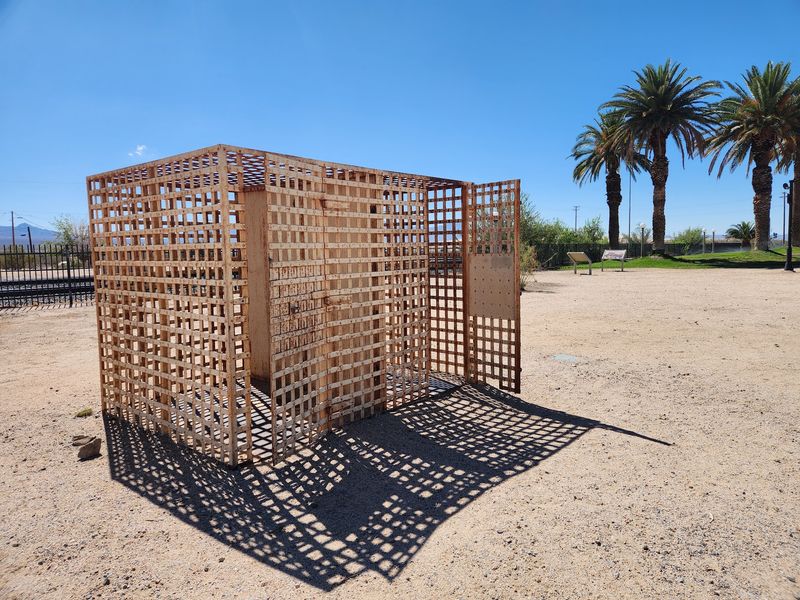
Not every exhibit here is about locomotives, which is part of the fun. A small jail cell sits in the building, and it is easily one of the most photographed corners.
There has also been a reading room with comfortable chairs, where you can sit with books about desert geology, wildlife, and railroad life.
Rangers staffing the desk have a reputation for being genuinely helpful, and asking them questions usually beats reading every panel.
Displays have covered the workforce, the landscape, mining, and how the rail system kept moving through difficult years.
Junior Ranger programs make this a decent stop for kids who like stamps and badges, though the exhibits lean toward adult interest.
One heads up worth knowing: the gift shop has operated as cash only, and there is no ATM anywhere nearby.
Bring small bills if you want a book or a patch. I learned that lesson the awkward way at a different park.
Small quirks like a jail cell and a cozy library are what turn a quick photo stop into a real visit.
Planning Your Stop, Closures Included
Honest heads up before you commit to the drive: as of September 2025 the visitor center was closed for heating and cooling system renovation, with reopening expected in 2026.
Outdoor areas stayed accessible during that work, including restrooms, parking, and water filling. Those clean restrooms and water are genuinely valuable out here.
Check the National Park Service page for Mojave National Preserve before leaving, since desert road washouts can also close access.
Even with the building shut, I found the stop worthwhile. Interpretive plaques outside walk you through the town’s rise and fall, and benches and small lawn patches give you somewhere to sit.
Cooler months are far more pleasant than summer, when heat here is no joke. Carry more water than you think you need.
Kelso Dunes and Hole in the Wall are elsewhere in the preserve, so map your route rather than assuming everything connects quickly.
Fuel up before entering, because services are scarce and cell coverage is basically nonexistent.
Address: 90942 Kelso Cima Rd, Kelso, California 92309
